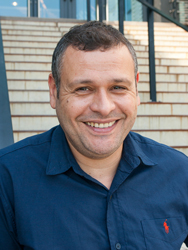
Professor Per Stenström is affiliated with the Department of Computer Science and Engineering at Chalmers University of Technology . His research focuses on computer architecture , memory systems optimization , and energy-efficient computing , with significant contributions to DNN accelerator design and cache management . Research Trends : His recent publications emphasize Memory compression techniques for energy efficiency Hardware-software co-design for DNN acceleration Security in microarchitectural optimizations Hybrid memory systems for near-memory computing These works span both theoretical and applied aspects of computer architecture, with a particular focus on data redundancy elimination , parallel processing , and quality-of-service constraints . His work has influenced the development of energy-aware resource management frameworks and resilient EU HPC systems , as evidenced by his long-standing contributions to the field since the early 2010s.
Luke Heemsbergen is a Senior Lecturer in Communication at Deakin University's School of Communication and Creative Arts and the Alfred Deakin Institute for Citizenship and Globalisation. His research explores the intersection of digital technologies and societal power structures, focusing on how emerging media reshape political communication, human-computer interaction, and cultural practices. He co-leads the Immersive Realities Theme at Deakin Motion Lab and coordinates the Critical Digital Interfaces and Infrastructures research group. Research interests include: Digital media's role in political engagement and activism Augmented/extended reality as tools for environmental and health communication Algorithmic governance in institutional contexts Critical approaches to synthetic media and AI creativity His recent publications demonstrate sustained focus on platform politics, with 9/15 articles analyzing social media's role in elections, activism, and misinformation. Methodologically, he employs innovative digital approaches like 'backend-in' platform analysis and multimodal data visualization. Thematically, articles cluster around: 1) Pandemic technologies and surveillance, 2) Algorithmic management in institutions, and 3) Immersive media design. Supervision includes 8 doctoral students working on projects like embodied human-machine interfaces, EdTech supply chains, and surveillance law reform. Funded projects include: Defining Communication in a Digital Era (ACCAN grant) Techno-Totalitarianism vs. Disruptive Technologies (Gerda Henkel Stiftung) VR Wayfinding Visitor Experience Model (ID Laboratory)
Laura Emilia Maria Ricci is a Full Professor at the University of Pisa's Department of Computer Science, leading the Pisa Distributed Ledger Laboratory (Pisa DLT Lab). Her research focuses on blockchain technology, layer-2 solutions, cryptographic techniques, and self-sovereign identity frameworks. She coordinates the National PhD program in Blockchain and Distributed Ledger Technologies and leads the PRIN research project 'AWESOME' (2023-2025). Ricci serves as an associate editor for the ACM Distributed Ledger Technologies: Research and Practice journal and the Springer Nature SN Computer Science section on blockchain innovations. Her research emphasizes blockchain scalability, transaction analysis, and social network dynamics. Recent work includes studies on NFT architectures, post-quantum cryptography in Ethereum, and query authentication protocols. She co-organized the 7th IEEE International Conference on Blockchain and Cryptocurrencies (2025) and actively participates in global blockchain initiatives. Ricci has been awarded Best Paper Awards for her contributions to decentralized cloud scheduling, hybrid architectures for online games, and distributed virtual environments. She advises numerous PhD students and oversees grants like the H2020 'HELIOS' project. Ricci's academic roles include teaching blockchain, peer-to-peer systems, and web scraping at the University of Pisa. Her lab collaborates on projects such as the AQuSDIT grant (2024-2025) and the Ethereum Foundation's 'Cross Chain Authenticated Queries.' She also chairs conferences like IEEE Blockchain and co-edits special issues on blockchain-based pervasive systems and social media analysis.
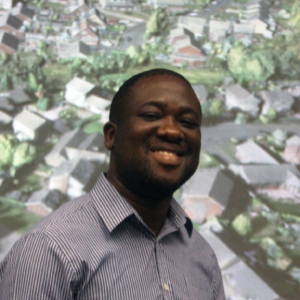
Dr Kwasi Gyau Baffour Awuah is an interdisciplinary academic and practitioner with over 22 years of international experience in real estate, urban development, and sustainability across developing and developed contexts. Currently based at THINKlab, University of Salford, he leads the real estate research and consultancy cluster while teaching urban development modules. His educational qualifications include: PhD in Economic Analysis of Spatial Planning & Management Systems PG Cert. in Academic Practice in Higher Education (PCGAP) MA in Development Studies BSc (Hons) in Land Economics Professional Diploma in Real estate surveying & valuation Certificate in Cradle-to-Cradle (C2C) Professional Certificate in Alternative dispute resolution Dr Awuah's research spans land administration, heritage conservation, urban governance, sustainable development, and property valuation, with particular focus on African urban contexts. His work bridges theoretical frameworks with practical policy implementation, addressing challenges in informal settlements, infrastructure financing, and sustainable resource management. Recent publications (2021-2024) demonstrate a pronounced shift toward digital heritage conservation (HBIM applications in Jordan), stakeholder dynamics in Nigerian water systems, and sustainable housing solutions. His interdisciplinary approach integrates urban planning, digital technologies, and governance frameworks to tackle complex sustainability challenges in rapidly urbanizing regions. No scientific awards were explicitly mentioned in the source material. Dr Awuah has supervised over 50 student dissertations across degree levels and serves as an external examiner for multiple universities. His research attracts substantial funding from: RICS (Property Valuation Practice in Sub-Saharan Africa) DFID (Urbanisation and Infrastructure Research Programme) EU (INTERREG IVB C2C BIZZ project) AHRC (Digital Heritage in India) Royal Academy of Engineering (Jordanian Heritage Conservation) As leader of the real estate research cluster at THINKlab, he directs a multidisciplinary team conducting internationally collaborative projects with academic institutions, government bodies, and industry partners across Africa, Europe, and Asia.
Dr. Ryan P. McMahan is an Associate Professor of Computer Science and Learning Sciences at the University of Central Florida (UCF), leading the eXtended Reality & Training (XRT) Lab. He holds a Ph.D. from Virginia Tech (2011) and has expertise in leveraging XR/VR technologies for training and education. His work emphasizes enhancing learning outcomes through immersive systems, with over $3.4M in secured funding. He is an NSF CAREER Award recipient and authored the textbook 3D User Interfaces: Theory and Practice (2nd Ed.). Education Ph.D. Computer Science, Virginia Tech (2011) M.S. Computer Science, Virginia Tech (2007) B.S. Computer Science, Virginia Tech (2004) Research Interests focus on XR/VR applications in education, human-computer interaction, and training systems. Key areas include interaction fidelity, personalized learning, and embodied cognition in virtual environments. Awards include the NSF CAREER Award and teaching accolades such as UCF’s 2023 Excellence in Graduate Teaching Award. His research has generated 5,000+ citations with a h-index of 26. Professional Engagement includes roles as IEEE TVCG Associate Editor and organizer of ICAT-EGVE 2020. He mentors students in UCF’s Mixed Reality Engineering Graduate Certificate program and advises initiatives like Girls Who Code.
Alex C. Snoeren is a Professor in the Department of Computer Science and Engineering at the University of California, San Diego (UCSD). He is affiliated with the Systems and Networking Research Group, the Security and Cryptography Research Group, and the Center for Networked Systems. His work focuses on distributed systems, networking, and security, with notable contributions to data center networking, optical systems, and network measurement. He has advised numerous PhD students and has been actively involved in teaching courses such as CSE 120 (Principles of Computer Operating Systems), CSE 123 (Computer Networks), and graduate-level systems and networking courses. His research has led to innovations in network architecture, including projects like RotorNet (optical data center networking) and Eden (far memory integration). Key awards include the Best Paper at ACM SIGCOMM 2023 and multiple best student paper recognitions. His work spans both theoretical and applied domains, addressing challenges in network scalability, security, and efficiency.
Adlen KSENTINI is a Professor at EURECOM's Communication Systems department, specializing in advanced networking technologies. His research focuses on Mobile and Wireless Networks, Software Defined Networking (SDN), Mobile Edge Computing (MEC), Network Function Virtualization (NFV), and Content Delivery Networks (CDN), with an emphasis on performance evaluation and network virtualization. He has contributed to projects like AC3 and 6G-BRICKS, exploring cloud-edge continuum integration and 6G infrastructure. Key research interests include virtualized mobile core networks, carrier cloud systems, and AI-driven network management. He has received Best Paper Awards at IEEE WCNC 2018 and IWCMC 2016 for works on network slicing and LTE modeling accuracy. His work often integrates machine learning for optimization, sustainability, and security in 5G/6G networks. Distinctions: Two Best Paper Awards Labs/Teams: Involved in EU-funded projects like AC3 and 6G-BRICKS Grants: Not explicitly listed, but active in collaborative research initiatives
Mircea R. Stan is a Professor of Electrical and Computer Engineering at the University of Virginia, serving as Director of Computer Engineering and Virginia Microelectronics Consortium (VMEC) Professor. He leads the High-Performance Low-Power (HPLP) lab and is an associate director of the Center for Automata Processing (CAP). His research focuses on AI hardware, Processing in Memory, Low Power Design, Cyber-Physical Systems, and Spintronics. Education: Ph.D. (1996) and M.S. (1994) from UMass Amherst; Diploma (1984) from Politehnica University, Bucharest. Research interests include energy-efficient computing architectures, IoT systems, and emerging technologies like magnetic skyrmions and memristors. He has pioneered work on asynchronous stochastic computing, thermal-aware microarchitecture, and microfluidic cooling for 3D-ICs. Key awards include the 2024 A. Richard Newton Technical Impact Award, 2018 ISCA Influential Paper Award, and IEEE Fellow (2014). He has held editorial roles at IEEE TVLSI, IEEE TNano, and IEEE Design & Test. Notable contributions include the HPLP lab’s advancements in low-power logic computing, the VCRFID framework for Industry 4.0, and thermal-aware design tools like Hot-LEGO and Cool-3D.
Daniel Prajogo is a Professor in the Department of Management at Monash University, Faculty of Business and Economics. His research and teaching focus on quality, operations, supply chain, and innovation management. He has published extensively in top-tier journals and has led numerous funded research projects with industry and international partners. Education: Bachelor of Electrical Engineering, Sepuluh Nopember Institute of Technology, Indonesia Master of Quality Management, RMIT University, Australia (Best Graduate Award) PhD in Business Management, Monash University, Australia (2003) His research interests span quality management, operations and supply chain management, innovation, and strategic management , with recent work extending into healthcare systems, sustainability, and biotechnology applications. He has made significant contributions to understanding supply chain resilience, lean implementation, and ethical business practices. His recent publications reflect a strong trend in interdisciplinary research , bridging operations with healthcare, sustainability, and international development. Themes include crisis response (e.g., pandemic disruptions), innovation in emerging industries (e.g., seaweed biotechnology), and ethical supply chain dynamics. His work often integrates theoretical frameworks with practical industry applications. Scientific Awards and Recognition: Best Graduate Award, RMIT University Listed among the top 25 Supply Chain Management scholars in Asia (IJPE, 2018) Daniel Prajogo has secured multiple research grants from the Australian Research Council and industry bodies such as JAS-ANZ and ISCRR. He actively supervises research students and collaborates internationally, particularly with Indonesian institutions. His current projects focus on strengthening health resilience, sustainable marine biodiversity, and Australia-Indonesia industrial partnerships. He leads research initiatives that often function as virtual labs or collaborative networks, particularly in the areas of supply chain innovation, healthcare operations, and sustainable development . These involve cross-institutional and cross-border teams, emphasizing real-world impact and policy relevance.
Robert Czechowski, PhD , is an Assistant Professor at the Faculty of Information and Communication Technology , Wrocław University of Science and Technology , Poland, stationed in the Department of Telecommunications and Teleinformatics . His office is located in building D-20, room 421, and he holds regular consultation hours on Tuesdays 14:00–15:00, Wednesdays 15:00–17:00, and Thursdays 13:00–15:00. His research portfolio is centred on securing the next generation of electrical power systems. Core interests include: Cyber-security architectures for smart grids and micro-grids Artificial-intelligence-driven intrusion detection and prevention systems (IDS/IPS) Network protocols and time-synchronisation security in SCADA environments Simulation of information flow in complex, dynamically reconfigurable networks IPv4/IPv6 network design and security policy enforcement in power-system automation Database and expert-system solutions for real-time energy-management and fraud detection Between 2014 and 2019 he authored or co-authored more than fifteen peer-reviewed works. The publications reveal a clear longitudinal trend: early work established foundational security policies and good-practice guidelines, while later studies pivot toward advanced AI/ML techniques for anomaly detection and risk quantification in smart-metering infrastructures. A recurring theme is the integration of communication-protocol security (IEC 61850, PLC, IPv4/IPv6) with higher-level cyber-physical risk governance. Scientific recognitions: None explicitly mentioned in the supplied text. Advising & Grant activities: The provided material does not list specific doctoral or master’s students, nor does it enumerate funded projects. Laboratories & Teams: He conducts research within the Department of Telecommunications and Teleinformatics, leveraging university laboratories and the wider ICT Faculty infrastructure, although no dedicated lab name is specified.
Bjorn Ross is a Lecturer in Computational Social Science at the School of Informatics, University of Edinburgh. He is affiliated with the Institute for Language, Cognition and Computation and actively contributes to the Computational Social Science research area. He serves as Director of the SMASH research group and is part of the management team for the Centre for Doctoral Training in Natural Language Processing (CDT in NLP). Education: PhD, 2019, University of Duisburg-Essen MSc in Computer Science, 2016, University of Münster Exchange year, 2014–2015, University of Strasbourg BSc in Information Systems, 2013, University of Münster His research focuses on computational methods for analyzing social media, particularly using natural language processing, social network analysis, and agent-based modeling. Key interests include misinformation, hate speech, social bots, and the ethical implications of automated systems. He emphasizes fairness, bias, and data ethics in AI applications. His recent publications span topics such as queerphobic bias in sentiment analysis, explainable hate speech detection, temporal generalizability in misinformation models, and cross-lingual bias amplification. These works appear in leading venues including ACL, ICWSM, Social Science Computer Review, and Big Data & Society, reflecting a strong interdisciplinary focus bridging computer science, social science, and ethics. Scientific Awards: Best Paper Award, Electronic Government track, HICSS 2018 Ross supervises multiple PhD students and welcomes new applicants. He has also contributed to software tools and web-based platforms for argument analysis and counterspeech. He is an Associate Editor for Business & Information Systems Engineering and a member of AIS, ACL, and ACM. His teaching includes courses on Text Technologies for Data Science and digital persuasion. He leads the SMASH group, which focuses on social media analytics and societal challenges, and collaborates extensively within the CDT in NLP and the Institute for Language, Cognition and Computation.
Francesco Strada is a Fixed-term Assistant Professor at the Department of Control and Computer Engineering (DAUIN) at Politecnico di Torino. He serves as a Course Lecturer for Virtual Reality and Technical Art for Cinema and Video Games, and as a Course Collaborator for multiple courses across Computer Engineering, Film and Media Engineering, and Architecture programs. He is an active member of the College of Computer, Film and Mechatronics Engineering and the College of Architecture and Design teaching committees. Dr. Strada's research focuses on Computer Graphics, Virtual Reality, Augmented Reality, and Human-Computer Interaction with particular emphasis on Embodied Conversational Agents, emotion recognition, and serious games applications. His work bridges technical computer science with psychological and human factors considerations to create more believable and effective virtual experiences. His research spans applications in education, healthcare, automotive interfaces, cultural heritage, and emergency response training. His recent publications demonstrate a strong trend toward emotionally intelligent virtual agents, VR/AR applications in specialized domains, and technical innovations in latency management and digital human representation. His work often combines psychological principles with technical implementations to enhance user experience and system effectiveness. Dr. Strada actively supervises PhD students including Alessandro Emmanuel Pecora, Stefano Calzolari, and Leonardo Vezzani, whose research focuses on Emotionally Aware Embodied Conversational Agents (E2CA) and Car AR-HUD design. He leads significant research projects including Holo-BLSD (2024-2025), a Mixed Reality tool for first aid emergency response training, and '50 shadows of AI' (2025), focusing on personalized education in corporate settings. He is a member of the CGVG - Computer Graphics and Vision Group at DAUIN, where his team develops cutting-edge applications in AR/VR, Human-Computer Interaction, User Experience, Computer Vision, Machine Learning, and Artificial Intelligence. His research has practical applications in education, training, healthcare, automotive interfaces, and cultural heritage preservation.
Binoy Ravindran is a Professor at Virginia Tech’s College of Engineering, Department of Electrical and Computer Engineering, leading the Systems Software Research Group (SSRG). His research focuses on computer systems, emphasizing security, performance, concurrency, distributed systems, and real-time computing, with recent work in software verification and heterogeneous-ISA platforms. Key projects: Low-level Reasoning Machine (LLRM), Popcorn Linux, LibrettOS, Hyflow, HermiTux, SlimGuard, HydraVM, KairosVM. He has co-authored 15+ papers from 2025 to 2022, spanning venues like ASPLOS, POPL, PLDI, VEE, PPoPP, and MIDDLEWARE, with awards including ACM Distinguished Scientist and eight Best Paper Awards. Service roles: Editorial Boards (IEEE Transactions on Cloud Computing, ACM TECS), Program Co-Chair (ACM Systor 2025), Committee memberships across ASPLOS, PLDI, and more.
Brady D. Lund is an active researcher in Library and Information Science with significant contributions to bibliometrics, information behavior, and the ethical implications of artificial intelligence in scholarly communication. His research spans multiple domains including data science ethics, information literacy, and public library services, with particular attention to how digital technologies impact information practices across diverse populations. Lund's research interests focus on the intersection of information science and emerging technologies, particularly examining how AI systems affect scholarly publishing practices, research ethics, and information behavior. His work on ChatGPT's impact on academic writing and AI authorship policies has been particularly influential in library and information science circles. He also investigates information literacy among vulnerable populations, including rural older adults during the pandemic, highlighting the critical role of libraries in community information ecosystems. Analysis of Lund's recent publications reveals a clear trajectory toward examining the ethical dimensions of AI in information contexts, with increasing focus on transparency frameworks, data privacy, and the practical implementation of AI systems in professional settings. His collaborative work spans multiple disciplines, connecting information science with healthcare, cybersecurity, and public policy. Lund demonstrates strong collaborative patterns, frequently working with Ting Wang and Nishith Reddy Mannuru across multiple publications. His research shows methodological diversity, employing both quantitative bibliometric approaches and qualitative investigations of information behavior. While specific grant funding isn't detailed in the publication records, his work addresses significant societal challenges related to information access, digital equity, and ethical technology implementation.
Nuno Ricardo Mateus Coelho is an Associate Professor at Universidade Lusófona and a Guest Adjunct Professor of Cybersecurity at Instituto Politécnico do Cavado e Ave. He serves as a Cyber Security Adviser for FORVIA and Nanium Grupo Amkor, CEO of NRMC.PT, Judicial Expert for the Ministry of Justice, and CISO & DPO for several national organizations. He holds a PhD in Informatics (Cybersecurity) from the University of Trás-os-Montes e Alto Douro and is a Senior Engineer accredited by the Ordem dos Engenheiros and the European Commission. His research focuses on cybersecurity, privacy, secure operating systems, blockchain, AI in security, and digital forensics . He leads the LAPI2S - Laboratory of Privacy and Information Systems Security and is the Editor-in-Chief of the ARIS2-Journal . He is the General Chair of the iSCSi International Conference and has authored numerous scientific publications, books, and book chapters. The recent publications highlight a strong trend in secure system design, threat resilience, AI applications, and privacy-preserving technologies . His work spans from paranoid operating systems and blockchain applications to social engineering defense and AI-driven risk assessment, reflecting a multidisciplinary and applied approach to cybersecurity challenges. Inncyber Innovation Award - Best European Research in Cybersecurity (2021) Inncyber Innovation Award - 2nd Place (2023) Editor-in-Chief of ARIS2-Journal General Chair of iSCSi International Conference Specialist Accredited by the European Commission in Information and Cybersecurity Projects Senior Engineer and Specialist at the Ordem dos Engenheiros Nuno Mateus-Coelho advises on national cybersecurity strategy and has been instrumental in innovation through projects like Vent2Life , which repaired hospital ventilators during the pandemic, saving hundreds of lives. He has received research recognition and industry grants through his cybersecurity advisory roles and academic leadership. His work bridges academia, government, and industry, with strong emphasis on practical impact. He leads the LAPI2S Laboratory and organizes the iSCSi Conference , fostering collaboration between researchers, industry experts, and policymakers in cybersecurity and information systems. His teams focus on developing secure, privacy-aware technologies for real-world deployment in healthcare, education, and critical infrastructure.