Cicek Cavdar is an Associate Professor at the School of Electrical Engineering and Computer Science (EECS) at KTH Royal Institute of Technology , Sweden. She leads the Intelligent Network Systems research group and specializes in Telecommunication Networks , with a focus on Beyond 5G/6G Mobile Networks , Energy Efficiency , and AI-Assisted Network Management . PhD in Computer Science (2009) from University of California, Davis and Istanbul Technical University Her research spans Cell-Free Massive MIMO , Reconfigurable Intelligent Surfaces (RIS) , UAV Communication Systems , and Green Network Technologies . She actively contributes to 6G Network Architecture and Non-Terrestrial Networks , including satellite and aerial systems. Recent publications highlight AI-driven network optimization for handover management, energy-aware resource allocation , and multi-agent reinforcement learning in complex communication environments. She teaches advanced courses in Communication Systems , Machine Learning , and Software Engineering at KTH.
Daniel W. Bliss is a Professor in the School of Electrical, Computer and Energy Engineering at Arizona State University and Director of ASU's Center for Wireless Information Systems and Computational Architectures (WISCA). With over $50 million in research funding as principal investigator from organizations including DARPA, ONR, Google, and Airbus, his work bridges theoretical foundations with practical implementations across multiple domains of wireless systems. Dr. Bliss received his educational foundation with a B.S.E.E. from Arizona State University (1989), followed by M.S. and Ph.D. degrees in Physics from the University of California-San Diego (1995, 1997). His academic journey includes significant industry experience at General Dynamics (1989-1993) and MIT Lincoln Laboratory (1997-2012) before joining ASU. His research program focuses on advanced wireless systems spanning radar, communications, precision positioning, computational architectures, and medical monitoring applications. Bliss employs information theory, estimation theory, and signal processing to develop novel system concepts with disruptive capabilities. Current research emphasizes RF convergence, integrated sensing and communications, and anticipatory medical analytics using wireless technologies, with particular focus on extracting physiological data from radar signals. Analysis of recent publications reveals a strong trend toward integrated sensing and communications systems, particularly utilizing mmWave and radar technologies for medical monitoring applications. His work increasingly bridges traditional communications and radar domains while expanding into physiological monitoring, demonstrating a clear trajectory toward convergence of wireless technologies for healthcare applications and remote vital sign detection. Dr. Bliss has received significant recognition for his contributions: Fellow of the IEEE (2015) 2021 IEEE Warren D. White Award for Excellence in Radar Engineering 2016-2017 Top 5% Teaching Award at ASU 2017 ASU Fulton Engineering Exemplar Faculty As a dedicated mentor, Dr. Bliss has supervised numerous graduate students through successful dissertation and thesis defenses across both PhD and Master's programs. His research portfolio includes substantial funding from diverse sources with over $50 million secured as principal investigator. Current projects include the $17M DARPA DASH project focused on advanced software-reconfigurable heterogeneous SoCs for next-generation RF systems, and multiple initiatives in contactless vital sign monitoring using radar technologies. Dr. Bliss leads the BLISS Lab and serves as director of WISCA, fostering interdisciplinary research in wireless systems. His team includes researchers working on distributed coherent systems, MIMO radar, RF convergence, and medical monitoring applications, with recent successes including the Making Waves team that tied for first place in the Air Force Spark Tank challenge. He has founded two startup companies: DASH Tech Integrated Circuits Company and the Big Little Sensor Company, focusing on high-performance embedded processing and small-scale radar physiological monitoring, respectively.
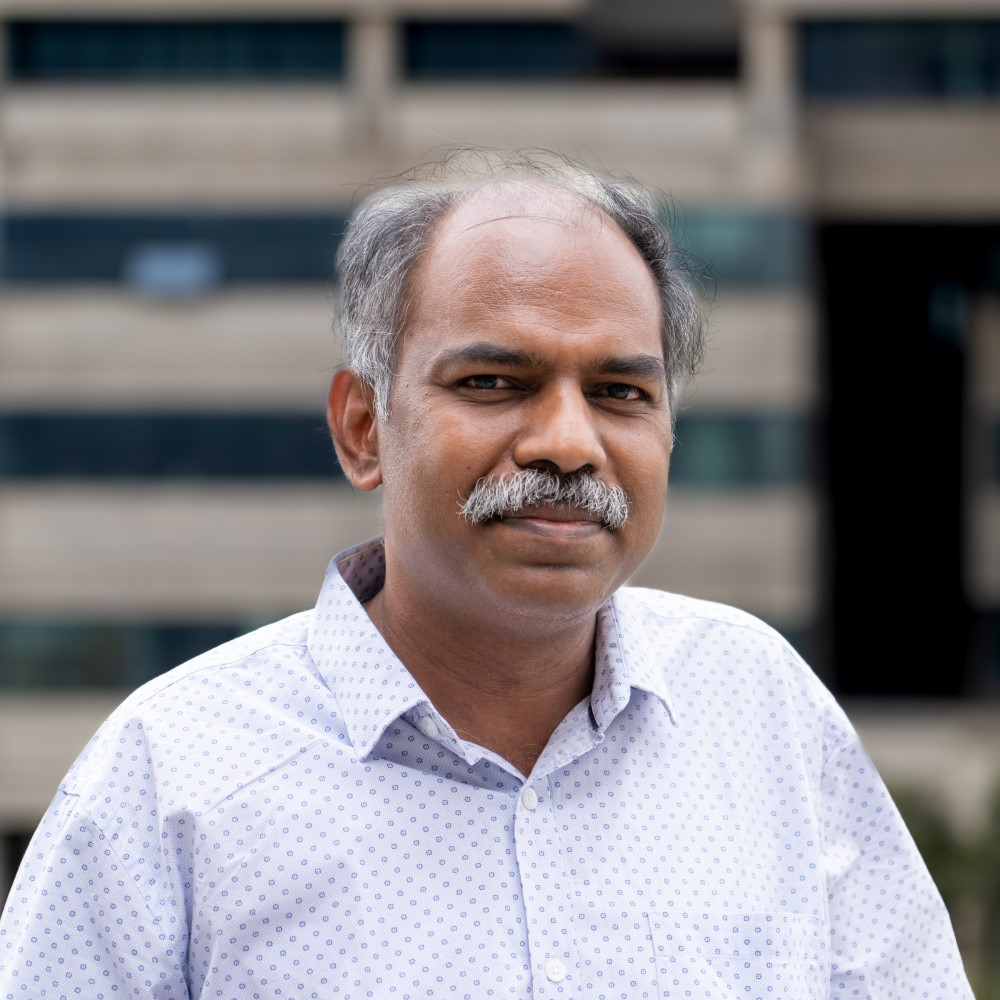
Antony Franklin is an Associate Professor and Head of the Department of Computer Science and Engineering at the Indian Institute of Technology Hyderabad (IITH), India. He leads the Networked Wireless Systems (NeWS) Lab and is actively involved in 5G research, wireless networks, and cybersecurity. He earned his Ph.D. from IIT Madras in 2010. Education: Ph.D. in Computer Science and Engineering, IIT Madras, 2010 Research Interests: His research spans wireless networks , 5G systems , mobile edge computing , low-latency transport protocols , and cybersecurity . He focuses on next-generation mobile systems, especially 5G, aiming to meet the demands of ultra-low latency, high data rates, and quality of experience for services like IoT, autonomous driving, and VR. He has been involved in developing testbeds and prototypes to validate real-world performance of 5G technologies, including network slicing, LTE-WiFi integration, and edge computing. Scientific Awards: Best Academic Demo Award, IEEE COMSNETS 2018 Second Best Paper Award, IEEE ANTS 2017 Grants & Projects: Network Slice Life-cycle Management for 5G Mobile Networks – SPARC, MHRD (2019–2021) DNS/IPv6 for IoT Security – NASSCOM (2018–2019) CCRAN: Energy Efficiency in Cloud RAN – Intel India (2018–2021) End-to-End 5G Test-Bed – DoT, GoI (2018–2021) M2SMART Smart Cities – SATREPS (2018–2023) Ultra-Reliable Low Latency Protocols – STINT, Sweden (2017–2018) Low Latency 5G Protocols – SERB ECR (2016–2019) Lab & Team: He leads the NeWS Lab (Networked Wireless Systems) at IITH, which focuses on 5G, wireless networks, and IoT systems. The lab is actively involved in developing real-world testbeds and publishing in top-tier conferences and journals.
Jon M. Peha is a Full Professor in the Department of Engineering and Public Policy and the Department of Electrical and Computer Engineering at Carnegie Mellon University's College of Engineering. He serves as Founder and Director of the Center for Executive Education in Technology Policy (CEE-TP) and maintains affiliations with the CyLab Security and Privacy Institute and the Information Networking Institute. His career uniquely bridges government service (as FCC Chief Technologist, White House OSTP Assistant Director, and congressional advisor), industry leadership (as CTO for three tech startups), and academic research. Education: Ph.D. in Electrical Engineering, Stanford University (1991) M.S. in Electrical Engineering, Stanford University (1986) B.S. in Electrical Engineering and Computer Science, Brown University (1984) Peha's research spans the technical and policy dimensions of information networks, with particular focus on spectrum management, broadband Internet architecture, wireless communications, cybersecurity, and communications for emergency response. His work integrates engineering principles with economic and regulatory analysis to address real-world challenges in telecommunications infrastructure. Current projects examine connected vehicle communications, spectrum sharing models, and consumer-centric broadband labeling systems that emerged from his large-scale user studies. His research publications demonstrate consistent leadership in both technical innovation and policy analysis, with recent work addressing satellite interference mitigation, V2X communications, and pandemic-era internet performance. The breadth of his scholarship reflects his unique position at the intersection of engineering practice and policy formulation. Scientific Awards: IEEE Fellow AAAS Fellow FCC Excellence in Engineering Award IEEE Communications Society TCCN Publication Award Brown Engineering Medal AAAS Featured Science and Technology Policy Fellow (40@40) Peha actively engages with policymakers through congressional testimony, FCC consultation, and White House advisory roles. His government service has directly informed his academic work on spectrum policy, network neutrality, and public safety communications. He has supervised numerous graduate students across EPP, ECE, and INI programs, with research spanning vehicular networks, spectrum sharing, and emergency communications systems. As Director of CEE-TP, he leads executive education initiatives that bridge technical expertise and policy decision-making. His work with CyLab focuses on cybersecurity and privacy challenges in broadband systems and connected vehicles. Current projects include developing cost-effective spectrum sharing models for intelligent transportation systems and analyzing the economic implications of multi-network access architectures in 5G networks.
Amalia Miliou is a Professor in the Department of Informatics at Aristotle University of Thessaloniki, where she has served since 1993, progressing through the academic ranks from Lecturer to her current position as Professor since 2022. She holds a PhD in Electrical and Computer Engineering from the University of Florida (1991) with specialization in Optoelectronics, following an MSc in the same field (1988) and a Physics degree from Aristotle University (1985). Her research focuses on optical communications systems, with specific expertise in optoelectronic circuits simulation, optical switching, optical RAM development, converged fiber-wireless technology, 5G networks, and secure optical communications using chaos theory. Over her career, she has supervised numerous graduate students across these research areas, with thesis topics spanning optical memory systems, fiber-wireless integration, chaos-based secure communications, and advanced optical network architectures. Her recent publications (2021-2024) demonstrate a strong focus on next-generation optical networking solutions for 5G/6G applications, including fiber-wireless convergence, optical memory systems for high-speed networks, and innovative approaches to optical signal processing. Her work bridges fundamental photonics research with practical telecommunications applications, particularly in addressing the bandwidth and latency challenges of modern mobile networks. Professor Miliou has served as the Coordinator of the LLP-ERASMUS student exchange program at the Department of Informatics since 1997 and has held various administrative positions including membership in the University Senate and General Assembly. She has led and participated in numerous research projects, most recently focusing on technological improvements for 5G systems through optical-wireless network development (2019-2021), next-generation healthcare applications leveraging 6G networks (2023-2027), and photonic integrated circuits for random access memory (2012-2015).
Yoon Chae is an Assistant Professor in the Department of Computer Science and Engineering at the University of Texas at Arlington (UTA), joining the faculty in January 2025. His work bridges wireless networking and low-power IoT systems, with a focus on millimeter-wave technologies and backscatter communication. Education: PhD in Computer Science, George Mason University, 2024 MS in Computer Science, George Mason University, 2022 MS in Electrical and Computer Engineering, University of Minnesota - Twin Cities, 2012 BS in Electrical Engineering, Yonsei University, 2012 His research centers on enabling reliable and high-speed mmWave backscatter by leveraging the unique properties of millimeter waves, with applications in vehicular networks, IoT, and spectrum efficiency. He has pioneered techniques using commodity WiFi and FMCW radar for backscatter communication, significantly advancing the field of low-power wireless systems. The recent publications highlight a strong trend in utilizing commodity hardware (like WiFi and radar) for novel wireless sensing and communication. His work spans mmWave backscatter, vehicular networking using street view imagery, and interference management between ZigBee and WiFi. The research demonstrates innovation in spectrum reuse, low-power design, and integration of real-world data for network optimization. Scientific Awards: Best Paper Award, ACM MobiSys 2022 SIGMOBILE Research Highlight, 2023 Yoon Chae actively contributes to the academic community as a reviewer for top journals including IEEE Transactions on Mobile Computing, IEEE/ACM Transactions on Networking, and ACM Transactions on IoT, as well as conferences like INFOCOM, MobiCom, and SenSys. He serves on program committees and has held leadership roles such as Registration Co-chair for ICNP'25 and Artifact Evaluation Committee for MobiSys'25. He is currently building a research lab and seeking motivated Ph.D. students and research interns to join his team. He has been involved in collaborative projects with Prof. Parth Pathak (George Mason) and Prof. Song Min Kim (KAIST), and his work has been presented at major venues including NSDI, MobiCom, MobiSys, and SenSys. His lab focuses on experimental systems design, wireless sensing, and next-generation IoT networking.
Vijay K. Shah is an Assistant Professor in the Electrical and Computer Engineering Department at North Carolina State University, leading the NextG Wireless Lab. His research focuses on advancing wireless communication and network technologies for beyond 5G/6G systems, including O-RAN architecture, spectrum management, and AI-driven network optimization. Education: Ph.D. in Computer Science, University of Kentucky (2019) Bachelor's in Computer Science and Engineering, National Institute of Technology, Durgapur (2013) Research emphasizes open radio access networks (O-RAN), mmWave testbeds, and cross-layer optimization. Recent work highlights include ORAN-Bench-13K (LLM benchmarking), ZT-RIC (zero-trust security frameworks), and Milli-O-RAN (reconfigurable mmWave networks). His contributions span O-RAN applications (xApps/rApps), satellite-terrestrial coexistence, and AI-driven positioning systems. Experimental validations include 3GPP-compliant 5G positioning and adversarial attack defenses. Publications reflect expertise in O-RAN architecture evolution, spectrum policy tools (ASCENT), and UAV-based network coordination (GLIDE). Current projects explore LEO satellite constellations and resilient disaster response networks. Labs/Teams: Head of the NextG Wireless Lab at NC State, focusing on prototype development in O-RAN, 6G, and secure AI-driven networks.
Dr. Ying He is a Senior Lecturer at the School of Electrical and Data Engineering, University of Technology Sydney (UTS). Her research focuses on wireless communication networks, particularly integrating machine learning with satellite and terrestrial systems. She holds a BEng from Beijing University of Posts and Telecommunications (2009) and a PhD from UTS (2017). Prior to her academic role, she worked on TD-LTE chip design at the Chinese Academy of Sciences. Affiliations : Faculty of Engineering and Information Technology Global Big Data Technologies Centre (GBDTC) Education : BEng in Telecommunications Engineering, Beijing University of Posts and Telecommunications (2009) PhD in Engineering (Telecommunications), UTS (2017) Her research interests include satellite communication (GEO-LEO integration), spectrum sharing, vehicular communication, and applying machine learning to physical layer algorithms. Notable contributions include optimizing beam design in LEO networks and developing secure IoT systems. She supervises PhD/Master’s students and teaches courses like CCNA and capstone projects. Funded projects span satellite networks, IoT security, and supply chain tracking. Recent grants include SmartSat CRC initiatives and collaborations with industry partners like Intel and Ericsson. Her work addresses challenges in 6G, UAV-enabled computing, and resilient quantum algorithms.
Dr. Aryan Kaushik is an Associate Professor at Manchester Metropolitan University (Manchester Met), UK, since 2024, affiliated with the Department of Computing and Mathematics. He also serves as Chief Advisor at RakFort, Ireland, since 2025. Previously, he was an Assistant Professor (senior grade) at the University of Sussex, UK, from 2021-24, and held roles as Recruitment and Admissions Tutor and Academic Advisor there. His academic journey includes a Research Fellow position at University College London (2020-21), and a PhD in Communications Engineering from the University of Edinburgh (2019). He holds an MSc in Telecommunications from the Hong Kong University of Science and Technology (2015). Education: PhD in Communications Engineering, University of Edinburgh (2019) MSc in Telecommunications, Hong Kong University of Science and Technology (2015) Professional Roles: Chair of IEEE ComSoc ETI on Electromagnetic Signal and Information Theory (since 2024) Core Member of IEEE P1955 Standard on 6G-Empowering Robotics Editorial roles across multiple IEEE journals and conferences His research focuses on 5G/6G wireless communications , integrated sensing and communications , reconfigurable holographic surfaces , non-terrestrial networks , and AI-driven network optimization . He has led UKRI-funded projects on topics like AI-assisted ISAC and Net Zero 6G, and collaborates globally with institutions like IIIT-Delhi, University of Bologna, and Imperial College London. Dr. Kaushik has received awards including the Top Editor Award 2025 (IEEE IoT Magazine), Best Editor Awards 2023-2024 (IEEE Open Journal), and was shortlisted for teaching excellence awards at Sussex. He actively contributes to standardization, serves on over 14 IEEE conference committees, and has delivered 110+ keynote/tutorial talks worldwide. His leadership extends to roles like TPC Co-Chair at IEEE ICC 2025 and Chair of Special Interest Groups on AI-driven Non-Terrestrial Networks and Fluid Antenna Systems.
Zicheng Chi is an Assistant Professor in the Department of Electrical Engineering and Computer Science at Cleveland State University. His research focuses on Internet of Things (IoT) and cyber-physical systems, with expertise in wireless networks, embedded systems, and RF sensing. Ph.D. in Computer Engineering, University of Maryland, Baltimore County (2020) M.E. in Microelectronics and Solid Electronics, South China University of Technology (2011) B.S. in Electronic Information Science and Technology, Lanzhou University (2007) Chi's work explores fundamental networking and energy challenges in IoT, including LTE backscatter systems, cross-technology communication protocols, and interference-negligible RF sensing. His research bridges communication efficiency and security in heterogeneous IoT environments. Recent publications demonstrate expertise in high-throughput backscatter (2024), secure asymmetric communication (2024), vehicle-to-vehicle perception (2023), and tactical IoT protocols (2022). His work spans wireless network optimization, security mechanisms, and energy-efficient system design. Best Paper Award Candidate, SenSys 2019 Best Paper Runner-up, SenSys 2018 Chi teaches graduate and undergraduate courses in computer networks, data communication, and system programming. His NSF-funded SWIFT project investigates spectrum coexistence in IoT systems.
Professor Dominic O'Brien is a Professor of Engineering Science at the University of Oxford and Senior Research Fellow at Balliol College. He serves as Director of the UK National Hub in Quantum Computing and Simulation. His research focuses on optoelectronics, optical wireless communications, and quantum key distribution. He leads the optical communications group and has authored over 200 publications in these areas. His work emphasizes high-speed free-space optical systems, UV-based secure communication, and beam-steering technologies. Education: MA and PhD from the University of Cambridge, followed by a DPhil from the University of Oxford. His research interests include quantum networks, photonics, and energy-efficient optical systems. Notable projects include handheld low-cost quantum key distribution systems and terabit-per-second fiber-wireless links. He collaborates on initiatives like the WORTECS project for virtual reality applications using optical wireless. Publications span topics from UV solar-blind OWC to liquid crystal beam steering. His work bridges academic and industrial applications, addressing challenges in both classical and quantum communication systems. He contributes to standards for visible light communications and next-generation wireless infrastructure.
Mahbubur Rahman is an Assistant Professor in the Department of Computer Science at Queens College and the Graduate Center, City University of New York (CUNY). He earned his PhD in Computer Science from Wayne State University in 2020 and a BSc in Computer Science & Engineering from Bangladesh University of Engineering and Technology in 2012.
Ingrid Moerman is a part-time Professor at Ghent University and a staff member at the Internet Technology and Data Science Lab (IDLab), a core research group of imec embedded within Ghent University and the University of Antwerp. She coordinates mobile and wireless networking research and leads a team of over 30 researchers at Ghent University, with extensive involvement in European and national funding initiatives. She received her Electrical Engineering degree (1987) and Ph.D. (1992) from Ghent University. Her research spans collaborative networks, cognitive radio, software-defined radio, IoT, LPWAN, and high-density wireless access, emphasizing experimentally-supported development of next-generation wireless systems with practical implementations in spectrum management and real-time control. Recent publications (2024-2025) reveal a strong pivot toward AI-integrated wireless networking, featuring OFDMA scheduling innovations, Wi-Fi 6/7 interference mitigation, and time-sensitive networking for industrial applications. Key trends include 5G/6G convergence, vehicular communication enhancements, and digital twin frameworks for network observability, reflecting her focus on mission-critical industrial use cases. Her accolades include: 9 Best Paper Awards 2 FWO Prizes (Research Foundation - Flanders) IMEC Prize of Excellence 2001 MSc Thesis Award (as promoter) Best Demo/Exhibit Award at ICT 2013 DARPA Spectrum Collaboration Challenge Prize ($750,000) She has coordinated major EU projects (FP7/H2020: CREW, WiSHFUL, eWINE, ORCA) with industry partners, securing substantial funding for experimental wireless research. Her grant portfolio emphasizes collaborative innovation in spectrum sharing and neutral-host architectures for multi-operator environments. At IDLab, she directs advanced wireless testbeds supporting real-world validation of technologies like openwifi and White Rabbit, with active experimentation in time-sensitive networking and spectrum collaboration for industrial IoT deployments.
Scott F. Midkiff is a Professor in the Bradley Department of Electrical and Computer Engineering at Virginia Tech. His research focuses on networking, telecommunications, and cybersecurity, with particular emphasis on 5G, O-RAN, edge cloud computing, and interference management in wireless networks. He holds a Ph.D. from Duke University (1985), an M.S.E.E. from Stanford University (1980), and a B.S.E. from Duke University (1979). Midkiff’s work spans theoretical and applied domains, including stochastic optimization for RAN intelligent controllers, network slicing, and wireless control plane design. He has contributed to advancements in interference alignment, MIMO systems, and secure spectrum sharing. His awards include the ORBIE Award and Capital CIO of the Year. Awards: ORBIE Award, Capital CIO of the Year Service: Member at Large, IEEE Committee on Engineering Accreditation Activities; ABET Program Evaluator His research group explores cutting-edge topics like software-defined cellular networks, distributed scheduling in underwater networks, and energy-efficient routing in sensor networks. Midkiff is affiliated with Virginia Tech’s research initiatives in pervasive computing and sustainable wireless systems.
Eva LAGUNAS is an Assistant Professor and Deputy-Head of the SIGCOM research group at the Interdisciplinary Centre for Security, Reliability and Trust (SnT) , University of Luxembourg. Her expertise lies in Non-Terrestrial Communication Systems , focusing on radio resource management and wireless networks optimization. She holds a Ph.D. and M.Sc. in Telecommunications Engineering from the Polytechnic University of Catalonia (UPC), Barcelona. Key Affiliations & Roles: Principal Investigator (PI) of the FNR CORE project VARRAY-5G (Vehicular Phase Array Antennas for 5G) PI of the CHIST-ERA project SHIELD (Secure Distributed Learning & Smart Contract Ecosystems) Co-PI in the ESA ARTES-funded NeuroSat project (Neuromorphic Processors for SatCom) Deputy-Head of SIGCOM group and active contributor to the TelecomAI-Lab (AI-driven satellite communication) Event organizer: Special Session on ML for NTN at IEEE ICMLCN 2025, Track Chair at EUCNC 2025 Research Interests: Non-Terrestrial Networks (NTN), 6G integration, satellite-ground network convergence, AI-driven optimization, reconfigurable intelligent surfaces (RIS), and neuromorphic computing for onboard processing. She also leads efforts in vehicular communications and energy-efficient satellite payloads. Recent Achievements: 2025: Elected to the EURASIP Board of Directors 2024: Listed in the 100 Brilliant and Inspiring Women in 6G list 2023: Co-authored NeuroSat project's IEEE publication on neuromorphic computing for SatCom Labs & Projects: TelecomAI-Lab : Developing neuromorphic hardware (e.g., Intel Loihi2, BrainChip AKIDA) for satellite applications ESA NeuroSat : Pioneering neuromorphic processors for onboard SatCom resource management Grants & Funding: Secured Luxembourg National Research Fund (FNR) and CHIST-ERA grants for projects like VARRAY-5G and SHIELD, totaling over €2M in research investment.