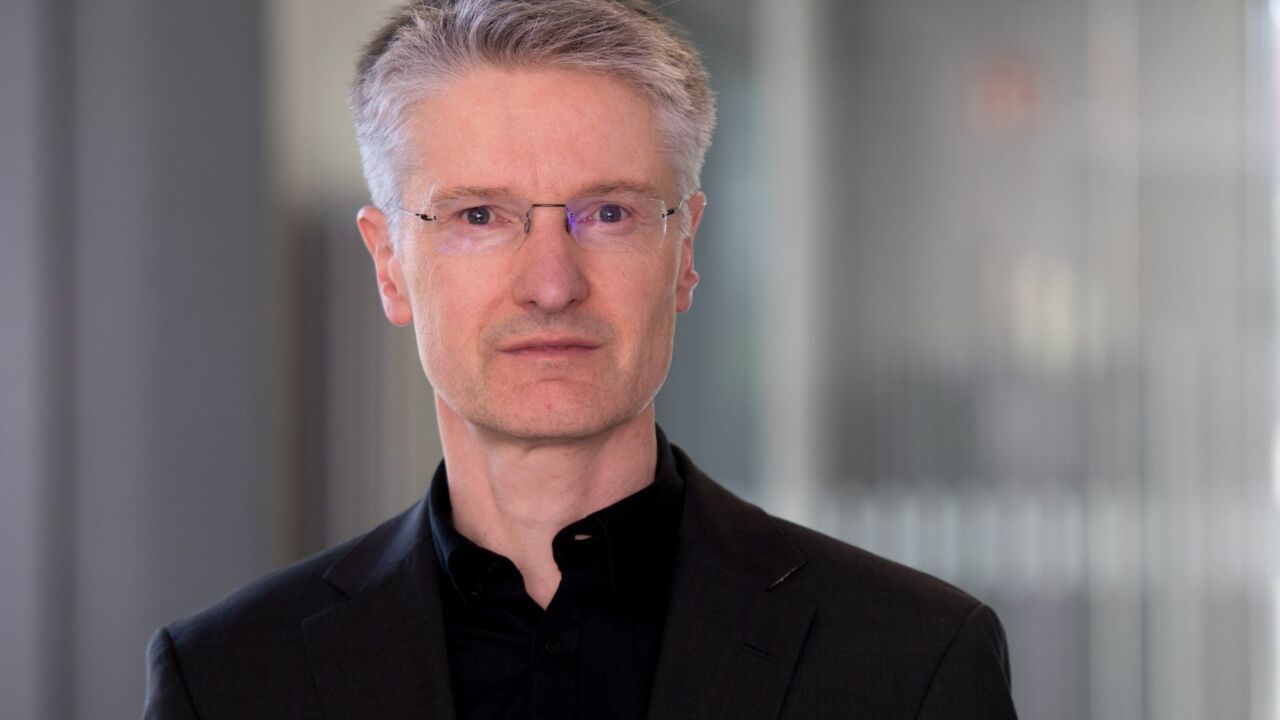
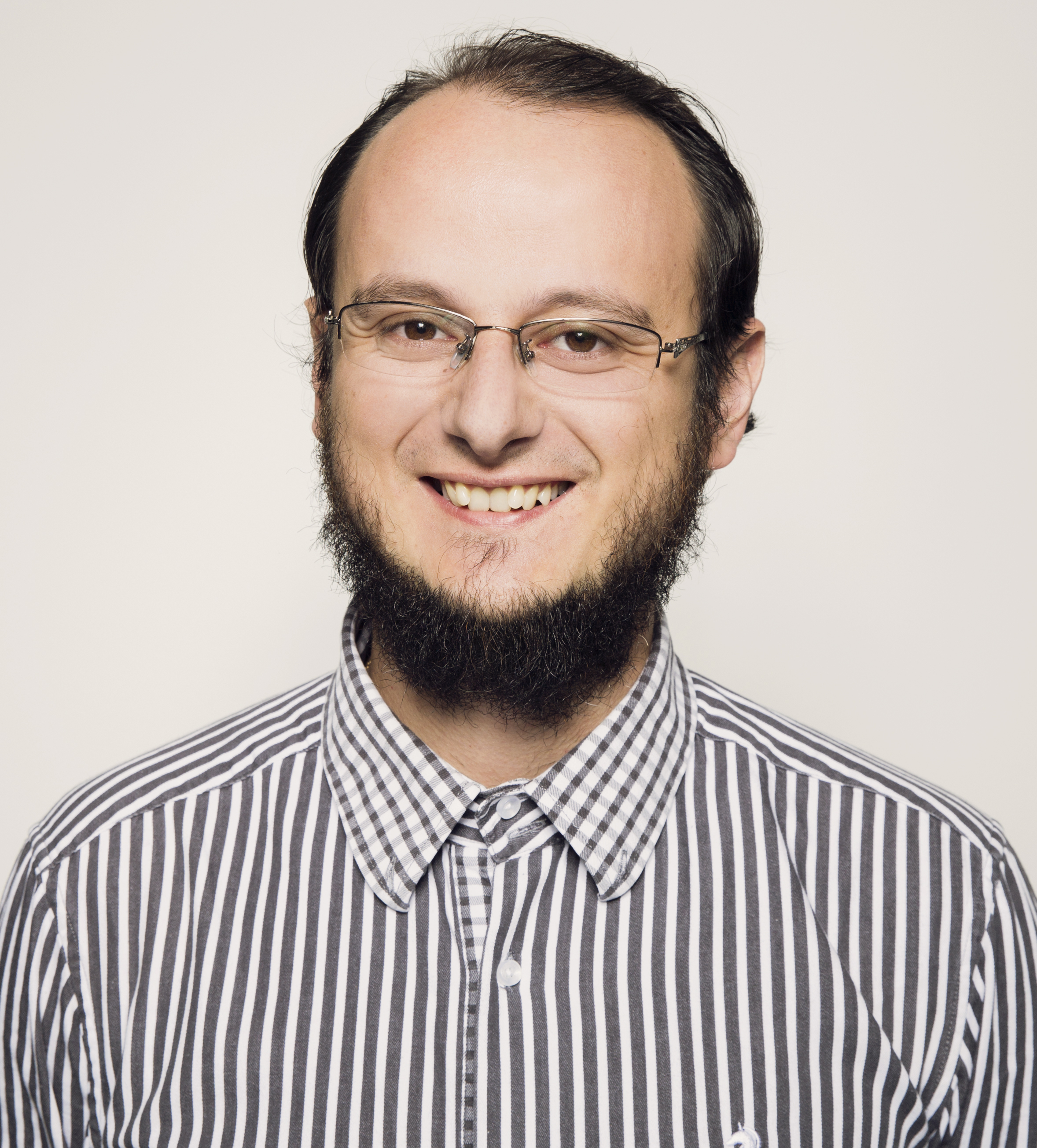
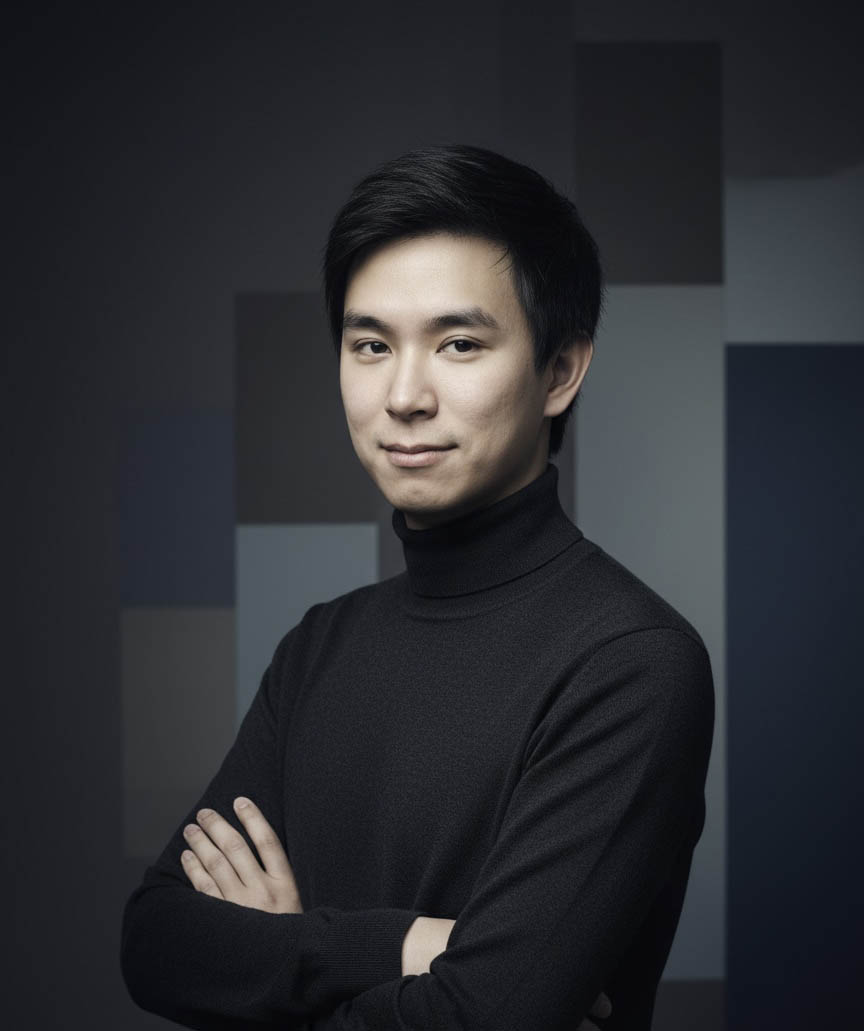
Prof. Dr. Wolfgang Funk is a full-time Professor in the Business Information Systems program at the Faculty of Business, Baden-Württemberg Cooperative State University Villingen-Schwenningen. With a doctorate in Computer Science from Technische Universität Darmstadt and extensive experience in applied research, he specializes in software engineering, digital watermarking, and biometric recognition systems. PhD in Engineering from TU Darmstadt (2008) Diploma in Physics from University of Würzburg (1994) His research focuses on: Digital watermarking techniques for multimedia data Biometric system security and liveness detection Software engineering for business applications Image compression algorithms in recognition systems Publications demonstrate expertise in: 3D CAD model watermarking Multimedia security frameworks MPEG-4 compression impacts Biometric anti-spoofing methods Scientific achievements include: Joseph von Fraunhofer Prize (1998) Three granted European patents in digital watermarking and biometric systems
Lucy M. Aplin is Professor of Cognitive and Cultural Ecology at the University of Zurich (Department of Evolutionary Biology & Environmental Studies) and Associate Professor at the Australian National University (Research School of Biology). She heads the Cognitive and Cultural Ecology (CCE) Group, leads the ERC-funded project “CULTURES ADAPT”, and directs the citizen-science initiative “Clever Cockies” on sulphur-crested cockatoos. Combining field experiments and automated tracking, she studies how cognition, social networks and cultural evolution shape animal behaviour—especially in parrots and parids. Education PhD (2014) – University of Oxford & Australian National University BSc (Hons, First Class, 2009) – Australian National University LLB (2003-2008) – Australian National University Research Interests Lucy’s research investigates how new behaviours emerge, spread and persist in wild animal populations. Her work integrates three core themes: Cognitive Urban Ecology : understanding how cognitive flexibility enables parrots to thrive in cities. Social Networks & Culture : mapping the role of social structure in the diffusion and long-term maintenance of cultural traits. Comparative Cultural Evolution : comparing cultural processes across parrot species and parids to uncover general principles. Methodologically, the lab pioneers automated data-collection tools—GPS tags, microphone backpacks, PIT-tagged puzzle-boxes—and large-scale citizen-science platforms. Publication Trends From 2021-2024, Aplin’s 15 most recent papers reveal accelerating interest in urban animal culture , technological innovation in tracking , and the mechanisms of social learning . Study systems span wild sulphur-crested cockatoos (bin-opening culture), monk parakeets (vocal dialects), and great tits (foraging traditions). Interdisciplinary approaches combine behavioural experiments, social-network analyses, citizen science and open-source hardware development. Awards & Fellowships Christopher Barnard Award for Outstanding Contributions by a New Investigator (2022) Max Planck Society Lise Meitner Tenure-Track Fellowship (2022, declined) National Geographic Explorer (2019) Jasper Loftus-Hills Young Investigator Award, American Society of Naturalists (2015) Junior Research Fellowship, St John's College, University of Oxford (2015) Grants & Supervision Lucy has secured >€1.5 M from the European Research Council (2022-2027 “CULTURES ADAPT”), the Cultural Evolution Society, German Science Foundation (DFG), Israeli Science Foundation, UK NERC, and National Geographic. She currently supervises four PhD students (Fontana, Bolcato, Dorepalli, Rose) and two post-docs (Penndorf, Chimento) across Zurich and Canberra, and mentors numerous Honours & Masters students. Labs & Teams She leads the Cognitive and Cultural Ecology (CCE) Lab , an international team embedded in the University of Zurich and ANU, and collaborates closely with the Max Planck Institute of Animal Behaviour (as Alumna Group Leader) and Centre for the Advanced Study of Collective Behaviour (University of Konstanz).
Cristian-Alexandru Staicu is a tenure-track faculty member at CISPA Helmholtz Center for Information Security in Saarbrücken, Germany. He earned his PhD from the Software Lab group at TU Darmstadt under Michael Pradel's supervision, a Master's from EIT Digital (University of Trento and Twente), and a Bachelor's in Computer Engineering from Politehnica University Timișoara. Research Focus : Systems security at the intersection of software/web security, software engineering, and programming languages Contributions : Empirical studies on JavaScript ecosystems, vulnerability detection in npm/Deno, open-source tool development, and security benchmarks His research group Empirical and Behavioral Security investigates real-world threats through case studies on JavaScript bundling, Deno runtime risks, and prototype pollution vulnerabilities. Recent work includes security analysis of source code models and empirical studies of cross-economic web disparities. Key publication trends include: Security risks in Node.js and Deno ecosystems Automated testing techniques for JavaScript sandboxes and constraints Empirical methodologies applied to web inclusivity and global digital disparities Analysis of type systems and gradual typing security implications Dr. Staicu actively supervises PhD candidates and contributes to open-source security , having uncovered multiple critical vulnerabilities in popular JavaScript packages. His group develops tools like SecBench.js while maintaining strong collaborations across USENIX , IEEE , and ACM venues.
Yushen Zhang is a PostDoctoral researcher at the Technical University of Munich (TUM), working within the Chair of Electronic Design Automation under Professor Ulf Schlichtmann. He earned his Dr.-Ing. degree with summa cum laude distinction in Electrical and Computer Engineering from TUM between 2020-2025, following his Master of Science in Computer Science from the same institution (2017-2020). His research focuses on Microfluidics, Electronic Design Automation, and 3D Printing technologies. Dr. Zhang has developed several innovative platforms including Cloud Columba, an online Microfluidic Large-Scale Integration Chip design automation tool, and has made significant contributions to open-source hardware for microfluidic applications. His work bridges the gap between electronic design automation and microfluidic systems, creating accessible and portable solutions for biochip development. Dr. Zhang's publications demonstrate a clear trend toward making microfluidic technology more accessible through 3D printing, open-source design platforms, and automation tools. His research spans from fundamental microfluidic design principles to practical implementation of low-cost, portable systems with applications in medical diagnostics and biological research. Recent work shows increasing sophistication in multi-layer microfluidic design, reliability testing, and integration with electronic control systems. Special prize COSIMA 2024 3rd prize iCANX Davos Summit 2024 3rd place COSIMA 2023 1st prize iCAN'23 3rd place COSIMA 2022 3rd place TUM Student Video Award 2020 1st place IBM Cloud Award 2019 Hackathon finalist StudySmarter Hackathon at Google Munich 2018 Dr. Zhang actively mentors students, having supervised over 19 theses across Bachelor, Master, and research internship levels. His Cloud Columba project has received significant recognition, including multiple awards in student competitions. He has also secured visiting researcher positions at Santa Clara University, demonstrating international collaboration in his field. Dr. Zhang currently serves as course instructor for the master's course VHDL System Design Laboratory at TUM. His laboratory work focuses on developing integrated microfluidic systems with an emphasis on accessibility and portability. The research group has created several open-source hardware platforms including ColoriSens, a portable color sensor board, and PAMICON, an all-in-one automated microfluidic system. Current work centers on multi-layer 3D-printed microfluidics with precise timing and volumetric control, representing the cutting edge of the field.
Franz Jetzinger is a researcher at the Professorship for Computer Science Education (Lehrstuhl für Informatikdidaktik) at the Technical University of Munich (TUM), working under the direction of Prof. Dr. Tilman Michaeli. He is based at Marsstr. 20-22(2907)/IV, 80335 Munich, with his office in room 2907.04.446. Jetzinger teaches courses in the Computer Science Education program, including "digi4all - Kompetenzen für das Unterrichten in einer digitalen Welt" and "Übung zur Didaktik der Informatik" for both winter and summer semesters of 2024/25 and 2025. His research focuses on several key areas within computer science education, with particular emphasis on Artificial Intelligence and Machine Learning education for K-12 settings. He has developed and delivered professional development programs for computer science teachers, especially regarding AI integration into compulsory computer science classrooms. His work spans teacher training, curriculum development, and practical implementation strategies for bringing AI education to secondary school levels. Jetzinger's publications reveal a strong focus on AI education in K-12 settings, with multiple publications in 2023-2025 addressing scalable professional development for teachers and evidence-based approaches to teaching AI. His work also includes substantial contributions to German computer science textbooks for Bavarian high schools, covering topics from object-oriented modeling to AI education. Developed professional development programs for AI education Contributed to multiple computer science textbooks for Bavarian high schools Conducted research on debugging processes in learning environments Participated in the TRR419 SHARP research project Worked on the "Von Bits zu QuBits" quantum computing education initiative Through his work with the Bavarian Ministry of Education and various workshops, Jetzinger has been instrumental in implementing AI education across Bavarian schools, delivering numerous training sessions throughout 2024 and 2025 on both basic and advanced AI topics for teachers.
Christine Morin is a Professor at INRIA - Institut National de Recherche en Informatique et en Automatique, focusing on advanced research topics in cloud computing, distributed systems, and high-performance computing. Fields of Research: Cloud Computing, Distributed Systems, Grid Computing, Virtualization, Parallel Computing, High Performance Computing, Fault Tolerance, Resource Management, Operating Systems, Autonomic Computing, Energy Efficiency Long-term Research Contributions: SLA management in cloud environments, self-adaptable systems, energy-efficient computing, distributed application deployment Her work has been particularly influential in the areas of cloud security, SLA verification, fault tolerance mechanisms, and energy-efficient computing. She has pioneered approaches to self-adaptable security monitoring in IaaS clouds and developed innovative frameworks for cloud bursting PaaS environments. Christine Morin has published extensively on topics related to: Autonomic cloud management systems like Snooze and Merkat Energy-aware resource allocation and consumption models Message logging and fault tolerance protocols Distributed application deployment under SLA constraints Virtual organization support in grid operating systems Her research has contributed significantly to the evolution of cloud computing infrastructure, particularly in the areas of security monitoring, resource management, and energy efficiency.
Mira Mezini is a Professor of Computer Science at Technical University of Darmstadt, where she leads the Software Technology Group. She holds a LOEWE Professorship and serves as founding co-director of hessian.AI, the Hessian Center for Artificial Intelligence, and as a board member of ATHENE, the national research center for applied cybersecurity. Previously, she served as Dean of Computer Science (2013-2014) and in Vice President roles (2014-2019) at TU Darmstadt. She has held visiting professorships at Lancaster University (UK) and Università della Svizzera Italiana (Switzerland). Her research focuses on three central areas: programming systems for distributed software and AI, automated software analysis, and fundamental code models. With over 200 peer-reviewed publications in top venues, Mezini is particularly renowned for her pioneering work on aspect-oriented programming and breakthrough contributions to automated code completion. Her work has evolved from early innovations in modularization and software product lines to cutting-edge research integrating AI with programming systems. Her recent publications reveal a strong trend toward integrating artificial intelligence with traditional programming systems, with significant work on code language models, static analysis techniques, and programming models for distributed applications. The research spans foundational programming language concepts while addressing practical challenges in software development, particularly in the context of AI-assisted programming tools that have become increasingly important in the industry. IBM Eclipse Innovation Award (2005, 2006) Google Research Award (2017) Horst Görtz Foundation's IT Security Award (2nd prize, 2014) ERC Advanced Grant (2012) ACM Fellow (2024) Dahl-Nygaard Prize (2025) Mezini has chaired major conferences in software engineering and programming languages (ECOOP, OOPSLA, FSE, and ICSE) and has served on numerous influential committees, including the Computer Science Panel of the German Research Foundation (DFG) and the Computer Science Consolidator Grant Panel of the European Research Council (ERC). She is currently a member of the ERC Scientific Council's selection committee and the DFG Senate. As co-spokesperson of the Excellence Cluster 'Reasonable Artificial Intelligence,' she leads significant research initiatives at the intersection of AI and software engineering. Her Software Technology Group at TU Darmstadt functions as a hub for innovative research in programming languages and software engineering, with strong connections to both theoretical foundations and practical applications. The group maintains active collaborations with industry partners and other academic institutions, particularly through hessian.AI and ATHENE, focusing on translating research into real-world impact in areas like secure software development and AI-assisted programming tools.
Prof. Dr. Jörn Eichler is a Professor in the Department of Computer Science at the Department of Mathematics and Computer Science, Freie Universität Berlin, leading the Secure Systems Engineering working group. His research focuses on risk assessments, protection concepts, security tests, and optimization of design processes for attack-resistant software systems throughout their lifecycle. His primary research interests span cybersecurity, risk assessment, automotive security, software security, and security engineering. He develops methodologies for modeling security risk assessments, streamlining ISO 21434 compliance, and implementing agile threat assessment frameworks. His work emphasizes practical applications in automotive systems, critical infrastructure, and business process security, with strong contributions to model-based security engineering and vulnerability prioritization. Analysis of his 15 most recent publications (2015-2023) reveals a dominant focus on automotive security risk assessment, particularly through ISO 21434 standardization. Key trends include modular risk assessment frameworks, threat modeling integration in agile development, and security goal validation techniques. His research consistently bridges theoretical modeling with industrial applications, especially in vehicle systems and critical infrastructure protection. Scientific awards: No scientific awards, fellowships, or medals are mentioned in the provided text. Prof. Eichler actively supervises student theses as evidenced by available, awarded, and completed theses listings in the Secure Systems Engineering group. Specific student names and grant details are not provided in the source material, though his publications indicate involvement in government-funded projects like ITS|KRITIS for critical infrastructure security. He directs the Secure Systems Engineering working group, which conducts applied research on security risk assessments, penetration testing methodologies, and lifecycle security optimization for software-based systems, with specialized focus on automotive and critical infrastructure domains.
Dr. Khan Reaz is a Researcher in the Cybersecurity and AI group within the Department of Mathematics and Computer Science at Freie Universität Berlin. He has been with the university since August 2016, contributing to numerous research projects including UltraSec, PHY2APP, ONE5G, SecureFog, and AutoKEY. His work focuses on building quantum-ready security solutions with expertise spanning post-quantum cryptography, blockchain technologies, and Internet of Things security. Dr. Reaz holds a Dr. rer. nat. in Computer Science from Freie Universität Berlin, a Double M.Sc. in Information and Communication Technology and Innovation and Entrepreneurship from Technische Universität Berlin and Sorbonne Université, and a B.Sc. in Electronic and Telecommunication Engineering from North South University. He also participated in an exchange study in the USA as a recipient of the Global UGRAD scholarship administered by the U.S. Department of State. His research interests center around cybersecurity architecture with a particular focus on post-quantum privacy and security, next-generation communication networks, blockchain applications, Internet of Things security, formal verification of protocols, and ontology. Dr. Reaz designs security architectures that anticipate threats in the post-quantum world, bridging digital identity, quantum-safe protocols, and AI-powered security agents to build systems that defend, adapt, and scale under next-generation threat models. Dr. Reaz's publication record demonstrates consistent contributions to the fields of wireless security, blockchain applications for IoT, formal verification of security protocols, and UWB-based security solutions. His work shows a clear progression from foundational signal processing and direction of arrival algorithms to more applied cybersecurity solutions focusing on practical implementations for emerging technologies. CISPA Helmholtz-Zentrum für Informationssicherheit travel-grant (2023) Master scholarship from European Institute of Innovation & Technology (2013-2015) Fraunhofer FOKUS grant for Intelligent Services for Digital Cities (2013) Microsoft Student Partner award for outstanding contribution (2011) Runner-up at the Commercial Idea Contest, Grameenphone Ltd. (2010) ITU Youth Education Scheme grant for Bachelor study (2008-2011) Selected for Asia Youth Camp, South Korea (2008) Global UGRAD Exchange Program participant, U.S. Department of State (2007) Dr. Reaz has been actively involved in multiple European cybersecurity projects including AUTOKEY, SecureFog, PHY2APP, and UltraSec, contributing to advancements in privacy-preserving authentication, secure device onboarding, and post-quantum readiness. He participates in global discussions through NIST activities and EU-level working groups such as the 5G and 6G Security Working Groups. He regularly presents at top-ranked conferences including USENIX, ACM MobiSys, and IEEE GLOBECOM. As part of the Cybersecurity & AI Lab at Freie Universität Berlin, Dr. Reaz works within a team that focuses on AI, deep learning, and fundamental information theory for security, privacy, and identity with applications in IoT, 6G, blockchains, post-quantum codes, and deep fake detection.
Lawrence Dean, M.Sc., is a Researcher at the Fraunhofer Institute for Applied and Integrated Security (AISEC) , affiliated with the Department of Mathematics and Computer Science under the Secure Software Engineering (SSE) working group. Based in Berlin, Germany, he contributes to initiatives like the Center for Trustworthy AI and collaborates on projects such as IDApp2 , FLOQI , and SENSITIVE AI . His research focuses on information security and secure software engineering , with an emphasis on applied solutions for mobile systems and cybersecurity frameworks. While specific publications and awards are not detailed in the provided text, his work aligns with Fraunhofer AISEC's mission to develop privacy-preserving and trustworthy AI technologies. Contact details include his office at Breite Straße 12, Room 309, Berlin, and his email: lawrence.dean@aisec.fraunhofer.de .
Prof. Dr. Peter Birkner is affiliated with the Saarland University of Applied Sciences as a Professor in the College of Engineering. His work focuses on cryptography and secure programming, particularly in elliptic curve cryptography and IoT security. He teaches courses such as Mathematics 1-3, Discrete Mathematics (Master), Computer Science 2, and advanced topics like secure home networks for IoT applications and time server development. Research Interests: Cryptographic protocols, elliptic curve optimization, secure programming, and mathematical foundations of cryptography. Projects: Supervised master's and project work on cryptographic implementations, IoT security, and simulation techniques. Email: Peter.Birkner@htwsaar.de Publications highlight his contributions to elliptic curve cryptography, Edwards curves, and efficient divisor class halving algorithms applied to binary and low-genus curves. His work bridges theoretical mathematics with practical cryptographic implementations. Advising Philosophy: Emphasizes strict adherence to deadlines and personal responsibility in academic and professional development, as evidenced by his detailed guidelines on exam preparation and organizational policies.
Dr. Moritz Joseph serves as Professor and Chair of Software for Systems on Silicon at RWTH Aachen University's School of Electrical Engineering and Information Technology. His research group operates within the Institute for Communication Engineering (ICE), focusing on cutting-edge hardware architectures for next-generation computing systems. The chair maintains laboratory facilities in the ICT Cube 1 building at Kopernikusstr. 16 in Aachen, Germany. Professor Joseph's research spans Computing-in-Memory architectures , Resistive RAM technologies , and neuromorphic computing systems . His work addresses critical challenges in hardware acceleration for deep learning, with particular emphasis on reliability, security, and energy efficiency of novel memory-centric computing paradigms. His research bridges computer architecture, hardware security, and machine learning acceleration. Analysis of his recent publications reveals a strong focus on RRAM-based compute-in-memory systems, with increasing attention to security implications of thermal effects and side-channel attacks. His work demonstrates progression from fundamental memory characterization to system-level integration and security analysis, showing consistent innovation in memory-centric computing architectures over the past five years. Professor Joseph actively contributes to the development of simulation frameworks and evaluation methodologies for emerging memory technologies, as evidenced by his work on platforms like CIM-Explorer, Ratatoskr, and gem5 extensions. His research has significant implications for energy-efficient AI hardware and secure computing systems.
Michael Menth is a Professor at the Department of Computer Science, University of Tübingen, specializing in communication networks. His work bridges theoretical and applied research in network resilience, software-defined networking (SDN), and time-sensitive networking (TSN). University: University of Tübingen Department: Computer Science Research Interests: Network security, P4 programming, multicast protocols, and congestion control. Recent publications focus on advancements in SDN, TSN, and network security. His team has developed tools like P4TG for high-speed traffic generation and SENSOR for flow monitoring. Key projects include BIER-TE for multicast optimization and OIDC² for secure authentication. His research trends emphasize stateless network architectures, machine learning integration for network management, and automotive/E/E system softwarization. Collaborative work spans eHealth platforms like SSTeP-KiZ and security frameworks for industrial networks. Publications from 2022-2025 demonstrate technical depth in P4-based implementations, TSN scheduling, and resilient multicast protocols. While no explicit awards are listed, his extensive RFC contributions (e.g., RFC 5696, RFC 9262) highlight industry-standard impact.
Prof. Wilhelm Stork is a Professor at the Department of Electrical Engineering and Information Technology (ETIT) at the Karlsruhe Institute of Technology (KIT). His research focuses on microsystems technology, optics, and the application of artificial intelligence in healthcare and automotive systems. He leads projects in holographic systems, sensor technology, and decentralized health data management. His work spans automotive camera systems, medical decision support systems, and innovative dementia interventions. Education details are not explicitly provided in the text, but his academic role suggests a doctoral background in natural sciences (Dr. rer. nat.). Research Interests: Development of holographic optical elements and augmented reality systems AI-driven healthcare applications including medical imaging, diagnostics, and patient data management Sensor systems optimization for automotive and environmental monitoring Blockchain-based solutions for health data sovereignty and security Recent publications emphasize AI in healthcare decision-making, holographic recording techniques, and automotive sensor reliability. His work bridges engineering innovation with clinical applications, particularly in dementia prevention and telemedicine. Awards/Funding: No specific awards mentioned, but active in EU-funded projects related to smart grids and medical AI. His lab, ITIV (Institute of Information Processing Technology), collaborates internationally on dementia intervention platforms and digital health solutions. He advises on interdisciplinary projects combining engineering and medicine, such as the 'Model-Driven Dementia Prevention Platform' and 'AI for Spectral Analysis' initiatives.
Praveen Pramod Kulkarni is affiliated with the Max Planck Institute for Software Systems (MPI-SWS), where he contributes to research in areas such as algorithms, programming languages, cybersecurity, and distributed systems. His work focuses on theoretical foundations and practical applications in software systems, including verification, cyber-physical systems, and social information systems. He is part of the MPI-SWS community, which emphasizes interdisciplinary research in computing and related fields. While specific details about his academic rank, awards, or publications are not explicitly provided in the text, his involvement in the institute’s research agendas highlights his expertise in advanced computational and systems research. Praveen’s contributions encompass both fundamental and applied research, potentially addressing challenges in distributed systems security, privacy-preserving technologies, and the theoretical underpinnings of modern software engineering practices.