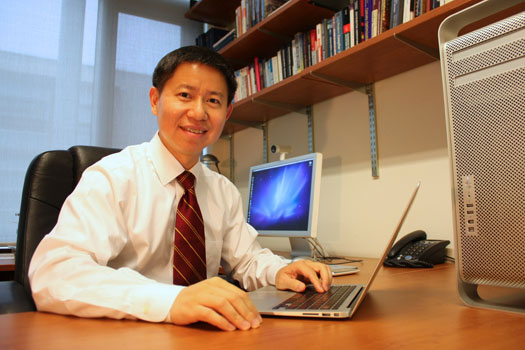
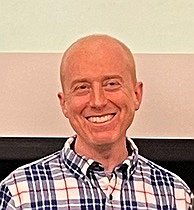
Baishakhi Ray is an Associate Professor at Columbia University, specializing in improving software reliability and developers' productivity for both traditional and AI-driven systems. She leads the ARiSE Lab, focusing on interdisciplinary research at the intersection of software engineering and artificial intelligence. Her research interests include software testing for AI systems, adversarial robustness, automated testing of autonomous systems, and leveraging AI techniques such as neural networks for dynamic analysis and fuzzing. Notable projects include DeepTest for autonomous car testing and NEUZZ for efficient fuzzing. Awards: VMware Early Career Faculty Award (2020), IBM Faculty Award (2019), NSF CAREER Award (2019), and multiple best paper awards including EAPLS FASE (2020) and ACM Distinguished Papers (FSE 2017, MSR 2017). Grants: NSF CAREER grant (2019-2024) for deep learning testing, NSF grants for workshops and security bug detection, and collaborative grants on persistent memory and SSL/TLS implementations. Her recent work emphasizes advancing code generation with large language models (LLMs), evaluating model robustness under data contamination, and developing tools like CodeSense and CrashFixer for code semantics and kernel debugging. The ARiSE Lab also explores causal performance debugging and transfer learning for configurable systems.
Mark Batty is a Professor in the School of Computing at the University of Kent, specializing in formal methods for concurrent systems. His work bridges hardware-software interfaces, focusing on memory models for C/C++, OpenCL, and architectures including x86, ARM, POWER, and GPUs. As a member of the Programming Languages and Systems Research Group, he develops mathematical specifications and verification tools for real-world concurrency challenges. His research centers on empirical testing of hardware/compiler behavior, formal modeling of system components, and verification of fine-grained concurrent algorithms. Key contributions address relaxed memory semantics, transactional memory, and compositional reasoning for concurrent data structures. His work combines theoretical rigor with practical tool development to ensure correctness in complex concurrent environments. Analysis of his 2015-2025 publications reveals consistent focus on memory consistency models, formal verification of weak memory concurrency, and compiler optimizations. Dominant themes include C/C++11 standards, GPU concurrency semantics, and mechanized verification techniques. His research demonstrates strong industry relevance through collaborations with hardware vendors and contributions to language standards. Mark Batty has received significant recognition: John C. Reynolds Doctoral Dissertation Award (2015) from ACM SIGPLAN CPHC and BCS Distinguished Dissertation Award (2015) Lloyds Register Foundation and Royal Academy of Engineering Research Fellowship (2016) He actively leads major research initiatives and mentors next-generation researchers: Current Funding: EPSRC Standard Grant 'Verifiably Correct transactional memory' (2018), VeTTS Grant 'Specification and verification of C++ data structure libraries' (2018), EPSRC First Grant 'Compositional, dependency-aware C++ concurrency' (2018) PhD Recruitment: Actively seeking candidates for UKRI-funded studentship in Verified Trustworthy Software Systems Batty drives community engagement through Kent Concurrency Workshop (2016) and South of England Programming Language Seminars, fostering national collaboration in programming languages research. His leadership in organizing Royal Society discussions underscores his influence in trustworthy systems verification.
Hans Christian Bruun Hansen is a Professor in Environmental Chemistry at the Department of Plant and Environmental Sciences, Faculty of Science, University of Copenhagen. His research focuses on solid-solution processes governing pollutant fate in soils and sediments with applications in soil and water remediation. His primary research areas include: Engineering and reactivity of iron(II)iron(III) hydroxides ("green rusts") Phosphate bonding in anoxic soils Fate of natural toxins like ptaquiloside and glucosinolates Hansen pioneered critical discoveries in environmental chemistry, including demonstrating green rusts' reducing capacity for nitrate-to-ammonium conversion and dehalogenation of chlorinated compounds. His recent work shows green rusts can form 1 nm thick iron oxide sheets for catalytic applications. His research on natural toxins documented carcinogenic ptaquiloside in soil and elucidated degradation kinetics. Hansen has secured over 35 million DKK in research funding through projects like SupremeTech (phosphorus remediation) and Iron-X (solvent degradation). He teaches environmental chemistry from BSc to PhD levels and has supervised 69 MSc and 25 PhD theses. As Head of the Section for Environmental Chemistry and Physics (40 researchers), he leads initiatives like the EnvEuro MSc program and Sino-Danish Water Research Center. His laboratory focuses on nanoscale remediation materials and natural toxin analysis.
Santiago Torres-Arias is an Assistant Professor at Purdue University, affiliated with the Elmore Family School of Electrical and Computer Engineering . His research spans computer systems security , software supply chain security , and applied cryptography . Campus: West Lafayette, Indianapolis Office: BHEE 324B Contact: santiagotorres@purdue.edu , +1 765-496-6610 Research Interests: Computer systems security Software supply chain security Distributed systems security Applied cryptography Password storage mechanisms Publication Trends: His recent work focuses on software supply chain security , including code signing , provenance mechanisms , and IoT vulnerabilities . Key projects address Sigstore , DevSecOps , and zero-trust dependencies . Scientific Awards: Advising & Grants: No student details provided No grant information listed
Corina Pasareanu is an ACM Fellow and IEEE ASE Fellow serving as a Principal Scientist at Carnegie Mellon University's CyLab Security and Privacy Institute and Technical Professional Leader for Data Science at NASA Ames Research Center through KBR. Her work bridges formal methods, software verification, and artificial intelligence to ensure the safety and security of complex systems, particularly autonomous systems and machine learning applications. Dr. Pasareanu received her academic training at: Ph.D. in Computer Science, Kansas State University (2001) M.S. in Computer Science, University Politehcnica of Bucharest (1995) B.S. in Computer Science, University Politehcnica of Bucharest (1994) Her research focuses on developing formal verification techniques that can provide mathematical guarantees about the behavior of complex software systems. She specializes in applying model checking, symbolic execution, and compositional verification methods to challenges in autonomy, security, and AI safety. Her recent work addresses the verification of systems incorporating machine learning components, particularly neural networks used in safety-critical applications like autonomous vehicles. She investigates how to ensure these systems behave correctly even when their perception components have uncertainties or are subject to adversarial attacks. Analysis of her recent publications shows a strong trend toward verifying AI and machine learning systems, particularly focusing on neural networks in autonomous systems. Her work increasingly addresses the challenges of Large Language Models, examining both their vulnerabilities to attacks and methods to defend against them. She also continues to advance traditional software verification techniques while adapting them to modern programming languages and paradigms. Dr. Pasareanu has received numerous prestigious awards recognizing her contributions to the field: ACM Fellow IEEE ASE Fellow ETAPS Test of Time Award (2021) ASE Most Influential Paper Award (2018) ESEC/FSE Test of Time Award (2018) ISSTA Retrospective Impact Paper Award (2018) ACM Impact Paper Award (2010) ICSE 2010 Most Influential Paper Award (2010) As an advisor, Dr. Pasareanu mentors several PhD students and postdoctoral researchers, often in collaboration with other faculty members at CMU. Her students focus on cutting-edge research at the intersection of formal methods and AI safety. Her research is supported by substantial funding from diverse sources including NSF, DARPA, NASA, AWS, and industry partnerships. She leads multiple projects focused on AI security, formal verification of neural networks, and software analysis techniques. Dr. Pasareanu also plays a significant role in the broader research community, serving as Program/General Chair for major conferences including ICSE 2025, and as an associate editor for IEEE TSE and STTT. Dr. Pasareanu leads research teams working on projects like "Trinity: Neurosymbolic Learning and Reasoning" (DARPA) and "HUGS: Human-Guided Software Testing and Analysis" (NSF). Her work often involves interdisciplinary collaboration between computer scientists, formal methods experts, and domain specialists to address complex safety challenges in autonomous systems.
Aravind Machiry is an Assistant Professor at Purdue University's Electrical and Computer Engineering Department and a founding member of the Purdue Systems and Software Security (PurS3) Lab . His research focuses on system security, particularly vulnerability detection, prevention, and secure system development using static/dynamic program analysis, fuzzing, type systems, and machine learning. Designing practical solutions for software and embedded system security Recipient of NSF CAREER and Amazon Research awards Active participant in SPLASH 2025 as OOPSLA Review Committee member His recent work includes automated vulnerability detection in embedded software, spatial memory safety enhancements, and security analysis of GitHub workflows. He has received recognition for his research through multiple distinguished paper awards and industry funding. Selected scientific awards include NSF CAREER Award (2024) Amazon Research Award (2022) Test of Time Award at FSE 2023 for DynoDroid Distinguished Paper Award at OOPSLA 2022 for 3c Qualcomm Innovation Fellowship (2025) His research team has developed frameworks like ARGUS for taint analysis of CI/CD workflows and FuzzUEr for UEFI interface fuzzing, discovering hundreds of critical vulnerabilities in open-source projects and thousands of command injection flaws in GitHub repositories.
Ruben Martins is an Assistant Professor at Carnegie Mellon University's School of Computer Science and serves as the program director of the Master of Science in Computer Science (MSCS) . His research focuses on the intersection of constraint programming, program synthesis, analysis, and verification, with recent work aiming to make formal methods tools more accessible through automated reasoning. Ruben earned his Ph.D. with honors from the Technical University of Lisbon, Portugal (2013) , followed by postdoctoral research at the University of Oxford (2014-2015) and UT Austin (2015-2017) . Research Interests : Ruben's work bridges constraint programming and program synthesis , with applications in software verification , optimization , and automated reasoning . He has developed award-winning tools like Open-WBO , a modular MaxSAT solver that has won gold medals in international competitions. His publications span top-tier venues such as POPL , PLDI , FSE , SAT , and CP , often addressing real-world challenges from program analysis to network security. Scientific Awards include: Distinguished Paper Award at PLDI 2018 Distinguished Paper Award at FSE 2021 Distinguished Paper Award at SAT 2022 Gold medals for Open-WBO in MaxSAT competitions Teaching & Advising : Ruben mentors Ph.D., Master’s, and undergraduate students in research projects related to program synthesis, formal methods, and constraint solving. He teaches courses such as Bug Catching: Automated Program Verification and Advanced Topics in Logic: Automated Reasoning and Satisfiability , emphasizing hands-on experience with tools like Why3. His advising spans topics from AI-driven program repair to network protocol verification , fostering collaboration across disciplines.
Meng Xu is an Assistant Professor in the Cheriton School of Computer Science at the University of Waterloo, Canada. He is affiliated with the Cryptography, Security, and Privacy (CrySP) group and the Cybersecurity and Privacy Institute (CPI). His research focuses on system and software security, emphasizing secure-by-design languages (e.g., Rust, Move), automated program analysis, and runtime defense techniques. Education : Ph.D., Computer Science (2020), Georgia Institute of Technology B.Eng. and B.Business (First Class Honors), Nanyang Technological University (2014) Research Interests : Secure-by-design languages Automated security analysis (fuzzing, symbolic execution) Runtime defense mechanisms (moving target defense, secure hardware) Key Awards : EAPLS Best Paper Award (2022) USENIX Security Distinguished Paper Award (2018) Grants & Funding : BlackBerry Research Grant (CAD $200,000) Amazon Research Award (USD $60,000) NSERC Discovery Grant (CAD $170,000) Labs & Collaborations : CrySP (Cryptography, Security, and Privacy Group) Cybersecurity and Privacy Institute (CPI)
Michael Sammler is an Assistant Professor leading the Programming Languages and Verification Group at the Institute of Science and Technology Austria (ISTA). He holds a PhD from the Max Planck Institute for Software Systems (MPI-SWS) and was a postdoctoral researcher at ETH Zürich. His research focuses on formal verification of low-level systems code, combining foundational proofs with automation. Key projects include RefinedC (C verification), Islaris (assembly code verification), and DimSum (multi-language interoperability). Education: PhD at MPI-SWS/Saarland Informatics Campus, postdoc at ETH Zürich. Research interests emphasize tool development for safety-critical systems, including Rust verification (RefinedRust), OCaml/C interoperability (Melocoton), and decentralized multi-language semantics (DimSum). Awards: Runner-Up for Informatics Europe 2024 Best Dissertation Award, Dr. Eduard Martin Prize, Distinguished Paper Awards at PLDI/POPL/USENIX, and Google PhD Fellowship. Labs/Teams: Programming Languages and Verification Group at ISTA, collaborations with MPI-SWS and international researchers. His work bridges foundational theory with practical tools for industry-relevant verification challenges.
Ruth Dill-Macky serves as a Professor in the Department of Plant Pathology at the University of Minnesota, based at Stakman Hall and Borlaug Hall in St. Paul, MN. She maintains an active research program focused on cereal crop diseases with USDA Agricultural Research Service funding, collaborating directly with wheat, barley, and oat breeding initiatives to develop resistant varieties. Her academic credentials include: PhD in Botany-Plant Pathology from University of Queensland, Australia (1993) BS in Botany-Plant Pathology (Honours, First Class) from University of Queensland, Australia (1984) BS in Botany and Biochemistry from University of Queensland, Australia (1983) Professor Dill-Macky's research centers on economically devastating diseases of small grains, particularly Fusarium head blight, stem rust, and bacterial leaf streak. Her program develops resistance screening techniques, analyzes inheritance patterns of resistance traits, and conducts epidemiological studies on pathogen spread under varying environmental conditions. She prioritizes translating molecular insights into practical breeding solutions for Minnesota growers. Recent publications (2023-2025) reveal intensified focus on molecular characterization of Fusarium resistance mechanisms and Ug99 stem rust threats, alongside emerging bacterial disease challenges. Her work integrates genomics, field trials, and germplasm screening to address yield impacts from pathogens like Xanthomonas translucens, with strong emphasis on developing deployable resistance strategies for cereal production systems. Scientific awards: No specific awards documented in the provided materials She has secured 67 grants as Principal Investigator, primarily through USDA Agricultural Research Service, with active projects extending to 2026. Current work includes molecular characterization of Fusarium head blight, stem rust evaluation in oats, and bacterial leaf streak management. Her program has generated 96 research outputs and one major barley genomics dataset. Professor Dill-Macky leads a multidisciplinary research team collaborating with breeders and USDA scientists, operating field nurseries and molecular labs focused on pathogen virulence and host resistance mechanisms in cereal crops across Minnesota's agricultural landscape.
Dr. Friedrich Longin is an Adjunct Professor and Group Leader of the Wheat Research Group at the State Seed Breeding Institute of the University of Hohenheim, Germany. He leads research on wheat breeding, alternative wheat varieties, and increasing biodiversity in wheat cultivation. University of Hohenheim: Habilitation in Plant Breeding (2016), Adjunct Professor (2019) University of Hohenheim and China Agricultural University in Beijing: Doctorate in a German-Chinese graduate program University of Hohenheim: Studied agricultural biology, specializing in biotechnology and plant breeding Dr. Longin's research focuses on breeding alternative wheat varieties, pre-breeding in wheat, processing and nutritional quality of wheat varieties, nutrient use efficiency in wheat species, and increasing biodiversity and sustainability in wheat cultivation. His breeding research into alternative crops has led to the resurgence of traditional varieties such as spelt, emmer, and einkorn. His work bridges fundamental plant breeding science with practical applications for sustainable agriculture and food systems. He has made significant contributions to understanding the genetic basis of wheat quality traits, disease resistance, and nutritional properties. His recent publications demonstrate a strong focus on genomics-based approaches to wheat improvement, with particular attention to grain quality, nutritional properties, disease resistance, and the relationship between wheat varieties and human health. There is a clear trend toward integrating molecular breeding techniques with traditional approaches, and an increasing emphasis on understanding the health implications of wheat consumption, particularly regarding inflammatory responses and food sensitivities. Active participant in numerous national and international research projects related to wheat breeding and genetic resources Regularly invited to speak at national and international conferences on wheat breeding and sustainable agriculture Volunteers on several professional committees related to plant breeding and agricultural research Dr. Longin heads the Wheat Research Group at the State Seed Breeding Institute of the University of Hohenheim, which focuses on developing improved wheat varieties with enhanced nutritional quality, disease resistance, and environmental adaptability. His team works closely with farmers, millers, and bakers to ensure that new varieties meet the needs of the entire production chain from farm to fork.
Jeff Huang is an Associate Professor in the Department of Computer Science & Engineering at Texas A&M University, affiliated with the College of Engineering. His research focuses on software engineering, programming languages, concurrency, and runtime verification, with notable contributions to static analysis, race detection, and vulnerability mitigation in concurrent systems. Education: Postdoc, Computer Science, University of Illinois at Urbana-Champaign (2013-2014) Ph.D., Computer Science, Hong Kong University of Science and Technology (2012) B.E., Electrical Engineering, National University of Defense Technology, China (2008) Research Interests: Huang's work bridges theoretical foundations and practical applications in concurrency debugging, static analysis tools, and cybersecurity for smart contracts. He emphasizes scalable solutions for pointer analysis, race detection, and vulnerability detection in distributed systems and blockchain technologies. Recent Trends in Publications: His recent work explores AI-driven program execution (e.g., SGLang), blockchain security (e.g., Smart Contract analysis), and dynamic/static analysis techniques for memory safety. These studies underscore advancements in automated tools for securing concurrent and distributed systems. Awards: 2023 ACM SIGSOFT Distinguished Paper Award 2019 DARPA Young Faculty Award 2016 NSF CAREER Award 2013 ACM SIGSOFT Outstanding Doctoral Dissertation Award Advising & Grants: Huang has advised PhD students including Bozhen Liu and Peiming Liu, who have contributed to OpenMP race detection and pointer analysis tools. His grants include NSF awards for pointer analysis as a service and DARPA funding for young faculty research. Labs & Teams: He leads the O2 Lab, focused on concurrency verification and cybersecurity, collaborating with industry partners like Coderrect Inc. and DOE on scalable static analysis frameworks.
Baochun Li is a Professor and Associate Chair, Research at the Edward S. Rogers Sr. Department of Electrical and Computer Engineering at the University of Toronto , with a cross-appointment to the Department of Computer Science. He holds the Bell Canada Endowed Chair in Computer Engineering since 2005. Education: B.Engr. from Tsinghua University (1995), M.S. and Ph.D. from University of Illinois at Urbana-Champaign (1997, 2000) His research interests span cloud computing , distributed systems (including federated learning), security and privacy , and networking , often integrating control theory , game theory , and network coding into practical systems. Recent work focuses on asynchronous federated learning , secure mechanisms for UAV teams , and transformer-based distributed inference . His 15 most recent publications emphasize federated learning , security in distributed systems , and transformer optimization , reflecting trends in large language models and edge computing . Awards and Recognitions: IEEE Fellow (2014) IEEE INFOCOM Achievement Award (2024) Fellow of the Canadian Academy of Engineering (2023) University of Toronto McLean Award (2009) He has contributed extensively to teaching , including launching the first Canadian university course on Rust programming in Fall 2024 and receiving a Departmental Teaching Award (2011). As a professional service leader , he has chaired major conferences like IEEE INFOCOM and IEEE ICDCS.
G. Boyd Padgett is Professor and Extension/Research Row Crop Plant Pathologist at Louisiana State University's College of Agriculture. He serves as State Small Grains and Peanut Specialist and Interim Soybean Specialist, developing disease management programs for major Louisiana crops including corn, cotton, grain sorghum, peanut, soybean, and small grains. Education: Educational background not explicitly provided in text. Dr. Padgett's research focuses on the epidemiology and management of fungal pathogens affecting row crops. His work emphasizes field-based solutions through variety evaluation, fungicide efficacy trials, and integrated disease management strategies. He has secured over $3 million in grant funding from organizations including the United Soybean Board, USDA, and National Peanut Board. Recent publications address soybean rust monitoring systems, fungicide resistance mechanisms in Cercospora species, nematode management in cotton, and integrated disease management strategies for wheat and soybeans. His extension program delivers practical disease management solutions through over 170 local, state, and national presentations and media engagements. Dr. Padgett teaches plant disease management courses and mentors graduate students. His extension publications provide disease management guidelines for Louisiana growers, addressing emerging threats like target spot of cotton and Fusarium head blight of wheat.
David I. August is a Professor at Princeton University specializing in programming languages and compiler systems. His research bridges theoretical compiler techniques with practical systems implementation, focusing on memory safety, speculative execution, and compiler optimization. His primary research interests include Compiler Design , Rust Programming Language safety mechanisms , and LLVM infrastructure extensions . His work emphasizes practical implementations that enhance both performance and security in modern programming systems. Recent publications demonstrate consistent contributions to memory profiling frameworks (PROMPT), Rust safety enhancements, and speculative dependence analysis. His research shows strong focus on making low-level systems programming safer without sacrificing performance. August serves regularly on program committees for major conferences including PLDI and CGO, indicating his standing in the programming languages research community. He has mentored students in compiler construction and programming language design, with research projects often involving practical implementations integrated into production-quality compiler frameworks.