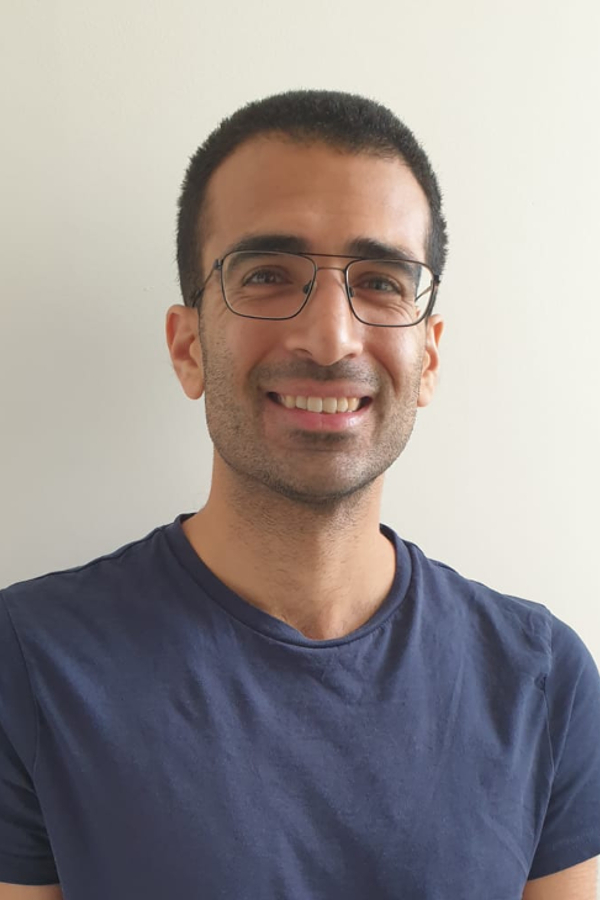
Jeremy Prestholdt is a Professor in the Department of History at the University of California, San Diego. His research focuses on African, Indian Ocean, and global histories, emphasizing consumer culture, political dissent, and identity politics. He is the author of Domesticating the World: African Consumerism and the Genealogies of Globalization (2008) and a forthcoming book, Icons of Dissent , analyzing figures like Che Guevara, Bob Marley, Tupac Shakur, and Osama bin Laden. His current projects explore Kenya’s coastal political culture and the transnational resonance of cultural icons. His academic accolades include fellowships from the National Endowment for the Humanities, Rockefeller Foundation, and Woodrow Wilson Foundation, among others. Prestholdt has held visiting positions at institutions such as the University of Bergen and University of Basel. His work bridges historical analysis with contemporary issues, addressing topics like counterterrorism, postcolonial identity, and globalization's cultural dimensions. Teaching spans courses on Modern Africa, global history, and the politics of violence. His research underscores how consumer culture, transnational movements, and symbolic imagery shape political and social dynamics across regions and eras.
Professor Pamela Davidson is a distinguished scholar of Russian Literature at University College London's School of Slavonic and East European Studies (SSEES). With over four decades of academic experience, she has held various leadership positions including Head of the Russian Department (2003-2006), Head of Teaching and Graduate Tutor (2012-2014), and currently serves as Admissions Tutor for Languages & Cultures programmes. Her scholarly work has significantly shaped the field of Russian literary studies, particularly in areas of Russian Symbolism, literary prophecy, and the interaction between religion and culture. Doctor of Philosophy, University of Oxford, 1984 Undergraduate studies in Russian, French and Italian, Newnham College, Cambridge Professor Davidson's research spans several interconnected areas within Russian and comparative literature. Her work on the "construction and dynamics of literary tradition" examines how Russian writers positioned themselves within broader cultural and historical contexts. She has made significant contributions to understanding "the interaction of religion and culture," particularly through her edited volume "Russian Literature and Its Demons," which opened up new interdisciplinary research avenues. Her long-standing interest in "Silver Age poetry" has focused extensively on Viacheslav Ivanov, whose work she has studied through multiple lenses including his engagement with Dante and classical antiquity. Most notably, she has developed an extensive body of work on "the representation of the writer as prophet in Russia," tracing this tradition from its biblical and classical roots through to the Soviet period. Professor Davidson's recent publications reveal a consistent focus on the prophetic dimension of Russian literature, with particular attention to Viacheslav Ivanov and Fedor Glinka. Her scholarship demonstrates a sophisticated interweaving of literary analysis, religious studies, and cultural history. Over the past decade, her work has increasingly examined how Russian writers engaged with biblical and classical traditions, often reinterpreting them within specifically Russian contexts. The recurring themes across her publications include the tension between Athens and Jerusalem in Russian thought, the role of the writer as moral authority, and the complex relationship between religious tradition and literary innovation. Her comparative approach frequently bridges Russian literature with Western European intellectual traditions, revealing unexpected connections and influences. Travelling Junior Research Fellowship at Queen's College Leverhulme Research Fellowship (2019-2021) Director of the CEELBAS Centre for Doctoral Training (2020-2021) Member of the AHRC Peer Review College of Assessors (2003-2007) As an academic mentor, Professor Davidson has supervised numerous doctoral students in Russian literature and thought, with particular expertise in 19th and early 20th century literature, Silver Age poetry, and comparative literature. Her leadership roles have included serving as Graduate Tutor and Chair of BA and MA Examination Boards at SSEES. In terms of research funding, she has successfully secured competitive grants including the Leverhulme Research Fellowship that supported her recent work on literary prophecy. Her collaborative projects have often involved international partnerships, particularly with Russian academic institutions including the Institute of Russian Literature (IRLI) in St Petersburg. Professor Davidson has also contributed to major scholarly initiatives such as the 12-volume academic edition of Ivanov's collected works. While Professor Davidson's work is primarily in humanities rather than laboratory-based research, she has been instrumental in building academic networks and collaborative projects. She served as Director of the CEELBAS Centre for Doctoral Training, liaising with the Arts and Humanities Research Council (AHRC) and consortium members at Cambridge, Manchester and Oxford. Her long-standing collaboration with the St Petersburg Institute of Russian Literature has been particularly significant, resulting in the completion of the first comprehensive bibliography of Viacheslav Ivanov's works. Professor Davidson has also been active in the international scholarly community through her membership on the Board of Directors of the Foundation "Centro Studi e Ricerche Vjacheslav Ivanov" in Rome.
Miaoyan Wang is an Associate Professor in the Department of Statistics at the University of Wisconsin-Madison, part of the School of Computer, Data & Information Sciences. She holds early tenure and is a faculty affiliate in the Mathematical Foundations of Machine Learning, Institute for Foundations of Data Science (IFDS), and Center for Demography of Health and Aging (CDHA). She is currently on sabbatical as a visiting associate professor at Stanford University and Lawrence Livermore National Laboratory. Education: PhD in Statistics from the University of Chicago (2015), BS in Mathematics from Fudan University (2010). Postdoctoral training included positions at UC Berkeley (Computer Science) and the University of Pennsylvania (Math+X). Research focuses on statistical machine learning, with emphasis on matrix/tensor data analysis, high-dimensional statistics, nonparametric learning, and applications in genetics. Her work bridges theory and practice, addressing challenges in computational efficiency and statistical optimality for complex data structures. Awards include the prestigious NSF CAREER Award (2022), multiple best paper awards (ASA, IMS, NEURIPS), and recognition from ASHJ and IGES. Her group has secured grants totaling $3.4 million, including NSF funding for foundational machine learning research and collaborative projects in population genomics. Advising includes PhD students Chanwoo Lee and Jiaxin Hu, with former students Yuchen Zeng and Zhuoyan Xu. She teaches advanced statistical methods and computational courses, emphasizing rigorous theoretical foundations and practical applications. Key collaborations include work on tensor decomposition algorithms, statistical genetics, and interdisciplinary projects with biology and computer science departments. Her lab contributes open-source software tools for data analysis, including packages for tensor block models and multiway clustering.
Brian Frederking is a Professor of Political Science at McKendree University, where he has held positions since 1990. He earned his Ph.D. from Syracuse University (1997), with earlier degrees from the same institution (M.A., 1993) and McKendree College (B.A., 1990). His research focuses on international organizations, collective security, conflict resolution, and foreign policy, with a particular emphasis on the United Nations Security Council and post-Cold War dynamics. Frederking has authored or co-authored multiple books, including Renegotiating the Liberal Order: Evidence from the UN Security Council (2023) and The United States and the Security Council: Collective Security since the Cold War (2007). His scholarly work bridges constructivist theory with empirical analysis of diplomatic discourse, security dilemmas, and international norms. He frequently collaborates with undergraduate students in research, including co-authored articles on nuclear proliferation and conflict resolution. His recent academic contributions include analyses of the Israel-Hamas conflict, transitional justice mechanisms, and the legitimacy of UN Security Council actions. Frederking has also engaged in public commentary through radio appearances on topics like the Iraq War and Middle East conflicts. He serves as editor of the Illinois Political Science Review and reviewer for numerous journals, reflecting his leadership in the field. Frederking advises McKendree's Model United Nations and Scholars journal, emphasizing experiential learning. His research datasets, such as the Collective Security Dataset, offer empirical tools for studying global governance. Despite no explicit mention of grants or labs, his work demonstrates sustained engagement with international political challenges.
Fabrício Benevenuto is an Associate Professor in the Computer Science Department at Federal University of Minas Gerais (UFMG), where he conducts interdisciplinary research at the intersection of social media analysis, data science, and computational journalism. His work spans complex networks, machine learning, and natural language processing with strong societal impact. His research focuses on social media dynamics, particularly in Brazilian contexts, with major contributions to hate speech detection, fake news analysis, and political discourse monitoring. He leads large-scale projects against misinformation, including development of systems like WhatsApp Monitor, Media Bias Monitor, and Purple Feed. His work combines technical innovation with real-world applications for election transparency and public discourse integrity. Benevenuto's recent publications demonstrate strong trends in multilingual NLP for social media analysis, with emphasis on Brazilian Portuguese contexts. His team produces both theoretical contributions and practical systems addressing hate speech, misinformation, and media bias. Notable methodological approaches include combining network analysis with linguistic features, developing culturally-aware detection systems, and creating large annotated datasets for understudied languages. CAPES award for best Brazilian computer science thesis (2010) Humboldt Foundation scholarship recipient (2017-2018) Member of TikTok Safety Advisory Council WWW'20 Best Paper Nominee & CNIL-INRIA Privacy Protection Prize winner Multiple best paper awards at CEAS, WBC, and ICWSM conferences Test-of-Time Award at ICWSM'20 Benevenuto actively mentors PhD and MSc students, with numerous advisees securing academic positions at Brazilian universities and research roles at institutions like Max Planck Institute. His projects often receive funding supporting interdisciplinary collaborations across computer science and social sciences. Current work includes large-scale analysis of Telegram political groups, real-time election monitoring systems, and developing culturally-aware NLP tools for Portuguese. He leads research teams working on social media analysis systems with societal impact, particularly focused on Brazilian digital ecosystems. Projects involve cross-institutional collaborations with researchers from MPI-SWS, Max Planck Institute, and various Brazilian universities, emphasizing practical applications for public discourse integrity.
Pedro Schilling De Carvalho is a Lecturer in Law at University College London's Faculty of Laws, specializing in Financial and Environmental Law. He holds a PhD in Law and Finance from the University of Cambridge, where he received a Cambridge International Scholarship, as well as an LLM in Commercial Law from Cambridge (supported by a Chevening Scholarship) and a LLB from the University of São Paulo, Brazil. His academic journey includes positions at: University of Cambridge (Research Affiliate, Judge Business School and Lauterpacht Centre for International Law) London School of Economics (Guest Lecturer) University of Edinburgh (Early Career Fellow in Financial Law and Regulation) Max Planck Institute for Comparative and International Private Law (Visiting Fellow) Harvard Law School (Visiting Fellow) Pedro's research focuses on financial regulation, corporate finance, environmental law, international economic law, and sustainable finance. His work explores regulatory diffusion in sustainable finance, international financial governance in multipolar contexts, and the intersection of corporate governance with environmental and social concerns. He has published in peer-reviewed journals such as the Journal of Financial Regulation and has been cited by institutions including the International Monetary Fund. His recent publications demonstrate a strong focus on sustainable finance frameworks, regulatory coordination across jurisdictions, and the evolving landscape of financial technology regulation globally. His work spans theoretical analysis of corporate governance models alongside practical regulatory frameworks for emerging financial technologies and sustainable investment. Pedro has received several prestigious awards and recognitions: Cambridge International Scholarship Chevening Scholarship Max Planck Institute & Cambridge Scholarship Certified peer-reviewer by the Equitable Growth, Finance and Institutions Global Practice He has actively contributed to policy development through written evidence to the UK Parliament Committee on the Future Relationship with the European Union, consultancy work for the World Bank Group's Legal Vice Presidency, the Green Climate Fund, and the Bill & Melinda Gates Foundation. His professional activities include being Co-Director of the UCL Centre of Law and the Environment, academic member of the European Corporate Governance Network, and member of the Leadership of the Commission on Arbitration and ADR at the International Chamber of Commerce. Pedro has extensive experience as both a transactional and dispute resolution lawyer, having worked with prominent law firms and served as Chief of Staff at the Commercial Law Chamber of the São Paulo Supreme Court.
Nailin Bu is an Associate Professor of International Business at the Smith School of Business, Queen's University in Canada. She holds a Ph.D. in Organizational Behavior from the University of British Columbia (1992), and prior academic positions include Assistant Professor roles at the University of Victoria (1992–1995) and the University of British Columbia (1990–1991). Her research focuses on cross-cultural management, international human resource management, and management practices in China and the Asia-Pacific region. She has received significant funding from organizations such as the Social Sciences and Humanities Research Council (SSHRC) of Canada and CGA-Canada. Education: Ph.D. in Organizational Behavior, University of British Columbia (1992) M.Sc. in Macroeconomics and Management, Shanghai Jiao Tong University (1985) B.Sc. in Computer Science, Fudan University (1983) Research Interests: Dr. Bu’s research emphasizes international business strategies, cross-cultural management dynamics, and organizational behavior in China and the Asia-Pacific. Her current projects explore networking practices among Chinese managers, determinants of voluntary turnover among professionals in China, and consumer behavior in retail contexts. Her work integrates comparative studies across cultures, with a focus on managerial practices and employee-employer relationships. Funding & Grants: Dr. Bu has secured grants from prestigious bodies including SSHRC (e.g., studies on voluntary turnover and Wal-Mart’s global retail strategies) and CGA-Canada. Notable grants include SSHRC funding for projects like “Determinants of Voluntary Turnover Among Managers in China” (2002) and “Retail Globalization: The Case of Wal-Mart” (2001). These grants support her empirical research into cross-cultural management and labor dynamics. Teaching & Advising: Dr. Bu teaches courses such as “Global Leadership Across Cultures,” “Cross-Cultural Management,” and “Doing Business in the Asia-Pacific.” Her teaching focuses on practical applications of cross-cultural theories and international business strategies. While specific advisee names are not listed, her research collaborations and conference engagements suggest active mentorship in international management studies. Collaborations: Dr. Bu collaborates extensively with scholars in China and Taiwan, contributing to cross-border research networks. Her work often involves comparative analyses across East Asian and Western business contexts, reflecting her deep engagement with regional academic and professional communities.
Muhammad Shujaat Mubarik is an Associate Professor and Head of Research (Marketing & Operations Department) at Heriot-Watt University's Edinburgh Business School. His expertise spans logistics, supply chain management, operations management, and sustainability. He focuses on integrating digital technologies like blockchain and digital twins into supply chain frameworks, emphasizing intellectual capital's role in resilience and sustainability. His research methods include Structural Equation Modeling, Multi-Criteria Decision Making (AHP, ANP), and hybrid modeling. He holds leadership roles, including prior positions as Dean of the College of Business Management (IoBM) and Dean of the Faculty of Business Administration & Social Sciences (Mohammad Ali Jinnah University). He has secured grants from UKRI-EPSRC, NSERC, and HEC Pakistan, leading projects on supply chain resilience, logistics decarbonization, and SME internationalization strategies. His research collaborations span institutions like the University of Cambridge, Stanford University, and Copenhagen Business School. He teaches postgraduate courses in supply chain strategies, systems analysis, and green logistics. He actively engages in academic governance and industry partnerships, contributing to policy bridging. His work aligns with UN SDGs related to sustainable consumption, climate action, and responsible consumption. He has published over 100 papers, including 45 in high-impact journals, authored five books, and received the 2023 Best Researcher Award at the institute level. His funded projects address challenges like blockchain in oil and gas sectors and circular economy adoption barriers.
Dr. Carlos Molina is a Professor of Molecular Biology at Montclair State University’s College of Sciences and Mathematics. Previously, he served as an Assistant Professor at Rutgers Medical School’s Department of Obstetrics, Gynecology, and Women’s Health (1994–2006). He holds a B.S. in Biology from the University of Puerto Rico, M.S. and Ph.D. in Biochemistry from Purdue University, and postdoctoral training at the University of Louis Pasteur (France). His research focuses on cancer mechanisms involving tumor suppression proteins in skin cancer cells and ovarian-specific transgenic zebrafish models for ovulation studies. These efforts aim to develop therapeutic agents and reproductive technologies. Dr. Molina has secured grants from the National Institutes of Health, National Science Foundation, and American Association of Cancer Research. He served on NIH study sections for Heart/Lung/Blood Institute and Defense Department Ovarian/Prostate Cancer initiatives. Office hours are consistently held Tuesdays and Thursdays 3:30–5:00 PM via Zoom.
Prof. Juin J. Liou serves as the UCF Pegasus Distinguished Professor and Lockheed Martin St. Laurent Professor of Engineering in the Department of Electrical and Computer Engineering at the University of Central Florida, where he has held faculty positions since 1987. Education: B.S. (Honors) in Electrical Engineering, University of Florida, 1982 M.S. in Electrical Engineering, University of Florida, 1983 Ph.D. in Electrical Engineering, University of Florida, 1987 Research Focus: Prof. Liou specializes in Electrostatic Discharge (ESD) protection systems critical for integrated circuit reliability, semiconductor device modeling, and RF circuit design. His pioneering work addresses ESD challenges in next-generation technologies including silicon nanowire, organic semiconductors, and gallium nitride (GaN) devices, where miniaturization intensifies vulnerability to electrostatic damage. His research bridges theoretical modeling with practical implementation to solve industry-critical protection failures. Awards and Leadership: Ten teaching/research excellence awards from University of Central Florida Six major awards from IEEE IEEE-EDS Distinguished Lecturer Multiple honorary professorships Research Impact: Secured over $14.5 million in funding from NSF, DARPA, NASA, NIST, and semiconductor industry leaders including Intel, Texas Instruments, and Analog Devices. Authored 10 books, 270+ journal papers (18 invited reviews), and 220+ conference papers while holding 8 U.S. patents (4 pending). Served as IEEE EDS Vice-President, Treasurer, and Board of Governors member, plus editorial roles for Microelectronics Reliability and IEEE journals.
Erisa Karafili is an Associate Professor in Cybersecurity at the University of Southampton. She leads Teaching Methods Innovation at the GCHQ/EPSRC Academic Centre of Excellence for Cyber Security Education (ACE-CSE) and is a Champion in Security by Design at ACE-CSR. A Fellow of the Higher Education Academy, she joined the University in 2020 after roles including a Marie Curie Fellowship at Imperial College London, where she investigated cyber-attack attribution techniques. Her research focuses on formal methods applied to security, IoT threat models, and secure data sharing frameworks. Education: PhD in non-classical logics applied to multi-agent systems security from the University of Verona. Previous positions include PostDoc at Technical University of Denmark and Researcher at Imperial College London. Research Interests: Cyber-attack attribution, IoT security, formal methods in cybersecurity, data privacy, and argumentation-based reasoning for security. Awards: Higher Education Academy Fellowship. Current PhD Students: Betul Gokkaya, Mohammed Homaid Alquliti, Peter Geoffrey Williams, Steve Johnson. Active Projects: Heterogeneous Material Integrated MEMS/NEMS-Photonics Platform for Secure Communication (collaborative with Jize Yan and others).
Rongxing Lu is an Adjunct Professor at the Faculty of Computer Science, University of New Brunswick (UNB), Canada, since August 2016. Previously, he held positions at Nanyang Technological University (NTU), Singapore (2012–2016) and the University of Waterloo, Canada (PhD in 2012). His research focuses on applied cryptography, privacy enhancing technologies, and IoT-big data security. He has over 7,500 citations and received prestigious awards like the Governor General’s Gold Medal (2012) and the IEEE ComSoc Asia Pacific Outstanding Young Researcher Award (2013). He is an IEEE senior member and serves on editorial boards of journals like IEEE Network. **Education**: PhD in Electrical & Computer Engineering, University of Waterloo (2012), awarded Governor General’s Gold Medal Postdoctoral Fellow at University of Waterloo (2012–2013) **Research Interests**: Developing cryptographic protocols for IoT and big data systems Privacy-preserving techniques for distributed systems Secure communication in 5G/6G networks and vehicular systems **Awards and Recognition**: Recipient of multiple best paper awards in IEEE conferences 2016–2017 Excellence in Teaching Award at UNB **Editorial and Leadership Roles**: Symposium co-chair at IEEE Globecom’16 Secretary of IEEE ComSoc CIS-TC Organized special issues on fog computing security (Elsevier) and big data security (IEEE IoT Journal) **Key Contributions**: Pioneered privacy-aware data reporting schemes for vehicular networks Designed lightweight IoT authentication protocols Advanced secure machine learning frameworks with privacy guarantees
Dr. Navid Nabijou is a Lecturer in Mathematical Sciences at Queen Mary University of London, part of the School of Mathematical Sciences. He is affiliated with the Centre for Combinatorics, Algebra and Number Theory. His research focuses on algebraic geometry, particularly moduli spaces and combinatorial techniques from logarithmic and tropical geometry. He earned his PhD from Imperial College London in 2018, followed by postdoctoral positions at the University of Glasgow and the University of Cambridge before joining Queen Mary in 2022. His research interests include algebraic curves, Gromov-Witten theory, logarithmic and tropical geometry, orbifolds, and moduli spaces. He has secured grants such as the COW Algebraic Geometry Seminar (Heilbronn 2025) and the London Mathematical Society grants for conferences and seminars. His work bridges algebraic geometry with combinatorial methods, addressing foundational questions in enumerative geometry and moduli theory. Key research trends in his recent articles include applications of logarithmic and tropical geometry to Gromov-Witten invariants, moduli spaces of curves, and toric varieties. He has contributed to understanding universality in tropical maps, divisors on logarithmic mapping spaces, and degenerations of hypersurfaces. Dr. Nabijou has advised no students listed, but his grants support collaborative research activities. His lab or team is part of the Centre for Combinatorics, Algebra and Number Theory at Queen Mary University of London.
Rhoda Kanaaneh is an Adjunct Assistant Professor in the Department of Anthropology at Columbia University. She specializes in Palestinian Studies, Gender and Sexuality, and the intersection of ethnicity, nationalism, and military service. Her work examines Palestinian citizens of Israel through lenses of reproductive rights, military participation, and ethnic identity. Dr. Kanaaneh has held academic positions at Columbia University, New York University, and the American University in Washington, DC. She has received fellowships from Harvard University, the European University Institute, and Columbia University. She serves on the editorial committee of the Journal of Palestine Studies . Her award-winning scholarship includes Birthing the Nation: Strategies of Palestinian Women in Israel (2002) and Surrounded: Palestinian Soldiers in the Israeli Military (2008). Her research explores themes such as gendered citizenship, queer perspectives on Palestinian identity, and the paradoxes of Palestinian military service in Israel. Recent work focuses on reproductive politics in the Galilee and queering Palestinian national narratives. Her publications consistently bridge ethnographic fieldwork with critical analysis of state policies and ethnic dynamics.
Professor Mohan Lal Kolhe is a distinguished academic at the University of Agder , serving as a Full Professor in Smart Grid and Renewable Energy within the Faculty of Engineering and Science and the Department of Engineering Sciences . With over three decades of international academic experience, he has held positions at prestigious institutions including University College London, University of Dundee, and Hydrogen Research Institute in Canada. His career spans technical innovation, policy development (e.g., as a member of South Australia’s Renewable Energy Board), and extensive research leadership in sustainable energy systems. Research Leadership : Focus on Smart Grid integration, Electric Vehicles, Hydrogen Energy, Solar/Wind Systems, and Techno-Economic Energy Analysis. Global Recognition : Listed in the top 2% of scientists worldwide (2020-2023) by Stanford University, with 10 publications averaging 200+ citations. Recent publications emphasize advanced optimization techniques for renewable integration, EV charging infrastructure, hydrogen production, and power system stability. His work has secured competitive funding from entities like the Norwegian Research Council and EU programs. Awards and Expert Roles : Top 2% Global Scientist (Stanford, 2020-2023) Highly Cited Researcher (Top 10 publications, 200+ avg. citations) Expert evaluator for European Commission, Royal Society London, EPSRC, and Cyprus Research Foundation He actively contributes to international conferences as keynote speaker and editorial board member, with leadership roles in research groups like Autonomous and Cyber-Physical Systems and Energy Systems .