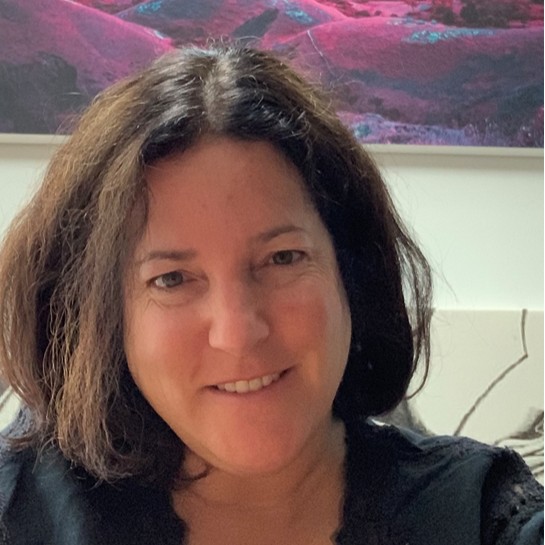
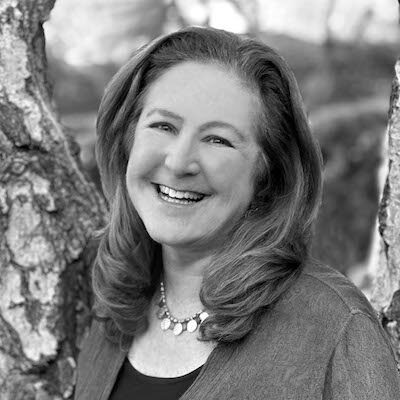
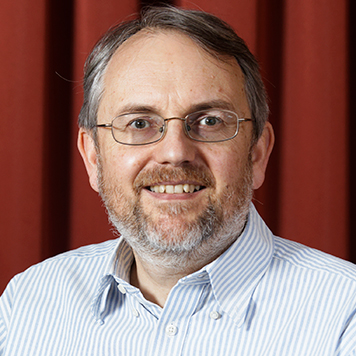
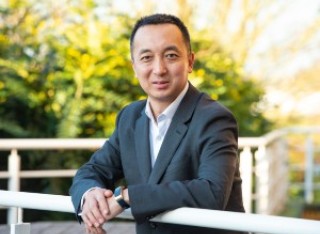
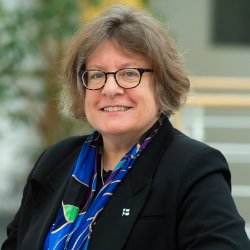
Dr. Kosala Gunawardane is an Associate Professor in Renewable Energy Engineering at the University of Technology Sydney (UTS), School of Electrical and Data Engineering. Previously, she held roles as Associate Professor and founding Director of the Centre of Future Power and Energy Research (CFPER) at Auckland University of Technology (AUT), New Zealand. She also served as Deputy Program Leader in the Blue Economy Corporate Research Centre in Australia. Her academic journey includes a PhD in Power Electronics (University of Waikato, 2014) and a BEng in Electronics and Telecommunications Engineering (University of Moratuwa, Sri Lanka, 2005). She is an IEEE Senior Member and former Vice Chair of the IEEE Women in Engineering NZ North Chapter. Dr. Gunawardane’s research focuses on renewable energy systems, hydrogen and fuel cells, DC microgrids, supercapacitor applications, and power electronics. She has secured significant funding from NZ government and Australian CRC grants as a primary investigator. Her work emphasizes sustainable energy solutions, including grid stability, energy storage optimization, and offshore renewable systems. Her research highlights include pioneering hybrid energy storage systems, advanced DC circuit breaker designs, and hydrogen integration in microgrids. She has published over 111 articles and edited sections on hydrogen energy conversion and management. Awards include a 2018 finalist position in the NZ Women of Influence (Science & Innovation category). Dr. Gunawardane leads funded projects such as the Blue Economy CRC’s offshore power systems and UTS’s energy transition initiatives. She actively contributes to IEEE conferences as an organizer and associate editor of the IEEE Transactions on Power Electronics. Her teaching spans circuit analysis, sustainable energy systems, and energy policy.
Rui Teixeira is an Assistant Professor in the School of Civil Engineering at University College Dublin (UCD). He leads UCD's Centre for Critical Infrastructure Research (CCIR) and focuses on Uncertainty Quantification, Safety, and Risk in civil engineering systems, with applications to infrastructure resilience. His research emphasizes reliability analysis, multi-fidelity modeling, and AI-driven risk assessment. Education: MSc in Civil Engineering, University of Porto, Portugal PhD in Civil Engineering, Trinity College Dublin Professional Certificate in University Teaching and Learning, UCD Research Interests: Development of novel reliability analysis techniques Resilience of infrastructure systems Artificial intelligence applications for risk assessment Probabilistic system evaluation and safety standards Grants & Projects: Smart Enforcement of Transport Operations (SETO), Horizon Europe (2023–2026) Optimality-Tracking Civil Engineering Systems, Enterprise Ireland (2023–2025) Floating Offshore Wind Dynamic Cables (FlOWDyn), Sustainable Energy Authority of Ireland (2024–2027) Teaching: Coordinates courses such as 'Civil Engineering Systems' and 'Design of Structures 1'. Labs/Teams: Director of the Centre for Critical Infrastructure Research (CCIR), focusing on interdisciplinary approaches to infrastructure resilience.
Dr. Robert J. Girod is an Assistant Professor of Criminology and Intelligence Analysis at Indiana State University, affiliated with the School of Criminology and Security Studies. He has also held teaching roles at Indiana University, Keiser University, and nine other institutions as a visiting or adjunct professor. J.D., Western Michigan University Thomas M. Cooley Law School (2010) Ph.D., Union Institute & University in Criminology and Public Administration (2001) Post-doctoral certificate in Leadership, Harvard University (2003) M.S., University of Central Missouri in Criminal Justice Administration (1986) B.A., Indiana University in General Studies (2000) B.A., Huntington University in Sociology (1980) A.A., Indiana University in Criminal Justice (1983) His research spans criminology, intelligence analysis, homeland security, and cybersecurity, focusing on pandemic impacts on law enforcement, military history, war crimes trials, and policing strategies. Recent publications emphasize institutional adaptation during crises and intelligence tradecraft. Dr. Girod has authored or co-authored books and journal articles on topics including criminal investigations, police liability, and behavioral science. His awards include FBI and American Legion honors, and he is listed in Who’s Who in Law Enforcement (1991) and Who’s Who in Public Service (2000). Meritorious Service Medal, Fort Wayne Police Department (1994) Commendation Certificate, FBI Director (2002) Who’s Who in Law Enforcement (1991) Who’s Who in Public Service (2000) As a faculty advisor, he has guided student research and clubs, including the Amateur Radio Club at Indiana State University. His community service includes pro bono legal work with Neighborhood Christian Legal Services and The Innocence Project.
Heiko Falk is a Professor and Head of the Institute of Embedded Systems at Technische Universität Hamburg (TUHH). His roles include serving as Workshop Chair for the 2024 Embedded Systems Week (ESWEEK), Scientific Coordinator for the B.Sc. and M.Sc. Computer Science programs, and Deputy Head of the Board of Examiners for Computer Science and Engineering. His research focuses on real-time systems, compiler optimizations, and worst-case execution time (WCET) analysis. Key areas include multi-core architectures, cache management, energy efficiency, and hardware/software co-design. Falk's work emphasizes practical compiler techniques for improving real-time performance, such as WCET-aware memory allocation, dynamic SPM optimization, and event-driven scheduling. His publications analyze shared cache interference, preemptive/non-preemptive scheduling, and DMA-aware optimizations. Recent work explores multi-objective trade-offs between WCET, energy consumption, and code size in embedded systems. No scientific awards are explicitly listed, but his contributions to WCET benchmarking (e.g., haRTStone project) and compiler frameworks demonstrate significant impact in the field. Advising and grants: No formal advisees are listed in the provided texts. Falk's work is supported through projects like teamplay, focusing on cyber-physical systems optimization. Labs/Teams: His group operates within TUHH's Institute of Embedded Systems, collaborating on projects addressing real-time system challenges in multi-core environments.
Bissan Ghaddar is a Professor in the Department of Technology, Management and Economics at Technical University of Denmark (DTU). Her work focuses on robust optimization, edge computing, and sustainable energy systems, contributing to UN Sustainable Development Goals related to affordable and clean energy. She supervises PhD projects on sector coupling in energy models and quantum computations for power systems. Her research interests include optimizing energy consumption in electric vehicle routing and application placement in edge computing under uncertainty. She has published influential papers in journals like Transportation Research Part C and Omega , addressing latency and efficiency challenges in dynamic systems. Current projects include modeling large-scale sectoral energy systems using smart-linking approaches (2024–2027) and secure power system operation leveraging quantum computations (2021–ongoing). She collaborates internationally with experts in operations research and telecommunications.
Paul Rohmeyer is an Adjunct Professor at Stevens Institute of Technology's School of Business, holding roles such as Associate Teaching Professor (2015-Present) and former Program Director for the MSIS program (2017-2019). He holds a PhD in Information Management from Stevens (2006) and has extensive industry experience in IT governance, risk management, and leadership roles across AXA Financial, SAIC/Bellcore, and American Home Products. His research focuses on Information Security Management, Risk Assessment, Project Management, and Business Intelligence. Notable work includes his 2018 book on Financial Cybersecurity Risk Management and studies on network dynamics impacting company profitability (2015), cloud computing risks (2015), and cybersecurity policy frameworks (2012). Rohmeyer is a Ponemon Institute Fellow and actively contributes to professional organizations like ISACA and PMI. He teaches advanced courses in cybersecurity, data management, and project management at both graduate and undergraduate levels, including MIS 646 Information Security Management and FIN 545 Risk Management for Financial Cybersecurity. His career spans academic leadership and executive IT roles, with a strong emphasis on bridging theoretical research and practical applications in organizational security and technological innovation.
Tae Eun Kim is an Associate Professor in Maritime Safety Management at UiT The Arctic University of Norway, working within the Department of Technology and Security. Her research, teaching, and industrial collaboration focus on maritime safety and human factors, with particular expertise in maritime safety management, accident analysis, Maritime Autonomous Surface Ships (MASS), and human factors in maritime operations. Dr. Kim's research spans four interconnected domains: maritime safety management and leadership, maritime accident and casualty analysis, Maritime Autonomous Surface Ships (MASS), and human factors in maritime operations. She has developed assessment instruments like the Safety Leadership Self-Efficacy Scale (SLSES) and conducted STAMP-based causal analyses of maritime accidents. Her work on MASS addresses safety challenges in mixed navigational environments and examines leadership competencies for autonomous shipping operations. Her human factors research explores how technological advancements impact navigators' performance, crew dynamics, and safety outcomes, including gender parity issues in the maritime industry. Dr. Kim's publication record reveals a strong focus on the intersection of maritime safety, technology, and human performance. Her recent work increasingly addresses autonomous shipping technologies, with numerous publications on AI decision transparency, learning analytics in maritime simulator training, and multi-modal data analysis for nautical skill development. She has conducted systematic reviews on simulator training approaches and scenario design, contributing significantly to methodology development in maritime education and training. Her research demonstrates a clear trajectory toward integrating emerging technologies with traditional maritime safety practices as the industry transitions toward greater automation. Dr. Kim is actively involved in several significant research projects, including the i-MASTER EU Horizon Europe Research and Innovation Project, the REFRAME project, and the SPRICE project (Multidisciplinary approach for spray icing modelling). She is a member of both the Advanced Maritime Ship Operations research group and the Maritime Safety Science (MARSCI) Research Group, demonstrating her commitment to collaborative research in maritime safety science. Dr. Kim teaches several specialized courses at UiT, including SVF-3206 Safety Management and Accident Investigation, TEK-3014 Navigation Technology, MFA-2100 Maritime Digitalization, MFA-8010 Maritime HTO (Human-Technology-Organisation) and Innovation, and MFA-2018 Maritime Administration and Leadership. Her teaching portfolio reflects the interdisciplinary nature of her expertise, bridging engineering, safety science, and organizational behavior in maritime contexts.
Professor Carla Ferstman serves as Director of the Human Rights Centre at Essex Law School, University of Essex, holding a full Professorship since October 2021 after previously serving as Senior Lecturer from January 2018 to September 2021. She is an internationally recognized expert in human rights law with extensive practical experience in international human rights institutions. Education: DPhil in Public International Law from University of Oxford (2015) LLM in International Law from New York University (1998) Barrister and Solicitor from British Columbia Bar Association (1994) LL.B in Law from University of British Columbia (1993) BA in Philosophy from University of Western Ontario (1990) Professor Ferstman's research spans three interconnected domains: Public International Law (focusing on law of international organizations, consular assistance, and application of human rights principles); Human Rights Law (specializing in enforcement mechanisms, remedies and reparation, accountability of state and non-state actors, and terrorism law); and International Criminal Law (particularly victims' rights, reparations, prosecutorial discretion, and complementarity). Her work consistently bridges theoretical frameworks with practical implementation challenges. Analysis of her recent publications reveals a clear trajectory toward increasingly complex human rights implementation issues, with growing emphasis on accountability mechanisms, civil society space protection, and the practical realities of reparation systems. Her scholarship shows particular focus on the tension between state sovereignty and human rights obligations, especially in migration contexts and peacekeeping operations. Scientific Awards: Essex Faculty of Arts and Humanities Supervisor of the Year award (2022) MacArthur Foundation Award for Creative and Effective Institutions (awarded to REDRESS during her tenure as Director) Professor Ferstman actively supervises doctoral candidates in human rights and law, with current students including Matteo Bassetti, Benjamin Khastan, Kani Areef, and Nataly Santana Sanchez. Her recent grant funding includes projects on Conflict Reporting Ethics (2025, University of Essex), Accountability for Online Harm Under International Criminal Law (2023, Modern Law Review), and UK Government Accountability for International Crimes (2020, University of Essex ESRC IAA). She has held prestigious fellowships including the O'Brien Residential Fellowship at McGill University (2023) and Fernand Braudel Fellowship at the European University Institute (2022). As a member of the Council of Europe's Expert Council on NGO Law since 2018, Professor Ferstman contributes to shaping civil society regulation across Europe. She also serves on the Justice Rapid Response SGBV Justice Experts Roster and the Advisory Committee of Lawyers for Justice in Libya, demonstrating her commitment to practical human rights implementation beyond academic work.
Yang Cheng is an Associate Professor at the Department of Materials and Production, Aalborg University, Denmark. He holds a PhD in Mechanical Engineering from the same institution (2011), focusing on manufacturing strategy and network dynamics. His research spans supply chain management, sustainability, and global operations, with a focus on integrating technology and environmental policies into manufacturing systems. He leads or participates in high-impact projects like MAASive (2024–2026) and the Sino-Danish Center Research Project (2011–present), addressing resilience in value networks and global operations innovation. Research Interests: Supply Chain Management & Integration Sustainability & Green Technologies Manufacturing Strategy & Networks Technology Policy & Digitalization Global Operations & Cross-Border Collaboration Recent Work Trends: Prof. Cheng's 2025 articles emphasize blockchain in sustainable supply chains, green technology investments under carbon policies, and digitalization's ethical implications. His 2024 research explores smart factories, EU battery regulations, and robotization in manufacturing. These studies blend quantitative models with case-based analysis to address real-world challenges. Awards: 2024 Emerald Literati Awards – Outstanding Reviewer Advising & Grants: As PI for multiple Global Operations Management PhD programs (2019–2025), he guides research on digital transformation and university-industry collaboration. His projects receive funding from Danish and international grants, focusing on innovation and resilience in manufacturing networks. Labs/Teams: Collaborates with the Center for Industrial Production at Aalborg University and engages in international partnerships through the Sino-Danish Center. Active editorial roles include Production Planning & Control and Journal of Manufacturing Technology Management .
Professor Meredith Crowley is a Professor of Economics and Deputy Chair of the Faculty at the University of Cambridge, where she also serves as a Research Fellow at CEPR (London). She is a Fellow of St. John's College and serves as a Research Coordinator for the Janeway Institute's Transmission Mechanisms and Economic Policy Research Theme. Professor Crowley has established herself as a leading expert in international trade and trade policy, with extensive engagement with international institutions including Bruegel, CEPII, and the Kiel Institute. Professor Crowley's educational background includes: PhD (2001) and MS (1999) in Economics from the University of Wisconsin-Madison MPP (1996) in International Trade and Finance from Harvard University AB (1990) in Asian Studies and Chemistry from Bowdoin College Professor Crowley's research focuses on international trade and trade policy, with particular expertise in trade agreements, trade remedies, currency invoicing, and the economic impacts of Brexit. Her work examines how trade policy uncertainty affects firm behavior, how trade agreements shape market competition, and how exchange rate movements influence trade flows. She has made significant contributions to understanding pricing-to-market dynamics, the role of dominant currencies in trade, and the challenges facing the global trading system, frequently using detailed firm-level data in her empirical analyses. Analysis of Professor Crowley's recent publications reveals a consistent focus on the intersection of trade policy and firm behavior. Her work demonstrates how trade policy uncertainty influences market entry decisions, how trade agreements create competitive effects across markets, and how currency invoicing patterns respond to major economic events like Brexit. Her research combines rigorous empirical methods with deep policy relevance, often using detailed firm-level data to examine how international trade operates in practice, with particular attention to the impacts of trade disputes, tariff threats, and exchange rate fluctuations. Professor Crowley has received significant recognition for her work, including being elected as a Research Fellow at the Centre for Economic Policy Research (CEPR) in 2016. She has secured multiple research grants, including a UK in a Changing Europe Fellowship from the Economic and Social Research Council (2019-2022) and a Data Impact Fellowship from JISC (2017). She also received an ESRC grant for research on 'The impact of trade policy and exchange rate shocks on trade' (2017-2018). Professor Crowley has supervised several PhD students, including Chuan-Han Cheng (International Macroeconomics, Trade, and Monetary Policy) and Yi (Amanda) Wang (International Trade, Innovation, Productivity), and advised others such as Deniz Atalar (Inter-Sectoral Trade Linkages in Aggregate Fluctuation) and Ana Lleo-Bono (Behavioral, Experimental, and Organizational Economics). She serves as co-investigator for the publicly-funded Centre for Inclusive Trade Policy and has been actively involved in policy discussions, serving on the Trade and Economy Panel of the UK Department for International Trade and providing scientific advice to international institutions. Professor Crowley is a key member of the Janeway Institute for Economics at Cambridge and actively contributes to the Centre for Inclusive Trade Policy. Her research group focuses on empirical microeconomics, particularly examining international trade phenomena through detailed firm-level data analysis. She has established herself as a leading voice in trade policy discussions, with over 100 media appearances including BBC, The New York Times, Financial Times, and The Economist, where she explains complex trade issues to the public and policymakers.
Gail Brager is a Distinguished Professor of Architecture at the University of California, Berkeley, serving as Director of the Center for Environmental Design Research (CEDR) and Associate Director of the Center for the Built Environment (CBE), a research collaboration with over 40 industry partners. She holds a 50% appointment as Associate Dean of the Graduate Division and is an affiliate faculty member of the Energy and Resources Group. Her educational background includes a PhD and MS in Mechanical Engineering from UC Berkeley and a BS from UC Santa Barbara. Professor Brager's research focuses on thermal comfort in naturally ventilated and mixed-mode buildings, sustainable design, and the assessment of energy and indoor environmental quality. She pioneered adaptive thermal comfort models that revolutionized building standards by accounting for occupant behavior and climate adaptation, bridging engineering precision with architectural aesthetics to create human-centered sustainable spaces. Her publication record reveals a consistent trajectory from foundational adaptive comfort theory to contemporary occupant-centric environmental control systems, with increasing emphasis on big-data field studies like the ASHRAE Global Thermal Comfort Database II and practical applications in green-certified workplaces. Presidential Young Investigator Award (NSF) Progressive Architecture Research Award AIA Education Honors Honorable Mention Places/EDRA award for Place-based research ASHRAE Fellow ASHRAE Publications Award As a dedicated educator and research leader, she has mentored generations of architects and engineers while securing industry-funded projects that translate thermal comfort research into real-world building performance standards through CEDR and CBE. Her leadership in CEDR and CBE fosters interdisciplinary teams spanning academia and industry, driving innovations in sustainable building design through post-occupancy evaluations, occupant behavior studies, and climate-responsive ventilation strategies that directly inform green building certifications worldwide.
Dr. Hyungwoong Ahn is a Senior Lecturer in Chemical Engineering at the University of Edinburgh and an Adjunct Professor at Yonsei University. His expertise lies in adsorption process engineering, particularly for CO2 capture and gas separation. He leads the Carbon Capture Group and coordinates exchange programs for chemical engineering students. Dr. Ahn holds a BSc, MSc, and PhD in Chemical Engineering from Yonsei University. Roles: Senior Lecturer (Edinburgh) & Adjunct Professor (Yonsei) Research Focus: Pressure Swing Adsorption (PSA), CO2 capture technologies, hydrogen purification, and industrial decarbonisation Key Projects: PSA-SPUR technology development, ship-based carbon capture, and collaboration with HD Korea Shipbuilding Awards: KOFST Brain Pool Fellow, IChemE Global Awards finalist, and Honeywell UniSim Design Challenge winner His research integrates equilibrium theory analysis, numerical simulation, and experimental validation to advance carbon capture systems. He has authored over 50 publications (H-index 32) and secured funding from EPSRC, BEIS, KETEP, and others.
Simon Moore is a Professor of Computer Engineering at the University of Cambridge's Department of Computer Science and Technology. He leads the Computer Architecture research group, focusing on secure processors and subsystems, particularly the CHERI project. His work emphasizes formal verification, hardware-software co-design, and scalable security solutions. He is a Fellow and Director of Studies at Trinity Hall, overseeing undergraduate admissions and mentoring in Computer Science. Research Interests: Moore's primary focus is the CHERI secure processor architecture, integrating RISC-V cores with formal verification. His work spans secure hardware design, memory safety, and embedded systems. Notable contributions include the CHERI-RISC-V microarchitecture, CheriABI, and formal verification frameworks. Key Projects: CHERI, CheriBSD, Morello (ARM collaboration) Recent Achievements: Test of Time Award (IEEE Security & Privacy 2025), finalist for Bhattacharyya Award (2022) Grants: Innovate UK Digital Security by Design, DARPA Mission Oriented Resilient Clouds Publications: Over 200 papers on secure architectures, including influential work on CHERI's capability model, formal verification, and hardware security. Recent focus areas include temporal memory safety, embedded system security, and GPU-based capability systems. Labs/Teams: Directs the Computer Architecture Group and collaborates with industry partners like ARM and Microsoft on CHERI implementations.
Yue Gao is a Professor of Wireless Communications at the Institute for Communication Systems, University of Surrey. He holds a PhD from Queen Mary University of London (2007) and previously served as a lecturer, senior lecturer, and reader at QMUL. His research focuses on smart antennas, signal processing, spectrum sharing, millimeter-wave systems, and IoT in mobile/satellite communications. He has authored over 180 papers, two patents, a book, and five book chapters. Current roles include EPSRC Fellow (2018–2023) and editorial roles for IEEE Transactions on Cognitive Communications and Networking, Vehicular Technology, and Internet of Things Journal. Notable awards include the EU Horizon Prize (2016). His work spans interdisciplinary projects like GBSense (GHz Bandwidth Sensing) and contributes to 6G research. Collaborations include leadership roles at IEEE conferences and global spectrum sensing challenges. Research interests emphasize antenna design (e.g., 3D printed, Ka-band), sub-Nyquist sampling, and machine learning for spectrum reconstruction. Affiliated with Surrey’s antenna measurement facilities (NPL) for advanced testing (400 MHz to 110 GHz, THz spectroscopy). Active in mentoring PhD students in antennas/wireless communications and oversees projects like the GBSense Challenge, advancing sensor-driven spectrum management.
Professor Bonnie Buchanan is the Director of the Sustainable and Explainable FinTech (SAEF) Center and a Professor of Finance at the University of Surrey's Surrey Business School (SBS). She previously served as Head of the Department of Finance and Accounting (2019–2023). Her affiliations include fellowships at the University's Center for Sustainability, the Center for AI, and the Centre for Digital Economy (CoDE). Professor Buchanan holds a BSc (Hons), MAppSc, and PhD. Her research focuses on FinTech, AI in financial services, securitization, CSR, and synthetic/alternative data. Notable projects include work on biodiversity in FinTech and regulatory frameworks for financial technologies. Recent grants include a 2020–2022 grant from the Liikesivistysrahasto in Finland (€200,000). She actively supervises PhD students in FinTech, AI, securitization, CSR, and law-related finance topics. Teaching roles include courses on FinTech (MANM493), Banking and Money (MAN3124), and historical financial crises. Her research aligns with UN Sustainable Development Goals, emphasizing environmental and social impacts. Key publications explore sustainability in private investing, creditor governance, and AI's role in UK financial services. Current initiatives include promoting biodiversity-friendly FinTech solutions and advising the Bank of England-FCA consortium (2025).