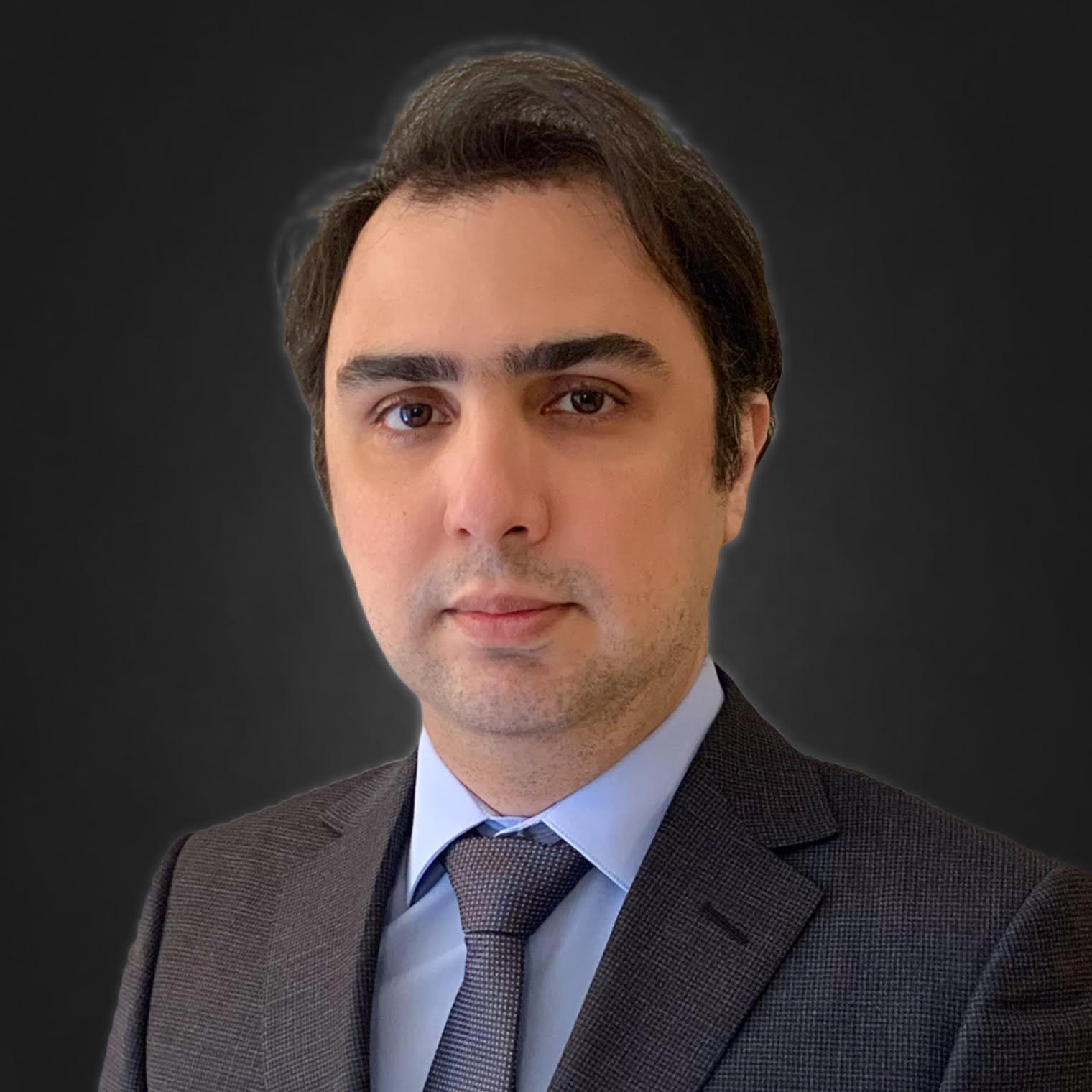
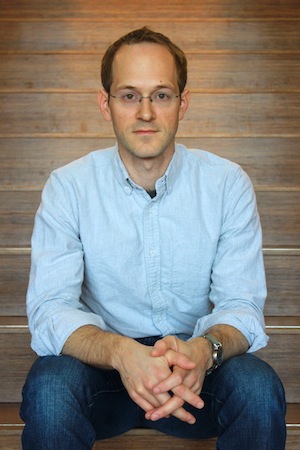
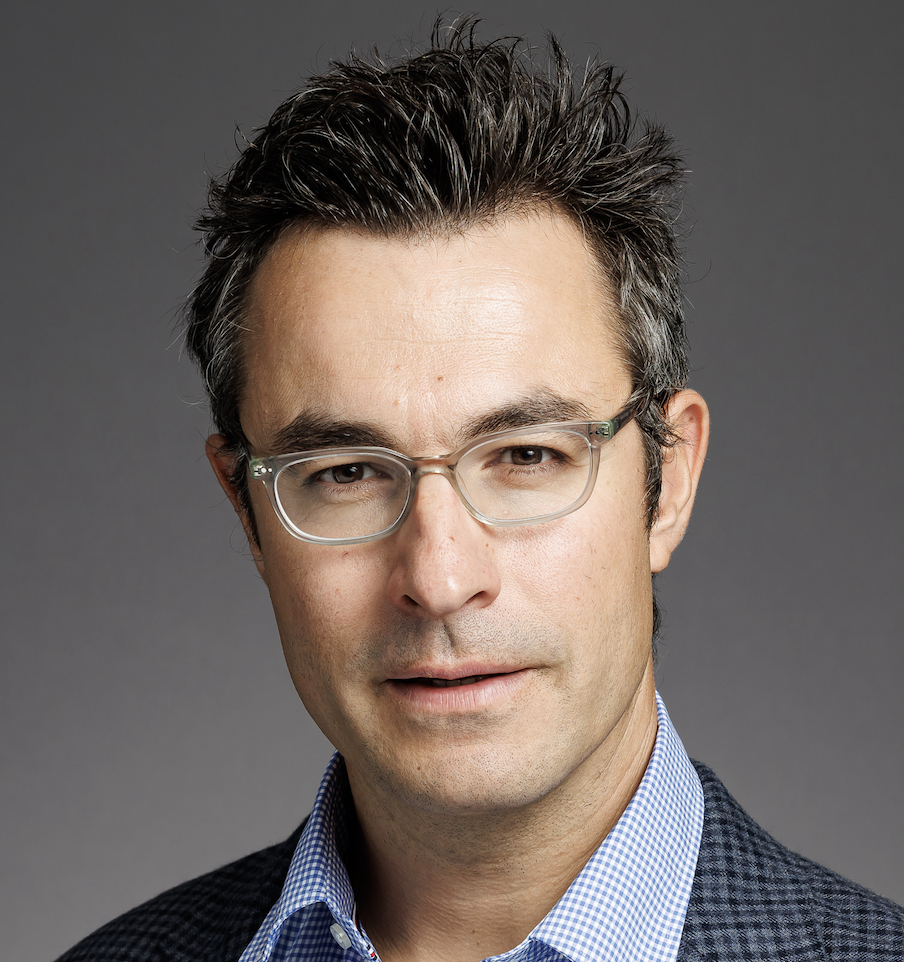
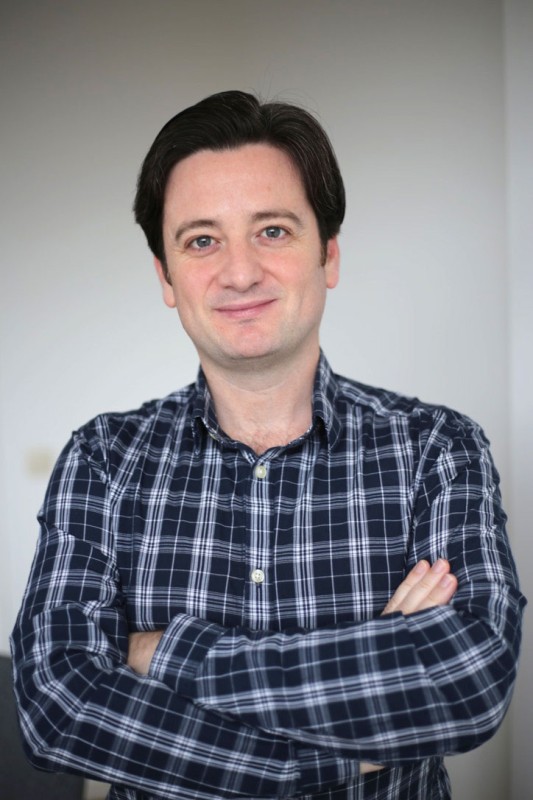
Anoosheh Heidarzadeh is an Assistant Professor in the Department of Electrical and Computer Engineering at Santa Clara University's School of Engineering. He holds a Ph.D. in Electrical and Computer Engineering from Carleton University (2012) and previously served as a Visiting Assistant Professor at Texas A&M University (2018-2022) and Associate Research Scientist at the same institution (2015-2017). His postdoctoral research was conducted at the California Institute of Technology (2013-2014). His research focuses on: Information and coding theory : Fundamental limits of data transmission and storage systems Private and secure computing : Protocols for confidential data processing in networked environments Fault-tolerant distributed systems : Resilient computation frameworks for large-scale applications Distributed machine learning : Scalable algorithms for collaborative learning architectures Recent publications (2021-2022) demonstrate strong emphasis on privacy-preserving computation (covering 73% of articles) and distributed coding techniques (67% of articles), with innovations in private information retrieval, matrix operations, and group testing methodologies. Theoretical contributions dominate (87%), while 13% address applied challenges like COVID-19 screening.
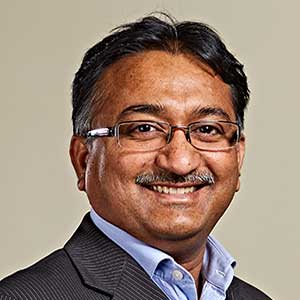
Samir Dani is a Professor of Operations and Supply Chain Management at Keele University’s Keele Business School. He holds Chartered Manager status and is a Fellow of multiple professional bodies, including the Higher Education Academy and Chartered Institute of Logistics and Transport. Prior to academia, he worked in India’s automotive industry. His research focuses on supply chain resilience, sustainability, food logistics, and Industry 4.0 technologies like AI and Blockchain. Affiliations: Keele University (current), University of Huddersfield (2014–2019), Loughborough University (2005–2008) Leadership: Former Head of Logistics, Marketing, Hospitality, and Analytics Department at University of Huddersfield Industry Engagement: £5M Leeds City Region LEP Supply Chain Program, UK-India trade advisory roles Research Interests: Supply chain risk and resilience Food supply chain sustainability AI, IoT, and Blockchain applications Industry 4.0 transformations Recent Article Trends: Focus on climate action impacts, blockchain trust mechanisms, and SME net-zero strategies. His work bridges academic theory with industry challenges, emphasizing technology adoption and sustainability. Awards: Prix des Associations (2015), UK Top 100 Logistics Professional (2017/18) Grants: £800K+ from EPSRC, IMCRC, and KTP Advisory Roles: Editorial Board member of Supply Chain Management: An International Journal, Academic Review Board member of International Journal of Operations and Production Management.
Pramod Bhatotia is a Full Professor and Chair at the Technical University of Munich (TUM) and an Honorary Professor at the University of Edinburgh. Previously, he held professorial roles at the University of Edinburgh and was the Founding Technical Director of Huawei Dresden Research Center. He earned his PhD in Computer Science from the Max Planck Institute for Software Systems (MPI-SWS). His research focuses on building reliable, secure, and scalable computer systems, encompassing distributed systems, cloud computing, operating systems, and quantum computing. **Education**: PhD in Computer Science from MPI-SWS. **Research Interests**: Distributed Systems, Cloud Computing, Operating Systems, Virtualization, Compilers, Quantum Computing, Dependable Systems, and System Security. His work emphasizes practical system design to address real-world challenges. **Awards**: A prolific award recipient, Bhatotia has received grants and recognition from ERC, NVIDIA, Google, Huawei, and others, including the DSN Rising Star Award (2024) and the EuroSys Young Researcher Award (2023). His contributions span academic and industrial collaborations. Service**: Organized major conferences like HotOS 2027 and SOSP 2026. Served as PC Co-Chair for EuroSys 2027 and Middleware 2023. Editorial roles include Communications of the ACM (2022–2024). Labs & Industry**: Leadership roles at Huawei Research, Microsoft Research, IBM Research, and Bell Labs. Founded the Huawei Dresden Research Center. Global Engagement**: Presented at over 30 international conferences and delivered invited talks at institutions worldwide, including KAUST, Imperial College London, and TU Munich.
David A. Hsieh is the Bank of America Professor of Finance at the Fuqua School of Business, Duke University, where he has been a faculty member since 1993. Previously, he served as Associate Professor and Assistant Professor at the University of Chicago's Graduate School of Business from 1981-1989. His extensive research has significantly contributed to the understanding of hedge funds, financial risk management, and nonlinear dynamics in financial markets. Massachusetts Institute of Technology, Ph.D. in Economics, 1981 Yale University, B.S. in Economics and Mathematics, 1976 (Summa Cum Laude, Phi Beta Kappa) Phillips Academy, Andover, 1972 (Cum Laude) Dr. Hsieh's research primarily focuses on the dynamics of asset prices and their implications for financial risk management. He has made significant contributions to understanding risk and return characteristics in hedge funds and commodity funds, pioneering work on nonlinear dynamics applications to financial markets. His research has evolved from early work on exchange rates and volatility modeling to more recent comprehensive analyses of hedge fund strategies, performance measurement, and industry structure. Hsieh's publication history reveals a clear progression from foundational work on nonlinear dynamics in financial markets to increasingly sophisticated analyses of hedge fund strategies and risk characteristics. His recent work, often in collaboration with William Fung and other prominent finance researchers, has focused on mega hedge fund firms, franchise value in the industry, and the evolution of hedge fund strategies toward more index-like products. The research consistently combines rigorous theoretical frameworks with robust empirical analyses across diverse market conditions. CAIA Award for Excellence in Alternative Investment Research (2015) CFA Institute Graham and Dodd Award of Excellence (2004) Bank of America Faculty Award (2002) Duke Cross-Continent Executive MBA Teaching Excellence Award (2002) Fischer Black Memorial Foundation Robert J. Schwartz Memorial Prize (1999) Smith Breeden First Prize (1990) Yale Science and Engineering Association High Scholarship Award (1976) Russell Henry Chittenden Prize (1976) Dr. Hsieh has served as a consultant for the International Monetary Fund (2007-2016) and the Bank for International Settlements (1998), and as a Visiting Scholar at both the International Monetary Fund and the Board of Governors of the Federal Reserve System. His editorial service includes Finance Editor for Management Science (2003-2009) and Associate Editor roles for several leading finance journals. He has developed extensive research resources including a Hedge Fund Data Library that has become widely used in academic and industry research.
Jian Huang is an Associate Professor of Electrical and Computer Engineering at the University of Illinois at Urbana-Champaign (UIUC), holding a 100% appointment since August 2024. He is also an affiliated Associate Professor in Computer Science and serves as the Y. T. Lo Faculty Fellow in ECE. Huang leads the Systems Platform Research Group and received his Ph.D. in Computer Science from Georgia Institute of Technology in August 2017, where his dissertation earned the College of Computing Dissertation Award. His research focuses on Computer Architecture, Memory and Storage Systems, AI Infrastructure, Distributed Systems, and Systems Security . Huang has pioneered work in sustainable AI infrastructures, modular data centers, neural processing unit virtualization, and ransomware-aware storage systems. His research has been featured in top-tier conferences including ISCA, MICRO, ASPLOS, OSDI, SOSP, and USENIX ATC, with over 50 publications and multiple patents issued worldwide. Huang's research has significant industry impact, with some work transferred into products and featured in popular media outlets including ACM CACM, TechXplore, and Science Daily. His work on non-volatile memory and storage systems has received extensive coverage, with some projects generating over 50 media reports. Among his notable achievements are the ACM SIGMICRO Early Career Award, NSF CAREER Award, IEEE Micro Top Picks (three times), USENIX Best Paper Award, and the MICRO Best Paper Runner Up in 2024. He has secured over $4.01M in grants ($11.12M with collaborators) from NSF, DARPA, Army Research Office, and industry partners. ACM SIGMICRO Early Career Award NSF CAREER Award IEEE Micro Top Picks (three times) USENIX Best Paper Award MICRO Best Paper Runner Up (2024) Google Faculty Research Award NetApp Faculty Fellowship Award Huang actively contributes to the academic community as program co-chair of NVMW'23 and organizer of HotInfra'23. He currently advises 12 Ph.D. students, 1 master student, and multiple undergraduates. His teaching innovations include developing ECE522: Emerging Memory/Storage System and revising ECE511: Computer Architecture with cutting-edge content.
Andrew Childs is a Professor at the University of Maryland, affiliated with the Department of Computer Science and the Institute for Advanced Computer Studies (UMIACS). He serves as Director of the NSF Quantum Leap Challenge Institute for Robust Quantum Simulation (RQS) and is a Fellow at the Joint Center for Quantum Information and Computer Science (QuICS). His research focuses on quantum algorithms for simulating physical systems, algebraic problems, and quantum walk protocols, with applications in quantum computing and computational complexity. University of Maryland Institute for Advanced Computer Studies (UMIACS) Joint Center for Quantum Information and Computer Science (QuICS) NSF Quantum Leap Challenge Institute for Robust Quantum Simulation Childs' research spans quantum simulation, quantum Fourier transform, phase estimation, and Hamiltonian dynamics. He has developed techniques to reduce quantum computational resources for simulating quantum systems and explored limitations of quantum computers through hidden subgroup problems and non-unitary dynamics. His publications cover diverse areas including quantum walk optimization, Hamiltonian simulation methods, and applications to cryptography and condensed matter physics. Recent works address spatial search algorithms, product formulas for commutators, and quantum routing protocols. As an educator, Childs has taught courses on quantum algorithms and information processing at both the University of Maryland and University of Waterloo, with lecture notes and materials spanning multiple years. Contact: amchilds@umd.edu | Office: ATL 3359 | Affiliated with University of Maryland's quantum research institutes.
Charalampos Papamanthou is an Associate Professor of Computer Science at Yale University, where he also serves as Co-director of the Yale Applied Cryptography Laboratory and a member of the Yale Institute for Foundations of Data Science. He holds affiliations with the Yale Center for Algorithms, Data, and Market Design. Additionally, he is Chief Scientist at Lagrange Labs. His research focuses on computer security and applied cryptography, particularly verifiable and privacy-preserving computations, leakage-abuse attacks on searchable encryption, and scalable blockchains/cryptocurrencies. He has advised numerous students and postdocs, and his work is supported by NSF, Protocol Labs, and JP Morgan. Research Interests: His primary areas include cryptographic protocols, privacy-preserving systems, blockchain infrastructure, secure cloud computing, and distributed consensus mechanisms. He has pioneered advancements in zero-knowledge proofs, private information retrieval, and dynamic searchable encryption. Awards: He has received prestigious awards such as the CCS Test-of-Time Award (2022), JP Morgan Faculty Research Award (2022), and NSF CAREER Award (2017). His contributions span over 140 publications in top venues like CRYPTO, CCS, and SODA. Teaching: He has taught advanced courses in cryptography, algorithms, and computer systems security at Yale and previously at the University of Maryland and Brown University. Recently, he chairs Yale’s PhD admissions in Computer Science. Labs & Teams: Leads the Yale Applied Cryptography Lab, focusing on real-world applications of cryptographic research. Collaborates with industry partners like Lagrange Labs to develop privacy-preserving technologies.
Goran Strbac is a Professor of Energy Systems at Imperial College London's Faculty of Engineering, holding the Chair in Electrical Energy Systems. He leads the Department of Electrical and Electronic Engineering and directs the joint Imperial-Tsinghua Research Centre on Intelligent Power and Energy Systems. His roles include IPCC WG 3 Leading Author, OFGEM RIIO-2 Challenging Group Member, and member of multiple EU energy platforms. Strbac's research focuses on multi-energy systems integration, energy market design, renewable integration, distributed energy resources, and grid resilience. Notable contributions include whole-energy system modeling across operation and investment scales, market mechanisms for flexibility services, and security assessments for low-carbon infrastructure. His work emphasizes resilience and decarbonization, with over 500 publications and 4 co-authored books. He advises governments and regulatory bodies on energy policy, including contributions to UK Smart System Forum and European Technology and Innovation Platforms. His recent articles explore AI-driven grid optimization, hydrogen integration, and transactive energy systems. Strbac leads major initiatives like the UK Centre for Grid Scale Energy Storage and chairs resilience-focused research clusters. His research bridges academia and industry, informing policy through rigorous systems analysis and innovative modeling frameworks.
Tom Rainforth is an Associate Professor of Statistical Machine Learning at the University of Oxford's Department of Statistics, leading the RainML Research Lab (rainml.uk). He holds a Tutorial Fellowship at Mansfield College and is Principal Investigator of the ERC Starting Grant 'Data-Driven Algorithms for Data Acquisition' (2024–2029). Previously, he held roles including a postdoc under Yee Whye Teh (2017–2019), Junior Research Fellow at Christ Church College (2019–2019), and Florence Nightingale Bicentennial Fellow (2020–2024). He earned his MEng in Mechanical Engineering from the University of Cambridge and his D.Phil from Oxford under Frank Wood and Michael Osborne, focusing on probabilistic programming and Monte Carlo methods. He briefly worked in Ferrari's Formula 1 team. Research Interests : Bayesian experimental design, probabilistic and data-efficient machine learning, active learning, deep learning (with a focus on probabilistic approaches), probabilistic programming, and Monte Carlo methods. His work emphasizes statistical efficiency and adaptive algorithms. Publications : Recent contributions span modern Bayesian experimental design, adaptive importance sampling (Daisee), and applications of probabilistic methods in LLMs and generative models. His research bridges theory and practice, addressing challenges in scalability and robustness. Awards : ERC Starting Grant (2024–2029), highlighting his leadership in foundational AI research. Advising & Grants : Supervises 15 graduate students, including work on Bayesian neural networks, generative flows, and experimental design. His ERC grant supports cutting-edge data-driven algorithm development. Labs & Teams : Directs the RainML Lab, which develops scalable Bayesian methods and probabilistic AI systems.
Prof. Dr. Timothy Roscoe is a Full Professor in the Department of Computer Science at ETH Zurich. His research focuses on operating systems, networking, and distributed systems. He was inducted as an ACM Fellow in 2014 for contributions to these fields. Previously, he worked at Intel Research Berkeley, UC Berkeley (Adjunct Professor), and Sprint Labs. His work includes foundational contributions to systems like PlanetLab, P2 Declarative Networking, and the Nemesis OS. Roscoe holds a PhD from the University of Cambridge and has led projects in cloud computing, wide-area network measurement, and secure systems design. His current research emphasizes hardware-software co-design, formal verification of systems, and scalable memory architectures. Education: PhD in Computer Science, University of Cambridge (1995) Key Roles: Principal Researcher at Intel Berkeley Lab, Visiting Researcher at National ICT Australia Research Highlights: Contributions to distributed systems (PlanetLab), declarative networking (P2), and secure microkernels (seL4 integration). Current projects address challenges in disaggregated memory systems, coherent interconnects, and trustworthy embedded systems. Awards: ACM Fellow (2014), numerous grants and industry collaborations. Labs/Teams: Systems Group at ETH Zurich, focusing on OS design, hardware architectures, and formal methods.
Subodha Kumar is the Paul R. Anderson Distinguished Chair Professor of Statistics, Operations, and Data Science at Temple University’s Fox School of Business. He serves as the Founding Director of the Center for Business Analytics and Disruptive Technologies and has a secondary appointment in Information Systems. His roles include Ph.D. Program Concentration Director for Operations and Supply Chain Management. With over 240 publications, he ranks #1 globally in Information Systems Research publishing and holds a robotics patent. His research focuses on AI, blockchain, healthcare analytics, and cybersecurity, with notable contributions to digital transformation and operations management. Awards include the INFORMS ISS Distinguished Fellow and POMS Fellow. He advises major journals like Production and Operations Management and organizes conferences like POMS 2018. Media mentions span NYT, WSJ, and CBS. Education: University of Washington faculty Texas A&M University faculty Research Interests: Dr. Kumar explores AI applications, blockchain in fintech, healthcare system optimization, and supply chain analytics. He investigates cybersecurity’s operational impacts and data mining strategies. His work bridges theory and practice, addressing challenges in digital transformation and platform economies. Publications Trends: Recent work emphasizes digital platforms (e.g., blockchain adoption, telemedicine impact), organizational behavior (real-time feedback systems), and healthcare operations (personalized treatment algorithms). He frequently collaborates internationally, with studies appearing in Management Science, Information Systems Research, and Decision Sciences. Awards & Recognition: Changjiang Scholars Chair (China) ISB Visiting Professorship POMS Executive Editor Grants & Labs: Secured NIH grants for health analytics projects. Leads Temple’s analytics center fostering industry partnerships. Active in editorial roles (e.g., Production and Operations Management Journal Deputy Editor). Teaching: Offers courses in data science, optimization methods, and innovation entrepreneurship at graduate/undergraduate levels.
Prof. Dr. Gonzalo Guillén Gosálbez is a Full Professor at the Department of Chemistry and Applied Biosciences , ETH Zürich. He holds a PhD in Process Systems Engineering (UPC, 2005) and has held academic positions at Imperial College London (Reader), University of Manchester (Senior Lecturer), and Universitat Rovira i Virgili (Assistant/Associate Professor). His research focuses on Sustainable Chemical Processes , integrating life cycle assessment, optimization techniques, and planetary boundary analysis to evaluate and design low-carbon technologies. Current position: Full Professor, ETH Zürich (2019–present) Prior roles: Imperial College London (2016–2019), University of Manchester (2014–2016), URV Spain (2008–2014) Education: PhD (UPC, 2005), MEng/BEng (University of Murcia) His research explores CO2 valorization , green methanol synthesis , circular marine fuels , and planetary boundary compliance in energy and chemical systems. Recent work emphasizes machine learning for process modeling, single-atom catalysis , and decentralized ammonia production . Scientific contributions include 15+ peer-reviewed articles (2023–2025) in journals like Nature Chemical Engineering , ACS Sustainable Chemistry & Engineering , and Energy & Environmental Science . Key themes: Optimization of hybrid fossil/renewable carbon systems Environmental impacts of energy transitions Catalyst design for sustainable chemistry Life cycle assessment of emerging technologies Awarded UPC Top Doctoral Student Award and Top National Student Award , he combines process systems engineering with sustainability metrics to address global challenges in chemical and energy systems.
Andy Pavlo is an Associate Professor with Indefinite Tenure in the Computer Science Department at Carnegie Mellon University's School of Computer Science. He is an active member of the CMU Database Group and the Parallel Data Laboratory, where he leads research in database management systems with a focus on self-driving architectures, transaction processing, and large-scale analytics. His work bridges academic research and industry applications through projects like NoisePage, OtterTune (which he co-founded and served as CEO before it ceased operations), and Peloton. Dr. Pavlo's research interests span database management systems with particular emphasis on autonomous database architectures that can self-tune and optimize without human intervention. His work explores transaction processing systems that can handle high-throughput workloads while maintaining consistency, and large-scale data analytics techniques that efficiently process massive datasets. He has made significant contributions to query optimization, database extensibility, and automatic database tuning using machine learning techniques. His recent work on database extensibility revealed critical issues in PostgreSQL's extension ecosystem, showing that approximately 16% of extensions are incompatible with at least one other extension due to API violations and memory errors. His research output demonstrates a consistent focus on practical database systems challenges, with recent publications examining database extensibility, user-defined function optimization, and the cyclical nature of database research. The articles show a strong trend toward making database systems more autonomous, with increasing integration of machine learning techniques for automatic tuning and optimization. His work often combines deep theoretical analysis with practical implementation in open-source systems. Dijkstra Award 2024 for contributions to database systems research Dr. Pavlo actively mentors graduate students, with current advisees including Wan Shen Lim, William Zhang, and Sam Arch (co-advised with Todd Mowry). His former students have gone on to successful careers in both industry and academia. He has secured significant research funding through CMU's affiliate program with major database companies including ClickHouse, DataStax, dbt, Firebolt, MotherDuck, RelationalAI, SingleStore, Spiral, PingCAP/TiDB, Yellowbrick, and Yugabyte. His research is supported by these industry partnerships and likely includes NSF funding given his active participation in the database research community. At CMU, Dr. Pavlo leads the Database Group and organizes several seminar series including "SQL or Death," "Database Building Blocks," and "ML⇄DB Technical Talks." These seminars bring together researchers and practitioners to discuss cutting-edge developments in database systems. He also runs a summer research internship program that has attracted students for multiple consecutive years, indicating a strong research group with ongoing projects and funding.
Katherine Lemons is an Associate Professor in the Department of Anthropology at McGill University's Faculty of Arts. Her research focuses on Islamic family law adjudication in India, examining its implications for understanding Muslim gender and kin relations, secularism, minority politics, and legal pluralism in postcolonial contexts. She has established herself as a leading scholar in the anthropology of law with her groundbreaking work on Muslim divorce practices and their relationship to Indian secularism. Dr. Lemons earned her Ph.D. from the University of California, Berkeley in 2010. Her academic journey has centered on the intersections of religion, law, and gender in South Asian contexts, with particular attention to how religious legal systems operate within secular states. Her research interests span multiple interconnected fields including the anthropology of law, Islamic legal studies, secularism theory, feminist anthropology, and South Asian studies. Lemons approaches these topics through careful ethnographic work in India, particularly examining how Muslim communities navigate family law disputes through non-state Islamic institutions. Her work challenges conventional understandings of the relationship between religious and secular law, arguing that Muslim divorce practices in India represent a critical site for understanding the complexities of secular governance in postcolonial contexts. She investigates how legal pluralism functions in practice, how religious legal authority is established adjacent to secular states, and how gender relations are shaped through these intersecting legal regimes. Dr. Lemons' scholarly output reveals a consistent focus on the tensions between religious legal traditions and modern secular governance, with particular attention to how marginalized communities navigate these complex legal landscapes. Her work demonstrates how legal practices often blur the boundaries between religious and secular domains, challenging simplistic understandings of secularism. She has made significant contributions to understanding how Islamic law functions in non-Muslim majority contexts, both in India and more recently in her research on sharia courts in Ontario. Michelle Z. Rosaldo Prize from the Association for Feminist Anthropology, American Anthropological Association (Honorable Mention) Critical Anthropology Book Prize from the Association for Political and Legal Anthropology (Honourable Mention) South Asian Muslim Studies Association Book Award (Honourable Mention) As an academic mentor, Dr. Lemons advises graduate students working at the intersections of anthropology, law, and religious studies. Her research has been supported by various academic grants that have enabled extensive fieldwork in India and Canada. She is currently developing two major research projects: "Traveling for Justice," which examines transnational dimensions of Islamic legal knowledge, and "Adjacent to the State," an ethnographic study of sharia courts in Ontario. Dr. Lemons is affiliated with several research centers at McGill University that focus on South Asian studies, legal anthropology, and religious studies. Her work connects with broader scholarly communities through collaborations with researchers studying legal pluralism, secularism, and Islamic jurisprudence across multiple national contexts.
Daniel E. Ho holds multiple prestigious positions at Stanford University: William Benjamin Scott and Luna M. Scott Professor of Law Professor of Political Science Professor of Computer Science (by courtesy) Senior Fellow, Stanford Institute for Economic Policy Research Senior Fellow, Stanford Institute for Human-Centered Artificial Intelligence Faculty Fellow, Center for Advanced Study in the Behavioral Sciences He serves on the National Artificial Intelligence Advisory Commission (NAIAC), as Senior Advisor on Responsible AI at the U.S. Department of Labor, and as a Public Member of the Administrative Conference of the United States (ACUS). Ho earned his J.D. from Yale Law School and Ph.D. from Harvard University, completing a clerkship with Judge Stephen F. Williams on the U.S. Court of Appeals for the District of Columbia Circuit. His research bridges artificial intelligence, law, and public policy with emphasis on: Regulatory governance frameworks for AI systems Fairness and bias mitigation in algorithmic decision-making Environmental enforcement using satellite imagery and computer vision Methods for estimating racial disparities without direct demographic data Legal AI reliability and statutory research systems Analysis of his 2025 publications reveals a consistent focus on practical AI governance tools addressing real-world regulatory challenges. Key themes include developing benchmarks for legal applications, mitigating hallucination in legal AI tools, and creating systems for statutory research. His work demonstrates strong integration of technical AI methods with policy implementation, particularly in environmental enforcement and fairness assessment. As Director of the Regulation, Evaluation, and Governance Lab (RegLab), Ho leads interdisciplinary research partnerships with government agencies. While specific grant details aren't provided, RegLab's operational model indicates substantial research funding for policy-relevant AI projects. No student advisees are mentioned in available materials. Ho's leadership extends to national advisory roles where he shapes federal AI policy through evidence-based recommendations, particularly regarding environmental protection and civil rights enforcement mechanisms.