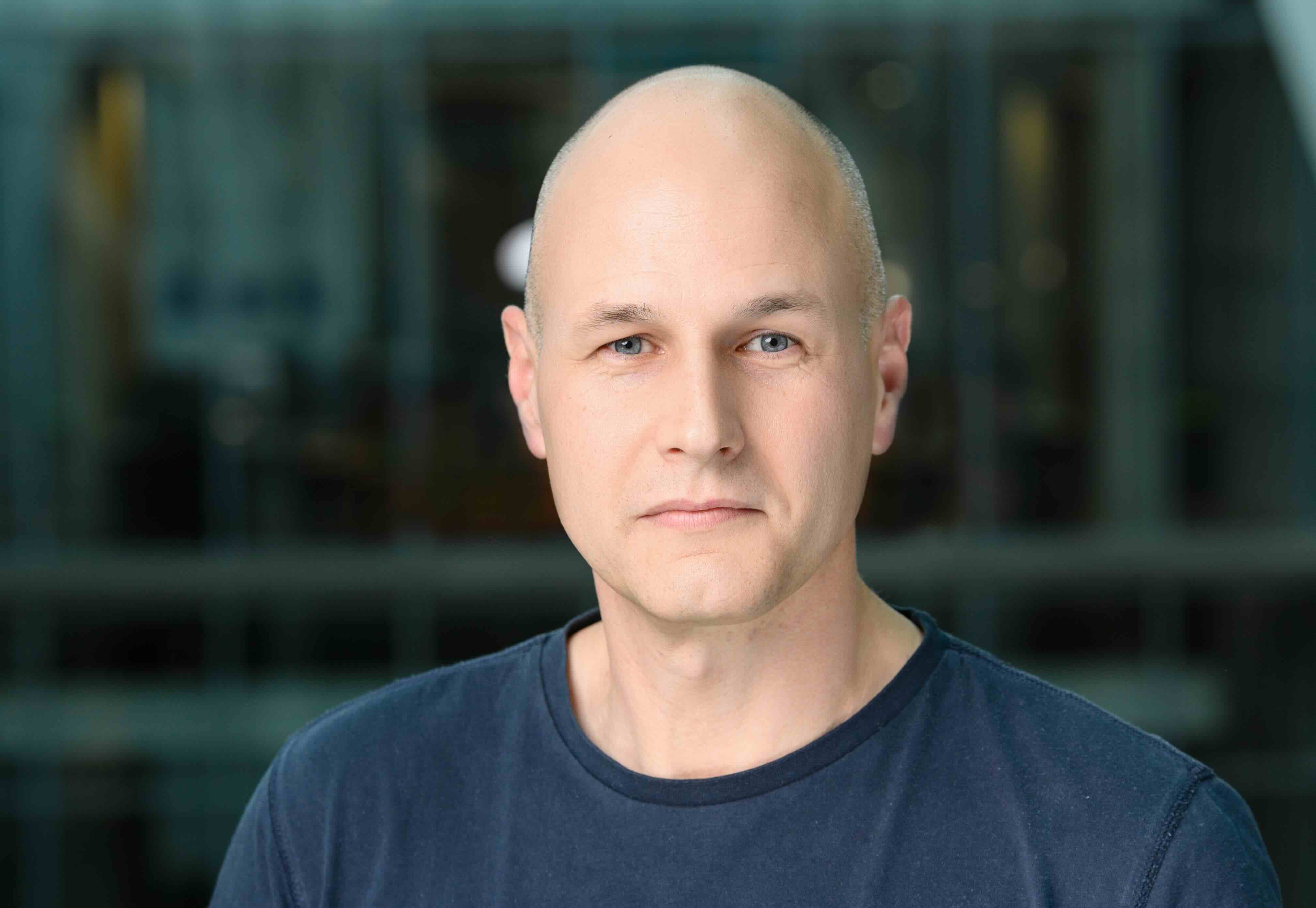
Ben Faber is an Associate Professor in the Department of Economics at the University of California, Berkeley. His research focuses on the intersection of international trade and development economics, with particular emphasis on migration patterns, market integration, and policy interventions in rural and urban contexts. He joined UC Berkeley in 2013 and currently teaches courses on international economics and supervises doctoral students. His research explores topics such as the economic impacts of senior migration on local development, rural-urban migration dynamics, and the welfare implications of incomplete price data. He has also studied agricultural policy scalability, responsible sourcing practices in global supply chains, and the role of e-commerce in connecting rural regions. His work frequently integrates empirical evidence from case studies in Mexico, China, and the Democratic Republic of Congo. Faber’s recent publications analyze the effects of retail globalization on household welfare, the relationship between tourism and coastal economic development, and the challenges of artisanal mining in cobalt supply chains. His research methodologies often involve innovative use of scanner data, spatial analysis, and econometric modeling to address complex development questions.
Professor Michael Bell is the Foundation Professor of Ports and Maritime Logistics at the University of Sydney Business School's Institute of Transport and Logistics Studies. He holds a BA from Cambridge University, MSc and PhD from Leeds University, and has held roles including Director of Imperial College London's PORTeC and academic positions at Newcastle University and Karlsruhe Technical University. His research focuses on ports, transport networks, sustainability, and intelligent transport systems. He has authored over 150 publications, including seminal works like Transportation Network Analysis . Current projects include circular economy diversification for ports and autonomous delivery systems. Awards include fellowship in multiple transport societies. Education: BA (Economics) Cambridge (1975), MSc (Transportation) Leeds (1976), PhD (Freight Distribution) Leeds (1981). Postdoctoral research at Karlsruhe Technical University (1982–1984). Research Interests: Ports logistics, transport network resilience, urban logistics, cybersecurity in supply chains, and sustainable transport policy. Publications span 40+ years, emphasizing empirical and theoretical advancements in maritime systems, network modelling, and policy analysis. Recent work explores autonomous systems integration and port diversification strategies. Grants include a 2023 iMOVE CRC project on land use trip surveys and a 2022 ARC Discovery Project on automated transport decisions. Media appearances address global trade disruptions (e.g., Suez Canal blockage), autonomous vehicles, and port sustainability. Led PORTeC (Imperial College) and co-founded the Institute of Transport and Logistics Studies at Sydney. Active in policy advisory roles for government agencies and industry bodies.
Dr. Iñaki Esnaola is a Senior Lecturer at the Department of Automatic Control and Systems Engineering, University of Sheffield, and a Visiting Research Collaborator at Princeton University. He holds a MSc from the University of Navarra (2006) and a PhD from the University of Delaware (2011). His research focuses on information theory, machine learning, and cybersecurity, particularly in cyberphysical systems like smart grids. His work addresses data integrity, privacy, robust estimation, and optimal sensor placement. Research interests include: Information theory and data science, machine learning and high-dimensional statistics, cybersecurity (especially data injection attacks), privacy, robust estimation, and sensor placement optimization. Recent projects involve empirical risk minimization with regularization, stealth attacks on control systems, and compressive sensing for environmental monitoring. Key publications include studies on relative entropy in machine learning, sensor placement for sewer networks, and stealth attacks in smart grids. He leads a research group with ongoing projects in resilient cyberphysical systems and received a UKRI grant for advanced manufacturing. His work bridges theoretical foundations with real-world applications in energy systems and environmental monitoring.
Phil Berke is a Research Professor at the University of North Carolina Chapel Hill's Department of City and Regional Planning, specializing in community resilience and urban planning. He leads the Center for Resilient Communities and Environment , focusing on interdisciplinary research to enhance urban resilience through policy integration and stakeholder collaboration. His work emphasizes mitigating climate change impacts, particularly via the Plan Integration for Resilience Scorecard™ , funded by the NSF and Department of Homeland Security. Education: B.A. in Economics/Environmental Science (Empire State College), M.S. (University of Vermont), Ph.D. (Texas A&M) Key Affiliations: Coastal Resilience Center, Planet Texas 2050 Technical Advisory Board Research interests include land use planning, environmental hazards, and social equity in disaster resilience. His 2015 article on community resilience earned the APA's Best Article Award. Current projects involve evaluating flood resilience in cities like Houston and Rotterdam, and advancing equity in hazard mitigation plans. Berke advises on global resilience initiatives, including the Rockefeller Foundation's 100 Resilient Cities program. He prioritizes training students through capstone courses and fieldwork to address real-world challenges like coastal development risks and climate adaptation strategies.
Prof. Alan Kin-tak Lau is an Adjunct Professor in the Department of Mechanical Engineering & Product Design at Swinburne University of Technology. He previously served as Pro Vice-Chancellor (International and Digital Research), overseeing global research collaborations and digital innovation. His expertise spans advanced materials, manufacturing, and product design, with a focus on aerospace applications, energy storage, and sustainable technologies. Lau holds adjunct roles at Chonbuk National University and is a Fellow of multiple prestigious institutions, including the European Academy of Sciences and the Royal Aeronautical Society. Affiliations: Swinburne University of Technology Roles: Adjunct Professor, Former Pro Vice-Chancellor Research interests include nanomaterials for energy storage (e.g., supercapacitors, hydrogen systems), composite materials for aerospace, and eco-friendly manufacturing. He leads interdisciplinary projects like the Aerostructures Innovation Research Hub and the Research Centre for New Energy Transition. Lau has secured over AUD 100M in grants and supervised numerous PhD projects on topics like graphene composites and additive manufacturing. Notable awards include the VEBLEO Best Scientist Award (2020), UGC Teaching Excellence Award (2013), and the Young Engineer of the Year Award (2004). He chairs international conferences and serves on boards of companies like King’s Flair International. His work bridges academia and industry, with patents and commercial applications in sustainable materials and EV technologies.
Dr Fiona Suwana is a Communication and Media Lecturer & Researcher at UniSA Creative, University of South Australia. She holds a PhD from Queensland University of Technology and has a Master's from Universitas Indonesia and a Bachelor's from London School of Public Relations. Her research focuses on digital activism, democracy, media literacy, and youth civic engagement in Indonesia. Fiona has co-authored works on social media dynamics, including 'Social Media in Society' (Palgrave Macmillan) and peer-reviewed articles on Indonesian political movements and digital media strategies. Education: PhD: Digital Media Research Centre, Queensland University of Technology MSc: Communication Science, Universitas Indonesia Bachelor of Arts: Communication Studies (Mass Communication), London School of Public Relations Her research interests include digital media's role in political movements (e.g., the Save KPK campaign), WhatsAppification in elections, and expanding digital literacy initiatives. Fiona collaborates with institutions like Diponegoro University, Monash University Malaysia, and QUT. She has led projects such as the 'Democratic Resilience' series funded by DFAT Australia Awards Indonesia. Grants & Supervision: Supervises research degree students and has secured grants for projects analyzing digital media's societal impact. Her work addresses challenges in Indonesia's democratic practices and cyber threats to activists. Labs/Teams: Engaged in cross-disciplinary research at UniSA Creative, focusing on creative industries and digital innovation.
**Jianguo Wu** is the Dean’s Distinguished Professor of Landscape Ecology and Sustainability Science at Arizona State University (ASU), holding joint appointments in the School of Life Sciences and School of Sustainability. His affiliations include the Center for Biodiversity Outcomes, Water Institute, Global Drylands Center, and roles as Senior Global Futures Scientist. He earned his B.S. from Inner Mongolia University and M.S./Ph.D. from Miami University, followed by NSF postdoctoral fellowships at Cornell and Princeton Universities. **Education**: B.S. in Biology, Inner Mongolia University (1982) M.S. in Ecology, Miami University (1987) Ph.D. in Ecology, Miami University (1991) **Research Interests**: Landscape ecology, urban ecology, biodiversity-ecosystem functioning, and landscape sustainability science. His work emphasizes ecosystem services, human wellbeing linkages, and interdisciplinary solutions to global environmental challenges. **Awards**: Includes AAAS Fellow (2007), Leopold Leadership Fellow (2009), Distinguished Landscape Ecologist Award (2010), and recognition as a Web of Science Highly Cited Researcher (2019–2020). **Service & Leadership**: Editor-in-Chief of Landscape Ecology since 2005, Founding Director of the Sino-US Center for Conservation, Energy, and Sustainability Science (2007–present), and leader in multiple international editorial and advisory roles. **Labs/Teams**: Directs the Center for Human-Environment System Sustainability (CHESS) at Beijing Normal University and contributes to interdisciplinary initiatives like the Global Futures Scientists and Scholars program.
Dr. Nagham Saeed is an Associate Professor in Electrical and Electronic Engineering at the School of Computing and Engineering, University of West London, where she has been actively engaged in teaching and research since 2007. She holds a PhD in Intelligent MANET Optimisation from Brunel University and leads the Industrial Internet of Things (IIoT) research group. Her academic service includes editorial and technical committee roles for IEEE and MDPI, and she is a Chartered Engineer (CEng), Senior Member of IEEE, Member of IET, and Senior Fellow of the Higher Education Academy (HEA). PhD in Intelligent MANET Optimisation System, Brunel University (2011) Her research focuses on intelligent systems for smart cities, applying artificial intelligence to telecommunications, energy modeling, and industrial applications. She explores AI-driven optimization in next-generation networks, smart grid integration, battery management systems, and sustainable ICT. Her work also extends to engineering education, particularly feedforward teaching methods and student engagement. The recent publications reveal a strong trend in applying AI and machine learning to solve real-world challenges in energy systems, IoT, transportation, and environmental sustainability, often with a focus on smart cities and renewable integration. Dr. Saeed has been recognized with several awards, including: 2021 University of West London Student Union Best Supervisor/Tutor Award 2022 IEEE Region 8 Outstanding Women in Engineering Section Volunteer Award She mentors early-career engineers and academics and actively promotes electrical and electronic engineering among young girls. She has served as the 2023 IEEE Women in Engineering UK & Ireland Chair and is currently the Vice Chair (Chair-Elect) for the IEEE UK & Ireland Section (2024–2025). Her leadership spans technical innovation, academic service, and diversity advocacy in engineering. She teaches across a range of programs, including MSc Industrial Internet of Things, BEng and MSc Electrical and Electronic Engineering, and supervises PhD research in related fields.
Vincenzo Liberatore is an Associate Professor in the Department of Computer and Data Sciences at Case Western Reserve University’s Case School of Engineering, and currently serves as Associate Chair. His research focuses on smart grid technologies, real-time network control, distributed systems, and randomized algorithms. He holds a PhD and MS in Computer Science from Rutgers University (1998 and 1994), and a BS in Electrical Engineering from Sapienza University of Rome (1992). Dr. Liberatore developed the Energy Information Dashboard (EIDA) with FirstEnergy, an educational tool modeling electricity markets and grid dynamics. He has contributed to patents like the 2014 'High-Performance Streaming Dictionary.' His work spans publications in control systems, theoretical computer science, and energy grid communication. He has served on program committees for the Workshop on Factory Communication Systems (WFCS) and International Conference on Mobile Data Management (MDM). Teaching responsibilities include courses in computer science and engineering, reflecting his expertise in both academia and industry-relevant research.
Maumita Bhattacharya is a Senior Lecturer (equivalent to Associate Professor in North America) at the School of Computing, Mathematics & Engineering, Charles Sturt University, Australia. She specializes in Computational Intelligence and Cyber Security, focusing on AI-driven security solutions, electronic fraud detection, and human-centric cybersecurity challenges. Her work addresses critical areas like BYOD security, IoT vulnerabilities, and social engineering through social media. Research Interests: Computational Intelligence techniques for optimization (Big Data, Engineering Design), Cyber Security applications (fraud detection, IoT security), and human dimensions of cybersecurity. She also investigates socio-computing systems and privacy challenges in social networks. Key Achievements: Recipient of the 2024 Excellence Award (Research) and 2017 SOCM Research Excellence Award Published over 65 peer-reviewed papers in top-tier journals/conferences Editorial roles at Human-centric Computing and Information Sciences (Springer Q1 journal) Guest editor of special issues and conference committee member Labs/Groups: Member of Cyber Security Research Group (CSRG), Machine Vision and Digital Health (MaViDH), and Data Mining Research Group (DaMRG). Active in interdisciplinary research collaborations across Australia and globally.
Oliver T. Coomes is a Professor in the Department of Geography at McGill University, Montreal, Canada. His research focuses on environment and development in tropical regions, particularly in the Peruvian Amazon, examining peasant livelihoods, forest conservation, and adaptation to environmental change. He leads the PARLAP project, studying rural livelihoods and poverty through extensive household surveys and remote sensing. Coomes has held editorial roles in journals like World Development and is affiliated with institutions like the Conference of Latin Americanist Geographers. Education : BSc (University of Victoria), MA (University of Toronto), PhD (University of Wisconsin-Madison). Research Interests : Tropical forest dynamics, shifting cultivation, floodplain agriculture, climate change adaptation, and the intersection of environment and economy in resource-dependent communities. His work combines microeconomic analysis with ecological data, emphasizing sustainable development pathways. Awards : Carl O. Sauer Distinguished Scholarship Award (2010), Runner-up Global Development Network Award (2000). Advising & Grants : Advised over 20 graduate students and post-doctoral fellows. Collaborates internationally on projects funded by agencies like SSHRC and the National Science Foundation. Research emphasizes participatory methods and policy-relevant insights. Labs/Teams : Coordinates the PARLAP Project and collaborates with interdisciplinary teams on Amazonian environmental studies. Engaged in global initiatives like the Global Land Project and the International Geographical Union.
Dr. Panagiotis Andriotis is a Lecturer in Computer Science at the School of Computer Science, University of Birmingham, within the College of Engineering and Physical Sciences. He is also a GIAC Certified Forensic Examiner (GCFE, GASF) and a Senior Fellow of the Higher Education Academy (SFHEA). His interdisciplinary research spans Cyber Security, Human Factors, and Mobile and Ubiquitous Computing. He teaches courses in Computer Science, Cyber Security, and Digital Forensics. His educational background includes a PhD in Computer Science from the University of Bristol (2016), an MSc with Distinction in Computer Science from the same institution (2011), and a BSc in Mathematics from the National and Kapodistrian University of Athens (2004). Dr. Andriotis’s research interests focus on user-centered security, particularly in mobile environments. He investigates how users interact with Android’s permission systems, develops novel authentication mechanisms like Bu-Dash, and explores adversarial machine learning in cybersecurity. His work bridges technical and human aspects, aiming to improve both system robustness and user experience. His recent publications reflect a strong trend in adversarial machine learning, mobile malware detection, usable privacy, and the societal implications of AI in education. He has contributed to high-impact journals such as IEEE Transactions on Cybernetics, ACM Transactions on Privacy and Security, and Elsevier’s Journal of Information Security and Applications. Best Paper Award at HCI International 2020 Impact Award, UWE Bristol Student Union GIAC Certified Forensic Examiner (GCFE) GIAC Advanced Smartphone Forensics (GASF) SANS Lethal Forensicator Coin Dr. Andriotis has advised PhD students, including Andrew McCarthy, and has been involved in funded research projects such as those related to fuzzing, software security, and critical infrastructure protection in collaboration with Airbus. He has served as an External Examiner at Cardiff Metropolitan University and is currently on the editorial boards of Digital Threats: Research and Practice (ACM) and the Journal of Responsible Technology (Elsevier). He has held visiting roles at the National Institute of Informatics in Tokyo, including as a JSPS Fellow and Toshiba Fellow. He leads research in digital forensics and security, with a lab focus on mobile ecosystems, behavioral modeling, and AI-driven threat detection. His team explores both technical and human dimensions of cybersecurity, contributing to tools and frameworks that enhance mobile security and user awareness.
Bruce Stephen is a Senior Lecturer and Strathclyde Chancellor's Fellow in the Department of Electronic and Electrical Engineering at the University of Strathclyde, where he has been since 1999. His work lies at the intersection of data science and power systems engineering, with a strong focus on real-world industrial applications. His educational background includes a BSc in Aeronautical Engineering from the University of Glasgow (1997), an MSc from the University of Strathclyde (1998), and a PhD in Electronic and Electrical Engineering (2005) from the University of Strathclyde. Dr. Stephen's research centers on data-driven methodologies for solving complex engineering challenges in power systems, particularly under conditions of limited data or domain knowledge. His applications span the entire energy value chain—from generation (nuclear, wind, solar) to transmission, distribution, and end-use. He develops software solutions for condition assessment, anomaly detection, and predictive modeling to support asset management and future grid planning. Notably, he co-founded Silent Herdsman Ltd, a spin-out company applying intelligent systems to precision livestock farming. His recent publications highlight a strong trend toward advanced machine learning techniques such as transfer learning, surrogate modeling, and synthetic data generation (e.g., using CTGANs) to improve reliability and decision-making in power systems. These works emphasize explainability, uncertainty quantification, and scalability, particularly in renewable-rich and data-scarce environments. Dr. Stephen is currently the Principal Investigator on the EPSRC-funded Analytical Middleware for Informed Distribution Networks (AMIDiNe) project, aiming to identify barriers to Net Zero through improved data modeling of unmonitored networks. He has also contributed to major projects including EU FP7 ORIGIN, EPSRC APAtSCHE, AGILE, and Transactive Energy Supply Arrangements. He actively advises students and collaborates on interdisciplinary research. His professional activities include organizing the QFF Quarterly Forecasting Forum (2018) and delivering invited talks at industry workshops. He has supervised datasets and research involving structural health monitoring and industrial diagnostics. His work supports UN Sustainable Development Goals related to affordable and clean energy, industry innovation, and climate action.
Carlo Frappi is a Contract Lecturer at the Department of Asian and North African Studies, Ca' Foscari University of Venice. He is also a member of the Steering Committee of the Observatory of Politics and International Relations (OPRI). With a Ph.D. in European History from the University of Rome 'La Sapienza' and an M.A. in Political Sciences from the University of Perugia, Frappi has built a distinguished career at the intersection of academia and policy research. His research focuses on energy security, Turkish foreign policy, the politics of the South Caucasus—especially Azerbaijan—and the geopolitics of the Caspian and Black Sea regions. He has held research and teaching roles at institutions including ISPI, Università Cattolica del Sacro Cuore, and the University of Milan. Frappi's scholarly output spans monographs, journal articles, book chapters, and policy reports. Since 2010, he has co-authored the ISPI quarterly monitoring on Energy Security for the Italian Parliament and Ministry of Foreign Affairs. His recent publications analyze Armenia's geopolitical challenges, Turkish-Azerbaijani energy alliances, and the impact of the Ukraine war on European energy security. His work consistently bridges academic rigor and policy relevance, with a strong emphasis on international relations, regional cooperation, and energy diplomacy in Eurasia. Ph.D. in European History, University of Rome 'La Sapienza' M.A. in Political Sciences (International Politics), University of Perugia Specialization in 'Democratization and Political Affairs', Austrian Study Center for Peace and Conflict Resolution Frappi's research interests include energy security, geopolitical competition in Central Asia, Turkish foreign policy, and post-bipolar regional dynamics. His articles explore themes such as pipeline politics, regional stability, and external influence in the South Caucasus. His recent publications reflect a sustained focus on energy geopolitics, conflict analysis, and regional cooperation. Key trends include the impact of global instability on the South Caucasus, evolving energy strategies in Turkey and Azerbaijan, and the transformation of European energy security in the wake of the Ukraine war. Frappi has not received any scientific awards that are publicly listed in the provided texts. He has contributed to significant research projects and policy monitoring initiatives, including long-term collaboration with ISPI and leadership roles in joint research with institutions in Azerbaijan. He has supervised or co-edited several academic volumes and policy reports, often in collaboration with Italian and international scholars. Frappi is actively involved in academic and policy networks, contributing to research groups and observatories focused on international politics and energy security.
Stefan Katzenbeisser is a Professor at the Chair of Computer Engineering, University of Passau, focusing on cybersecurity in embedded systems, critical infrastructures, and technical data protection. He serves as spokesperson for the Bavarian-funded research cluster ForDaySec and contributes to the DFG Review Board for Security and Dependability. Research areas: Automotive cybersecurity, railway security, hardware-based security (PUFs), post-quantum cryptography Key projects: RESURREC (autonomous vehicle security), FINESSE (secure transportation sensors), 6G-RIC (future mobile networks) His work spans both theoretical and applied cybersecurity, with collaborations in industry and interdisciplinary fields. Recent publications highlight innovations in secure mobility and critical infrastructure protection.