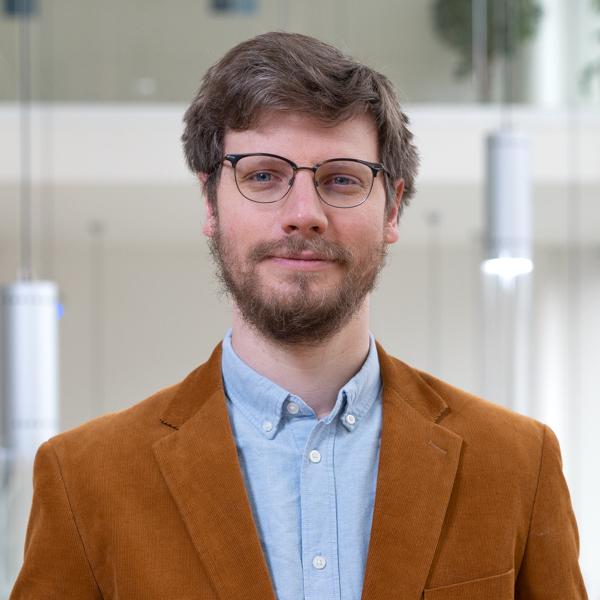
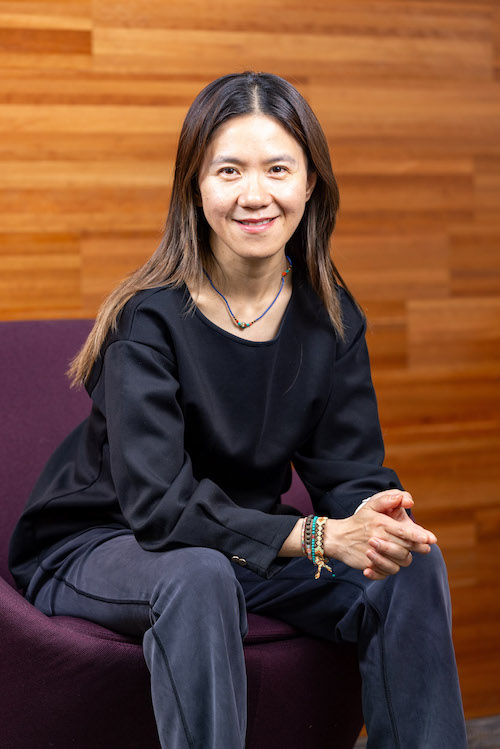
Ibrahim Numanagić is an Assistant Professor in Computer Science and Canada Research Chair (Tier 2) at the University of Victoria, Canada. His research spans computational biology, programming languages, and secure computing. He leads the 0xTCG Lab , developing tools like Aldy for pharmacogenomics and Codon for high-performance Python applications. Education: PhD (Simon Fraser University, Vanier Scholar), Postdoc (MIT CSAIL), BSc (University of Sarajevo). His work focuses on integrating computational methods with genomics, including segmental duplication analysis, compiler design, and secure biomedical data sharing. Research Highlights: Innovations in genotyping tools (e.g., Geny, BISER), dynamic compiler optimization (Vectron), and secure multi-party computation frameworks (Sequre). Active in open-source projects and clinical bioinformatics. Awards: Canada Research Chair (2021–), Vanier Canada Graduate Scholarship (2015–2018) Recruitment: Seeking PhD/MSc students (2025 intake) with strong Python/C++ skills; applications must include 'Lab 0xTCG' in emails
Jared Saia is a Professor in the Department of Computer Science at the University of New Mexico, within the College of Engineering. His research spans theoretical computer science, with a focus on distributed algorithms, security, game theory, and spectral methods. He has taught numerous advanced courses in algorithms, data structures, blockchains, and game theory. University: University of New Mexico School: College of Engineering Department: Department of Computer Science Academic Rank: Professor Email: saia@cs.unm.edu Education: PhD in Computer Science, University of Washington, 2002 BS in Computer Science, Stanford University, 1993 His research interests lie at the intersection of theory and practical systems, particularly in enabling large-scale groups to function effectively without centralized control. He has made significant contributions to distributed consensus, blockchain technologies, and algorithmic game theory. The recent publications and course topics reflect a strong trend toward interdisciplinary work combining algorithms with economics, security, and machine learning. His work often employs probabilistic and geometric methods to solve complex distributed computing problems. Scientific Awards: NSF CAREER Award School of Engineering Junior Faculty Research Excellence Award School of Engineering Senior Faculty Research Excellence Award Several best paper awards Prof. Saia has been actively involved in mentoring through graduate courses and research supervision. He has led projects on secure distributed systems, blockchain applications, and algorithmic resilience. His teaching includes core graduate courses such as CS 561 (Algorithms and Data Structures), CS 506 (Advanced Geometric and Probabilistic Methods), and specialized seminars on Bitcoin and game theory. Labs and Research Groups: While not explicitly named, his course websites and research themes suggest leadership in a theoretical computer science and distributed systems research group at UNM, focusing on algorithm design for secure and decentralized environments.
Xukai Zou is an active researcher in Cybersecurity , Federated Learning , and Privacy-Preserving Authentication . His work spans multiple institutions and focuses on secure e-voting systems, biometric authentication, and robust machine learning frameworks. Key Research Areas : Federated Learning, Network Security, Biometric Authentication, Privacy-Preserving Techniques Collaborations : Frequently works with Feng Li, Agnideven Sundar, and Qin Hu Recent Trends include applying Deep Learning to Network Intrusion Detection , developing Decentralized Federated Learning for Non-IID Data , and creating Interactive Cybersecurity Curricula inspired by E-Voting technology. Notable Contributions in Group Communication security and Key Management date back to the early 2000s, showing sustained expertise in cryptographic protocols and distributed security solutions.
Haris Smajlović is a Postdoctoral Associate in the Department of Biomedical Informatics & Data Science at Yale School of Medicine, working in the Hoon Cho Lab. His research bridges privacy-enhancing technologies, compiler design, and biomedical data security, with a focus on enabling secure collaborative analysis of sensitive health information. Dr. Smajlović earned his PhD in Computer Science from the University of Victoria (2024), where he worked at the 0xTCG lab under Prof. Ibrahim Numanagić. Previously, he completed his MSc in Theoretical Computer Science (2017) and BSc in Mathematics (2015) at the University of Sarajevo, where he also served as a lecturer in the Department of Mathematics before pursuing his doctorate. His educational background spans mathematics, theoretical computer science, and practical software engineering experience from his role as lead software engineer at Symphony.is. His research interests center on privacy-preserving computational frameworks for biomedical applications, with particular expertise in secure multiparty computation, homomorphic encryption, and high-performance compiler design. Dr. Smajlović specializes in creating practical tools that bridge the gap between theoretical cryptographic techniques and real-world biomedical data analysis needs. Analysis of his publication record reveals a consistent trajectory from computational geometry and optimization algorithms toward increasingly sophisticated privacy-preserving frameworks for biomedical data. His most recent work focuses on compiler-based approaches to secure distributed computation, with applications in genomic analysis and healthcare data sharing. The progression shows a shift from theoretical algorithms to practical frameworks that integrate cryptographic techniques with domain-specific biomedical applications. Golden Badge of University of Sarajevo (2017) Graduate Award of University of Victoria (awarded annually 2020-2024) Ph.D. Fellowship at University of Victoria (2020-2021) Dr. Smajlović actively contributes to the academic community as a reviewer for prestigious venues including Genome Biology, ACM SIGPLAN International Conference on Compiler Construction, ISMB, and RECOMB. His invited talk at Applied Machine Learning Days (EPFL) in 2025 highlights his growing recognition in the field of secure federated AI. His work on the Sequre and Shechi frameworks has been supported by research funding at Yale, particularly within the context of the NSF grant for confidential genome analytics mentioned in the lab news. As a core member of the Hoon Cho Lab at Yale's Biomedical Informatics & Data Science department, Dr. Smajlović contributes to the lab's mission of creating algorithmic solutions for computational challenges in genomic and health-related data. The lab's research themes align closely with his expertise, particularly in privacy-enhancing technologies for biomedical applications. His work on the Shechi framework directly supports the lab's focus on secure computation for sensitive biomedical data, while his compiler expertise contributes to their scalable AI/ML in genomics initiatives.
Nico Döttling is a faculty member at the CISPA Helmholtz Center for Information Security, where he leads research in cryptographic foundations. His work focuses on advancing theoretical and practical aspects of modern cryptography, with particular emphasis on homomorphic encryption, post-quantum cryptography, and secure multi-party computation. Dr. Döttling received his PhD in Computer Science from the Karlsruhe Institute of Technology in 2014 under the supervision of Jörn Müller-Quade. Prior to joining CISPA in 2018, he held positions as an Assistant Professor at Friedrich-Alexander University Erlangen-Nuremberg (2017-2018), a postdoctoral researcher at UC Berkeley (2016-2017) supported by a DAAD fellowship, and a postdoctoral researcher at Aarhus University's Cryptography Group (2014-2016) working with Ivan Damgård and Jesper Buus Nielsen. Dr. Döttling's research centers on the theoretical foundations of cryptography with practical applications. His work spans public-key encryption, communication-efficient secure multi-party computation, homomorphic encryption, and post-quantum cryptographic systems. He has made significant contributions to laconic cryptography, time-lock puzzles, and verifiable delay functions, with his ERC Starting Grant project 'Next Generation Laconic Cryptography (LACONIC)' driving innovation in communication-efficient cryptographic protocols. His research bridges theoretical computer science with practical security applications, addressing fundamental questions while developing usable cryptographic primitives. Analysis of Dr. Döttling's recent publications reveals a strong focus on efficient cryptographic primitives with particular attention to communication complexity, security proofs, and practical implementations. His work spans theoretical foundations of cryptography, post-quantum security, and novel applications of cryptographic techniques to real-world problems. A notable trend is his exploration of laconic cryptography - developing protocols with minimal communication overhead - which has applications in resource-constrained environments and large-scale distributed systems. Dr. Döttling's scientific achievements have been recognized with several prestigious awards: ERC Starting Grant for the project 'Next Generation Laconic Cryptography (LACONIC)' (2021) Best Paper Award at Crypto for 'Identity-Based Encryption from the Diffie-Hellman Assumption' (2017) Postdoctoral Fellowship at UC Berkeley sponsored by DAAD (2016) Best Paper Award at ProvSec 2015 for 'From Stateful Hardware to Resettable Hardware Using Symmetric Assumptions' (2015) Biennial dissertation award for best dissertation in computer science at Karlsruhe Institute of Technology (2014) As a faculty member at CISPA, Dr. Döttling leads an active research group focused on cryptographic foundations. His ERC Starting Grant provides significant research funding to advance laconic cryptography. While specific information about his advisees is not provided in the source material, his extensive publication record with multiple co-authors suggests active collaboration with students and researchers. His work bridges theoretical cryptography with practical security applications, making contributions that advance both academic understanding and real-world cryptographic implementations. Dr. Döttling leads the Algorithmic Foundations and Cryptography research group at CISPA, focusing on developing theoretically sound yet practically efficient cryptographic protocols. His team explores innovative approaches to longstanding cryptographic challenges, particularly in making cryptographic protocols more communication-efficient without sacrificing security. Current research directions include post-quantum cryptographic systems, verifiable delay functions, and novel applications of homomorphic encryption to privacy-preserving computation.
L.A.M. (Berry) Schoenmakers is an Associate Professor at the Coding Theory and Cryptology department of Eindhoven University of Technology. His research spans cryptography, secure computation, and algorithm design, with a focus on threshold systems and numerical methods in cryptographic contexts. Active in Secure Multiparty Computation , Secret Sharing , and Elliptic Curve Cryptography Published extensively in Cryptography , Fixed-Point Arithmetic , and Algorithm Design Recent work includes secure implementations of Newton-Raphson iteration and Extended GCD algorithms . He teaches courses in Cryptographic Protocols , Linear Algebra , and Programming , with active supervision of research outputs.
Huijia (Rachel) Lin is a Professor in the Paul G. Allen School of Computer Science & Engineering at the University of Washington. Her research bridges theoretical cryptography with broader domains in computer science, including complexity theory, algorithm design, learning, and security. Dr. Lin leads the Simons Collaboration on the Theory of Algorithmic Fairness (2020–2027) and collaborates with UW’s cryptography and theory groups, which include Professors Andrea Coladangelo, Stefano Tessaro, and Nirvan Tyagi. She has also served on numerous prestigious program committees and steering committees, including as a co-chair for TCC 2025 and FORC 2026. Research Interests: Theoretical aspects of cryptography Program obfuscation and functional encryption Lattice-based cryptography Secure multiparty computation Non-malleability and concurrent security Connections to quantum computation Scientific Awards: NSF CAREER Award Hellman Fellowship Cisco Research Award JPMorgan Faculty Award Microsoft Research PhD Fellowship Best Paper Award at STOC 2021 Best Paper Award at Eurocrypt 2018 Best Paper Honorable Mention at Eurocrypt 2016 Advising and Grants: Dr. Lin has mentored numerous PhD students and postdocs, including Kameron Shahabi, Ji Luo, and Min Jae Song. Her research is supported by the Simons Collaboration on the Theory of Algorithmic Fairness.
Zvika Brakerski is a Professor at the Department of Computer Science and Applied Mathematics of the Weizmann Institute of Science. He is an active researcher in theoretical computer science with a focus on cryptography and quantum computing. His work bridges foundational aspects of computer science with practical cryptographic applications. His educational background includes: Ph.D. from Weizmann Institute of Science (2011), advised by Shafi Goldwasser M.Sc. from Faculty of Engineering of Tel-Aviv University (2002), advised by Boaz Patt-Shamir B.Sc. joint degree from Faculty of Engineering and School of Computer Science of Tel-Aviv University (2001) Brakerski's research primarily focuses on the foundations of computer science, with particular emphasis on cryptography and quantum computing. His work explores the intersection of these fields, developing new cryptographic primitives that are secure against quantum adversaries while also leveraging quantum phenomena for cryptographic purposes. He has made significant contributions to lattice-based cryptography, fully homomorphic encryption, and quantum cryptography, establishing new connections between computational complexity and cryptographic security. His recent publications demonstrate a consistent focus on advancing the theoretical foundations of post-quantum cryptography while exploring novel applications of quantum computing to cryptographic problems. There's a clear trend toward establishing connections between seemingly disparate areas such as quantum information theory, computational complexity, and traditional cryptographic constructions. His work often introduces new frameworks that unify previously separate concepts, creating bridges between theoretical computer science and practical cryptographic applications. Brakerski has mentored students and collaborated with numerous researchers in the field, contributing to the advancement of cryptographic theory and quantum computing. His work has been supported by various research grants, though specific details are not provided in the source material.
Ágnes Kiss is a Researcher at the Department of Computer Science, Technical University of Darmstadt, Germany. She earned her PhD in 2021 with a thesis titled Efficient Private Function Evaluation . Her research focuses on cryptographic protocols, privacy-preserving technologies, and secure computation, with applications in distributed systems and real-world security challenges. Her work spans topics such as private function evaluation (PFE), universal circuit design, and privacy-preserving location proximity schemes. She has contributed to advancing secure computation efficiency and resistance against side-channel attacks. Her publications appear in top venues like Journal of Cryptology , EUROCRYPT , and USENIX Security Symposium . Key areas of interest include cryptography, algorithmic countermeasures, and the practical implementation of secure protocols. Her recent work addresses security risks in scripting languages and explores trustworthy AI inference systems, reflecting her commitment to both theoretical and applied cryptography.
Ersin Uzun serves as the Katherine Johnson Endowed Executive Director of RIT's ESL Global Cybersecurity Institute and Professor in the Department of Cybersecurity at the Golisano College of Computing and Information Sciences. His expertise spans Usable Security/Privacy, IoT Security, and Privacy Enhancing Technologies. Education: M.S. and Ph.D. from University of California Executive Ignite Program graduate from Stanford Graduate School of Business Research Interests: Focuses on bridging academic research with industry applications, including deepfake detection tools like DeFake, network-layer trust mechanisms in content-centric networking, and differential privacy in secure data aggregation. His work emphasizes practical security solutions for emerging technologies. Key Collaborations: Google Cybersecurity Clinics Fund ($500K to support cybersecurity education and public service) Alstom Signaling collaboration for transportation cybersecurity innovation Advisor to U.S. National Science Foundation, Research Council of Canada, and other global bodies Awards & Recognition: Over 100 patents and 50+ peer-reviewed publications Inducted into University of California Information and Computer Sciences Hall of Fame Labs & Initiatives: Leads the ESL Global Cybersecurity Institute, fostering interdisciplinary research in cybersecurity education, threat mitigation, and industry partnerships.
David Darais is an Adjunct Assistant Professor at the University of Vermont's College of Engineering and Mathematical Sciences, and Principal Scientist at Galois, Inc. His research bridges programming languages, security, and formal verification. He holds a Ph.D. from the University of Maryland (2017), an M.S. from Harvard University, and a B.S. from the University of Utah. At Galois, he develops tools for high-assurance software in security-sensitive domains. His research creates programming languages and analysis frameworks for differential privacy, secure computation, and verified networking. Key innovations include the Duet language for privacy enforcement and Proof-Carrying Network Code for secure SDNs. He leads DARPA/NSF-funded projects on zero-knowledge proofs and privacy-preserving AI. He has advised 9+ graduate/undergraduate students on verification and privacy. Courses taught include Programming Languages (CS 225) and Software Verification (CS 295A).
Andrew Chi-Chih Yao is a distinguished Professor and Dean at Tsinghua University, leading the College of AI and the Institute for Interdisciplinary Information Sciences. He holds dual roles as Professor at Tsinghua's Center for Advanced Study and Distinguished Professor-At-Large at The Chinese University of Hong Kong. His academic journey includes professorships at MIT, Stanford, UC Berkeley, and Princeton University (1986–2004). Education: Ph.D. in Physics (Harvard, 1972) and Ph.D. in Computer Science (University of Illinois, 1975). Research focuses on Algorithms, Cryptography, Quantum Computing, and Artificial Intelligence. He pioneered foundational work in communication complexity, secure computation protocols, and quantum circuit theory. His contributions to computational theory include Yao’s minimax principle and the millionaires’ problem framework for privacy-preserving computation. Recent publications address AI safety, quantum replication, and secure systems for global challenges like DNA synthesis and emissions trading. His 2024 work on AI risk management underscores ongoing engagement with cutting-edge tech ethics. Awards: Kyoto Prize (2021), Turing Award (2000), Pólya Prize (1987), and over 20 honorary doctorates. Grants/Advisory Roles: Key contributor to interdisciplinary initiatives at Tsinghua, including AI and blockchain research. Advised projects on secure computing and cryptographic protocols. Labs/Teams: Leads teams in quantum computing, AI ethics, and secure multiparty computation at Tsinghua.
Eman Alqahtani is a Lecturer in the Department of Computer Science at King Abdulaziz University. Her research focuses on information security, privacy-preserving technologies, and their applications in local energy markets and smart grids. She holds a PhD from an unspecified institution (likely inferred from her current role), with a Master’s in Information Security from Cardiff University (2016–2017) and a Bachelor’s in Information Technology from King Abdulaziz University (2010–2014). Education: PhD: Department of Computer Science (university unspecified) Master of Science: Information Security and Privacy, Cardiff University (2016–2017) Bachelor of Science: Information Technology, King Abdulaziz University (2010–2014) Her research interests include applied cryptography, blockchain, and privacy-preserving mechanisms for local energy markets. Notably, she has developed a zone-based privacy-preserving billing system using multiparty computation to address physical grid constraints. Her work emphasizes balancing computational efficiency with data confidentiality in smart grid environments. Recent publications focus on privacy-preserving solutions for energy markets, leveraging cryptographic techniques to ensure security while maintaining grid operational requirements. Her 2023 work on multiparty computation received 20 downloads and 6 citations within a year, indicating active engagement in this field. Awards: 2014: Best Oral Presentation Award at URC 2014: National Winner of Microsoft Imagine Cup Innovation Category She collaborates on grants and datasets, including a systematic literature review on privacy-preserving local energy markets published via Figshare. No advising roles or lab affiliations are explicitly mentioned in the provided text.
Julieanna Powell-Turner is Professor of Environmental Organisational Sustainability and Associate Dean for Research and Innovation at the University of Chester's Faculty of Science, Business and Enterprise. She leads the Centre for Research into Environmental and Sustainable Transitions (CREST), driving interdisciplinary work on climate resilience, resource security, and social cohesion aligned with UN SDGs. With 20+ years in sustainability research, she has secured significant UKRI funding and supervised doctoral projects in decarbonization and green skills. Her recent publications focus on climate action governance (2025), corporate sustainability barriers (2025), and semantic access controls for healthcare systems (2022-2024). Powell-Turner oversees institutional research frameworks including REF/KEF and manages postgraduate programs, emphasizing participatory action research and cross-sector partnerships.
Manuel Blum is the Bruce Nelson Professor of Computer Science at Carnegie Mellon University's School of Computer Science, Department of Computer Science. He is renowned for foundational contributions to computational complexity, cryptography, and theoretical computer science. His work includes pioneering research on CAPTCHAs, human computation, and self-testing programs. Blum has collaborated extensively with figures like Luis von Ahn, contributing to projects like Peekaboom and Verbosity. His research also extends to philosophical inquiries into consciousness, blending computer science with neuroscience and philosophy. Blum's teaching includes courses on theoretical cryptography (15-503) and undergraduate complexity theory (15-455). He has advised students such as Brendan Juba and Matt Humphrey, whose work explores computational complexity and related fields. His research spans grants on machine learning, game theory, and computational complexity, including an NSF proposal on understanding concept understanding. Blum's contributions to security, randomness, and algorithm design have had lasting impacts on computer science.