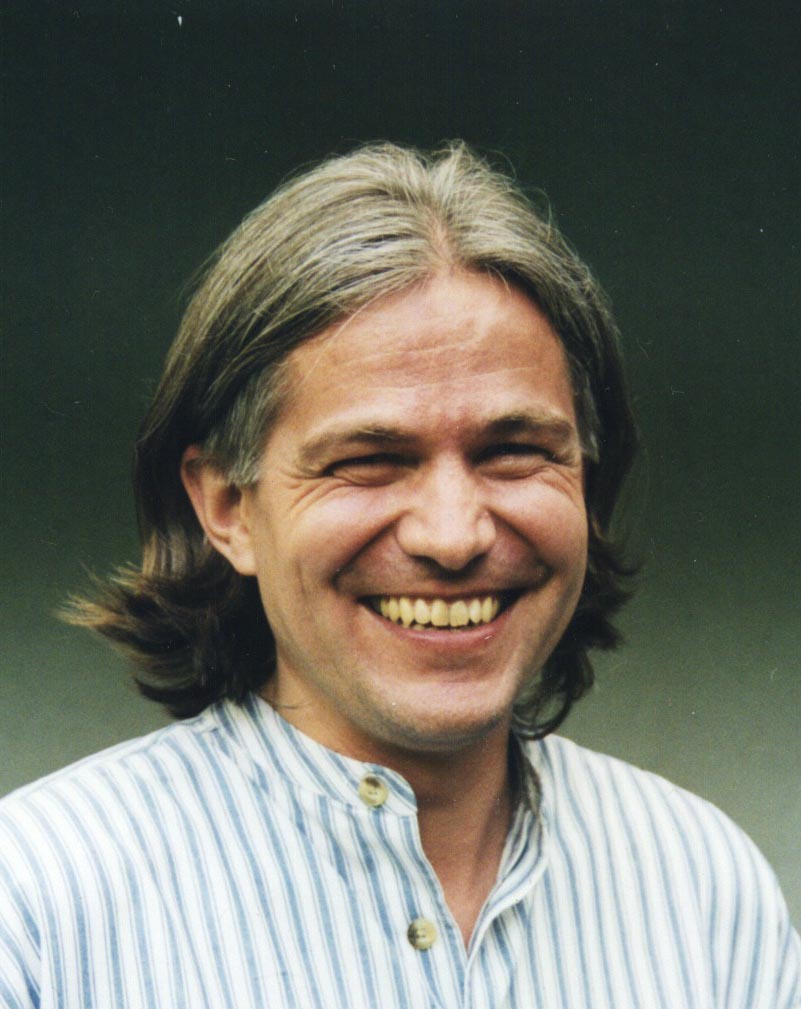
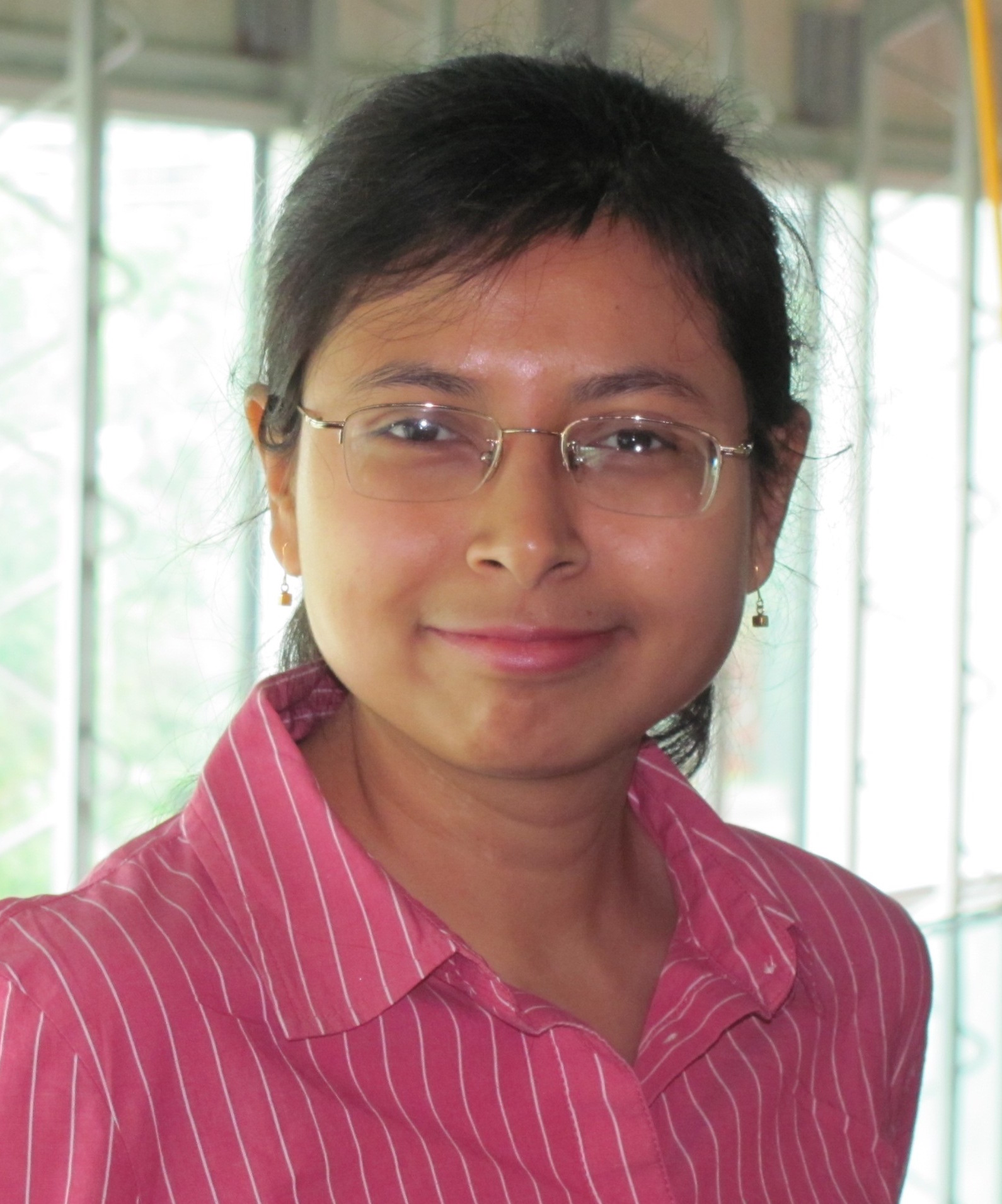
Florian Kerschbaum is a Professor and NSERC/RBC Industrial Research Chair in Data Security at the Cheriton School of Computer Science, University of Waterloo. His research focuses on data security and privacy, applied cryptography, and confidentiality in data science. Research interests span data collection/preparation management, secure multi-party computation, homomorphic encryption, differential privacy, and machine learning robustness/privacy. His work develops cryptographic solutions for practical data management challenges in distributed systems.
Vassilis Zikas is an Associate Professor at the School of Cybersecurity and Privacy and holds a courtesy appointment in the School of Computer Science at Georgia Tech. He previously held positions at Purdue University, the University of Edinburgh, and Rensselaer Polytechnic Institute (RPI). His research focuses on cryptography, blockchain technologies, cryptocurrencies, game theory, and distributed computing. He leads the Blockchain Lab at Georgia Tech and serves as Chief Scientist at Sunday Group, where he contributes to the Mobby blockchain architecture. His work is supported by the NSF, DoD, Swiss NSF, and industry partners like Sunday Group and Algorand Foundation. He has organized major conferences including PKC 2020 and has served on program committees for EUROCRYPT, CRYPTO, and TCC. He advises PhD students in cryptography and related fields and has mentored postdocs and master’s students. Zikas’ publications span topics like secure multi-party computation (MPC), blockchain security, and cryptographic protocol design. His recent work includes advancements in privacy-preserving protocols, adaptive security frameworks, and composability in blockchain systems. Notable awards include the 2023 Leadership Award from Purdue College of Science and an AnlytiXIN Fellowship. He actively contributes to both theoretical and applied aspects of cybersecurity and privacy through academic and industrial collaborations.
Elaine Shi is a Professor with a joint appointment in the Department of Computer Science (CSD) and the Department of Electrical and Computer Engineering (ECE) at Carnegie Mellon University (CMU). She is also an Adjunct Professor of Computer Science at the University of Maryland. Her research focuses on cryptography, security, mechanism design, algorithms, blockchains, and programming languages. Shi co-founded Oblivious Labs, Inc., and her work on Oblivious RAM and differentially private algorithms has been adopted by major companies like Signal, Meta, and Google. Affiliations: CMU’s Crypto Group CMU’s Cylab Crypto Seminar Series (co-founder) Research Interests: Cryptography and Security: Focused on oblivious computation, private information retrieval, and secure protocols. Blockchain Technology: Including consensus mechanisms, transaction fee design, and decentralized systems. Privacy-Preserving Algorithms: Such as differential privacy and secure multi-party computation. Algorithm Design: With applications to parallel computing and efficient data structures. Awards: Packard Fellow Sloan Fellow ACM Fellow IACR Fellow Advising & Grants: Current advisees include PhD students like Benjamin Chan, Yanyi Liu, Mingxun Zhou, and Nikhil Vanjani. Past students have taken academic roles at institutions like UVA, University of Michigan, and Duke University. Grants supported research in secure computation, blockchain mechanisms, and privacy-preserving technologies. Labs & Teams: Co-founder of Oblivious Labs, Inc. Leading CMU’s Crypto Group and Cylab Crypto Seminar Series.
Ben Fisch is an Assistant Professor of Computer Science at Yale University's School of Engineering & Applied Science. He is also the co-founder of Espresso Systems, a company focused on blockchain infrastructure. His research focuses on privacy and verifiability in decentralized systems like Bitcoin and Ethereum, with applications in digital finance and healthcare. Dr. Fisch received his B.A. from the University of Pennsylvania and completed his Ph.D. at Stanford University, where he worked with Dan Boneh in the applied cryptography research group. His educational background provided the foundation for his work at the intersection of cryptography, distributed systems, and economics. His research centers on leveraging cryptographic tools such as succinct non-interactive zero-knowledge proofs (zk-SNARKs), private information retrieval, and homomorphic encryption to address challenges in verifiable computation, verifiable storage, and verifiable fairness. He has made significant contributions to verifiable delay functions (VDFs) and proofs of replication, which have been adopted by major blockchain projects including Ethereum 2.0, Chia, and Filecoin. His work on Filecoin's Proofs of Replication has helped the network reach over 1.5 exabytes of storage capacity. His publication record shows a clear trend toward increasingly sophisticated cryptographic protocols for blockchain applications, with recent work focusing on data availability for Bitcoin rollups, efficient folding schemes for pairing-based arguments, and privacy pools with proof-carrying disclosures. His research bridges theoretical cryptography with practical implementations that have real-world impact in decentralized systems. His notable recognition includes: Best Paper Finalist at ACM CCS 2017 for 'Iron: Functional Encryption using Intel SGX' Dr. Fisch's research has led to significant technology transfer, most notably with his work on Verifiable Delay Functions (VDFs) sparking a multimillion dollar industry initiative through the VDF Alliance. His research on Proofs of Replication forms the basis of Filecoin's incentive layer and consensus protocol. His newer SNARK system Basefold is being used by several commercial products. He maintains active collaborations across academia and industry, with publications spanning top conferences in cryptography and security. As co-founder of Espresso Systems, Dr. Fisch leads a team developing next-generation blockchain infrastructure, particularly focusing on sequencing layers for rollups. His work bridges academic research with practical implementation, ensuring that theoretical advances in cryptography find real-world applications in decentralized systems.
University of Illinois Urbana-ChampaignUnited States
Andrew Miller is an Associate Professor in the Electrical and Computer Engineering department at the University of Illinois, specializing in Programming Languages, Formal Methods, Software Engineering, Security and Privacy, and Systems and Networking. His research focuses on blockchain technologies, cryptography, and secure systems. Professor Miller's research spans multiple critical areas in modern computer security. His work primarily focuses on blockchain technologies , where he has made significant contributions to understanding and improving the security, privacy, and performance of systems like Bitcoin and Ethereum. He has conducted empirical analyses of privacy in the Lightning Network and developed protocols for confidential smart contracts. His work in cryptography includes research on multiparty computation, zero-knowledge proofs, and formal methods for cryptographic protocol design. Miller also investigates security vulnerabilities in proof-of-stake systems and resource exhaustion attacks, contributing to the robustness of decentralized systems. His applied security research extends to privacy-preserving health applications, as evidenced by his work on the Safer Illinois platform for COVID-19 contact tracing. Miller's publication record demonstrates consistent contributions to top security and systems venues including IEEE Security & Privacy, ACM CCS, Financial Cryptography, and USENIX Security. His research shows a clear trajectory from foundational work in blockchain security to more applied systems addressing real-world privacy and security challenges. Recent work focuses on making multiparty computation services publicly auditable and developing decentralized identity solutions that maintain compatibility with existing systems. Distinguished Reviewer Award, IEEE Security & Privacy 2018 Professor Miller has advised students including Vivek Nair, who joined the prestigious Hertz Fellows program in 2022. He has taught various courses including Introduction to Algorithms & Models of Computation, Advanced Computer Security, Cryptography, Applied Cryptography, and Ideal Functionality in Cryptography. His research has received support through grants including the SaTC: CORE: Medium project on "Automated Support for Writing High-Assurance Smart Contracts" in 2018. Miller is actively involved in research groups focusing on blockchain security, cryptographic protocols, and privacy-preserving systems. His lab appears to collaborate extensively with researchers across multiple institutions, as evidenced by the diverse author lists on his publications. Current work seems to be focused on making decentralized systems more secure, privacy-preserving, and accessible for real-world applications.
Benedikt Bünz is an Assistant Professor of Computer Science at New York University's Courant Institute of Mathematical Sciences. He is also a co-founder and chief scientist of Espresso Systems, where he applies his research expertise to real-world blockchain solutions. His academic work bridges theoretical cryptography with practical blockchain implementations, focusing on enhancing privacy, security, and usability of decentralized systems. Dr. Bünz's research centers around applied cryptography, consensus mechanisms, and game theory as they relate to cryptocurrencies. His work spans zero-knowledge proofs, verifiable delay functions, secure multi-party computation, and privacy-preserving protocols. He has made significant contributions to Bulletproofs, a zero-knowledge proof system deployed on blockchains like Monero, and pioneered research in verifiable delay functions which are now part of Ethereum 2.0's design. His recent work focuses on recursive proof systems, accumulation schemes, and efficient verification techniques for blockchain scalability. His publication record shows a consistent progression from foundational cryptographic primitives to practical blockchain implementations. Recent work demonstrates increasing sophistication in recursive proof systems (ProtoStar, HyperPlonk), novel accumulation techniques (ARC, DewTwo), and foundational work on randomness generation (VDFs). His research consistently bridges theoretical cryptography with real-world blockchain applications, resulting in protocols that are both theoretically sound and practically implementable across multiple blockchain platforms. Dr. Bünz actively contributes to the academic community through teaching and mentorship. He teaches courses on cryptography of blockchains and computer security at NYU, providing students with hands-on experience in blockchain security and cryptographic protocols. His industry engagement through Espresso Systems demonstrates his commitment to translating academic research into practical solutions for the blockchain ecosystem.
Heather Zheng is the Neubauer Professor of Computer Science at the University of Chicago, co-directing the SAND Lab (Security, Algorithms, Networking and Data) with Prof. Ben Y. Zhao. She holds IEEE (2015) and ACM (2023) Fellowships, and was recognized as MIT TR35 (2005) for cognitive radio research. Her work bridges mobile/IoT security, adversarial ML, and generative AI ethics. Zheng earned her PhD in Electrical and Computer Engineering from University of Maryland in 1999, with prior roles at Bell-Labs, Microsoft Research Asia, and UCSB. Education: PhD in Electrical and Computer Engineering, University of Maryland, College Park (1999) Research Focus: Explores cutting-edge challenges in: Security implications of mobile/IoT sensors (e.g., bracelet-of-silence countermeasures) Adversarial machine learning defense mechanisms (e.g., Blacklight attack detection) Generative AI governance (Glaze, NightShade copyright tools) Awards: ACM Fellow (2023) IEEE Fellow (2015) World Technology Network Fellow Labs & Collaborations: Leads SAND Lab focusing on security, ML, and networked systems. Active in UChicago's Systems Group exploring cloud/edge computing architectures.
Furkan Alaca is an Assistant Professor at Queen's University's School of Computing, part of the Faculty of Arts and Science. His research focuses on user authentication systems, addressing security and usability challenges. He holds a Ph.D. (2018) in Computer Science from Carleton University, an M.A.Sc. (2012) in Electrical and Computer Engineering, and a B.Eng. (2010) in Communications Engineering, all from Carleton University. His academic career includes teaching roles at Queen's University and the University of Toronto Mississauga, where he taught courses such as Cryptography, Cybersecurity, and Discrete Mathematics. He is affiliated with Queen's Security Research Group and Computer Security Research Lab. Research interests include computer and internet security, usable security, authentication mechanisms, and systems security. He has contributed to advancements in web authentication frameworks, malware analysis, and privacy-preserving technologies. His work spans conferences like IEEE and ACM, with notable publications in cybersecurity, machine learning, and network efficiency. Current teaching includes CISC 447 (Introduction to Cybersecurity) and CISC 468 (Cryptography). He has advised on courses ranging from undergraduate programming to graduate-level security topics.
Jens Groth is an Honorary Professor at the Department of Computer Science, University College London (UCL), and serves as Chief Scientist at Nexus. His primary research focuses on cryptography, with an emphasis on cryptographic protocols, zero-knowledge proofs, and privacy-preserving technologies. Groth has contributed significantly to advancements in digital signatures, homomorphic encryption, and secure multi-party computation. He holds a leadership role as Program Chair for the 15th IMA International Conference on Cryptography and Coding (2015) and has been a key figure in shaping modern cryptographic standards. His work often bridges theoretical foundations with practical implementations, emphasizing efficiency and security. Groth's research interests include but are not limited to: cryptographic protocol design, lattice-based cryptography, and the application of zero-knowledge proofs in real-world systems such as blockchain and voting systems. His publications span venues like CRYPTO, EUROCRYPT, and ASIACRYPT, reflecting his impact on the field. Notably, he advocates for open access to research and has contributed to strategies ensuring conferences adopt de facto open-access policies. His current focus at Nexus centers on verifiable computation and distributed cryptographic systems.
Peter Druschel is a Professor and founding Director of the Max Planck Institute for Software Systems (MPI-SWS) in Saarbrücken, Germany. He holds adjunct professorships at Saarland University and the University of Maryland. His research focuses on distributed systems, operating systems, and privacy-preserving technologies. He earned his Ph.D. from the University of Arizona in 1994 and has held roles at Rice University since 1994, including Professor of Computer Science (2002–2005). Education: Ph.D. in Computer Science, University of Arizona (1994) Research Interests: Distributed systems, operating systems, network security, accountable computing, and privacy technologies. Current projects include privacy compliance in data systems (Thoth), secure communication (EbN), and privacy-aware image capture (I-Pic). Awards: SIGOPS Mark Weiser Award (2008) NSF CAREER Award (1995) Member of Academia Europaea and German Academy of Sciences Leopoldina Grants & Leadership: Leads the ERC Synergy Project imPACT, chairs the Max Planck Society’s Chemistry, Physics, and Technology Section, and collaborates with institutions like Cornell and Google. Advises on policy issues related to technology and privacy. Labs/Teams: Distributed Systems Group at MPI-SWS, collaborations with Microsoft Research and MIT. Current team includes students and postdocs working on privacy, security, and distributed systems.
Prof. Bryan Ford leads the Decentralized/Distributed Systems (DEDIS) lab at EPFL. He focuses on secure decentralized systems, including blockchain technology, privacy, and systems security. He earned his Ph.D. from MIT and held faculty positions at Yale University and EPFL. His work spans distributed consensus protocols, peer-to-peer networking, and privacy-preserving systems. Key projects include QuePaxa (timeout-free consensus), UIA (global connectivity for mobile devices), and MedCo (secure healthcare data sharing). He advises numerous PhD students and contributes to open-source projects like Bitcoin collective signing and privacy networks like Riffle. Education: Ph.D., MIT; Postdoctoral work at Yale Research interests include blockchain scalability, consensus algorithms, and cryptographic privacy. His lab develops systems like TRIP for coercion-resistant voting and F3B to mitigate blockchain front-running. His work on NAT traversal and peer-to-peer protocols (e.g., STUN/ICE) remains foundational in network architecture. He emphasizes practical, auditable security solutions such as CertiKOS and atomic cross-chain transactions (Atom). Notable contributions: CoSi (collective signing), OmniLedger (sharded blockchain), and privacy-preserving protocols like PURBs (Protected Unsealable Recursive Boxes). His lab collaborates with Swiss Post to audit e-voting systems and designs democratic cryptocurrencies like PoPCoin.
Dr. Feng Cheng is a Senior Researcher and head of the IT Security Engineering (Sec-Eng) Team at the Hasso Plattner Institute (HPI), Germany, and serves as the Representative of the Chair "Internet Technologies and Systems" at the Digital Engineering Faculty, University of Potsdam. He holds a PhD from the University of Potsdam, an MEng from Beijing University of Technology, and a BEng from Beijing University of Aeronautics and Astronautics. His research is centered on data-driven security engineering, security analytics, network security, cloud security, firewall, IDS/IPS, attack modeling, and penetration testing. Dr. Cheng's research interests span a broad range of cybersecurity domains, with a strong emphasis on security analytics , data-driven threat detection , cloud and network security , and authentication . His work integrates advanced data engineering and machine learning techniques to enhance security operations, including intrusion detection, threat intelligence, and security information and event management (SIEM). Key application areas include IoT security, mobile security, and web security. The recent publications of Dr. Cheng and his team reflect a significant trend towards leveraging big data analytics , machine learning , and graph-based methods for cybersecurity. Their work focuses on developing frameworks for blockchain-based public key infrastructures, advanced SIEM analytics, malware detection using NLP, and chaos engineering for cloud security. This demonstrates a strong commitment to creating practical, scalable, and intelligent solutions for modern security challenges in complex, distributed environments. Dr. Cheng is actively involved in the academic community as a member of ACM and IEEE, a program committee member for numerous international conferences, and an organizer of workshops on cloud computing and cybersecurity. He has also served on editorial boards for international journals. He supervises a large group of PhD, master's, and bachelor's students, guiding research on topics such as security analytics, cyber threat intelligence, digital credentials, and behavioral authentication. He leads the Sec-Eng team, which conducts research on a diverse portfolio including the Security Analytics Lab, HPI-VDB (vulnerability database), Lock-Keeper (physical separation technology), and the Security Lab Generator for scenario-driven security training.
Christina L. Garman is an Assistant Professor in the Department of Computer Science at Purdue University, where she joined in Spring 2018. Her research focuses on practical cryptography and cryptographic automation to make secure system development accessible to non-experts through error-resistant design methodologies. Her educational background includes: Bachelor of Science in Computer Science and Engineering from Bucknell University (2011) Bachelor of Arts in Mathematics from Bucknell University (2011) Master of Science in Engineering in Computer Science from Johns Hopkins University (2013) Doctor of Philosophy in Computer Science from Johns Hopkins University (2017) Professor Garman's work centers on real-world cryptographic system security, spanning protocol analysis (e.g., RC4 in TLS, Apple iMessage flaws), decentralized anonymous systems (Zerocash/ZCash), and cryptographic automation. She pioneered techniques for removing human error in cryptographic deployments through automated tools and frameworks. Her research bridges theoretical cryptography with practical implementation challenges in privacy-preserving technologies and secure infrastructure. Analysis of her 2021-2025 publications reveals expanding research horizons: hardware security vulnerabilities (Rowhammer, SGX), privacy network enhancements (Tor onion services), software supply chain security (SBOM tools), and advanced cryptographic protocols (zkSNARKs, MPC). This evolution demonstrates consistent focus on real-world security impact while diversifying into hardware-software cross-layer threats and formal verification methods for cryptographic implementations. Her major scientific recognitions include: NSF CAREER Award (2021) for cryptographic automation research ACM CCS Best Paper Award (2016) for iMessage security analysis IEEE Test of Time Award (2024) for foundational Zerocash work Professor Garman co-founded ZCash, a privacy-focused cryptocurrency based on her Zerocash protocol, and her NSF CAREER grant supports cryptographic automation development. Her research has received significant media coverage in The Washington Post, Wired, and The New York Times, highlighting real-world relevance. While specific student advising details aren't public, her active publication record indicates ongoing mentorship of graduate researchers in security and cryptography. Her work maintains strong industry connections through ZCash development and Tor network contributions, with recent projects like keyless CDNs demonstrating practical applications of cryptographic automation. She remains a leading voice in cryptographic research communities through conference participation and collaborative projects addressing evolving security challenges.
Sushmita Ruj is an Associate Professor in the School of Computer Science and Engineering at the University of New South Wales (UNSW), Sydney. She serves as the Faculty of Engineering Lead for the UNSW Institute for Cybersecurity (IfCyber) and as the Taste of Research (ToR) Coordinator within the School of Computer Science and Engineering. Her academic journey includes previous positions as a Senior Research Scientist at CSIRO's Data61 (2019-2022), Associate Professor at the Indian Statistical Institute, Kolkata, and Assistant Professor at the Indian Institute of Technology (IIT), Indore. Dr. Ruj's primary research interests focus on applied cryptography, post-quantum cryptography, cybersecurity, blockchains, and data privacy. She designs practical, efficient, and provably secure protocols for real-life applications, with particular emphasis on critical infrastructure including smart grids, cloud computing, ad hoc networks, and data sharing frameworks. As quantum technology advances, her work increasingly focuses on developing quantum-safe algorithms to ensure a more secure Internet infrastructure. Her research spans multiple domains including cryptographic key management, proofs of storage, verifiable computation, vector commitments, and privacy-enhancing technologies for cloud and IoT environments. Her recent publications demonstrate a strong trend toward post-quantum cryptography solutions, with particular emphasis on blockchain applications, DNS security, and privacy-preserving protocols for industrial IoT. The research shows increasing focus on practical implementations of theoretical cryptographic concepts, with applications across multiple sectors including finance, healthcare, and critical infrastructure. Her work bridges the gap between theoretical cryptography and real-world security challenges, with growing emphasis on the transition from classical to quantum-resistant systems. Best Paper Award at ACISP 2024 JNCA Best Survey Award (2023) NSW Innovation Award (iAward) Merit Winner (2022) Women in Science Award from CSIRO (2020) ACM Senior Member (2016) IEEE Senior Member (2015) Samsung GRO award (2014) Dr. Ruj has successfully mentored numerous PhD and Master's students, with many of her former students now holding academic positions at institutions like IIT Indore, TU Wien, and CISPA Helmholtz Center. She has secured significant competitive funding including multiple Australian Research Council (ARC) grants, Samsung GRO Award, NetApp Faculty Fellowship, Cisco Academic Grant, and IBM Research grant. Her current research portfolio includes projects on blockchain-based quantum-safe digital medical passports, embedding trust in digital IDs, and resilience of supply chain unstructured data. As Faculty of Engineering Lead for IfCyber, Dr. Ruj plays a key role in UNSW's cybersecurity research initiatives. She has served on editorial boards for prestigious journals including IEEE Transactions on Information Forensics and Security and has held leadership positions in major conferences such as ACISP 2021 and Indocrypt 2020. She was also a member of the working group on "Blockchain For Cybersecurity" for the National Blockchain Roadmap of Australia and the first Blockchain Working group set up by the Reserve Bank of India.
Michael J. Freedman is the Robert E. Kahn Professor of Computer Science at Princeton University and co-founder/CTO of Timescale. He received his Ph.D. from NYU’s Courant Institute and degrees from MIT. Current roles: Professor, Co-founder & CTO Affiliations: Princeton University, SNS Group, CITP Associate Education: Ph.D. (NYU), S.B./M.Eng. (MIT) His research spans distributed systems, networking, and security, with innovations like CoralCDN, DONAR, and Ethane. His work impacts decentralized content delivery, software-defined networking, and privacy-enhancing technologies. His recent publications address scalable fusion algorithms, GPU acceleration for data systems, and distributed GPU resource management. These works intersect with cloud infrastructure, network optimization, and security. Scientific honors include: Presidential Early Career Award for Scientists and Engineers (PECASE) Sloan Fellowship NSF CAREER Award Office of Naval Research Young Investigator Award Test of Time Award (Theory of Crypto Conference) ACM SIGOPS Mark Weiser Award He advises graduate students like Sam Ginzburg and Ashwini Raina, who joined Meta AI and Timescale post-PhD. His projects have secured substantial grants, including $110M Series C funding for Timescale. Key labs/teams: Princeton SNS Group Co-founder, Timescale (enterprise data platform) Co-founder, iobeam (IoT analytics, acquired by Timescale) Collaboration with FCC on Consumer Broadband Test Contributions to OpenFlow/SDN standardization