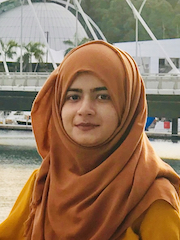
Zhigang LiView profile
Professor
Zhigang Li is a Professor in the Department of Computer Science at South China University of Technology's School of Computer Science and Engineering. His research spans multiple technical domains with significant contributions to neural networks, medical imaging, computer vision, and sensor technologies. Recent collaborations include work with Northwestern Polytechnical University, Hong Kong University of Science and Technology, and various medical research institutions. Dr. Li's research interests focus on neural network architectures, particularly small-world and feedforward networks for system modeling and medical applications. His work bridges computer science with practical applications in healthcare (EEG analysis, schizophrenia detection, liver transplant allocation), environmental monitoring (wastewater treatment), and engineering systems (CMOS image sensors, UAV networks). His research demonstrates strong interdisciplinary connections between theoretical computer science and real-world problem solving. Analysis of his recent publication trends shows increasing focus on medical applications of AI, with significant work in brain functional network analysis, depression recognition, and schizophrenia detection. His technical contributions include novel neural network architectures, efficient sensor systems, and advanced signal processing techniques. The publications reveal a consistent pattern of high-quality output in top-tier journals across multiple disciplines. Dr. Li has received recognition through publications in prestigious venues including IEEE Transactions, Medical Image Analysis, and Expert Systems with Applications, though specific awards aren't documented in the provided bibliography. His work demonstrates significant impact across multiple fields, particularly in applying computational methods to healthcare challenges. His research program includes collaborations with medical researchers for brain imaging applications, electrical engineers for sensor development, and computer scientists for network architecture design. Current projects appear focused on multi-view brain network analysis, energy-efficient sensor systems, and medical AI applications with potential clinical impact.