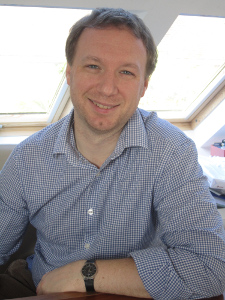
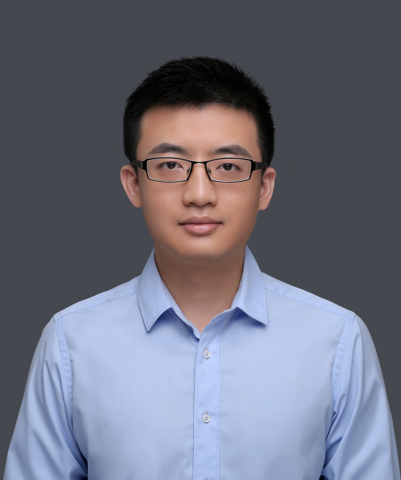
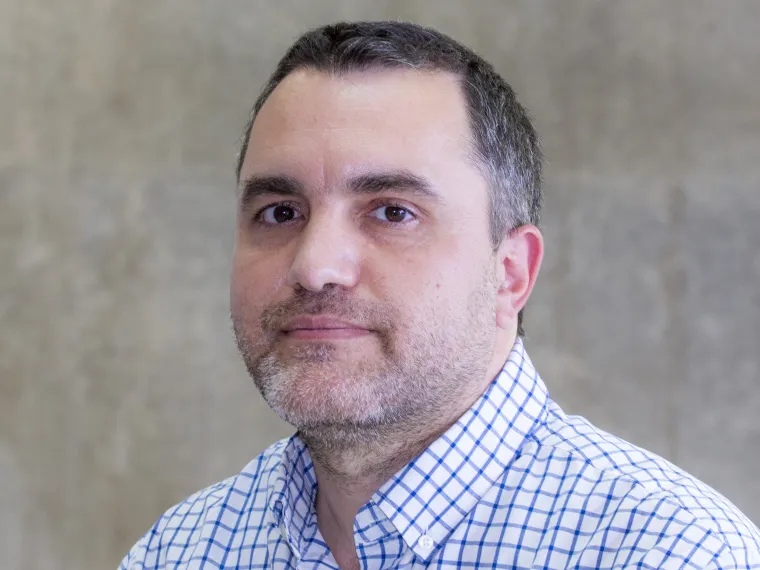
Associate Professor Vic Ciesielski is affiliated with RMIT University's School of Computing Technologies. His research focuses on Artificial Intelligence, Evolutionary Computing, Computer Vision, and Genetic Programming, with applications in areas like robot soccer and aesthetic analysis of images. He has supervised projects including efficient neural architecture search and off-line handwritten text recognition. His work bridges computational techniques with creative fields such as art history and digital media. Key research interests include machine learning, data management, and graphics/augmented reality. He actively contributes to conferences like GECCO and IJCNN, publishing on topics ranging from neural architecture optimization to sensor-based activity recognition. His research often integrates evolutionary algorithms with deep learning methodologies. He can be contacted via vic.ciesielski@rmit.edu.au and has an ORCID identifier: 0000-0001-7273-9566 .
Timothy M. Jones is a Professor of Computer Architecture and Compilation at the University of Cambridge's Computer Laboratory, serving as Director of the Computer Architecture and Semiconductor Design Centre (CASCADE) and Fellow/Director of Studies at Gonville and Caius College. His research focuses on parallelism extraction in applications to enhance performance and address energy efficiency/reliability challenges in compilers, binary translators, and microarchitectures. Current work includes novel cache prefetching techniques, thread-level parallelism schemes, and advanced core prediction methods. He has an Erdős number of 4 and a Dijkstra number of 4 via collaborative networks. Research interests span computer architecture fundamentals, compiler optimizations, hardware security mechanisms, and fault tolerance strategies. Notable contributions include speculative vectorization, heterogeneous parallel error detection (MEEK/FireGuard), and security tools like MarkUs and MineSweeper. CASCADE oversees interdisciplinary projects addressing future microprocessor/system challenges. Jones supervises PhD students through CASCADE's 2025 intake program. Publications emphasize architectural innovations in memory systems, security, and energy efficiency. Key works include MASCOT (memory dependence prediction), Scalar Vector Runahead (2024), and Decoupled Vector Runahead (2023). His work integrates hardware-software co-design principles to tackle real-world processor bottlenecks.
Magdalena Szymczyk is a Lecturer in the Department of Biocybernetics and Biomedical Engineering at AGH University of Science and Technology, Faculty of Electrical Engineering, Automatics, Computer Science and Biomedical Engineering. Her work bridges embedded systems, biomedical signal processing, and geophysical data analysis. Research focuses on energy-efficient sensor networks, neural networks for GPR data classification, and mathematical transforms in signal analysis Expertise in parallel computing, real-time systems, and biomedical engineering applications Her publications (2015–2025) demonstrate a trajectory from parallel neural networks and S-transform/GPR methodologies to recent work on MicroPython in embedded systems. Key themes include energy optimization in distributed architectures and AI-driven signal processing across biomedical and geophysical domains. She has authored works on deterministic chaos in simulations, GPU image processing, and cybersecurity in microcontroller systems. Her current research emphasizes embedded systems security, medical signal diagnostics, and computational methods for geological analysis. She utilizes tools like OpenCL for GPU acceleration and MATLAB for parallel computing implementations.
Soumaya Cherkaoui is a Full Professor in the Department of Computer Engineering and Software Engineering at Polytechnique Montréal. Previously, she served as a Full Professor at Université de Sherbrooke and held industrial roles as an aerospace project manager. Her research integrates artificial intelligence with telecommunications, focusing on quantum computing, frugal edge intelligence, and applications in connected vehicles and IoT. Current Position: Full Professor, Polytechnique Montréal Prior Academic Role: Full Professor, Université de Sherbrooke Industry Experience: Aerospace Project Manager Research Interests: Convergence of AI and communications, quantum computing for networking, frugal intelligence at the edge, and applications in autonomous vehicles, industrial IoT, and smart grids. She leads government and industry-funded projects, including a $6 million quantum initiative in 2025. Recent Publication Trends: Her 2025–2024 work emphasizes quantum-enhanced anomaly detection (via QGANs), Open RAN slicing with quantum optimization, and reinforcement learning for secure cognitive radio networks. Topics span 5G/6G, vehicular networks, and zero-trust architectures. Scientific Awards: IEEE Communication Society Distinguished Lecturer (2020) ACM Mirela Notare Award (2023) IEEE Bio-Inspired Computing STC Leadership Award (2023) N2Women: Stars in Networking and Communications (2023) Best Paper Awards at IEEE ICC 2017, IEEE LCN 2021, ICCSPA 2024 Advising and Grants: Supervised 3 Master's students in 2024, with research on quantum GANs and federated learning for vehicular networks. Secured grants like the $6 million quantum project (2025) and participated in CFI-QC government funding (2022). Editorial and Leadership: Served as Associate Editor for IEEE, Wiley, and Elsevier journals. Chaired conferences like IEEE LCN 2019 and IEEE ICC2025, and held leadership roles in IEEE Communications Society committees.
Dr. Emre Sefer is an Associate Professor at the Faculty of Engineering, Özyeğin University, specializing in machine learning and bioinformatics. He holds a Ph.D. in Computational Biology from Carnegie Mellon University (2015), an M.S. in Computer Science from University of Maryland College Park (2011), and a B.S. in Computer Engineering from Boğaziçi University (2008). His research bridges graph machine learning with financial networks, bioinformatics, and data engineering. Ph.D.: Computational Biology, Carnegie Mellon University M.S.: Computer Science, University of Maryland College Park B.S.: Computer Engineering, Boğaziçi University Research focuses on applying machine learning to financial and biological networks: Bioinformatics : 3D genome modeling, protein modifications, transcriptomic analysis Graph Machine Learning : GNNs for fraud detection, drug response prediction, and network evolution Financial Networks : Cryptocurrency investment strategies, asset price prediction His lab (OzU Machine Learning in Finance and Bioinformatics Lab) develops graph-based deep learning methods for cross-domain applications, including NFT market analysis and chromatin structure prediction. He received the Best research paper award at Recomb 2016 for work on 3D genome architecture. Former postdoc at CMU Machine Learning Department Industry experience as Quantitative Strategist at Goldman Sachs and JPMorgan
Gianluca Setti is a Full Professor at the Department of Electronics and Telecommunications (DET) at Polytechnic University of Turin, where he has been serving since 2017. He previously held positions at the University of Ferrara from 1997 to 2017. His institutional roles include being the Contact Person for the Research Quality Evaluation process, Member of the Interdepartmental Center SmartData@PoliTO - Big Data and Data Science Laboratory, and Member of the University Quality Assurance Committee. He serves as Editor-in-Chief of the Proceedings of the IEEE, the first non-US editor to hold this position. Dr. Setti's research spans multiple interdisciplinary fields including machine learning, artificial intelligence, big data analytics, Internet of Things, biomedical signal processing, power electronics, and electromagnetic compatibility. His work bridges theoretical foundations with practical applications, particularly focusing on compressed sensing, neural networks, and circuit design for specialized applications. His research has significant implications for healthcare, sustainable infrastructure, and next-generation electronics. His publication record reveals a consistent trajectory from foundational work in chaotic systems and neural networks to contemporary applications in AI, IoT, and edge computing. The most recent publications demonstrate his focus on anomaly detection at the edge, neural oracles for biosignal processing, and power electronics innovations. His work shows strong integration between theoretical signal processing and practical circuit implementation. 1998 Caianiello prize (best Italian Ph.D. thesis on Neural Networks) IEEE Fellow (2006) IEEE Circuits and Systems Society Distinguished Lecturer (2004, 2015) 2004 IEEE CAS Society Darlington Award 2013 IEEE CAS Society Meritorious Service Award 2013 IEEE CAS Society Guillemin-Cauer Award 2019 IEEE Transactions on Biomedical Circuits and Systems best paper award Multiple best paper awards at major conferences including ECCTD2005, EMCZurich2005, ISCAS2011, PRIME2019, and EMCCOMPO2019 Dr. Setti has supervised numerous PhD students across various research domains including electromagnetic compatibility, signal and power integrity, communication networks, mechatronics and robotics. His research is supported by significant funding including national PRIN projects, EU-funded JTI-ECSEL initiatives, and commercial contracts. He leads the VLSILAB Group at DET, focusing on circuit architectures, embedded systems, and AI applications. His current projects include DECORI (anomaly detection), StorAIge (embedded storage for AI), PROGRESSUS (energy infrastructure), CONNECT (smart grid), and CONVERGENCE (wearable healthcare applications).
Jon Crowcroft is the Marconi Professor of Communications Systems in the Department of Computer Science and Technology at the University of Cambridge, and serves as the Chair of the Programme Committee at the Alan Turing Institute. He is also a Fellow of Wolfson College, Cambridge, and a visiting professor at the Department of Computing at Imperial College London. With a career spanning over three decades in computer networking research, Professor Crowcroft has made seminal contributions to the development of the Internet and continues to be highly active in cutting-edge research areas. His educational background includes: BA in Physics from Trinity College, University of Cambridge (1979) MSc in Computing from University College London (1981) PhD from University College London (1993) Professor Crowcroft's research spans multiple domains in computer networking and distributed systems. He has worked in Internet support for multimedia communications for over 30 years, with three main focus areas: scalable multicast routing, practical approaches to traffic management, and the design of deployable end-to-end protocols. His current research focuses on opportunistic communications, social networks, and techniques to scale infrastructure-free mobile systems. He is particularly known for his 'build and learn' paradigm for research and has recently been exploring decentralized digital identification systems, smart cities, and edge computing. His work often bridges theoretical foundations with practical implementations, emphasizing privacy-preserving approaches and sustainable network architectures. Professor Crowcroft has received numerous prestigious awards recognizing his contributions to the field, including: Election as Fellow of the Royal Society (2013) ACM SIGCOMM Award (2009) ACM Fellow (2002) Fellow of the Royal Academy of Engineering IEEE Fellow (2004) Chartered Fellow of the British Computer Society Throughout his career, Professor Crowcroft has advised numerous PhD students, including Mark Handley and Pan Hui, who have themselves become influential researchers in the networking community. He has authored several influential books that have been adopted internationally in academic courses, such as 'TCP/IP & Linux Protocol Implementation,' 'Internetworking Multimedia,' and 'Open Distributed Systems.' His research has been supported by various grants and collaborations with both academic institutions and industry partners, contributing to successful startup projects and influencing Internet standards. Professor Crowcroft is actively involved in several research initiatives, including serving on the Scientific Council of IMDEA Networks Institute since 2007 and the advisory board of the Max Planck Institute for Software Systems. He is also a director of the Matrix Foundation, which develops open network protocols. His current research group focuses on privacy-preserving analytics, decentralized systems, and the future of Internet architecture.
A. Asadi is an Assistant Professor at the Faculty of Electrical Engineering, Mathematics and Computer Science at TU Delft. He leads the Wireless Communication and Sensing (WISE) Lab within the Embedded Systems Group, focusing on the integration of wireless communication and sensing systems for Beyond-5G and 6G networks. His research leverages machine learning to develop practical solutions for next-generation wireless networks, with strong industrial collaborations from companies such as Nokia, NEC, and National Instruments. Research Themes : Wireless Sensing, 6G Networks, Physical Layer Security, Reconfigurable Intelligent Surfaces (RIS), mmWave Communication Key Collaborations : Industry partnerships with Nokia, National Instruments, and NEC Recent research outputs highlight his work on Reconfigurable Intelligent Surfaces (RIS) for 6G systems, including liquid crystal-based designs for fast beam switching and temperature compensation. His publications emphasize practical implementations in mmWave communication, security protocols, and experimental validation. Scientific Awards : Athene Young Investigator Prize (2017) Educational Fellowship (2025) Asadi contributes to the academic community through committee roles at major conferences like IEEE INFOCOM , IEEE ICNP , and ACM CoNEXT , and his work on D2D communication has been cited as an ESI highly cited paper.
Mads Dam is a Professor in Teleinformatics at the School of Computer Science and Communication at Kungliga Tekniska Högskolan (KTH), where he heads the Department of Theoretical Computer Science. His research focuses on computer security, formal methods, and program logics, with particular emphasis on the formal modeling and verification of low-level hardware and software execution platforms for security and application isolation. His educational background includes: PhD in Computer Science from the University of Edinburgh (1990) MSc in Computer Engineering from Aalborg University, Denmark BSc in Information Technology from Aalborg University, Denmark Mads Dam's research interests center on computer security, formal methods, and program logics. His current work focuses on the formal modeling and verification of low-level hardware and software execution platforms such as hypervisors and OS kernels and their underlying hardware. He has made significant contributions to information flow security, verification of microarchitectural systems, and network programming language security. His research bridges theoretical foundations with practical security applications. His recent publications show a strong trend toward verifying low-level systems, with a focus on information flow security for processors, network programming languages (particularly P4), and microarchitectural vulnerabilities. His work combines formal methods with practical security concerns, developing verification techniques that address real-world security challenges in hardware and software systems. The research spans theoretical foundations in temporal and epistemic logics to practical applications in network security and processor verification. His scientific awards and recognition include: Two framework grants from the Swedish Foundation for Strategic Research A junior individual grant from the Swedish Foundation for Strategic Research Project grants and a five-year research fellowship from the Swedish Research Council (VR) Project grants from Ericsson, Microsoft Research, US Air Force, and Vinnova (the Swedish Innovation Agency) Mads Dam has been a principal investigator on numerous research projects and has supervised many graduate students. He has been a partner in several European projects including HATS, S3MS, VerifiCard, LOMAPS, and UaESMC. His research has been supported by substantial grants from major funding bodies, reflecting the significance and impact of his work in computer security and formal methods. He is a founding member of several research centers at KTH, including Access, the CASTOR software research center, and the CDIS center for cyber defense and information security. These centers bring together researchers from multiple disciplines to address complex challenges in cybersecurity and software engineering.
Kede Ma is an Associate Professor in the Department of Computer Science at City University of Hong Kong (CityUHK). He received his B.E. from the University of Science and Technology of China (USTC) in 2012, and MASc and Ph.D. degrees from the University of Waterloo in 2014 and 2017, respectively. From 2018 to 2019, he was a Research Associate with the Howard Hughes Medical Institute and New York University. Prof. Ma has been named to the Highly Cited Researchers list by Clarivate Analytics in 2024 and currently serves on the editorial boards of IEEE Transactions on Image Processing, IEEE Transactions on Information Forensics and Security, and IEEE Signal Processing Letters. Prof. Ma leads the Multimedia Analytics (MA) Laboratory, an interdisciplinary research group focused on computational vision, computational modeling of human visual perception, perceptual multimedia signal processing, quality assessment, and multimedia forensics. His research spans computational photography, high dynamic range imaging and rendering, omnidirectional video analysis, camera processing pipeline design, and artificial intelligence safety in multimedia systems. His work integrates machine learning techniques including reinforcement learning, generative modeling, self-supervised learning, and continual learning for multimedia signal processing applications. His recent publications demonstrate a strong focus on image quality assessment, deep learning for multimedia processing, and multimedia forensics. His work bridges theoretical computer vision principles with practical applications in multimedia systems. The research trends show increasing integration of foundation models with specialized multimedia processing tasks, particularly in quality assessment and security applications. Highly Cited Researchers list by Clarivate Analytics (2024) Best Paper Award at IEEE International Conference on Virtual Reality and Visualization (2021) Best Paper Runner-Up at International Joint Conference on Artificial Intelligence Workshop (2021) Top 10% Award at IEEE International Conference on Image Processing (2015) Finalist for the Governor General's Gold Medal, University of Waterloo (2017) Spotlight presentation at NeurIPS (2022) Highlight paper at ICCV (2025) Oral presentation at ICLR (2025) Prof. Ma advises numerous PhD students and postdoctoral fellows in the MA Laboratory. His research is supported by various grants enabling work in multimedia analytics, image processing, and computer vision. The laboratory maintains active collaborations with researchers at institutions including SUSTech, ZJU, and HIT. Current projects focus on advancing image quality assessment methodologies, developing more robust deep learning techniques for multimedia forensics, and exploring new approaches to HDR imaging and omnidirectional video processing. The Multimedia Analytics Laboratory maintains a strong focus on both theoretical foundations and practical applications of multimedia processing. Current research directions include integrating large language models with image quality assessment, developing more robust deepfake detection methods, and advancing techniques for continual learning in multimedia applications. The lab emphasizes rigorous evaluation methodologies and maintains multiple datasets for multimedia quality assessment research.
David Blakesley is Professor of Rhetorics, Communication, and Information Design and Campbell Chair in Technical Communication at Clemson University's College of Arts and Humanities, Department of Interdisciplinary Studies. He currently serves as President of the Faculty Senate for 2023-2024. His academic career spans over three decades with significant contributions to rhetorical theory, digital publishing, and technical communication. Blakesley earned his PhD in Rhetoric, Linguistics, and Literature from the University of Southern California (1990), an MA in English from San Diego State University (1986), and a BA in English from the same institution (1983). His research spans multiple interconnected fields including rhetorical theory, history of rhetoric, digital and visual rhetorics, print and digital publishing, film theory and production, technical communication, and digital humanities. He has focused particularly on Kenneth Burke's rhetorical theory and its applications across various media. His scholarly work demonstrates a consistent trajectory from traditional rhetorical theory toward digital applications and publishing innovations. Over the past decade, his research has increasingly focused on the intersection of digital technologies with rhetorical practices, particularly examining how digital platforms transform scholarly communication and publishing. His 2022 TUGboat article on production versus distribution in publishing exemplifies his ongoing interest in how technological shifts impact academic and professional communication. Fellow, Rhetoric Society of America George Yoos Distinguished Service Award (RSA) Charles Moran Award for Distinguished Contributions to the Field of Computers and Composition Blakesley has secured significant funding including the $11 million Clemson-Adobe Partnership for Campus-Wide Creative Cloud implementation. He serves as Editor of KB Journal, Co-Editor of WAC Journal, and General Editor of The Writing Instructor. His editorial work has been instrumental in shaping scholarly communication in rhetoric and composition studies, particularly through his leadership in digital publishing initiatives.
Ross Koppel is an Adjunct Professor of Sociology with expertise in healthcare information technology, medication errors, and ethics in social research. His work explores the intersection of technology and societal impacts, focusing on data governance, clinical workflows, and human factors in health IT systems. Research Interests Context-sensitive understanding of medication errors Societal implications of clinical data sharing Ethical challenges in AI and informatics Healthcare cost analysis Scientific Awards Fellow of the American College of Medical Informatics (FACMI)
Farinaz Koushanfar is a Professor in the Department of Electrical and Computer Engineering at the Jacobs School of Engineering, University of California San Diego (UCSD) . She holds the Siavouche Nemat-Nasser Endowed Chair and serves as Founding Co-Director of the Center for Machine-Intelligence, Computing and Security . Her affiliations include NSF Trust-Hub (Co-PI) and NSF TILOS AI Institute . She also serves on the Editorial Board of The Proceedings of the IEEE . Research Focus: Prof. Koushanfar leads research in secure and efficient computing , including robust/safe AI , hardware/system security , AI-based optimization , and cryptographically secure privacy-preserving computing . Her work pioneered logic obfuscation/locking for chip security, automated co-design of AI systems , watermarking/tracing of deep learning models , and physical proofs of provenance . She explores co-design with cryptographic constructs for privacy preservation and manages nonlinearities in ciphertext domains. Article Trends: Recent publications show expertise in neural watermarking (deepfakes, media authentication), zero-knowledge proof frameworks , Trojan attack defenses in ML models, secure federated learning , and hardware acceleration of cryptographic protocols . Her work combines machine learning , cryptography , and physical design security across 2022-2025 publications. Scientific Awards: Fellow of ACM Fellow of IEEE Fellow of National Academy of Inventors (NAI) Fellow of Kavli Foundation of NAS Inducted to NAI 2024 Fellows Advising & Leadership: She has advised multiple PhD students who became faculty at top universities (e.g., Stanford, Purdue). She chairs conferences like ACM WiSec 2024 and co-led the NSF SaTC decadal review. Her lab ( ACES Lab ) produces award-winning graduates like Bita Rouhani (DAC Under-40 Innovators) and Shehzeen Hussain (UCSD Best Dissertation Award).
Mehmetcan Akbulut is an Associate Research Professor at the Wyant College of Optical Sciences , The University of Arizona. His office is located in GCRB 447. Research Focus: Photonics subsystems and systems development with applications in Directed Energy, Remote Sensing, Quantum Optical Networks, Optical Computing, Ultrafast & RF Photonics, and Biophotonics. Key Research Areas: High-energy fiber lasers, coherent beam combining, LIDAR systems, quantum communications, optical computing architectures, and photonic biosensors. Recent publications highlight advancements in injection-locked fiber lasers, SBS suppression techniques, optical Ising machines, and frequency comb applications. His work intersects academic and applied research through collaborations like the Center for Quantum Networks and CIAN projects. The Photonics & Systems Laboratory explores technologies for Directed Energy, wind shear sensing, distributed fiber sensing, and AI-driven biomedical imaging systems.
John Breslin is a Personal Professor in Electronic Engineering at the College of Science and Engineering, University of Galway, serving as Director of the TechInnovate and AgInnovate programmes. Associated with two Taighde Éireann – Research Ireland Centres, he is a Principal Investigator at Insight Centre for Data Analytics (specializing in data analytics) and a Funded Investigator at VistaMilk (Agri-Technology), while also leading the EDIH Data2Sustain project. With an h-index of 50, over 12,000 citations, and 300+ peer-reviewed publications including seminal books on the Social Semantic Web, he ranks among Ireland's most influential researchers in digital technologies. Breslin's research fundamentally bridges Semantic Web technologies, AI-driven data analytics, and practical innovation. His co-creation of the SIOC framework—implemented across 65,000+ websites by entities like Yahoo and Boeing—demonstrates real-world impact in social data interoperability. Current work leverages blockchain and federated learning for sustainable Agri-Technology through VistaMilk, while his TechInnovate programmes translate academic research into commercial ventures across healthcare, smart manufacturing, and energy systems. Analysis of his 15 most recent publications reveals dominant themes in AI-enhanced security (35% of works), blockchain applications for sustainability (27%), and multimodal AI for healthcare (20%). His team pioneers privacy-preserving techniques for IoT and medical devices, neurosymbolic visual reasoning frameworks, and federated learning architectures addressing data heterogeneity—directly supporting his roles in national research infrastructures like Insight and VistaMilk. John has received several prestigious awards: IIA Net Visionary Award (twice) ITAG Outstanding Contribution to the ICT Sector Award Galway Chamber President’s Award Best Irish-Published Book Award (2020 for Old Ireland in Colour) Multiple Best Paper Awards He leads major research initiatives funded by Taighde Éireann – Research Ireland: Insight Centre for Data Analytics (as Principal Investigator) VistaMilk SFI Research Centre (as Funded Investigator) EDIH Data2Sustain (as Principal Investigator) His entrepreneurial programs TechInnovate and AgInnovate have mentored 200+ startups, securing €50M+ in follow-on funding. Breslin co-founded PorterShed (Galway City Innovation District) and serves on Scale Ireland's Steering Group, creating Ireland's most active regional innovation ecosystem outside Dublin. He maintains active industry partnerships with Vodafone, Boeing, and agricultural cooperatives through VistaMilk's testbed facilities.