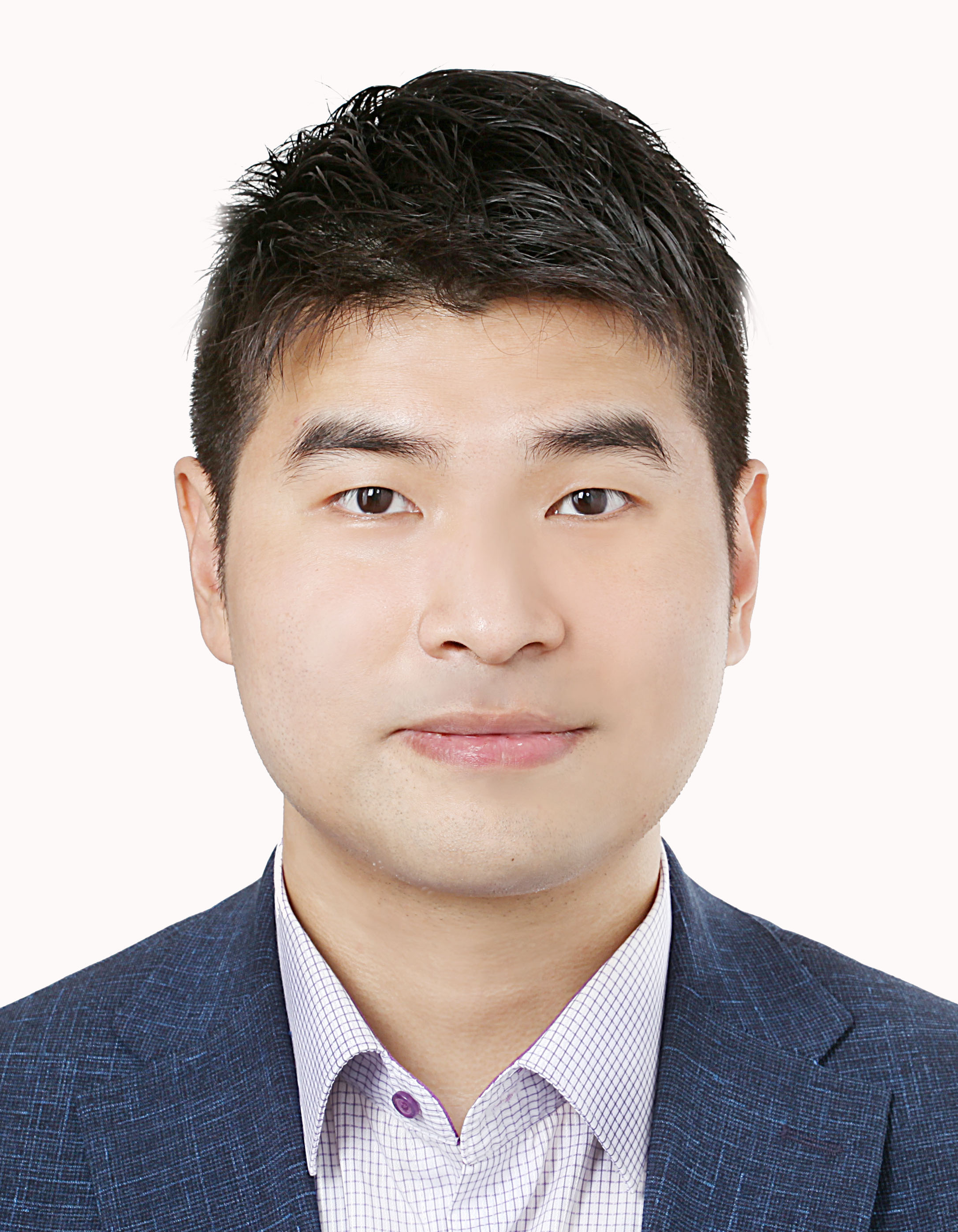
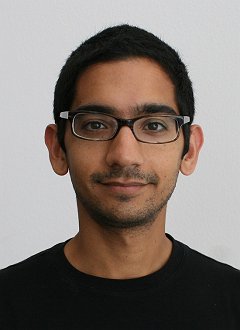
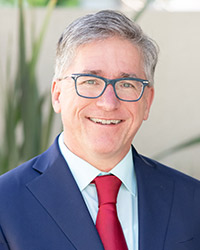
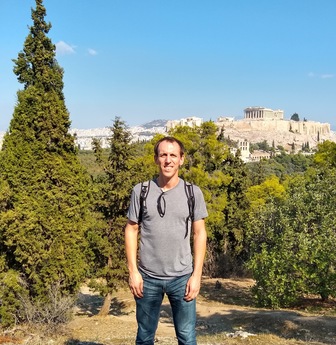
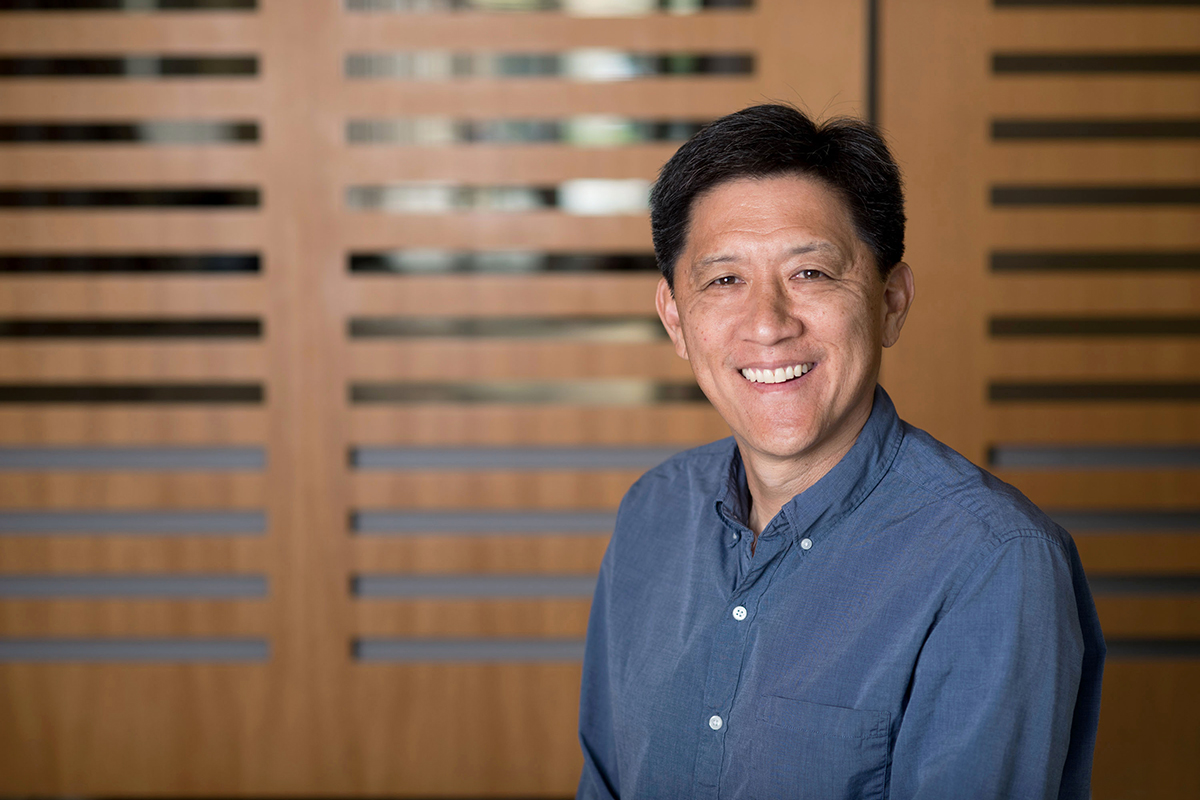
Prof. Gael Thomas is a Professor at Telecom SudParis, focusing on distributed systems, operating systems, and high-performance computing. His work emphasizes virtualization, concurrency control, and secure execution environments. He has contributed extensively to projects like VMKit, I-JVM, and J-NVM, addressing challenges in garbage collection, system scalability, and trusted computing. His research interests include: Virtualization techniques for improved system isolation Optimizing garbage collectors for multicore architectures Trusted execution environments using SGX and HTM Performance analysis of MPI/OpenMP applications Notable contributions: Developed PALLAS trace format for HPC analysis (2025) Created NVCache for NVMM-based I/O optimization (2021) Pioneered secure code partitioning techniques (2023-2024) His work has been presented at top conferences including EuroSys, Middleware, and DSN.
Leonor Santiago Pinto is an Assistant Professor in the Department of Mathematics at ISEG, University of Lisbon, specializing in Operations Research. She has been a faculty member since 1983 and previously taught at the University of Macau (1991–1998). She is actively involved in teaching and coordinates the Master’s program in Quantitative Methods for Economic and Business Decision-Making. Her research focuses on combinatorial optimization, particularly arc routing problems with applications in urban logistics, waste collection, parking enforcement, and conservation biology. She employs mathematical programming and heuristic methods to solve real-world logistical challenges. Her recent publications highlight a strong trend in applying arc routing models to municipal services, with emphasis on solution attractiveness, trip balancing, and hybrid matheuristics. Her work bridges theoretical optimization with practical implementation in urban environments. PhD in Mathematics Applied to Economics and Management, ISEG (2004) She has supervised numerous Master’s theses on topics including waste collection, scheduling, logistics, and optimization in healthcare and sports. She has co-supervised a doctoral thesis and continues to mentor students in quantitative decision-making. Leonor Pinto is affiliated with ISEG’s research initiatives in data and policy modeling, contributing to applied projects in urban sustainability and public service optimization.
Frank Piessens is a full professor in the Department of Computer Science at KU Leuven, Belgium, with research spanning both offensive and defensive aspects of software and systems security. His defensive work includes formal verification for C-like languages, information flow security enforcement, memory safety hardening, micro-architectural side-channel mitigation, and embedded security architectures. On the attack front, he has pioneered techniques for transient execution vulnerabilities, memory corruption exploits, and controlled channel attacks. His research interests focus on software security , system security , formal methods , programming languages , and information flow security . Recent publications demonstrate expertise in secure compilation (linear capabilities, control-flow linearization), functional reactive programming for web/IoT systems, and type-theoretic approaches to program equivalence. His work bridges theoretical foundations with practical security implementations across hardware-software boundaries. Professor Piessens maintains active leadership in the academic community through program committee service for top-tier conferences including ACM CCS, Usenix Security, IEEE Security & Privacy, and ACM POPL. He has chaired major events such as POST 2016, IEEE Euro S&P 2018-2019, and IEEE SecDev 2021-2022, while delivering keynotes at SPLASH 2025 and PriSC 2022 on confidential computing and hardware security evidence.
Yu Wang is affiliated with Nanjing University (China). The person actively contributes to programming language and software engineering research through publications and committee roles. Published papers on compiler optimization, concurrency analysis, and AI-driven program analysis Served on program committees for SPLASH, ICSME, and PLDI Research focuses on compiler verification , static analysis , and deep learning applications in software engineering . Key trends in their publications include: Algorithmic optimization for floating-point constraints Concurrency modeling in Go programming Adversarial robustness in code analysis models Yu Wang's committee memberships demonstrate leadership in academic peer review processes across multiple conferences.
Bryan Parno is a Professor at Carnegie Mellon University, holding the Kavčić-Moura Chair in Electrical and Computer Engineering and Computer Science. His work bridges theoretical and practical aspects of secure systems verification, focusing on formal methods to ensure rigorous security guarantees. Research Areas: Secure systems, formal verification, cryptography, concurrency, distributed systems Key Contributions: Development of Verus, Leaf, IronFleet, and FastVer2 for verified secure systems Awards: Jay Lepreau Best Paper (OSDI 2025), IEEE Cybersecurity Award for Practice (2024), Distinguished Artifact Award (SOSP 2024) His recent publications demonstrate a focus on scalable formal verification across diverse domains, including Rust programming, WebAssembly sandboxing, and cryptographic protocols. Tools like Verus and OwlC enable provably correct implementations with performance optimizations. Scientific recognition includes: ACM Doctoral Dissertation Award (2011) IEEE Golden Core Recognition (2023) Forbes 30-Under-30 (2011) Sloan Research Fellowship (2018) Multiple best paper awards at USENIX Security, CAV, and IEEE S&P Parno advises PhD students in secure systems and contributes to critical infrastructure projects like Project Everest. His lab develops open-source tools for verified cryptography and systems programming.
Neelakantan R. Krishnaswami is a Professor of Computer Science at the University of Cambridge, affiliated with the Computer Laboratory and a Fellow of Trinity College . His research focuses on program verification, programming language design, and the intersection of logic, semantics, and type theory. PhD in Computer Science from Carnegie Mellon University (2011) His work addresses foundational challenges in programming languages, including refinement type systems with explicit proofs, deterministic parsing with fused lexing, and verification of systems code using separation logic. He has also contributed to bidirectional typechecking, higher-order reactive programming, and logical models for concurrency. Recent publications highlight trends in refinement types with explicit proof terms, parser combinator optimization, and formal verification of C and WebAssembly code. These works span type theory, denotational semantics, and practical compiler design. Distinguished Paper Award, POPL 2020 Distinguished Paper Award, PLDI 2019 He has collaborated extensively on projects involving functional reactive programming, logical relations, and substructural type systems. His contributions include the design of the flap parser library and the Datafun language, which extends Datalog with higher-order features.
Marcelo Arenas is a Professor at the Department of Computer Science and the Institute for Mathematical and Computational Engineering at the Pontifical Catholic University of Chile. He is a Fellow of the Association for Computing Machinery (ACM), former director of the Millennium Institute for Foundational Research on Data, and co-founder of the Center for Semantic Web Research. His Ph.D. in Computer Science was obtained from the University of Toronto in 2005. Research interests include data management , applications of logic in computer science , and Semantic Web technologies. He has published extensively on topics such as SPARQL query complexity , graph database systems , and incomplete database theory , with notable works like MillenniumDB and Foundations of Data Exchange . Scientific accolades: 2016 SWSA Ten-Year Award for "Semantics and Complexity of SPARQL" IBM Ph.D. Fellowship (2004) Nine Best Paper Awards across PODS, ISWC, ICDT, ESWC, WWW, and NeurIPS His work on approximate counting algorithms (e.g., FPRAS for #NFA) and explainable AI frameworks has influenced database theory, while serving on program committees for ICDT 2015, ISWC 2015, and PODS 2018 demonstrates leadership in the field. Current projects focus on probabilistic explanations for decision trees and temporal regular path queries in knowledge graphs.
Elizabeth Polgreen is a Lecturer (~Assistant Professor) in the School of Informatics at the University of Edinburgh, where she conducts research in programming languages and formal methods, particularly program synthesis and verification. She is affiliated with the Laboratory for Foundations of Computer Science and contributes to the Programming Languages and Software Engineering research area. Her research focuses on formal program synthesis, leveraging techniques such as symbolic reasoning, genetic algorithms, and large language models to improve the scalability and automation of software verification. She explores applications in code modernization, tensor program lifting, and explainable AI. Her work bridges programming languages, AI, and formal methods to build trustworthy systems. Her recent publications (2020–2025) span top venues including PLDI, CGO, AAAI, CAV, OOPSLA, and NeurIPS, showing a strong trend in neuro-symbolic synthesis, grammar inference, and verification of AI and low-resource code. She has secured competitive funding, including a Royal Academy of Engineering fellowship and an Amazon Research Award. Scientific awards include: Royal Academy of Engineering Research Fellowship Amazon Research Award Best Paper Award at GPCE Distinguished Paper Award from CGO She advises multiple PhD students, including Yixuan Li, Alexander Brauckmann, and José Wesley de Souza Magalhães, often in collaboration with Professor Mike O'Boyle. Her research is supported by grants from the Royal Academy of Engineering and Amazon. She has delivered keynotes, tutorials, and a TEDx talk, contributing actively to outreach and education in formal methods. She leads a research group within the Laboratory for Foundations of Computer Science, focusing on trustworthy systems through synthesis and verification. Her team includes PhD students and collaborators working on cutting-edge topics in program analysis, AI for code, and compiler design.
Daniel Smith is a Senior Lecturer in English Language & Literature, specializing in Early Modern English Literature, Digital Humanities, and Letterlocking. His research explores the intersection of textual analysis, historical security practices, and material culture. Research Trends: His work focuses on Renaissance epistolary practices, including cryptographic methods like letterlocking, and extends to digital reconstruction technologies for sealed documents. He also examines literary networks (e.g., John Donne, Thomas Kyd) and socio-historical contexts of early modern women’s writings. Scientific Awards: Fellow of the Higher Education Academy (2019) Fellow of the Royal Historical Society (2017) Fellow of the Society of Antiquaries (2025) John Donne Society Distinguished Publication Award (2011) University English Book Prize (2016) Academic Contributions: Editor of Liber amicorum H. R. Woudhuysen , a bibliographical tribute, and key works on Thomas Kyd and the Conway Papers. His virtual exhibitions and digital tools (e.g., letterlocking.org) bridge historical scholarship and technology.
Dr. Ilona Varrók is an Associate Professor and Head of the Department of Japanese Studies at the Faculty of Humanities and Social Sciences, Károli Gáspár Reformed University in Budapest, Hungary. With over three decades of academic experience, she has established herself as a leading scholar in Japanese studies within the Hungarian academic landscape. Her leadership has been instrumental in developing Japanese language and cultural studies programs at multiple Hungarian institutions. Dr. Varrók's educational background includes: PhD in Educational Science (2003) from ELTE (Eötvös Loránd University), with dissertation on 'History of Art Education in Japan, with special regard to the relationship between literature and fine arts' MA in Portuguese Language and Literature, Spanish Language and Literature, and Orientalist (Japanese) Studies (1984, 1992) from ELTE Her scholarly work centers on the intricate connections between Japanese literature, visual arts, and educational philosophy. She has made significant contributions to understanding how Japanese educational traditions integrate aesthetic principles and creative expression across historical periods. Dr. Varrók's research spans from ancient Japanese educational practices through the transformative Meiji era to contemporary educational reforms, with particular emphasis on the relationship between visual arts and literary traditions in pedagogical contexts. Her work demonstrates how Japanese educational philosophy has historically valued the synthesis of artistic expression and intellectual development. Dr. Varrók's publication record reveals a consistent scholarly trajectory focused on Japanese educational history and cultural studies. Her most recent works increasingly emphasize cross-cultural connections between Japan and Hungary, particularly through her leadership in the Japanese-Hungarian Dictionary project. A notable trend in her scholarship is the interdisciplinary approach that bridges education, art history, literature, and cultural studies. Her publications demonstrate a deepening engagement with how aesthetic principles inform educational practices across different historical periods in Japan. Dr. Varrók's scholarly achievements have been recognized with significant honors: Rector's Certificate of Merit from Károli Gáspár Reformed University (2017) Award for the Japanese-Hungarian Dictionary from the Japanese Ministry of Foreign Affairs (2016) As an academic leader, Dr. Varrók has supervised numerous student research projects through the Scientific Student Circle (TDK) program. She has secured substantial research funding, including Japanese Government Cultural Grant Aid. Her editorial leadership extends to coordinating major projects such as the Multimedia in Japanese Language Teaching project (PFP) and serving as Editor-in-Chief for the Japanese-Hungarian Dictionary project, which represents a significant scholarly achievement in cross-cultural linguistic work. Dr. Varrók has played a pivotal role in establishing and developing Japanese studies programs at Károli Gáspár Reformed University, including the five-year Japanese studies program, the Oriental Languages and Cultures undergraduate program with Japanese specialization, and the Japanese studies master's program. She has also contributed to the World Literature Lexicon as a senior associate and has been active in the Hungarian Association of Japanese Language Teachers, helping to shape Japanese language education standards across Hungary.
Woosuk Lee is an Associate Professor at Hanyang University since September 2024, previously serving as an Assistant Professor there from September 2018 to August 2024. He held postdoctoral fellowships at the University of Pennsylvania (2017-2018) and Georgia Institute of Technology (2016-2017), and completed his Ph.D. (2009-2016) and B.S. (2005-2009) at Seoul National University. His research focuses on enhancing software quality and programmer productivity through innovations in programming systems , integrating ideas from programming languages , software engineering , compilers , and security . He develops scalable techniques for program synthesis , enabling automated generation of efficient and safe software, alongside program analysis and repair tools to detect and fix bugs. His work has been presented at top-tier venues like OOPSLA, POPL, and PLDI. Professional Activities : Program Committee member for OOPSLA 2025, POPL 2025, PLDI 2024, APLAS 2023, and others; Co-Chair for PLDI 2025 workshops; Reviewer for journals including ACM Transactions on Software Engineering and Methodology. Students : PhD advisees Jaehyung Lee and Hangyeol Cho; Master’s students Jinsang Kim, Wang Ao, Gangdae Ju, Junghoon Lee, and Junseong Park; Alumni include DongKwon Lee (co-advised with Kwangkeun Yi) now at Samsung Research. Contact: Rm 403, 3rd Engineering Building, Hanyang University, Ansan-si, Gyeonggi-do, South Korea. Email: woosuk@hanyang.ac.kr .
Ravi Chugh is an Associate Professor in the Department of Computer Science at the University of Chicago. His work bridges Programming Languages (PL) and Human-Computer Interaction (HCI), focusing on direct manipulation programming systems and hole-driven development. Affiliation: University of Chicago Role: Director of Undergraduate Studies Research interests: Direct Manipulation Programming Systems Type Systems Program Synthesis Structured Editing Visual Programming His recent work includes Ragged Blocks (UIST 2025) for structured text rendering, Code Style Sheets (OOPSLA 2025) for styling code, and projects like Sketch-n-Sketch and Hazel for bimodal programming environments. Professional Activities: Program Committee: HATRA 2025, VL/HCC 2023, PLDI 2022, POPL 2021 Artifact Evaluation Co-Chair: PLDI 2018-2020 Editorial Board: Journal of Functional Programming (2020–)
David Austin serves as Professor of Legal Writing at California Western School of Law, where he has taught since 2009. A former clerk for Hawai'i Supreme Court Chief Justice Ronald T.Y. Moon (2001-2003), he brings extensive complex litigation experience from Chicago firms Jenner & Block and Schoeman Updike Kaufman & Scharf, specializing in commercial disputes and product liability defense. Education: J.D., The John Marshall Law School (2001, cum laude) B.A., University of Maryland-European Division (1995) Bar Admitted: Illinois Professor Austin's research centers on international human rights law with particular emphasis on LGBTQ+ asylum claims and immigration policy. His publications consistently address sexual orientation/gender identity protections in refugee systems, analyzing evolving legal standards across jurisdictions. He also examines state immigration legislation impacts and comparative legal frameworks in North America. His 2008-2014 publications reveal a strategic focus on documenting legal developments in asylum law while advocating for marginalized communities. The recurring themes in International Law journal contributions demonstrate sustained engagement with refugee protection mechanisms and systemic discrimination challenges. Professor Austin maintains active pro bono commitments through the National Immigrant Justice Center (Leadership Council member and Asylum Program director) and AIDS Legal Council of Chicago (amicus in Illinois Supreme Court case). His teaching extends to appellate advocacy instruction at The John Marshall Law School and international legal education in Mexico and Switzerland. Before law, he contributed to European public health initiatives including HIV prevention research presented at International AIDS Conferences (Berlin 1993, Yokohama 1994) and served on the European Council of AIDS Service Organizations board (1991-1994) as Southern Europe representative.
Michael D. Bond is a Professor in the Department of Computer Science and Engineering at Ohio State University, where he leads the Programming Languages and Software Systems (PLaSS) Research Group. His work focuses on designing program analyses and software and hardware systems that enhance computing reliability, scalability, and security. As an active member of the programming languages and systems research community, he serves in leadership roles including General Chair for PLDI 2027 and ISMM 2024. Professor Bond's research interests span programming languages, systems, and security with a particular focus on information flow control, concurrency, memory management, and Rust programming language systems. His group has made significant contributions to data race detection, predictive analysis, information flow control in Rust, and memory-disaggregated systems. Recent work includes Carapace (static-dynamic information flow control in Rust), Cocoon (static information flow control in Rust), and IsoPredict (predictive analysis for weakly isolated data applications). His research group has secured substantial funding, including multiple NSF grants such as SaTC-2348754 (2024-2027) on information flow control in Rust, CyberCorps-2336531 (2024-2029), and CSR-2106117 (2021-2025). Professor Bond has advised numerous PhD and MS students, many of whom have gone on to prestigious positions at Google, Amazon, Huawei, and academic institutions. Scientific Awards: Outstanding Teaching Award, Department of Computer Science and Engineering, Ohio State University (2018) Lumley Research Award, College of Engineering, Ohio State University (2016) OOPSLA 2015 Distinguished Paper and Artifact Awards NSF CAREER Award ACM SIGPLAN Outstanding Doctoral Dissertation Award Professor Bond actively contributes to the research community through service as program committee member for top conferences including PLDI, ASPLOS, and OOPSLA. He is currently the General Chair for PLDI 2027 and served as General Chair for ISMM 2024. His group's open-source implementations accompany many publications, demonstrating commitment to reproducibility and practical impact.
Calvin Lin serves as a University Distinguished Teaching Professor at the University of Texas at Austin, concurrently directing the Turing Scholars Honors Program and coaching UT's Men's Ultimate Frisbee team. His career uniquely integrates cutting-edge research in computer systems with transformative educational initiatives. His academic foundation includes: BS from Princeton University PhD from the University of Washington Lin's research spans computer architecture, parallel computing, programming languages, compilers, security, and privacy, with recent emphasis on computer science education. His work consistently addresses performance optimization challenges across hardware-software boundaries, particularly in memory systems and processor design, while pioneering efforts to modernize K-12 CS curricula through NSF funding. Publication trends reveal enduring focus on system-level efficiency: early breakthroughs in machine learning-based branch prediction (2001) evolved into contemporary innovations in data prefetching and GPU synchronization. His articles demonstrate methodological progression from theoretical compiler techniques to practical security-aware architectures, maintaining relevance across 20 years of computing evolution. Recognition for his dual excellence includes: William David Blunk Memorial Professorship (2019) President’s Associates Teaching Excellence Award (2015) Senior Provost Teaching Fellow (2015) UT Academy of Distinguished Teachers (2013) Jean Holloway Award for Excellence in Teaching (2013) Best Paper Award, Eurographics Symposium on Parallel Graphics and Visualization (2012) University of Texas Regents’ Outstanding Teaching Award (2011) Best Paper Award, International Symposium on Code Generation and Optimization (2011) Best Paper Award, ACM SIGPLAN Conference on Programming Language Design and Implementation (2007) IEEE Micro Top Picks (2006) HPCA Test of Time Award (2019) As Turing Scholars Director, Lin mentors elite undergraduate researchers while leading an NSF grant to redesign high school CS education. His advising extends beyond traditional graduate supervision into curriculum development and competitive programming initiatives, fostering talent pipelines from secondary education through doctoral research. Beyond formal academic roles, Lin cultivates community engagement through Ultimate Frisbee coaching and maintains active research collaborations. His current work focuses on security-enhanced architectures and compiler-driven performance optimization, positioning his team at the intersection of hardware innovation and educational outreach.