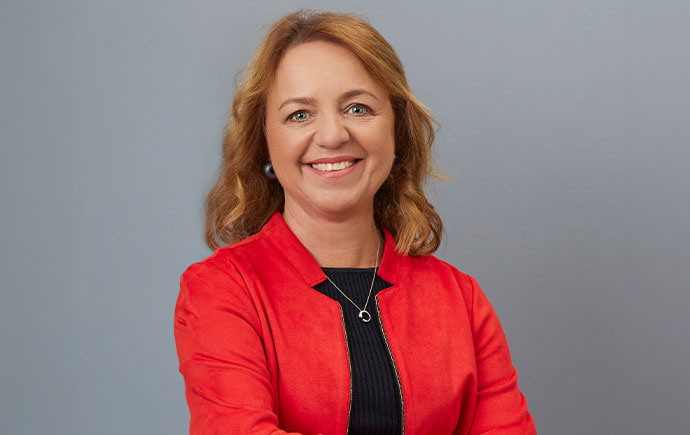
Sonja Buchegger is a Professor at the Division of Theoretical and Computer Science at KTH Royal Institute of Technology. She serves as Co-PI of the DataLEASH research project (Learning and Sharing under Privacy constraints) and is affiliated with the Digital Futures Faculty, a cross-disciplinary center focused on digital technologies and societal challenges. Her work addresses privacy-preserving technologies in decentralized systems, IoT, and secure communication. Research Interests: Privacy-Preserving Technologies Data Security and Synthetic Data Generation Decentralized Systems and Cryptographic Protocols IoT Privacy and Ownership Management Secure Communication in Social Networks Key Projects: DataLEASH: Focuses on privacy constraints in data sharing and learning chownIoT: Enhances IoT privacy during ownership transfers Anonfaces: Anonymization of facial data with efficacy and security constraints Advising & Grants: As Co-PI of DataLEASH, she leads collaborative research on privacy challenges. Her work is supported by Digital Futures' interdisciplinary initiatives. Labs/Teams: Active contributor to Digital Futures' research on digital technologies and societal impact.
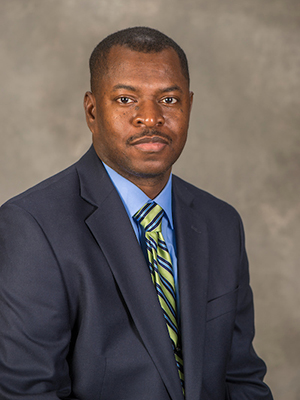
Garth V. Crosby is an Associate Professor at Texas A&M University's Department of Engineering Technology and Industrial Distribution within the College of Engineering. He is also affiliated with the Multidisciplinary Engineering program. His research focuses on IoT and IIoT security, cyber-physical systems, and STEM education innovation. Crosby holds a Ph.D. in Electrical Engineering from Florida International University (2007), an M.S. in Computer Engineering, and a B.S. in Electronics (Applied Physics) from the University of the West Indies. His work spans cybersecurity frameworks for emerging technologies, including blockchain-based federated learning, post-quantum cryptography, and IoT threat mitigation. He has contributed to educational advancements through online lab design and faculty efficacy studies in hybrid learning environments. Crosby's recent publications emphasize securing robotic IoT systems, supply chain blockchain applications, and ransomware evasion techniques using generative AI. His research portfolio includes over 40 peer-reviewed articles in journals like IEEE Transactions and conferences such as ASEE and FiCloud. Key themes include volunteer cloud reliability models (ProTrust), edge computing security, and educational technology evaluation. Crosby's interdisciplinary approach bridges engineering systems with pedagogical innovation, addressing both technical and human factors in modern technological challenges.
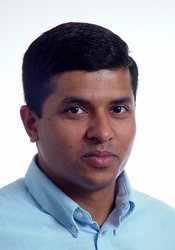
Gaurav Sharma is a Professor at the University of Rochester, holding joint appointments in the Department of Electrical and Computer Engineering, Computer Science, and Biostatistics and Computational Biology. He is also a Distinguished Researcher at the Goergen Institute for Data Science and Artificial Intelligence. His research focuses on Data Analytics, Cyber Physical Systems, Signal and Image Processing, Computer Vision, Media Security, and Communications. Previously, he served as Director of the Center for Emerging and Innovative Sciences (2008-2010) and held roles at Xerox Research (1996-2003). He earned a PhD in Electrical and Computer Engineering from North Carolina State University (1996), alongside degrees from Indian institutions including the Indian Institute of Science and IIT Roorkee. Education: PhD (NCSU), M.S. Applied Mathematics (NCSU), M.S. Electrical Communication Engineering (IISc), B.Eng (IIT Roorkee) Awards: Fellow of IEEE, SPIE, and IS&T; Elected Sigma Xi member Editorial Roles: Editor-in-Chief of IEEE Transactions on Image Processing (2018-2020) and Journal of Electronic Imaging (2011-2015) Leadership: Chair of IEEE Signal Processing Society committees and SPIE/EI conferences His research spans interdisciplinary areas like medical imaging analytics, cybersecurity in IoT systems, and computational methods for biomedical applications. Recent work includes studies on cardiac mortality patterns, viral protein inhibition, and federated learning for privacy-sensitive healthcare tasks. Dr. Sharma’s contributions to academic governance include roles on IEEE publication committees and strategic planning boards, reflecting his commitment to advancing technical standards and open science practices.
Professor Daphne Flynn is the Director of Monash Art, Design and Architecture's Health Collab, an interdisciplinary lab focused on healthcare innovation. She holds a BA in Industrial Design from RMIT University (1984) and has over 35 years' experience spanning academic leadership and industry roles at Philips Design and Invetech. Her research emphasizes human-centered design methodologies applied to healthcare challenges such as medtech devices, patient experience improvement, and chronic disease management. Key Projects: Design Health Collab initiatives: Emergency Department redesign, Hospital-to-Home care pilots, venous access improvement Co-creation of award-winning medical devices like X-halo asthma monitor and Blundstone Intelligent Footwear for healthcare workers Leadership in Asia-Pacific telehealth solutions through Philips collaboration Awards & Recognition: 2021 Good Design Award (Gold) for Hand Hygiene Management 2022 Designers Australia Award for Blundstone Footwear innovation 2024 Monash-led 12-award achievement in Good Design Awards Grants & Partnerships: Principal investigator on 29+ projects including ARC Training Centre for Optimal Ageing (2023-2028) and Asia-Pacific Resilient Hospitals Initiative (2024-2025). Collaborates with Philips, Blundstone, and healthcare institutions globally. Labs/Teams: Directs Design Health Collab - pioneering co-design approaches across 15+ active research streams including Future Healthcare, Mobile Stroke Imaging, and Patient-Centered Multimedia Solutions.
Sonia Solera Cotanilla is an Assistant Professor at the Universidad Politécnica de Madrid, specializing in cybersecurity, IoT security, and privacy protection in connected devices. She leads the RSTI research group, actively participates in European projects like DESIRE6G, 6Green, and ACROSS, focusing on 5G network security, energy efficiency, and cross-layer provisioning frameworks. Her work integrates hardware-software solutions for emerging technologies such as smart home systems, wearables, and e-voting infrastructure. Key affiliations: RSTI Group, Polytechnic University of Madrid Research areas: Cybersecurity frameworks, threat detection, privacy-preserving architectures Recent contributions include developing the SPEDIA system for insider threat detection, cybersecurity frameworks for FCAS risk assessment, and privacy analysis of wearable devices for minors. She has advised doctoral candidates like Mario Sanz Rodrigo and Carmen Sánchez Zas, both awarded PhDs in Telematic Systems Engineering. Notable awards: ISDEFE Prize for Best Doctoral Thesis (2024) Grants: National Cybersecurity Institute (INCIBE) funding, Horizon 2020 projects Labs/Teams: RSTI Group focuses on advanced cybersituational awareness platforms and secure IoT/IIoT infrastructure development. Current projects include GovTech4Impact, RAMONES, and e-Voting security audits for Minsait.
Dr. Naser Ojaroudi Parchin is a Lecturer at the School of Computing Engineering and the Built Environment , Edinburgh Napier University. His work focuses on antenna systems for 5G/6G wireless networks , Internet of Things (IoT) , and microwave power transfer . Research Interests : 5G/6G antenna design IoT wireless power solutions Metamaterials and beam-steering Cognitive radio systems Recent Publications : 15 most recent works span THz phased arrays , SWIPT systems , and compact MIMO designs Key themes: beam-steering , end-fire radiation , and metamaterial integration Awards : No specific awards mentioned Advising : Supervised PhD student: Haleh Jahanbakhsh Basherlou (2023) Second supervisor for: Abubakar Suleiman (2022) Projects : Lead project: Device-based e-Assistant for People (DeAP) (2025, £7,500) Feasibility Study of Wireless Microwave Power Transfer (2022-2023, £14,999)
Henk Wymeersch is a Professor at Chalmers University of Technology's Communication Systems department, part of the School of Electrical Engineering. He leads the Radio Localization and Sensing research area and is affiliated with the FORCE Research Center on optical communication. His work focuses on algorithm design and system analysis for 5G/6G systems, emphasizing integrated communication, localization, and sensing. Notable contributions include RIS-aided positioning, bistatic/multistatic sensing, and joint communication-sensing frameworks. Research Interests: His primary areas include Reconfigurable Intelligent Surfaces (RIS), 6G positioning/sensing, integrated ISAC systems, mmWave/V2X positioning, and distributed radar networks. Recent work explores challenges in near-field localization, OFDM-based ISAC under hardware impairments, and privacy-preserving techniques for localization systems. Publications: Over 485 publications (2025) highlight his expertise in mmWave SLAM, RIS applications, and 6G enablers. Recent trends focus on 6G sustainability, distributed ISAC architectures, and leveraging RIS for robust localization in cluttered environments. Affiliations: Active in the Communication Systems Group and FORCE Research Center. Collaborates internationally on Hexa-X 6G projects and standards development.
Gene Tsudik is the Peter & Lois Griffin Professor at the University of California, Irvine (UCI), affiliated with the School of Information and Computer Sciences. His research focuses on cryptography, computer security, privacy, and applied cryptographic protocols. He has authored over 300 publications in top-tier venues, addressing challenges in secure communication, key management, privacy-preserving technologies, and network security. Key research areas include group key agreement, secure data possession, privacy-preserving protocols, and mobile agent systems. His work has influenced foundational aspects of computational grid security, cloud storage integrity, and post-quantum cryptography. Collaborations include prominent institutions like KAIST, University of Surrey, and NYIT. His publications span topics from theoretical cryptographic proofs to practical system implementations, reflecting a balance between academic rigor and real-world applicability.
Manel del Valle is a Full Professor of Analytical Chemistry at the Autonomous University of Barcelona (UAB), leading the Sensors & Biosensors Group. He specializes in electrochemical sensors, electronic tongues, and biosensor arrays, with contributions to environmental, pharmaceutical, and security applications. His work integrates nanotechnology and artificial intelligence for advanced data processing. PhD in Chemistry (1992) and B.Sc. in Chemistry (1986) from UAB. Former roles: Associate Professor (1997–2018), Assistant Professor (1989–1997). Research interests focus on sensor array design, electrochemical impedance spectroscopy, and automated analytical systems. He has coordinated EU projects like BORDERSENS (H2020) and authored over 220 publications with an h-index of 84. Awards include the ICREA Academy Distinction and multiple research sexennia. Awards: 3rd National Prize for Studies, Extraordinary Doctorate Award, Medical Journal Research Award. Supervised 28 doctoral theses and 36 final projects across chemistry, engineering, and environmental sciences. Current projects include development of portable drug detection devices and bioelectronic tongues for environmental monitoring. Collaborates widely on electronic tongue applications in food, pharmaceuticals, and security.
Carlos Cilleruelo Rodríguez is an Associate Professor in the Department of Computer Science at Universidad de Alcalá. He is affiliated with the TIFyC research group ("Information Technologies for Training and Knowledge") and specializes in cybersecurity, healthcare IT security, and authentication systems. His research focuses on dark web analysis, malware detection, and adaptive security frameworks. He earned his Doctorate from Universidad de Alcalá in 2023 with the thesis "A cybersecurity review of healthcare industry 2023" , supervised by Dr. José Javier Martínez Herráiz and Dr. Luis de Marcos Ortega. His work spans ransomware mitigation in manufacturing, continuous authentication architectures (JBCA), and privacy issues in IoT healthcare devices. Recent projects include the ProTego initiative for mobile authentication in eHealth environments. Publications highlight trends in machine learning for behavioral authentication, darknet interconnections, and security in Bring-Your-Own-Device (BYOD) healthcare settings. No scientific awards explicitly mentioned. Labs/teams: Active contributor to the TIFyC group, focusing on cybersecurity education and applied research in critical infrastructure protection.
Enrique de la Hoz de la Hoz is an Associate Professor at the Department of Automática, University of Alcalá, Spain. His research focuses on Network Security, Telecommunications, and Multi-Agent Systems. He holds a PhD from the University of Alcalá (2017), with a thesis on consensus policy applications in complex negotiations. His work spans Wi-Fi channel optimization, IoT security frameworks, and critical infrastructure resilience using graph theory and multi-agent negotiation techniques. He leads the NetIS research group (Networks and Intelligent Systems), addressing challenges in network resource allocation and secure communication protocols. Key research areas include: Application of graph coloring to Wi-Fi channel assignment and network resilience Multi-Agent systems for distributed decision-making in smart environments Cybersecurity for IoT and critical infrastructure protection Optimization of traffic light systems using intelligent agent coordination His recent work emphasizes reactive resilience mechanisms (e.g., REACT framework) and surgical immunization strategies against network attacks. He has contributed to standards like SDN-based secure routing and access control models for IoT environments. His research methodologies combine theoretical graph theory with practical implementations in real-world network scenarios.
UnivProf.Dr. Delphine Reinhardt is a Professor of Computer Science at the University of Göttingen, serving as Head of the Computer Security and Privacy group and Head of the Dean's Office of the Faculty of Mathematics and Computer Science. She is a core member of the Institute of Computer Science and the Campus Institute Data Science (CIDAS). Her work focuses on privacy engineering in emerging technologies like smart devices, extended reality (XR), and human-robot interaction. Research interests include privacy-preserving computation, IoT security, and ethical AI applications. Her recent work explores privacy challenges in smart speakers, telepresence robots for hospitalized children, and cross-platform XR privacy solutions. She leads multiple courses on security and privacy, including advanced seminars and lab internships. Her publications analyze user privacy perceptions across cultures and technologies, with a focus on quantifying privacy risks in smart environments. She actively contributes to standards through leadership roles, balancing academic research with institutional governance responsibilities. Lab affiliations include the Computer Security and Privacy research group, which develops tools like PrivXR and SensitivAlert. She collaborates on EU-funded projects addressing privacy in smart workplaces and autonomous systems.
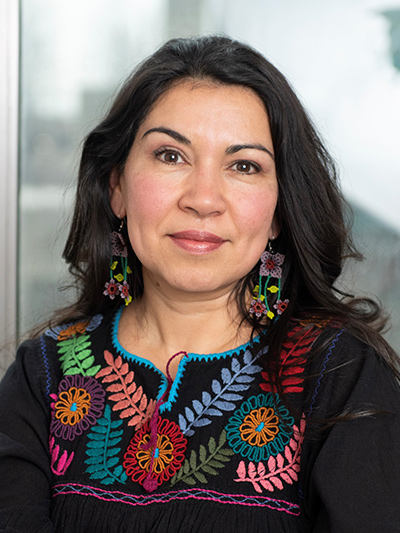
Sandra M. Gonzales serves as Associate Professor of Bilingual/Bicultural Education in Wayne State University's College of Education, teaching foundational courses on culture, language, and identity while directing the federally funded Upward Bound program for Latino youth. Her academic credentials include: Ed.D. in International Educational Development, Teachers College, Columbia University (2009) M.Ed. in International Educational Development, Teachers College, Columbia University (2002) M.A. in Psychology, Mental Health Counseling, Antioch University (1996) Certificate in Ethnic Minority Mental Health Specialist, University of Washington (1996) B.S. in Psychology, Michigan State University (1992) Dr. Gonzales pioneers research at the intersection of Bilingual/Bicultural Education, Indigenous epistemologies, and Latino Studies through autohistoria-teoría frameworks. Her work critically examines institutional barriers while developing additive educational models that utilize storytelling to promote cultural and linguistic diversity, directly challenging subtractive schooling practices that marginalize Indigenous and Latino communities. She emphasizes how personal narratives become critical pedagogies for social justice and cross-cultural understanding. Analysis of her 15+ recent publications reveals consistent focus on creating culturally sustaining learning environments through innovative models like Latinx learning communities and "casa away from casa" frameworks. Her research demonstrates how high-impact practices, Indigenous knowledge systems, and community-centered approaches improve retention and graduation rates for marginalized students while countering colonial educational legacies. Her scientific recognition includes: Michigan Distinguished Professor of the Year Wayne State University College of Education Scholarship Award (2016) As principal investigator for the COE Upward Bound program, she secured nearly $1.5 million in federal funding to provide academic guidance and college preparation for Detroit high school students, particularly from Latino backgrounds. Her community engagement extends to the Michigan Department of Education's ELL Advisory Committee and the Detroit Latino Agenda's Education Committee, where she advocates for systemic change. Dr. Gonzales leads the development of tiered learning community models spanning pre-college enrichment through career preparation, creating culturally responsive spaces that validate Indigenous and Latino epistemologies while fostering academic success through familia-centered support networks.
Katharine P. Burnett is Professor of Art History at the University of California, Davis, where she also serves as Chair of the Art History Program, Graduate Chair, and Co-Chair of the Department of Art and Art History (2022–2025). She is the founder and Faculty Director of the Global Tea Institute for the Study of Tea Culture and Science and a Faculty Associate in the East Asian Studies Program. Her academic home is within the Department of Art and Art History in the College of Letters and Science at UC Davis. Education: Ph.D., University of Michigan M.A., University of Michigan B.A., Wellesley College Her research centers on Chinese historical art theory and criticism, particularly of the seventeenth century, as explored in her book Dimensions of Originality . She also investigates art collecting and display, exemplified in her acclaimed work Shaping Chinese Art History: Pang Yuanji and His Painting Collection . A major focus of her scholarship is the international spread of visual and material culture related to the global tea trade. She teaches courses on Chinese art from the Neolithic to the present, including specialized seminars on tea culture, ceramics, and travel painting. Her interdisciplinary approach bridges art history, cultural studies, and material culture. The trajectory of her recent publications reveals a deepening engagement with the cultural, historical, and scientific dimensions of tea. While her earlier work focused on Chinese painting theory and connoisseurship, her more recent articles and editorial projects emphasize tea’s role in shaping global material culture, trade, and interdisciplinary scholarship. This evolution reflects her leadership in establishing tea studies as a legitimate academic field. Scientific Awards and Honors: Chancellor’s Award for International Engagement, UC Davis (2021) O-Cha Pioneer Award, World Green Tea Association, Japan (2021) Best Tea Health Advocate, World Tea Expo (2018) Nominee, Best Tea Educator – Individual, World Tea Expo (2019) Nominee, ICAS Book Prize for Dimensions of Originality (2013) George Wittenborn Memorial Book Award (as contributing author, 2017) Burnett is an active mentor and academic leader. She founded and led the Global Tea Initiative (2015–2023), now the Global Tea Institute, and established the Global Tea Studies book series with Brill. She has supervised numerous exhibitions at UC Davis, often featuring tea-related art and material culture. Her work includes significant public outreach and media engagement, demonstrating her commitment to disseminating knowledge beyond academia. She has secured recognition for her innovative integration of research, teaching, and community building around the theme of tea. Labs and Research Initiatives: Founder and Director, Global Tea Institute for the Study of Tea Culture and Science (2023–present) Founder and Director, Global Tea Initiative for the Study of Tea Culture and Science (2015–2023) Founder and Director, Global Tea Institute Collection of Art and Material Culture, UC Davis (2014–present) Faculty Leader, All Things Tea Research Cluster (2012–2015)
Anya Helene Bagge is an Associate Professor in the Department of Informatics at the University of Bergen, where she is a researcher at the Bergen Language Design Laboratory. Her work focuses on programming languages and software language engineering, with strong ties to education and tool development. Research Interests: Programming language design and implementation Software language engineering Semantics of programming languages Domain-specific languages and language extensions Program transformation using Rascal, MPL, and Stratego/XT Aspect-oriented programming, especially Domain-Specific Aspect Languages Her recent publications reflect a consistent focus on software language engineering, refactoring, microservice security, and programming education. Themes across her work include language design, program analysis, and the development of educational tools and methodologies. Scientific Awards: The Realist Committee's Teaching Award 2016/17 Lecturer of the Year in Computer Science (Spring 2015) Anya Bagge actively supervises students, including PhD and Master’s candidates such as Tero Hasu, Kristoffer Haugsbakk, and Nina Andersen. She has been involved in numerous academic activities, including organizing the OOPSLE workshop and serving on program committees for conferences like SLE, HILT, and WCRE. She has also taught core courses including INF101, INF225, and INF328, demonstrating a strong commitment to both research and teaching. Labs and Teams: She is affiliated with the Bergen Language Design Laboratory , collaborating with researchers such as Magne Haveraaen, Eva Burrows, and Tero Hasu.