Marian Burchardt is a Professor of Sociology at Leipzig University, specializing in cultural sociology with a focus on how power and institutions shape social life in culturally diverse societies across Africa and Europe. His research examines transregional and comparative governance of cultural diversity, particularly in urban contexts, and its impact on citizen practices and identities. He earned his Ph.D. in Sociology from Leipzig University and previously held roles as a Max Planck Fellow in the 'Governance of Cultural Diversity' group and as a lecturer in African Studies at Bayreuth University. In 2015, he received the prestigious Heinz Maier Leibnitz Award from the German Science Foundation (DFG). His notable works include Regulating Difference (2020) and Faith in the Time of AIDS (2015), addressing religious diversity governance and biopolitics in the Global South. His research themes coalesce around secularity, cultural memory, and transnational comparisons of public space regulation.
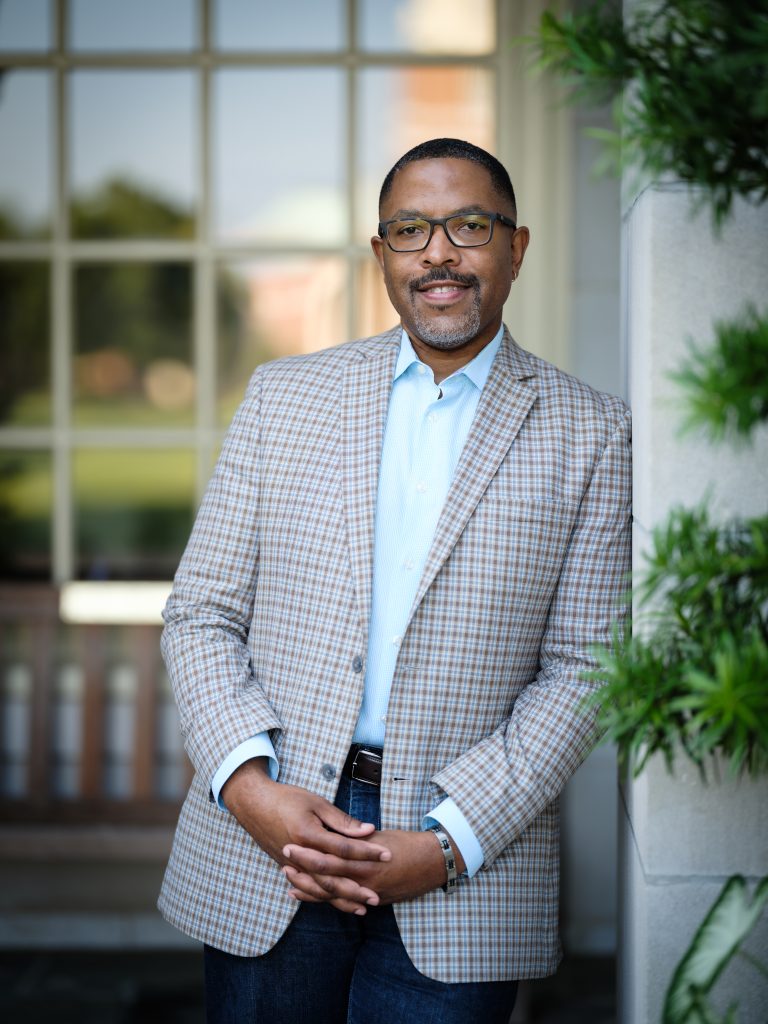
Corey D. B. Walker is the Dean of Wake Forest University School of Divinity, Wake Forest Professor of the Humanities, and Inaugural Director of the Program in African American Studies. His career includes leadership roles at Virginia Union University, Winston-Salem State University, Brown University, and the University of Virginia. A theologian and scholar, his work interrogates the moral foundations of American democracy through interdisciplinary lenses. He holds degrees from Norfolk State University (BS), Virginia Union University (MDiv), Harvard University (MTS), The College of William and Mary (PhD), and Brown University (MA ad eundem). Education: BS in Finance (Norfolk State University), MDiv (Virginia Union University), MTS (Harvard University), PhD in American Studies (William and Mary), MA ad eundem (Brown University). Research interests include religious freedom, Black intellectual traditions, democracy’s ethical frameworks, and critical pedagogy. His scholarship bridges religion, race, and politics. He has authored multiple books and over 70 articles, emphasizing transformative thought and social justice. Notable works include A Noble Fight: African American Freemasonry and the Struggle for Democracy in America and forthcoming Disciple of Nonviolence: Wyatt Tee Walker and the Struggle for the Soul of Democracy . Awards include the 2023-2024 Phi Beta Kappa Frank M. Updike Memorial Scholar distinction. He has served as Book Review Editor and Associate Editor of The Journal of the American Academy of Religion . Current roles include board memberships at Lincoln University, Habitat for Humanity, and the Middle Passage Ceremonies and Port Markers Project. Advising/grants: While no formal advisees are listed, his leadership roles involve mentorship across institutions. Grants include Ford Foundation support for the Center for the Study of Local Knowledge. Labs/teams: Directed the Ford Foundation-supported Center for the Study of Local Knowledge (UVA) and led interdisciplinary initiatives at multiple universities. His work centers collaborative research on race, democracy, and religion.
Andrew Poe is an Associate Professor in the Faculty of Education and Arts, specializing in political theory and critical analysis. His research engages with themes such as political enthusiasm, fanaticism, emergency governance, and the intersection of technology and firearms politics. Poe has contributed significantly to interdisciplinary discussions on ideology, power structures, and cultural critique. His research interests include political theology, democratic enchantments, and the sociopolitical dimensions of emergency responses. Notable works explore partisan dynamics, biopolitical frameworks, and the theoretical underpinnings of political movements. Poe’s scholarship often bridges philosophy, sociology, and cultural studies to dissect complex ideological phenomena. His publications reflect a focus on critical engagement with political theory, ranging from analyses of fascist imagery to the ethical implications of self-manufactured firearms. The trends in his work emphasize the destabilization of conventional political narratives and the exploration of non-representational political forms. No scientific awards or grants are explicitly listed in the provided materials. His advising and grants activities remain undocumented here. Poe has not been affiliated with specific labs or research teams in the available data.
Marta Vicente is a Professor of History at the University of Kansas specializing in the history of women, gender, and sexuality, particularly in Spain and Europe. Her work spans from the early modern period to the present, with a focus on transgender narratives, feminist theory, and the intersection of gender with colonial and industrial histories. She holds a Ph.D. from Johns Hopkins University (1999) and has authored influential books like Debating Sex and Gender in Eighteenth-Century Spain (2017) and Clothing the Spanish Empire (2006), which won the 2010 Best First Book Prize from the Association of Spanish and Portuguese Historical Studies. Her research explores how medical, legal, and social definitions of gender were contested in early modern Spain, examining cases of sexual ambiguity and transgender experiences. She is currently completing a book titled Reinventing Nature: Transgender Narratives from the Inquisition to the Internet , tracing transgender histories across five centuries. Prof. Vicente teaches courses on European women’s history, feminist theory, and the history of women and the body, integrating interdisciplinary perspectives from literature, law, and material culture. Publications highlight her expertise in Iberian archives, early modern censorship (e.g., the Spanish Inquisition’s handling of forbidden texts), and the global calico trade’s gendered dimensions. Her work bridges historical scholarship with contemporary debates on gender identity, emphasizing how past discourses inform modern understandings of sexuality and gender fluidity. Notable awards include recognition for her pioneering work on Spanish colonial economic history. Her teaching and research underscore the importance of intersectional approaches to gender, race, and class in historical analysis.
Carlo Leget (born 1964) is a full professor of care ethics at the University of Humanistic Studies in Utrecht, the Netherlands, a position he has held since 2012. He serves as chair of the care ethics department and is responsible for the Master in Care Ethics & Policy program. Leget is also the director of research at the university and a member of the Health Council of the Netherlands. Previously, he served as vice-president of the European Association for Palliative Care from 2012-2019 and co-founded the EAPC reference group on spirituality. Leget has a background in theology, medical ethics and care ethics. His research focuses on the intersection of care, meaning and end of life issues. He developed the diamond model for existential care at the end of life in secularized societies, based on medieval art of dying traditions. This model has been widely adopted in the Netherlands and Belgium, integrated into medical monitoring systems for palliative patients, and is currently being validated across 7 European countries through the EU-project Raphael. His research spans interdisciplinary collaborations across ethics, philosophy, medical science, nursing science, anthropology, psychology and theology. Current research centers around care ethics development combined with empirical studies on vulnerability across life stages, loss and grief, moral epistemology, and phenomenology. Leget has written three books and numerous scientific papers, some translated into German, Spanish and Portuguese. Recent publications demonstrate consistent focus on palliative care ethics, existential dimensions of healthcare, and practical applications of care ethics frameworks across diverse healthcare settings including end-of-life care, dementia care, and pediatric palliative care. His work shows strong integration of theoretical care ethics with practical healthcare applications. Member of the Health Council of the Netherlands Former vice-president of the European Association for Palliative Care (2012-2019) Co-founder of the EAPC reference group on spirituality Director of the Center for Grief and Existential Values Committee member at 's Heeren Loo Advisory board member for 'Nu Niet Zwanger' at GGD GHOR Nederland Leget supervises numerous research projects and has directed 25 supervised works. Current research projects include integrating palliative care approaches for heart failure patients, examining age limits in healthcare legislation, studying vulnerability in families with medically complex children, analyzing ethical dimensions of COVID-19 policy choices, and exploring autonomy in maternal-midwife relationships. He leads the EU-project Raphael which will validate his diamond model across 7 European countries starting in January 2024. Leget directs research activities at the University of Humanistic Studies and leads the Center for Grief and Existential Values. His interdisciplinary teams include collaborators from medical science, nursing, theology, anthropology, and psychology, reflecting his commitment to cross-disciplinary approaches to care ethics and end-of-life issues.
Leonardo Vasconcelos de Castro Moreira is a Marie Skłodowska-Curie Actions Postdoctoral Fellow at KU Leuven’s Department of Social and Cultural Anthropology, Faculty of Sciences. He holds a PhD from the University of Warwick (2019) and earlier degrees from Universidade Federal do Rio de Janeiro (BSc, 2012) and Pontifícia Universidade Católica de São Paulo (MA, 2014). He won the Peter B. Clarke Essay Prize for his work on religious exorcism practices. His research focuses on Global South Pentecostalism in Europe, particularly diasporic communities' religious rituals and their sociopolitical implications. Current projects include analyzing exorcism rituals in London performed by Brazilian and Nigerian churches. Past work explored the New Atheism movement in Brazil and intersections between religion and politics, including Jair Bolsonaro’s ideology and pandemic responses. He temporarily taught in São Paulo public schools (2021–2022) before joining KU Leuven. Research interests span religious identity formation, transnational religious networks, and the role of exorcism in multicultural urban settings. His work bridges anthropology, sociology, and theology to examine how religious practices mediate social integration and cultural adaptation. Education : Bachelor’s in Social Sciences, Universidade Federal do Rio de Janeiro (2012) M.A. in Religious Studies, Pontifícia Universidade Católica de São Paulo (2014) PhD in Social Anthropology, University of Warwick (2019) Awards : Peter B. Clarke Essay Prize (Socrel, 2022) His articles critically address topics like demonic symbolism in Brazilian politics, exorcism rituals as identity tools, and the entanglement of Pentecostal theology with far-right ideologies. Future work expands on comparative studies of Global South Pentecostal communities in European cities.
Jovana Pavlović is a Research Fellow at the Faculty of Orthodox Theology, University of Belgrade since February 2023, approved by the Ministry of Science. She holds a PhD in Classics from the University of Belgrade (2018) and is a PhD candidate in Political Science. Her academic career includes research associate roles at the Faculty of Orthodox Theology (2016-2020) and work at the Archives of the Serbian Orthodox Church (2020-2024), where she organized the Cathedral Church library. She has extensive teaching experience across 15 years, including marginalized education programs and high school teaching roles. Education Bachelor's (2009): Classics, Faculty of Philosophy, University of Belgrade Doctorate (2018): Classics, University of Belgrade (dissertation on Greek liturgical texts) PhD Candidate: Faculty of Political Sciences, University of Belgrade Research Interests Pavlović specializes in intersections of theology, history, and politics. Her work examines: 1) Medieval religious texts and their Slavic translations, 2) 19th/20th century socio-political movements (e.g., Sokol), 3) Balkan religious-political dynamics, and 4) historical narratives shaped by legal institutions. She combines textual analysis with archival research, recently focusing on resilience studies in sports during crises. International Collaboration Established projects include a Church World Service initiative at Branko Pešić School and a Roma women's socialization program supported by the City Secretariat for Social Welfare. Her recent publications analyze the Sokol Movement's Greek legacy and iconological theological texts.
Russell Foster is a Senior Lecturer in British and International Politics at King’s College London, affiliated with the Department of European & International Studies. His research focuses on European and national identities, Brexit’s cultural and political impacts, far-right strategies, and the legacy of empire in contemporary politics. He holds a history degree from the University of Cambridge, MA degrees from Newcastle University, and has held prestigious fellowships, including the Marie Skłodowska-Curie International Fellowship (University of Amsterdam) and the Leverhulme Early Career Fellowship (King’s College London). His work examines themes such as Brexit’s portrayal in British pop culture, Euroscepticism, and the evolving relationship between identity and politics in the UK and EU. Notable publications include analyses of radical-right engagement with LGBTQ+ communities and the symbolic dimensions of European integration. Foster teaches modules on European integration, empire studies, and European identities, and supervises students across BA, MA, and PhD levels. He co-convenes research groups like Europe’s Borderlands and the Rethinking Modern Europe seminar, and co-hosts the podcast Breaking Britain . His media contributions include analyses for BBC, Sky, and The Economist. Recent events chaired by Foster include discussions on post-Trump Western defense strategies and the EU’s 30th-anniversary challenges.
Guillermo Trejo is a Professor of Political Science at the University of Notre Dame and Director of the Violence and Transitional Justice Lab (V-TJ Lab) at the Kellogg Institute for International Studies. His research focuses on political/criminal violence, social movements, human rights, and transitional justice in Mexico and Latin America. He co-authored Votes, Drugs, and Violence: The Political Logic of Criminal Wars in Mexico and authored Popular Movements in Autocracies . His work has been published in journals like the American Political Science Review and British Journal of Political Science. Key research agendas include transitional justice mechanisms’ impact on criminal violence reduction, indigenous resistance to narco rule, and ecosystems of local violence in Mexico. He advises human rights NGOs and victim collectives. Awards include the Gabriel Almond, Mancur Olson, and Charles Tilly Awards, among others. Trejo’s affiliations include the Kellogg Institute, Kroc Institute for International Peace Studies, and Klau Center for Civic and Human Rights. He combines qualitative and quantitative methods to address complex socio-political issues in Latin America.
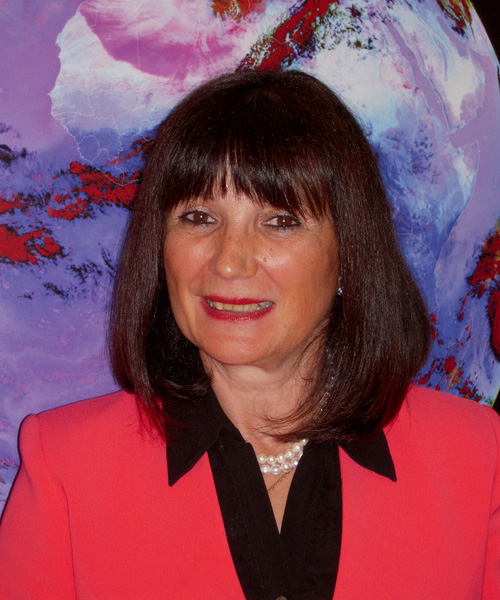
Mioara Mandea is a distinguished geophysicist currently serving as Solid Earth Programmes Manager at the French Space Center (CNES) in Paris since 2011. She maintains strong academic affiliations with Sorbonne University through her long-standing association with the Institut de Physique du Globe de Paris (IPGP), where she held multiple research positions from 1991-2011 including Head of the National Magnetic Observatory (1994-2004). Her career also includes leadership roles at the European Center for the Arctic at Versailles University and the Helmholtz Center in Potsdam. Her educational background includes dual PhDs in Geophysics (1993 from Bucharest University and 1996 from IPGP) followed by an HDR (Habilitation à diriger les recherches) in Physics of the Earth from Université Paris VII in 2001. This highest French academic qualification authorizes her to supervise doctoral candidates and apply for professorial positions. Mandea's research spans Earth observation from space, geopotential fields analysis, and geomagnetic field studies using historical archives, modern observatories, and satellite data. She specializes in adapting advanced mathematical tools to analyze magnetic and gravity data, with particular focus on Earth's deep interior, planetary magnetism (Moon, Mars, Mercury), and Arctic region geophysical changes. Her work bridges theoretical geophysics with practical space-based observation techniques. Analysis of her recent publications reveals a consistent focus on integrating satellite-derived gravity and magnetic data to understand Earth's interior dynamics. Her research shows increasing sophistication in mathematical modeling techniques, particularly wavelet analysis and multi-sensor data integration. The publications demonstrate strong international collaboration patterns, with frequent co-authorship across European institutions and the United States. Membre associé de l'Académie Royale de Belgique (2018) Medal 'Petrus Peregrinus' of European Geosciences Union (2018) Chevalier - Ordre National du Mérite (2016) Member of Academia Europaea (2015) Member of the Bureau des Longitudes (2014) International Award of American Geophysical Union (2014) Mandea has held significant leadership roles in the international geoscience community, including Secretary General of the International Association of Geomagnetism and Aeronomy since 2009, Chair of the Science Committee at the International Space Science Institute since 2016, and former Secretary General of the European Geosciences Union (2012-2016). She serves on multiple advisory boards for major research projects including EPOS and MED-SUV, and has chaired numerous award committees for the AGU and EGU. Her editorial work includes associate editor roles for Surveys in Geophysics and special issues for Physics of the Earth and Planetary Interior. Her research has been supported through leadership roles in major international space-based Earth observation initiatives, particularly through her position at CNES where she manages solid Earth science programs. She has contributed to numerous collaborative projects involving satellite missions for geomagnetic and gravity field measurements.
Yagmur Karakaya is an Assistant Professor of Sociology at Yale University and a Visiting Assistant Professor at Hamilton College. She holds a Ph.D. from the University of Minnesota, an M.A. from Koç University, and a B.A. from Boğaziçi University. Her research focuses on cultural sociology, political sociology, collective memory, and emotions, with a regional emphasis on Turkey. She examines how nostalgia functions as a collective force in populist politics and popular culture, particularly analyzing the Ottoman revival in Turkey and its interplay with state-led neo-Ottomanism and popular Ottomania. Her work has been recognized with an Honorable Mention from the ASA’s Culture Section and supported by fellowships including the Badzin Fellowship and Interdisciplinary Doctoral Fellowship. Her research includes a comparative analysis of populist rallies in the U.S. and Turkey, exploring how nostalgia and performance shape political engagement. She has also investigated Holocaust remembrance in Turkey and Spain, examining transnational memory frameworks. Karakaya’s teaching spans cultural sociology, social movements, and politics, emphasizing critical engagement with contemporary issues like race, inequality, and globalization. She co-leads the Interdisciplinary Nostalgia Workshop and contributes to platforms like the ‘Theorizing Nostalgia’ blog. Her work bridges historical and comparative sociology with qualitative methods, addressing themes such as authoritarianism, cultural revival, and emotional politics.
Efe Peker is an Associate Professor in Sociological and Anthropological Studies at the University of Ottawa's Faculty of Social Sciences. He holds a joint PhD in History (Université Paris 1 Panthéon-Sorbonne) and Sociology (Simon Fraser University), with a SSHRC Postdoctoral Fellowship at McGill University (2017-19). His research focuses on state-religion relations, secularism, nationalism, populism, and immigration/diversity policies in comparative-historical frameworks with emphases on Quebec-Canada and Western Europe. Affiliations include Director of the Axe de recherche: Populisme, diversité et cohésion sociale and Collaborator at the Observatory of Populism in Canada. Current courses include SOC 3709 (Secularization), POL 3171 (Immigration & Citizenship), and POL 3509 (Nationalism). Research explores themes like secular state-building in Quebec, right-wing responses to multiculturalism, and populist mobilization around religious heritage. His 2024 publications analyze secularism's postcolonial dimensions and pan-Canadian nationalism. He supervises two doctoral students and contributes to interdisciplinary debates on populism's intersections with sociology and political theory. Publications span sociology, political science, and history journals, emphasizing transnational comparisons of secularism, nationalism, and religious governance. His edited volume Populisme et sciences sociales (2023) bridges Quebec-Canadian and transatlantic perspectives. Research also addresses Gezi Park protests in Turkey and neoliberal critiques through a class-analytic lens.
Prof. Jochen E. Gebauer leads the Chair of Cross-Cultural Social and Personality Psychology at the School of Social Sciences. His research focuses on self-concept from social and personality psychology perspectives, emphasizing cross-cultural approaches to identify universal processes. Key interests include agency, communion, religiosity, and their interplay with personality traits and societal contexts. His work explores topics such as obesity’s societal impacts, religiosity’s psychological benefits, and cultural influences on personality. Publications span over two decades, addressing global challenges like pandemics and segregation. Though no specific awards or grants are noted, his contributions highlight interdisciplinary collaborations across psychology, sociology, and public health. His team investigates themes like leadership dynamics, secularization trends, and the psychological effects of social stratification. While no student advisees are listed here, his research lab’s activities emphasize empirical studies combining large-scale data with cultural theory.
Dr. Femi J. Kolapo is a Professor of African History in the Department of History at the University of Guelph (College of Arts). His research focuses on slavery and abolition in 19th-century Africa , evangelical missionary activities , and precolonial West African societies . He has taught courses on African slavery, religious movements, and labor migration. Education: Ph.D., History, York University (1999) M.A., History, Ahmadu Bello University (1989) B.A., History, Ahmadu Bello University (1982) His scholarly work examines West African engagement with Christian missionary efforts , colonial documentation , and indigenous agency during European expansion . He has published extensively on the Church Missionary Society's (CMS) operations in Nigeria and the political impact of missionary activities. Dr. Kolapo contributes to the AH_DigITal Document Portal project, curating 19th-century missionary and colonial archives related to Nigeria. His recent articles analyze topics ranging from missionary theological debates to Nigerian Pentecostalism's digital transformation , demonstrating interdisciplinary breadth across history, religious studies, and political sociology .
Gema Kloppe-Santamaría is an Associate Research Professor of Latin American History at George Washington University, specializing in violence, crime, religion, and gender in 20th and 21st century Mexico and Central America. She holds affiliations with the Woodrow Wilson International Center for Scholars and Noria Research’s Mexico & Central America Program. Her work bridges historical analysis with contemporary policy, focusing on how state institutions and societal norms shape perceptions of justice and violence. Education: Ph.D. in Social Research from The New School (2016). Her research explores: Lynchings as manifestations of state-citizen tensions Religious influences on violence legitimacy Gender dynamics in crime and security Cross-border gang networks Key publications include In the Vortex of Violence (2020), analyzing post-revolutionary Mexico's lynching culture, and co-authored projects on comparative violence in Mexico and Central America. Her current projects investigate religious violence legitimacy in Mexico and transnational crime dynamics. Awards: 2022 LASA Mexico Section Best Article 2022 CLAH Book Prize Honorable Mention 2021 Mellon Emerging Faculty Leaders Award Harry Frank Guggenheim Distinguished Scholar Award (2020) Grants and collaborations include the David Rockefeller Center for Latin American Studies and the Kellogg Institute for International Studies. Her work appears in Foreign Affairs , Harvard ReVista , and other outlets.