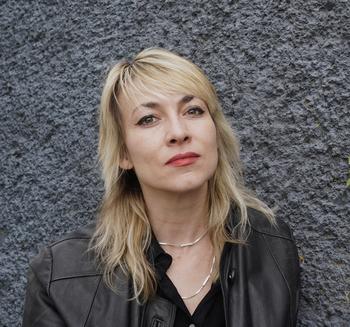
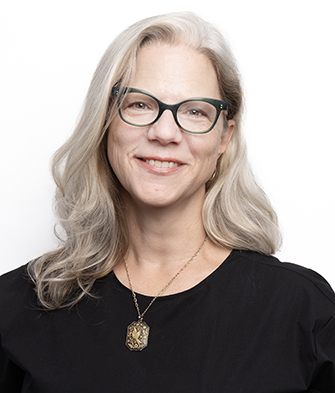
Professor Max Deeg is a leading scholar in Buddhist Studies at Cardiff University , holding a personal chair since 2009. With a career spanning institutions in Germany, Austria, and the UK, his research focuses on transcultural Buddhist history from India to East Asia, Chinese Buddhist travelogues , and interreligious encounters in medieval China. He has held visiting positions at universities in Japan, Nepal, the US, and Germany, and currently directs the Centre for the History of Religion in Asia (CHRA) . PhD from University of Würzburg (1990) Dr. phil. habil. in Religious Studies (1998) Full Professor at University of Vienna (2002-2006) His research explores Buddhist narratives as tools for constructing religious identity, foundation myths in trans-Himalayan contexts, and terminology evolution in Chinese Buddhist translations. Recent publications analyze Indian Buddhist monasticism through Chinese sources and religious concepts like xin (trust) across Buddhist, Manichaean, and Christian traditions. Awarded the KHK Visiting Research Fellowship (2016) and a DAAD Scholarship (1986-87) , Prof Deeg contributes to editorial boards of major journals. He supervises PhD students and teaches Buddhist Studies , Life of the Buddha , and Chinese Buddhist Texts .
Dr. Sebastian Rimestad is a Research Fellow at the Institute for the Study of Religions , University of Leipzig. His work focuses on Orthodox Christianity, religious history of Eastern and Northern Europe, religious conversion, religion and politics in modern societies, and religious minorities in Europe. Current affiliation: University of Leipzig Education: Habilitation (2019), PhD (2011), MA in Religious Studies (2007) and Politics & IR (2004) Research interests include confessional identity formation in 18th-century Poland-Lithuania, religious conversion as political statement, and Russian Orthodox concepts of secularity. His work analyzes how religious identities have been shaped by external authorities and critiques of religious modernity. His scientific awards include the DFG Heisenberg Fellowship and Liselotte Kirchner Scholarship. He has taught courses on religious conversion and published extensively on Orthodox Christianity in Eastern Europe, Baltic states, and global contexts.
Albrecht Fuess is a Professor of Islamic Studies at Philipps University of Marburg since 2010, specializing in Middle Eastern History (13th–17th centuries), Mamluk socio-cultural dynamics, and contemporary European Islamic discourses. His research spans historical continuity in Ottoman-Mamluk-Safavid interactions, Islamic youth cultures, and Mediterranean geopolitics. Research Focus: Medieval Islamic history, Transottomanica mobility studies, Islam in Europe, and cultural integration of Muslim migrants. Awards: Le Studium Fellowship (2007–2009) at Université de Tours. His publications emphasize military-economy interplay, legitimacy through religious narratives, and resource management in empires, with a focus on Mamluk and Ottoman transformations. He has advised on doctoral projects covering topics like Islamic welfare, Arabic ʾAmālī literature, and Cypriot-Ottoman relations. Leadership: Co-coordinator of Transottomanica (DFG-SPP 1981), member of ANR and DAAD committees, and liaison professor for the German National Academic Foundation. Editorial Roles: Co-editor of 'Transottomanica' and 'Muslim Worlds' series, and advisory board member for journals in Cairo, Paris, and Leuven.
Prof. Dr. Thomas Duve is a Director at the Max Planck Institute for Legal History and Legal Theory and holds the Professorship for Comparative Legal History at Goethe University Frankfurt am Main. His research focuses on global legal history, particularly the interplay between secular and religious knowledge in the Iberian empires of the early modern period, and the method of legal history and comparative law. Director, Max Planck Institute for Legal History and Legal Theory Professor of Comparative Legal History, Goethe University Frankfurt Co-editor of 'The School of Salamanca Working Paper Series' Duve’s research explores normative knowledge production, colonial law, and the glocalization of legal norms. He has led projects such as 'Glocalizing Normativities' and 'Mapping Conflicts in Iberian Worlds', emphasizing cross-cultural legal exchange and historical normativity regimes. His recent publications (2018–2025) address global legal history, transnational legal practices, and the role of canon law in colonial settings. Key themes include legal pluralism, indigenous rights, and the translation of legal norms across cultures, with methodological innovations in comparative and transnational legal studies. Duve collaborates extensively with international scholars and institutions, including the Max Planck Partner Group and the Oxford Handbook of Legal History. His work bridges European and Latin American legal traditions, offering critical insights into legal globalization and postcolonial legal analysis.
Schirin Amir-Moazami is a Professor at the Institute of Islamic Studies, Freie Universität Berlin, within the Department of History and Cultural Studies. She leads the research and teaching profile Islam in Europe and serves as a Principal Investigator at the Berlin Graduate School Muslim Cultures and Societies since 2009. Education: PhD in Political Science/Sociology (European University Institute, 2004) Affiliations: Freie Universität Berlin, Berlin University Alliance (RePLITO), SCRIPTS Cluster of Excellence Her research focuses on political theory , critical secular studies , and Islamic practices in European public spheres . She examines how liberal-secular regimes produce knowledge about Islam, intersecting with gendered, racialized hierarchies and institutional inclusion logics. Recent work analyzes funding structures, research agendas, and epistemic frameworks shaping discourses on Islam in Europe. Key themes include racialization of minorities , secular governance of religion , and postcolonial critiques of liberal frameworks . She contributes to editorial platforms like the Trafo Blog-Essay Series and collaborates on projects addressing antimuslimischer Rassismus and liberal epistemic traps .
Prof. Dr. Ulrike Freitag is a distinguished scholar in Islamic Studies and social history of the Arab world, holding a Professorship at Freie Universität Berlin and serving as Director of the Leibniz-Zentrum Moderner Orient (ZMO) . Her work bridges urban history, transregional Islamic networks, and Arabian Peninsula studies within Indian Ocean and Red Sea contexts. Education : PhD in Islamic Studies (Freiburg, 1991), Habilitation (Bonn, 2002) Research : Focus on Ottoman urban violence, Saudi state formation, Hadhrami diaspora, and historical urbanism in Jeddah Her supervision of PhD projects spans topics from Moroccan Sufi sanctußen to Yemeni Jewish communities. Recent scientific awards include fellowships at Leiden University and Käthe-Hamburger Kolleg. She contributes to public discourse through Tagesspiegel op-eds and international conferences.
Ruggero Vimercati Sanseverino is a Full Professor of Hadith Studies and Prophetic Tradition at the Center for Islamic Theology, University of Tübingen. His research spans Hadith transmission in Sunni and Shiite traditions Prophetic worship and Islamic imitation piety Dynamics of tradition and renewal in Islam Islamic spirituality and religious practices His academic journey includes a PhD from Aix-Marseille University (2012) and a Master’s from IREMAM/CNRS (2007). He has led projects like The Presence of the Prophet (DFG-ANR) and contributed to interdisciplinary dialogues on multireligious societies. The 15 most recent articles reflect his expertise in Hadith methodology Sufi spiritual traditions Prophetic hermeneutics Comparative Islamic studies Key collaborative works address interfaith dynamics and Islamic responses to secularization. He supervises PhD candidates and contributes to editorial boards, including the Theologie, Bildung, Ethik und Recht des Islam series at Nomos Verlag. His work bridges classical Islamic scholarship with contemporary theological challenges.
Bonnie Honig, Nancy Duke Lewis Professor at Brown University, holds joint appointments in Modern Culture and Media and Political Science , with courtesy roles in Religious Studies and Theater and Performance Studies . Her scholarly work intersects democratic theory , feminist critique , and cultural analysis , examining how inherited political narratives shape collective action. Education: PhD (Johns Hopkins, 1989), MSc (London School of Economics, 11981), BA (Concordia University, 1980) Central to her research is a reexamination of classical texts like Sophocles' Antigone and Euripides' Bacchae to develop agonistic democratic models . Her Antigone, Interrupted (2013) challenges heroic readings of Antigone, proposing instead a collective feminist politics rooted in textual counter-interpretations. Public Things: Democracy in Disrepair (2017) argues for shared objects as democratic orientation devices , while Emergency Politics (2009) analyzes crisis responses beyond Schmittian frameworks. The 2021 dual publications A Feminist Theory of Refusal and Shell Shocked: Feminist Criticism After Trump extend these themes through Trump-era analysis and queer theoretical lenses . Scientific Awards: 2023-24 Guggenheim Fellowship 2012 David Easton Prize 2012 Okin-Young Award 2007-08 American Philosophical Society Fellowship 1994 Scripps Prize Affiliated with the American Bar Foundation and Digital Democracy Group at Simon Fraser University, Honig's teaching spans feminist theory , Politics and Film , and advanced seminars on Arendt . Her Shell Shocked analysis of Trump-era disaster patriarchy connects classical feminist frameworks to contemporary political crises.
Dr. Stefanie Burkhardt is a Research Associate at the Department of Religious Studies and Intercultural Theology , University of Münster, since October 2024. She previously served as a Postdoctoral Researcher and Research Coordinator at the Friedrich-Alexander University Erlangen-Nürnberg (2016–2024) and completed her doctorate in 2022 with a dissertation on Mircea Eliade's dual work in Religious Studies and Literature. Education: PhD (2022, FAU Erlangen-Nürnberg), MA in 'Ethics of Textual Cultures' (2013), BA in Religious and German Studies (2012). Research Interests span the intersection of Religion and Literature , Postcolonial Religious Studies , and the Spectral Turn in Cultural Theory . Her work critically examines Eliade's methodologies, the role of African and diasporic narratives in decolonizing the 'spectral turn', and the socio-cultural implications of border crossings in postcolonial contexts. Recent Publications include a monograph on Eliade's literary and academic duality (Brill 2024) and upcoming edited volumes on authenticity in esoteric practices (Brill 2026) and Eliade's entanglements in religious history (Brill 2025). She has contributed to debates on postcolonialism, spectral theory, and Eliade's exoticism in Indian studies. Grants and Projects include participation in the DFG Advanced Study Group 'Alternative Rationalities and Esoteric Practices in Global Perspective' (2023–2024) and leadership in projects on post-Eurocentric cultural theory.
Mahmoud Abdallah is a Researcher at the Center for Islamic Theology , University of Tübingen, where he has worked since 2020. His career includes roles as Senior Scientist at the University of Innsbruck (2019–2020), Project Leader at ZITh (2016–2019), and Post-Doc researcher (2013–2018). He also held guest lectures at Marmara University (2017) and served as an Arabic Editor (2012–2013). Education : PhD in Comparative Linguistics (2012, Heinrich Heine University Düsseldorf), Master’s summa cum laude (2002, University of Minia), State Examination (1998, Al-Azhar University). Research Interests focus on Islamic Theology , Pastoral Care , Interreligious Dialogue , and Religious Institutions in Pluralistic Societies . He explores hermeneutics in Islamic counseling, Ḥisba in public order, and Umma dynamics in multicultural contexts. Recent Publications (2014–2022) analyze Qur’anic ambiguity , interfaith education , religious responses to crises (e.g., pandemic pastoral care), and Islamic social ethics . Key themes include Abrahamic unity , contextual theology , and religious hermeneutics . Scientific Awards : Master’s degree with summa cum laude distinction (University of Minia, 2002). Advising & Projects : Co-editor of Grundlagen muslimischer Seelsorge (2020) and Theologie des Zusammenlebens series (2017–2022). Led the 2016 project Scientific Education and Social Responsibility (Baden-Württemberg Ministry). Currently working on books about Prophetic Hermeneutics (2023) and Religious Transformations in Crisis (2022). Committee Memberships : Member of the German Islam Conference (since 2018), Scientific Advisory Boards at Zukunftsforum Islam e.V. (since 2017), and the DAVO (German Working Group on the Middle East, since 2009).
Hartmut Rosa holds the Professorship of General and Theoretical Sociology at Friedrich Schiller University Jena since 2005. He serves as Director of the Max Weber College in Erfurt and leads multiple DFG-funded research groups including the Collaborative Research Center TRR 294 'Structural Change in Property'. A leading theorist in social acceleration and resonance theory , he combines temporal analysis with democratic theory and critical sociology. Born: August 1965 Current: Director of Max Weber College Key Positions: New School for Social Research affiliation His research spans : Social acceleration across technological, cultural, and experiential dimensions Resonance as alternative to alienation Democratic theory under time pressure Modernity diagnostics Critical theory foundations Recent article themes include: Digital self-tracking motivations (2021) - intersection of big data and temporal ethics Corona crisis as temporal disruption (2020) - rethinking economic priorities Acceleration's impact on democracy (2005-2023) - temporal overload analysis World relations theory (2011-2022) - new materialist approaches Major scientific awards : 2023 Gottfried Wilhelm Leibniz Prize (Germany's highest research honor) 2018 Erich Fromm Prize for Social Psychology 2018 Paul Watzlawick Ring of Honor 2016 Tractatus Prize for Philosophical Essays He leads multiple research projects : SFB TRR 294 Subproject C06 'Making Things Available' DFG Priority Programme on Aesthetic Eigenzeiten Research Group 'Land Grabbing, Acceleration, Activation' VW Foundation project on 'Aporias of Perfection' in acceleration
Florian Zemmin is a Professor at Freie Universität Berlin's Institute of Islamic Studies , serving as Co-Director of the Berlin Graduate School Muslim Cultures and Societies (BGSMCS). His research focuses on Islamic reformism , Middle Eastern conceptual history , and Arabic sociologies of religion within broader debates about modernity and secularity . Current affiliations: Freie Universität Berlin (since 2020) Previous affiliations: Universität Bern (2010-2020), Universität Leipzig (2015-2021) His research interests examine how Islamic traditions intersect with modern secular concepts through: Historical conceptual analysis in Arabic and Ottoman contexts Comparative secularisms beyond Western frameworks Postcolonial critiques of Eurocentric theory Sociological approaches to Islamic knowledge production Current projects include: Das soziokulturelle Leben soziologischer Konzepte – creating a critical lexicon of 60 sociological terms in Arabic Global Secularity: A Sourcebook – co-editing a 7-volume series on secular formations across regions Arabic Sociologies of Religion – challenging Eurocentric sociology through Arabic theoretical work Key publications address: Conceptual transfers in Islamic modernism Secularism in Islamic intellectual history Arabic sociology of religion Ottoman conceptual transformations Islamic responses to global social theory
Prof. Dr. Daniel Eggers serves as Professor of History of Philosophy at the University of Regensburg's Faculty of Philosophy, Arts, History and Social Sciences since 2021, holding the Chair of History of Philosophy. Previously, he worked as a research associate at RWTH Aachen University and the University of Cologne, where he completed his habilitation in 2020. His educational background includes: PhD from Westfälische Wilhelms-Universität Münster (2007) Master of Philosophy from University of Cambridge (2005) Magister Artium from Westfälische Wilhelms-Universität Münster (2004) Studies in Philosophy, Germanistics, Communication Science, and Educational Sciences (1994-2004) Eggers specializes in 17th-18th century moral and political philosophy, with additional expertise in metaethics, moral psychology, and media ethics. His research critically examines expressivism, sentimentalism, and the role of reason in moral judgment, while addressing contemporary challenges in scientific communication and democratic discourse. His work bridges historical philosophical analysis with modern ethical dilemmas, particularly in digital environments and public reason. His publications demonstrate consistent focus on Hobbesian theory, moral motivation, and the intersection of ethics with political theory. Key trends include rigorous analysis of natural law theory, examination of emotional versus rational components in moral judgment, and critical evaluation of media ethics frameworks. Award highlights: Zeitschriftenpreis der Deutschen Gesellschaft für Publizistik- und Kommunikationswissenschaft (DGPuK) for 'Medienethik: Vier populäre Irrtümer' (2021) Eggers actively contributes to academic governance as board member of Bayerisches Promotionskolleg Politische Theorie and co-editor of the 'Ideen&Argumente' book series at de Gruyter. He serves as peer reviewer for major funding bodies including DFG, Alexander von Humboldt Foundation, and numerous international philosophy journals. His teaching portfolio spans historical philosophy courses and specialized seminars on ethical theories, reflecting his dual commitment to academic research and pedagogy. He participates in the European Hobbes Society and contributes to interdisciplinary forums including the Middle Ages Forum and Classical Center at the University of Regensburg.
Dr. Stephanie Roberta Graf is a Research Fellow at the Institute for Religious Studies (Department of History and Cultural Studies) at the Free University of Berlin since 2025. She previously worked as a Universitätsassistentin at the University of Innsbruck (2021-2025) and participated in the FWF-funded project 'Membership Metaphors as Doorkeepers'. Her research bridges philosophy, critical theory, and religious studies, with a focus on the Frankfurt School's theology and metaphorology. Diploma in International Development (University of Vienna & UNAM, 2005-2011) Master in Latin American Studies (UNAM, 2013-2015) Doctorate in Political and Moral Philosophy (UAM-I & Hebrew University, 2015-2019) Her research explores the theology and metaphysics of the Frankfurt School , German-Jewish thought, coloniality in diaspora religions, and political theology. She has published on topics ranging from Walter Benjamin's natural history concepts to critical analyses of capitalism as religion and heretical mysticism. Her recent work examines ecological crises, cultural appropriation, and interdisciplinary approaches to social critique. Selected publications reveal trends in Frankfurt School philosophy , Jewish mysticism , coloniality , and Benjaminian metaphorology , with subfields including divine violence, nonidentity theory, diaspora cultures, and interdisciplinary hermeneutics. She has presented at international conferences in Argentina, Chile, Peru, Austria, and Israel. She contributes to the academic community through her involvement in projects like the Metaphorology Lecture Series at the University of Innsbruck and the International Colloquium on Heretic Argumentation in Argentina. Her work intersects philosophy, religious studies, and socio-political critique.
Pamela Klassen is a Professor and Chair in the Department for the Study of Religion at the University of Toronto, with a cross-appointment in the Department of Anthropology. She has taught at the University of Toronto since 1997 and has been a full professor since 2011. Her academic leadership includes serving as Chair & Graduate Chair of her department (2020-present) and as Vice-Dean, Undergraduate & International in the Faculty of Arts & Science (2016-2020). In 2022-2023, she served as the William Lyon Mackenzie King Visiting Professor of Canadian Studies at Harvard University. Professor Klassen's research focuses on colonialism, treaties, museums, and public memory. Her work spans several interconnected areas: Anthropology of religion, secularism, and mediation (including digital humanities) Christianity, colonialism, and land in North America & Turtle Island Religion, ritual, and public memory (including museum studies) Religion, spirituality, and gender Her scholarship demonstrates a consistent engagement with how religious practices, memories, and institutions intersect with questions of power, land, and identity in settler colonial contexts. Klassen's work often bridges historical and ethnographic approaches, examining both contemporary religious practices and their historical formations. Professor Klassen's publications reveal a trajectory of increasingly focused attention on the intersections of religion, land, and colonialism, with recent work emphasizing Indigenous perspectives and decolonial approaches to religious studies. Her scholarship moves fluidly between theoretical interventions in religious studies and concrete engagements with public memory projects. Scientific Awards & Honors 2022-2023: William Lyon Mackenzie King Visiting Professor of Canadian Studies, Harvard University 2019: Fellow of the Royal Society of Canada 2015-2020: Anneliese Maier Research Award, Alexander von Humboldt Foundation 2015: Northrop Frye Award of Excellence for Integration of Research and Teaching 2014-2017: Distinguished Visiting Professor in Anthropology of Modern Religion, University of Tübingen 2012: American Academy of Religion Award of Excellence for Spirits of Protestantism Professor Klassen has successfully secured significant research funding, including the prestigious Anneliese Maier Research Award which supported her collaborative work with the Kay-Nah-Chi-Wah-Nung Historical Centre. She has supervised numerous graduate students in religious studies and anthropology, with many going on to successful academic careers. Professor Klassen leads several major collaborative projects including Kiinawin Kawindomowin Story Nations, a digital storytelling initiative with the Rainy River First Nations, and Treaty Conversations, an educational resource about treaty relationships in Ontario. These projects exemplify her commitment to community-engaged scholarship that bridges academic research with public education and reconciliation efforts.