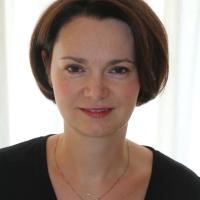
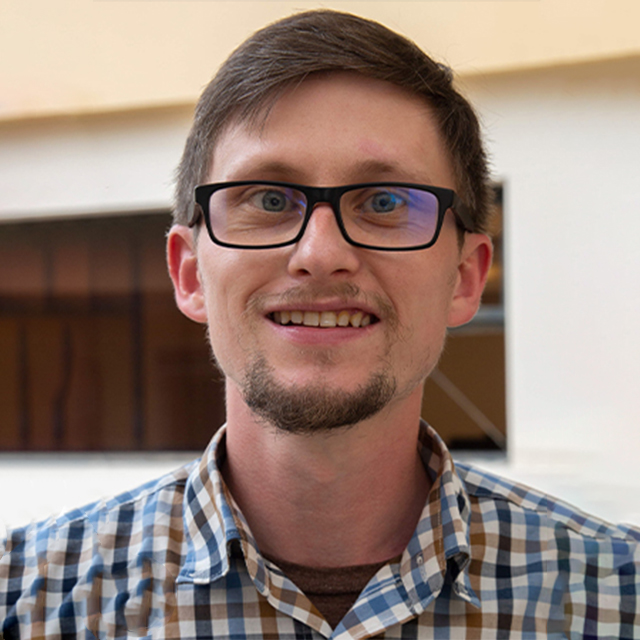
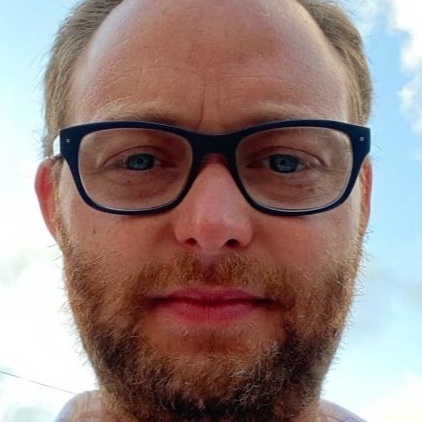
Dr Vanda Pickett is a Lecturer in Czech at the University of Oxford’s Faculty of Medieval and Modern Languages. She teaches Czech language at all proficiency levels and specializes in 19th- and early 20th-century Czech prose, focusing on narrative structures and discourse analysis. Her research includes studies on travel writing and the narrative works of Richard Weiner. She has also contributed to discourse analysis, second language acquisition, and bilingualism research. Research emphasizes narrative uncertainty in Richard Weiner’s prose, as detailed in her 2006 doctoral thesis. Publications include a translation of Shlomith Rimmon-Kenan’s Poetika vyprávění (2001) with an original afterword, and an article on description in 19th-century Czech travel literature (1998). No scientific awards or grants are listed, and her advising activities are unspecified. She has no documented involvement in labs or research teams beyond her independent scholarly work.
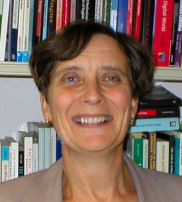
Professor Clare Furneaux holds a Professorship in Applied Linguistics at the University of Reading's Institute of Education. She serves as Teaching and Learning Dean across multiple schools and previously led the MA English Language Teaching by Distance Study programme. Her research focuses on second language writing in EAP contexts, online learning, and curriculum design. Education: BA English/History (Bristol), MA Applied Linguistics (Reading), EdD (IOE, University of London) Awards: 2009 National Teaching Fellow Her work examines challenges faced by international postgraduate students in English-medium universities, cross-cultural writing practices, and MOOC development. Key areas include academic discourse socialization, argumentative writing structures, and feedback mechanisms in L2 contexts.
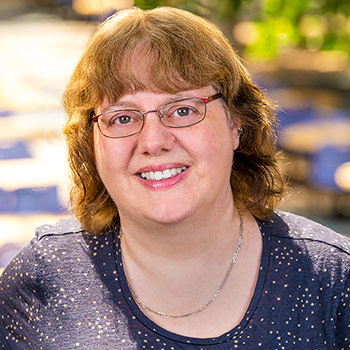
Alexandra Gottardo is a Professor in the Department of Psychology at Wilfrid Laurier University. Her research focuses on reading development in second language learners, with particular expertise in word reading, reading comprehension, and vocabulary acquisition. She investigates language processing across diverse populations including English language learners and refugee children. Her primary research examines cognitive and linguistic factors influencing reading skills in bilingual populations. Current projects explore cross-linguistic transfer of literacy skills, the impact of socioemotional factors on language acquisition in refugee populations, and effectiveness of teacher training programs for literacy instruction in multilingual contexts. Research publications demonstrate strong emphasis on applied educational interventions, particularly in teacher professional development programs in Kenya. Recent work examines blended learning approaches for literacy instruction and the impact of technology on teacher training. Dr. Gottardo's research employs longitudinal and cross-cultural methodologies to examine language development across different writing systems and cultural contexts, with significant work on Arabic-speaking populations. She maintains active collaborations with international researchers and institutions, particularly in literacy program development and evaluation. Her work contributes significantly to understanding literacy acquisition in multilingual and marginalized populations.
Mehdi Babaei, PhD, is a Faculty Lecturer at the McGill Writing Centre (MWC) since 2019. He holds a PhD in Educational Studies with a focus on Second Language Education. His teaching spans undergraduate and graduate academic writing, English for Professional Purposes, and language courses delivered in blended, online, and in-person formats. He coordinates key ESL courses at the McGill School of Continuing Studies and oversees WCOM ESL placement tests. Education : PhD in Educational Studies, Second Language Education (not explicitly dated, but inferred from experience timeline). Research Interests : Prior learning assessment, language and identity among plurilingual immigrants, reflective teaching practices. Active contributor to the BILD research group (Belonging, Identity, Language, and Diversity), authoring blog posts and publishing on cultural integration, minority language dynamics, and educational policy. Service Roles : MWC Faculty Lecturer representative, MWC Advisory Committee member, Academic Resource Coordinator. Coordinates courses such as WCOM 235, 245, 255, and YCCM 600. Labs/Teams : Member of the BILD research group at McGill University, focusing on sociocultural themes in multilingual contexts.
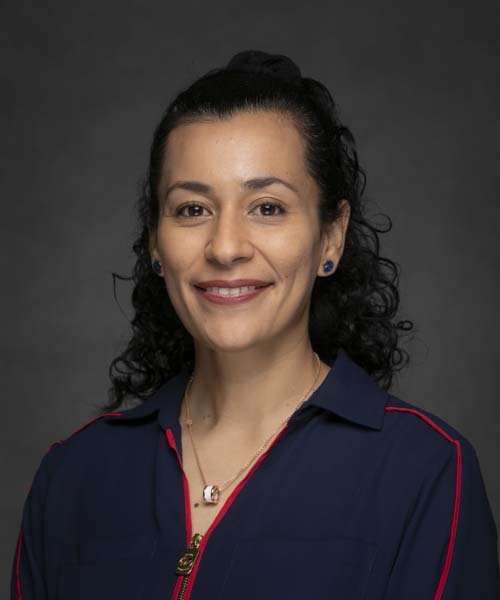
Dr. Judith Martinez is an Associate Professor in the Department of Languages, Cultures and Religions at Missouri State University, located within the Reynolds College of Arts, Social Sciences and Humanities. She holds a PhD in Comparative Literature and Cultural Studies from the University of Arkansas and has extensive experience in Spanish and French language education. Her research focuses on forced migration, neoliberal violence along the Mexican border, and Latinx literature, with notable publications in critical literary journals such as Ciberletras and Revista de Equidad y Género. Education: PhD, Comparative Literature and Cultural Studies (2017), University of Arkansas MAT, French and Spanish as a Second Language (2005), Missouri State University BS in Law and Social Sciences (2002), Universidad Autónoma de Nuevo León BS in Secondary Education (2002), Escuela Normal Superior del Estado de Nuevo León Research Interests: Her work bridges critical theory with contemporary social issues, particularly examining how literary narratives reflect political and social fractures in Mexico. She explores themes of displacement, gender equity, and the intersection of education with cultural identity. Her recent studies analyze literary responses to post-conflict scenarios and neoliberal state policies. Awards: Recipient of the Curtis T. Lawrence Master Teaching Award and multiple grants supporting educational initiatives for Hispanic learners. Notable recognitions include the Latina Leadership Award and repeated Student Athlete recognitions for her impactful teaching. Teaching & Grants: Supervises student teaching programs and has pioneered heritage Spanish language curricula. Led initiatives like the Early College program for Missouri State University, integrating community outreach with academic recruitment strategies. Labs/Teams: Active in the College of Education's Hispanic Initiative and collaborates with the CODERS Project for interdisciplinary research.
Barry Thatcher is a Professor in the Department of English at New Mexico State University (NMSU), where he has been affiliated since 2001. His academic journey includes teaching roles at Ohio University and La Universidad San Francisco de Quito, as well as ongoing collaborations with Mexican institutions like El Colegio de Chihuahua. Ph.D. in Rhetoric and Professional Communication (1997), Purdue University B.A. and M.A. in English (1989 and 1991), North Carolina State University Dr. Thatcher specializes in cross-border rhetorical theory and practice between the U.S. and Latin America, with a focus on ESL/L2 writing, particularly Spanish-English academic communication. He develops curricula for English composition tailored to native Spanish speakers and applies the Human Capability Approach to analyze cross-border rhetoric. His publications include founding the peer-reviewed journal Rhetoric, Professional Communication, and Globalization and co-editing books on intercultural rhetoric and technical communication. Key themes in his work include globalization, digital literacy, and cultural reciprocity in communication. Dr. Thatcher teaches graduate courses such as Intercultural Rhetoric, Modern Rhetorical Theory, and Qualitative Research, alongside his favorite undergraduate course, Intercultural Writing. He resides in Las Cruces, New Mexico, and can be contacted at bathatch@nmsu.edu .
Dr. Troy E. Spier is an Assistant Professor of English and Linguistics at Florida A&M University, affiliated with the Department of English and Modern Languages within the College of Social Sciences, Arts, and Humanities (CSSAH). His primary research focuses on language documentation and description in East and East-Central Africa, particularly in Zambia, Tanzania, and the Democratic Republic of Congo. He also explores discourse analytic approaches to intersections of language, power, ideology, and religion, alongside interests in linguistic landscapes, computational methods, and pedagogy. He serves as Editor-in-Chief of the Arusha Working Papers in African Linguistics and has contributed to journals such as Discourse & Society , Journal of Asian and African Studies , and Language. Text. Society . Dr. Spier holds a Ph.D. in Linguistics from Tulane University (2020), an M.A. in Linguistics (2018), and a B.S. Ed. in English Education from Kutztown University (2014). His teaching responsibilities include courses like Freshman Communicative Skills, Advanced Composition, and History of the English Language. He has also worked on digitizing literary works from the Post-Bellum era (1877–1917), available on his personal website. His research spans diverse regions, including extended fieldwork in Arusha (Tanzania) and Mansa (Zambia), and he has lived in multiple countries such as Germany, Macedonia, and Ecuador. His scholarship bridges sociopolitical discourse analysis with linguistic documentation, emphasizing under-resourced languages and cultural contexts. He frequently employs corpus linguistics techniques to examine media representation, religious ideologies, and educational practices. Recent work includes studies on Ecuadorian journalism’s portrayal of Muslims, linguistic landscapes in Pennsylvania, and the state of linguistics education in U.S. colleges. He actively contributes to interdisciplinary dialogues through pedagogical innovations and collaborative projects in African linguistic studies.
Dr. Brian Moon is an Honorary Associate Professor in the School of Education at Edith Cowan University (ECU). With extensive experience teaching English, media, and communications in WA schools and universities, he has contributed as a curriculum developer and state examiner. His authored textbooks include Literary Terms: A Practical Glossary (3rd ed, 2017) and Introducing Literature (2016). His research focuses on writing pedagogy, English curriculum history, and teacher education, particularly analyzing secondary school English curricula. Education Doctor of Philosophy, Curtin University (1993) Master of Arts (Distinction), Curtin University (1990) Postgraduate Diploma in English (Distinction), Curtin University (1989) Graduate Diploma in Education (Distinction), Western Australian Institute of Technology (1981) Bachelor of Arts, Western Australian Institute of Technology (1980) Professional Affiliations Current roles include Editorial Board memberships with Australian Journal of Teacher Education (since 2017) and English in Australia (since 2012). He has been affiliated with the Australian Society of Authors, Copyright Agency Ltd, and the English Teachers Association of WA. Research Trends Recent work emphasizes curriculum analysis, literacy development in teacher training, and the role of digital media in education. His articles address textbook content evaluation, social influences on student reading habits, and cross-cultural academic writing strategies for Chinese-speaking students. Advising & Grants Supervised over 10 research students, including studies on Bhutanese English pedagogy, intertextuality in WA curricula, and literacy testing policies. Collaborated on projects funded through educational partnerships and institutional grants. Labs & Teams Actively involved in ECU's Partners in Literacy and Numeracy (PLaN) initiative and contributes to WA-based educational research networks.
María Elena Vázquez Abal is a Professor in the Geometry and Topology department at the University of Santiago de Compostela . She is a member of the Research Group in Mathematics and has taught courses across multiple academic programs, including the Master in Mathematics , Doctoral Programme in Mathematics , and various undergraduate and double-degree programs in Mathematics, Physics, and Informatics Engineering. Her research focuses on differential geometry , with particular emphasis on geometric structures such as Einstein manifolds, symmetric spaces, and Lorentzian geometry. She explores topics like curvature operators, harmonic maps, and geometric flows, bridging theoretical mathematics with applications in physics and education. Notable contributions include studies on homogeneous manifolds, soliton dynamics, and invariant geometric properties in low-dimensional spaces. Her publications (2005–2023) reflect a consistent investigation into geometric analysis, including work on conformal geometry, harmonic vector fields, and Osserman manifolds. She also engages in educational outreach, as seen in writings about mathematical communication and women in mathematics. Teaching responsibilities include foundational courses like Mathematical Language and Sets , advanced topics such as Global Theory of Surfaces , and pedagogical training for secondary education teachers. Her work combines rigorous theoretical exploration with pedagogical innovation, maintaining an active role in both research and academic mentorship.
Bettina Beinhoff is an Associate Professor of Sociolinguistics at Anglia Ruskin University (ARU), serving as Course Leader for the MA Intercultural Communication program. She leads the Anglia Ruskin Research Centre for Intercultural and Multilingual Studies (ARRCIMS) and the Centre for Science Fiction and Fantasy (CSFF). Her research focuses on language ideologies, identity negotiation in cross-cultural contexts, and constructed languages (conlangs), including their sociolinguistic and artistic dimensions. She holds a PhD and MPhil from the University of Cambridge, and a PGCert in Higher Education Teaching. Education: PhD in Applied Linguistics, University of Cambridge MPhil in English and Applied Linguistics, University of Cambridge PGCert in Teaching at Higher Education Level Her work spans sociolinguistics and second language acquisition, with notable projects on second-language accent intelligibility and the intersection of language and identity. She also explores conlangs like Esperanto and Na’vi as cultural phenomena. Recent activities include advising startups like Algodynamix and contributing to extraterrestrial communication initiatives via the Interstellar Foundation, culminating in a moon-bound message in 2025. Research Supervision: Current PhD supervision focuses on migrant community language maintenance, identity in second-language acquisition, accent sociolinguistics, and intercultural behavioral mirroring. Grants & Collaborations: Completed British Academy grant on CEFR language comprehension mapping Core team member of the Interstellar Foundation's planetary communication projects Her interdisciplinary approach integrates linguistics with science fiction studies and applied research, bridging theoretical and real-world communication challenges.
Dr. Yanbin Lu is an Associate Professor of Academic Literacies in the School of Liberal Arts at RAUL, specializing in teaching Research and Writing courses within the Academic Literacies Programme. With over thirty years of language teaching experience across China, the USA, and the UK, she holds a PhD in Applied Linguistics from Georgia State University and an MA from Tsinghua University. In addition to her academic role, she serves as a Collaborative Provision Support Officer in RAUL's Quality Assurance team, supporting partnership and validation projects through language and administrative expertise. Educations: PhD in Applied Linguistics, Georgia State University, USA MA from Tsinghua University, Beijing, China Her research focuses on language learning and teaching methodologies , second language acquisition , and teacher education , with a strong emphasis on academic socialization and curriculum development. She has contributed to pre-sessional EAP programs at the University of Bath and the University of Nottingham before joining RAUL in 2019. No scientific awards or grants are explicitly mentioned in the provided text. She advises no listed students and has no published articles detailed here, though her role involves active collaboration in academic partnerships.
Jennifer Wolfeld is an English Language Specialist at Carnegie Mellon University's Silicon Valley campus, affiliated with the Integrated Innovation Institute. She holds a Master of Liberal Arts (ALM) in Linguistics from Harvard University and a Master of Education from Stanford University, focusing on foreign language teaching. Her expertise spans second language acquisition, accent reduction for nonnative English speakers, and professional communication skills for tech professionals. Previously, she taught academic English, research methods, cross-cultural communication, and business writing at Endicott College's Van Loan School of Graduate and Professional Studies. Her Harvard thesis explored the efficacy of speech visualization techniques for accent reduction, earning her the Dean's Prize in Behavioral Sciences. Her instructional focus includes workplace writing, presentation skills, and interpersonal communication strategies, complemented by her active involvement in Bay Area music ensembles. She currently coaches students in pronunciation, professional writing, and public speaking through CMU's Communication and Languages Services.
Sara Hascal is an Associate Professor of the Practice of Hebrew and Director of the Hebrew Language, Literature, and Culture Program at Brandeis University. She has been teaching there since 1985 and currently serves as Assistant Director of the School of Hebrew at Middlebury College. Her academic roles include directing language programs and developing curricula integrating Hebrew language proficiency with cultural literacy. Dr. Hascal holds a DML from Middlebury College, two M.A. degrees (Hebrew College and Lesley University), and a B.H.L. from Tel Aviv University. Her research focuses on using modern Israeli theater and literature to enhance language learners' communication skills and cultural awareness. She co-authored the widely adopted textbook Brandeis Modern Hebrew , emphasizing interdisciplinary approaches to language education. Her teaching philosophy prioritizes intercultural competence, critical thinking, and worldview expansion through Hebrew instruction. She has designed courses that contextualize language learning within Israeli history, politics, business, arts, and cultural traditions. Awards include the 1987 Robert A. Carpenter Scholarship and Leah Hurwich Prize for Educational Excellence. Dr. Hascal’s pedagogical innovations bridge language acquisition with cultural immersion, reflecting her dual focus on linguistic proficiency and cultural understanding. She collaborates with colleagues to advance Hebrew education methodologies.
Francisco Javier Sanchez Martin is a Professor in the Department of Spanish Language and General Linguistics at the Faculty of Arts and Humanities, Universidad de Murcia. His research focuses on historical lexicography and terminology of technical vocabulary in Spanish Renaissance texts, particularly Alonso de Herrera's agricultural treatises. He earned his PhD from Universidad de Salamanca in 2009 with a dissertation on geometric terminology in Hispanic Renaissance technical works, supervised by Dr. María Jesús Mancho Duque. Sanchez Martin specializes in lexicography, historical linguistics, and specialized language studies, with emphasis on agricultural and geometric terminology from the Renaissance period. His work examines Herrera's Libro de agricultura and its influence on Spanish lexicographic tradition including the Diccionario de autoridades , while also exploring viticulture terminology, Arabic loanwords, and digital applications in language teaching. Recent publications (2023-2025) demonstrate sustained focus on Renaissance agricultural lexicon with growing interdisciplinary connections to viticulture, medical Spanish curriculum design, and digital humanities. His research bridges historical analysis with contemporary pedagogical practices through studies of grafting terminology, Arabic influences like 'abencenif', and geometric treatises. He supervises graduate theses in Spanish linguistics through the HISTOLEX research group (History of Spanish Lexicon and Lexicography) and was previously active in Gleax (Grupo Lexicografico Alfonso X), contributing to collaborative projects on Spanish lexical evolution.
Dr. Michael Cribb is a Lecturer in English at Coventry University's Faculty of Arts and Humanities. He holds a PhD in Applied Linguistics from the University of Reading and has extensive teaching experience in Language and Linguistics, including roles at Oxford Brookes and in the Far East. His research focuses on Second Language Acquisition, Discourse Analysis, and the Philosophy of Language and Mind. He supervises MA and PhD students in these areas and teaches courses such as Research Methods, Psycholinguistics, and Discourse Analysis at both undergraduate and postgraduate levels. Education: PhD in Applied Linguistics, University of Reading Research Interests: Second Language Acquisition strategies in political discourse Discourse Analysis of parliamentary language Philosophical intersections of language and reality Oral presentation skills for non-native speakers Psycholinguistic aspects of intonation and hesitation Publications: Over 20 peer-reviewed articles and 3 authored books focusing on linguistic pragmatics, political rhetoric analysis, and applied language pedagogy. Recent work includes Research Methods for Undergraduate Students (2021) and Nonrepresentational Linguistic Idealism (2021 monograph). Awards: Fellow of the Higher Education Academy (HEA). External Activities: Link Tutor for Coventry University's English programs in Egypt; former editor/reviewer for top journals; maintains educational websites like Oral Presentation Skills and Neutral Footing . Grants/Advising: Extensive supervision of MA/PhD theses in applied linguistics and discourse studies. No specific grants listed but actively involved in curriculum development for digital intercultural learning projects.