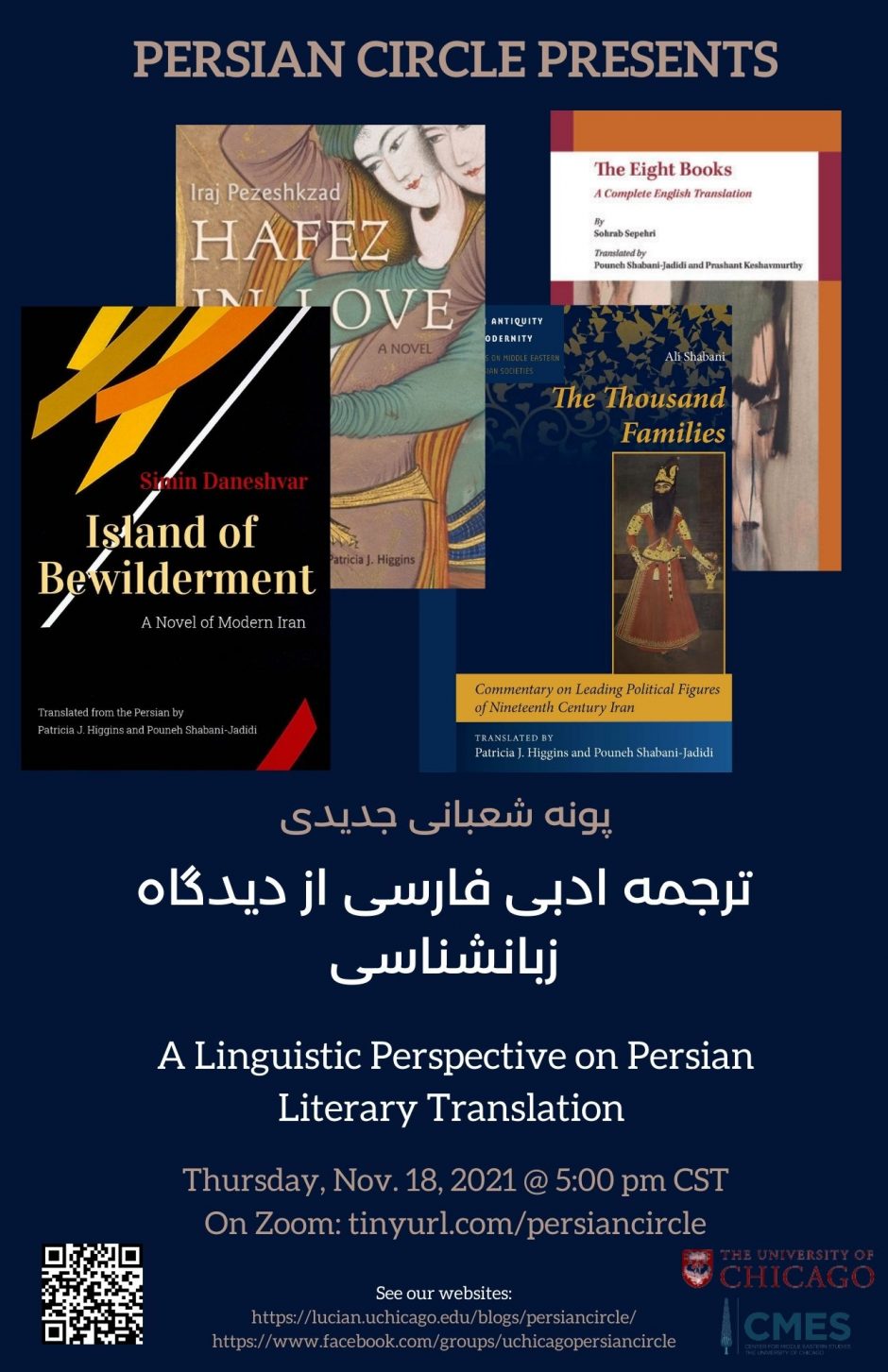
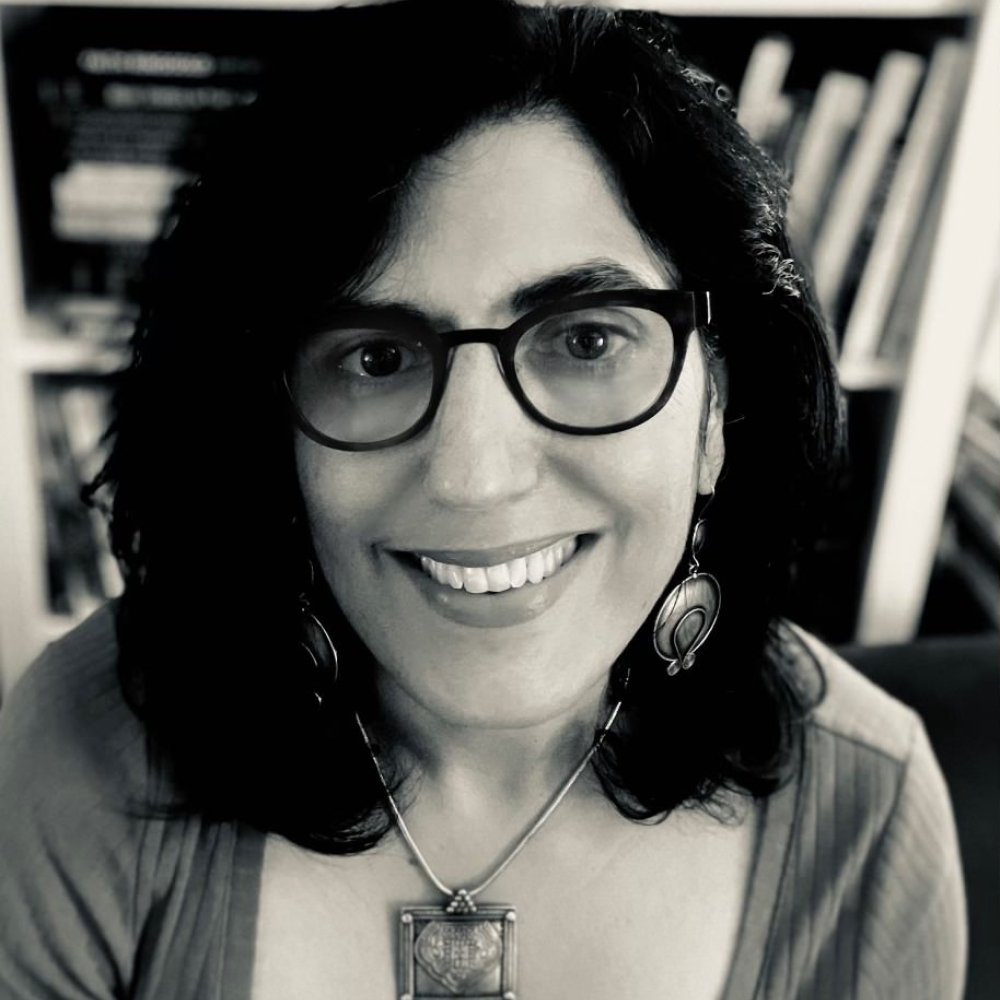
Pouneh Shabani-Jadidi is a Teaching Professor of Persian at the University of Chicago. Prior to this, she served as Senior Lecturer of Persian Language and Linguistics at McGill University (15 years) and Lecturer of Linguistics and Translation at Tehran Azad University (7 years). She holds two PhDs: a 2012 degree in Linguistics from the University of Ottawa, and a 2004 PhD in Applied Linguistics (Translation Focus) from Tehran Azad University. Persian language pedagogy Second language acquisition Literary translation theory and practice Psycholinguistic approaches to Persian syntax Translation metacognitive strategies Persian media language instruction Her publications include edited volumes like The Oxford Handbook of Persian Linguistics (2018) and The Routledge Handbook of Second Language Acquisition and Pedagogy of Persian (2020), along with co-translations of major Iranian literary works. She has presented extensively on linguistic approaches to Persian literary translation.
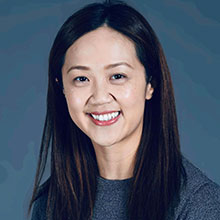
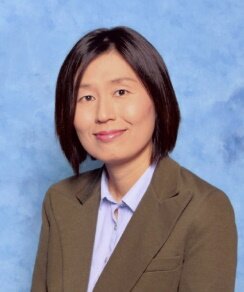
Dr Ivy Wong serves as a Bowland Research Fellow at the Department of Education, University of York, while concurrently holding an Assistant Professor position at Hong Kong Shue Yan University (currently on sabbatical). Her research program centers on second language acquisition, specifically investigating how cognitive linguistics-inspired instruction enhances grammar learning through innovative digital tools and pedagogical frameworks. Her academic credentials include: PhD in Applied English Linguistics, The Chinese University of Hong Kong (2015-2018) MPhil in Applied English Linguistics, The Chinese University of Hong Kong (2013-2015) BA in English, The Chinese University of Hong Kong (2011-2013) Dr Wong's research bridges cognitive theory with practical language pedagogy, specializing in concept-driven grammar instruction for challenging structures like prepositions and conditionals. She pioneers computer-assisted methodologies using animated schematic diagrams and Bayesian statistical modeling to analyze individual learning trajectories. Her work emphasizes open science practices, with research materials publicly accessible via Gorilla platform. Recent publications reveal a methodological evolution toward Bayesian approaches in replication studies and neurocognitive investigations, while maintaining consistent focus on translating theoretical linguistics into classroom applications. Key themes include technology-enhanced grammar instruction, cross-linguistic influences on L2 acquisition, and evidence-based material development. Her scholarly recognition includes: Bowland Research Fellowship (2023-2025) Fulbright Visiting Scholar award (2017-2018) Dr Wong has secured substantial research funding including the SCOLAR Language Fund (£110,203; 2021-2023) for developing the English Preposition Tutor and the Bowland Fellowship for her current conditional acquisition project. Her teaching portfolio spans undergraduate modules in Psycholinguistics and Second Language Acquisition to postgraduate courses in Cognitive Linguistics, demonstrating comprehensive mentorship across academic levels. She actively contributes to the Centre for Advanced Studies in Language and Education (CASLE) at York, collaborating on interdisciplinary projects that integrate computational methods with language education research.
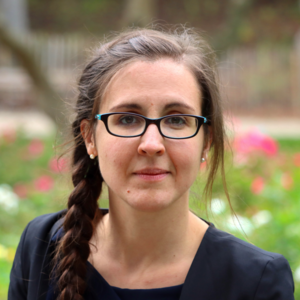
Samantha Laporte is an Assistant Professor in English Linguistics at the University of Lille , affiliated with the Faculty of Languages, Cultures, and Societies and the Department of Anglophone Studies . Her research focuses on the cognitive representation of language through corpus linguistics and construction grammar , particularly in English as first, second, and foreign language . She investigates how grammar emerges from use and explores the link between social and cognitive dimensions of language. Key methods : Corpus-based analysis, Construction Grammar, Learner Corpus Research Labs : Affiliated with UMR 8163 - Laboratory of Knowledge, Texts, and Language
Miroslaw Pawlak is affiliated with Adam Mickiewicz University in Poznan, Poland, focusing on second language acquisition and language learning psychology. Key research areas: Emotional dynamics in language classrooms, strategic grammar instruction, blended learning environments Recent work explores foreign language enjoyment/boredom, grit in SLA, and technology-mediated learning Publications from 2025 investigate: Emotion mediation in Chinese student engagement Pronunciation knowledge development through explicit/implicit learning Playfulness as a counterbalance to language learning boredom His work employs advanced statistical modeling and mediation analysis to understand affective factors in multilingual education contexts.
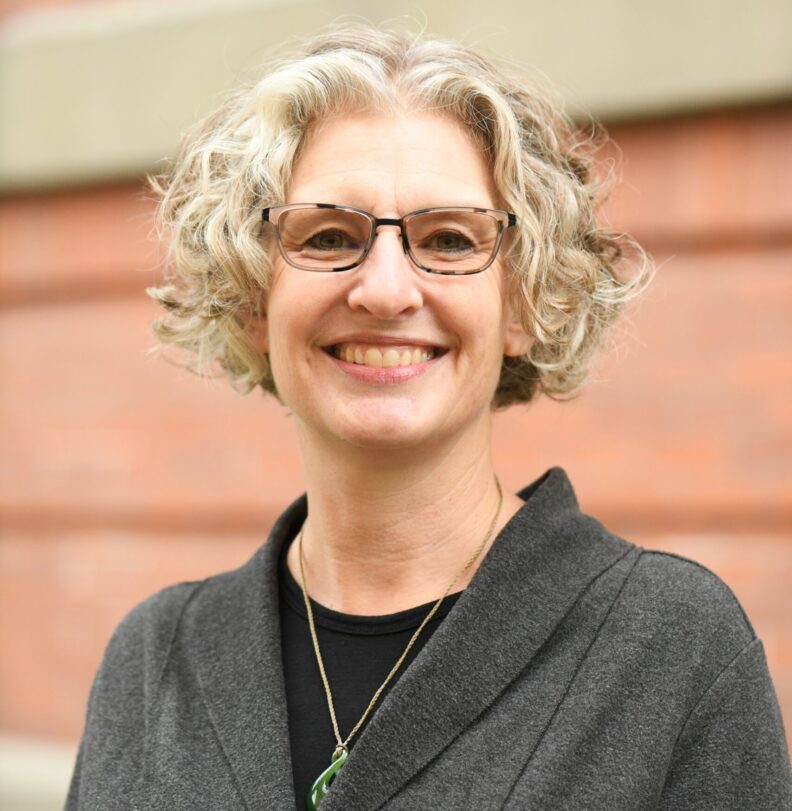
Nancy Bell is a Professor at Washington State University, specializing in Applied Linguistics and Second Language Acquisition. Her work focuses on the role of humor and language play in second language learning, intercultural communication, and pragmatic competence development. BA: Linguistics, University of Oregon PhD: Educational Linguistics, University of Pennsylvania Her research explores how humor functions in L2 interaction, emphasizing its impact on sociolinguistic competence and classroom dynamics. She has published extensively on topics including L2 humor production, discourse analysis, and pedagogical strategies for multilingual learners. Bell’s publications highlight a strong focus on humor studies, pragmatic development, and language play. Her work bridges theoretical insights from discourse analysis with practical applications in language education, reflecting a sustained interest in enhancing L2 learners’ communicative abilities through playful interaction. At WSU, she coordinates the Linguistics track, trains graduate instructors in academic literacies for multilingual students, and teaches courses supporting international learners. Her career includes two years with the Peace Corps in Cameroon, enriching her expertise in ESL and cross-cultural teaching.
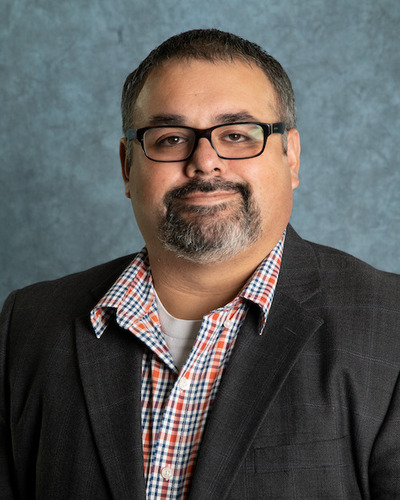
Gilberto Lara, Ph.D. , is an Assistant Professor in the Department of Bilingual and Bicultural Studies at the University of Texas at San Antonio (UTSA), within the College of Education and Human Development. With over 16 years of experience in dual-language and ESL education, his work bridges pedagogy, cultural equity, and literacy development for emergent bilinguals. Education: Ph.D. in Bilingual/Bicultural Education (UT Austin), M.Ed. and B.S. in Education (Boise State University) with concentrations in Bilingual Education and ESL Methods. Research Focus: Investigates pedagogical practices in dual-language/EL classrooms, emphasizing community cultural wealth and multicultural children's literature . His studies address raciolinguistic ideologies, teacher identity, and equity in education for marginalized communities. Article Trends: Recent publications analyze translanguaging in family contexts, post-pandemic pedagogical shifts, and systemic barriers in bilingual education. He integrates STEM and biliteracy, while critiquing children's literature for cultural relevance and social justice themes. Scientific Awards 2017 STAR Fellow, Literacy Research Association 2016 Second Place Outstanding Dissertation Award, National Association of Bilingual Association Grants & Collaborations: Though not explicitly listed, his work on equity and teacher education implies participation in federally funded initiatives. His book, The Reading Turn-Around with Emergent Bilinguals , codifies years of classroom and research experience.
Shana Sippy is an Associate Professor of Religion and Chair of Asian Studies at Centre College , where she has taught since 2017. Her work bridges Hindu studies, feminist theory, and critical race studies , with a focus on diasporic identity and interfaith solidarity. She is a co-founder of the Feminist Critical Hindu Studies Collective (Auntylectuals) and previously taught at Carleton College for eight years. Research Interests include: Caste oppression in religious education Intersectional gender/sexuality critique Transnational Hindutva politics Vernacular Hinduism practices Diasporic self-fashioning Co-optation of decolonial language Her recent work analyzes the political dimensions of Hindu educational programs, the affective labor in diasporic communities, and the entanglement of Hinduism with white supremacy. Public Scholarship features collaborations with Twin Cities Public Television on the Sacred Minnesota documentary series (2021) and the curation of Beyond Borders: The Art of Siona Benjamin (2022). She also co-developed the Intersectional Hindu Studies Seminar at the American Academy of Religion.
Dr. Anton Ragni is a Senior Lecturer in Speech and Language Technologies at the University of Sheffield's School of Computer Science, where he serves as Assessments Lead and contributes to the Speech and Hearing (SpandH) research group. His educational background includes: BEng in Information Technology from the University of Tartu (2005) MEng in Information Technology from the University of Tartu (2007) PhD from the University of Cambridge (2013) Ragni's research centers on machine learning approaches for speech and language processing, with core expertise in automatic speech recognition (ASR), expressive speech synthesis, spoken language translation, information retrieval, and conversation modeling. His work increasingly integrates self-supervised learning and foundation models to address challenges in speech technology and cross-domain applications like music processing. Analysis of his recent publications reveals a strong trend toward applying speech processing techniques to music understanding and developing robust ASR systems for specialized populations, including hearing-impaired users and children. His work demonstrates consistent innovation in leveraging contextual information and novel architectures like energy-based models. His scientific recognition includes: Best Student Paper Award at IEEE ASRU 2011 for 'Generative kernels for noise robust ASR' Ragni has secured significant research funding as Principal Investigator and Co-Principal Investigator: EPSRC grant 'Exemplar-based Expressive Speech Synthesis' (2021-2023, £218,290) as PI Innovate UK grant 'Automatic voice conversion for transforming professional adult voice actors to artificial child voice actors' (2021-2023, £173,605) as Co-PI He actively contributes to the Speech and Hearing research group, focusing on advancing speech technology through interdisciplinary collaboration and real-world applications.
Susan Kalt is a Lecturer in the Applied Linguistics department at UMass Boston, specializing in Quechua and Spanish language acquisition, bilingualism, and endangered language documentation. Her research focuses on documenting varieties of Southern Quechua as spoken in rural communities and examining how Quechua and Spanish influence each other's morphosyntax and discourse pragmatics. Dr. Kalt earned her PhD in Linguistics from the University of Southern California, Los Angeles, following an MA in Applied Linguistics from the same institution. She also holds an MA in Education with a focus on English as a Second Language Studies from the University of Massachusetts, Boston, and a BA in Hispanic Studies from Brown University. Her research examines sequential language acquisition of Quechua and Spanish, with particular attention to documenting Southern Quechua varieties in rural communities. She investigates how Quechua and Spanish influence each other's morphosyntax and discourse pragmatics, with a focus on endangered language documentation. Her work often involves linguistic fieldwork in rural Andean communities, particularly in Cuzco, Peru and Chuquisaca, Bolivia. Dr. Kalt's publications reveal a consistent focus on Quechua language acquisition, morphosyntactic changes in bilingual contexts, and language documentation. Her recent work examines typological shifts in bilingual Quechua speakers, particularly looking at word order and case marking patterns in child language. She has made significant contributions to understanding how language contact affects grammatical structures in endangered languages. National Endowment for the Humanities Documenting Endangered Languages Program American Council of Learned Societies and Andrew Mellon Foundation Foundation for Endangered Languages, London Community College Humanities Association As an award-winning linguist and language curriculum designer, Dr. Kalt teaches courses including APLING 601: Linguistics, APLING 603: Language, Culture, and Identity, and APLING 705: Advanced Ethnography. Her work bridges theoretical linguistics with practical applications for language preservation and education.
Anne Lafay is a permanent Lecturer at Savoie Mont Blanc University (USMB), specializing in mathematical cognition and developmental learning disorders . Her research focuses on the interplay between language development and numerical cognition , particularly in children with developmental dyscalculia and mathematical learning disabilities . Academic affiliation: Department of Psychology, USMB Research themes: Developmental dyscalculia , math anxiety , manipulatives in education , mathematical language skills Her work explores how symbolic number processing and non-symbolic numerical representations affect mathematical development, with a particular emphasis on cross-linguistic comparisons (French vs. second-language learners) and intervention design using digital tools like SUBéCAL and Examath batteries. Recent publications in School Science and Mathematics and Children journal demonstrate her commitment to innovative assessment methodologies and emotion-based educational interventions . Scientific Recognition Banting Postdoctoral Fellowship (2017-2021) 3rd Prize for Best Glossa Article (2023) 2nd Prize for Best Glossa Article (2022) Best Poster Presentation Awards (2014, 2012) As a certified speech therapist (Université Claude Bernard Lyon 1), with additional training in cognitive science and neuropsychology , she develops evidence-based interventions for mathematical difficulties. Her supervision services cover scientific article analysis , assessment planning , and intervention method development for professionals across multiple disciplines.
Weifeng Han is a Senior Lecturer in Inclusive Education Futures at Flinders University's College of Education, Psychology and Social Work. With dual PhDs in Linguistics and Speech Pathology , their research focuses on culturally and linguistically diverse (CALD) language development/disorders, interprofessional practice (IPP), and early language literacy policy in inclusive education contexts. PhD in Speech Pathology PhD in Linguistics MA in Applied Linguistics BA in English Research explores language development variations across cultural contexts, diagnostic/intervention strategies in multilingual settings, and evidence-based projects addressing social inclusion. Key themes include: Bilingual language development Developmental language disorders Assistive technology in education UN Sustainable Development Goals (Education) Recent publications analyze digital mental health interventions, dysgraphia interventions, and semantic acquisition in L2 learners. Awards include IELTS Research Grant (2020-2022) and Ember Venning Scholarships (2016-2017).
Dr. Kook-Hee Gil is a Reader in Applied Linguistics and Graduate Director of English Language and Linguistics at the School of English , University of Sheffield. She teaches undergraduate courses in Linguistic Theory, Semantics, and Second Language Acquisition, and postgraduate courses including 'Current Issues in Second Language Acquisition' and 'Research Methods' within the MA in Applied Linguistics program. Education: BA in English Literature and Linguistics, Chungnam National University (1993) MSc in Applied Linguistics, University of Edinburgh (1994) MSc in Speech and Language Processing, University of Edinburgh (1995) PhD in Linguistics, University of Edinburgh (2000) with thesis on Korean Long-Distance Anaphora Research Interests: Her work focuses on syntax-semantics interface, second language acquisition of quantifiers, mass/count distinction, and pedagogical applications of generative SLA research. She has led workshops at AAAL (2011), GASLA (2013), and LAGB (2016) on these topics. Publications Trends: Her research spans formal linguistics (e.g., quantification, anaphora) and applied linguistics (e.g., classroom implications, textbook analysis). Key areas include L2 acquisition of English/Korean quantifiers, polarity items, and cross-linguistic semantic variability. Projects: She worked on an AHRC-funded project "Strategies of Quantification" at the University of York (2001-2004) before joining Sheffield.
Hyun-Sook Kang is an Associate Professor at the University of Illinois at Urbana-Champaign with multiple affiliations across the institution. She holds appointments in the College of Education's Department of Education Policy, Organization and Leadership, as well as the Center for East Asian and Pacific Studies, the Center for the Study of Global Gender Equity, and the Center for Global Studies. Dr. Kang earned her Ph.D. in Educational Linguistics from the University of Pennsylvania's Graduate School of Education in 2007. Prior to her current position, she served on the faculty in the Linguistics Department at the University of Illinois, Illinois State University, and the University of Texas at San Antonio. Dr. Kang's research focuses on language practice and ideology in relation to global mobility, including immigration and study abroad. Her work examines student agency, belief, and identity in educational contexts with implications for teacher development and internationalization of education. She is particularly interested in ontological, epistemological, and methodological considerations in educational research. Her scholarship bridges linguistic theory with practical applications in diverse educational settings. Her recent publications demonstrate a strong emphasis on international education, language teaching, and the impact of technology on learning. The research spans study abroad experiences, online language education, teacher development, and equity considerations in global contexts. Her work often employs mixed-methods approaches and focuses on Korean and East Asian language learners in international settings. Dr. Kang serves as Co-Editor of the Journal of Language, Identity, and Education and sits on the editorial boards of several academic journals including the European Journal of Education, Study Abroad Research in Second Language Acquisition and International Education, Humanities & Social Sciences Communications, International Journal of Qualitative Methods, Language and Assessment, and Language-Related Research. As an educator, Dr. Kang teaches courses related to global education, education and globalization, learning technologies, and instructional design. She has contributed significantly to the field through her editorial work, research publications, and service on professional committees including the American Association for Applied Linguistics and the Comparative and International Education Society.
Mark Tutton is a Senior Lecturer in French and Francophone Studies at the School of International Studies and Education, University of Technology Sydney. With dual Australian and French citizenship, he coordinates the French language and culture program and has extensive experience in linguistics education across Australia and France since 2004. PhD in Linguistics (University of New South Wales, 2010) Graduate Diploma of Teaching and Learning (University of Southern Queensland, 2018) MA in Linguistics (University of Lille, 2005) MèsL (BA equivalent) in Linguistics (Sorbonne Nouvelle, 2004) BA in Communication and International Studies (UTS, 2001) His research focuses on spatial language and multimodal communication, particularly comparing English and French locative expressions through gestural and cognitive frameworks. Recent work explores foreign language anxiety in online learning environments and the impact of AI on language pedagogy. Articles span topics in spatial semantics, English-French contrastive linguistics, and technology-enhanced language learning. Key themes include metaphorical resource conceptualization, prospective location in motion verbs, and static/motion-framed locative expressions. Mark teaches French language and culture at all levels (A1-C1 ECFR) while advocating for concrete, relatable explanations of abstract linguistic concepts to enhance student learning experiences.
Tarja Nikula-Jäntti serves as a Professor at the Centre for Applied Language Studies within the Faculty of Humanities and Social Sciences at the University of Jyväskylä. Her academic work centers on language education frameworks, particularly examining intersections between language and subject content in multilingual educational environments across diverse institutional contexts. Nikula-Jäntti's research adopts socio-functional perspectives emphasizing language's contextual and variable nature, with foundational work on content-language integration in CLIL classrooms. She argues for prioritizing language's role in knowledge construction rather than treating it as an isolated skill, advocating for collaborative dialogue between language specialists, content teachers, and researchers. Her scholarship directly addresses challenges in linguistically heterogeneous classrooms and informs language-aware pedagogical approaches applicable beyond CLIL contexts. Her 2023-2025 publications reveal consistent focus on disciplinary literacies operationalization, multimodal knowledge construction in science education, and equity dimensions in CLIL implementation. Significant cross-national comparisons (Finnish-Spanish contexts) and European-wide CLIL policy analyses demonstrate her international research scope, while Tanzania-based teacher education collaborations reflect applied commitment to multilingual pedagogy in global contexts. No scientific awards were documented in the provided materials for Tarja Nikula-Jäntti. As lead implementer for Finland's PISA 2025 Foreign Language Assessment (English), Nikula-Jäntti directs her unit's work on large-scale language proficiency evaluation. This high-visibility project connects her theoretical expertise in language assessment to national educational policy, though specific grant histories weren't detailed in available sources. Her collaborative networks include the CLIL Network for Languages in Education (CLILNetLe) working groups across 20+ European countries. The Centre for Applied Language Studies at University of Jyväskylä serves as her primary research hub, supporting international collaborations like the Tanzania teacher education initiative and CLILNetLe's European-wide reporting. Her work consistently bridges theoretical linguistics with classroom practice through physics/chemistry multimodal studies and Finnish-Spanish comparative research, demonstrating commitment to contextually grounded language education solutions.