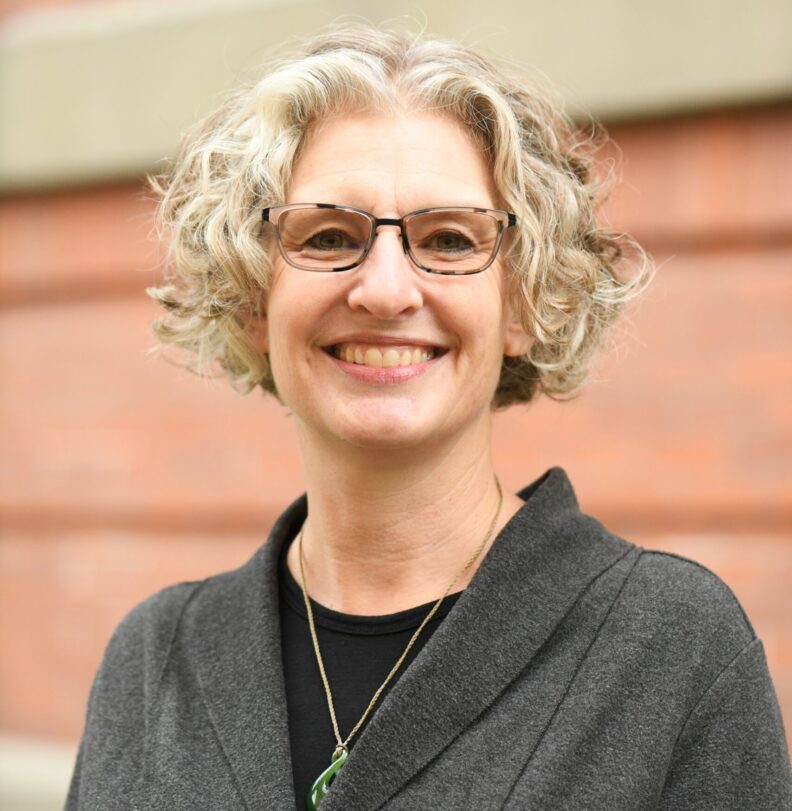
Elena Nicoladis is the Department Head and a Professor at the Department of Psychology within the Irving K. Barber Faculty of Arts and Social Sciences at the University of British Columbia Okanagan. Her research focuses on bilingual first language acquisition, second language learning, and the role of gestures in communication and cognitive development. She is currently accepting graduate students but has specified that she is not considering Psychology graduate applicants for the September 2026 intake.
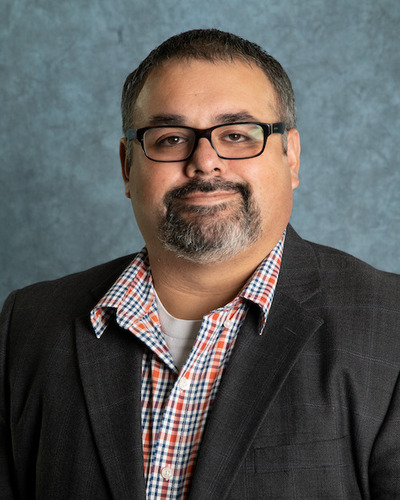
Louis-Martin Guay is an Associate Professor at the School of Design within the Faculty of Planning at Université de Montréal. He has been teaching game design at the university since 2007, following 8 years of professional experience at Ubisoft. His office is located in room 1037 of the Faculty of Planning building, and he can be reached at 514 343-6111 ext. 2803. Guay's research interests focus on applied game design, game design methodology, games and education, the history and culture of video games, scenic interactions, second-person game design, spontaneous theater, and improvisation. His work spans across multiple disciplines including Game Design, Video Game Studies, Creativity, and Media Arts. He has developed expertise in both theoretical and practical aspects of game design, with particular attention to how games can be used for education and social purposes. His recent publications show a consistent focus on innovative applications of game design principles across various contexts. His work examines how games can facilitate language learning for preschoolers, develop empathy through game mechanics, and create socially responsible entertainment. He also explores the transformation of traditional tabletop role-playing games into virtual environments and the philosophical foundations of player experience. Guay has supervised numerous graduate students working on diverse aspects of game design, from casual games to persuasive role-playing mechanics. His research has been supported by funding from FRQSC, including the project 'T'es-tu GAME?' (2021-2024) which developed a video game to optimize social skills in youth, and 'MR ROBOTO' (2013-2017), a project on interactive ludic fiction. As an educator, Guay teaches courses including Introduction to Video Game Design, Fundamental Concepts of Games, Games, Experiences and Interactions, Games and Learning Design, Ludic Objects, and Final Year Projects. He is involved with multiple academic programs including Industrial Design, Video Game Major, and various Master's programs in Planning, Cinema, and Media Arts.
Ján Strelinger serves as a Senior Lecturer at the Department of English Language, Faculty of Applied Languages, University of Economics in Bratislava, where he has contributed to academic programs since 2008 with expertise spanning language pedagogy and cross-cultural business communication. His educational foundation includes a second degree in Translating and Interpreting (English-Italian) from Comenius University (1991) and a third degree in International Economic Relations from the University of Economics in Bratislava (2016), complemented by professional development through study stays at Universitá di Padova (2003), Universitá per stranieri di Siena (2006), and UC Berkeley (2007). Strelinger's research critically examines Language Teaching methodologies for business contexts, Translation Studies in EU documentation, Consumer Behavior in sustainable food systems, and Cultural Diplomacy in international negotiations. His work bridges linguistic theory with practical applications in economics and management education, emphasizing innovative approaches to multilingual professional communication. Analysis of his publications reveals a consistent focus on adapting language education to global business demands, with significant contributions to understanding Slovak consumer patterns in organic food markets and developing pedagogical frameworks for cross-cultural negotiation competence. No major scientific awards or fellowships were documented in the source material. He has supervised 2 Bachelor's theses and secured research funding through KEGA grants: KEGA Project (2018-2019): 'Ideational idioms in Business English communication' (Co-investigator) KEGA Project (2024): 'Innovative Methods in Teaching Business Negotiations in English' (Co-investigator) His recent Erasmus mobility at Universidad de País Vasco EHU (March 2024) underscores ongoing international collaboration in language education.
Simona ANASTASIO is an Associate Professor in the Department of Language Sciences at the University of Toulouse – Jean Jaurès, where she conducts research at the NeuroPsychoLinguistics Laboratory (LNPL, UR 4156). She is also affiliated with two CNRS research units: UMR 7023 SFL and UMR 8163 STL. Her teaching spans multiple programs, including Units and Diversities of Languages, FLE methodologies, child language development, and second language learning at both undergraduate and graduate levels. University: University of Toulouse – Jean Jaurès Department: Department of Language Sciences Research Lab: NeuroPsychoLinguistics Laboratory (LNPL, UR 4156) Additional Affiliations: UMR 7023 SFL CNRS, UMR 8163 STL CNRS Her research centers on second language acquisition, linguistic typology, and the interface between language and cognition, particularly in the expression of spatial and temporal relations. She employs qualitative and quantitative methods based on oral and written corpus analysis. Her work investigates crosslinguistic influence, inter- and intra-typological variations, and the didactic implications of acquisition research. She has led and participated in several major research projects, including WRIMOTEF, ADMIT, and CAUSEMOTYP, focusing on motion events, migrant integration, and linguistic relativism. The recent publications and conference presentations reflect a strong thematic concentration on motion event construal in L2 French and Italian, with growing attention to pedagogical applications and cognitive underpinnings. Her work frequently compares learners with different L1 backgrounds (e.g., French, English) and analyzes both oral and written productions across proficiency levels. Scientific Affiliations: Member, Second Language Acquisition Network (ReAL2) Member, Romance Linguistics Society (SLR) Member, French Association of Cognitive Linguistics (AFLICO) Member, Italian Association of Applied Linguistics (AItLA) Member, International Society for Applied Psycholinguistics (ISAPL) She actively contributes to the academic community through editorial reviews for journals such as International Review of Applied Linguistics , Discours , and Language and Cognition , and serves on scientific committees for international conferences. She has organized workshops and conferences on linguistic relativism, motion and cognition, and discourse in multilingual contexts. Her current projects involve corpus-based research with practical applications in language teaching and migrant education. Laboratories and Research Teams: NeuroPsychoLinguistics Laboratory (LNPL) UMR 7023 SFL CNRS UMR 8163 STL CNRS Participation in DOC (Didactique, Oral, Corpus) project
Inès Saddour is a Lecturer in the Department of French as a Foreign Language Studies (DEFLE) at the University of Toulouse – Jean Jaurès and a researcher at the NeuroPsychoLinguistics Laboratory (LNPL). She specializes in second language acquisition among adult migrants, with a focus on cognitive, linguistic, and sociocultural development. Her research interests include: Second language acquisition in natural and institutional settings Language socialization and context in language development Perception and encoding of events in L1 and L2 Expression of temporality and causality in L2 French Multimodal behavior analysis, particularly gesture in communication Intercultural sensitivity and cultural adaptation of migrants Her recent publications reveal a strong focus on longitudinal studies of Syrian and Tunisian learners of French, using multimodal and psycholinguistic methods such as eye-tracking and corpus analysis. Key trends include the role of orthography in L3 pronunciation, agentivity in causal constructions, and the development of verbal morphology in spoken and written L2 French. She leads the ANR-funded CLASS project (2021–2025) on intercultural sensitivity and language acquisition in Syrian learners, and was co-leader of the SOFRA project (2018–2020) on Syrian asylum seekers. She also co-leads the DEFLUND study on Swedish-speaking learners in France. She has served as editor-in-chief of the Cahiers de l’AFLS (2014–2020), co-edited volumes on tense and modality, and contributes to major research networks including RéAL2 and GIS RéAL2. She teaches research methodology, linguistic development, and French corpus studies at Master’s level. She is the thematic axis coordinator for Migration at RéAL2 and is responsible for Open Science and Digital Sobriety at LNPL. She also co-leads the Master E2F program and serves as webmaster for the DEFLE department.
Fay Shin is a Professor and Chair in the Department of Teacher Education at California State University, Long Beach, within the College of Education. She plays a leadership role in shaping teacher preparation programs with a strong emphasis on English language development and bilingual education. Her educational background includes: Ph.D. in Education, University of Southern California M.S. in Teaching English as a Second Language, University of Southern California B.A. in Psychology, University of California, Los Angeles Multiple Subject Teaching Credential, California State University, Los Angeles Fay Shin's research focuses on literacy and bilingual education, particularly in the context of science instruction for English language learners. She has developed evidence-based curricula that integrate language development with content standards, influencing classroom practices across the United States. Her work emphasizes free voluntary reading, heritage language development, and equitable access to education for multilingual students. The trends in her publications and presentations reveal a sustained commitment to improving educational outcomes for English learners through integrated content and language instruction, teacher preparation, and policy advocacy. Her work spans curriculum design, pedagogical strategies, and systemic support for bilingual programs. She is an active presenter and keynote speaker at national and international conferences, including TESOL, AERA, and CABE, where she shares insights on effective strategies for second language acquisition and literacy development. Fay Shin mentors future educators through her leadership in teacher education programs and has contributed significantly to professional development across school districts. She has led initiatives such as the Bilingual Teacher Educators Project and conducted workshops on ELD standards implementation. While specific grant details are not listed, her extensive outreach and curriculum development suggest active engagement in funded educational projects. She is involved in various professional communities and collaborates with institutions nationally and internationally, including school districts, universities, and educational associations, to advance bilingual and literacy education.
Hyun-Sook Kang is an Associate Professor at the University of Illinois at Urbana-Champaign with multiple affiliations across the institution. She holds appointments in the College of Education's Department of Education Policy, Organization and Leadership, as well as the Center for East Asian and Pacific Studies, the Center for the Study of Global Gender Equity, and the Center for Global Studies. Dr. Kang earned her Ph.D. in Educational Linguistics from the University of Pennsylvania's Graduate School of Education in 2007. Prior to her current position, she served on the faculty in the Linguistics Department at the University of Illinois, Illinois State University, and the University of Texas at San Antonio. Dr. Kang's research focuses on language practice and ideology in relation to global mobility, including immigration and study abroad. Her work examines student agency, belief, and identity in educational contexts with implications for teacher development and internationalization of education. She is particularly interested in ontological, epistemological, and methodological considerations in educational research. Her scholarship bridges linguistic theory with practical applications in diverse educational settings. Her recent publications demonstrate a strong emphasis on international education, language teaching, and the impact of technology on learning. The research spans study abroad experiences, online language education, teacher development, and equity considerations in global contexts. Her work often employs mixed-methods approaches and focuses on Korean and East Asian language learners in international settings. Dr. Kang serves as Co-Editor of the Journal of Language, Identity, and Education and sits on the editorial boards of several academic journals including the European Journal of Education, Study Abroad Research in Second Language Acquisition and International Education, Humanities & Social Sciences Communications, International Journal of Qualitative Methods, Language and Assessment, and Language-Related Research. As an educator, Dr. Kang teaches courses related to global education, education and globalization, learning technologies, and instructional design. She has contributed significantly to the field through her editorial work, research publications, and service on professional committees including the American Association for Applied Linguistics and the Comparative and International Education Society.
Mark Tutton is a Senior Lecturer in French and Francophone Studies at the School of International Studies and Education, University of Technology Sydney. With dual Australian and French citizenship, he coordinates the French language and culture program and has extensive experience in linguistics education across Australia and France since 2004. PhD in Linguistics (University of New South Wales, 2010) Graduate Diploma of Teaching and Learning (University of Southern Queensland, 2018) MA in Linguistics (University of Lille, 2005) MèsL (BA equivalent) in Linguistics (Sorbonne Nouvelle, 2004) BA in Communication and International Studies (UTS, 2001) His research focuses on spatial language and multimodal communication, particularly comparing English and French locative expressions through gestural and cognitive frameworks. Recent work explores foreign language anxiety in online learning environments and the impact of AI on language pedagogy. Articles span topics in spatial semantics, English-French contrastive linguistics, and technology-enhanced language learning. Key themes include metaphorical resource conceptualization, prospective location in motion verbs, and static/motion-framed locative expressions. Mark teaches French language and culture at all levels (A1-C1 ECFR) while advocating for concrete, relatable explanations of abstract linguistic concepts to enhance student learning experiences.
Dr. Kook-Hee Gil is a Reader in Applied Linguistics and Graduate Director of English Language and Linguistics at the School of English , University of Sheffield. She teaches undergraduate courses in Linguistic Theory, Semantics, and Second Language Acquisition, and postgraduate courses including 'Current Issues in Second Language Acquisition' and 'Research Methods' within the MA in Applied Linguistics program. Education: BA in English Literature and Linguistics, Chungnam National University (1993) MSc in Applied Linguistics, University of Edinburgh (1994) MSc in Speech and Language Processing, University of Edinburgh (1995) PhD in Linguistics, University of Edinburgh (2000) with thesis on Korean Long-Distance Anaphora Research Interests: Her work focuses on syntax-semantics interface, second language acquisition of quantifiers, mass/count distinction, and pedagogical applications of generative SLA research. She has led workshops at AAAL (2011), GASLA (2013), and LAGB (2016) on these topics. Publications Trends: Her research spans formal linguistics (e.g., quantification, anaphora) and applied linguistics (e.g., classroom implications, textbook analysis). Key areas include L2 acquisition of English/Korean quantifiers, polarity items, and cross-linguistic semantic variability. Projects: She worked on an AHRC-funded project "Strategies of Quantification" at the University of York (2001-2004) before joining Sheffield.
Maria Lim Falk is a researcher at the Department of Swedish Language and Multilingualism, Stockholm University . She leads key projects like IntensiveSwedish and collaborates with the Swedish National Agency for Education. PhD in Scandinavian Languages (2008) with focus on bilingual education Academy Fellow in Swedish Didactics (2010–2015) Research Focus: Bilingual education, CLIL pedagogy, academic writing in multilingual contexts, grammar instruction for second-language learners, and sociolinguistic challenges in education. Her work bridges theory and practice through teacher-researcher collaborations. Publication Trends: Analyzes Swedish/English code-switching, CLIL effectiveness, vocabulary acquisition, and curriculum design for refugee students. Key themes: multilingual competence, educational equity, and language policy implementation. Scientific Awards: Royal Swedish Academy of Literature Fellowship (2010–2015) Collaborative Work: Coordinates teacher-researcher partnerships, contributes to national educational models, and leads projects on language literacy. Her studies inform policies for sustainable educational practices.
Victoria Mateu is an Associate Professor of Hispanic Linguistics at the University of California, Los Angeles (UCLA), Department of Spanish and Portuguese, where she joined in 2019 after completing her Ph.D. in Linguistics at UCLA and serving as Lecturer in Linguistics and Lab Manager of the UCLA Language Lab. Her educational background includes: Ph.D. in Linguistics, University of California Los Angeles (2016) M.A. in Linguistics, University of California Los Angeles (2013) B.A. in English Philology, Universidad de Granada, Spain (2011) Dr. Mateu's research employs experimental methodologies to investigate language representation across populations, with core focus on Spanish acquisition in children and adults. Her work examines morphosyntactic constraints, crosslinguistic differences between Spanish/English, language processing mechanisms, and word segmentation in monolingual/bilingual infants. She explores how developmental paths reveal underlying grammatical structures through both naturalistic and experimental paradigms. Recent publications demonstrate strong trends in intervention effects across syntactic domains (passives, sluicing, wh-questions) with expanding cross-linguistic scope (Mandarin, Italian) and methodological innovation through large-scale collaborations. Her work bridges theoretical syntax with developmental psycholinguistics, emphasizing experimental rigor in child language research. Her scientific recognition includes: UCLA Social Impact Collaborative Seed Grant ($50,000) for ‘A community-centered approach to supporting dual language learning’ Dr. Mateu actively mentors graduate students as evidenced by co-authored publications with emerging scholars. Her current grant-funded project with Megha Sundara and Laurel Perkins develops community-centered approaches to dual language support, reflecting commitment to applied linguistic research. She serves as course instructor for advanced syntax and language acquisition seminars. As former Lab Manager of the UCLA Language Lab and current contributor to the international ManyBabies Consortium, she participates in large-scale initiatives addressing methodological challenges in infant research through multi-lab collaborations.
Shana Sippy is an Associate Professor of Religion and Chair of Asian Studies at Centre College , where she has taught since 2017. Her work bridges Hindu studies, feminist theory, and critical race studies , with a focus on diasporic identity and interfaith solidarity. She is a co-founder of the Feminist Critical Hindu Studies Collective (Auntylectuals) and previously taught at Carleton College for eight years. Research Interests include: Caste oppression in religious education Intersectional gender/sexuality critique Transnational Hindutva politics Vernacular Hinduism practices Diasporic self-fashioning Co-optation of decolonial language Her recent work analyzes the political dimensions of Hindu educational programs, the affective labor in diasporic communities, and the entanglement of Hinduism with white supremacy. Public Scholarship features collaborations with Twin Cities Public Television on the Sacred Minnesota documentary series (2021) and the curation of Beyond Borders: The Art of Siona Benjamin (2022). She also co-developed the Intersectional Hindu Studies Seminar at the American Academy of Religion.
Nancy Bell is a Professor at Washington State University, specializing in Applied Linguistics and Second Language Acquisition. Her work focuses on the role of humor and language play in second language learning, intercultural communication, and pragmatic competence development. BA: Linguistics, University of Oregon PhD: Educational Linguistics, University of Pennsylvania Her research explores how humor functions in L2 interaction, emphasizing its impact on sociolinguistic competence and classroom dynamics. She has published extensively on topics including L2 humor production, discourse analysis, and pedagogical strategies for multilingual learners. Bell’s publications highlight a strong focus on humor studies, pragmatic development, and language play. Her work bridges theoretical insights from discourse analysis with practical applications in language education, reflecting a sustained interest in enhancing L2 learners’ communicative abilities through playful interaction. At WSU, she coordinates the Linguistics track, trains graduate instructors in academic literacies for multilingual students, and teaches courses supporting international learners. Her career includes two years with the Peace Corps in Cameroon, enriching her expertise in ESL and cross-cultural teaching.
Gilberto Lara, Ph.D. , is an Assistant Professor in the Department of Bilingual and Bicultural Studies at the University of Texas at San Antonio (UTSA), within the College of Education and Human Development. With over 16 years of experience in dual-language and ESL education, his work bridges pedagogy, cultural equity, and literacy development for emergent bilinguals. Education: Ph.D. in Bilingual/Bicultural Education (UT Austin), M.Ed. and B.S. in Education (Boise State University) with concentrations in Bilingual Education and ESL Methods. Research Focus: Investigates pedagogical practices in dual-language/EL classrooms, emphasizing community cultural wealth and multicultural children's literature . His studies address raciolinguistic ideologies, teacher identity, and equity in education for marginalized communities. Article Trends: Recent publications analyze translanguaging in family contexts, post-pandemic pedagogical shifts, and systemic barriers in bilingual education. He integrates STEM and biliteracy, while critiquing children's literature for cultural relevance and social justice themes. Scientific Awards 2017 STAR Fellow, Literacy Research Association 2016 Second Place Outstanding Dissertation Award, National Association of Bilingual Association Grants & Collaborations: Though not explicitly listed, his work on equity and teacher education implies participation in federally funded initiatives. His book, The Reading Turn-Around with Emergent Bilinguals , codifies years of classroom and research experience.
Samantha Laporte is an Assistant Professor in English Linguistics at the University of Lille , affiliated with the Faculty of Languages, Cultures, and Societies and the Department of Anglophone Studies . Her research focuses on the cognitive representation of language through corpus linguistics and construction grammar , particularly in English as first, second, and foreign language . She investigates how grammar emerges from use and explores the link between social and cognitive dimensions of language. Key methods : Corpus-based analysis, Construction Grammar, Learner Corpus Research Labs : Affiliated with UMR 8163 - Laboratory of Knowledge, Texts, and Language