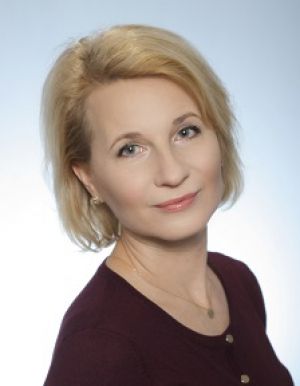
Claudia Baark is an Academic Assistant for Teaching in German Language and Literature Didactics at the University of Hamburg's Faculty of Education. She specializes in primary school language education with focus areas including literacy acquisition, text writing, and spelling instruction. Education: 1995: First State Examination, University of Hamburg 1998: Second State Examination Her research examines effective methodologies for German language instruction in primary education, particularly collaborative learning approaches, feedback mechanisms for children's writing, and literary learning. Publications address instructional strategies for vocabulary development, poetry education, and writing assessment. With extensive school teaching experience (1998-2016) and leadership roles in teacher training at Hamburg's State Institute, she contributes to curriculum development for Hamburg's educational authorities, including recent work on German language curricula for primary schools.
Merje Miliste is a Lecturer in German Language and Linguistics at the University of Tartu's Faculty of Arts and Humanities, Institute of Foreign Languages and Cultures (1.00 FTE since 2019). Previously, she held roles including Programme Director for German Studies (2014), Academic Developer (2016–2019), and various lecturer positions since 2003. She earned a Doctor's Degree in 2011, focusing on interactions between Estonian learners' mother tongue and other languages when acquiring German as an additional foreign language. Education : PhD (2011, University of Tartu) with a thesis on mother tongue interactions in multilingual learners; MA (2000, German Philology); BA (1996, German Language and Literature). Pedagogy training (1995–1996) and intercultural mentorship certification (2008–2009). Research Interests : Applied linguistics, multilingualism, language acquisition processes, technology in language learning, foreign language pedagogy, and sociolinguistics. Her work emphasizes intersections between mother tongue influence, digital tools, and educational methodologies. Publications Overview : Over 20 peer-reviewed articles and book chapters since 2001, focusing on topics like AI's role in language media, YouTube-driven language learning, MOOC engagement patterns, and multilingual curriculum design. Recent work explores digital dictionary usage and collaborative teaching strategies. Awards : 2015 Tartu University Scholarship for Teaching and Learning Innovation. Recognized for administrative leadership in educational initiatives. Grants & Roles : Managed German MA programs (2013–2015), chaired national German Olympiad committees (2001–2002), and contributed to language policy discussions in post-Soviet educational contexts. Active in teacher training and intercultural mentorship programs. Labs/Teams : Collaborates with the Institute of Foreign Languages and Cultures on multilingual education projects and digital pedagogy initiatives.
Carol Rounds is a Senior Lecturer in Hungarian at Columbia University's Department of Italian. She has been affiliated with Columbia since 1979 and specializes in Hungarian pedagogy and Uralic linguistics. Her research explores linguistic relationships among Finnish, Komi, and Hungarian, particularly focusing on definiteness in syntax. She holds a BA in Linguistics (1984), MA (1986), and PhD in Uralic Studies (1992). Her publications include seminal works like Hungarian: An Essential Grammar and Colloquial Hungarian , both widely used in language education. In 2010, she received the Pro Cultura Hungarica Award for advancing Hungarian language and culture abroad. Teaching focuses on Hungarian language instruction, including elementary, intermediate, and advanced courses. Courses recently taught include UN1101 (Elementary Hungarian I), UN2101 (Intermediate Hungarian I), and UN3341 (Advanced Readings in Hungarian). Education: BA in Linguistics (1984) MA in Uralic Studies (1986) PhD in Uralic Studies (1992) Research Highlights: Authored/co-authored major Hungarian language textbooks Explored accusative marking systems in Finno-Ugric languages Her publications reflect a sustained engagement with language pedagogy and comparative Uralic linguistics, bridging theoretical research with practical language instruction materials.
Professor Melanie Dirks is the Department Chair of Psychology at McGill University, specializing in Clinical Psychology and Developmental Science . Her research focuses on mapping social and emotional skills across childhood, adolescence, and young adulthood, with emphasis on peer/sibling relationships and their impact on psychological symptoms. Uses multimodal methodologies: observational studies, daily diaries, emotion recognition tasks Current projects: friendship quality maintenance, interpersonal victimization in youth, emotional communication dynamics Key research themes from publications include: Peer Relationships : Dissolution patterns, prosocial behavior, bullying, and dating aggression Emotional Processing : Vocal emotion recognition, neural reward responses, stress-neuroimaging links Contextual Influences : Family dynamics, socioeconomic status, post-pandemic social changes Her lab ( CASC Lab ) trains students in advanced social-emotional assessment techniques, with notable advisees including *Morningstar, *Gilbert, and *Santucci. Google Scholar articles (2014-2025) demonstrate expertise in developmental psychopathology, social neuroscience, and cross-cultural mental health determinants.
Alain Ausoni is a researcher (MER 1) at the School of French as a Foreign Language within the Faculty of Arts at the University of Lausanne (UNIL), a position he has held since August 2018. His academic journey includes a Master's in Comparative Literature from the University of Kent and a doctorate from the University of Oxford as a Berrow Scholar. He previously studied at UNIL and holds a teaching diploma from HEP-VD. His research focuses on multilingualism in literature and the teaching of spoken French in FLE contexts. He is particularly known for his work on translingual writing—autobiographical practices by non-native French authors—and for developing pedagogical tools for oral comprehension. His recent book Mémoires d'outre-langue (2018) explores this theme in depth. He co-created the digital platform FLORALE (florale.unil.ch) with Christian Surcouf, a corpus-based resource for teaching spoken French, supported by the Educational Innovation Fund. The trends in his scholarly publications reveal a sustained engagement with translingual autobiography, oral language variation in French, and innovative FLE pedagogy. His works analyze how learners comprehend spontaneous spoken French and how literary authors navigate identity across languages. He has also contributed to the historical understanding of oral corpus use in language teaching. Alain Ausoni was supported by an SNSF mobility grant during his postdoctoral fellowship at the École normale supérieure de Paris, completed in January 2019. He has not received any explicitly mentioned scientific awards in the provided texts. He has not listed any students or advising roles. He is involved in digital educational innovation through the FLORALE project, which represents a significant contribution to applied linguistics and language teaching methodology.
Elizabeth Anne Warren is a researcher specializing in mathematics education, particularly focusing on Indigenous students and early childhood learning. Her work emphasizes culturally responsive pedagogy, language development in mathematical contexts, and strategies to support disadvantaged learners. She has collaborated extensively with educators to design effective teaching approaches for Indigenous communities and ESL students. Her research spans topics such as pattern generalization, algebraic thinking in young children, and the role of teacher assistants in cross-cultural educational settings. Warren has contributed to professional development frameworks for early years teachers in remote and disadvantaged areas, advocating for quality resources and pedagogical strategies to enhance student engagement. Key themes in her publications include bridging educational gaps for Indigenous learners, analyzing semiotic interactions in mathematics classrooms, and evaluating the impact of oral language on numeracy outcomes. Her work underscores the importance of holistic, culturally inclusive approaches to mathematics education. Notable collaborations: Jodie Miller, Tom Cooper, Annette Baturo Focus areas: Indigenous education, early algebraic thinking, ESL learners Geographic focus: Remote and disadvantaged regions in Australia
Laura Colantoni is a Professor of Hispanic Linguistics at the Department of Spanish and Portuguese, University of Toronto. Her research focuses on phonetics, phonology, and second language acquisition, particularly in the context of sound change and variable phonetic parameters. She holds a BA from the University of Buenos Aires and a PhD from the University of Minnesota. She has held administrative roles including Chair of the Department of Spanish & Portuguese (2014-2019) and Associate Chair of Undergraduate Studies (2022-present). Her research involves collaborative projects funded by SSHRC and U of T, exploring topics like phonetic variability in bilingual language acquisition and electropalatographic studies of consonant assimilation patterns. Key collaborations include projects on Spanish-English bilingual children's grammatical development and cross-linguistic studies of nasal and lateral consonants in French, Spanish, and other languages. Publications highlight her work on Argentine Spanish, second language speech production, and the interplay between prosody and morphology. She has edited volumes on Argentine Spanish (2013) and co-authored Second Language Speech: An Introduction (2015). Her recent work examines articulatory timing differences in French/Spanish clusters and intonation patterns across languages such as Jordanian Arabic and Lombard Italian. Her teaching and research emphasize evidence-based approaches to pronunciation pedagogy and the application of laboratory methods to phonological analysis. She actively collaborates with scholars in linguistics, speech pathology, and related fields to advance understanding of language variation and acquisition processes.
Nicola Halenko is a Senior Lecturer in Applied Linguistics at the University of Central Lancashire (UCLan), serving as Course Leader for the BA (Hons) TESOL with Modern Languages programme. She teaches on BA and MA TESOL programmes and supervises postgraduate/doctoral research projects focused on second language teaching and learning. Prior to academia, she taught English as a second language in Europe, Asia, and Australia. Research Interests: Second language pragmatics and pedagogy Study abroad effects on language development Formulaic language use and instructional interventions Email pragmatics in cross-cultural contexts Technology-enhanced language learning (CALL) Key Contributions: Edited volumes on email pragmatics and second language acquisition Co-authored over 24 peer-reviewed articles since 2011 Focus on practical applications of pragmatics research in EFL/EAP settings Her work bridges theoretical linguistics with classroom practice, emphasizing the role of pre-departure instruction and study abroad experiences in shaping pragmatic competence.
Liang Tao is a Professor of Linguistics and the Chinese Coordinator at the College of Arts and Sciences, Ohio University. He is affiliated with the Department of Linguistics and contributes significantly to the fields of Chinese linguistics, discourse analysis, and psycholinguistics. Education: Ph.D. in Linguistics, University of Colorado, Boulder, 1993 Cognitive Science Certificate, Institute of Cognitive Science, University of Colorado, Boulder, 1993 Liang Tao’s research focuses on interactional linguistics and discourse analysis of Mandarin Chinese, with an emphasis on usage-based models of language and grammaticalization. His work explores second language learning, particularly the cognitive mechanisms of memory and their pedagogical implications. He investigates the grammar of Chinese and English, psycholinguistic processing, and the interplay between language, culture, and cognition. His recent publications highlight self-repair in conversation, tone perception, and metalinguistic awareness in language learners. The 15 most recent articles reflect a strong trend in discourse processing, particularly in Mandarin Chinese conversation, with subfields including self-repair, tone perception, usage-based change, and bilingual processing. Keywords span psycholinguistics, cognitive science, and language acquisition, indicating an interdisciplinary approach grounded in empirical and theoretical linguistics. Scientific Awards: Fellow, Psychonomic Society Liang Tao has been involved in research grants, including serving as Principal Investigator on the Ohio University 1804 Grant for improving pronunciation in Chinese learners using speech recognition strategies. He has collaborated extensively with researchers such as Chao-Yang Lee, Alice F. Healy, and Zinny Bond on projects related to speech perception and cognitive processing. Though a grant proposal to the US Department of Education was denied, his ongoing research activity is evident through regular presentations at national and international conferences. While no specific lab or research team is named, his frequent collaborations and focus on experimental psycholinguistics suggest an active research group or network, particularly in speech processing and second language acquisition at Ohio University.
Birgit Lugrin is a Professor and Chair of Computer Science V (Socially Interactive Agents) at the University of Würzburg's Institute of Computer Science since 2024. Her interdisciplinary research bridges computer science and psychology, focusing on socially interactive agents (SIAs) for education, healthcare, and cultural understanding. She leads a lab focused on human-robot interaction, virtual agents, and bias reduction. Education: B.Sc. and M.Sc. in Computer Science from Augsburg University, followed by a Dr. rer. nat. in Human-Centered AI. Research Themes: Socially interactive agents, cultural diversity in AI, educational robotics, elderly support, and bias reduction through virtual agents. Projects: Adaptive pedagogical agents, mixed-cultural speech models, robotic concierge design, and VR interventions for racial bias. Her recent work explores AI-driven robotics for elderly engagement, empathy-building in mixed-cultural contexts, and the efficacy of virtual agents in educational and social settings. She has contributed to tools like PePUT for Pepper robotics and frameworks for ingroup bias research. Scientific Awards Victor Lesser Distinguished Dissertation Award (IFAAMAS-12) Best Paper Awards at ICMI, AAMAS, and Culture and Computing Women's Representative roles at University of Würzburg As a mentor, she advises students in socially interactive agents, co-authoring studies on topics like robotic storytelling, speech perception, and user studies. Her lab engages in field studies, partnerships with institutions like USC and NII, and multi-stakeholder design processes.
Bryan Koronkiewicz serves as Associate Professor of Spanish Linguistics within the Department of Modern Languages & Classics at the University of Alabama. His academic profile bridges theoretical linguistics and practical language education with specialized expertise in bilingual speech phenomena. His educational trajectory includes: PhD in Hispanic Studies (Linguistics), University of Illinois at Chicago (2014) MA in Hispanic Studies (Linguistics), University of Illinois at Chicago (2010) BA in Spanish / Communication Arts, University of Wisconsin-Madison Dr. Koronkiewicz's research centers on Spanish-English code-switching through experimental and quantitative lenses, examining syntactic constraints in heritage speakers' language production. His work interrogates phenomena like preposition stranding, adverb placement, and inalienable possession while addressing methodological challenges in bilingualism research. This interdisciplinary approach connects theoretical syntax with second language acquisition and heritage language pedagogy, emphasizing empirical validation of linguistic constraints. Analysis of his 13 publications (2013-2023) reveals consistent focus on experimental code-switching research using acceptability judgments and corpus methods. Key trends include systematic investigation of syntactic boundaries in bilingual speech, methodological innovations in data collection, and expansion into language pedagogy through studies of social media integration and writing assessment. His work demonstrates strong alignment with contemporary debates in bilingual syntax while maintaining practical relevance for heritage language education. No scientific awards or fellowships were documented in the source material. Dr. Koronkiewicz teaches across the curriculum from first-year language courses to graduate seminars in bilingualism, syntax, and second language teaching methods. While departmental highlights reference French PhD students (Awodirepo, Lambon, Dafong), no specific advisees in Spanish linguistics are identified. The text contains no mention of grant funding or research team leadership. No dedicated laboratories or research collectives are associated with his profile in the available documentation.
Dr. Timothy Cribbin is a Senior Lecturer in the Department of Computer Science within the College of Engineering, Design and Physical Sciences at Brunel University London. He has been with the university since 2001, initially joining as a lecturer and advancing to his current position. His academic home is firmly rooted in the intersection of information science, human-computer interaction, and data analytics. His educational background includes: PGCert Learning and Teaching in Higher Education, Brunel University (2007) PhD Information Science, Brunel University (2005) for research exploring spatial-semantic interfaces for exploratory document search MSc Industrial Psychology, University of Hull (1996), where he was awarded the Tom Hoyes Memorial Prize BSc (Hons) Psychology, University of Portsmouth (1994) Dr. Cribbin's research focuses on information visualization, interactive search interfaces, and text analytics, with particular expertise in processing and modeling large text collections to uncover meaningful insights. His work spans the design and evaluation of algorithms, interaction models, and end-user tools that support search, navigation, exploration, and sense-making within connected information spaces like scholarly publications and social media platforms. Early in his career, he pioneered work on interactive visualization using distance-similarity and spatial-semantic metaphors, making key contributions through the application of geodesic distance and second-order similarity transformations. More recently, his research has centered on citation-enhanced information retrieval and social media analytics, including the development of the Chorus Twitter analytics project. His scholarly output reveals a consistent trajectory from foundational work in information visualization to increasingly applied research in social media analytics and text mining. Throughout his career, Dr. Cribbin has maintained a strong focus on human-centered approaches to information processing, with particular attention to how users interact with and make sense of complex information spaces. His recent work demonstrates growing interest in psychological aspects of information processing, author classification, and the analysis of linguistic patterns in online radicalization. Dr. Cribbin has received notable recognition including: Tom Hoyes Memorial Prize for his MSc in Industrial Psychology Fellowship of the Higher Education Academy (FHEA) He has secured research funding for projects including "Predicting online radicalisation" and "Facilitating social media research in social sciences." Dr. Cribbin serves as a Deputy Senior Tutor (Academic Misconduct) and provides supervisory duties for final year undergraduate and Masters dissertation projects. He regularly acts as a reviewer for conferences and journals in information science, social media analytics, and information visualization. Dr. Cribbin is a key contributor to the User Centred Design research group and is the founder and lead programmer of the Chorus Twitter analytics project. His work bridges theoretical research with practical applications, particularly in the areas of social media analytics and text mining.
Shigeru Eguchi is a Senior Lecturer in Japanese at Columbia University's Department of East Asian Languages & Cultures, where he has taught all levels of Japanese since 2006. He also serves as the Administrative Director of Columbia's Summer MA Program in Japanese Pedagogy and has prior teaching experience at Middlebury College’s Summer Program in Japanese and the Hokkaido International Foundation. BA: Teaching of English, Ibaraki University MA: Japanese Pedagogy, University of Iowa Eguchi specializes in Japanese pedagogy and grammar, with a focus on creative teaching methodologies. His work integrates haiku, video projects, and authentic cultural materials into language instruction to enhance learner engagement and proficiency. He has developed innovative curricula and textbooks tailored for intermediate-level Japanese learners. His publications and teaching materials emphasize curriculum development, cultural context integration, and contextualized language acquisition. Notably, Hiyaku: An Intermediate Japanese Course (2011) exemplifies his commitment to combining pedagogical rigor with multimedia resources.
Aleksandra Wach is a Professor at the Faculty of English, Adam Mickiewicz University, Poznań. With a career spanning decades, she holds a D.Litt. in linguistics (2020) and has specialized in second language acquisition, teacher training, and the role of native language in foreign language education. M.A. in English (1994) PhD in English (2003) D.Litt. in linguistics (2020) Her research focuses on L2 grammar learning, learner and teacher autonomy, and the integration of L1 in EFL instruction. She has pioneered multinational telecollaboration projects and explored the affective dimensions of language education. Her recent publications examine intercultural training, code-switching dynamics, and telecollaboration strategies. She has participated in Erasmus+ mobility programs across Spain, Italy, Romania, and Turkey, and led the EFUESTE project on European Portfolio integration in teacher training. Active in professional circles, she collaborates with the Polish Association of Teachers of Foreign Languages (PTN) and contributes to international conferences like IATEFL, TESOL, and AILA. Her work bridges classroom research, technology-enhanced learning, and multilingual education.
Naoko Taguchi is a Professor in the Department of English at Northern Arizona University with over 100 scholarly publications spanning two decades. Her academic profile demonstrates sustained research productivity, including 102 documented works with significant citation impact (h-index 35, 3617 citations). She maintains active research leadership through editorial roles and contributions to major reference works in applied linguistics. Her research program centers on pragmatic competence development in second language acquisition, specializing in speech acts (particularly request-making), appropriateness judgments, and proficiency impacts. Key investigation areas include how learners acquire culturally appropriate language use across contexts, with growing emphasis on technological applications. Her fingerprint analysis reveals dominant expertise in Speech Acts (100%), Pragmatic Competence (61%), Proficiency (61%), and Request strategies (40%), indicating consistent theoretical focus over time. Recent publications (2024-2025) show strategic expansion into technology-mediated pragmatics, examining digital games for request-learning feedback systems and social VR environments for Spanish conversation management. This technological pivot complements ongoing work on prosody in Chinese pragmatics, demonstrating methodology evolution while maintaining core theoretical commitments across multiple target languages. No scientific awards were documented in the source material. Information regarding student advising, grant funding, or research supervision was not provided in the available text. No laboratory facilities, research teams, or collaborative infrastructure were described in the source documentation.