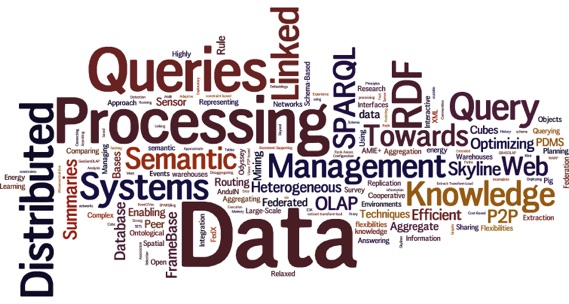
Katja Hose is a Full Professor of Data Management at TU Wien's DBAI research unit, heading the Data Management and Knowledge-Driven AI Lab. She previously held a Poul Due Jensen Foundation Professorship at Aalborg University. Her research focuses on data and knowledge engineering, including graph databases, knowledge graphs, querying, analytics, and machine learning, with interdisciplinary applications in bioscience, healthcare, and environmental assessment. Education: PhD in Computer Science (Ilmenau University of Technology, 2009), Postdoc at Max Planck Institute for Informatics (2009–2012). Academic roles include Program Co-Chair for ISWC 2024 and EDBT 2023, and editorial board membership at VLDBJ and TGDK. She leads projects like TARGET (health virtual twins) and ARMADA (data management). Research Interests: Knowledge Graphs, Semantic Web, Big Data, Machine Learning, Data Integration, and Provenance Systems. Key contributions include SHACL shape extraction, conversational data analytics, and environmental knowledge graphs. Awards include the 2025 Distinguished Meta-Reviewer Award and 2024 Manfred Paul Award. Advising and Grants: Supervised students including E. Pürmayr (Diploma Thesis 2025). Active in EU projects (TARGET, ARMADA) and grant coordination. Labs/Teams: DMKI Lab at TU Wien, collaborating with interdisciplinary teams in healthcare and environmental science.
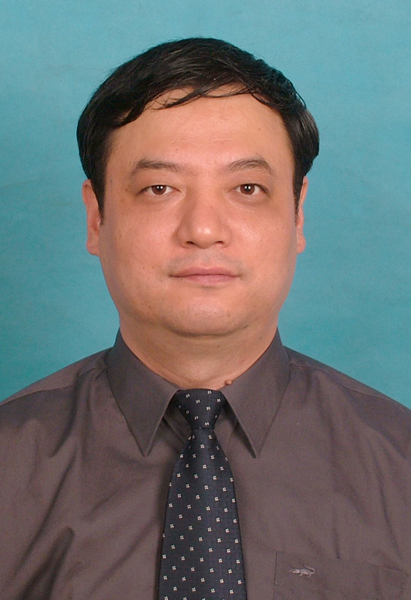
Prof. Maosong Sun is a Professor at the Department of Computer Science and Technology, Tsinghua University, China. He holds additional leadership roles including Executive Vice Dean of the Institute for Artificial Intelligence and Deputy Director of the National Engineering Laboratory for Cyberlearning and Intelligent Technology. His research focuses on natural language processing (NLP), artificial intelligence, machine learning, and computational education. He leads interdisciplinary projects in computational humanities, knowledge graphs, and MOOC platforms like XuetangX, which has over 58.8 million registered learners. Key contributions include pioneering work in Chinese NLP tools, poetry generation systems like Jiuge, and large-scale research initiatives funded by Chinese and Singaporean programs. Awards include the Tsinghua University Education Award (2019) and the National Outstanding Practitioner Award (2007). Established NLP and Computational Humanities & Social Sciences Lab (2008) Co-director of the Joint Research Center for Extreme Search (2011-present) Over 200 publications with 11,000+ citations (h-index 47)
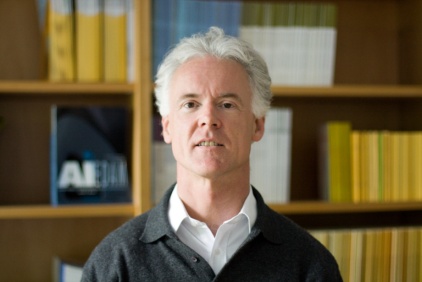
Assoc. Prof. Dr. Klaus Schöffmann is an Associate Professor at the Institute of Information Technology (ITEC) at Klagenfurt University, Austria. He holds a PhD and MSc in Computer Science, and received his habilitation (venia docendi) in 2015. His research focuses on video content understanding (including medical/surgery videos), deep learning, multimedia retrieval, and interactive multimedia. He has secured over €2M in research funding and mentored 6 PhD candidates. He chairs the Video Browser Showdown (VBS) and Lifelog Search Challenge (LSC), and is a member of IEEE/ACM. He has served as program co-chair for MMM 2021, CBMI 2021, ACM ICMR 2020, and others. Affiliations: Deputy Head of the Institute of Information Technology, Chairman of the Curricular Commission for Computer Science. Grants & Impact: €2M+ funding from FWF, KWF, and industry; Google H-index 36 (4,000+ citations). Teaching: Courses in computer vision, multimedia technologies, and app development. He actively organizes conferences including general co-chair roles for ACM ICMR 2024, CBMI2025, and ACMMM2025, and contributes as a reviewer for top journals/conferences in multimedia and medical imaging.
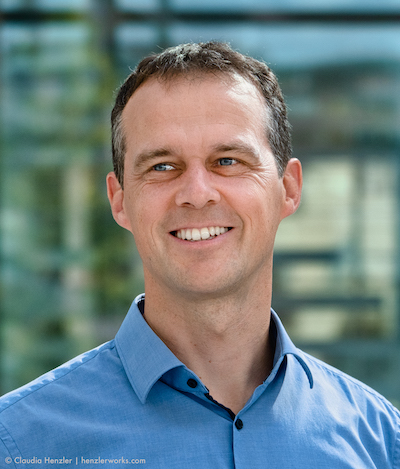
Dietmar Jannach is a Full Professor at the University of Klagenfurt, Austria, affiliated with the Institute for Artificial Intelligence and Cybersecurity where he leads the Research Group for Information Systems. His academic roles include membership in the university's Senate and Curricular Commissions for Liberal Arts and Information Management. His research spans: Core Areas : Artificial Intelligence, Recommender Systems, and Software Engineering. Methodological Focus : Algorithm reproducibility, fairness in AI, sequential recommendations, and hybrid learning models. Emerging Interests : Generative AI for group decision support, ethical recommender systems, and foundation model applications. Jannach's recent publications critically evaluate reproducibility challenges in AI research, advocate for calibrated recommendations to mitigate bias, and explore agentic paradigms in group recommender systems. He emphasizes real-world validation, with studies on deployment challenges and developer experiences in software processes. He actively contributes to academic governance and mentors through research groups, though specific student advisees are not listed. Contact via Dietmar.Jannach@aau.at .
Wolfgang Nejdl is a Full Professor of Computer Science at Leibniz Universität Hannover since 1995 and the Head of the L3S Research Center since 2001. His research focuses on Web Science, search and information retrieval, semantic web technologies, peer-to-peer infrastructures, databases, technology-enhanced learning, and artificial intelligence. Education: M.Sc. (1984) and Ph.D. (1988) in Computer Science from Vienna University of Technology. Previous Positions: Assistant Professor in Vienna (1988–1992), Associate Professor at RWTH Aachen (1992–1995), and visiting professor/researcher at Xerox PARC, Stanford, University of Illinois at Urbana-Champaign, EPFL Lausanne, and PUC Rio. His research spans foundational and applied Web technologies, including social networks, trust and reputation, Web infrastructure, digital libraries, semantic web, collaborative filtering, and privacy-preserving systems. Recent projects like PHAROS, OKKAM, LiWA, and LivingKnowledge highlight his work in audio-visual search, web entities, web archive management, and diversity bias algorithms. Wolfgang Nejdl published over 230 scientific articles and held leadership roles as General Chair for AH'08 and PC Chair for WWW'09. He co-founded iSearch IT Solutions in 2006 to commercialize digital library and web engineering research from L3S projects. Scientific Awards: Founding member and head of the L3S Research Center The L3S Research Center, with a 2009 budget of €6 million (75% third-party funding), focuses on connecting the Web to real-world entities through research in Web Science, service computing, and security. Funding comes equally from the European Union and national/industry sources.
Navid Rekab-saz is an Assistant Professor at the Institute of Computational Perception, Johannes Kepler University Linz (JKU), Austria. He is actively involved in research and teaching, offering courses such as Natural Language Processing and Natural Language Processing with Deep Learning . He maintains regular office hours and is accessible via email and a dedicated booking system for meetings. His research focuses on natural language processing , information retrieval , fairness and bias in AI , and recommender systems , with applications in humanitarian action and ethical AI. He employs deep learning and machine learning techniques to address challenges in bias mitigation, explainability, and domain adaptation. His work often bridges technical innovation with societal impact, especially in developing inclusive and fair AI systems. The recent publications of Navid Rekab-saz reflect a strong trend in debiasing strategies , parameter-efficient learning , and evaluation of societal biases in search and recommendation systems. His research spans from foundational work on word embeddings and retrieval models to applied studies in humanitarian NLP and gender bias in user queries. He frequently collaborates with a broad network of researchers and contributes to the development of datasets and benchmarks. Scientific Awards: Best Student Paper Award at ISMIR 2022 for 'Traces of Globalization in Online Music Consumption Patterns and Results of Recommendation Algorithms' Advising and Grants: Navid Rekab-saz has advised and collaborated with numerous students and researchers, many of whom are co-authors on his publications. While specific grant details are not listed in the provided text, his extensive publication record in top-tier venues suggests active involvement in funded research projects, likely supported by national or European funding bodies. He is also engaged in interdisciplinary research, particularly at the intersection of technical AI and legal or social implications. Labs and Teams: He is a core member of the Institute of Computational Perception at JKU, where he contributes to research projects in computational linguistics and AI. He collaborates closely with the team led by Prof. Markus Schedl and participates in initiatives related to music information retrieval, fairness in AI, and humanitarian applications of NLP.
Johann Eder is a full professor for Information and Communication Systems at the Department of Informatics Systems, University of Klagenfurt, Austria, and currently serves as Deputy Head of Department. He previously held positions at the Universities of Linz, Hamburg, Vienna, and Klagenfurt, and was Vice President of the Austrian Science Funds (FWF) from 2005-2013. He was also a visiting scholar at AT&T Shannon Labs, NJ. Educational Background: Diplom-Ingenieur, University of Linz Doctor of Technical Sciences, University of Linz Johann Eder's research focuses on databases, information systems, and data management for medical research, including temporal information modeling, process evolution, and workflow systems. His work spans temporal data warehousing, exception handling in workflows, and application interoperability, with a particular emphasis on privacy and quality in medical data lakes and federated biobanks. Recent publications highlight trends in temporal reasoning for business processes, medical data quality, and service composition optimization. His editorial roles include positions at ACM Transactions on Database Systems and IEEE Transactions on Knowledge and Data Engineering . He leads the Information and Communication Systems Research Group at AAU, contributing to projects like federated biobank integration and blockchain-based smart contracts.
Stefan Lengauer is a Senior Researcher at the Institute of Visual Computing (IVC), Graz University of Technology. His work bridges cultural heritage analysis and health informatics through advanced visualization techniques. PhD in Computer Science (2022), Graz University of Technology MSc in Space Sciences (2018), TU Graz BSc in Computer Science (2014-2022) and Aviation (2015), FH JOANNEUM Research focuses on visual analytics , 3D object retrieval , and cross-modal search , with applications in: Medical domains (diabetes care, health information systems) Cultural heritage (pottery analysis, fragment matching, digital restoration) Pattern recognition (geometric motifs, surface textures) Recent publications highlight trends in adaptive visualization (2024-2025) and 3D cultural heritage analysis (2021-2023). Key projects include: HEREDITARY (2024-present): HORIZON Europe project on gut-brain interaction A+CHIS (2020-present): FWF research group on adaptive health information systems CrossSAVE-CH (2019-2022): Cross-modal search in cultural heritage Scientific recognition includes: Best Challenge Entry (2024) Honorable Mention (2020) PhD distinction (2022) Mentored 12+ students in topics ranging from medical chatbots to 3D pottery analysis . Reviewing activities span journals like Springer Nature and conferences including WSCG.
Anne-Marie Kermarrec is a Senior Researcher at INRIA (France), with prior roles at Microsoft Research (UK) and the University of Rennes 1 (France). Her work focuses on decentralized systems, including gossip protocols, peer-to-peer networks, social networks, and collaborative filtering. PhD in Computer Science (Rennes, 1996) Her research spans epidemic algorithms, content-based search in large-scale networks, and scalable group communication. She pioneered gossip-based peer sampling and multicast infrastructures like Scribe and SplitStream. Her publications highlight applications in decentralized news recommendation (AllYours), network coding, and privacy-preserving social platforms (Gossple). Key article trends include gossip protocols , P2P systems , social network analysis , decentralized storage , and collaborative filtering . She received the Michel Monpetit Award (2011), ERC Starting Grant (GOSSPLE, 2008-2013), and an ICDCS Best Paper Award (2010). Michel Monpetit Award (2011) ERC PoC AllYours (2013) ERC Starting Grant GOSSPLE (2008-2013) ICDCS Best Paper Award (2010) Kermarrec led program committees for major conferences (e.g., EuroSys, Middleware) and chaired the ACM Software System Award. Her software contributions include AllYours (news recommender), GossipLib (gossip library), and GossipPeer (P2P platform maintenance).
Univ.-Prof. Dr. Pierre Sachse is a Professor of General Psychology at the University of Innsbruck, Austria, where he holds the Professorship for General Psychology within the Faculty of Psychology. His office is located at Universitätsstraße 5-7 (Grauer Bär), Room 2S20, with postal address at Universitätsstraße 15, A-6020 Innsbruck. His research spans multiple domains of cognitive and experimental psychology, with particular emphasis on visual perception, memory processes, and psychophysiological measures. Professor Sachse's research interests focus on eye movement patterns, attentional mechanisms, memory consolidation processes, and sensory processing sensitivity. His work employs sophisticated methodologies including eye tracking, psychophysiological measurements, and experimental cognitive paradigms to investigate fundamental cognitive processes. He has made significant contributions to understanding how post-learning activities affect memory retention, how gaze behavior influences social interactions, and the relationship between sensory processing sensitivity and cognitive performance. His research bridges theoretical cognitive psychology with practical applications in work psychology and human-computer interaction. Analysis of his recent publications reveals a strong trend toward interdisciplinary research combining cognitive psychology with social, business, and historical perspectives. His work increasingly integrates advanced data analysis techniques with traditional experimental methods, as evidenced by the development of tools like SPBView for eye movement analysis. There's a clear progression from basic cognitive processes to their application in real-world contexts including team performance, leadership, and interpersonal communication. His research maintains a consistent focus on individual differences, particularly how sensory processing sensitivity moderates cognitive and emotional responses. Professor Sachse has supervised numerous doctoral and postdoctoral researchers, with Martini, Maran, Furtner, Hoffmann, and Büsel appearing frequently as co-authors on his publications. His collaborative network extends across multiple institutions and disciplines, reflecting the interdisciplinary nature of his research. While specific grant information isn't detailed in the provided materials, his extensive publication record suggests successful funding for multiple research projects over his career. His research group appears to focus on experimental cognitive psychology with specialized equipment for eye tracking, psychophysiological measurements, and behavioral experiments. The group conducts both laboratory and naturalistic studies, including mobile eye tracking in real-world environments. Their work spans basic cognitive mechanisms to applied contexts in business, leadership, and social interactions.
Sareh Aghaei serves as a Research Fellow at the Institute of Management Sciences within the Faculty of Mechanical Engineering and Industrial Management at Vienna University of Technology (TU Wien), focusing on knowledge-driven solutions for industrial maintenance and healthcare systems. Her academic credentials include: Ph.D. in Computer Science from the University of Innsbruck (2023) M.Sc. in Computer Science from the University of Isfahan Dr. Aghaei's research integrates knowledge graphs with natural language processing and machine learning to develop explainable AI systems. Her work spans industrial maintenance optimization, clinical decision support, and tourism information systems, emphasizing ontology engineering and question-answering frameworks that transform unstructured data into actionable knowledge. Analysis of her 2021-2025 publications reveals a strategic shift toward domain-specific knowledge graph applications, particularly in maintenance management (2022-2025) and health informatics (2023-2024). This evolution demonstrates increasing specialization in medical knowledge representation while maintaining foundational contributions to semantic web technologies established in earlier works like her 2011 Web services architecture research. Her scholarly recognition includes: netidee Grant Call 17: Austria's award for most innovative doctoral theses Dr. Aghaei's doctoral research was funded through the netidee scholarship. Current documentation indicates no active student supervision or major grant leadership beyond her postdoctoral position at TU Wien. Within TU Wien's Institute of Management Sciences, she contributes to research bridging production engineering and artificial intelligence, developing knowledge-based systems for predictive maintenance and industrial process optimization through interdisciplinary collaboration.
Prof. Nikolaus Augsten is a Professor and Head of the Database Research Group at the Department of Computer Science, University of Salzburg. He previously held positions at the Free University of Bozen-Bolzano, Italy, and visited Technische Universität München (TUM) and Washington State University. His research focuses on data-centric applications, approximate matching techniques for complex data structures, and efficient index structures for similarity search. Education: PhD from Aalborg University (Denmark, 2008), supervised by Prof. Michael Böhlen. Master's from Adam Mickiewicz University (Poland). Research interests include hierarchical data similarity (e.g., tree structures), scalable algorithms for tree edit distance, and applications in e-government and XML search engines. His work emphasizes practical solutions for tree-to-tree matching and similarity joins. Selected Awards: ICDE 2010 Best Paper Award for TASM: Top-k Approximate Subtree Matching Advising includes PhD student Mateusz Pawlik (thesis: Efficient Computation of the Tree Edit Distance). His group develops open-source tools like the RTED algorithm and approximate tree matching libraries. Labs/Teams: Database Research Group at University of Salzburg, collaborating on projects like Tree Edit Distance reference implementations and set similarity join algorithms.
Paul Primus is a researcher at the Institute of Computational Perception, Johannes Kepler University Linz, specializing in audio processing and machine learning. His work focuses on sound event detection, acoustic scene classification, and language-based audio retrieval, with significant contributions to the DCASE (Detection and Classification of Acoustic Scenes and Events) challenges. Education: Dr. (PhD) MSc BSc Research Interests: Primus's research bridges audio signal processing and deep learning, addressing real-world challenges in machine listening. His work emphasizes device invariance, data efficiency, and transformer architectures for audio analysis. Key contributions include knowledge distillation for audio retrieval, multi-stage transformer training, and novel approaches to language-audio interaction. He actively explores low-complexity solutions suitable for embedded systems and edge deployment. Publication Trends: Primus's recent work (2023-2025) shows a clear trajectory toward multimodal audio-language systems, leveraging transformers and pretraining techniques. His publications increasingly focus on data efficiency, device generalization, and practical deployment constraints, as evidenced by his DCASE challenge submissions. The integration of metadata and cross-modal alignment represents a growing research emphasis. Activities: Adversarial Robustness in Data Augmentation (2020) Exploiting Parallel Audio Recordings to Enforce Device Invariance in CNN-based Acoustic Scene Classification (2019) Labs and Teams: Primus is a core member of the Institute of Computational Perception at JKU, which leads research in computational audio analysis. The institute maintains strong participation in international challenges like DCASE and collaborates extensively on audio transformer development and language-audio interaction systems.
University of Applied Sciences Upper AustriaAustria
Christina Ortner is a professor at the University of Applied Sciences Hagenberg , affiliated with the Digital Transformation Strength Area under the ICT - Information & Communication Technology department. Her work bridges Digital Literacy , Social Media , and Media Literacy , focusing on youth and societal implications. Research Interests: Digital media's impact on education, pandemic-related media behaviors, and equitable digital futures. Projects: Leads EU Kids Online V (2024-2026), investigates AI risks for youth, and develops open educational resources like iMooX . Awards: Otto Wittschier Science Award (2014) Margartha Lupca Foundation Science Award (2015) Her publications analyze digital skill gaps , media use during crises , and generative AI challenges . She actively contributes to academic discourse through invited talks and peer reviews.
Tova Milo is a Full Professor and Head of the Department of Computer Science at Tel Aviv University, where she has held academic roles since 1995. She specializes in database systems, XML, data integration, and crowd-sourcing. Her research bridges theoretical foundations and practical applications in data management. Education: Ph.D. in Computer Science from Hebrew University (1992). She has led major initiatives such as the ERC Advanced Investigators grant (MoDaS project) and holds ACM Fellow status. She chairs key committees like the ACM SIGACT-SIGMOD PODS executive committee and has organized over 50 international conference programs. Research interests focus on database management, XML, data-centric business processes, and leveraging crowd-sourcing for data tasks. Her work has been recognized with the ACM PODS Test-of-Time Award (2010) and an IBM Faculty Award (2008). Grants and funding include over 20 awards from the European Union, US-Israel Binational Science Foundation, and industry partners like IBM and Microsoft. She contributes to editorial boards of ACM Transactions on Database Systems and The VLDB Journal.