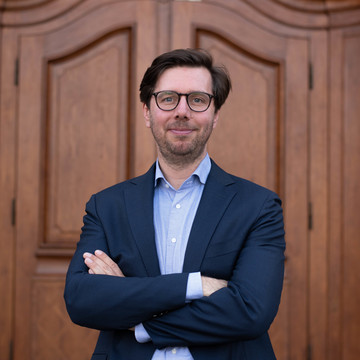
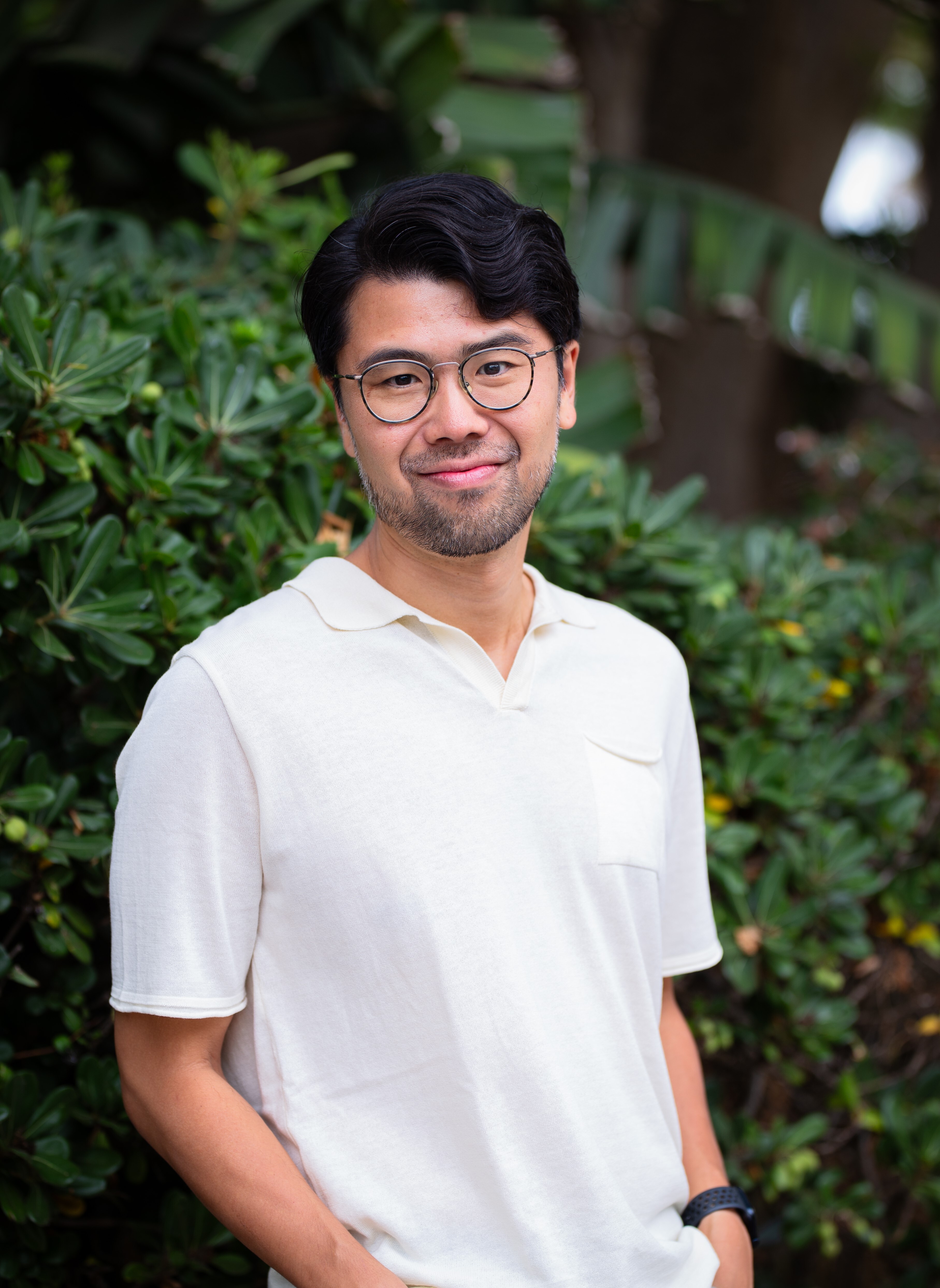
Fabio Schoen is a Professor of Operations Research at the Department of Information Engineering, University of Florence, and an Adjunct Professor of Operations Management at the Stern Business School, New York University (Florence campus). His research focuses on optimization methods, global optimization, and machine learning applications. He has authored influential textbooks such as Fondamenti di Ricerca Operativa , widely used in engineering and management courses. His editorial roles include serving as an associate editor for journals like Journal of Global Optimization and Computational Optimization and Applications . His work spans theoretical advancements in optimization algorithms and practical applications in logistics, transportation, and healthcare. Research interests include multi-objective optimization, clustering methods, and the integration of machine learning with optimization frameworks. He has contributed to solving complex problems in scheduling, vehicle detection systems, and resilient IoT networks.
Prof. Dr. Philipp Dörrenberg serves as Professor for Business Administration and Taxation at the University of Mannheim's Business School within the Department of Accounting and Taxation. His academic responsibilities span teaching across Bachelor, Master, and PhD programs, with courses including Tax Planning (TAX 660), Causal Data Science for Business Decision Making (TAX 620), and Reading Courses in Taxation Research (TAX 922/TAX 923). Based at Schloss, Ostflügel – Room O 260 in Mannheim, Germany, he maintains an active research agenda and supervises doctoral students. Dörrenberg's research focuses on taxation (both corporate and individual) and applied behavioral economics, utilizing diverse empirical methodologies including financial market data analysis, administrative tax return datasets, causal inference techniques, survey research, and laboratory/field experiments. His work examines how taxation influences business decisions, explores taxpayer behavior, and investigates the intersection of economic policy with human decision-making. He has developed frameworks for understanding tax planning opportunities that remain applicable despite changing tax legislation, emphasizing consideration of 'All Parties,' 'All Taxes,' and 'All Costs' in business decision contexts. His publication portfolio demonstrates significant scholarly impact, with recent work under review at top journals including American Economic Journal: Economic Policy, Journal of the European Economic Association, and Economic Journal. Several papers have been accepted for publication in prestigious outlets such as Journal of Political Economy Microeconomics, Management Science, and Journal of Public Economics. His research often involves collaborations with other leading scholars in the field and addresses timely topics including tax compliance, behavioral responses to taxation, and the economic implications of digital transformation. Dörrenberg leads the German Business Panel, a valuable firm-level dataset for accounting and taxation research, demonstrating his commitment to building research infrastructure. His teaching philosophy emphasizes practical application of empirical methods, as evidenced by courses that train students in statistical software (particularly R) and analysis of large business databases like Amadeus and Compustat. He has also contributed to understanding how causal inference methods can address business questions regarding cause-and-effect relationships beyond mere correlation.
Ilankaikone Senthooran is a Senior Research Fellow in the Department of Data Science & AI at Monash University. Their work focuses on applying artificial intelligence and operations research to real-world challenges, including healthcare optimization, transportation systems, energy networks, and robotics. Research interests include constraint programming, human-centered AI, feasibility restoration algorithms, and optimization under complex constraints. They have led projects on community-centric sports scheduling, AI in policy problems, and hydrogen supply networks. Notable contributions include nurse rostering with fatigue modeling, pavement upgrade scheduling, and hydrogen supply-demand network analysis. Collaborations span disciplines like robotics (swarm systems, MAV localization), infrastructure planning, and public policy. Their work aligns with UN Sustainable Development Goals related to sustainable cities and systems, and responsible innovation. Recent projects include: Community Centric Sport Fixtures (2023-2025) Fitting AI Technology to Complex Policy Problems (2022) Human-Centred Feasibility Restoration (2021-2023) Publications emphasize practical applications of AI and optimization techniques across diverse sectors.
Holmer Kok is an Associate Professor at the House of Innovation, Department of Entrepreneurship, Innovation and Technology, Stockholm School of Economics. He holds a PhD from the University of Groningen and teaches strategy, innovation, and operations management across BSc, MSc, PhD, and executive programs. His research focuses on impactful technology creation, value appropriation strategies, external knowledge sourcing (e.g., strategic alliances), and optimizing public R&D funding allocation. Education: PhD in Economics from the University of Groningen. Notable awards include the 'PhD Dissertation Award' from Groningen and a finalist position for the Academy of Management's 'TIM Best Dissertation Award'. His 2019 article won the EBS SITE Best-Paper-Award for Innovation Management. He currently serves as Associate Editor for Industry and Innovation . Research trends in his articles emphasize innovation trajectories, knowledge recombination dynamics, policy impacts on R&D, and strategic alliance performance. His work bridges theoretical insights with practical implications for firms and policymakers. Scientific Awards: PhD Dissertation Award (University of Groningen) Finalist TIM Best Dissertation Award (Academy of Management) EBS SITE Best-Paper-Award (2019) Advising/Grants: Active PhD supervisor; research on public R&D grants examines earmarking effects on performance. Labs/Teams: Part of the House of Innovation at SSE, focusing on entrepreneurship and technology innovation.
Marjolein Aerts-Veenstra serves as an Assistant Professor at the Department of Operations within the Faculty of Economics and Business at the University of Groningen. She has been a faculty member since 2020, contributing to both teaching and research in operations management and operations research. Dr. Aerts-Veenstra earned both her Master's degree (MSc EORAS) and PhD from the University of Groningen. Prior to her academic career, she gained practical experience working as a consultant for several years, which likely informs her applied research approach. Her research focuses on complex optimization problems in logistics and transportation systems, with particular expertise in vehicle routing, pickup and delivery problems, and healthcare logistics. She develops sophisticated algorithms to solve real-world operational challenges, often with applications in the Dutch context. Her work bridges theoretical operations research with practical implementation in supply chains and healthcare systems. Dr. Aerts-Veenstra's recent publications demonstrate a strong trajectory in operations research, with multiple high-impact papers published in 2024. Her research shows a clear progression from fundamental routing problems to practical applications in healthcare logistics and digital transformation of supply chains. She frequently collaborates with researchers both within Groningen and internationally, addressing multicompartment delivery systems, time-dependent routing challenges, and collaborative transport planning. While specific awards aren't detailed in the available information, her publication record in top-tier journals like Transportation Science, European Journal of Operational Research, and BMJ Open indicates recognition within her field. Her work has accumulated significant citations, particularly her 2018 paper on healthcare logistics which has received 78 Scopus citations. Dr. Aerts-Veenstra appears to be actively engaged in research collaborations across multiple domains, though specific details about current grants or advising relationships aren't provided in the available materials. Her recent work on healthcare logistics and digital transformation suggests she's addressing timely challenges in operational systems. Her research contributes to multiple Sustainable Development Goals, particularly those related to sustainable cities and communities, reflecting the practical impact of her work on transportation and logistics systems.
Andrew Clement serves as Assistant Professor of Psychology and Neuroscience at Millsaps College since fall 2023, teaching cognitive psychology and neuroscience courses with emphasis on critical thinking and real-world applications of psychological research. His educational credentials include: Ph.D. in Psychology from University of Notre Dame M.A. in Psychology from University of Notre Dame B.A. in Psychology from Denison University Clement's research investigates visual cognition through empirical analysis of attention, working memory, and perception. He examines how statistical learning shapes attentional strategies and why detecting salient targets increases cognitive effort during visual search, bridging behavioral, mental, and neurological perspectives on human thought processes. His recent publications reveal a focus on attentional control mechanisms and visual search dynamics within cognitive neuroscience, demonstrating how learned statistical regularities optimize perceptual processing while effort metrics quantify search difficulty. His scientific recognition includes: Chair’s Postdoctoral Fellowship (University of Toronto) Presidential Fellowship (University of Notre Dame) Irvin S. Wolf Award in Psychology (Denison University) Clement actively mentors undergraduate researchers throughout all research phases—from question formulation to data analysis—though specific grant funding beyond his fellowship awards remains unspecified. His student-centered lab environment focuses on visual cognition experiments without dedicated facility descriptions.
Darlene Denae Ingram is an Associate Professor in the Department of Chemistry at Kentucky Wesleyan College, where she has served since 2020 after previously holding a Visiting Assistant Professor position (2019-2020). Her academic career spans over two decades with teaching roles at multiple institutions including the University of Southern Indiana, Indiana University Southeast, and Pellissippi State Community College. Education: Ph.D. in Organic Chemistry, 2004, University of Louisville M.S. in Organic Chemistry, 2001, University of Louisville B.S. in Chemistry and Biology, 1991, Kentucky Wesleyan College Her research interests include creative problem solving in chemistry education , cosmetic formulation for skin care, and synthetic chemistry with a focus on peptide synthesis and transition metal catalysts . Her work bridges educational innovation and chemical synthesis for applications in health and environmental sustainability. Her scholarly output reflects a strong commitment to chemistry education and outreach, particularly in engaging underrepresented groups and developing online teaching methods, alongside research in peptide chemistry for therapeutic applications and catalytic methodologies in organic synthesis. Awards: Online Course Development Program (2016) EURP Grant (2014) Southeast Region Teacher of the Year award (2007) GAANN Fellowship (1993) PB&S Chemical Company Award (1989) Advising and Grants: Mentored undergraduate researchers through CHEM 499 at University of Southern Indiana Secured EURP Grant (2014) for peptide analogs research related to Alzheimer's disease She leads research projects in peptide synthesis and CO2-reducing catalysts while actively engaging in community outreach through programs like the Chemistry of Cosmetics Camp and Boy Scout Chemistry Merit Badge initiatives.
Linjie Xu is a Visiting Professor at Queen Mary University of London's School of Electronic Engineering and Computer Science. His research focuses on artificial intelligence, particularly in reinforcement learning, machine learning, and game-playing algorithms. Key interests include state abstraction techniques, multi-agent systems, Monte Carlo tree search, and adversarial defense mechanisms for large language models. His academic work spans strategy game AI, optimization algorithms, and computational game theory. Xu has contributed to advancing sample-efficient methods in multi-agent reinforcement learning and developing elastic Monte Carlo tree search frameworks. His recent publications emphasize practical applications of state abstraction and cross-domain decision transformers. No scientific awards or grants are explicitly mentioned in the provided materials. He currently holds no listed advisees or doctoral students. Contact him at linjie.xu@qmul.ac.uk for collaboration opportunities.
Prof. Dr. Udo Kruschwitz is a Full Professor of Information Science at the University of Regensburg since July 2019. Previously, he held a professorship at the School of Computer Science and Electronic Engineering, University of Essex. His research bridges Information Retrieval (IR) and Natural Language Processing (NLP), focusing on adaptive search systems, dialogue modeling, gamification for annotation, and ethical issues in search technology. Key projects: COURAGE (Volkswagen Stiftung-funded virtual companion for social media safety), SENSEI (Horizon 2020 conversational analytics), and collaborative works with industry (Signal Media, Minority Rights Group). Research themes include: IR/NLP integration Conversational systems Gamified annotation platforms (Phrase Detectives) Arabic language resources Privacy-preserving search strategies His publications span query suggestion algorithms, crowdsourcing validation techniques, and hate speech detection. He has co-organized major events like Search Solutions and GamifIR workshops, and founded the Data Science @ Regensburg meetup. Scientific awards include the 2015 InnovateUK Knowledge Transfer Partnership Project of the Year. Current teaching includes Advanced Topics in IR and Natural Language Engineering modules. Serves as Senior Academic Advisor for Signal AI and mentor for numerous doctoral candidates.
Prof. Oya Gürdal is a Professor at the Department of Information and Record Management in the Faculty of Language, History-Geography at Ankara University. Her research focuses on information management, text mining, library science, and industrial information systems with a particular emphasis on digital content analysis and citation-based evaluation methodologies. Over her career, she has advised 13 thesis students and led 7 projects. Her work bridges theoretical scholarship with practical applications in library institutional value assessment, industrial information needs analysis, and bibliometric methodologies. She contributes to Turkish academic communities through editorial roles and professional activities. Notable research outputs include studies on Ankara University's librarianship department history (2014), textile industry information needs (2013), and digital content analysis using text mining (2022). Her work frequently intersects with social sciences and cultural heritage preservation. Contact information includes emails ogurdal@ankara.edu.tr and gurdaloya@gmail.com, with an office phone extension 1682 at +90 312 310 3280.
Professor Nils Stieglitz holds a position in Strategic Management at Frankfurt School of Finance & Management with adjunct affiliation at the University of Southern Denmark. His research examines strategic decision processes, organizational learning mechanisms, and managerial risk assessment in corporate environments. Primary research domains include: Behavioral strategy formulation Organizational adaptation dynamics Executive decision-making under uncertainty
Professor Hoong Chuin Lau leads the Artificial Intelligence and Optimization research group at Singapore Management University's School of Computing and Information Systems. He earned his PhD from Tokyo Institute of Technology (1996) and teaches Computational Thinking, Algorithms, AI Planning, and Intelligent Systems. Lau's research integrates operations research with emerging computing paradigms including quantum computing and reinforcement learning. His research spans artificial intelligence, optimization algorithms, urban mobility systems, healthcare operations, and quantum computing applications. Recent work focuses on developing hybrid quantum-classical solutions for combinatorial optimization problems in logistics and resource allocation. Lau maintains active collaborations with maritime, healthcare, and urban planning sectors to implement optimization systems. He advises doctoral candidates researching quantum optimization, logistics planning, and AI-driven scheduling systems. Lau's publication record demonstrates consistent innovation in applying computational intelligence to complex real-world problems across transportation, security, and supply chain domains.
Professor Steve Alpern is a Professor of Operational Research at the ISM-Analytics (ISMA) Group, Warwick Business School (University of Warwick). He previously held a position at the London School of Economics as Professor of Mathematics and Operational Research. He earned an AB from Princeton University (Senior Thesis advised by Oskar Morgenstern) and a PhD from the Courant Institute at NYU under Peter Lax, focusing on dynamical systems. His research spans game theory applications, search theory (including rendezvous search and patrolling games), and interdisciplinary studies in animal behavior modeling. He teaches modules on Mathematical Programming and Game Theory. Research Interests: His work emphasizes game-theoretic modeling of mutual-choice problems, search games (e.g., predator-prey dynamics, caching strategies), and decision-making under uncertainty. Current projects explore patrolling networks, caching games, and jury voting models. Recent contributions include analyzing search strategies with unreliable information and applying game theory to autonomous agent behavior. Teaching: Currently instructs Mathematical Programming 2 (IB2070), Mathematical Programming I (IB1040), and Mathematical Game Theory: Combinatorial and Search Games (IB3J30). Awards: No specific prizes mentioned in the text, though some publications have received recognition (e.g., a 2025 article noted as a winner). Advising/Grants: No explicit student advisees or grant details provided in the text. Collaborations include work with colleagues like Thomas Lidbetter and Steve Gal. Labs/Teams: Active within the ISMA Group, focusing on analytics and operational research applications.
Daniel Green is Associate Professor of Physics at UC San Diego, researching cosmology's intersection with particle physics and quantum field theory. His work explores inflationary universe models, cosmic microwave background physics, and large-scale structure formation as probes of fundamental physics. Research employs quantum field theory tools to study inflation dynamics, develops analysis methods for CMB data (including delensing techniques), and formulates new cosmic probes for particle physics beyond accelerators. Key contributions include axion search strategies and primordial magnetic field constraints. Recent publications focus on CMB-S4 experiment planning, inflationary consistency conditions, and cosmological signatures of new physics phases. Theoretical frameworks emphasize analyticity, distinguishability of inflation models, and scale-dependent bias in structure formation. Leads theoretical contributions to next-generation CMB experiments and develops formal approaches to cosmological observables within the Green Group at UC San Diego.
Sukhun Kang is an Assistant Professor of Technology Management at the University of California Santa Barbara (UCSB), affiliated with the College of Engineering. His academic career is complemented by industry experience as a semiconductor engineer at Samsung Electronics and as a founder of an internet startup in 2010. He co-directs the Health Innovation Lab (HIL), a research hub focused on healthcare sectors, exploring technology adoption's societal and organizational impacts. He holds a Ph.D. in Strategy and Entrepreneurship from the London Business School, an M.S. in Entrepreneurship & Innovation and Computer Engineering from the University of Southern California, and a B.S. in Computer Engineering from the University of Illinois. His research interests span innovation and entrepreneurship, strategic management, and public policy, particularly in biopharmaceutical and high-tech industries. He investigates organizational search behaviors, exploration vs. exploitation trade-offs, and the role of technology in shaping firm strategies. His recent work addresses themes such as investor influence on startup decisions, challenges in rare disease funding, expanded access to oncology drugs, and the symbolic effects of female political leadership on workplace diversity. These studies reflect his interdisciplinary approach, bridging strategy, policy, and innovation. Awarded recognition for his dissertation—including a 2024 AOM STR/TIM Outstanding Dissertation finalist nod and a 2024 ISA Giarrantani Rising Star Award runner-up—he has also received grants from the Strategic Research Foundation and the Sir James Ball PhD Prize. His consulting and advisory roles span entrepreneurial strategy, firm ecosystem orchestration, and policy analysis. In teaching, he instructs UCSB's TMP120: Fundamentals of Business Strategy, earning high evaluations (e.g., 4.8/5 in Winter 2025). His Health Innovation Lab currently includes research assistants Ivan Lin, Carter Kulm, Kuan-I (Brian) Lu, Sean Wang, Pramukh Shankar, Janice Jiang, Amy Ji, and Pranav Hegde, who contribute skills in data analytics, econometrics, and machine learning.