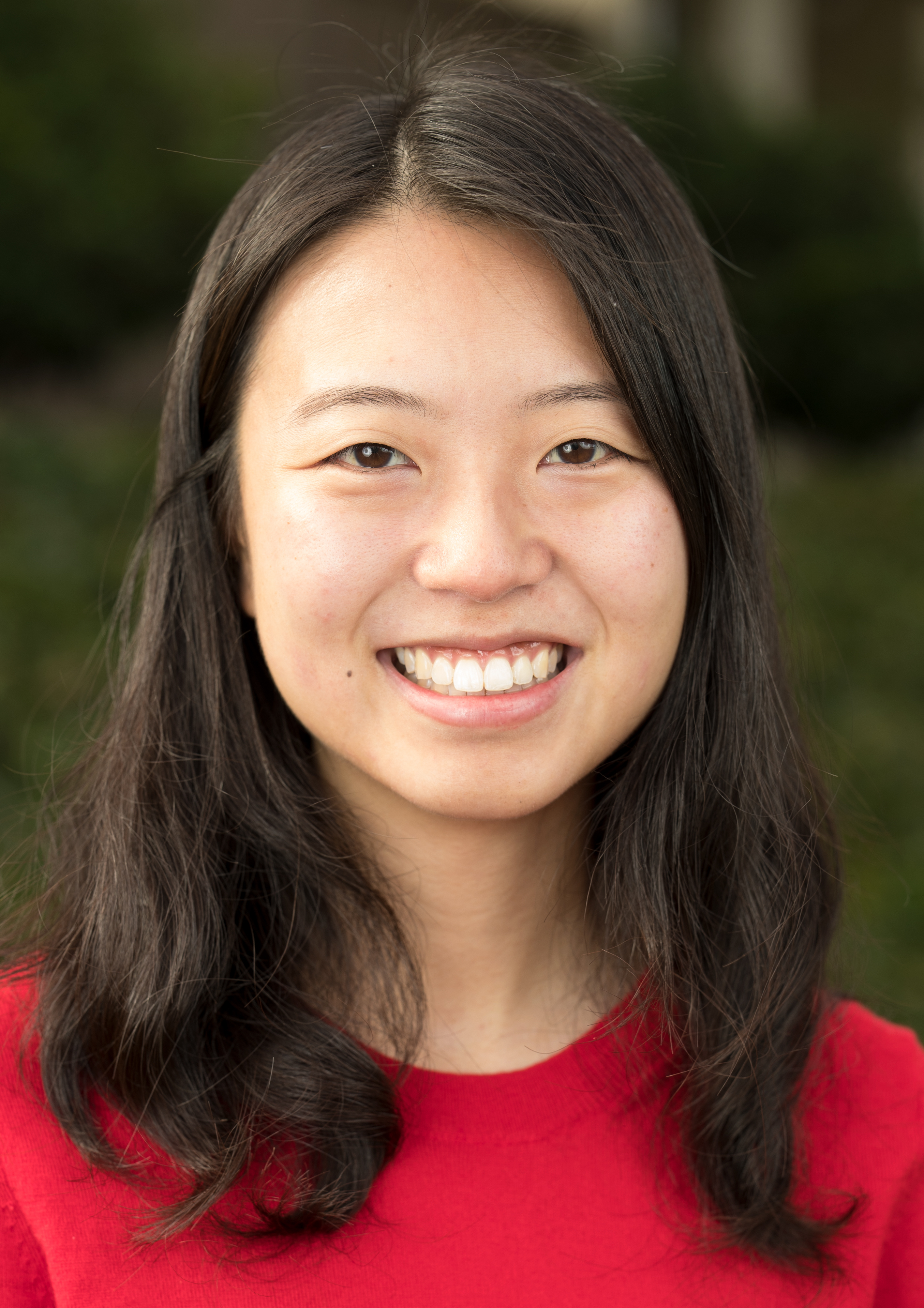
Daniel Khashabi is an Assistant Professor in the Department of Computer Science at Johns Hopkins University, with affiliations to the Center for Language and Speech Processing, Data Science and AI Institute, Institute for Assured Autonomy, and Institute for Data-Intensive Engineering and Science. His research focuses on natural language as a communication medium between humans and AI systems , aiming to enhance helpfulness, reliability, and efficiency through themes like augmentation , generality , specificity , reasoning , interpretability , and safety in high-stakes AI deployment . He leads the Intelligence Amplification Lab (IALab) , co-advising PhD students with experts like Benjamin Van Durme and Nick Andrews. Recent publications address multilingual generation barriers , feedback integration challenges , scientific literature hierarchography , and safety benchmarking , reflecting his work in NLP , machine learning , and human-AI collaboration . Notable awards include Outstanding Paper at EMNLP 2023 and Best Video at ACL 2023 .
Dimitrije D. Čvokić serves as Assistant Professor and Head of the Department of Computer and Information Sciences within the Faculty of Science and Mathematics at the University of Banja Luka. His academic leadership spans curriculum development across computer science and mathematics disciplines, with teaching responsibilities including Data Structures, Algorithms, Software Engineering, and Mobile Application Development. His research focuses on competitive hub location problems, bioinformatics tool development, and blockchain applications. Čvokić pioneered the integration of Linux-based bioinformatics tools like BioLinux and UGene into biology curricula, while developing novel optimization algorithms for Stackelberg games in logistics networks. His recent work explores large language model terminology standardization and blockchain-based property investment platforms. Analysis of his publication trends reveals a strong trajectory from theoretical optimization (2015-2020) toward applied computational solutions (2021-2024), with increasing interdisciplinary collaboration spanning public health, real estate, and linguistic computing. His work demonstrates consistent methodological rigor in operations research while adapting to emerging technological domains. As an academic advisor, Čvokić has mentored multiple thesis students including Aleksandar Vrhovac (Interval Arithmetic, 2023), Danijela Kovačević (Automatic Control Systems, 2023), and Nemanja Marjanović (CAPTCHA systems, 2022). His teaching innovations include introducing Python programming, RDKit cheminformatics tools, and BASH scripting into diverse science curricula across chemistry, biology, and geodesy programs. Čvokić established computational laboratories featuring specialized software environments including Chemistry Add-in for Word, ChemSketch, UGene, and NET Bio Extension for Excel. His cross-departmental collaborations have modernized computer science instruction across the university's technical and natural science programs through systematic integration of open-source tools and modern development frameworks.
Aniruddha Kembhavi is an Affiliate Associate Professor at the University of Washington's Computer Science & Engineering department and currently serves as Director of Science Strategy at Wayve AI in London, UK. Previously, he led computer vision efforts as Senior Director at Allen Institute for AI (AI2) in Seattle and contributed to Microsoft's Image and Video Search division. His research spans 20+ years in Computer Vision , Robotics , and Embodied AI , focusing on open-source frameworks like AI2-THOR and Molmo. His work emphasizes procedural environment generation , vision-language integration , and 3D asset creation , with large-scale datasets such as Objaverse becoming foundational in 3D computer vision. CVPR 2025 Best Paper (Honorable Mention) CVPR 2023 Best Paper Winner Neurips 2022 Outstanding Paper CoRL 2024 Outstanding Paper IROS 2024 Best Mobile Manipulation Paper ICRA 2024 Best Paper Winner Allen Institute Test Of Time Award 2020 NVIDIA Pioneer Award 2018 His recent publications analyze vision-language models , 3D generation evaluation , and diffusion architectures for unified generation. He actively contributes to community-building as Program Chair for ICCV 2025 and Senior Area Chair for CVPR 2024.
Carol Camlin, PhD, MPH is a Professor in Residence at the University of California, San Francisco (UCSF) School of Medicine with a distinguished career in global health research. She serves as Principal Investigator on multiple NIH-funded projects including Mentoring Clinical Investigators in Patient Oriented Research on Human Mobility and HIV (NIH K24MH126808), Self-Test Strategies and Linkage Incentives to Improve ART and PrEP Uptake in Men (NIH R01MH120176), and Strengthening behavioral and social science research capacity to address the evolving challenges in HIV care and prevention in Uganda (NIH D43TW011304). Her work is centered at the Institute for Global Health Sciences, with extensive field research conducted in Kenya, Uganda, and South Africa. Dr. Camlin's research focuses on the intersection of HIV/AIDS prevention, population mobility, gender dynamics, and sexual and reproductive health. Her work employs mixed-methods approaches to address critical challenges in HIV care and prevention among mobile and vulnerable populations, particularly in Sub-Saharan Africa. She has pioneered research on how migration patterns affect HIV transmission and care engagement, with particular attention to gendered dimensions of mobility. Her studies often examine innovative interventions including economic incentives for care engagement, social network-based approaches to HIV testing, and strategies to improve PrEP uptake among high-risk populations such as fishermen communities along Lake Victoria. Analysis of her recent publications (2024-2025) reveals a strong emphasis on community-engaged research addressing structural barriers to HIV care. Her work spans multiple disciplines including epidemiology, behavioral science, implementation science, and qualitative health research. Key trends include examining mobility patterns and HIV risk, developing culturally appropriate interventions for hard-to-reach populations, addressing alcohol use among people living with HIV, and improving maternal and reproductive health outcomes in the context of HIV care. Her research consistently incorporates community perspectives and emphasizes context-specific solutions to complex health challenges. Dr. Camlin has received significant recognition for her contributions to global health, including the 2023 Alum of the Year award from the UCSF Graduate Division. Her work has been featured in prominent venues including the NIMH Human Mobility & HIV Workshop and AIDSMap articles on the Owete Study findings. She maintains an active research profile with numerous publications in high-impact journals such as The Lancet, PLOS journals, and AIDS journals. Her research portfolio demonstrates substantial grant funding and collaborative leadership across international research teams. She has mentored numerous investigators through her NIH K24 award focused on mentoring clinical investigators in patient-oriented research. Her work bridges implementation science with community-based participatory research approaches, ensuring that interventions are both evidence-based and contextually appropriate. Dr. Camlin's contributions to the field extend beyond traditional research through her engagement with the Bixby Center and other global health initiatives at UCSF. Dr. Camlin leads several major research initiatives including the Owete Study, which examines HIV self-testing among fishermen communities, and the SEARCH trial extensions focused on dynamic choice HIV prevention models. Her work often involves close collaboration with local health systems and community stakeholders to ensure interventions are sustainable and responsive to local needs. She is particularly known for her work with mobile populations and her innovative approaches to addressing structural barriers to HIV prevention and care.
Jiří Švancara is a Lecturer at the Department of Theoretical Computer Science and Mathematical Logic (KTIML) within the Faculty of Mathematics and Physics at Charles University in Prague. His academic career focuses on Artificial Intelligence, particularly Multi-Agent Path Finding (MAPF), where he has established himself as a prominent researcher with numerous publications in top-tier conferences. His research interests span across Multi-Agent Path Finding , Robotics , Algorithm Design , and Constraint Satisfaction Problems . Švancara has made significant contributions to the field of MAPF, developing novel approaches for large-scale maps, temporal uncertainty handling, and efficient solving methods. His work bridges theoretical foundations with practical applications in robotics and transportation systems. Analysis of his recent publications reveals a strong focus on improving the scalability and robustness of MAPF algorithms. His research explores graph pruning techniques for large maps, handling temporal uncertainty in path execution, and comparing different objective functions for optimization. He has also investigated applications of MAPF in autonomous intersections and train routing systems, demonstrating the practical relevance of his theoretical work. Best Paper Award for 'Multi-agent Path Finding on Real Robots: First Experience with Ozobots' at IBERAMIA 2018 Švancara actively teaches multiple courses including Introduction to Artificial Intelligence, Propositional and Predicate Logic, and Algorithms and Data Structures. His teaching spans both theoretical foundations and practical implementation, with students engaging in programming assignments that reflect current AI challenges. His research collaborations are extensive, with frequent co-authorship with Roman Barták and other researchers in the field, indicating strong integration within the international AI research community. His laboratory work involves practical implementations of MAPF algorithms, including testing on real robots as evidenced by several publications describing experiments with Ozobots and other robotic platforms. This hands-on approach connects theoretical research with tangible robotic applications, providing valuable validation for his algorithmic contributions.
Dr. Geza Zsigmond is a Researcher in the UCN Physics Group at the Laboratory for Particle Physics, Paul Scherrer Institute (PSI), Switzerland. His work centers on ultracold neutron (UCN) physics and precision measurements for fundamental symmetry tests, particularly through the n2EDM experiment which aims to detect the neutron electric dipole moment with unprecedented sensitivity. As part of PSI's world-leading UCN source facility, he contributes to advancing experimental techniques for probing physics beyond the Standard Model. His research focuses on ultracold neutron production, storage, and manipulation, with emphasis on magnetic field control, systematic error correction, and dark matter searches. Key interests include neutron electric dipole moment measurements, neutron-mirror neutron oscillations, axion-like particle interactions, and precision instrumentation development. His experimental work addresses fundamental questions about CP violation, matter-antimatter asymmetry, and potential new physics through high-precision neutron-based experiments. Analysis of his recent publications reveals consistent innovation in magnetic field management for nEDM experiments, UCN source optimization using solid deuterium converters, and novel detection techniques for rare processes. His work demonstrates strong interdisciplinary connections between nuclear physics, particle physics, and precision measurement science, with recurring themes of experimental design refinement and systematic uncertainty mitigation across all publications. Dr. Zsigmond actively collaborates within large international teams, as evidenced by multi-institutional author lists across his publications. His contributions to the UCN Physics Group include critical work on the PSI Ultracold Neutron source infrastructure, magnetic shielding systems, and data analysis frameworks essential for next-generation fundamental physics measurements.
Serena Yeung is an Assistant Professor of Biomedical Data Science at Stanford University School of Medicine, with courtesy appointments in Computer Science and Electrical Engineering. She leads the Medical AI and Computer Vision Lab (MARVL) at Stanford and serves as Associate Director of Data Science for the Stanford Center for Artificial Intelligence in Medicine & Imaging (AIMI). She is also affiliated with the Stanford Clinical Excellence Research Center (CERC). Dr. Yeung's research focuses on computer vision, machine learning, and deep learning with applications to healthcare. Her work spans surgical video analysis, medical imaging AI, human motion analysis, and vision-language models for clinical applications. She has pioneered approaches for analyzing patient activities in ICU settings, surgical skill assessment, and hand hygiene monitoring in hospitals using computer vision systems. Her recent publications reveal a strong trend toward multimodal AI systems applied to medical imaging, with increasing focus on foundation models, surgical AI, medical vision-language systems, and 3D human motion analysis for clinical applications. Her work bridges computer vision fundamentals with practical healthcare implementations. Best Paper Award at NIPS 2017 Machine Learning for Health Workshop Dr. Yeung leads significant research initiatives including the Medical AI and Computer Vision Lab (MARVL) and serves as Associate Director of Data Science for the Stanford Center for Artificial Intelligence in Medicine & Imaging (AIMI). Her research has been supported by collaborations with major healthcare institutions and technology companies, focusing on translating computer vision research into clinical practice. Dr. Yeung directs the Medical AI and Computer Vision Lab (MARVL), which focuses on developing computer vision systems for healthcare applications. The lab's work spans surgical video analysis, ICU patient monitoring, medical imaging, and clinical decision support systems using state-of-the-art computer vision and deep learning techniques.
Nadia Lahrichi is a Full Professor in the Department of Mathematics and Industrial Engineering at Polytechnique Montréal, where she holds a Tier 1 Canada Research Chair in Healthcare Analytics and Logistics (HANALOG). She serves as Deputy Director at CIRRELT and is an active member of multiple research centers including IVADO (Institute for Data Valorization) and the Interuniversity Research Center on Enterprise Networks, Logistics and Transport. Her research focuses on applying operational research and mathematical modeling techniques to healthcare systems, with particular emphasis on patient flow optimization, resource allocation, scheduling, and logistics. She has developed innovative approaches that integrate machine learning with traditional optimization methods to address complex healthcare challenges. Her work spans multiple healthcare domains including radiology, chemotherapy scheduling, emergency department operations, and pandemic response systems. Professor Lahrichi's publications demonstrate consistent growth in applying advanced analytics to healthcare problems, with recent work focusing on pandemic response systems (particularly related to COVID-19 testing in Nepal), integration of machine learning with optimization techniques, and resilience planning for healthcare systems. Her research bridges theoretical operations research with practical healthcare applications, resulting in tangible improvements to healthcare delivery systems. Tier 1 Canada Research Chair in Healthcare Analytics and Logistics (HANALOG) Deputy Director at CIRRELT Member of CIRRELT (Interuniversity Research Center on Enterprise Networks, Logistics and Transport) Member of IVADO (Institute for Data Valorization) Professor Lahrichi has supervised an impressive number of graduate students throughout her career, including 5 PhD students and 34 Master's students, demonstrating her commitment to training the next generation of researchers in healthcare analytics. Her research has been supported by significant grants that have enabled large-scale projects addressing critical healthcare system challenges. She collaborates extensively with healthcare institutions to ensure her research has direct practical applications and impacts real-world healthcare delivery systems.
Peter Judmaier is a Professor and Deputy Academic Director of Media Technology (BA) at the Department of Media and Digital Technologies, Institute of Creative/Media/Technologies at Fachhochschule St. Pölten. He teaches across multiple programs including Media Technology (BA), Digital Media Technologies (MA), Digital Healthcare (MA), Creative Computing (BA), Smart Engineering (BA), Digital Design (MA), Interactive Technologies (MA), and Digital Media Production (MA). Dr. Judmaier's research focuses on Human-Computer Interaction, Usability Engineering, Serious Games, Media Technology, Digital Media, and User Experience Design. His work spans diverse applications from air traffic control systems to social inclusion platforms for elderly populations. He has extensive experience in developing and evaluating interactive systems, with particular expertise in gamification, accessibility, and user-centered design approaches. His recent publications demonstrate a strong trend toward AI applications, assistive technologies, and sustainable mobility solutions. He has been particularly active in developing platforms for air traffic control visualization, digital tools for social inclusion, and gamified approaches to waste management and sustainable behavior, showing consistent innovation in applying interactive technologies to solve real-world problems across multiple domains. Dr. Judmaier has led numerous research projects including DIHOST 2.0, Tovies, FairMedia, KüKeN, LAMORE, comfort:zone, BündelHeinz, IoT4LAC, LEWELJU, CLUE, CargoRiders series, TailoredMedia, Homeless, Smart Companion, and BRELOMATE, addressing contemporary challenges in digital media and technology. He has supervised student projects through initiatives like BRELOMATE (a platform against social isolation for elderly people), Smart Companion (an AI assistant for autonomous living), and various empowerment games. His research has been supported by grants focusing on innovative digital solutions for societal challenges, particularly in the areas of sustainable mobility, healthcare, and social inclusion. Dr. Judmaier leads research in interactive media technologies, with laboratory work focusing on virtual reality, augmented reality, multi-touch interfaces, and practical applications of emerging technologies for real-world problems across transportation, healthcare, and environmental domains.
Sabrina Brigadoi is an Assistant Professor at the University of Padua, Italy, specializing in cognitive neuroscience and neuroimaging methodologies. Her research centers on functional near-infrared spectroscopy (fNIRS) and visual short-term memory , investigating neural mechanisms of attention, working memory, and visual search. She pioneers methodological advancements including motion correction algorithms, optimal source-detector configurations, and neonatal cap design for fNIRS applications. Her work bridges technical innovation with cognitive theory to enhance non-invasive brain imaging capabilities. Recent publications (2021-2025) reveal expanding applications in smartphone-based sensor registration , PTSD biomarker discovery , and infant neurodevelopment . Her research trajectory demonstrates progression from foundational fNIRS methodology to translational studies in clinical and developmental contexts, maintaining strong emphasis on visual cognition while diversifying into psychiatric and pediatric neuroscience.
Christophe Daussy is an Assistant Professor (Maître de Conférences) at Université Sorbonne Paris Nord, where he conducts research in the Laboratoire de Physique des Lasers (LPL). His work spans precision metrology, molecular spectroscopy, and physics education, with significant contributions to the redefinition of the International System of Units, particularly regarding the Boltzmann constant and thermodynamic temperature measurements. He maintains strong connections with the Laboratoire commun de métrologie LNE-CNAM and Systèmes de Référence Temps Espace. Daussy's research focuses on high-precision laser spectroscopy, particularly for fundamental constant determinations and metrological applications. His work on the Boltzmann constant has been instrumental in the redefinition of the kelvin, and he has made significant contributions to quantum cascade laser stabilization, optical frequency dissemination, and the search for parity violation effects in chiral molecules. More recently, he has expanded his interests to include physics education research, particularly the integration of metrological concepts in biology education. His publication record shows consistent high-impact research since the early 2000s, with recent work spanning both fundamental metrology (Boltzmann constant measurements, quantum cascade laser stabilization) and science education (metrological concepts in biology courses). His work appears in prestigious journals including Physical Review Letters, Metrologia, and Nature Photonics. Daussy has also been active in developing educational tools like the LightBox kit for optics education. Daussy leads research within the Metrology, Molecules and Fundamental Tests group at LPL, focusing on precision molecular spectroscopy for fundamental physics tests and metrological applications. His laboratory work combines advanced laser techniques with precision measurement methodologies to address fundamental questions in physics while maintaining practical applications in metrology.
Dr. Alice Towler is a Casual Academic at the School of Psychology within the University of New South Wales (UNSW). Her research focuses on improving face identification accuracy and efficiency in forensic settings, including the study of super-recognition abilities, development of evidence-based facial comparison methods, and optimization of human-software collaboration in identity verification. Her primary research interests include: Forensic face identification techniques and error reduction Predictors of superior face recognition ability (super-recognition) Development of evidence-based training protocols for facial image comparison Integration of human expertise with facial recognition software systems Identity fraud detection in critical applications like passport verification Dr. Towler collaborates extensively with the UNSW Forensic Psychology Lab under Dr. David White and Prof. Richard Kemp. She maintains an active partnership with the Australian Passport Office to enhance identity fraud detection capabilities. As a member of the Evidence-Based Forensics Initiative, she advocates for scientifically validated practices in forensic sciences through interdisciplinary collaboration between legal professionals, forensic scientists, and cognitive researchers. Her recent publications demonstrate consistent focus on face recognition mechanisms, perceptual expertise development, and forensic applications. Research themes include optimization of training protocols, individual differences in recognition abilities, validation of forensic methodologies, and real-world implementation challenges.
Professor Dan Tovey is affiliated with the School of Mathematical and Physical Sciences at the University of Sheffield. His research focuses on Supersymmetry searches , Dark Matter , and ATLAS detector upgrades at the Large Hadron Collider (LHC). Role: Professor of Particle Physics Institution: University of Sheffield Research: ATLAS experiment, Higgs boson properties, detector performance Research Interests Dan Tovey leads studies on supersymmetry and dark matter using the ATLAS detector. His work spans Higgs boson decays , top quark interactions , and detector upgrades for the High-Luminosity LHC. He investigates non-standard model phenomena like long-lived particles and exotic Higgs decays . Publications (2023–2025) Recent articles highlight his contributions to Higgs boson mass measurements , top quark production , and ATLAS trigger system optimizations . Key trends include searches for new physics , precision electroweak tests , and detector simulations . Scientific Awards ERC Advanced Grant No. 694202 for 'LHCDMTOP: Novel Dark Matter Searches with Top Quarks'
Dongkuan Xu is an Assistant Professor in the Department of Computer Science at North Carolina State University, leading the Generative Intelligent Computing (GIC) Lab. His research spans Artificial Intelligence , focusing on scalable, efficient, and reliable AI systems for large language models, diffusion models, and generative frameworks. Education Ph.D. in Computer Science, Pennsylvania State University (2022) M.S. in Optimization and Data Mining, University of Chinese Academy of Sciences (2017) B.E. in Information Management and System, Renmin University of China (2014) His research explores test-time adaptation, computational efficiency, and trustworthy AI through uncertainty-aware learning and robust generalization. Applications include Education , Robotics , Agriculture , Networking , and Healthcare . Recent work emphasizes hardware-algorithm co-design and domain-specific AI platforms like Synthora and Gentopia. His publications from 2024–2025 highlight advancements in Vision Transformers , Diffusion Models , Edge Computing , and Trustworthy AI , with grants from NVIDIA , Microsoft , and the National Science Foundation . Awards include the AAAI Best Demonstration Award (2025), NVIDIA Academic Grant (2025), and the Carla Savage Award (2024). He actively mentors undergraduate researchers and co-chairs workshops at top venues like DAC , CVPR , and KDD , aiming to democratize AI access and enhance its reliability across real-world domains.
Yongjoo Park is an Assistant Professor in the Department of Computer Science at the University of Illinois Urbana-Champaign, affiliated with the Siebel School of Computing and Data Science and the Data and Information Systems (DAIS) Research Lab. He co-founded and serves as Chief Scientist at Keebo, Inc., a startup developing automated data warehouse optimization platforms. Ph.D. in Computer Science and Engineering, University of Michigan, Ann Arbor (2017) M.S. in Computer Science, University of Michigan, Ann Arbor (2013) B.S. in Electrical Engineering, Seoul National University (2009) His research focuses on building intelligent data-intensive systems that integrate statistical and AI techniques for improved reliability, scalability, and usability in data science workflows. Key projects include Kishu (undoable Jupyter notebooks), AirIndex (automated index optimization), and CARE (causal-reasoning data systems). His work bridges database systems and machine learning, emphasizing end-to-end optimization for structured/unstructured data processing. Recent publications highlight trends in computational notebook checkpointing, index tuning through data-aware storage, and AI-driven database learning. His projects have been recognized at top venues including SIGMOD, VLDB, and CHI, with a focus on practical implementations for real-world data challenges. Scientific Awards: NSF CAREER Award (2025) Best Demo Award at SIGMOD 2025 ACM SIGMOD Jim Gray Dissertation Award Runner-up (2018) Engineering Council Outstanding Advising Award (2021) Teaching Excellence Awards (2023, 2024) Yongjoo advises multiple PhD and MS students, including Supawit Chockchowwat (joining CMKL University in Thailand) and Nikhil Sheoran (now at Databricks). His research group maintains strong industry collaborations and open-sources systems like Kishu and VerdictDB through their GitHub organization .