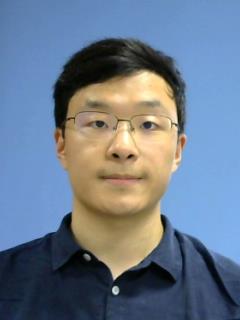
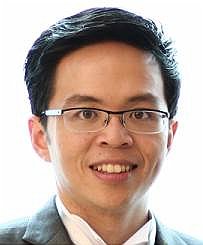
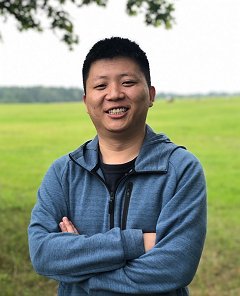
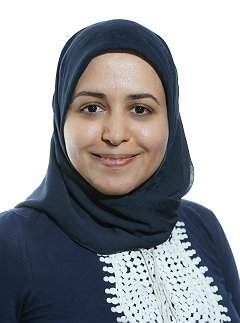
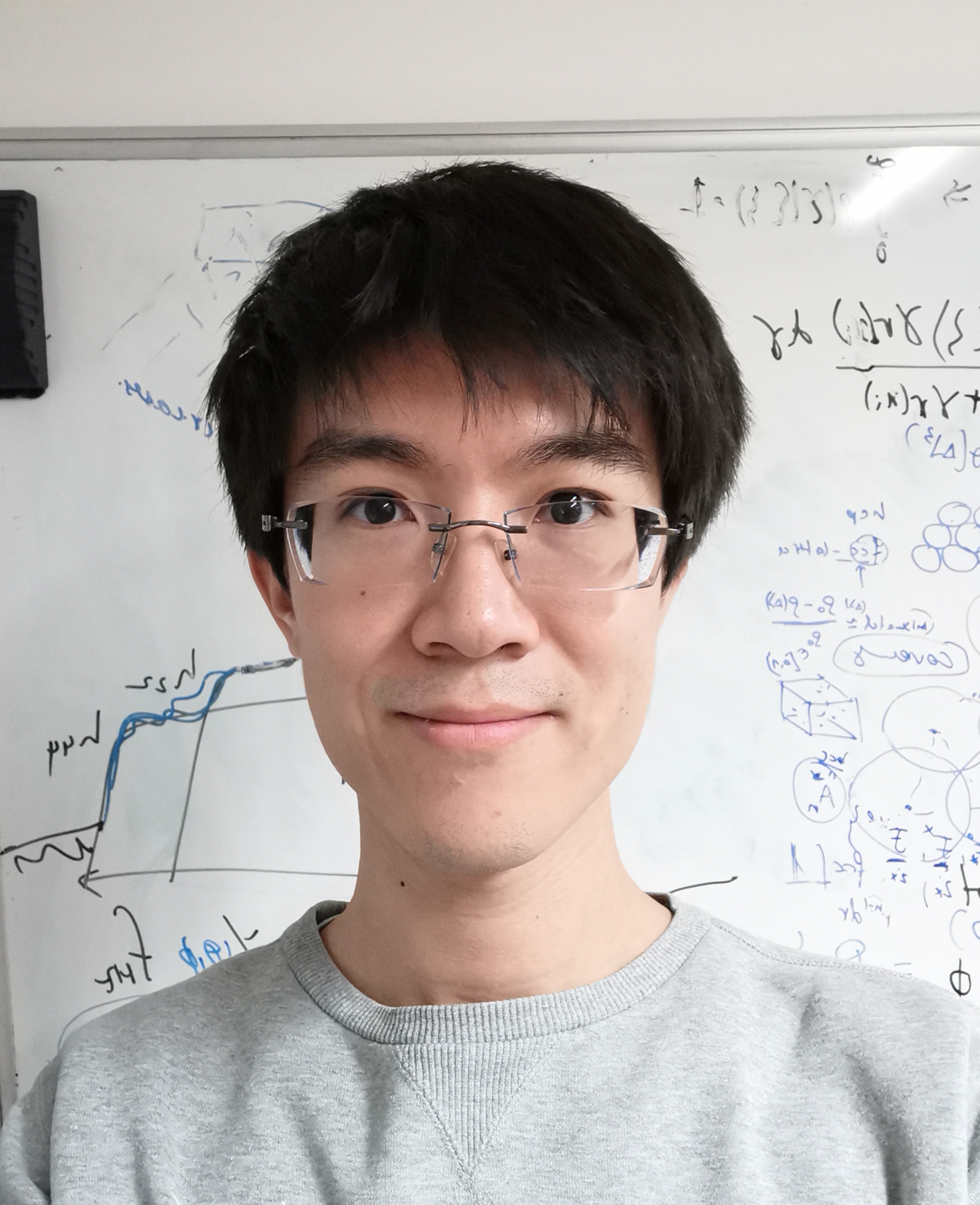
Zhongxin Liu is an Assistant Professor at the College of Computer Science and Technology , Zhejiang University , China. He earned his Ph.D. from the same institution in 2021. His research focuses on Intelligent Software Engineering (AI4SE) , leveraging software "big data" to improve code understanding, generation, and security through machine learning techniques. Published in top-tier venues: TSE, TOSEM, ICSE, FSE, ASE, ISSTA Active in academic service: Reviewer for TSE, TOSEM, ASEJ, etc. Visiting Professor at University of Stuttgart (2024-2025) His recent work explores Large Language Models (LLMs) for code intelligence, security hardening, and vulnerability detection. Papers emphasize cross-domain applications, zero-shot learning, and API/code dependency analysis. Scientific awards include: ACM SIGSOFT Distinguished Paper Awards (ASE 2018, 2019, 2020; ISSTA 2025) Zhejiang University Qizhen Scholar (2021) CCF TCSE Doctoral Dissertation Award (2023) Recruiting undergraduate interns, graduate students (MS/Ph.D.), and postdocs for code intelligence research. Contact: liu_zx@zju.edu.cn .
Claire Le Goues is a Professor of Computer Science at Carnegie Mellon University, primarily affiliated with the Software and Societal Systems Department (S3D) within the School of Computer Science (SCS). She serves as the Associate Department Head for Faculty within S3D and leads the squaresLab research group. Le Goues also co-directs the REUSE@CMU summer program and teaches software engineering and program analysis at undergraduate, master's, and PhD levels. Her research spans software engineering and programming languages, with a particular focus on how to construct, maintain, evolve, improve/debug, and assure high-quality software systems. Le Goues has made significant contributions to automated program repair, program analysis, and defect detection. Her work often bridges theoretical foundations with practical applications, addressing real-world challenges in software development and maintenance. Le Goues' recent publications demonstrate a clear trend toward integrating large language models and generative AI with traditional software engineering techniques. Her research examines how these technologies can enhance program repair (BatFix, AdverIntent-Agent), vulnerability detection (Interpretable Vulnerability Detection Reports), and testing (LWDIFF for WebAssembly). This represents an evolution from her earlier foundational work in program repair (GenProg) toward leveraging contemporary AI advancements. She has mentored numerous students through her squaresLab research group and has been instrumental in developing educational programs that prepare the next generation of software engineers. Le Goues is also known for her advocacy for double-blind review processes in academic conferences, having implemented this approach when co-chairing the Symposium for Search-Based Software Engineering in 2014.
Dr. Antonio Mastropaolo is an Assistant Professor of Computer Science at William & Mary, USA. His research lies at the intersection of Artificial Intelligence, Natural Language Processing, and Software Engineering, with a strong emphasis on the automation of SE-related practices. He promotes explainability, efficiency, and optimization from both model-centric and output-centric perspectives. His research interests focus on the reliability and efficiency of AI systems for software engineering. He investigates robustness and adaptability of foundation models like GitHub Copilot, as well as documentation and summarization of code components. His work addresses critical challenges in AI-driven software development including transparency, scalability, and developer productivity. His publication portfolio shows a strong trend toward neurosymbolic approaches that combine neural learning with symbolic reasoning. Recent articles explore quantization of large code models, code summarization optimization, and resource-efficient AI for software engineering. His work spans both theoretical foundations and practical applications, with emphasis on empirical validation of AI techniques in real-world SE contexts. Distinguished Reviewer Award for service on FSE'25 program committees Distinguished Reviewer Award at ASE 2024 Distinguished Paper Award for 'Unveiling ChatGPT's Usage in Open Source Projects' at MSR'24 Distinguished Paper Award for 'How do Hugging Face Models Document Datasets, Bias, and Licenses?' at ICPC'24 Dr. Mastropaolo advises PhD students, with Saima recently starting her PhD journey with a publication in FORGE 2025. He received an NSF Grant (#2451058) in April 2025 for research on efficient and responsible AI for software engineering. His service includes committee membership for major conferences including ASE, ICSE, ICSME, and FSE across multiple tracks including Research Papers, NIER, and Tool Demonstrations.
Oliver G. Ernst is a Professor of Numerical Analysis at Technische Universität Chemnitz . His research focuses on Numerical Analysis , Uncertainty Quantification , and Inverse Problems , with applications in Thermo-Hydro-Mechanical (THM) processes , Electromagnetics , and Stochastic Partial Differential Equations . He is associated with the Numerical Analysis group at TU Chemnitz. Key Research Areas : Efficient numerical methods for PDEs Krylov subspace techniques Stochastic finite element methods Multi-physics modeling Geoscientific applications Recent Publications (2025-2010): THM simulations under uncertainty Neural network PDE solvers Bayesian inversion frameworks Rational Krylov algorithms Deflated restarting strategies Collaborations : TU Bergakademie Freiberg University of Manchester Technical University of Munich University of Maryland University of Geneva Software Development : Contributor to OpenGeoSys platform Developer of FEMALY MATLAB library Academic Recognition : h-index 32, i10-index 66, with over 4423 citations since 2020.
Siegfried Nijssen is an Assistant Professor of Data Mining and Artificial Intelligence at the Catholic University of Louvain (UCLouvain) in Belgium, working within the ICTEAM research institute's Artificial Intelligence and Algorithms group. He has been at UCLouvain since 2016, previously serving as an Assistant Professor at University Leiden (2012-2016) and completing postdoctoral work at KU Leuven (2006-2015). He earned his PhD in Computer Science from University Leiden in 2006. His research focuses on making data analysis simpler through intersections between pattern mining, exploratory data analysis, and programming paradigms in Artificial Intelligence, particularly constraint programming and probabilistic programming. He has developed techniques for analyzing diverse data types including graphs, networks, and multi-relational data. His work bridges theoretical foundations with practical applications in decision tree learning, probabilistic networks, and source code analysis. Nijssen's recent publications demonstrate a strong focus on optimal decision trees, constraint-based pattern mining, and applications in bioinformatics and education. His research shows consistent evolution from foundational graph mining work (including the Gaston algorithm developed in 2004) to current work integrating machine learning with constraint programming for interpretable AI solutions. As an educator, he teaches courses including Mining Patterns in Data, Databases, and Artificial Intelligence and Machine Learning seminars at UCLouvain. He has advised numerous PhD students and postdocs, primarily in collaboration with Pierre Schaus, with former students like Tias Guns now holding professorships.
Xiaoyuan Xie is a Professor at the School of Computer Science, Wuhan University, where he leads a research group focused on software engineering, particularly in software testing, fault localization, and the intersection of AI and software engineering. His work bridges theoretical foundations with practical applications in software quality assurance and development processes. His research interests span software testing, fault localization, program slicing and analysis, debugging techniques, search-based software engineering, evolutionary computing, and machine learning applications in software engineering. He has pioneered work in metamorphic testing, particularly for AI systems, and developed innovative approaches for fault localization that consider exception trigger streams and parallel debugging contexts. Xie's publication trend shows a strong focus on applying AI techniques to software engineering problems, with recent work emphasizing metamorphic testing for AI systems, code search, debugging assistance, and fault localization enhanced by deep learning. His research bridges traditional software engineering with modern AI techniques, creating novel solutions for testing and debugging complex software systems. ICST 2025 Most Influential 10-years Journal First Paper Award Multiple ACM SIGSOFT Distinguished Paper Awards (2024, 2022, 2021) CCF Open Source Innovation Competition First Prize 2024 CCF NASAC Software Innovation Award for Young Researchers 2021 ACM SIGEVO HUMIES 2017 Silver Medal Luojia Young Scholar, Wuhan University 2016 Professor Xie has supervised numerous PhD and Master's students who have gone on to prestigious positions at companies like Alibaba, Tencent, and ByteDance, as well as academic institutions including Yale University and the Hong Kong University of Science and Technology. His research is supported by multiple national grants, including NSFC重点项目 (key projects), 国家重点研发计划 (key R&D programs), and the Research Fund for International Excellent Young Scientists from NSFC.
David Lo is the OUB Chair Professor of Computer Science and the founding Director of the Center for Research in Intelligent Software Engineering (RISE) at Singapore Management University. He has held significant leadership roles including General Chair of MSR'22 and ASE'16, and Program Committee Co-Chair for ASE'20, FSE'24, and ICSE'25. Lo has championed the field of AI for Software Engineering (AI4SE) since the mid-2000s, demonstrating how data mining, machine learning, information retrieval, natural language processing, and search-based algorithms can transform software engineering data into actionable insights and automation. His research spans Mining Software Repositories (MSR), large language models for code, software testing, smart contract analysis, and developer tooling. His recent publications reveal a strong focus on the intersection of large language models and software engineering, with particular attention to code generation, evaluation, documentation, and the practical implications of AI tools for developers. His work increasingly addresses economic efficiency, privacy concerns, and human factors in AI-assisted development. Two Test-of-Time awards Eleven ACM SIGSOFT/IEEE TCSE Distinguished Paper awards ACM Fellow IEEE Fellow ASE Fellow National Research Foundation Investigator (Senior Fellow) Lo has supervised numerous students and collaborated extensively across the software engineering community. His work on Mining Software Repositories has led to practical tools and insights that have shaped the field. He regularly contributes to major conferences and has served in leadership roles across ASE, ICSE, and FSE communities. As founding Director of the Center for Research in Intelligent Software Engineering (RISE) at SMU, Lo leads a research group focused on advancing AI techniques for software engineering problems, with emphasis on practical applications that address real developer pain points.
Xiaofei Xie is an Assistant Professor in the School of Computing and Information Systems at Singapore Management University (SMU), where he has been employed since 2022. Prior to this position, he was a postdoctoral researcher at Nanyang Technological University in Singapore from 2018 to 2021. His research primarily focuses on program analysis, software testing, vulnerability detection, and quality assurance of AI systems. SMU is ranked No. 9 (No. 5 in Asia) in the Software Engineering category according to CSRankings. Dr. Xie's research interests span multiple critical areas in software engineering and AI systems. His work on program analysis includes detecting non-termination bugs and developing practical methods like EndWatch for real-world software. In software testing, he has made significant contributions to deep learning systems testing, autonomous driving systems testing, and smart contract security. His research on vulnerability detection encompasses various aspects of AI security, including backdoor attacks, adversarial examples, and security testing for web-based deep learning frameworks. His quality assurance work for AI systems includes developing metrics for robustness evaluation and creating testing methodologies for diverse AI applications. Dr. Xie's publication record shows a strong trend toward integrating large language models with traditional software engineering techniques. His recent work demonstrates increasing focus on testing autonomous systems, securing AI models, and applying advanced machine learning techniques to traditional software engineering problems. The research spans multiple domains including deep learning frameworks, smart contracts, autonomous driving systems, and federated learning environments. Among his notable achievements are multiple ACM SIGSOFT Distinguished Paper Awards (ASE 2019, ASE 2023, ISSTA 2022), the ACM Tianjin Doctoral Dissertation Award 2019, and the Best Paper Award at APSEC 2020. His work has been accepted to top-tier conferences including ICSE, FSE, ASE, ISSTA, and security venues like USENIX Security. Dr. Xie actively serves the academic community as a PC co-chair for ICECCS 2025 and as a program committee member for numerous prestigious conferences including ICSE, FSE, ASE, ISSTA, and AAAI. He has also organized workshops such as the Workshop on AI and Software Testing/Analysis (AISTA) and served as Guest Editor for special issues on AI security. His service demonstrates leadership in bridging software engineering with AI and security research communities.
Alessio Gambi is a Researcher at the Austrian Institute of Technology (AIT) within the Security & Communication Technologies department, specializing in software engineering for autonomous systems. His current work focuses on testing methodologies for self-driving cars, self-adaptive systems, and cloud environments. His research interests center on Software Testing for Autonomous Vehicles , where he develops novel techniques for scenario generation, safety validation, and uncertainty management. Key areas include search-based procedural content generation, simulation-based testing, and the integration of large language models for test learning. His work bridges theoretical advances with practical tools like Flexcrash and TEASER for real-world validation. Analysis of his recent publications (2023-2025) reveals a strong trend toward autonomous vehicle testing with increasing incorporation of AI techniques. Approximately 60% of his work addresses self-driving car validation, 25% focuses on general software testing methodologies, and 15% explores AI/LLM applications in testing. His subfield specialization shows consistent emphasis on critical scenario generation, mixed-traffic simulation, and safety monitoring. Gambi actively contributes to the software engineering community through program committee roles at major conferences including ASE (2023-2025), ICSE (2024-2026), ISSTA (2021-2025), and ESEC/FSE. He has served as session chair, workshop organizer, and track committee member across these venues, demonstrating leadership in software testing research. His professional activities include developing open-source testing tools (visible on GitHub), teaching engagements like the Database Systems course at AIT (2024), and industry collaborations through AIT's research infrastructure. Current projects focus on predictive safety monitoring and uncertainty management for automated driving systems.
Zhi Jin is a Professor in the Department of Computer Science and Technology at Peking University, where he has been employed since 2009. Previously, he served as a professor at the Academy of Mathematics and System Sciences, Chinese Academy of Sciences from 1994-2009. He received his BS from Zhejiang University in 1984 and MS/PhD from National University of Defense Technology in 1984 and 1992 respectively. He progressed from assistant professor (1992) to associate professor (1995) to full professor (2001). His research focuses on knowledge engineering and software engineering, with special interests in knowledge graphs, self-adaptive systems, and deep learning applications. Current research directions include Self-Adaptive Software in Human-Cyber-Physical Systems, Crowd-based Requirements Engineering, and Learning from both Natural Language and Programming Language. His work bridges theoretical knowledge engineering with practical software development challenges. His recent publications demonstrate a strong trend toward applying large language models and AI techniques to traditional software engineering problems, particularly in requirements engineering, code generation, and vulnerability detection. The articles span multiple high-impact venues including ASE, ICSE, and RE, with significant focus on aerospace applications and multi-agent collaboration approaches. Scientific honors include: Winner of National Science Fund for Distinguished Young Scholars (2006) Project 973 project lead scientist (2014) Member of Discipline Appraisal Group of the Academic Degree Commission (2015) Multiple ACM Distinguished Paper Awards He serves in numerous editorial roles including Associate Editor for IEEE Transactions on Software Engineering (2018-present) and IEEE Transactions on Reliability (2019-present). He is also an Editorial Board Member for Empirical Software Engineering and Requirements Engineering Journal, and holds leadership positions in the China Computer Federation. His extensive conference service includes PC membership for ICSE, FSE, RE, and other major software engineering venues.
Reid Holmes is a Professor in the Software Practices Lab at the University of British Columbia's Department of Computer Science, Faculty of Science. With over 15 years of academic experience, he has progressed from Assistant Professor at the University of Waterloo (2010-2015) to Associate Professor (2015-2022) and now full Professor (2022-present) at UBC. His research spans multiple dimensions of software engineering with a strong emphasis on the human aspects of development. Dr. Holmes' research interests focus on understanding the problems software engineers encounter when creating and evolving software systems. His work examines software testing and validation, source code reuse, code search, context-sensitive example location, API understanding, speculative analysis, code review, and team awareness. He believes that by better understanding how people create, explore, evolve, and reason about software systems, we can enhance developers' effectiveness and improve software quality. His research is characterized by its practical application to real-world software development challenges. His recent publications demonstrate a consistent focus on improving developer productivity through better tools and understanding of developer behavior. The publications reveal a trajectory from traditional software engineering topics toward newer areas involving AI-assisted development, with particular attention to how generative AI affects workflow and collaboration. His work consistently bridges theoretical software engineering concepts with practical developer experience considerations. ACM SIGSOFT Distinguished Paper Award (multiple times) FSE 2024 Most Impactful Paper Award 2024 ICSE Most Influential Paper Award Winner of the 2008 MSR Mining Challenge As an educator and mentor, Dr. Holmes has supervised numerous graduate students who have gone on to successful careers in academia and industry. He has served on program committees for major software engineering conferences including ICSE, FSE, and MSR, and has been an Associate Editor for TSE since 2016. His work on developer tools like CodeShovel, Devy, and Baker demonstrates his commitment to creating practical solutions that address real developer pain points.
Reyhaneh Jabbarvand is an Assistant Professor in the Department of Computer Science at the University of Illinois at Urbana-Champaign, where she leads the Intelligent CAT Lab. Her research focuses on improving software quality, reliability, and maintenance through neuro-symbolic approaches that combine AI techniques with formal methods. Her research interests span Neural Program Analysis, Software Testing (with emphasis on mobile apps and autonomous software), Bug Localization, and Applied Optimization for Software Analysis. She has made significant contributions to the fields of energy testing for Android applications, neuro-symbolic approaches for code analysis, and large language models for software engineering tasks. Dr. Jabbarvand's recent publications reveal strong trends in applying machine learning to software engineering problems, particularly using neuro-symbolic methods to bridge the gap between deep learning and formal program analysis. Her work on code translation, test flakiness, and test oracle generation demonstrates her focus on practical applications of AI in software development workflows. Google PhD Fellowship in Programming Technology and Software Engineering Rising Star in EECS NSF CAREER Award Dr. Jabbarvand has received research funding from multiple sources including NSF, IBM Research, and C3.ai. She actively mentors students through her Intelligent CAT Lab and has served on numerous program committees for major software engineering conferences including ICSE, FSE, and ISSTA. She teaches courses on Advanced Topics in Software Engineering, ML for Code, and Software Engineering I. Her lab focuses on neuro-symbolic approaches to software engineering problems, bringing together PhD, undergraduate, and high school students to tackle challenges in AI-assisted software development and testing.
Prof. Dr. Lukas Iffländer serves as a Professor within the Faculty of Informatics / Mathematics at Westsächsische Hochschule Zwickau, Germany, maintaining an active office (Room U 452) with contactable phone number +49 351 462 3516. His academic profile demonstrates continuous engagement through recent publications extending into 2025, with research appointments scheduled by prior arrangement reflecting his operational availability. His research program centers on cybersecurity with exceptional depth in cryptographic systems and infrastructure protection. Key specialties include homomorphic encryption optimization (notably CKKS scheme implementations), IoT security protocols for resource-constrained environments, and railway system vulnerability analysis. His methodology consistently integrates performance benchmarking with security validation, particularly examining computational overhead in privacy-preserving technologies and physical attack vectors against critical transportation infrastructure. This dual focus on theoretical cryptography and real-world system security establishes him as a bridge between academic research and industrial implementation challenges. Analysis of his 15 most recent publications (2023-2025) reveals three dominant research trajectories: (1) Cryptographic performance evaluation, where he pioneers benchmarking frameworks for homomorphic and attribute-based encryption in practical scenarios like linear regression; (2) Railway security innovation, addressing digital interlocking systems and physical attack mitigation through technology forecasting; (3) IoT security optimization, developing multi-objective recommendation systems for group communication protocols. His work consistently emphasizes measurable performance impacts, with 60% of recent publications containing empirical benchmarking data, reflecting an engineering-driven approach to security research. No scientific awards were documented in the source materials. Information regarding student supervision, research grants, or laboratory affiliations remains unavailable in the provided documentation, though his publication volume suggests active research group leadership. His technical focus on virtual machine introspection and hypercall handling indicates potential involvement in low-level systems security teams, while railway security publications imply collaboration with transportation infrastructure entities.
Yifan Wang is a Postdoc/Research Fellow at the Department of Astrophysical and Cosmological Relativity , Max Planck Institute for Gravitational Physics (Albert Einstein Institute) in Potsdam, Germany. He obtained his B.S. (2015) from the University of Science and Technology of China and his Ph.D. (2019) from the Chinese University of Hong Kong. From 2019-2023, he worked at the Observational Relativity and Cosmology department in AEI Hannover. Research Focus : Data analysis of gravitational waves from compact binary coalescence, multi-messenger astronomy, testing general relativity, and black hole ringdown phenomena. Publications : His recent work (2025-2019) spans gravitational wave detection, compact binary systems (black holes/neutron stars), waveform modeling, multi-messenger correlations (gamma-ray bursts, FRBs), and tests of general relativity using open catalogs. Key subfields include eccentric binary black holes, quasi-normal modes, parity symmetry, and subsolar mass binaries. He collaborates with Alexander H. Nitz, Collin D. Capano, and others, contributing to LIGO/Virgo collaborations and catalogs like 4-OGC. Tools & Collaborations : Actively develops Python-based gravitational wave analysis tools (e.g., pycbc, pycbc-plugin-seobnr) and contributes to open-source projects. His GitHub activity reflects commits, pull requests, and code reviews in gravitational wave software repositories.
Scott Grissom is a Professor at Grand Valley State University’s College of Engineering and Computing , specifically within the Computer Science and Information Systems Department . His work focuses on transforming traditional lecture-based computer science education into interactive, student-centered environments through pedagogies like peer instruction , active learning , and collaborative learning . He has led multi-institutional studies on instructional practices and contributed to national discussions on evidence-based teaching methods in CS classrooms. Dr. Grissom’s research interests revolve around enhancing student engagement via algorithm visualization, digital libraries, and interactive pedagogical tools . His studies on peer instruction (e.g., “A Multi-institutional Study...”) and error analysis in recursive algorithms have significantly influenced CS2 curriculum design. He also explores the integration of mobile application development (e.g., iPhone curriculum adaptations) into traditional CS topics. His publications span journals like ACM Transactions on Computing Education and SIGCSE proceedings , with a focus on student-centered learning , instructional practices , and NSF grant opportunities . He has conducted workshops on funding competitive NSF proposals , emphasizing systematic strategies for converting ideas into successful grants. His collaborations include renowned figures like Renée McCauley , Laurie Murphy , and Leo Porter .