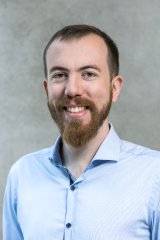
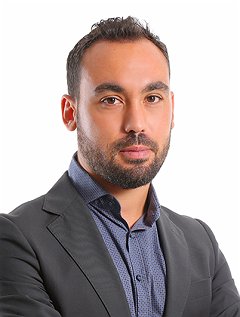
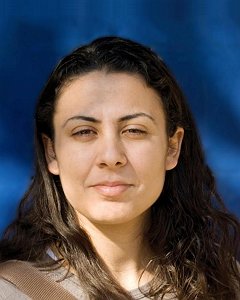
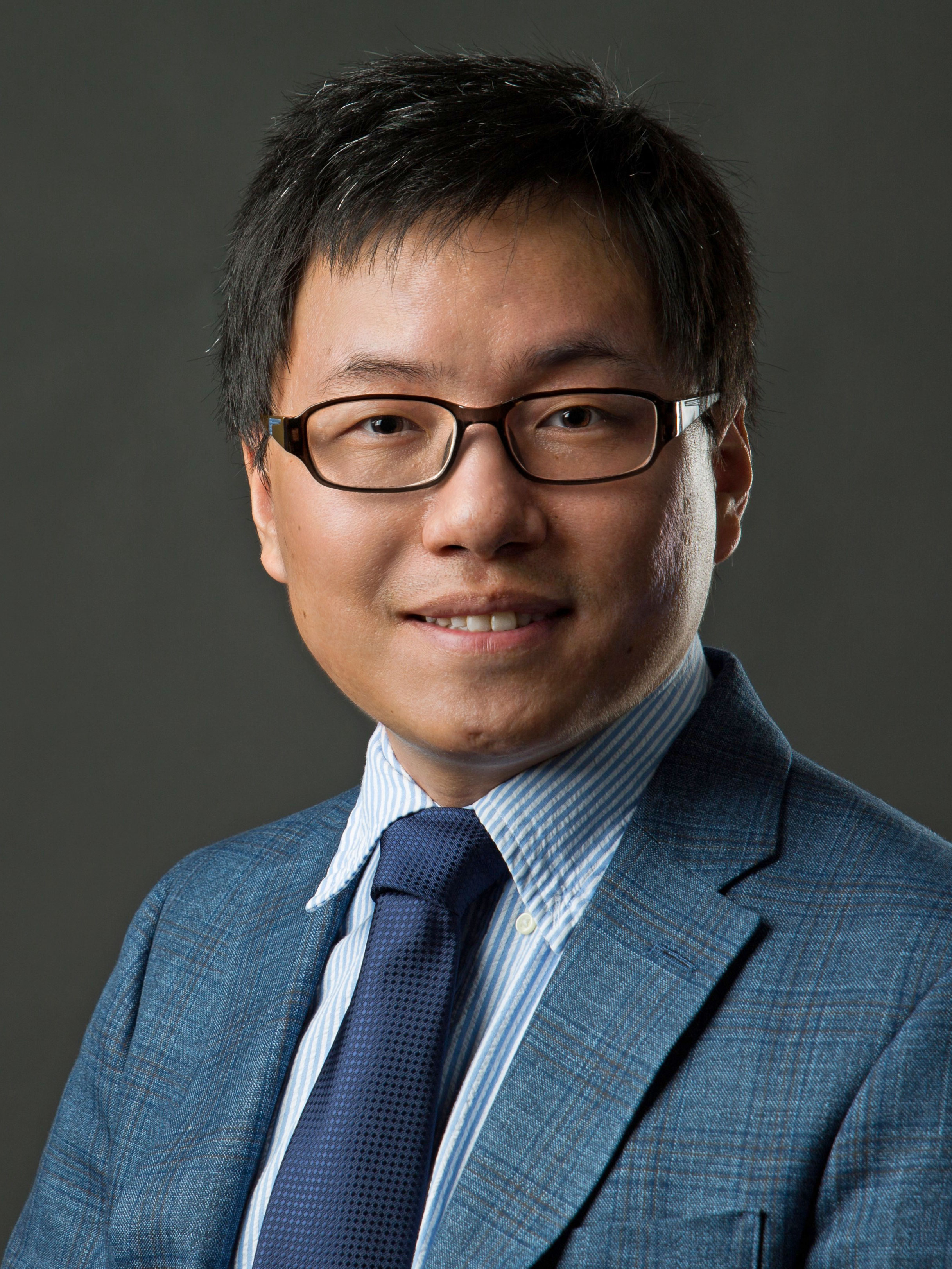
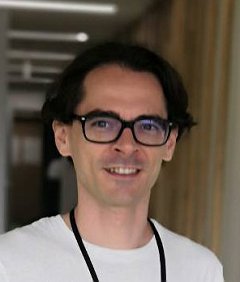
K. Psarakis is a researcher in the field of Data-Intensive Systems, focusing on cloud computing, stream processing, and distributed dataflows. Their work bridges theoretical and practical challenges in cloud-native applications and scalable systems. Institution: Affiliated with Data-Intensive Systems Research Focus: Cloud transaction management, autoscaling, geospatial data platforms, and fault tolerance Research Trends Recent publications like Styx and CheckMate highlight innovations in transactional stateful functions and checkpointing protocols. Psarakis also contributes to geospatial data federation (e.g., Topio ) and schema matching techniques ( Valentine ). Collaborations Collaborates with researchers such as G. C. Christodoulou, M. Fragkoulis, and A. Katsifodimos on projects involving open-source platforms and cloud-native systems.
Vincenzo Riccio serves as an Assistant Professor at the University of Udine, Italy, following a postdoctoral position at the Software Institute of Università della Svizzera Italiana (USI) in Lugano, Switzerland. His academic career centers on bridging software engineering with artificial intelligence through rigorous testing methodologies for machine learning systems. He earned his Ph.D. in Computer Science from Università degli Studi di Napoli “Federico II” in 2019, establishing the foundation for his specialized research in AI validation. His educational trajectory reflects deep technical expertise in both theoretical and applied aspects of software engineering. Riccio's research focuses intensely on test automation for machine learning-based applications, particularly deep learning systems. He investigates critical challenges including test input generation, fault detection in neural networks, and reliability validation for safety-critical domains like autonomous driving. His approach combines search-based techniques, mutation analysis, and empirical studies to develop practical testing frameworks that address the 'oracle problem' and input validity issues inherent in AI systems. Analysis of his 11 publications from 2020-2025 reveals a progressive research trajectory: starting with foundational work on behavioral exploration (2020), advancing to specialized tools like DeepHyperion and DeepMetis (2021), and maturing into domain-specific applications for autonomous vehicles (2022-2024) and generative AI testing (2025). His work consistently targets real-world applicability through empirical validation and tool development. He actively contributes to the academic ecosystem as a member of the EMSE journal's editorial board and as a reviewer for premier venues including ICSE, ASE, and ISSTA. His community leadership extends to organizing workshops such as DeepTest and SBFT, where he chairs sessions and coordinates tool competitions to advance the field of AI testing.
Karine Even-Mendoza is a Lecturer in Systems & Programming Languages at King's College London, working within the Department of Informatics in the Faculty of Natural, Mathematical & Engineering Sciences. Previously, she was a Research Associate at Imperial College London's Department of Computing, where she worked in the Software Reliability Group and Multicore Programming Group. She completed her PhD at King's College London, where she also spent four years working with the Software Systems (SSY) group. Dr. Even-Mendoza's research focuses on the intersection of software testing, verification, and programming languages, with recent work increasingly incorporating machine learning and quantum computing techniques. Her work addresses critical challenges in compiler testing, system simulation validation, and the application of large language models to software engineering problems. She has developed innovative approaches like ReFuzzer for enhancing the validity of LLM-generated test programs and SearchGEM5 for improving the reliability of system simulators through search-based testing. Her publication record demonstrates a strong trajectory in top-tier software engineering venues, with a notable shift toward incorporating large language models and quantum computing in recent years. She has become particularly active in applying AI techniques to traditional software engineering challenges, bridging the gap between classical software verification methods and modern AI approaches. Her work spans both theoretical foundations and practical applications, with implementations like CsmithEdge and GrayC contributing tangible tools to the software testing community. Dr. Even-Mendoza has been actively involved in the software engineering research community, serving on program committees for major conferences including ASE, ISSTA, ECOOP, and SPLASH. She has also contributed to artifact evaluation processes, demonstrating her commitment to research reproducibility and scientific rigor in software engineering.
Giovani Guizzo is a Software Engineer at Kii working as a Blockchain Engineer and Front-end developer with React, while maintaining an active research profile in Search-Based Software Engineering. He earned his PhD in Computer Science from the Department of Informatics at Federal University of Paraná (UFPR) in Brazil under Professor Silvia Regina Vergilio in 2018. His academic collaborations include significant affiliations with University College London where he has published as a researcher. His research program centers on applying evolutionary computation and search-based techniques to software engineering challenges, particularly in software testing and optimization. Guizzo's work bridges theoretical advances in multi-objective optimization with practical software engineering applications, resulting in innovative solutions for test model inference, mutant reduction strategies, and automated program repair. His approach often combines natural language processing with finite state machine generation to transform bug reports into actionable test models. Guizzo's publication record reveals a consistent trajectory of increasing impact in top-tier software engineering venues. His recent work demonstrates sophisticated integration of multi-objective evolutionary algorithms with practical software testing challenges, particularly in the areas of model inference from natural language bug reports and optimization of mutation testing processes. The evolution of his research shows progression from foundational work on design patterns in evolutionary algorithms toward more complex applications in automated software testing and repair. His achievements include: SSBSE 2021 Challenge Winner for innovative work on fitness functions in automated program repair Distinguished Artifact Award at ICSE 2021 recognizing reproducibility in genetic improvement research Microsoft Azure Research Award in 2017 supporting his work in cloud-based software engineering research Guizzo maintains active engagement with the research community through editorial roles for IET Software and Science of Computer Programming, membership on the SSBSE Steering Committee, and service on program committees for major conferences including ESEC/FSE, ASE, GECCO, and ICSE. His academic visits to University College London (3 months in 2017) and Queen Mary University (1 month in 2017) established lasting research collaborations with Dr. Jens Krinke, Dr. Federica Sarro, and Dr. John Drake that continue to produce high-impact publications. Through his interdisciplinary approach combining software engineering, evolutionary computation, and natural language processing, Guizzo has established himself as a significant contributor to the search-based software engineering community, with research that consistently addresses practical challenges while advancing theoretical foundations.
Vahid Alizadeh is an Assistant Professor in the College of Computing and Digital Media (CDM) at DePaul University in Chicago, USA, where he has been serving since 2020. His academic career focuses on bridging the gap between software quality research and industrial practice through empirical studies and intelligent tool development. Education: Ph.D. in Computer Science, University of Michigan (2015-2020) M.Sc. in Electrical Engineering, University of Tehran (2011-2013) B.Sc. in Electrical Engineering, Iran University of Science and Technology (2006-2011) Research Interests: Dr. Alizadeh's research spans empirical software engineering, software quality, refactoring & maintenance, intelligent software engineering, and AI-enabled systems. His work combines rigorous empirical methods with practical tool development to address real-world software engineering challenges. He has particular expertise in developing intelligent refactoring technologies that are currently deployed by organizations impacting thousands of programmers worldwide. Research Trends: His publication record shows a consistent focus on applying AI and machine learning techniques to software engineering problems, particularly in the areas of refactoring and quality assurance. Recent work demonstrates increasing integration of AI/ML approaches with traditional software engineering practices, reflecting the broader trend toward AI4SE (AI for Software Engineering). Awards & Recognition: Excellence in Teaching Award from DePaul University (2025) $67,000 DePaul-RFUMS Grant for AI-Powered Community Pharmacy Research (2024) ACM SIGSOFT Distinguished Paper Award at MODELS Conference (2020) Distinguished University of Michigan-Dearborn Honors Scholar (2020) Outstanding Graduate Research Assistant Award (2018/2019) Professional Activities: Dr. Alizadeh has served in various capacities at major software engineering conferences including ASE 2022 as Session Chair and Virtualization Co-Chair, and MODELS 2025 as Web Co-Chair. His work has resulted in one patent and multiple invention licenses through the University of Michigan Tech Transfer Office. He actively mentors graduate students interested in empirical software engineering, software quality, and intelligent refactoring technologies.
Earl T. Barr is a Professor of Software Engineering at University College London (UCL), where he heads the System Software Engineering Group and is a member of the Centre for Research on Evolution, Search and Testing (CREST). He received his Ph.D. in Computer Science from the University of California, Davis in 2009. His educational background includes: Ph.D. in Computer Science, 2009, University of California, Davis Barr's research focuses on software engineering, particularly program analysis, automated program repair, and the application of machine learning to code (AI4Code). He is renowned for his work on dual channel analysis, which examines how code combines natural language elements (in identifiers, comments, and stylistic choices) with formal programming language. His research also explores game theory applications to software development processes and how dual channel constraints can improve type inference and code understanding. His recent publications demonstrate a strong trend toward leveraging large language models for code understanding and modification, with particular emphasis on dual channel constraints and natural type inference. His work bridges traditional software engineering techniques with modern AI approaches, showing how machine learning can enhance program analysis and repair while maintaining rigorous theoretical foundations. Notable awards include: ACM SIGSOFT Distinguished Paper Award for Automated Software Transplantation (2015) ACM SIGSOFT Distinguished Paper Award for Learning Natural Coding Conventions (2014) ACM SIGSOFT Distinguished Paper Award for Collecting a Heap of Shapes (2013) Best Paper Award for TrustDavis: A Non-Exploitable Online Reputation System (2005) Barr actively supervises numerous PhD students and postdocs, with current research focusing on AI for code, software security, and program analysis. He collaborates extensively with Santanu Dash of Royal Holloway on dual channel program analysis, and they jointly supervise PhD students through the EPSRC Centre for Doctoral Training in Cyber Security for the Everyday. His work often combines theoretical rigor with practical tool development, resulting in several publicly available research tools that influence both academic research and industry practice. He leads the System Software Engineering Group at UCL, which focuses on developing novel approaches to software engineering challenges at the intersection of human and machine aspects of programming. Current research directions include dual channel analysis for vulnerability detection, game-theoretic approaches to development processes, and AI-assisted software development.
Xiaolin Xu is an Associate Professor in the Department of Electrical and Computer Engineering at Northeastern University. His research focuses on hardware and AI security, machine learning privacy, and energy-efficient deep learning. He earned a PhD from the University of Massachusetts Amherst and completed postdoctoral work at the Florida Institute for Cybersecurity Research. Education PhD, Electrical and Computer Engineering, University of Massachusetts Amherst, 2016 M.S., B.E., University of Electronic Science and Technology of China Research Interests : His work spans secure hardware design, AI model protection, and embedded systems security. Notable projects include securing FPGA-based ML accelerators and developing defenses against adversarial attacks. Recent Article Trends : Recent publications emphasize robustness in neural architectures, secure multi-party computation, and lightweight graph-based models for edge devices. Grants & Awards 2025 DAC Under-40 Innovators Award NSF CAREER Award (2023) Multiple NSF grants for hardware security research Advising : Supervises PhD students including Shijin Duan and Jiaxing, focusing on ML security and hardware-software co-design.
Adam Chlipala is the Arthur J. Conner Professor of Computer Science at the Massachusetts Institute of Technology (MIT). His work bridges programming languages, formal methods, computer systems, and security, with a focus on building practical systems verified end-to-end using the Coq proof assistant. He has advised numerous PhD and Master’s students and leads research into verified compilers, hardware-software stacks, and dependent types for real-world applications through his startup Nectry. Undergraduate: Carnegie Mellon University, 2003 PhD: University of California, Berkeley, 2007 Postdoc: Harvard University, through 2011 His research revolves around verified compilers , hardware-software co-verification , and dependent types for enterprise software . Recent work explores high-performance parallel computing stacks and end-to-end machine-checked proofs for cryptographic systems. His publications span conferences like PLDI, POPL, and ICFP, emphasizing formal verification, optimization, and security. Current research trends highlight verified cryptographic code , concurrent hardware verification , and DSLs with formal guarantees . His students work on topics from state machines to network switches and parallel computing frameworks. Coq Proof Assistant Verified Compilation Cryptographic Security Dependent Types Hardware Verification High-Performance Computing Chlipala has served on program committees for CoqPL, Dafny, CPP, and PLDI. He co-created the MIT course Formal Reasoning About Programs and authored two books: Certified Programming with Dependent Types and Formal Reasoning About Programs .
Liqian Chen is a Full Professor and PhD Supervisor in the College of Computer Science and Technology at the National University of Defense Technology (NUDT) in Changsha, China. With a prolific research career spanning over a decade, Professor Chen has established himself as a leading expert in program analysis, verification, and automated program repair. His work bridges theoretical foundations with practical applications, particularly in the areas of abstract interpretation and numerical program analysis. Professor Chen's primary research interests include: Program analysis and verification Abstract interpretation Automated program repair Floating-point analysis Neural network verification His research focuses on developing rigorous theoretical frameworks for program analysis while ensuring practical applicability to real-world software systems. A significant portion of his work addresses the challenges of numerical accuracy in software, particularly in floating-point computations, and has extended these techniques to the emerging domain of neural network verification. Analysis of Professor Chen's recent publications reveals several key trends in his research trajectory. His work has evolved from foundational abstract interpretation techniques to address increasingly complex software systems, including neural networks. There's a clear progression from theoretical developments in abstract domains to practical applications in software verification and repair. His recent work demonstrates a growing emphasis on the intersection of traditional program analysis with machine learning systems, particularly in verifying neural network behavior and addressing numerical instability in AI systems. Professor Chen has received notable recognition for his contributions to the field: ACM SIGSOFT Distinguished Paper Award (ISSTA 2024) Best Paper Award (APSEC 2017) Best Paper Award Nomination (EMSOFT 2015) As an academic advisor, Professor Chen supervises numerous PhD and Master's students working on cutting-edge research in program analysis and verification. His team has developed several influential tools including AutoRNP (for automatically detecting and repairing floating-point errors), Software Apron (a library for numerical abstract domains), and F-IKOS (a static analyzer for Fortran programs). Professor Chen has secured substantial research funding to support his work, though specific grant details are not provided in the available information. He actively serves the research community through program committee roles for major conferences including ASE, SAS, and VMCAI, and as a guest editor for journals such as Automated Software Engineering Journal and Journal of Systems Architecture. Professor Chen leads a vibrant research group focused on high-confidence software technologies. His team, comprising PhD students, Master's students, and research engineers, collaborates closely on projects spanning from theoretical foundations of program analysis to practical tool development. The group maintains strong connections with both academic institutions and industry partners, facilitating the transfer of research innovations to real-world applications. Their work is characterized by rigorous theoretical underpinnings combined with practical validation on real software systems.
Marsha Chechik is a Professor in the Department of Computer Science at the University of Toronto within the Faculty of Arts and Science. She previously served as Chair of the Department of Computer Science (2019-2022) and as Acting Dean in the Faculty of Information (July-December 2022). Professor Chechik received her Ph.D. from the University of Maryland in 1996 and has established herself as a leading researcher in software engineering with a focus on formal methods. Her research interests include software safety and security, automated verification, software product lines, and model management. Professor Chechik has authored numerous papers in formal methods, software specification and verification, computer safety and security, and requirements engineering. Her work has evolved to incorporate newer areas such as machine vision reliability analysis, normative requirements with large language models, and machine learning development lifecycle analysis. Her research consistently bridges theoretical foundations with practical applications in software engineering. Professor Chechik has served in numerous leadership roles including Program Committee Co-Chair for major conferences such as ICSE 2018, TACAS 2016, VSTTE 2016, ASE 2014, CONCUR 2008, CASCON 2008, and FASE 2009. She is currently the Area Chair for ASE 2025 in Security and Other Non-Functional Properties. She has also served as Associate Editor in Chief of Journal on Software and Systems Modeling and as associate editor of IEEE Transactions on Software Engineering (2003-2007, 2010-2013). Best paper award at RE'12 (2012) SIGSOFT Distinguished Paper at ICSE'12 (2012) Winner of Best Student Paper Award at CASCON'07 (2007) Winner of Distinguished Paper Award at ICSE'07 (2007) Professor Chechik regularly mentors PhD students, with notable advisees including Michalis Famelis, Shiva Nejati, Jocelyn Simmonds, Ou Wei, and Aws Albarghouthi. Her advising philosophy emphasizes rigorous formal methods while addressing practical software engineering challenges. She has been involved in numerous research grants focusing on software verification, safety-critical systems, and requirements engineering. Currently, her work explores the intersection of formal methods with emerging technologies like large language models and machine vision systems. Professor Chechik maintains an active research lab focused on model-based software engineering, with projects spanning software product lines, model management, and verification techniques. Her team collaborates with industry partners to address real-world software engineering challenges while advancing theoretical foundations. Current work includes developing techniques for normative requirements operationalization, machine vision reliability analysis, and automated code reconciliation using AI techniques.
Mitchell Olsthoorn is an Assistant Professor in the Software Engineering Research Group (SERG) at Delft University of Technology. He is also a member of the Computational Intelligence for Software Engineering lab (CISELab) and the Delft Blockchain Lab (DBL). His academic career is built on a strong foundation from Delft University of Technology, where he earned all his degrees. Mitchell's research interests span a diverse range of topics including Network Security, Search-based Software Engineering, Pen-testing, Computational Intelligence, Software Testing, Security Testing, Fuzzing, and Blockchain. His work demonstrates a strong focus on applying computational intelligence techniques to solve complex software engineering problems, particularly in the areas of test case generation and security testing. His publication record shows a consistent research trajectory with a focus on developing innovative testing frameworks for various programming languages and blockchain technologies. His work bridges the gap between theoretical research and practical applications, with tools developed for JavaScript, Kotlin, and blockchain platforms. Cum laude distinction (top 5% in Netherlands) Mitchell actively contributes to the academic community through conference organization and program committee roles. His current position as Hot-off-the-Press Track Co-Chair for SSBSE 2025 demonstrates his growing recognition in the software engineering research community. He also serves on program committees for major conferences including ISSTA, ICST, and ASE. Mitchell maintains active research laboratories including the Computational Intelligence for Software Engineering lab (CISELab) and the Delft Blockchain Lab, where he continues to advance research in software testing and security.
Massimiliano Di Penta is a Full Professor at the University of Sannio, Italy, working within the Department of Engineering. He has established himself as a prominent researcher in software engineering with extensive contributions to software evolution, software analytics, DevOps, and software engineering with/for AI. His academic leadership is evident through his roles as program co-chair of major conferences including ICSE 2023 and ESEC/FSE 2021, and his editorial positions as associate editor-in-chief of IEEE Transactions on Software Engineering and co-editor-in-chief of the Journal of Software: Evolution and Processes. His research interests span multiple critical areas in modern software engineering: Software evolution and maintenance Software analytics and mining software repositories DevOps practices and tooling Integration of AI in software engineering processes Technical debt management Software testing and quality assurance Analysis of his recent publications (2024-2025) reveals a strong focus on the intersection of AI and software engineering, particularly examining how large language models impact development practices, the challenges in software supply chain security through Software Bills of Materials (SBOM), and the application of AI techniques to traditional software engineering problems. His work demonstrates a consistent emphasis on empirical validation and practical applicability to real-world development scenarios. Notable scientific recognition includes: Four ACM SIGSOFT Distinguished Paper awards Multiple distinguished reviewer awards Extensive service on program committees for over 100 conferences Professor Di Penta has advised numerous students and has been instrumental in shaping research directions through his editorial work and conference leadership. His lab and research team at the University of Sannio focus on empirical studies of software development practices with particular attention to modern challenges in AI-assisted development and software supply chain security. His future work appears to be increasingly focused on the implications of generative AI for software engineering practices and the evolving landscape of software supply chain management.
Dr. Tao Zhang is a Full Professor at the School of Computer Science and Engineering, Macau University of Science and Technology (MUST), Macau SAR. He serves as an Associate Editor for IEEE Transactions on Software Engineering (TSE), IEEE Transactions on Reliability (TRel), and the Journal of Systems and Software (JSS), and is an Editorial Board Member for Empirical Software Engineering (EMSE) and Science of Computer Programming (SCP). His educational background includes: Ph.D. in Computer Science from the University of Seoul B.S. in Automation and M.Eng in Software Engineering from Northeastern University, China Postdoctoral Research Fellow at Hong Kong Polytechnic University Dr. Zhang's research primarily focuses on three interconnected areas that represent the cutting edge of modern software engineering: AI for Software Engineering : Utilizing neural language models and large language models to create automated software engineering tools that help developers produce high-quality software. His work includes evaluating whether pretrained language models truly understand software engineering tasks and developing universal representations for bug reports. Software Security : Employing static analysis, AI technologies, and formal methods to detect malware, vulnerabilities, and privacy leaks in mobile apps and smart contracts. His research spans Android malware detection, smart contract vulnerability analysis, and state manipulation attacks in blockchain systems. Mining Software Repositories : Applying information retrieval and machine learning to extract meaningful insights from software artifacts to improve development efficiency. This includes work on app review analysis, change request localization, and code similarity metrics. His publications demonstrate significant impact across the software engineering community, with over 100 high-quality papers in top venues including ICSE, ESEC/FSE, ASE, TSE, TOSEM, EMSE, JSS, TIFS, and TDSC. Dr. Zhang has received numerous honors and recognitions: Distinguished Member, China Computer Federation (CCF), September 2025 Top Reviewer Award 2023, Journal of Systems and Software (JSS), April 2024 Distinguished Reviewer in 2023, ACM Transactions on Software Engineering and Methodology (TOSEM), February 2024 Senior Member of ACM (October 2020) and IEEE (February 2020) Best Paper Award, 16th Korea Conference on Software Engineering (KCSE), February 2014 As an academic leader, Dr. Zhang serves/served as General or Program Chair for numerous conferences including APSEC 2025, Internetware 2024, SANER 2023, and DSA 2021. He mentors a vibrant research group with multiple postdocs, PhD students, and master's students working on innovative projects in intelligent software engineering and security. His lab actively recruits highly motivated students interested in Data Mining, Artificial Intelligence, Software Security, and Software Engineering. Dr. Zhang leads the "Intelligent Software Data Analysis and Software Security" research team at MUST, which focuses on leveraging AI technologies to solve critical challenges in software development and security. The team maintains strong collaborations with international researchers and regularly publishes in top-tier venues.
Paolo Arcaini is a Project Associate Professor at the National Institute of Informatics in Japan, where he has been employed since April 2019. Previously, he served as a Project Assistant Professor at the same institution from March 2018 to March 2019. Prior to that, he was an Assistant Professor at the Department of Distributed and Dependable Systems of Charles University from March 2015 to February 2018. His academic journey includes postdoctoral fellowships at the University of Bergamo and CNR-IDPA, followed by completing his PhD in Computer Science at the University of Milan. PhD in Computer Science at the University of Milan (January 2010 - December 2012) Postdoctoral fellow at University of Bergamo (October 2013 - February 2015) Postdoctoral fellow at CNR-IDPA (January 2013 - September 2013) Professor Arcaini's research focuses on the intersection of quantum computing and software engineering, particularly in quantum software testing and verification. He has pioneered approaches to applying search-based techniques to quantum software development, including mutation testing and error mitigation for quantum programs. His work also extends to autonomous systems testing, where he develops methods for scenario generation, safety assessment, and falsification of autonomous driving systems. His research in formal methods for cyber-physical systems combines signal temporal logic with search-based techniques to verify complex system behaviors. A significant portion of his work addresses the challenges of testing AI-enabled systems, particularly deep neural networks in safety-critical contexts. Analysis of Professor Arcaini's recent publications reveals a strong trend toward quantum software engineering, with numerous papers on testing methodologies for quantum programs, error mitigation techniques, and quantum-inspired optimization for software testing. His work demonstrates a consistent focus on applying search-based techniques to challenging domains, with increasing attention to safety-critical applications of AI and quantum computing. The interdisciplinary nature of his research connects formal methods, machine learning, and software engineering to address verification challenges in emerging technologies. Best paper award on testing AI system at IEEE International Conference on Artificial Intelligence Testing (AITest 2020) Distinguished paper award at Symposium on Search-Based Software Engineering (SSBSE 2021) Best paper award at Symposium on Search-Based Software Engineering (SSBSE 2020) Professor Arcaini is highly active in the software engineering research community, serving on program committees for numerous top conferences including ASE, ICSE, ISSTA, and ESEC/FSE. His work on quantum software engineering has positioned him as a leader in this emerging field, with multiple tool demonstrations and journal-first papers that bridge theoretical advances with practical applications. His research on autonomous systems testing has resulted in several tools for scenario generation and safety assessment that are being adopted by the automotive industry. While specific grant information isn't detailed in the provided materials, his extensive publication record across multiple high-impact venues suggests substantial research funding support. Professor Arcaini leads the MMM research group (as indicated by his personal website at http://group-mmm.org/~arcaini/), which focuses on model-based methods for software engineering. His team appears to specialize in applying formal methods and search-based techniques to emerging domains like quantum computing and autonomous systems. The group maintains active collaborations with researchers worldwide, as evidenced by the international co-authorship of his publications across European and Asian institutions.
Tim Menzies is a Full Professor at North Carolina State University with a diverse professional background that includes previous careers as a nurse, rocket scientist, taxi driver, and journalist. His primary research focuses on Search-Based Software Engineering (SBSE), software analytics, software product lines, Mining Software Repositories, and data mining and machine learning applications in software engineering. Dr. Menzies has maintained an active research profile with publications spanning from 2018 through 2026, serving on program committees and organizing tracks at major conferences including ASE, ICSE, and ESEC/FSE. His work consistently bridges theoretical research with practical applications, emphasizing solutions that are both technically sound and implementable in real-world settings. His research interests include: Search-Based Software Engineering (SBSE) Software analytics and data-driven approaches Software product lines and configuration Mining Software Repositories Machine learning applications in software engineering Fairness in software engineering tools Interpretable and explainable AI for software engineering His recent publications (2023-2026) reveal a strong trend toward making complex software analytics more accessible and understandable while maintaining performance. He has pioneered approaches that simplify models without sacrificing effectiveness, directly addressing the 'black box' problem that often hinders adoption of machine learning in practice. Dr. Menzies is known for his critical perspective on software engineering research, challenging assumptions in the field, particularly regarding deep learning applications. His work emphasizes practical, evidence-based approaches over theoretical elegance alone, reflecting his commitment to improving the research-practice connection in software engineering.