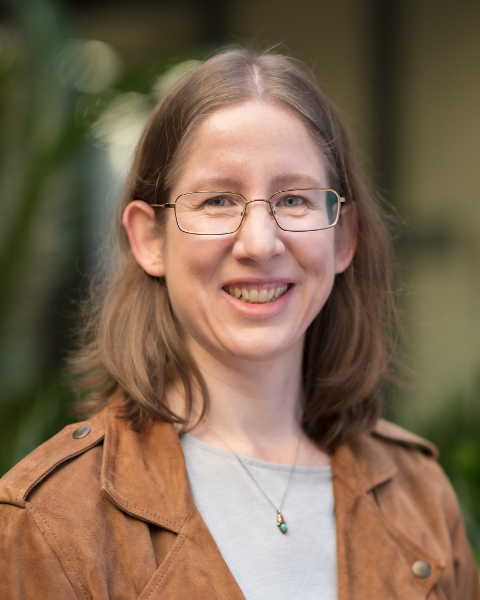
Krista A. Ehinger is an Associate Professor and co-lead of the AI group at the University of Melbourne's School of Computing and Information Systems. She holds a PhD from MIT and has held postdoctoral positions at York University and Harvard Medical School. Her research focuses on the intersection of human and computer vision, including scene recognition, visual search, and depth perception. Methodologically, she combines Bayesian models, deep learning, and behavioral experiments like eye tracking. Current projects explore AI applications in space systems (e.g., SpIRIT satellite) and ethical implications of workplace surveillance via computer vision. Recent work emphasizes amodal completion (e.g., reconstructing occluded objects) and AI reasoning systems. She collaborates on medical imaging (TCAM-Diff model), autonomous driving (truck speed detection), and 3D reconstruction. Her lab actively engages in open-source tools like the SUN Database for scene understanding. Professional activities include AI ethics discussions and academic service. She advises students on Masters/PhD projects and contributes to conferences like CVPR and NeurIPS.
Prof. Lionel C. Briand is a leading academic in software engineering and trustworthy AI, holding appointments at the University of Ottawa (EECS Department, Nanda Laboratory) and the University of Limerick (Lero - National Software Research Centre). He serves as Director of Lero and Scientific Director of the SnT software verification lab in Luxembourg. His research focuses on software testing, model-driven engineering, AI-driven quality assurance, and regulatory compliance. He has held the Canada Research Chair (Tier 1) since 2003 and led major institutions like Simula Research Laboratory (Norway) and Fraunhofer Institute (Germany). Education & Career: Full Professor at Carleton University (2008–2012) Head of Software Quality Engineering at Fraunhofer IESE (2000–2008) Research Scientist at NASA Software Engineering Lab (1990s) Research Interests: His work spans secure AI systems, automated legal compliance (e.g., GDPR), metamorphic testing, search-based software engineering, and safety-critical systems. He emphasizes practical applications, collaborating with industry partners globally. Awards & Recognition: IEEE Fellow (2010), ACM Fellow (2020) Harlan Mills Award (2012), ERC Advanced Grant (2016) Fellowships from Royal Society of Canada (2023) and Academia Europaea (2025) Grants & Labs: PEARL grant from Luxembourg FNR for SnT lab ERC Advanced Grant for software testing research Leadership roles in Lero and Nanda Lab Publications: Over 500+ papers on testing methodologies, AI ethics, and regulatory compliance. Notable tools include CompAI (GDPR compliance) and Teasma (DNN test adequacy).
Liji Shen is Professor of Operations Management and Chairholder at WHU – Otto Beisheim School of Management, Campus Vallendar, Germany. She is affiliated with the Supply Chain Management Group and leads research in scheduling, optimization, and sustainable manufacturing. Her academic journey includes a Ph.D. and Habilitation from Technische Universität Dresden, and she has held visiting scholar positions at institutions including École des Mines de Saint-Étienne and Huazhong University of Science and Technology. Ph.D. (Dr.rer.pol.), summa cum laude, Technische Universität Dresden (2009) Habilitation, Technische Universität Dresden (2015) Master of Business Administration (Dipl.-Kffr.), Technische Universität Dresden (2006) Liji Shen's research focuses on Operations Management , particularly scheduling optimization in manufacturing systems. Her work spans flexible job shops , parallel machine scheduling , energy-efficient production , and sequence-dependent setup times . She applies advanced techniques such as evolutionary algorithms , hybrid metaheuristics , and mathematical programming to solve complex industrial problems. Her recent publications emphasize sustainability through energy-aware scheduling and time-of-use pricing models. The 15 most recent publications highlight a consistent research trajectory in production scheduling , with increasing emphasis on energy efficiency , distributed manufacturing , and real-world constraints like eligibility and delivery times. Her work frequently appears in top journals such as European Journal of Operational Research , IEEE Transactions on Evolutionary Computation , and Computers & Operations Research , often in collaboration with leading researchers like Dauzère-Pérès, Mönch, and Buscher. Scientific Awards: European Journal of Operational Research, Best Paper Award (2021) DFG and TU Dresden, 'Support the Best' Prize for Outstanding Researchers (2013) Dr. Feldbausch-Prize for Best Dissertation, TU Dresden (2010) Scholarship for Young Researchers in Saxony (2006–2009) DAAD Prize for Best Foreign Students (2007) Best Master’s Thesis, German Operations Research Society (2007) Liji Shen has been an active advisor and researcher, leading projects in operations research and industrial optimization. Her editorial role on Operations Research Perspectives underscores her standing in the academic community. She has directed research labs and collaborated internationally, contributing to both theoretical advancements and practical applications in manufacturing and logistics. No specific grants are mentioned, but her sustained publication record and leadership roles indicate strong research support. She leads the Operations Management research group at WHU, focusing on algorithmic solutions for complex scheduling problems. Her team investigates energy-aware production, hybrid flow shops, and distributed systems, aiming to bridge the gap between theoretical models and industrial implementation. The lab collaborates with researchers across Europe and China, fostering a global research network in operations research and supply chain management.
Margaret H. Wright is a distinguished academic and researcher in optimization, numerical computing, and scientific applications. She holds a professorship in Computer Science and Mathematics at New York University's Courant Institute, where she also served as Chair of the Computer Science Department. Her career includes roles at Stanford University and Bell Laboratories, where she contributed to foundational work in optimization algorithms and numerical methods. Education: B.S. and M.S. in Mathematics and Computer Science from Stanford University (1966–1976), followed by a Ph.D. in Computer Science (1976). Her research focuses on optimization techniques, linear algebra, and their applications in engineering and science. Key contributions include seminal work on the Nelder-Mead simplex method, interior-point methods, and numerical linear algebra. She authored influential books like Practical Optimization and contributed to over 40 publications. Her articles span optimization theory, computational methods, and interdisciplinary applications. Awards and Recognition: Elected to the National Academy of Engineering (1997), American Academy of Arts and Sciences (2001), and National Academy of Sciences (2005). Honored with the AWM Noether Lecture (2000), SIAM's Distinguished Service Award (2001), and AMS's Public Service Award (2002) for her advocacy in STEM education and diversity. Leadership: Served as President of the Society for Industrial and Applied Mathematics (1995–1996). Active in editorial roles for journals and in promoting women and minorities in mathematics and computing.
Surajit Chaudhuri is a Researcher at Microsoft , with a career spanning decades in database systems and data management . He has received the prestigious SIGMOD Edgar F. Codd Innovations Award (2011) for his contributions to query optimization , index tuning , and data lakes . Research Interests : His work focuses on database tuning , approximate query processing , fuzzy similarity joins , automated data transformations , and machine learning integration for scalable data systems. Recent Publications : In 2025, his research includes Auto-Test for unsupervised error detection in tables, Esc for budget-aware index tuning, and MMTU for multi-task table understanding benchmarks. Earlier works in 2024–2023 address spreadsheet formula recommendation , low-overhead index filtering , and time-series pattern recognition . Scientific Impact : He has co-authored influential papers in SIGMOD , VLDB , and IEEE Transactions , shaping practices in cloud databases , query optimization , and self-service BI . His collaborations span institutions like Microsoft, MIT, and ETH Zurich.
Martin Aumüller is a Lecturer in Theoretical Computer Science Algorithms at the IT University of Copenhagen . He serves as Head of Education and Master of Software Design , focusing on algorithm engineering, differential privacy, and similarity search. Research interests include: Algorithm engineering for high-dimensional data Locality-sensitive hashing and nearest neighbor search Privacy-preserving machine learning Fairness in approximate search algorithms Benchmarking and evaluation of similarity search tools Publications trends highlight his work on approximate nearest neighbor search , privacy-preserving techniques , clustering algorithms , and scalable outlier detection in high-dimensional spaces. His recent projects (2024-2025) focus on fairness, differential privacy, and efficient indexing. Grants and projects : DIREC (2020-2025): Digital Research Centre Denmark (Innovation Fund Denmark) DIREC: Bias and Benefit of Approximate Nearest Neighbor Search (2022-2025): Principal Investigator (Innovation Fund Denmark) BARC (2017-2024): Basic Algorithms Research Copenhagen (Villum Fonden) SSS (2014-2019): Scalable Similarity Search (European Commission)
FH-Prof. Mag. Dr. Tassilo Pellegrini is a Professor at the University of Applied Sciences St. Pölten , leading the Institute for Innovation Systems within the Department of Digital Business and Innovation . His work bridges semantic technologies with digital business strategies. Education : Business Economics, Communication Studies, Political Science Research Focus : Semantic Web, Linked Data, Digital Media Economics, Network Neutrality, Data Licensing His publications highlight trends in Semantic Metadata for news production, Linked Data Integration , and Cloud-based Business Models under network neutrality constraints. Recent work explores thesaurus-driven knowledge organization and the economic implications of Big Data. Scientific Awards : Best Paper Award at I-Semantics 2012 Key Projects : ECO-TCO (Digital Data for Sustainability), Corporate Semantic Web initiatives Contact: tassilo.pellegrini@fhstp.ac.at
Deliang Fan is an Associate Professor at the School of Electrical, Computer and Energy Engineering, Arizona State University, Tempe, AZ. His research focuses on AI hardware, in-memory computing, and neuromorphic systems. He received his MS and PhD from Purdue University under Prof. Kaushik Roy. Education: PhD, Purdue University (2015) Research Interests: AI Hardware, In-Memory Computing, Adversarial AI, Neuromorphic Computing His work spans cross-layer co-design for AI applications, including deep learning, bioinformatics, and graph processing. He has authored 170+ peer-reviewed papers and developed hardware solutions for spintronic and memristor-based systems. Recent publications emphasize efficient architectures for transformers, federated learning, and robust neural networks. Awards include the NSF Career Award and multiple best paper recognitions. He serves in editorial and organizational roles for leading conferences like DAC, ISQED, and GLSVLSI.
Steffen Bondorf is a Professor of Distributed and Networked Systems in the Faculty of Computer Science at Ruhr University Bochum, Germany. His research focuses on performance modeling and analysis of deterministic networking, particularly using network calculus to provide rigorous performance guarantees for networked systems. Dr. Bondorf received his B.Sc., M.Sc., and Dr.-Ing. (Ph.D.) in Computer Science from TU Kaiserslautern (TUK), where he was part of the distributed computer systems lab. He was the first student to enroll in a B.Sc. program at TUK before finishing secondary education. After graduation, he held positions as postdoctoral researcher, lecturer and Carl-Zeiss Fellow at TUK, research fellow at the National University of Singapore, and visiting researcher at the University of Toronto. From fall 2018 to fall 2019, he was funded by an ERCIM Alain-Bensoussan fellowship at NTNU Trondheim, Norway, and spent time at INRIA Paris. His research interests include network calculus, deterministic networking, performance modeling, computer networks, distributed systems, and P2P overlays. Dr. Bondorf's work has significantly advanced the field of network calculus, particularly in developing methods for analyzing FIFO feedforward networks, multicast flows, and P2P overlay structures. His recent research has integrated machine learning techniques with network calculus to improve analysis accuracy and efficiency, creating hybrid approaches that leverage the strengths of both methodologies. Dr. Bondorf was appointed as assistant professor at Ruhr University Bochum on October 1, 2019, becoming the university's first hire in the joint tenure-track program for the promotion of young scientists. Since December 1, 2021, he has been a tenured full professor at RUB. Carl-Zeiss Fellow ERCIM Alain-Bensoussan fellowship At RUB, Dr. Bondorf teaches Advanced Topics in Networking, Distributed Systems, Deterministic Network Calculus, and Seminar Distributed and Networked Systems. His research group develops tools and methodologies for deterministic network analysis with applications in industrial networking, real-time systems, and time-sensitive communications. His work bridges theoretical networking principles with practical implementations, contributing to the advancement of deterministic networking standards and protocols.
Juan Camilo Castillo is an Assistant Professor in the Department of Economics at the University of Pennsylvania, focusing on Industrial Organization, Microeconomic Theory, and Market Design. His work bridges theoretical insights with real-world applications in digital platforms, urban transportation, and public health economics. Ph.D., Economics, Stanford University (2020) M.S., Economics, Universidad de Los Andes (2013) B.S., Physics and Industrial Engineering, Universidad de Los Andes (2012) Castillo's research spans two primary domains: Online platforms and digital economy (e.g., market power in web search, service quality in ride-hailing) Market design for social challenges (e.g., vaccine distribution, drug market violence) Recent publications examine platform competition in web search, surge pricing impacts, and pandemic response strategies. His methodological approach combines field experiments, econometric modeling, and network analysis.
Sonia Lopez Alarcon is an Associate Professor in the Department of Computer Engineering at the Kate Gleason College of Engineering, Rochester Institute of Technology (RIT). She has been a faculty member since 2009, teaching core courses like Computer Organization and developing quantum computing curricula including the new CMPE-257 undergraduate course and CMPE-757 graduate course. Her research bridges computer architecture and quantum computing with emphasis on practical quantum circuit implementation. Her educational background includes a Bachelor of Physics and Master's in Device Physics from the University Complutense of Madrid (2002), followed by a PhD in Computer Engineering (2009) where she researched cache hierarchy in simultaneous multithreaded architectures. During her studies, she gained industry experience at Lucent Technologies and Fundetel working on integrated circuit design. Dr. Lopez Alarcon's primary research focuses on Quantum Computing and heterogeneous hardware solutions, specifically quantum circuit compilation processes, scalability challenges, and error resilience techniques. She investigates how to translate theoretical quantum algorithms into executable circuits while managing noise and resource constraints, with applications in optimization problems and physics simulations. Her work connects computer engineering principles to emerging quantum technologies. Analysis of her publication timeline shows a strategic shift from traditional computer architecture (2015-2018 cache/HLS research for GPU/heterogeneous systems) to quantum computing (2019-2021). Recent work explores quantum algorithms for combinatorial optimization (Grover's), quantum simulation of physical systems, and machine learning applications, reflecting her adaptation to the rapidly evolving quantum landscape while maintaining her architectural expertise. Her teaching excellence has been recognized through multiple awards: Kate Gleason College of Engineering Exemplary Performance in Teaching Award (2016, 2017, 2020) Computer Engineering Most Effective Teacher Award (2016) She actively mentors graduate students including Mark Danza (MS Computer Engineering candidate 2025), with whom she collaborated on quantum machine learning research featured in Quantum Zeitgeist (May 2025). She contributes to RIT's quantum information science minor launched in 2022, developing curriculum and supervising student research in this emerging field. Dr. Lopez Alarcon leads quantum computing research efforts within RIT's Department of Computer Engineering, collaborating with colleagues like Cory Merkel on quantum algorithm applications. Her work is supported through her personal research website and integration into university-wide quantum initiatives, positioning her at the forefront of academic quantum computing education and research.
Vlahogianni Eleni is a Professor and Dean of the Department of Transportation Planning and Engineering at the National Technical University of Athens (NTUA). Her research focuses on integrating machine learning , quantum computing , and reinforcement learning with urban mobility and traffic engineering , addressing challenges in eco-routing , congestion pricing , and autonomous vehicle interactions . Her work emphasizes data-driven approaches to traffic forecasting, including quantum neural networks and theory-aware unsupervised learning . Recent publications explore mixed traffic environments , shared space modeling , and parking occupancy prediction , highlighting her commitment to advancing intelligent transportation systems . Professor Vlahogianni leads the Traffic Engineering Laboratory at NTUA and contributes to policy frameworks for connected and automated transport , wildfire resilience , and dynamic mobility solutions . She is actively involved in the LEVITATE project and advocates for explainable AI in transportation applications.
Joakim Lindblad is a Professor at the Department of Information Technology, Uppsala University , and holds affiliated roles as Senior Research Associate at the Mathematical Institute of the Serbian Academy of Sciences and Arts, and Head of Research at Topgolf Sweden AB. With over two decades of expertise in image analysis and machine learning , his work bridges computational methods with biomedical applications. Key affiliations: Uppsala University, Serbian Academy of Sciences, Topgolf Sweden Specializations: Deep Learning, Multimodal Image Registration, Quantitative Microscopy His research focuses on reliable image processing frameworks that integrate intensity and spatial information , particularly for biomedical applications . Recent publications highlight innovations in autofluorescence-based cancer detection , self-supervised one-class learning for sparse instance identification, and rotation-equivariant CNNs for robust analysis of cytology images. Recent article trends demonstrate expertise in multimodal image analysis (2024: 3 papers), oral cancer detection (2025: 2 papers), and multiscale biomedical imaging . His 2025 work on the Uppsala Storytelling Dataset introduces novel frameworks for multimodal dataset creation in AI research. While no scientific awards are explicitly mentioned, his extensive publication record (2000-2025) across top venues like Pattern Recognition , PLOS ONE , and IEEE Transactions indicates significant academic impact. His methodological contributions span stochastic distance transforms , fuzzy set defuzzification , and multimodal image registration techniques. Collaborative work with researchers like Nataša Sladoje and interdisciplinary teams has produced innovations in automated cytology analysis , TEM image enhancement , and AI-driven medical diagnostics . His 2021-2022 projects introduced contrastive learning approaches for multimodal image registration and explainable AI frameworks for infant engagement analysis.
Emma Tolley is an Assistant Professor at EPFL, affiliated with the School of Basic Sciences (SB) and the Laboratory of Astrophysics (LASTRO) . She also holds positions in the SCITAS group and teaches through the SB-SPH and SPH-ENS departments. EPFL SB IPHYS LASTRO EPFL SB SB-SPH SPH-ENS EPFL VPA-AVP-CP SCITAS Her research bridges dark matter physics and radio astronomy , developing high-performance computing techniques to analyze data from the Large Hadron Collider and the Square Kilometer Array . She specializes in astrophysical data science and detector technology for particle astrophysics. Recent publications focus on dark matter models , next-generation radio surveys , and detector performance analysis . She mentors doctoral students in astrophysics and teaches General Physics: Mechanics and Environmental Chemistry courses.
Manos Athanassoulis is an Associate Professor in the Department of Computer Science at the College of Arts and Sciences, Boston University. He is the Founder and Director of the BU Data-intensive Systems and Computing (DiSC) lab and a member of the BU MiDAS group. His research focuses on data systems, particularly cloud data management, hybrid transactional/analytical workloads, and integration with emerging hardware such as non-volatile memory and heterogeneous computing. His educational background includes a PhD from EPFL (2014), an MSc in Computer Systems Technology, and a BSc in Informatics and Telecommunications from the University of Athens, Greece. Prior to BU, he was a Postdoctoral Researcher and Research Associate at Harvard University, supported by a SNSF Postdoc Mobility Fellowship. His research interests span data systems, database architectures, LSM trees, indexing, storage systems, and performance optimization. He explores how novel hardware can be leveraged to improve data management efficiency and scalability, especially in cloud environments. His recent publications (2021–2025) predominantly focus on LSM trees, covering topics such as compaction policies, Bloom filter tuning, DPU offloading, adversarial resilience, and sustainable caching. Earlier works include foundational contributions on access methods (RUM Conjecture) and optimal key-value stores (Monkey). The trend shows a consistent focus on data system efficiency, adaptability, and robustness under varying workloads and hardware constraints. Scientific Awards: NSF CAREER Award (2022) Facebook Faculty Research Award (2020) NSF CRII Award (2019) Best of VLDB 2017 and Best of SIGMOD 2017 SIGMOD Most Reproducible Paper Award (2017) Multiple ACM SIGMOD Distinguished PC Member recognitions (2018–2025) VLDB 2023 Best Demo Award RedHat Collaboratory Research Incubation Awards (multiple, 2021–2023) SNSF Postdoc Mobility Fellowship (2015–16) IBM PhD Fellowship (2011–12) Dr. Athanassoulis has advised numerous students and collaborators, evident from his co-authorship on works with researchers such as Niv Dayan, Stratos Idreos, and A. Ailamaki. His grants include major awards from NSF, Facebook, and RedHat, supporting research in robust data systems, hardware-software co-design, and learned cost models. He has also been recognized for teaching excellence at Harvard University. He leads the DiSC lab at Boston University, which focuses on data-intensive computing and systems research. The lab explores next-generation data architectures, particularly in cloud and hardware-aware environments. Collaborations with the BU MiDAS group enhance interdisciplinary research in data science and AI.