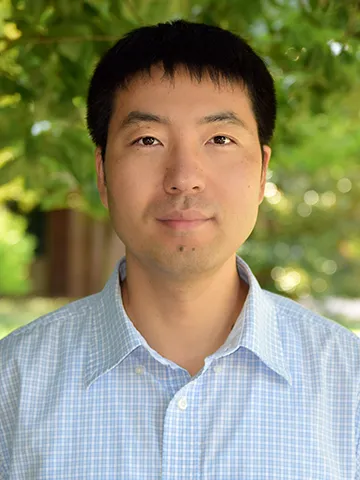
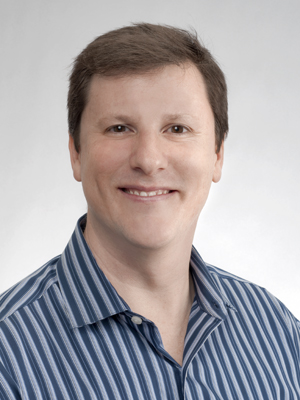
Dr. Luke Jackson is an Assistant Professor in the Department of Geography at Durham University. He previously held post-doctoral positions at the National Oceanography Centre (2013–2015) and Climate Econometrics, Nuffield College, Oxford University (2015–2020). He has undertaken consulting roles for the Rockefeller Foundation (climate change impacts in Pacific Islands) and Pictet Group (climate risks in emerging markets). Research Focus His research examines multi-scale sea-level dynamics and climate impacts, including: Historical, modern, and projected sea-level variability Coastal adaptation frameworks and management strategies Quantification of anthropogenic climate effects Probabilistic modeling of vertical land motion Publication Trends Recent articles analyze climate risks through computational modeling and regional case studies, focusing on sea-level projections, coastal vulnerability, and urbanization impacts. Work emphasizes practical applications for environmental resilience. Advising Currently supervising Emmy Martin (Master of Research) in climate-related geography topics. Additional Notes No awards, grants, or lab affiliations are documented in available materials.
Toby Rollin Ault is an Associate Professor and Director of Graduate Studies for Atmospheric Sciences in the Department of Earth and Atmospheric Sciences at Cornell University, where his research addresses emergent climate risks through interdisciplinary approaches spanning climatology, ecology, and paleoclimatology. PhD, University of Arizona, 2011 Postdoctoral Fellow, National Center for Atmospheric Research, 2011-2013 His work centers on three critical areas: quantifying 21st-century megadrought risk in the American Southwest using paleoclimate proxies and modeling; analyzing spring onset dynamics and phenological shifts across US ecosystems; and characterizing multi-decadal Tropical Pacific variability and its global teleconnections. This research integrates observational synthesis, statistical techniques, and numerical modeling to assess climate change impacts on water resources and seasonal cycles. Analysis of his recent publications reveals dominant trends in drought attribution methodology, tropical-extratropical climate linkages, and quantification of climate change impacts on hydrological and phenological systems, with increasing emphasis on industry-relevant risk assessment applications. His honors include: Faculty Fellow in Community Engaged Learning (Cornell Office of Engagement Initiatives, 2019) Dr. Ault secures research funding through Cornell Atkinson Center for Sustainability initiatives, including a 2025 industry partnership for drought risk assessment. He teaches Climate Dynamics (EAS 3050/5051) and Climate and Energy (EAS 1101), mentoring graduate students as Director of Graduate Studies. He leads the Emerging Climate Risk Lab (ECRL), which develops frameworks for communicating climate risks to policymakers and industry stakeholders through interdisciplinary collaboration.
De Viron Olivier is a Professor at La Rochelle University , associated with the DPL team. His research focuses on Geodesy , Climate System , and Data Analysis , with emphasis on geodetic data accuracy, source separation in mixed datasets, and climate dynamics' impact on geodetic observations. Research Interests : Geodetic data precision assessment Climate-induced signal separation in geodetic datasets Atmospheric and oceanic loading effects on Earth rotation Nonlinear coastal hydrodynamic modeling Earth's core variability studies via magnetic/gravity data Recent Publications highlight expertise in coastal engineering , climate-ocean mass interactions , hydrological connectivity , and Earth rotation dynamics . His work integrates GNSS , GRACE satellite , and superconducting gravimeter data across interdisciplinary teams. Affiliations : La Rochelle University Reference Institute: INSU (Institut National des Sciences de l'Univers) Research Section: CNU 35 (National Council for Universities - Earth, Planetary, and Environmental Sciences) Contact: olivier.de_viron@univ-lr.fr | Tel: +33(0)5 46 50 76 34
Valérie Ballu is a CNRS Research Director at the University of La Rochelle, affiliated with the DPL team. Her research focuses on underwater and coastal geodesy, utilizing GNSS, altimetry, and tide gauge data to study crustal movements, subduction zones, and sea-level changes. She contributes to interdisciplinary projects addressing coastal hazards and volcanic activity, particularly in Vanuatu, Mayotte, and the Indian Ocean. Research Themes : Vertical and horizontal geodetic positioning, subduction dynamics, and coastal vulnerability. Technologies : PAMELi autonomous drone development for coastal exploration. Her recent work includes monitoring the Mayotte volcanic crisis (2024) and analyzing the Ganges-Brahmaputra-Meghna delta subsidence (2021). She collaborates with geographers, oceanographers, and seismologists, emphasizing interdisciplinary data integration for hazard assessment. Scientific contributions span seafloor deformation studies (2024), calibration of altimetry missions (2023), and modeling of seafloor geodetic positioning (2021). She holds a HDR (Habilitation à Diriger des Recherches) and actively participates in international conferences like EGU and OSTST.
Evanthia Papastergiadou is a Professor in the Department of Plant Biology at the University of Patras, Greece. She leads the Plant Ecology Research Group and is a key figure in aquatic ecosystem research, particularly focusing on freshwater macrophytes, biodiversity, and ecological water quality under the EU Water Framework Directive. Education: Degree in Biology, School of Sciences, Aristotle University of Thessaloniki PhD in Biology, Department of Biology, Aristotle University of Thessaloniki Research Interests: Her research spans a wide array of ecological themes, including: Structure, dynamics and management of aquatic ecosystems Ecological water quality assessment using macrophytes as bioindicators Impact of invasive species and anthropogenic pressures Climate change effects on aquatic vegetation Landscape ecology and GIS-based land-use change analysis Research Trends from Publications: Her recent work emphasizes functional diversity of aquatic macrophytes, responses to environmental gradients, and conservation strategies in riparian and lacustrine systems across Europe. She has contributed to large-scale comparative studies such as REFRESH, COST-CONVERGES, and LIFE-IP, often involving mesocosm experiments and long-term monitoring. Grants and Projects: LIFE-IP (2018–2025): Integrated conservation of Natura 2000 sites COST Action CONVERGES (2017–2021): Riparian ecosystem management EU FP7 REFRESH (2010–2014): Climate change impacts on freshwater ecosystems National Monitoring Programs for River Ecological Quality (2014–2023) Labs & Teams: She is affiliated with the Plant Ecology Research Group at the University of Patras, which is actively involved in freshwater ecology and conservation biology. Her team collaborates with international partners across Europe, contributing to EU-level policy and conservation frameworks.
Dr. Eleni Anagnostou is a leading researcher in paleoceanography and marine biogeochemistry at the Helmholtz Centre for Ocean Research Kiel (GEOMAR) , where she has served as a group leader since 2024. Her work bridges climate dynamics, carbon cycle evolution, and geochemical proxy development, with a focus on past climate reconstructions. Ph.D., Chemical Oceanography, Rutgers University (2011) M.Sc., Environmental Science, Rutgers University (2005) B.Sc., Chemical Engineering, National Technical University of Athens (2003) Her research explores the relationship between atmospheric CO 2 , climate sensitivity, and ocean chemistry across geological periods such as the Paleogene and Neogene. She specializes in boron isotopes and trace elements as proxies for seawater pH and CO 2 levels, with applications to understanding tipping points in Earth’s climate history. The HighBorG project (ERC Consolidator Grant) and multiple DFG-funded initiatives underscore her leadership in reconstructing climate-carbon interactions during high-CO 2 intervals. Her recent publications emphasize methodological innovations in boron isotope analysis, ultra-high-resolution coral-based climate records, and modeling of past climate variability. Scientific Awards : ERC Consolidator Grant (2024-2029) for HighBorG DFG Project Funding (467590255, 468679331, 546924479) She has mentored numerous postdoctoral researchers and students, including Dr. Karlos Kochhann, Dr. Ray Zammit, and Luisa Meiritz, while collaborating on multidisciplinary efforts like the PAGES workshop series on foraminiferal boron isotopes.
Sybren Drijfhout is a Professor in Climate Physics at the University of Southampton (Department of Ocean and Earth Science), where he works three days a week. Additionally, he works one day a week as a Professor by Special Appointment (Buys Ballot Chair) at Utrecht University (IMAU) and one day a week at the Royal Netherlands Meteorological Institute (KNMI) as a Senior Researcher in the RDWK department (Research and Development of Weather and Climate Models). His research focuses on climate dynamics , ocean-climate interactions , sea level rise , and extreme weather forecasting . Current projects include ODYSEA (ocean forcing atmospheric variability), SMURPHS (ocean's role in climate hiatus), Blue Action (North Atlantic-Arctic sea-ice links to European weather), and PRIMAVERA (high-resolution ocean modeling for climate variability). He also collaborates on Antarctic ice-ocean interactions and IPCC AR6 report as a lead author for the chapter on 'Ocean, Sea-level, and Cryosphere'. At KNMI, he leads the 'Sea Level Rise' project, collaborating with Dewi Le Bars and Rein Haarsma on ocean eddies' impact on atmospheric variability. At Utrecht University, he works with the Ice and Climate Group, while at Southampton, he mentors Master's students and a postdoc (Jenny Mecking) on Antarctic ice sheet modeling using PISM and UK Met Office's HadGEM3 model for seasonal forecast improvements.
Man Qi is a Marie Curie Research Fellow at the University of Oxford , Department of Biology. Her work focuses on understanding coastal ecosystem stability in the context of global changes such as extreme climate events, sea level rise, and invasive species. Climate change impacts on ecosystems Interspecific interactions under stress Plant-soil feedback mechanisms Ecological modeling and remote sensing She employs greenhouse experiments, field studies, remote sensing, and mechanistic modeling across field sites in the Cheseapeake Bay Eastern Shore and the Yellow River Delta. Her research emphasizes translating ecological theory into conservation strategies and advancing nature-based solutions for coastal resilience. Recent publications highlight her work on climate change effects, ecological modeling, and autonomous monitoring technologies. She actively engages in international collaborations and will attend conferences like CERF 2025 and BES annual meeting. Marie Curie Research Fellowship Man Qi welcomes PhD collaborations and students interested in coastal ecology, climate change, and ecological modeling. Her fieldwork spans Europe and Asia, integrating multidisciplinary approaches to detect ecosystem collapse signals.
Aradhna Tripati is a Professor at the University of California, Los Angeles with joint appointments in the Institute of the Environment and Sustainability, the Department of Atmospheric and Oceanic Sciences, the Department of Earth, Planetary, and Space Sciences, the Institute for Geophysics and Planetary Physics, and the California Nanosystems Institute. She serves as the faculty director and founder of the Center for Developing Leadership in Science (CDLS) at UCLA. Dr. Tripati received her B.S. in Geological Sciences from California State University, Los Angeles in 1996, where she received the Aaron Waters Award for Outstanding Senior. She earned her Ph.D. in Earth Sciences at UC Santa Cruz in 2002, where she was a Gates Millennium Scholar, an Ocean Drilling Program Fellow, and a UC Regents' Fellow. Following her Ph.D., she was a research fellow at the University of Cambridge, holding the Thomas Nevile Fellowship in Natural Sciences, a Comer Abrupt Climate Change Fellowship, a National Environmental Research Council Fellowship, and a Marshall Sherfield Fellowship. She also served as a visiting scientist at the California Institute of Technology for several years before joining UCLA as an assistant professor in 2009, receiving tenure in 2014. Dr. Tripati's research focuses on climate change, the history and dynamics of changing Earth systems including climate, ice sheets, oceans, the water cycle, and carbon dioxide levels. She specializes in tool development and clumped isotope geochemistry, using the chemistry of natural compounds as well as models to understand how the Earth works. Her work addresses pressing questions pertaining to climate change, earth systems history, geochemistry, geobiology, and sedimentary geology. She also integrates geochemical data with field-based observations, sedimentologic and micropaleontologic data, and models. Her interdisciplinary approach spans multiple fields, connecting geological records with modern climate science to understand past and present environmental changes. Dr. Tripati's extensive publication record, with 66 publications including 12 in Nature journals, Science, or PNAS, demonstrates her significant contributions to paleoclimatology and geochemistry. Her recent work shows a continued focus on clumped isotope thermometry, with applications to understanding past climate conditions, hydrological cycles, and Earth system processes. Her research spans various time periods from the Miocene to the Holocene, examining climate dynamics across different spatial scales from local lake systems to global ocean circulation patterns. A notable trend in her recent publications is the increasing integration of community engagement and environmental justice perspectives with traditional geochemical research. Presidential Early Career Award in Science and Engineering from President Obama NSF CAREER award (NSF's most prestigious award for early career faculty) Bromery Award for Minorities from the Geological Society of America Hellman Fellow National Academy of Sciences Kavli Fellow E.O. Wilson Award for Outstanding Science on climate change Chair International D'Excellence in Stable Isotopes by IUEM Vasa Cube Awardee for UCLA's Fiat Lux Freshman Seminar program UCLA Career Development Award Dr. Tripati has mentored over 130 postdoctoral fellows, researchers, PhD students, Master's students, undergraduates, high school teachers, and high school students. Her commitment to education extends beyond traditional academic mentoring, as she has developed numerous outreach programs to promote diversity in STEM fields. She has secured substantial research funding, including the NSF CAREER award which supported her work from 2014-2018, and has established world-renowned laboratories for clumped isotope geochemistry. Her research program is highly collaborative, involving partnerships with institutions worldwide and interdisciplinary teams addressing complex environmental questions. Dr. Tripati directs the UCLA Geochemistry Facility, which houses specialized equipment for clumped isotope measurements including Thermo Finnigan MAT 253 and Nu Perspective IS mass spectrometers. Her 'Tripati Lab' (also known as the Climate & Biogeochemistry Group or Climate & Carbon Cycle Group) focuses on using the chemistry of natural compounds to understand Earth systems. The lab has established a strong reputation in clumped isotope geochemistry and maintains active collaborations with researchers globally. The lab follows a 'Star Wars naming convention' for its instruments, reflecting the team's enthusiasm for both science and pop culture. Dr. Tripati has also founded the Center for Developing Leadership in Science (CDLS), which aims to develop leadership skills in science students while promoting diversity and inclusion in environmental science and geoscience.
Professor Yi Deng is affiliated with the School of Earth and Atmospheric Sciences at the Georgia Institute of Technology . His research focuses on climate variability across multiple timescales, atmospheric dynamics, and climate modeling. University: Georgia Institute of Technology School: School of Earth and Atmospheric Sciences Email: yi.deng@eas.gatech.edu Research interests include: Hydroclimate variability at regional scales Polar-tropical interactions ENSO and Annular Modes feedbacks Probabilistic graphical models Climate networks Atmospheric scale-interactions Aerosol-circulation coupling Surface heat flux parameterization Recent publications highlight trends in climate extremes, monsoon dynamics, surface flux modeling, and multiscale interactions. Key subfields include synoptic-scale atmospheric disturbances, energy transport mechanisms, and data-driven climate analysis tools. No scientific awards or student advising information were explicitly mentioned in the provided texts.
Jud Partin serves as a Research Associate Professor at the University of Texas Institute for Geophysics (UTIG), part of The University of Texas at Austin, with primary affiliation in the Department of Earth and Planetary Sciences. His research integrates paleoclimate archives—particularly tropical speleothems, corals, and foraminifera—with climate modeling to evaluate historical climate variability and improve future projections. Education: Ph.D. in Earth and Atmospheric Sciences from Georgia Institute of Technology M.A. in Physical Chemistry from University of Southern California B.S. in Chemistry from The Citadel Dr. Partin's work centers on paleoclimatology , specializing in tropical hydroclimate dynamics and ENSO reconstruction . He develops quantitative methods for interpreting proxy records while rigorously assessing reconstruction uncertainties. Current projects address abrupt climate transitions, Holocene hydroclimate shifts, and millennial-scale ENSO behavior through field-based proxy development and model-data comparisons. His approach emphasizes translating paleoclimate insights into constraints for modern climate models. Analysis of his 2019-2025 publications reveals three dominant themes: methodological innovation in proxy interpretation (e.g., speleothem trace element calibration), tropical climate dynamics during key periods (Holocene, Common Era), and systematic data-model comparisons for ENSO and hydroclimate. Notable community contributions include the Iso2k paleoclimate database and PaCTS 1.0 reporting standards, reflecting his commitment to open science and reproducible research in paleoclimatology. Based at UTIG's J.J. Pickle Research Campus, Partin collaborates extensively with climate modelers and field researchers across institutions. His work has received significant media attention, including coverage of tropical paleosea level studies in Micronesia and analyses of Greenland ice sheet dynamics, demonstrating the real-world relevance of his paleoclimate research to contemporary climate challenges.
Ian Goodwin serves as an Adjunct Associate Professor at the UWA Oceans Institute, The University of Western Australia, where he conducts research in Earth and Planetary Sciences with a focus on Australian coastal systems and climate dynamics. His research interests span Sea Level , Wave Climate , Last Interglacial periods, Southern Oscillation , Wind Wave dynamics, Sea Surface Temperature patterns, and Indian Ocean processes. His work contributes significantly to understanding past and present climate systems, particularly in the Australian context, with applications for future climate projections and coastal management. Analysis of his recent publications reveals a strong focus on paleoclimate reconstruction, particularly examining sea level changes during the Last Interglacial period, wave climate dynamics, and ENSO (El Niño-Southern Oscillation) variability. His research integrates geological evidence with climate modeling to understand long-term climate patterns and their implications for contemporary and future coastal environments. Dr. Goodwin has secured significant research funding through multiple projects, demonstrating his active role in the scientific community and his ability to lead collaborative research efforts addressing critical environmental questions. His research profile shows extensive collaboration with industry partners including Chevron, Rio Tinto, and Woodside Energy, as well as with the ARC Australian Research Council, focusing on projects related to rock art dating, reservoir analogues, and sedimentation processes in coastal systems.
M. Verlaan is a Professor at Delft University of Technology (TU Delft) within the Electrical Engineering, Mathematics and Computer Science faculty. His research focuses on Oceanography , Hydrodynamic Modeling , and Satellite Altimetry , with emphasis on storm surge prediction , tidal dynamics , and climate change impacts on coastal systems . Recent works highlight his expertise in nonlinear tide-surge interactions and altimetry-based river water level estimation . He has developed advanced Ensemble Kalman Filtering systems for ocean modeling and contributed to global storm surge projections using CMIP6 climate models. His 2025 studies include Arctic tidal analysis via GNSS buoys and improved shallow-water tidal modeling. Collaborations span Earth and Space Science , Ocean Dynamics , and Journal of Geophysical Research-Oceans . Key datasets include Arctic sea level measurements and Tide-surge simulations , reflecting his work in coastal flood hazard assessment and hydrodynamic leveling for geodetic applications. His 2024-2025 publications demonstrate a trend toward multi-sensor data integration (e.g., Sentinel-6 altimeters, GNSS buoys, AIS) for high-resolution coastal and riverine monitoring . Themes include nonlinear feedback mechanisms in tidal systems and climate-driven variability in coastal processes.
Matthew England is a Scientia Professor at the University of New South Wales (UNSW), affiliated with the Faculty of Science and the Centre for Marine Science & Innovation. His research focuses on large-scale ocean circulation and its influence on global climate systems, particularly in the Southern Hemisphere and Antarctic regions. He utilizes ocean-climate models combined with observational data to study oceanic processes across timescales ranging from seasonal to millennial. Education includes: B.Sc. Honours (Class I and University Medal), University of Sydney (1987) Ph.D. in Oceanography/Climate Science, University of Sydney (1992) Research interests encompass Southern Ocean dynamics, Antarctic ice-ocean interactions, tropical-polar teleconnections, ocean heat uptake, and paleoclimate reconstructions. His work examines mechanisms controlling ocean currents, climate variability, and impacts of anthropogenic forcing on marine systems. Publications demonstrate strong emphasis on Antarctic climate processes, Southern Ocean circulation dynamics, and global climate teleconnections. Recent work focuses on climate change impacts on polar regions, including ice-shelf melting, ocean warming trends, and decadal climate variability. Leads collaborative projects through the Centre for Marine Science & Innovation, supervising research teams focused on ocean modeling and climate dynamics. Current investigations include Antarctic shelf warming mechanisms, Southern Ocean overturning circulation changes, and climate feedback systems.
Emily Choy is an Assistant Professor in the Department of Biology at McMaster University, focusing on marine and Arctic ecology. Her work integrates Environmental Toxicology , Climate Change Biology , and Physiological Ecology to study how Arctic and marine species adapt to environmental stressors. Research Interests: Marine ecosystems, climate change impacts, contaminant biology, and energy budget analysis. Teaching: Instructs advanced research projects and ecology courses at the undergraduate level. Recent scholarly work spans Arctic seabird thermal tolerance , beluga whale dietary shifts , and mercury contamination trends . Publications highlight the intersection of climate change , toxicological stressors , and conservation strategies in polar regions. Teaching activities include Advanced Independent Research Project , Applied Biology Placement , and Senior Thesis supervision, emphasizing hands-on ecological and physiological research training.