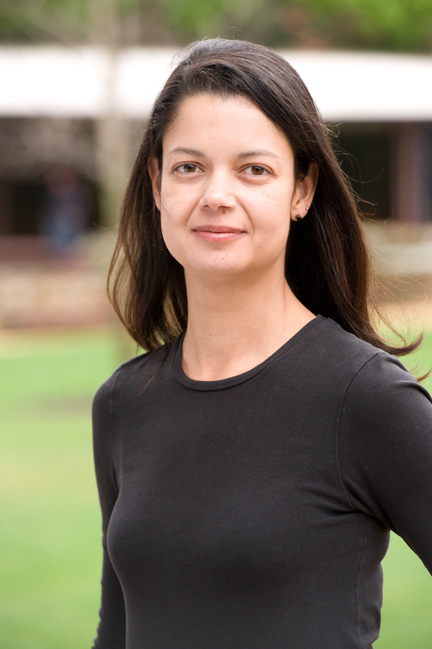
Dr. Björn Klaes is a Scientific Employee in the Department of Geology at the University of Trier , Germany. His research focuses on geochemical processes in diverse environments. Research Areas: Rock weathering biogeochemistry, fjord nutrient export dynamics, paleoclimate reconstructions, and environmental impacts of forestry operations. Key Projects: Investigated element transport in Patagonian fjords, analyzed stalagmite records for Holocene climate variability, and participated in multi-proxy studies of South African and Mongolian lake sediments. His recent publications (2022-2025) emphasize soil formation mechanisms , climate-soil interactions , and methodological developments in 3D geological modeling. Fieldwork spans from Patagonian Andes to Mongolian steppes. Contact: klaesb@uni-trier.de | Office: University of Trier, Campus II, Behringstraße 21, Trier
David Bice is a Professor in the Department of Geosciences at Pennsylvania State University , specializing in tectonics, structural geology, paleoclimate, and stratigraphy. His work focuses on understanding Earth's systems through geological records and climate cycles. Research Interests include: Tectonic processes and structural geology Paleoclimate reconstruction using geological proxies Magnetostratigraphy and impact stratigraphy Earth systems modeling and carbon cycle dynamics Recent Publications (2005-2019) analyze climate cycles, stratigraphic boundaries, and tectonic-climate interactions, with keywords spanning geology, paleoclimatology, and oceanography. His work often involves international collaborations in Italy, Croatia, and global sites. Email : dmb53@psu.edu
Dr. Mark Hemer is a Research Director (Climate, Atmosphere and Ocean Interaction) and Senior Principal Research Scientist at CSIRO's Environment Business Unit. With over 20 years of Met-Ocean research experience, he applies his expertise to public and private sector challenges globally, having worked in Australia, the US, Japan, the Netherlands, and Ireland. Chair, World Meteorological Organization (WMO) Coordinated Ocean Wave Climate Project (COWCLIP) Member, WMO Standing Committee on Marine Meteorology and Oceanographic Services (SC-MMO) Member, WMO Expert Team on Coastal and Emergency Response (ET-CER) Dr. Hemer contributes to climate science through roles in the IPCC Sixth Assessment Report (Oceans, cryosphere, and sea-level change), and has published over 100 peer-reviewed papers and 70 technical reports. His work focuses on: Understanding ocean wave climate variability and its role in the coupled climate system Ocean renewable energy systems and their environmental impacts Coastal and marine stressor analysis under climate change He holds a PhD in Antarctic and Southern Ocean Studies (University of Tasmania, 2003) and a BSc (Hons I) in Oceanography and Meteorology (Flinders University, 1998).
Professor Yan CHEN is an academic faculty member at Fudan University, serving as Executive Deputy Dean of the Graduate School. His research intersects environmental science, hydrodynamics, and ecosystem management, focusing on climate impacts on estuarine systems, methane emissions in reservoirs, and water quality interventions. Recent publications highlight his work on tidal energy dynamics under sea level rise, remote sensing for wetland water balance, and artificial mixing systems to mitigate eutrophication. His studies span interdisciplinary approaches, integrating numerical modeling, field experiments, and geochemical analyses. Key research themes: Climate change and estuarine hydrology Methane emissions in freshwater reservoirs Artificial mixing for water quality management Groundwater-surface water interactions
Dr. David Hutchinson is a Research Fellow at the Climate Change Research Centre within the Faculty of Science at the University of New South Wales (UNSW). He is also a long-term visitor at ANU Earth Sciences as part of the Climate and Fluid Physics group. Currently undertaking an ARC DECRA fellowship from 2022 to 2025, his work focuses on paleoclimate modeling and Earth system dynamics during geological warm periods. His educational background includes a PhD from the University of New South Wales (2011-2016) and a PhB (Hons) from the Australian National University (2005-2008). Dr. Hutchinson specializes in paleoclimate modeling, with particular expertise in past warm climate intervals including the Eocene (56-34 Ma), Oligocene (34-23 Ma), and Miocene (23-5 Ma). His research investigates the long-term evolution of deep ocean circulation and the development of the Antarctic Circumpolar Current. He has developed sophisticated simulations using the coupled climate model GFDL CM2.1 and is extending these to new intervals in the Oligocene and Miocene. His work also includes simulations of the Last Interglacial (127 ka), examining the impacts of partial melting of the West Antarctic ice sheet. Analysis of his recent publications reveals a strong focus on Eocene climate dynamics, with particular attention to ocean circulation patterns, climate variability during geological warm periods, and model-data comparisons. His research spans multiple disciplines including paleoceanography, climate modeling, and biogeochemical cycles, with significant contributions to understanding how Earth's climate system responds to elevated temperatures. Scientific Awards: ARC DECRA fellowship DE220100279: Did ocean circulation changes build the Antarctic ice sheet? (2022-2024, $453,000 AUD) FORMAS Mobility grant 2018-01621: Climate Impacts of Paleogeography at the Eocene-Oligocene Transition (2019-2021, 3,260,925 SEK) Dr. Hutchinson has secured significant research funding including his current ARC DECRA fellowship and a previous FORMAS Mobility grant. His current research involves developing equilibrium simulations of the Oligocene (30 Ma) and Miocene (15 Ma) warm climates using GFDL CM2.1, developing snapshot simulations using ACCESS-ESM1.5, enabling offline tracer simulations of Neodymium isotopes, and simulating partial loss of the West Antarctic Ice Sheet during the Last Interglacial. His work is highly collaborative, with numerous co-authored publications across leading climate science journals. As part of the Climate Change Research Centre at UNSW, Dr. Hutchinson contributes to one of Australia's leading climate research institutions, working alongside experts in paleoclimate modeling, climate dynamics, and Earth system science. His research integrates with broader efforts to understand past climate states as analogs for future warming scenarios.
Rick Hennekam serves as a Senior Scientist at the Royal Netherlands Institute for Sea Research (NIOZ), affiliated with the Ocean Systems department. His research integrates marine geochemistry, paleoceanography, and paleoclimatology to reconstruct Earth's climate history using ocean sediments as environmental archives. Hennekam employs high-resolution analytical techniques to investigate climate dynamics on human-relevant timescales. His primary research focuses on: Oxygen-depleted marine environments and anoxic event mechanisms Quaternary climate variability and sea level fluctuations Anthropogenic climate change using coral-based reconstructions Ocean current dynamics including the Indonesian Throughflow Trace metal cycling in restricted basins High-resolution paleoenvironmental reconstruction Hennekam's work utilizes millimeter-scale sediment analysis to achieve annual-to-decadal resolution, bridging geological records with human timescales. Recent publications demonstrate expertise in Mediterranean teleconnections, Paleoproterozoic iron formations, and North Sea chronostratigraphy, emphasizing advanced XRF core scanning and LA-ICP-MS techniques. His scientific recognition includes: NWO Vidi grant (800,000 euros) for investigating climate and ocean tipping points Hennekam leads major research initiatives including the TIP-TOP expedition on Earth system tipping points and participates in international projects like NoSE (North Sea Atlantic Exchange). His grant portfolio features NWO funding for regional sea level studies and Sargassum inundation research in the Caribbean. As principal investigator on Utrecht University-NIOZ collaborative projects, he examines eukaryotic metabolisms and harmful algal blooms. Based at NIOZ's Texel facility, Hennekam operates advanced geochemical laboratories and participates in global research cruises aboard vessels like R/V Pelagia. His work with the Ocean Systems department focuses on sediment core analysis from critical regions including the Black Sea, Gulf of Mexico, and Norwegian Trench.
Sonja van Leeuwen is a Senior Research Assistant at the Royal Netherlands Institute for Sea Research (NIOZ), specializing in marine ecosystem modeling within the Coastal Systems department. Her work focuses on numerical modeling of hydrodynamics, biogeochemistry, and ecosystem responses to stressors. Key Expertise : GETM-ERSEM-BFM modeling, end-to-end ecosystem simulation, stressor-response analysis Current Role : Maintains the OSPAR ICG-EMO riverine load database for European Shelf nutrient flows Research Themes : Linking lower to higher trophic level models to assess marine ecosystem dynamics Climate change impacts on shelf seas (temperature, acidification, stratification) Benthic-pelagic coupling and biogeochemical processes Deep chlorophyll maxima and primary production Scientific Contributions : Developed coupled models for fisheries yield projections under climate scenarios Investigated seasonal variability in North Sea stratification patterns Quantified the role of deep chlorophyll maxima in marine productivity
Christine Schøtt Hvidberg is an Associate Professor at the Niels Bohr Institute , University of Copenhagen, leading the ice modeling group within the Physics of Ice, Climate and Earth section. Since 2005, she has focused on ice-sheet dynamics, planetary climate, and paleoclimate reconstruction from ice cores. Education 1990: M.Sc. in Physics (major) and Mathematics, University of Copenhagen 1993: Ph.D. in Geophysics, University of Copenhagen Research Interests Her research integrates theoretical fluid mechanics with observational data to understand non-linear ice flow, climate stability, and ice-sheet evolution. Key areas include: Non-linear dynamical behavior of ice in the climate system Planetary climate and ices (e.g., Mars polar science) Glacial geophysics and remote sensing Ice-core paleoclimate archives Research Trends Recent publications (2023-2025) emphasize Greenland Ice Stream dynamics , ice fabric anisotropy , and subglacial hydrology , leveraging radar polarimetry, GPS, and satellite data to quantify ice-sheet responses to climate change. Awards & Honors Carlsberg Foundation Research Fellowship (2002) Inge Lehmanns Foundation Travel Award (2002) Curie Postdoc Award (1998) Knud Højgaards Foundation Travel Award (1992) Danish Council for Independent Research Stipend (1990) Grants & Leadership Villum Foundation Experiment grant (2019-2021): Greenland ice-sheet rover exploration Dancea project (2015-2020): GPS monitoring of Greenland surface movement ESA CCI+ Greenland Ice Sheet (Co-PI) Chair/co-chair of ice-flow modeling consortia for EastGRIP and NEEM ice-core projects Teaching & Supervision As Head of Studies for Physics (2016-present), she oversees ~750 MSc/BSc students. She has supervised 10 PhDs (6 as main advisor), 15 MSc , and 21 BSc projects, and teaches courses in glaciology and climate physics.
Aubrey Dey Cannon is a Professor in the Department of Anthropology at McMaster University, specializing in Northwest Coast archaeology. Their research integrates environmental science, zooarchaeology, and cultural anthropology to investigate coastal adaptations, mortuary practices, and resource management systems spanning millennia. Research interests focus on Northwest Coast Studies , Shell Midden Analysis , and Climate Change Archaeology , with particular expertise in fisheries archaeology, mortuary practices, and non-invasive site investigation techniques. Cannon employs interdisciplinary methods including sclerochronology, stable isotope analysis, and geochemical proxies to reconstruct past human-environment interactions and subsistence strategies. Recent publications demonstrate consistent output in high-impact journals like Journal of Field Archaeology and American Antiquity , revealing trends toward methodological innovation in minimally invasive techniques and expanding temporal frameworks for understanding coastal adaptations. Key themes include seasonal resource exploitation, anthropogenic landscape modification, and emotional dimensions of archaeological practice. Teaching activities show extensive engagement with graduate and undergraduate instruction, particularly in archaeology of death, climate change, hunter-fisher-gatherer societies, and zooarchaeology. Courses taught include ANTHROP 738 (Archaeology as History), ANTHROP 3DD3 (Archaeology of Death), and ANTHROP 3X03 (Zooarchaeology) across multiple academic years through 2024. Professional impact is evidenced by citations in 22 Wikipedia pages, media coverage from news outlets and blogs, and significant scholarly engagement across academic platforms including Mendeley readership and social media references.
Vittoria Todisco is a researcher at Linnaeus University specializing in aquatic ecology with a focus on thiamin (vitamin B1) dynamics in Atlantic salmon populations. She is affiliated with the Food Web Ecology research group and the Linnaeus University Centre for Ecology and Evolution in Microbial model Systems (EEMiS). Her research interests center on food web transfer of micronutrients , particularly examining how thiamin deficiency affects salmon behavior and offspring survival in the Baltic Sea. She investigates adaptations among aquatic organisms to environmental stressors including climate change and ultraviolet radiation exposure. Her work bridges ecological, physiological, and biochemical perspectives to understand nutrient dynamics across trophic levels. Dr. Todisco's recent publications reveal a strong focus on thiamin metabolism in Atlantic salmon, with studies examining fatty acid profiles, life cycle dynamics, and transfer mechanisms through aquatic food webs. Her research has significant implications for understanding population declines in both salmon and mussel-eating sea birds. She has recently completed her doctoral thesis on thiamine status in Atlantic salmon through Linnaeus University Press, establishing herself as an emerging expert in this specialized field of aquatic nutrient ecology.
Björn Johannesson is a Professor of Building Physics in the Department of Building Technology at Linnaeus University's Faculty of Technology. His research focuses on coupled mass and heat transport processes in porous building materials including concrete, wood, and bricks. He leads research groups in Building Physics and Wood Building Technology, and is associated with the Linnaeus University Centre for Competitive Timber Structures. His work has significant implications for understanding moisture damage in building envelopes and material degradation due to corrosion, frost damage, and wood deformation. PhD in Transport and Sorption Phenomena in Concrete and Other Porous Media (2000), Lund University Licentiate in Modelling of Transport Processes Involved in Service Life Prediction of Concrete (1998), Lund University Professor Johannesson's research primarily centers on coupled mass transport and heat transport processes in porous building materials such as wood, concrete, and bricks. These phenomena are critical for understanding moisture damage in building envelopes and material degradation mechanisms. His work combines theoretical concepts from continuum mechanics and mixture theory with thermodynamic principles to derive constitutive equations. He develops time-dependent and coupled finite element methods to numerically solve governing equations, with applications ranging from simulating degradation processes in concrete to optimizing environmentally friendly concrete binders over a 100-year perspective. His research also addresses mold growth on single-layer sealed facades and moisture-safe construction of wooden houses. Analysis of Professor Johannesson's recent publications reveals a strong focus on multiphase moisture and heat transport in porous materials, particularly in wood and concrete. His work consistently applies advanced numerical methods, especially finite element techniques, to solve complex coupled transport phenomena. A significant portion of his research addresses concrete durability issues including chloride ingress, frost damage, and chemical reactions. The development and application of the hybrid mixture theory appears as a unifying framework across his publications. His more recent work shows an increasing emphasis on wood building technology and sustainable construction methods, reflecting a strategic shift toward environmentally conscious building practices while maintaining his strong foundation in transport phenomena modeling. Professor Johannesson actively supervises doctoral students in specialized areas of continuum mechanics, mixture theory, and numerical methods for solving coupled time-dependent differential equations. His teaching spans undergraduate courses in building materials science, building physics, and concrete technology, as well as doctoral-level instruction in advanced mechanics topics. His research is supported through ongoing projects focused on sustainable timber construction and mechanical long-term effects in dowel connections for extended building lifespan and material reuse. Professor Johannesson leads the Building Physics research group and is affiliated with the Linnaeus University Centre for Competitive Timber Structures. His research environment maintains strong collaborations with VKAB (Växjö Kommunföretag AB) and regional industries, focusing on producing new and renovating old wooden houses in moisture-proof and energy-efficient ways. His work bridges theoretical continuum mechanics with practical building technology applications, creating a robust research ecosystem that addresses both fundamental scientific questions and real-world construction challenges.
Jens Hesselbjerg Christensen is a Professor at the Ice, Climate and Geophysics research group within the Niels Bohr Institute at the University of Copenhagen. His research focuses on climate modeling, extreme weather events, and Arctic climate dynamics. He has been actively publishing research since at least 2022 with multiple publications appearing through 2025, demonstrating continued scholarly activity. His work is affiliated with the University of Copenhagen's Niels Bohr Institute, a leading center for physics and geoscience research in Europe. Christensen's research spans multiple critical areas of contemporary climate science: Climate modeling and projections, particularly using convection-permitting models Extreme weather events and their intensification under climate change Arctic climate dynamics and sea ice interactions Atmospheric circulation patterns, especially the North Atlantic Oscillation Precipitation extremes and regional climate modeling Climate change impacts on permafrost regions and biomass distribution Wind energy potential in changing Arctic conditions His recent publication record shows a strong focus on understanding how climate change affects extreme weather events, with particular emphasis on 'unprecedented extremes' - climate events that exceed historical records and challenge current adaptation strategies. His work often employs regional climate models, particularly for European and Arctic regions, and examines the impacts of climate change on windstorms, precipitation extremes, and temperature patterns. Christensen has collaborated extensively with researchers across Europe and maintains connections with the Danish Meteorological Institute, where he worked from 1990 to 2017. Christensen's research has been cited in policy documents and picked up by news outlets, demonstrating its relevance to both scientific and societal discussions about climate change. His work on windstorm extremes has received attention from 2 news outlets, while his research on biomass distribution in permafrost regions has been highlighted in 3 news mentions and blogged about. Several of his publications have been referenced in policy sources, showing the applied value of his research. As a professor, Christensen advises PhD students and early-career researchers in climate science. His work is supported by various research grants focused on climate modeling and extreme event analysis. He is involved with major climate research initiatives including Arctic-CORDEX, which coordinates regional climate modeling efforts for the Arctic. His research group at the Niels Bohr Institute conducts interdisciplinary studies combining observational data with advanced modeling techniques to understand past, present, and future climate conditions.
Andrew Orr is a Researcher affiliated with the Scott Polar Research Institute at the University of Cambridge and the British Antarctic Survey (BAS). His work focuses on climate change and variability in polar and high-mountain regions, particularly the Antarctic, Alps, and Himalayas. Specializes in regional/global climate modeling and machine-learning methods Collaborates with international climate modeling groups His research addresses critical interdisciplinary challenges, including glacial/snowpack shrinkage affecting water resources, Antarctic ice sheet loss contributing to sea-level rise, and extreme weather event dynamics in vulnerable regions. He is involved in supervising PhD projects through the Cambridge NERC Doctoral Landscape Awards (Training Partnerships) and contributes to initiatives like the TEAMx observational campaign. Email: anmcr@bas.ac.uk
Xu Zhang is a Research Fellow affiliated with the British Antarctic Survey (BAS) under the Cambridge NERC Doctoral Landscape Awards (C-CLEAR DTP) at the University of Cambridge. Their work focuses on climate science, particularly abrupt and nonlinear climate changes such as Dansgaard-Oeschger events and glacial cycles. Research Area: Dynamics of past climate changes Institution: University of Cambridge and British Antarctic Survey Research interests include: Global core climate tipping elements and cascade effects Quaternary millennial-to-orbital time scale climate variability Antarctic forcings and feedbacks in climate changes Tropical hydroclimate variability Paleoclimate data assimilation Marine carbon cycle Xu Zhang leads a modeling protocol in the PAGES Quaternary Interglacial working group to study sea level-CO2 evolution during Marine Isotope Stage 11c and Termination V. Their interdisciplinary approach combines proxy records, numerical models, statistical methods, and machine learning.
Associate Professor Andrea Sardinha Taschetto is a climate scientist at the University of New South Wales, specializing in ocean-atmosphere interactions and their impact on regional climate variability. Her work focuses on El Niño-Southern Oscillation (ENSO), atmospheric teleconnection patterns, tropical ocean basin interactions, and future climate projections. PhD, MSc, and BSc in Physical Oceanography and Physics from USP, Brazil Accredited Associate Fellow of Higher Education Advance Her research examines how sea surface temperature anomalies influence Australian and global rainfall patterns, droughts, and marine heatwaves. She contributes to understanding ENSO diversity and its implications for climate extremes. Notable scientific awards include the Australian Academy of Science Dorothy Hill Award , ARC Fellowships , and conference honors. She supervises students across honors to PhD levels on topics like Southern Hemisphere atmospheric dynamics, tropical Pacific circulation, and climate extremes. At UNSW, she serves as CCRC Undergraduate Coordinator , chairs committees for climate seminars, and contributes to equity and diversity initiatives. She teaches CLIM1001/GENS0401 - Introduction to Climate Change and mentors HDR students in climate modeling and oceanography.