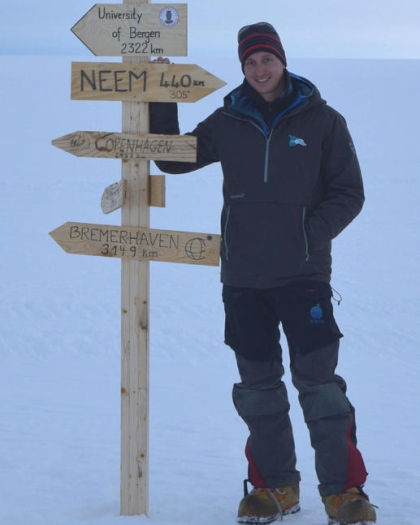
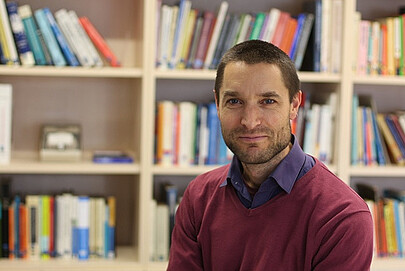
Andreas Born is a Professor at the Department of Geosciences, University of Bergen, Norway. His research focuses on glaciology, climate modeling, and ice sheet dynamics, particularly regarding the Greenland and Scandinavian ice sheets. He contributes to the Bjerknes Center for Climate Research and NORCE Climate and Environment. His work examines surface mass balance, ice dynamics, and paleoclimatic reconstructions using advanced models like ELSA v2.0 and ice-sheet stratigraphy analysis. Research interests include the influence of climate variability on ice sheets, uncertainty quantification in climate models, and the interplay between glacial landscapes and ice dynamics. Recent studies investigate historical mass loss projections for Greenland and the impact of landscape evolution on ice-sheet behavior. Key funding sources include the European Research Council (ERC) and the Research Council of Norway. He supervises doctoral students, such as Andreas Plach, and collaborates internationally on projects like the Eemian ice sheet simulations and model development. His work bridges paleoclimatology with modern climate change impacts, aiming to improve predictions of sea-level rise and ice-sheet stability.
Eystein Jansen is a **Professor** in Earth Sciences/Paleoclimatology at the **University of Bergen (UiB)**, affiliated with the **Department of Earth Science** and the **Bjerknes Centre for Climate Research**. His work focuses on Arctic climate dynamics, sea ice variability, and paleoclimatic reconstructions. He collaborates with institutions like NORCE Climate and Environment and the Alfred Wegener Institute. **Research Interests:** Jansen’s research explores abrupt climate changes, glacial-interglacial transitions, and the role of sea ice and ocean circulation in climate systems. He uses biomarkers, sediment cores, and climate models to reconstruct past environmental conditions. Key projects include the ABRUPT initiative studying Arctic climate shifts and interdisciplinary studies linking past and present climate patterns. **Key Contributions:** He co-authored influential articles on sea ice dynamics in the Nordic Seas and the impact of sea-level rise on atmospheric/oceanic systems. His work bridges paleoclimate data with modern climate models, offering insights into future climate scenarios. Jansen also engages in science communication, as seen in his podcast appearances explaining climate science to the public. **Grants & Funding:** Supported by projects funded by the Research Council of Norway (e.g., references 325333, 314371), his research addresses urgent climate questions, such as the relevance of historical climate patterns to contemporary Arctic changes. He supervises doctoral students like Henrik Sadatzki and Evangeline Sessford, advancing the next generation of climate scientists. **Affiliations:** In addition to UiB, Jansen contributes to the **Nansen Legacy** and **Bjerknes Centre**, fostering collaborative climate research. His work emphasizes interdisciplinary approaches to understand and address global climate challenges.
Jo Arve Alfredsen is a Professor at the Department of Engineering Cybernetics, Norwegian University of Science and Technology (NTNU). He has held an Associate Professor position since 2004, with a PhD and Master's degree in Engineering Cybernetics from NTNU. His research focuses on automation for marine systems, including aquaculture and fisheries. Key areas include mathematical modelling of marine biological systems, sensor development for aquaculture, and fish telemetry. He leads the research group on Automation in Fisheries and Aquaculture. Teaching responsibilities include courses like Industrial and Embedded Computer Systems Design (TTK4155), Topics in Fisheries and Aquaculture Cybernetics for PhD students (TTK8108), and Fish Telemetry . He coordinates the specialization program in fisheries and aquaculture cybernetics and offers Master’s projects in automation and marine instrumentation. Recent research highlights include developing robotic platforms for fish telemetry, optimizing dissolved oxygen levels in salmon cages, and behavioral studies using acoustic telemetry. His work bridges cybernetics, marine engineering, and biological systems to enhance sustainable aquaculture practices.
Jason McLachlan is an Associate Professor in the Department of Biological Sciences at the University of Notre Dame, within the College of Science. His research focuses on plant population ecology, statistical modeling, and paleoecology, particularly examining how species respond to large-scale environmental changes like climate change and land use shifts. He leads the McLachlan Lab, which investigates ecological processes through fossil records, genetic data, and mathematical models. His work includes studying range expansions of plant species during historical warming events and evolutionary responses to rising CO2 levels in coastal ecosystems. McLachlan has contributed to over 80 peer-reviewed articles, with recent work emphasizing ecological forecasting and climate policy integration, including collaborations on tribal land governance under climate change. His lab’s research has been featured in high-impact journals such as Science and Nature Climate Change . Research Interests: McLachlan examines the dynamics of plant populations under environmental stressors, combining paleoecological data with modern genetic and statistical methods. Key areas include: (1) historical and contemporary plant range shifts due to climate change, (2) evolutionary adaptations to rising CO2 in coastal marshes, (3) long-term forest biomass dynamics, and (4) the integration of traditional ecological knowledge with Western science in conservation governance. His lab develops frameworks to model ecological responses and inform adaptive management strategies. Publications Trends: His recent work bridges ecological science and policy, addressing climate adaptation challenges in natural and managed ecosystems. Notable themes include ecological forecasting methodologies, the impacts of climate change on tribal lands, and the application of historical data to predict future ecological shifts. Collaborations span disciplines, including climatology, evolutionary biology, and environmental law. Labs/Teams: He directs the McLachlan Lab at Notre Dame, fostering interdisciplinary research among graduate students, postdocs, and collaborators. The lab’s projects often involve fieldwork, lab-based genetic analysis, and computational modeling to address pressing environmental questions.
David Atkinson is a Professor and Acting Department Chair in the Department of Geography at the University of Victoria . His research focuses on climate and weather impacts on coastal and marine systems, with emphasis on the Arctic. He has held faculty positions at the University of Alaska Fairbanks (2004-2010) and postdoctoral roles at Bedford Institute of Oceanography and the University of Ottawa. Education: PhD in Geography from the University of Ottawa (2000). Atkinson's research examines environmental forcing of Arctic coastal zones through storm surges, wave action, and temperature inversions. His work integrates field instrumentation, Indigenous community engagement, and advanced statistical modeling. Key projects include ALPACA-PBL field experiments, ArcticNet collaborations, and NSERC-funded snowpack dynamics studies. His recent publications highlight interdisciplinary approaches to Arctic coastal erosion, climate change impacts, and operational weather metrics for shipping industries. MEOPAR , ArcticNet , and NSERC have provided major funding. His lab trains graduate students in methodology development, fieldwork, and community-based research. Teaching: He instructs graduate quantitative analysis (GEOG 524) and applied climatology (GEOG 373), emphasizing Python programming and real-world operational skills. Collaborations: Partnerships with Environment and Climate Change Canada, Geological Survey of Canada, Campbell Scientific Canada Corp., and Indigenous communities across Alaska and Canada.
Tim DeVries is a Professor in the Department of Geography at the University of California, Santa Barbara (UCSB). He leads the Ocean Circulation and Biogeochemistry Lab, focusing on numerical models of ocean processes, carbon cycles, and climate change interactions. He holds a Ph.D. in Earth System Science from UC Irvine and has been at UCSB since 2014. His research integrates physical oceanography and biogeochemistry to study carbon and heat exchange between the ocean and atmosphere. Key areas include global ocean circulation patterns, biological carbon uptake mechanisms, and the impact of anthropogenic activities on climate systems. He collaborates with the Earth Research Institute (ERI) and the Interdepartmental Graduate Program in Marine Science (IGPMS). Recent work emphasizes quantifying carbon sequestration efficiency, assessing climate mitigation strategies like marine CDR, and resolving uncertainties in global carbon sink dynamics. His lab employs advanced modeling techniques and observational data to address pressing climate questions. DeVries advises graduate students in marine science, with current advisees focusing on topics like DOM cycling, carbon export modeling, and ocean heat content variability. His research has been featured in Google Scholar and supports interdisciplinary efforts to understand Earth's climate system.
Sarah Gille is a Professor at the Scripps Institution of Oceanography (SIO) within the University of California San Diego. She holds a joint appointment in the Climate, Atmospheric Science, and Physical Oceanography Department. Her research focuses on Southern Ocean dynamics, satellite oceanography, and air-sea interactions, with particular emphasis on climate change impacts and observational systems. Gille earned her B.S. from Yale University and her Ph.D. from MIT-Woods Hole Oceanographic Institution Joint Program. Her work integrates satellite remote sensing (e.g., altimetry, scatterometry) with in-situ measurements to study processes like wind-driven ocean circulation, heat transport in the Antarctic Circumpolar Current, and submesoscale mixing. Key projects include the Southern Ocean Observing System (SOOS), Southern Ocean Carbon and Climate Observations and Modeling (SOCCOM), and the Diapycnal and Isopycnal Mixing Experiment in the Southern Ocean (DIMES). She also investigates diurnal ocean variability and the role of small-scale currents in modulating surface waves and climate feedbacks. Recent publications emphasize the Southern Ocean’s role in global climate, including warming trends, air-sea flux dynamics, and the impacts of ozone depletion. Gille collaborates on initiatives like the Surface Water and Ocean Topography (SWOT) satellite mission to advance fine-scale ocean surface topography observations. Her contributions address critical gaps in understanding high-latitude climate systems and improving coupled climate models.
Amulya Chevuturi is a researcher affiliated with the University of Reading's Department of Meteorology. Their work focuses on climate dynamics, monsoon systems, and seasonal forecasting, with a particular emphasis on South and East Asian weather patterns, Amazon Basin hydrology, and climate change impacts. Dr. Chevuturi has contributed to advancing seasonal prediction models such as ECMWF's SEAS5 and UK Met Office systems, analyzing monsoon onset predictability and hydrological cycle changes under global warming scenarios. Education includes a PhD in Atmospheric Science from Jawaharlal Nehru University (2015). Research interests span atmospheric teleconnections, climate model evaluation, and extreme weather events like cloudbursts in the Himalayas. They collaborate extensively with international institutions including Brazil's climate research networks and the UK's climate services initiatives. Key research trends in their articles include improving subseasonal-to-seasonal prediction accuracy, understanding aerosol impacts on monsoons, and modeling moisture transport mechanisms. They have pioneered studies on river level forecasting in the Amazon and Pearl River Delta regions, linking atmospheric dynamics with hydrological responses.
Dr. Hana Jurikova is a Senior Research Fellow at the School of Earth and Environmental Sciences, University of St Andrews. Her research focuses on understanding the co-evolution of climate, oceans, and life over the past 500 million years, with a particular emphasis on mass extinction events and biogeochemical processes. She employs novel isotopic techniques, especially boron isotope analysis, to reconstruct past ocean pH and CO2 levels. Education: PhD in Marine Biogeochemistry (2015-2018) from GEOMAR Helmholtz Centre Kiel (Marie-Sklodowska Curie Fellowship). Postdoctoral Researcher (2018-2020) at GFZ German Research Centre for Geosciences, funded by DFG and ICDP/IODP. Research Interests: Boron isotope applications in paleoceanography, brachiopod biomineralization, and the interplay between climate and marine ecosystems. Current projects include the Leverhulme Trust-funded 'Breaking Earth’s Thermostat' exploring super-greenhouse climates. Awards: 2023 EGU Early Career Scientist Award in Biogeosciences 2023 Geological Society of London Lyell Fund Award Grants & Projects: Leverhulme Trust Project (2023-2026): Investigating Permian-Triassic biomineralization and boron isotope dynamics Royal Society of Edinburgh Grant (2021-2023): Developing boron isotope proxies for CO2 and biomineralization studies Her work integrates field studies, lab analyses, and numerical modeling, with collaborations on evaporite systems (e.g., Laguna del Peinado) and global boron cycle reconstructions.
Joellen Russell is a University Distinguished Professor and holds the Thomas R. Brown Distinguished Chair of Integrative Science at the University of Arizona’s College of Science. She has joint appointments in the Department of Hydrology and Atmospheric Sciences, the Department of Lunar and Planetary Sciences, and the Mathematics/Program in Applied Mathematics. She is a leading climate scientist and oceanographer whose research focuses on the Southern Ocean’s role in global climate and the carbon cycle. Her research interests lie at the intersection of oceanography, climate science, and biogeochemistry. She investigates how ocean dynamics, particularly in the Southern Ocean, regulate atmospheric CO 2 levels and influence global climate patterns. Her early work on westerly winds led to a paradigm shift in understanding glacial-interglacial carbon cycles. She uses advanced tools such as autonomous biogeochemical floats, satellite observations, and supercomputer climate models to study past, present, and future climate systems. The most recent articles highlight a consistent focus on Southern Ocean dynamics, carbon and heat transport, climate modeling resolution, paleoclimate reconstructions, and observational system design. There is a strong trend toward evaluating and improving Earth system models (e.g., CMIP), understanding the impacts of ice melt and wind changes, and advancing space-based monitoring of oceanic and atmospheric variables. University Distinguished Professor, University of Arizona Thomas R. Brown Distinguished Chair of Integrative Science Co-author of amicus brief cited in Massachusetts v. EPA (2007) Prof. Russell leads the modeling theme of the Southern Ocean Carbon and Climate Observations and Modeling (SOCCOM) project and collaborates with NOAA/GFDL. She co-founded the Women in STEM Leadership program at the University of Arizona and serves on multiple advisory boards, including the NOAA Science Advisory Board’s Climate Working Group and the NCAR Community Earth System Model Advisory Board. She has been active in the UA Faculty Senate since 2015 and advises the Honors College. Her interdisciplinary leadership extends to the Global Change, Applied Math, and Space Institute programs. She is a key figure in major climate modeling and observational initiatives, driving efforts to improve climate projections and reduce uncertainty in carbon flux estimates. Her lab and collaborative teams focus on Southern Ocean modeling, paleoclimate analysis, and the development of next-generation observing systems.
Steinar Solheim is an Associate Professor in Archaeology at the University of Oslo's Department of Archaeology, part of the Faculty of Humanities. He specializes in prehistoric societies, particularly the Stone Age and Neolithic transition in Southern Norway. His research integrates demographic analysis, climatic impacts, and archaeological methodologies. Positions: Associate Professor (2017–present), Researcher (2016–2017), Project Leader for major excavations (E18 Rugtvedt-Dørdal, E18 Bommestad-Sky). Research Groups: Lead of 'Archaeology by Proxy' research group, member of 'PrehCOAST' and 'People3000' networks. Key Projects: Investigating demographic changes in prehistoric societies, coastal adaptations, and the impact of environmental disturbances on human populations. His work bridges archaeology with environmental science, focusing on radiocarbon dating, settlement patterns, and socio-ecological resilience. He has published extensively on Mesolithic and Neolithic transitions, climate impacts, and open-access publishing in archaeology.
Thomas Graf is an Associate Professor at the Institute of Fluid Mechanics and Environmental Physics in Civil Engineering, Leibniz University Hannover. His primary affiliation is within the Faculty of Civil Engineering and Geodetic Science. He specializes in hydrogeology, groundwater modeling, and environmental fluid mechanics. His research focuses on variable-density flow processes, geothermal systems, and coastal aquifer dynamics. Graf leads projects such as the RADON initiative on radioactive waste repository safety and contributes to TransTiP studies on Tibetan Plateau geoecosystems. He has advised students including Jonas Suilmann and Radhakrishna Bangalore Lakshmiprasad. His work spans academic publications, numerical benchmarks, and interdisciplinary collaborations involving hydrogeology, geophysics, and environmental engineering. Education: Ph.D. in Hydrogeology from Laval University (2005), Diplom thesis in GIS integration (2001). Research interests include thermal convection in porous media, permafrost dynamics, and urban flood modeling. He has pioneered methodologies for pipe leakage simulation and groundwater-surface water interactions. Current projects address climate change impacts on coastal aquifers and radioactive waste repository safety. His lab develops tools for subsurface flow modeling and integrates geophysical data with hydrological simulations. Grants: Federal Agency for Final Storage (2021–2024), German Research Foundation (2018–2022). Projects emphasize uncertainty quantification, robust infrastructure design, and environmental risk assessment. Teaching includes courses on hydromechanics, contaminant transport, and numerical modeling.
Dr. Leanne Wake is an Assistant Professor at Northumbria University's Geography and Environmental Sciences Department. Her research focuses on improving computational models of Earth system processes, particularly land-atmosphere interactions in boreal forests and Greenland Ice Sheet dynamics. She holds a PhD in Geography (2010) and has published 25 peer-reviewed articles. Key areas include snow cover impacts, permafrost dynamics, and regional sea level change. Her work integrates climate modeling with field observations across Arctic environments. Recent studies explore snow thermal conductivity effects on carbon emissions and Holocene ice sheet behavior. Education: PhD in Geography (2005-2010) Research: Arctic tundra modeling, climate feedback mechanisms, and glaciological processes Her publications highlight advancements in multi-physics modeling and validation of ecosystem exchanges under seasonal snow cover. Current research emphasizes bridging geophysical process understanding with large-scale climate simulations.
Dr. Jonathan Dale is a Lecturer in Physical Geography at the University of Reading 's Faculty of Environment. His research focuses on coastal and estuarine geomorphology, wetland restoration, intertidal morphology, and applications of unmanned aerial systems (UAVs) in environmental monitoring. PhD from University of Brighton (2018) Former positions at Coventry University (2019-2022) and University of Brighton (2018-2019) Council Member of the Estuarine and Coastal Sciences Association (2017-present) Current research examines sediment dynamics in managed realignment sites, UAV-based coastal ecosystem monitoring, and the interplay between hydrodynamics and habitat development in tidal environments. His work often incorporates collaborations with the Environment Agency, Natural England, and Natural Resources Wales. Recent publications highlight trends in coastal restoration techniques, sediment analysis for habitat conservation, and the application of remote sensing technologies in intertidal zone studies. Specific subfields include saltmarsh habitat resilience, nature-based coastal defenses, creek system development, UAV-based ecological engineering, and tidal flat sedimentation. Jonathan leads undergraduate teaching in remote sensing and earth observation, while maintaining active collaborations with UK-based environmental agencies. He utilizes advanced geospatial tools and contributes to coastal management policy through empirical research and case studies. His laboratory and team affiliations include the Environmental Science Research Division at the University of Reading, where he continues to investigate the long-term effectiveness of coastal wetland restoration schemes and sedimentary processes in tidal environments.
Steven Meyers is the Chief Scientist at the Ocean Center for Maritime and Port Studies within the University of South Florida's College of Marine Science. With over 20 years of expertise, he focuses on estuarine circulation models, ocean dynamics, and maritime environmental interactions. His research integrates big data analytics to enhance maritime domain awareness and assess climate impacts on coastal systems. Education: Postdoc, Florida State University (1993) Ph.D., University of Texas at Austin (1990) B.S. & B.A., University of Rochester (1984) Research Interests: Dr. Meyers explores climate variability, human-induced environmental changes, and the interplay between maritime operations and ecosystems. His work addresses critical issues like sea-level rise, ship wake impacts, and flood risk modeling using advanced computational techniques. Publications: Meyers' recent work emphasizes interdisciplinary approaches, linking glaciology to coastal engineering and leveraging AI for maritime data analysis. His studies on Antarctic ice dynamics and Tampa Bay vessel traffic highlight a focus on global-local environmental challenges. Professional Affiliations: Member of American Geophysical Union Member of American Meteorological Society Member of Coastal and Estuarine Research Federation Member of Florida Climate Institute Member of Tampa Bay Climate Science Advisory Panel Labs/Teams: Active at the Ocean Center for Maritime and Port Studies, leading projects on operational oceanographic data and maritime domain awareness.