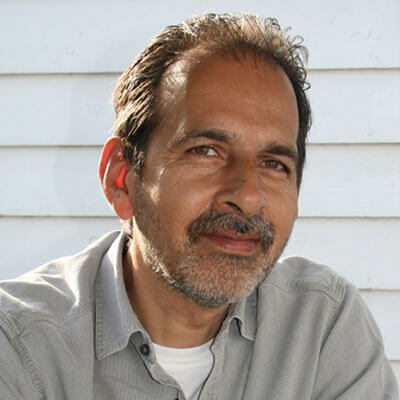
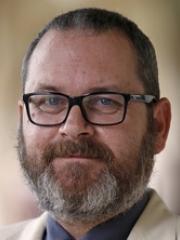
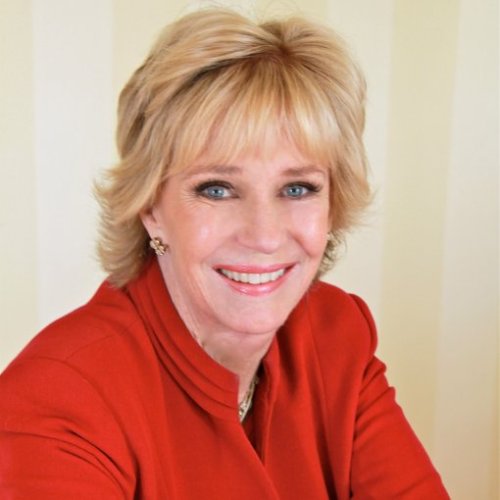
Robin Mukherjee is a Lecturer in Scriptwriting at Bath Spa University's School of Writing, Publishing and the Humanities. A multidisciplinary creative practitioner, he works across television, film, radio, and theatre while maintaining active academic engagement through teaching and research. Education: MA Critical and Creative Writing His creative practice spans three decades, with notable achievements including: Feature film 'Lore' (2012) - Australia's official Oscar entry and winner of 10 international awards BAFTA-nominated television series 'Combat Kids' (2011) Published book 'The Art of Screenplays: A Writer's Guide' (2014) Teaching experience at Bath Spa University, Arts University Bournemouth, Birkbeck College, and other institutions Robin has also delivered guest lectures at TEDx Wandsworth (2015) and Staffordshire University (2016), and serves as a PhD supervisor. His work focuses on liberating creative processes in scriptwriting while maintaining technical rigor.
Dr. Bettina Frankham is a Senior Lecturer in Digital Media at the School of Communication, Faculty of Arts and Social Sciences, University of Technology Sydney (UTS). She combines academic practice with creative work at the intersection of documentary, art, and poetry, focusing on aesthetic experience in knowledge creation. Her research explores digital culture’s impact on media production, expanded documentary practices, and immersive technologies like VR/MR. Education: PhD in Digital Media from UTS (2005–2013) Her scholarly output includes over 20 publications analyzing poetic documentary strategies, mobile media aesthetics, and pandemic-era screen education. Recent work investigates high-visibility clothing as a cultural symbol and the role of lists as heuristic tools in documentary. She contributes to academic leadership through roles like Interim Deputy Head of School and editorial board chair for Sightlines: Filmmaking in the Academy . Teaching focuses on Media Arts and Production, with supervision of research students exploring topics like eco-aesthetic filmmaking and autistic-led screen practices. Her work aligns with UN Sustainable Development Goals for Reduced Inequalities and Quality Education.
Thomas Alcott serves as a Lecturer in Film Theory and Practice within the Department of Theatre, Film, and Television Studies at Aberystwyth University. He teaches across Film and Television, Media and Communications, and Filmmaking modules while supervising dissertation research in his specialty areas. His research centers on Celebrity and Stardom with deep expertise in Audience Studies , particularly examining professional wrestling fandom through political economy and labor analysis frameworks. His work bridges media theory with real-world applications, as evidenced by contributions to UK parliamentary inquiries on wrestling classification. Key methodologies include audience reception studies and critical analysis of star imagery across sports and entertainment contexts. Alcott's publication trajectory reveals a consistent focus on authenticity negotiation in staged sports (2024), football stardom construction (2023), and childhood influences in wrestling reception (2019). His work demonstrates strong interdisciplinary connections between sports sociology, media studies, and cultural psychology with increasing policy impact. Professionally, Alcott leverages dual expertise as both academic and practitioner. His industry background includes work as an Assistant Director on major productions like Made in Dagenham (2010) and Doctor Who Confidential , supplemented by scriptwriting training through the Script Factory and Maddog Casting. His Master's in Scriptwriting informs his practical approach to film theory. Notable activities include editorial work for Celebrity Studies journal (2024) and participation in the 2021 All-Party Parliamentary Inquiry into Professional Wrestling, where his research directly influenced recommendations for classifying wrestling as a sport. He remains active in academic networks through BAFTS Stardom and Performance SIG engagements.
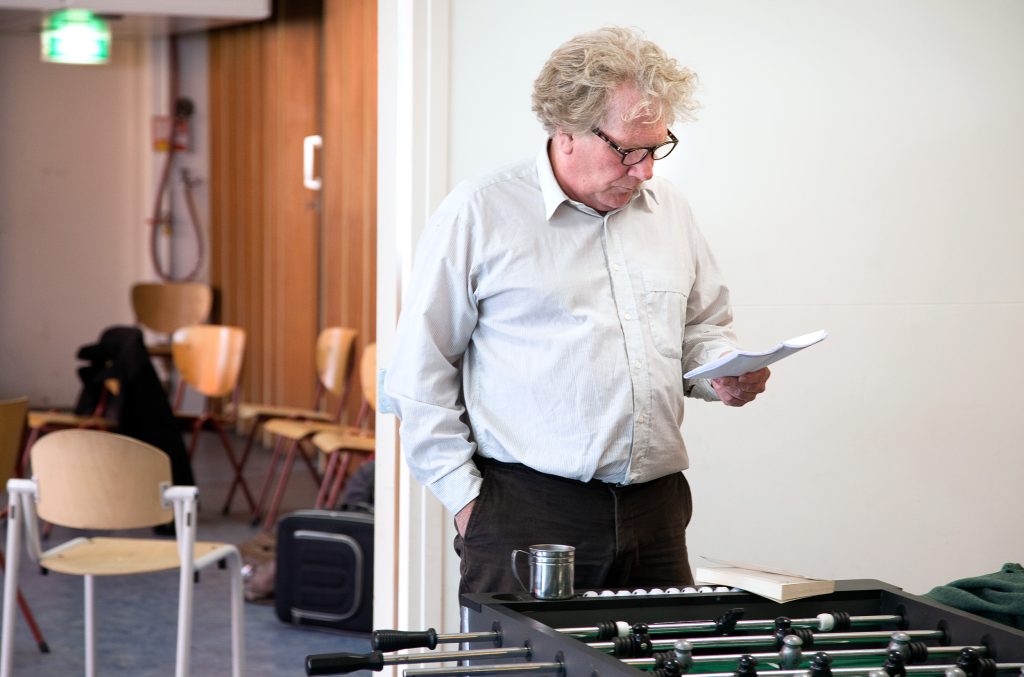
Nicoline van Harskamp is a Professor of Performative Art at the Kunstakademie Münster. Her work explores language dynamics, globalization, and technology through performance, installation, and interdisciplinary collaboration. She holds degrees from the Royal Academy of Fine Arts (Den Haag), Chelsea College (London), and the Rijksakademie (Amsterdam). Research interests include the evolution of English as a global language, the intersection of performance art with activism, and the impact of digital technology on artistic expression. Notable projects include Yours in Solidarity (2010–2013), Englishes (2014–2016), and the ongoing Prosodia series investigating synthetic speech and AI. Her works have been exhibited globally, including at the Tate Modern, Performa 11, and the Sydney Biennale. Collaborations include projects with institutions like the Sandberg Institute and Loughborough University’s Discourse and Rhetoric Group. Prosodia (2024) merges AI-generated speech with live performance, while Englishes MOOC offers an online course on multilingual art practices. Awards and grants include support from the Creative Industries Fund and the Pauwhof Fund. Van Harskamp’s class at Kunstakademie emphasizes cross-disciplinary collaboration, with projects like Performance Room and Actors and Directors . Her work interrogates language’s role in identity, politics, and technology, blending academic rigor with artistic innovation.
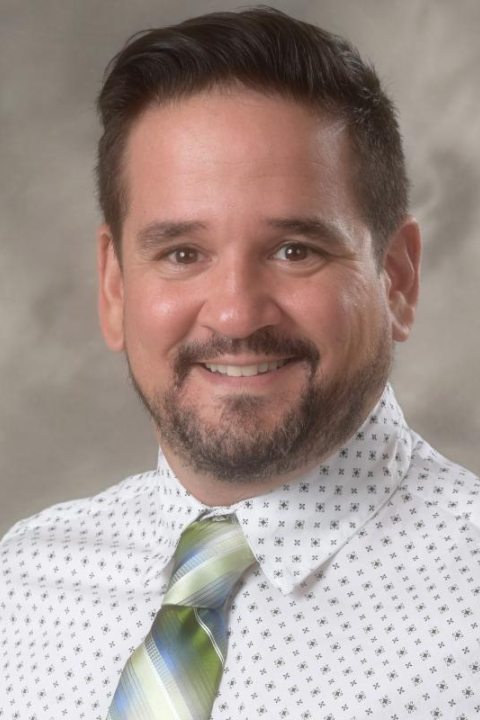
Francisco Suarez is an Associate Professor at the School of Communication at SUNY Oswego, where he teaches courses such as Intro to Video Production, Global Documentary, and Scriptwriting for Television. He holds an Associate’s Degree in Marketing and Advertising from the Institute of New Profession (Caracas, Venezuela), a Bachelor’s in Television, Radio and Film, and a Master’s in Media Management from Syracuse University’s Newhouse School of Public Communication. With over two decades of industry experience, Suarez has worked as a producer for agencies like Leo Burnett, HBO Latin America, MTV Latino America, and Maryknoll, where he produced documentaries and syndicated radio shows. His research interests focus on media production techniques, global documentary practices, and the intersection of media with cultural narratives. Currently, he oversees courses in post-production, podcasting, and television scriptwriting, reflecting his hands-on industry background. His Spring 2025 schedule includes teaching BRC 310 Producing Podcasts and BRC 428 Scriptwriting for TV. Office hours are held Monday-Wednesday via francisco-suarez.youcanbook.me.
Eoin Murray is a Lecturer in Creative Writing (BA(Hons)) at the University of Falmouth, specializing in video games and post-digital content. He joined Falmouth in 2021, focusing on interactive narratives, gender representation, and horror in video games. His research explores utopian manifestations in digital media and the sociological impacts of game design. Qualifications include a PhD from Bangor University (2020), an MA Creative Practice (2016), and a BA in Creative & Professional Writing (2015). He holds an Associate Fellowship from the Higher Education Academy (2019). Research interests span narrative structures in video games, player decision-making, and the intersection of gender dynamics with horror. Recent work includes presentations at conferences like the Electronic Literature Organisation (2019), Wandering Games (2019), and MIX Digital (2016). Teaching focuses on game scriptwriting and post-digital content creation. Grants include funding from the James Pantyfedwen Foundation (£4,121 annually from 2017–2019). Upcoming projects address gender representation in mainstream games and a novel manuscript seeking publication. Professional roles include editorial work for the Electronic Literature Organisation’s 4th Volume and peer reviewing for Journal of Gaming and Virtual Worlds . He advocates for online learning’s potential to reshape pedagogical practices in creative writing and digital media.
Lilia Topouzova is an Assistant Professor of History and Creative Nonfiction at the University of Toronto, affiliated with the Centre for European and Eurasian Studies. Her work bridges academic research and media arts, focusing on political violence, trauma, and public memory in post-communist Eastern Europe. She holds a SSHRC Connection Grant for interdisciplinary projects on authoritarian legacies and collaborates on multimedia installations like *The Neighbours: Forms of Trauma*. **Research Interests**: Her scholarship examines the Bulgarian gulag system, state repression, and memory studies. She critically engages historical sources while emphasizing public-facing scholarship through documentary film, digital storytelling, and immersive installations. Recent projects explore the intersections of trauma, space, and collective memory in post-communist societies. **Awards & Recognition**: Recipient of the 2018 Souyz Outstanding Article Prize for work on Bulgarian gulag history and the 2007 Human Rights Award (Sarajevo Film Festival) for her documentary *The Mosquito Problem & Other Stories*. Her films have premiered at TIFF and Cannes, reviewed in major media outlets. **Grants & Collaborations**: SSHRC Connection Grant (*Authoritarianism: Lives, Legacies, Traumas*) with Joshua Arthurs. Collaborative art projects include *The Neighbours: Forms of Trauma* (2024 Heritage Toronto People’s Choice Award winner). Fellowships at institutions like Leibniz-Zentrum für Zeithistorische Forschung (Germany), Brown University, and York University. **Creative Works**: Scriptwriter and co-director of documentaries *The Mosquito Problem & Other Stories* (2007) and *Saturnia* (2012). Her creative nonfiction appears in *The European Review of Books*, while academic writing explores visual literacy and digital humanities pedagogy.
Nicola Valentine is a Senior Lecturer and Programme Leader in the School of Humanities at De Montfort University, Faculty of Arts, Design and Humanities. She is an accomplished novelist, scriptwriter, and short story writer with a strong focus on creative writing, particularly crime fiction and working-class narratives. Her work spans novels, short films, graphic stories, and academic contributions to writing pedagogy. Research Interests: Creative Writing Fiction and Crime Fiction Working-Class Fiction Script Writing Genre Fiction and Memoir Her recent publications reflect a deep engagement with psychological depth, social realism, and narrative innovation. Themes across her fiction and films include memory, identity, trauma, and the representation of working-class life in contemporary Britain. Her literary output includes acclaimed novels such as The Killing Jar and Dead Flowers , as well as award-winning short films and contributions to collaborative graphic literature. Scientific Awards: Betty Trask Award Authors' Club Best First Novel Award Waverton Good Read Nottingham Creative Business Award Nicola Valentine has been shortlisted for several prestigious awards and serves on the Reading Committee for the Authors' Club Best First Novel Award. She actively supervises PhD and MA students, including Julian Pinnock and Mira Ho, and contributes to curriculum development in professional writing. She is a member of the Society of Authors, NAWE, and the Authors' Club, and has presented on creative writing education at national conferences. Her current projects include a literary novel Flyboats , a crime novel in the Sian Love series, and a potential TV adaptation of The Killing Jar .
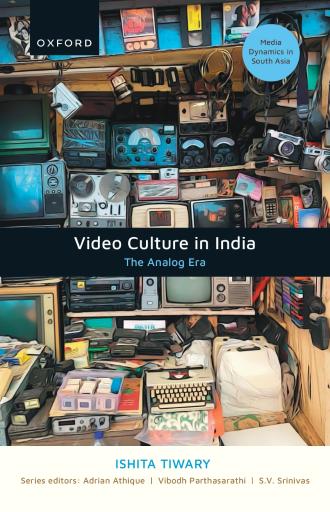
Ishita Tiwary is an Assistant Professor at Concordia University's Cinema department and holds the Canada Research Chair in Media and Migration. Her work explores intersections of video cultures, media infrastructures, and migratory processes. Research Lab: Raah Lab Current Projects: Streaming platforms' impact on Indian media industries Her research focuses on: Historical evolution of analog video in India (1980s-present) Contraband media practices and informal networks Media aesthetics in regional and transnational contexts Migrant media technologies and local practices Platform capitalism and digital standardization Affective infrastructures in domestic media Recent publications analyze: Streaming platform standardization Impact of OTT services on Indian scriptwriting Gender representation in global streaming content Legal disruptions in media technology Cultural significance of video archives Media populism and news cycles Scientific Recognition: Canada Research Chair in Media and Migration Teaching areas include: Global Video Modernities World Cinema analysis Media methods and migration studies Approaches to film theory
Michelle Williams Gamaker is a Professor in Fine Art at Goldsmiths, University of London, where she teaches in the Department of Art. Based in London, she is a moving image and performance artist whose work explores the fiction-making machine of 20th Century British and Hollywood studio films through restaging sequences to reveal cinematic construction and recasting characters to propose alternative endings. She is also Chair of Trustees at Pavilion in Leeds and co-founder of the Women of Colour Index (WOCI) Reading Group with Samia Malik and Rehana Zaman. 2016: Postgraduate Certificate in the Management of Teaching and Learning (HEA) 2012: PhD in Fine Art, Goldsmiths College, University of London 2005-06: MA Visual Anthropology, Goldsmiths College, University of London 1998-01: BA Fine Art (First Class Hons), Middlesex University 1997-98: BTEC Diploma in Art & Design, Middlesex University 2003-05: de Ateliers, Amsterdam, The Netherlands Williams Gamaker's key focus is the development of 'fictional activism': the restoration of marginalised brown characters as central figures who return in her works as vocal brown protagonists challenging historical cinematic injustices. Her practice involves scriptwriting, workshopping with actors, acquiring film paraphernalia, and producing props for intricate restagings of film sets. She explores migratory aesthetics, mental health, and the emotional complexities of capitalism and gender ideology through collaboration, particularly with artists Julia Kouneski and Mieke Bal. Her work with the WOCI Reading Group focuses on improving the visibility of women of colour artists while using archival material to generate discussion around current social and political concerns. Her recent works demonstrate a consistent exploration of postcolonial narratives, feminist film theory, and decolonial aesthetics. The Dissolution Trilogy represents a significant body of work that deconstructs Powell and Pressburger's 1947 Black Narcissus, revealing how cinematic construction shapes representation. Her filmic approach combines historical critique with contemporary theoretical frameworks, particularly around race, gender, and representation in cinema. Williams Gamaker is represented by Tintype Gallery, London, and her work has been exhibited internationally at venues including the BFI London Film Festival, Internationale Kurzfilmtage Winterthur, and various galleries across Europe. She has also presented at academic conferences such as Spectacular Evidence: Theatres of the Observed Mind, where she discussed Lygia Clark's work on 'biological architecture'. She has collaborated extensively with artist and cultural theorist Mieke Bal on projects including 'Madame B: Explorations in Emotional Capitalism' and 'Precarity,' which have been shown internationally at venues including Stedelijk Museum in Amsterdam, Gallery of Sydney College of the Arts, and Museum Bärengasse in Zürich. Her collaborative practice extends to her work with Julia Kouneski, revisiting Brazilian artist Lygia Clark's psychotherapeutic work as inspiration for interventions with the body, architecture and landscape.
John Marsh is a Professor of Dramatic Writing at Savannah College of Art and Design (SCAD) since Fall 2022. He has extensive experience in film, TV, and media production, including roles as Lecturer at Shelton College International (2020–22) and Adjunct Instructor at New York Film Academy (2013–16). His career spans scriptwriting, development, and education across international markets. Education: M.F.A. in Dramatic Writing from New York University (NYU) and B.A. in Mass Media Arts from Clark Atlanta University. Research focuses on narrative structure in film/TV scripts, children’s media development, and animation series creation. He has specialized in live-action, animated, and unscripted content for diverse age groups, with expertise in pitching, script workshops, and talent mentorship. His work bridges creative writing with strategic industry practices. Prior roles include Commissioning Editor at MediaCorp (2017–20), overseeing original series for streaming platforms, and Senior Development Producer at Beach House Pictures (2016–17), developing international children’s content. Awards include a nomination for Ollie and Friends Season 5 at the Asian Academy Awards (2019) and selection for the Disney TV Writers Fellowship (2000–01). Teaching spans university-level courses in screenwriting, TV pilot development, and short film narratives. He has mentored students globally, including Chinese film learners, and contributed to industry events like children’s television festivals. His career highlights include writing for PBS’s Arthur and Disney’s The Proud Family, showcasing prowess in both educational and mainstream entertainment.
Dr. Angel Lara is Associate Professor of Modern Languages at SUNY Old Westbury's School of Arts and Sciences. He holds a PhD in Sociology from Complutense University of Madrid (Summa Cum Laude), an MA in Social Dynamics in Contemporary Society from the same institution, and a BA in Sociology. His research spans Ibero-American cultural studies, Spanish identity formation, socioanalytic methods, and the digital economy. Dr. Lara leads research projects including 'Political Assemblages, Interculturalism, and (Anti)Racisms in Andalusia' (2021-2023) and directs the Latinx and Ibero-American Center (El Conuco) at SUNY Old Westbury. His publications examine narrative socioanalysis, digital labor in social media, and television scriptwriting as cultural products. He teaches courses in Spanish and Latin American cinema, Caribbean studies, and creative writing for television. As a professional scriptwriter registered with ALMA (Writers Guild of Spain), he conducts workshops internationally on media narratives and community storytelling methods. Dr. Lara received the 2013 Best Doctoral Dissertation Award from Complutense University and maintains collaborations with institutions in Mexico, Colombia, and Spain.
Professor Jason Jacobs is a leading scholar in Film and Television Studies at the University of Queensland, serving as Director of Research in the School of Communication and Arts. He holds a PhD from the University of East Anglia and a Bachelor of Arts (Honours) from the University of Warwick. His research focuses on television aesthetics, historical contexts of broadcasting, and authorship in contemporary TV drama. Key projects include an Australian Research Council-funded study on 'The Persistence of Television' and a monograph on David Milch (author of Deadwood ). His work bridges cultural analysis with institutional and technological histories. Research interests include: Television's adaptation to digital media Medium specificity in TV vs. film Historical analysis of broadcast institutions Recent publications span monographs like David Milch (2020), journal articles on auteur series and BBC commercialization, and critical analyses of films like Rain Man and Alfie . He has held academic positions at the University of East Anglia, University of Warwick, and Griffith University, contributing globally to television studies.
Mary Murphy is an Associate Professor of Professional Practice of Journalism and Faculty Lead of the Women’s Leadership Society at the USC Annenberg School for Communication and Journalism. She specializes in entertainment, pop culture, political journalism, and social issues reporting, with a focus on homelessness and media industries. Her career spans award-winning roles as a journalist for major publications such as The Los Angeles Times , New York , TV Guide , and Reader’s Digest International , alongside on-air stints with Entertainment Tonight and The Insider . She currently writes an award-winning blog for TheWrap.com and serves on the Critics Choice Association board. Her research and teaching emphasize digital media evolution, media industries' societal impact, and political persuasion tactics. Recent articles reflect her expertise in entertainment industry analysis, celebrity culture, and crisis reporting. Notably, she received the 2019 Los Angeles Press Club Best Commentary Runner-Up award for her insightful commentary. Murphy’s academic contributions include courses on entertainment business dynamics, special assignment reporting, and directed research. She has authored/co-authored books like The New News: The Digital Revolution in Newsrooms (2015) and Blood Cold: Fame, Sex & Murder in Hollywood (2002), with a forthcoming title The United States of Entertainment .
Benjamin McDonald is a Lecturer in Theatre Studies at the University of York, School of Arts and Creative Technologies. He is nearing completion of his PhD, focusing on the intersection of mental illness representation and theatrical performance. His work explores how mental health conditions are dramatized, including ethical and medico-legal dimensions of portraying automatism and feigned illness. Education: PhD candidate (University of York), prior teaching qualifications in secondary, further, and higher education. Research interests include scriptwriting, theatre directing, and the application of anthropological data in performance. He actively engages in public-facing projects, blending research with creative practice. In 2019, he was a finalist for the HRC Doctoral Fellowships, recognized for research communication skills. In 2020, he organized and presented at the University of York Postgraduate Virtual Symposium, exploring global storytelling trends through ethnodrama. Awards: HRC Fellowship finalist (2019), Symposium presentation award (2020). His work bridges academic research and creative output, emphasizing interdisciplinary collaboration and public engagement.