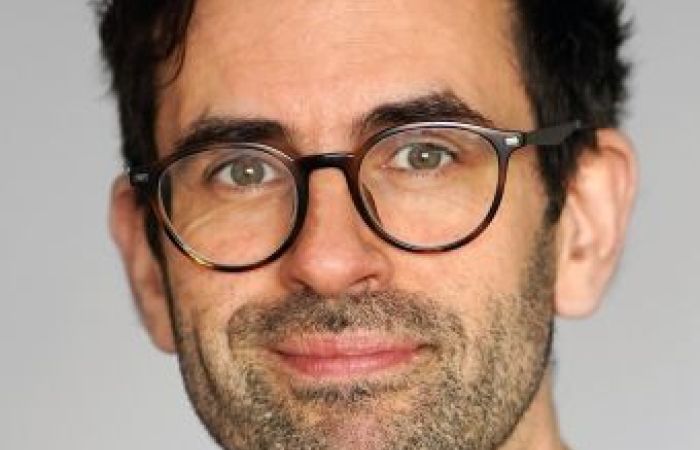
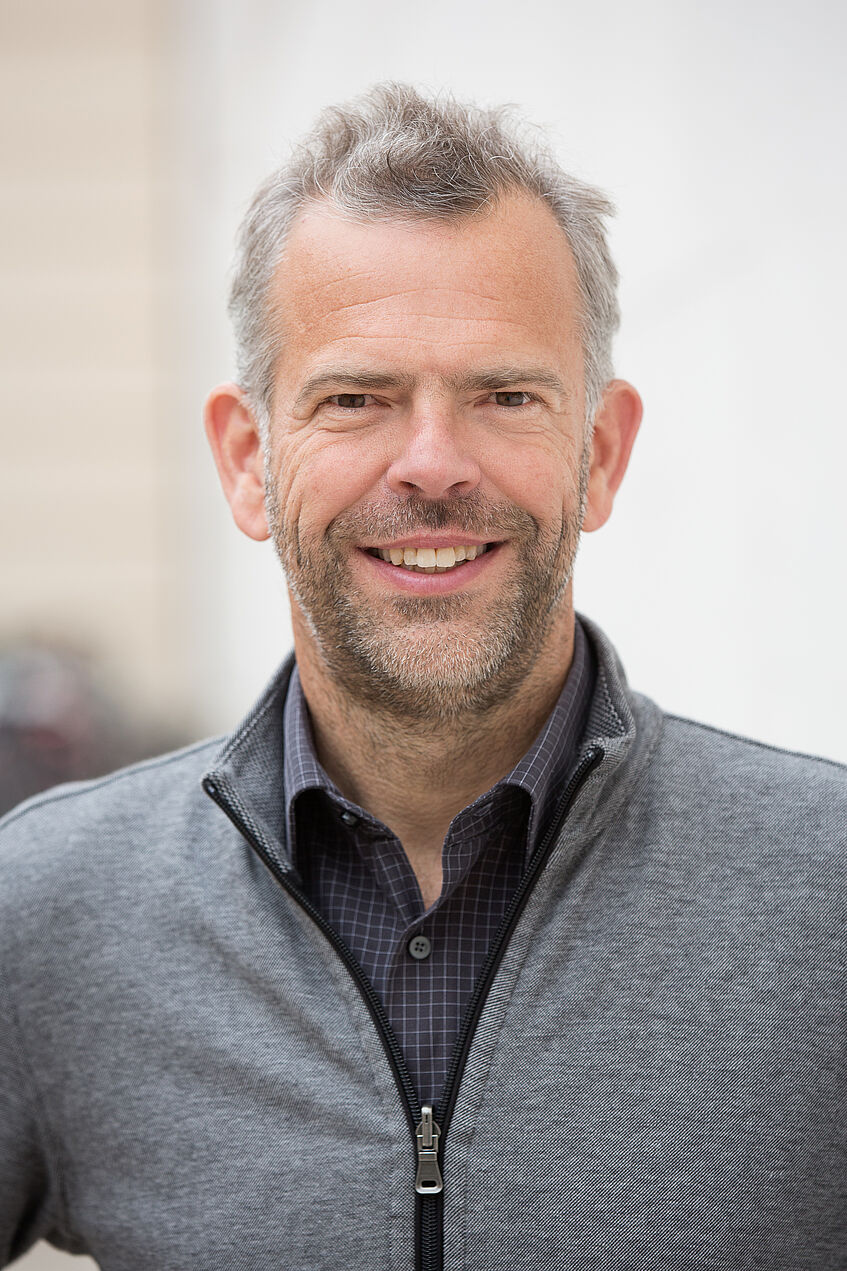
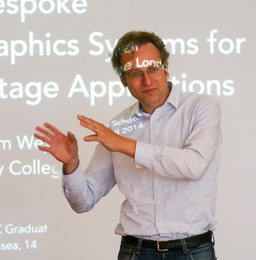
Tim Weyrich is Professor of Visual Computing (part-time) at University College London and Professor of Digital Reality at Friedrich-Alexander University Erlangen-Nürnberg. He leads the Digital Reality Lab and has affiliations with the Virtual Environments and Computer Graphics group at UCL, Eurographics, and the EPSRC Doctoral Training Centre (SEAHA). Previously, he held a Postdoctoral Teaching Fellowship at Princeton University. Research Interests: Content creation and computational photography Appearance modeling and fabrication Point-based graphics and cultural heritage analysis Digital humanities and 3D printing Article Trends: Recent work focuses on neural radiance fields (FruitNeRF++), 3D Gaussian splatting, mmWave radar inverse rendering, and texture anomaly detection. Applications span autonomous systems, cultural heritage, and medical imaging. Scientific Awards: Best Paper Honourable Mention (BMVC 2022) Best Student Paper Award (EG Workshop on GCH 2014) Honorable Mention (Eurographics 2011) Best Student Paper Honourable Mention (BMVC 2018) ACM SIGCHI Best Paper Honourable Mention (CHI 2013)
Univ.-Prof. Dr. Marc Siegel has been Professor of Film Studies at Johannes Gutenberg University Mainz since October 2020. He is based at the Institute for Film, Theatre, Media and Cultural Studies and also serves as artistic director of ZOOM – Labor Ludwig Schönherr . In parallel, he works as a freelance curator for international film festivals, museums and galleries, and is a founding member of the Berlin-based artist collective CHEAP . Education & Qualification: Although the provided text does not enumerate earlier degrees, Siegel’s title “Dr.” and his appointment as “Universitäts-Professor” indicate the completion of doctoral and post-doctoral qualifications. Research Interests: Siegel’s scholarship is situated at the intersection of queer studies , experimental film , and moving-image art/performance . He interrogates how cinema and related media articulate questions of sexuality, gender, race and anti-Semitism, often employing archival, curatorial and critical methods to foreground marginalized histories and aesthetics. His forthcoming monograph A Gossip of Images (Duke University Press) crystallizes these concerns. Publications & Trends: Across more than two decades Siegel has produced a consistent body of work that re-reads canonical avant-gardists (Warhol, Jack Smith, Werner Schroeter) and contemporary queer media alike. Recent essays expand into digital dissemination, camp temporalities, and the politics of ageing bodies, evidencing a trajectory from close textual analysis toward broader cultural critique. Scientific Awards & Distinctions: Member, Academy of the Arts of the World , Cologne Advisory Board, Forum Expanded , Berlinale Principal Investigator, AHRC-UK funded project “Serge Daney and Queer Cinephilia” (2018-2021) Research Grants & Collaborative Projects: DFG Graduate School “Configurations of Film” (GRK 2279), Goethe University Frankfurt am Main – associate researcher Swiss National Science Foundation project “Moving in Every Direction” , Lucerne University of Applied Sciences and Arts – associate researcher Laboratories & Teams: As artistic director of ZOOM – Labor Ludwig Schönherr Siegel mentors experimental media practices; he also co-founded the artist collective CHEAP , which produces queer interventions in urban and digital space.
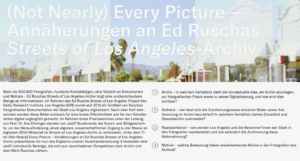
Prof. Dr. Eva Ehninger is a leading academic at the Institute for Art and Visual History at Humboldt University of Berlin , holding the Professorship for Modern Art History . Her research bridges photography theory, modernism, postcolonial studies, and transcultural methodologies , with a focus on visual media’s role in constructing social order. Education: Heidelberg, University of Michigan, Frankfurt/Main Doctoral thesis: Vom Farbfeld zur Land Art (2011, Benvenuto-Cellini Prize) Her research explores how photography, media, and art mediate social, political, and cultural dynamics. Current projects include the Käte Hamburger Kolleg inherit-heritage in transformation and Art Education Between Heritage Making and Critical Transregionality , analyzing entanglements between South Asian and European art education histories. Publications like The Modern Dream of Order (2025) and Ed Ruscha’s Streets of Los Angeles contributions examine Los Angeles as a site of visual critique and urban documentation. Her scholarly output spans 15 recent works addressing topics such as Victorian photography’s social imagination , biological metaphors in Smithson’s art , and dialogue in Nauman’s practice , reflecting interdisciplinary intersections of art history, media theory, and critical studies . She has received prestigious support from institutions like the Getty Research Institute and Terra Foundation for American Art . Scientific awards: Benvenuto-Cellini Prize (for dissertation) Grants: Studienstiftung des deutschen Volkes, Fulbright Commission, BMBF Ehninger supervises 10 ongoing PhD projects and co-edits journals like kritische berichte and Zeitschrift für Kunstgeschichte . She is a Vertrauensdozentin (Trusted Academic Advisor) for the Studienstiftung des deutschen Volkes, demonstrating her commitment to academic mentorship.
Prof. Dr. Julia Metag is Professor for Communication Science at the Department of Communication, University of Münster, where she heads the chair on 'Forms and Processes of Public Communication.' Her research focuses on political communication, science communication, media effects, and online communication. She is actively involved in major research initiatives such as the 'Hot SciComm Lab' (funded by the Volkswagen Foundation) and 'Global Warming’s Five Germanys,' and has led significant projects including the 'Science Barometer Switzerland.' Julia Metag's research interests include science communication, political communication, media use, public trust in science, science-related populism, climate change communication, and digital media. She investigates how audiences engage with scientific information, the role of visuals and AI in science communication, and the impact of misinformation and conspiracy theories. Her work often employs survey, experimental, and content analysis methods to understand public perceptions and media effects. Her recent publications reflect a strong focus on trust in science, audience segmentation, science literacy in digital environments, and the multimodal nature of science communication. She frequently collaborates with scholars across Europe, particularly with Mike S. Schäfer and other colleagues in Switzerland and Germany. Scientific Awards and Memberships: Member of the Academia Europaea (The Academy of Europe) Member of the German Society for Journalism and Communication Studies (DGPuK) Member of the International Communication Association (ICA) Member of the European Communication Research and Education Association (ECREA) Member of the Center for Higher Education and Science Studies (CHESS), University of Zurich Editorial Board Member of Studies in Communication Sciences , Media and Communication , and Environmental Communication Advisory Board Member of the German 'Wissenschaftsbarometer' Julia Metag supervises student theses and leads collaborative research projects, often involving interdisciplinary teams. She has previously held academic positions at the University of Zurich and the University of Fribourg, and her work is widely published in top journals such as Public Understanding of Science , Science Communication , and Communication Research . She is also involved in public engagement through projects like 'Frag Sophie!' and 'Nachgefragt bei Sophie & Co,' which use creative formats to bridge science and society. She leads the 'Hot SciComm Lab,' which investigates science communication in highly contested, multimodal environments shaped by social media, AI, and deepfakes. Her leadership in research networks such as 'Cultures of Compromise' further demonstrates her interdisciplinary reach and academic influence.
Janille Smith-Colin is the J. Lindsay Embrey Trustee Assistant Professor of Civil & Environmental Engineering at Southern Methodist University (SMU), where she leads the Smith-Colin Research Group. As a licensed Professional Engineer (P.E.) and Jr. Editor for the ASCE Journal of Infrastructure Systems, her work bridges infrastructure management with social equity. She serves on the Transportation Research Board Standing Committee on Transportation Planning Analysis and Application (AEP15). Her educational background includes: Ph.D. in Civil and Environmental Engineering from Georgia Institute of Technology Master of Science in Civil and Environmental Engineering from University of Wisconsin-Madison Bachelor of Arts in Engineering Studies from Lafayette College Smith-Colin's research centers on sociotechnical systems modeling to advance equity, sustainability, and resilience in transportation infrastructure. She employs system dynamics and spatial analysis to examine transportation as a social determinant of health, with emphasis on underserved communities. Her engineering education work integrates community-based participatory research and design thinking to develop inclusive pedagogical approaches. Recent publications reveal a strong trend toward data-driven equity assessment, utilizing social media mining, mobile trajectory data, and spatial analytics to investigate infrastructure deserts, micromobility access, and health impacts. She pioneers social return on investment (SROI) frameworks for transportation solutions, connecting civil engineering with public health and disaster resilience through interdisciplinary methodologies. Scientific recognition includes: Best Poster Award, International Conference on Transportation & Development (2023) Golden Mustang Teaching Award, SMU (2023) National Academies Gulf Coast Research Program Early Career Fellowship (2021) ASCE ExCEED Teaching Fellow (2019) Her research is funded by the National Academies of Sciences, Engineering and Medicine, with grants supporting equity-focused transportation projects. While student advisees aren't explicitly listed, her community-based research approach indicates active mentorship in solving civil engineering challenges for marginalized groups. She also contributes to transportation policy through regional collaborations. The Smith-Colin Research Group develops evidence-based tools for infrastructure equity, conducting spatial analysis of transportation systems and health outcomes. Current projects involve system dynamics modeling for social sustainability, Twitter-based crisis response monitoring, and partnerships with Dallas-area agencies to map infrastructure deficiencies and mobility barriers.
Lukas Engelmann is a Senior Lecturer at the University of Edinburgh , specifically within the Science, Technology and Innovation Studies department under the School of Social and Political Science . His research focuses on the history and sociology of biomedicine , with particular interest in epidemiological reasoning , visual cultures of disease , digital epidemiology , and decolonial approaches to medical history . The Epidemy Lab , which he founded, explores the historical development of epidemiology and its contemporary influence on data-driven public health and pandemic policy-making . Engelmann's work has been funded by prestigious grants including an ERC Starting Grant (2021-2025) for his research on the history of epidemiological reasoning, and support from the Wellcome Trust for projects examining the social dimensions of digital health . His book 'Mapping AIDS' (2018) established him as a leading scholar in medical visualization , while 'Sulphuric Utopias' (2020) with Christos Lynteris explores the technological history of maritime sanitation and its political implications. Recent publications emphasize the visual and data practices that have shaped epidemiology, including works on epidemic modeling during the COVID-19 pandemic , the history of plague mapping , and the ethical implications of digital phenotyping . He has also contributed to interdisciplinary discussions on syndemics , co-infection epistemology , and the commercialization of bacteriology in the early 20th century. His scientific contributions have earned recognition through editorial roles in journals like Big Data and Society , and collaborative projects such as 'Working with Diagrams' (2022) which investigates the epistemological role of visual tools in medical knowledge production. Scientific Awards and Funding: ERC Starting Grant (2021-2025) Wellcome Trust Institutional Support Fund British Academy/Leverhulme Small Research Grant Chancellor's Fellowship (University of Edinburgh) 'Sulphuric Utopias' listed in The Guardian's 30 Books to Understand the World (2020)
ao. Univ.-Prof. Dr. Martin Heintel is an Associate Professor at the Department of Geography and Regional Research, University of Vienna. With over 30 years of experience, he focuses on regional development, cross-border cooperation, and sustainable urban-rural linkages. His work spans Europe, Southeast Asia, and North America, emphasizing participatory governance and evidence-based policy. International guest professorships: University of New Orleans, Hebrew University, German University of Technology in Oman Recipient of Marshall Plan Chair and bm:bwk research grants Keynote speaker at conferences in Austria, Germany, Croatia, and Japan Research interests include collaborative governance, regional disparities, and transformative planning in megacities. His recent publications explore EU cohesion policy, cross-sectoral cooperation, and urban resilience frameworks. He has advised regional governments on demographic shifts and sustainable development. Notable trends in his 293+ publications: 100% focus on regional development, 75% sustainable practices, 60% cross-border governance, and 45% urbanization in the Global South. His work bridges academic theory with practical policy interventions. Scientific engagement: Editorial Advisory Board, Europa Regional (2008-2023) Speaker at 243+ international events Media coverage in Der Standard , Österreichische Medien , and public debates Leadership roles include co-founding the Austrian Association for Applied Geography (ÖVAG) and coordinating the IGEN EU project (2011-2013). He mentors young researchers through conference sessions and regional workshops.
Murali Mani is a Professor in the Department of Computer Science, Engineering, and Physics at the College of Innovation and Technology, University of Michigan-Flint. He is actively involved in teaching courses such as Database Design (CSC 384, CSC 584) and Independent Graduate Study in Computer Science (CSC 591), and serves as Principal Investigator on multiple research grants focused on computing education and data science. His research interests span database systems, data provenance, generative AI for data augmentation, computing education, and the societal impact of technology . He has developed educational tools including epidemiology calculators and market basket analysis modules to support interdisciplinary learning. His work emphasizes integrating computing skills across disciplines such as health sciences and management. The 15 most recent scholarly contributions reflect a strong focus on data management, AI-augmented data curation, educational technology, and the cognitive aspects of learning programming. These publications appear in venues such as VLDB, IEEE FIE, and ACM conferences, with several under review or in preparation for top-tier journals like Communications of the ACM and the VLDB Journal. Scientific Awards: No awards explicitly mentioned in the provided text. Advising and Grants: Murali Mani actively mentors students through independent graduate studies and collaborative research projects. He has secured funding from the National Science Foundation (SGER grant on provenance metadata) and internal university sources, including the CIT/CHS Joint Grant and the Office of Research at UM-Flint, supporting projects on civic literacy, computational skills integration, and AI for social science data archiving. Labs and Teams: While no formal lab name is mentioned, Murali Mani leads a research group focused on data systems and computing education, collaborating with colleagues across departments and institutions. He contributes to initiatives such as the Michigan Institute for Data & AI in Society (MIDAS) and the Academic Data Science Alliance (ADSA), and has presented at conferences including IASSIST, FIE, and ICCTAC.
Sergey Tulyakov is the Director of Research at Snap Inc. , leading the Creative Vision team. His work focuses on enhancing creator capabilities through computer vision , machine learning , and generative AI , with applications in 2D/3D/4D video generation, editing, and personalization. He pioneered video generation frameworks like MoCoGAN and First Order Motion Model , and has been recognized for BEST IN SHOW AWARD at SIGGRAPH Real-Time Live! 2020. PhD (2012-2017): University of Trento, Italy MSc (2010): Belorusian State University of Informatics and Radioelectronics B.Eng (2009): Belorusian State University of Informatics and Radioelectronics His research interests span computer vision , generative models , 3D reconstruction , and personalization , with a focus on making large models efficient and mobile-compatible . Recent publications highlight advancements in 4D video generation , text-guided 3D composition , and lightweight architectures . Key scientific awards include the SIGGRAPH Real-Time Live! 2020 Best in Show for Interactive Video Stylization. He has also served on technical program committees for top-tier conferences like CVPR, ICCV, SIGGRAPH, and NeurIPS since 2022. His team organizes tutorials and keynotes, including courses on Deep Generative Models and Efficient Neural Networks . While no direct student names are listed, his collaborative work spans 60+ top-tier publications.
Dr. Mario Slugan serves as Senior Lecturer in Film Studies at Queen Mary University of London's School of Languages, Linguistics and Film. His research bridges film studies, philosophy, and German studies with emphasis on theoretical frameworks, historical analysis, and cross-disciplinary methodologies. Slugan's research focuses on film philosophy and film theory , particularly examining fiction/non-fiction distinctions, early cinema practices, and montage aesthetics. His work explores German cinema , Eastern European film traditions , and techniques of visual immersion from Hale's Tours to VR, demonstrating how philosophical aesthetics informs cinematic experience across historical periods. Analysis of his recent publications reveals consistent exploration of fictional frameworks in non-fiction contexts and historical epistemology of cinematic forms . His work shows increasing engagement with pandemic-era film genres while maintaining core interests in German and Eastern European cinemas, with empirical approaches complementing philosophical inquiry. His scholarly contributions have earned significant recognition: 2021 BAFTSS Best Monograph Award (Second Place) for 'Fiction and Imagination in Early Cinema' 2022 BAFTSS Best Edited Volume Award (Third Place) for 'The Fiction/Nonfiction Distinction' 2023 BAFTSS Best Edited Volume Award (Second Place) for 'New Perspectives on Early Cinema History' 2017 BAFTSS Best Journal Article Award (Third Place) Fellowship in the Society for Cognitive Studies of the Moving Image Slugan currently supervises five PhD candidates examining Hitchcock's legacy, post-war German cinema, intersemiotic translation, Iranian avant-garde, and immersive museum theory. As Co-Investigator on the Croatian Science Foundation's 'Aesthetic Education through Narrative Art' project (2021-2026), he explores intersections of narrative art, philosophy, and educational practice while securing continuous research funding through international collaborations.
Sadam Issa serves as Associate Professor of Arabic Studies within Michigan State University's Department of Linguistics, Languages, and Cultures (College of Arts & Letters). He teaches comprehensive Arabic language sequences from first-year through fourth-year levels, alongside specialized courses in Arabic society, literature, media, and Levantine dialects, while directing MSU's Arabic Study Abroad Program in Amman, Jordan. As a certified Oral Proficiency Interviewer (ACTFL), he actively advances language assessment standards. His research integrates discourse analysis, sociolinguistics, and visual rhetoric with language pedagogy, prominently featuring Arabic political cartoons—currently the subject of a book project—and comics-based instructional methods. Investigations span classroom anxiety, technology-enhanced learning, politeness strategies in Jordanian advertisements, and revolutionary folk music, revealing consistent focus on sociocultural dimensions of Arabic communication. Recent publications demonstrate interdisciplinary convergence: visual media (political cartoons/comics) increasingly informs language education research, while sociolinguistic analyses of Arabic media evolve toward comparative cultural studies, particularly regarding conflict representation and religious discourse. Scientific recognition includes: Open Educational Resources (OER) Leadership Awards (Michigan State University, 2021) Honor Instruction Award (Michigan State University, 2021) Fulbright Foreign Language Teaching Assistant (U.S. Department of State, 2006-2007) Issa pioneers curriculum innovation through OER textbooks for first/second-semester Arabic and hybrid learning models, receiving institutional awards for educational leadership. His study abroad program and OPI certification underscore commitment to experiential learning and proficiency-based assessment.
Jason Ostanek is an Assistant Professor at Purdue University's School of Engineering Technology and Environmental and Ecological Engineering. He directs the Applied Thermofluids Laboratory and Powertrain Technology Laboratory, focusing on battery safety and thermal management systems. Ph.D. in Mechanical Engineering from Penn State M.S. in Mechanical Engineering from Penn State B.S. in Mechanical Engineering from Virginia Tech His research explores energy storage systems, thermal runaway phenomena, heat transfer mechanisms in Li-ion batteries, fluid dynamics, and internal combustion engine thermal management. He has developed analytical models for battery degradation, thermal abuse simulations, and innovative cooling strategies for large-scale energy systems. Key publication trends show expertise in: Li-ion battery thermal runaway modeling Heat transfer in confined geometries Thermal management for energy storage systems Renewable energy forecasting Computational fluid dynamics applications Scientific awards include: 2020 Purdue Teaching Academy's Award for Exceptional Teaching and Instructional Support during the COVID-19 Pandemic 2020 SOET Outstanding Faculty in Engagement 2019 SOET Outstanding Faculty in Discovery 2015 NAVSEA Commander’s Award for Innovation 2013 ASME IGTI Young Engineer Travel Award 2007 DOD SMART Fellowship Recipient As director of Purdue's Applied Thermofluids Laboratory, he leads research on battery safety mechanisms, combustion dynamics, and thermal systems optimization. His work spans fundamental and applied research with industrial collaborators.
Max Roser is a Professor of Practice in Global Data Analytics at the Blavatnik School of Government , University of Oxford. He is the founder and director of Our World in Data , an award-winning open-access publication addressing global challenges like poverty, climate change, and inequality. Professor at Blavatnik School of Government, Oxford Director of Oxford Martin Programme on Global Development Founder of Our World in Data and SDG-Tracker Research Interests focus on empirical analysis of global development, economic inequality, health metrics, and policy-driven data infrastructure. His work bridges academic rigor with public accessibility, emphasizing long-term trends and solutions to existential risks. Scientific Awards include honorary doctorates from KU Leuven and UC Louvain, recognition as a "Future Perfect 50" thinker by Vox, and Prospect Magazine's "Top 50 Thinkers." Advisory Roles span the UNDP Statistical Advisory Panel, UK Government (health, education, tech), and World Bank. He secured grants from the Nuffield Foundation to expand Our World in Data’s team.
Sampsa Hautaniemi is a Professor at the Department of Biochemistry and Developmental Biology within the Faculty of Medicine at the University of Helsinki. He serves as Principal Investigator of the Systems Biology of Drug Resistance in Cancer research group and holds docentship in the Faculty of Medicine. Professor Hautaniemi actively supervises doctoral students across multiple programs including the Doctoral Programme in Biomedicine, Doctoral Programme in Clinical Research, and Doctoral Programme in Integrative Life Science. His research focuses on systems biology approaches to understand drug resistance mechanisms in cancer, particularly ovarian cancer. His work integrates computational biology, genomics, epigenetics, and bioinformatics to develop precision medicine approaches for cancer treatment. His laboratory develops innovative computational methods and experimental models including patient-derived organoids to study tumor evolution, identify therapeutic targets, and predict treatment responses. Analysis of his recent publications reveals a strong emphasis on understanding tumor heterogeneity, clonal evolution during therapy, and the development of computational tools for cancer genomics. His work spans multiple disciplines including cancer biology, computational biology, immunology, and precision medicine, with a particular focus on high-grade serous ovarian cancer as a model system. Scientific Awards: The Anders Jahre Medical Prize to young medical scientists (2014) for outstanding research on systems biology and cancer The Finnish Medical Foundation 50-years jubileum award (2010) Professor Hautaniemi has supervised numerous doctoral students and early-career researchers, contributing significantly to cancer research education. His research is supported by multiple active projects including the DECIDER project (Clinical Decision via Integrating Multiple Data Levels to Overcome Chemotherapy Resistance in High-Grade Serous Ovarian Cancer) funded until 2026, as well as projects from the Academy of Finland, Cancer Foundation, and industry partners like Orion Corporation. His laboratory maintains a patient-derived organoid biobank for high-grade serous ovarian cancer and develops computational tools like Jellyfish for visualizing tumor evolution.
Morten Søndergaard is an Associate Professor at Aalborg University’s Department of Communication and Psychology, affiliated with the Faculty of Social Sciences and Humanities. He is part of the Art, Aesthetics & Health Research Laboratory and the MASSHINE initiative. His research focuses on sound art, media art curation, and transdisciplinary practices, emphasizing the exclusion mechanisms in 20th-century art systems and unarchived avant-garde movements. Søndergaard has curated exhibitions globally, including at Kiasma and ZKM, and co-founded the POM conference series and ISACS symposia. He leads the Erasmus Master of Excellence in Media Arts Cultures, collaborating with institutions in Austria, Poland, and Hong Kong. His work bridges art, science, and technology, with recent projects exploring sonic archives and participatory curatorial frameworks. Key collaborations include roles with the European NeMe network, SUNY College New York, and the Momentum Biennial. He has organized over 20 projects since 2008, including the 2025 Momentum Biennial as head curator. His teaching spans media art theory, sound art practices, and curatorial methodologies at both bachelor and master levels. Søndergaard’s research outputs include over 145 publications, with a focus on sound art’s theoretical and practical dimensions. His current projects emphasize ‘uncurating’ methodologies and the reactivation of marginalized avant-garde practices. Notable activities include editorial roles, international conference organization, and advisory roles in art and science networks. His work has been featured in media outlets like Artdaily and the Biennial Foundation, highlighting his contributions to contemporary art discourse and curatorial innovation.

.jpeg?h=700&iar=0&w=700&hash=ECBB86D790E7934E1AF1CA57FF156948)