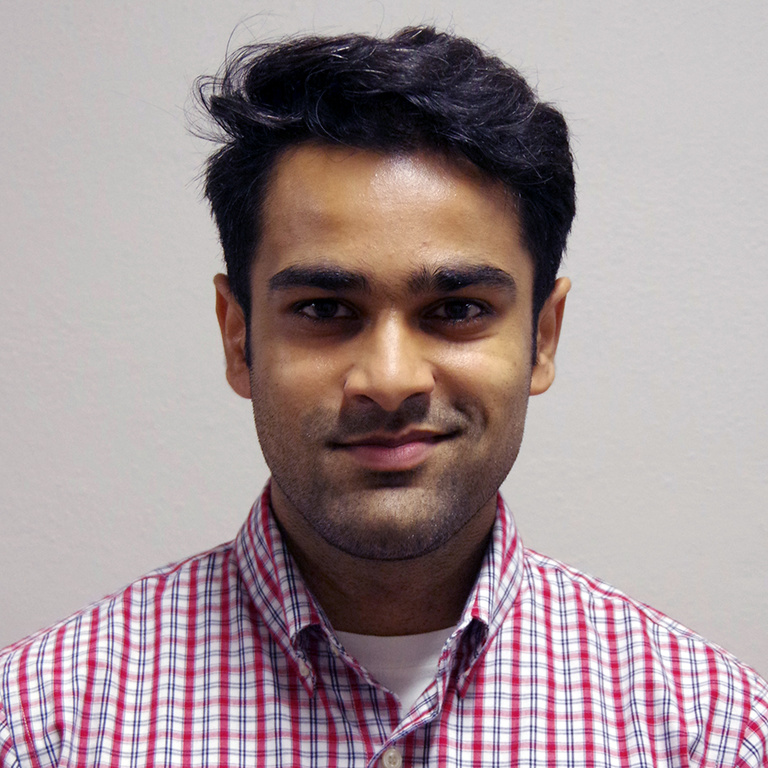
Umar Iqbal is an Assistant Professor in the Department of Computer Science and Engineering at Washington University in St. Louis , where he investigates transparency and control mechanisms in computing systems to enhance user privacy and security. His work intersects computer security, privacy, and technology policy with a focus on web tracking, IoT, and agentic systems. Research Themes : Web security, emerging technology privacy, regulatory compliance under CCPA/GDPR, and tracking mitigation Scientific Awards : Best paper award at ACM Internet Measurement Conference (IMC), 2023 Caspar Bowden Award for Outstanding Research in PET Runner-Up, 2024 Best applied research paper (3rd) at CSAW NYU Tandon, 2020 Collaborations : Regularly works with researchers like Franziska Roesner, Tadayoshi Kohno, and Zubair Shafiq His publication portfolio spans 2016-2025 with impactful work on browser fingerprinting (IEEE Oakland 2021), ad blocking (IEEE Oakland 2020), and LLM platform security (AIES 2024). Current research includes privacy implications of AI systems and regulatory auditing frameworks.
Tobias Neckel is an Associate Professor at the Institute for Informatics at the Technical University of Munich (TUM), where he leads research projects and coordinates academic programs. He has been the project team leader of the IGGSE Project ExaNIML since 2018, main coordinator of the Ferienakademie since 2014, and Program Coordinator of the Bavarian Graduate School of Computational Engineering (BGCE) since 2009. Diploma in Technomathematik from TU München (2005) Dr. rer. nat. in Informatics from TU München (2009) Neckel's research focuses on Uncertainty Quantification, Random Differential Equations, and High Performance Computing. His work develops efficient numerical algorithms using hierarchic and adaptive methods such as octrees/spacetrees and sparse grids, with applications in fluid-structure interactions and incompressible fluid flow simulation. His research bridges theoretical mathematics with practical computational science, emphasizing robust and efficient implementations. His recent publications demonstrate a strong trajectory in multi-fidelity modeling, uncertainty quantification, and high-performance computing. Neckel has made significant contributions to scalable hierarchical approximation methods, dynamic resource management in HPC, and the application of machine learning techniques to computational science problems. His work spans diverse application domains including plasma physics, hydrology, and computational engineering. Lehrfonds prize of the TUM (2014) Ernst Otto Fischer prize of the TUM (2011) Promotionspreis des Bunds der Freunde der TU München (2009) Neckel has supervised numerous graduate students and has been actively involved in curriculum development and teaching innovation. His book "Bits and Bugs: A Scientific and Historical Review of Software Failures in Computational Science" (2019) represents a significant contribution to understanding software reliability in scientific computing. He has organized minisymposia at major conferences including SIAM CSE and SIAM UQ, and serves on program committees for various computational science conferences. As coordinator of the Ferienakademie and the BGCE, Neckel plays a central role in advanced computational engineering education in Bavaria. His research group develops software for exascale computing and contributes to the Transregional Collaborative Research Centre 89 on Invasive Computing. Neckel also maintains international collaborations, with research stays at institutions including the Australian National University and Tokyo Institute of Technology.
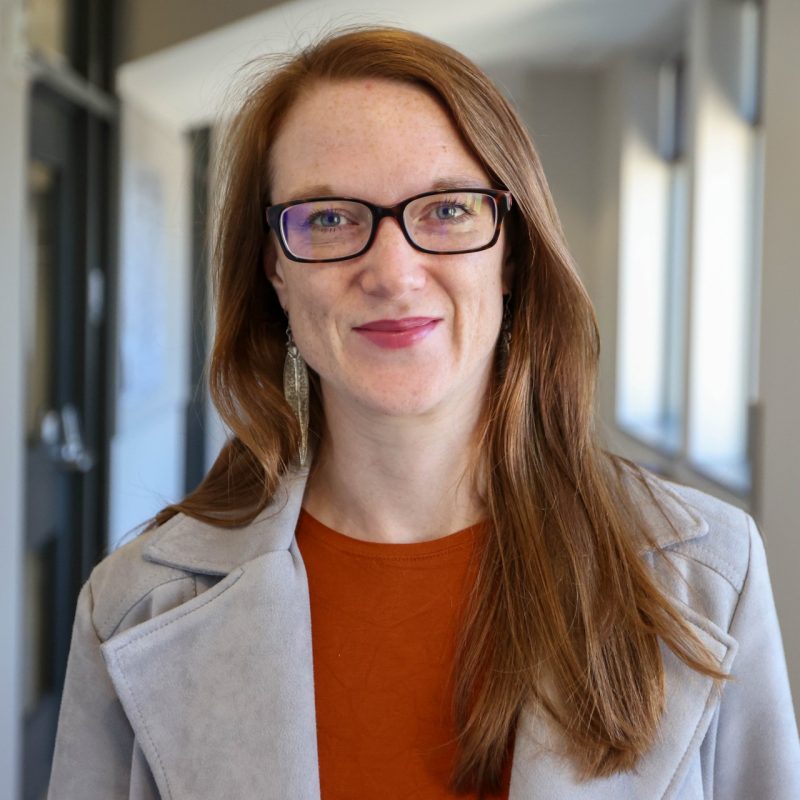
Teresa Head-Gordon is a Professor at the University of California, Berkeley, with affiliations in the Department of Chemistry and the Departments of Bioengineering and Chemical & Biomolecular Engineering . Her research spans interdisciplinary domains at the intersection of chemistry, bioengineering, and computational science . Research Areas: Biomaterials & Nanotechnology , Computational Biology The Head-Gordon lab focuses on developing computational models and methodologies for molecular liquids, macromolecular assemblies, protein biophysics, and catalysis (both chemical and biological). Her group also advances accelerated sampling methods , multiscale techniques , and machine learning approaches, with software tools widely disseminated for high-performance computing platforms. Her work bridges nanochemistry , biomolecular engineering , and data-driven scientific computing , emphasizing scalable solutions for complex chemical systems.
Md Mobashir Hasan Shandhi is a tenure-track Assistant Professor at Arizona State University , jointly appointed in the School of Electrical, Computer and Energy Engineering and the Biodesign Institute Center for Bioelectronics and Biosensors . His work focuses on developing equitable digital health technologies—wearable sensors and AI/ML algorithms—for personalized care and remote monitoring of chronic and infectious diseases. Education PhD, Electrical and Computer Engineering, Georgia Institute of Technology, 2020 Postdoc, Biomedical Engineering, Duke University, 2021–2024 MS, Electrical and Computer Engineering, University of Utah, 2016 BSc, Electrical and Electronics Engineering, Bangladesh University of Engineering and Technology, 2011 Research Interests Dr. Shandhi’s lab designs low-cost, reliable wearable sensors and machine-learning models to enable remote monitoring of cardiovascular, respiratory, and infectious disease patients. His goal is to reduce healthcare disparities by translating these technologies into resource-limited settings. Scientific Awards & Grants American Heart Association Career Development Award Mayo Clinic–ASU Alliance Faculty Summer Residency Fellowship AHA Postdoctoral Fellowship Duke Heart Center & Translating Duke Health cardio-oncology grant NIH mHealth Training Institute Scholarship Best Paper, Runner-up Best Paper, First Place Research Awards Distinguished Poster Nominee Advising & Funding Dr. Shandhi is currently recruiting PhD students with backgrounds in electrical/biomedical engineering or computer science. He also welcomes postdocs and MS/undergraduate researchers to join the SHANDHI Lab. Interested candidates should email him directly with a CV and statement of interest. Labs & Teams He directs the SHANDHI Lab at ASU, where interdisciplinary teams of engineers, clinicians, and data scientists collaborate on translating wearable health technologies from bench to bedside.
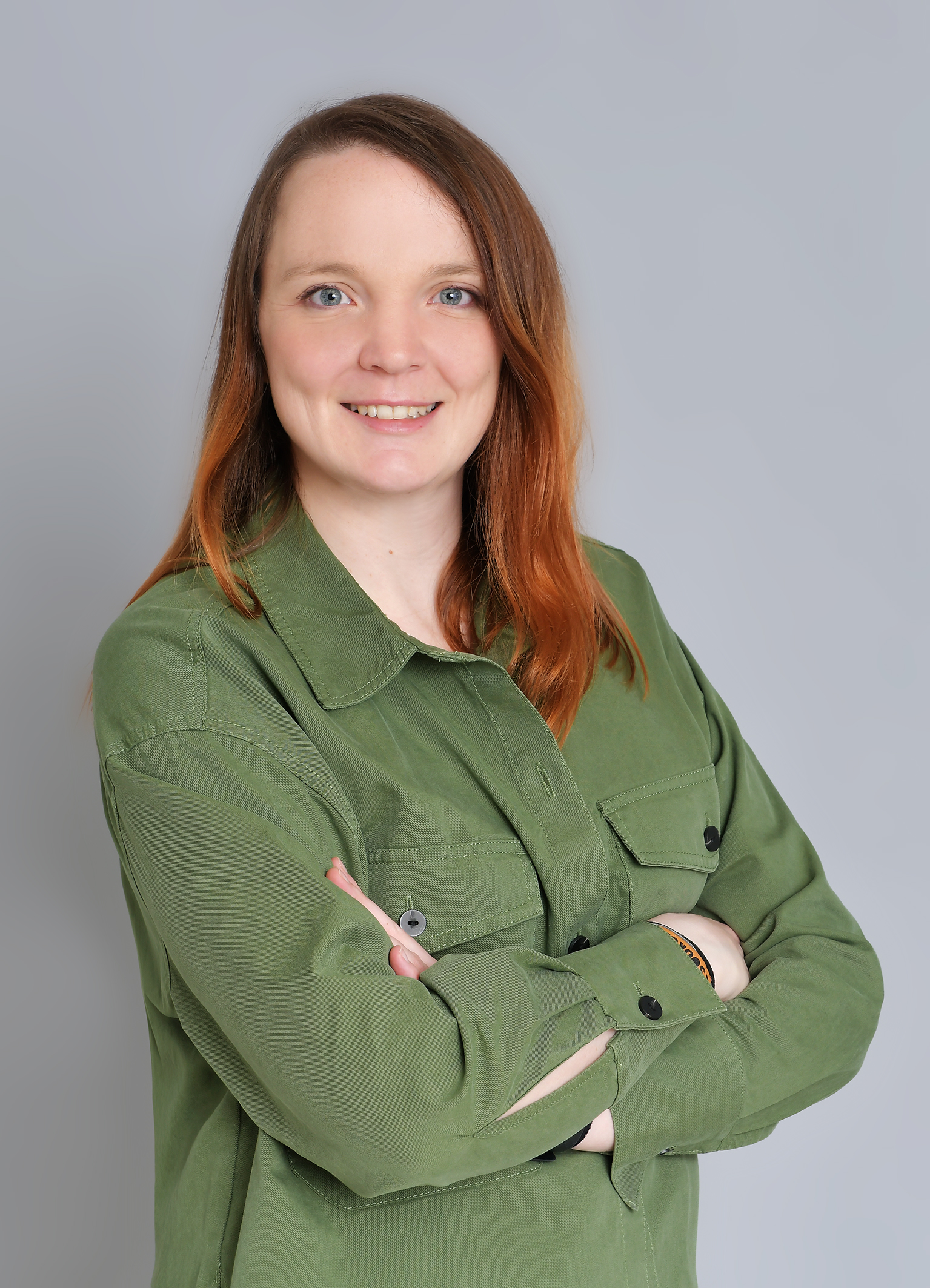
Katharina Eggensperger is an Early Career Research Group Leader at the University of Tübingen , leading the AutoML for Science group within the Cluster of Excellence Machine Learning for Science . She previously completed her Ph.D. at the University of Freiburg under Frank Hutter and Marius Lindauer (2022), and actively contributes to the AutoML community through open-source tool development and competition leadership. Co-developer of AutoML.org tools Faculty member of IMPRS-IS Chair for multiple AutoML workshops/conferences (2019-2025) Her research focuses on automated machine learning (AutoML) with specific attention to: AutoML Systems Hyperparameter Optimization Tabular Machine Learning Scientific Applications of ML She has organized multiple AutoML schools and conferences, including serving as Program Chair for AutoML 2024 and Non-archival Track Chair for AutoML 2025. Her work emphasizes making machine learning accessible through automation while maintaining scientific rigor and interpretability, particularly for tabular data applications. Katharina actively recruits PhD students through IMPRS-IS and collaborates with institutions like the University of Freiburg and Cyber Valley .
Steve Boker is a Professor of Psychology at the University of Virginia, directing the Human Dynamics Laboratory and the LIFE Academy. His research focuses on quantitative psychology, structural equation modeling (SEM), and dynamical systems analysis for longitudinal and time series data. Dr. Boker has pioneered methods like Differential Structural Equation Modeling (dSEM) , Latent Differential Equations (LDE) , and the Windowed Cross-Correlation (WCC) method. He co-developed the widely used OpenMx SEM software framework and invented the RAMpath method for path diagram analysis. Key Research Areas: Dyadic conversation dynamics, adaptive systems in addiction, motion symmetry in social interactions, maternal-infant coupling, and resilience modeling through longitudinal data. Awards & Honors: 2024 Distinguished Researcher Award (UVA) 2020 Saul Sells Award for lifetime achievement in multivariate psychology Fellow, American Psychological Association Fellow, Association for Psychological Science His methodological contributions span over 150 publications, with recent work emphasizing nonlinear dynamics, surrogate data validation, and complexity metrics like the Tangle index for short time series analysis.
Professor Kelly Lyons is a Professor at the Faculty of Information at the University of Toronto, cross-appointed to the Department of Computer Science. Her research focuses on service science, knowledge mobilization, social media, and data-driven innovation. Prior to academia, she held roles at IBM Toronto Lab's Centre for Advanced Studies. She has secured extensive funding from NSERC, IBM, and industry partnerships, and has advised numerous graduate students. Her work bridges interdisciplinary collaboration, emphasizing AI governance, digital economy impacts, and fostering Women in Technology initiatives. Research interests include the application of social platforms in service systems, data science for knowledge translation, and the societal implications of AI. Key projects involve analyzing gender dynamics in user reviews, open-source software structures, and pandemic-driven innovation trends. Her grants span data science, healthcare analytics, and smart city technologies. Publications span empirical studies on GitHub collaboration, AI governance frameworks, and biomedical knowledge systems. She received the Best Paper Award for 'The Effect of Collaborative Games on Group Work' (2015). Her teaching emphasizes service systems design and project management, with a focus on practical, interdisciplinary learning. Active in scholarly service, she chairs the Consortium for Software Engineering Research and serves on ACM-W's Executive Council. Collaborations include cross-institutional projects with University College London and UCL on AI governance frameworks. Her work extends to promoting STEM education and diversity in tech.
Valerie Welborn is an Assistant Professor in the Department of Chemistry within the College of Science at Virginia Tech. Her research program focuses on multiscale simulation of condensed phase systems, particularly examining the role of electric fields in biological interfaces and biological-like systems. She leads an active research group that bridges computational chemistry with experimental validation through multiple collaborations. Dr. Welborn's research interests span protein dynamics and function, characterization of structural and functional water, polysaccharides in solution, and polymer design for metal chelation. Her work combines morphological, structural, dynamic and electronic factors to develop new models of biological interfaces, with particular emphasis on how water interacts at a fundamental molecular level with biological entities such as proteins and bone tissues. She specializes in electric field calculations to understand protein flexibility in catalysis and ion transport, seeking to reconcile protein dynamics with electrostatic preorganization theory. Her recent publications demonstrate strong activity across multiple domains, with particular emphasis on electric field analysis in protein function, water dynamics at biological interfaces, and polymer design for metal chelation. Her work shows a consistent trajectory toward increasingly complex biological systems and more sophisticated computational approaches, including polarizable force field methods and multiscale modeling techniques. Centre for Doctoral Training (CDT) on Theory and Simulation of Materials (TSM) Ph.D. Prize for Research Excellence, 2014 Outstanding Contribution to Outreach and Public Engagement, CDT TSM, 2014 Engineering and Physical Sciences Research Council (EPSRC) fully-funded Ph.D. Fellowship, CDT TSM, 2011 Editor-selected as '2021 Hot PCCP article' Front cover article in Phys. Chem. Chem. Phys. Dr. Welborn actively mentors a diverse group of researchers, including multiple postdoctoral associates, graduate students across chemistry and related disciplines, and undergraduate researchers. Her lab participates in the NSF Materials Innovation Platform GlycoMIP (DMR-1933525), focusing on polysaccharide research. She collaborates extensively with experimental groups, particularly with Professor Michael Schulz on polymer design for metal chelation projects. Her lab develops computational tools like the ELECTRIC software package for electric field calculations in biomolecular systems. The Welborn group maintains active research programs in four main areas: protein dynamics and function, characterization of structural and functional water, polymer design for metal chelation, and polysaccharides in solution. Each program employs specialized computational approaches to address fundamental questions in biological chemistry, with particular emphasis on how electric fields govern molecular behavior at biological interfaces.
Aiichiro Nakano is Professor of Computer Science with joint appointments in Physics & Astronomy, Quantitative & Computational Biology, and the Collaboratory for Advanced Computing and Simulations at USC. He holds a Ph.D. in physics from University of Tokyo (1989) and has authored over 485 refereed publications in scalable algorithms, scientific machine learning, and computational materials science. Research develops AI-driven simulation methods for materials discovery, quantum computing applications, and exascale molecular dynamics. Recent work focuses on foundation models for molecular simulations, high-energy-density polymers, and nanocatalysis under extreme conditions. Publications show consistent contributions to computational science infrastructure, with accelerating focus on machine learning interatomic potentials and quantum-classical computing integration. Research bridges theoretical development with high-performance computing implementations. National Science Foundation CAREER Award
Maya Daneva is an Associate Professor at the University of Twente's Digital Society Institute and part of the Semantics, Cybersecurity & Services research group. With over 200 research outputs, her work focuses on Requirements Engineering , Cybersecurity , and Agile Methodologies , particularly in digital transformation and enterprise systems. Academic Role: Associate Professor in Computer Science Institution: University of Twente Her research spans Model-Driven Engineering , security risk mitigation, and quality requirements prioritization, often employing empirical studies and systematic reviews. Recent articles explore phishing detection ontologies (2025), secure data storage architectures (2024), and digital consulting service modeling (2024). Scientific Awards: CBI 2021 Best Paper Award for work on digital IT consulting platforms EMMSAD 2025 Best Paper Award for phishing attack modeling She actively organizes academic events, serves on editorial boards (e.g., Empirical Software Engineering ), and contributes to conference peer-review, reflecting her leadership in the field.
Alexandra Kirsch is an Assistant Professor in the Media Informatics Department at the University of Tübingen's Faculty of Informatics. She held the Carl von Linde Junior Fellowship at the Technical University of Munich (TUM) Institute for Advanced Study (TUM-IAS) from 2010. Previously, she was a senior research scientist at TUM's Intelligent Autonomous Systems Group and led the independent Junior Research Group “Planning for Adaptive Robot Assistance” within the Excellence Cluster CoTeSys (Cognition for Technical Systems). Education: Diploma in Computer Science from TUM, 2003 Doctoral degree from TUM, completed between 2003-2007 Research Interests: Kirsch focuses on developing control mechanisms for autonomous robots using artificial intelligence, aiming to create systems that collaborate closely and transparently with humans. Her work emphasizes models of world dynamics, robot action effects, and human behavior. She created the Robot Learning Language (RoLL) to automate model acquisition and update processes during robot operations. Collaborations with psychologists and neuroscientists explore joint human-robot planning tasks and model development for seamless interaction. Scientific Awards: Member of the Bayerische Akademie der Wissenschaften Förderkolleg (2012) Award by Comet Computer GmbH for excellent graduation results (2003) Advising & Grants: Managed interdisciplinary research projects during her junior fellowship at TUM. Previously worked as a management consultant at Booz & Co., 2007-2008. Her grants include the Carl von Linde Fellowship and support for the Junior Research Group. Labs/Teams: Active in the Planning for Adaptive Robot Assistance group (CoTeSys) and collaborates with the Cognitive Technology focus group at TUM-IAS. Engages in cross-disciplinary teams involving neuroscience and psychology for human-robot interaction studies.
Adlen Ksentini is a Professor at EURECOM, a leading graduate school and research center in Sophia Antipolis, France, specializing in digital science and communication systems. His extensive research focuses on next-generation mobile networks (5G/6G), network management, and the integration of artificial intelligence with telecommunications infrastructure. Dr. Ksentini actively contributes to major EU research initiatives including 6G-BRICKS and AC3, serving as a key researcher and project leader in the development of future network architectures. Dr. Ksentini's research interests center around network slicing, intent-based networking, edge computing, and the application of machine learning to network management problems. His work bridges theoretical advancements with practical implementations in 5G/6G systems, with particular emphasis on zero-touch network management, energy efficiency optimization, quality of service assurance, and the integration of large language models with network operations. His research has significantly contributed to the development of O-RAN (Open Radio Access Network) frameworks and the evolution of network automation. His recent publication trends reveal a strategic shift toward AI-native network architectures, with increasing focus on integrating large language models (LLMs) with network management systems. His work demonstrates a clear progression from traditional network management approaches to more autonomous, AI-powered systems capable of intent-based configuration, self-optimization, and predictive maintenance. The publications show strong emphasis on practical implementations within the 6G research ecosystem, addressing critical challenges in network slicing, resource allocation, and energy efficiency. As a research supervisor, Dr. Ksentini mentors several PhD students including Abdelkader Mekrache, Karim Boutiba, Bouziane Brik, and Houda Hafi, who frequently appear as co-authors on his publications. His research is primarily funded through major EU research projects such as 6G-BRICKS (Building Reusable Testbed Infrastructures for Cloud-to-Device Breakthrough Technologies) and AC3 (which focuses on Cloud Edge Continuum). Dr. Ksentini is actively involved with the 6G-BRICKS project consortium and the AC3 project team, where he contributes to developing next-generation network architectures that integrate communication, computing, and sensing capabilities. His work within these projects focuses on creating reusable testbed infrastructures and addressing security and trust management challenges in the cloud-edge continuum.
Alva L. Couch is an Associate Professor at Tufts University's School of Engineering, Department of Computer Science, with a career spanning over 30 years. His work bridges network/system administration, autonomic computing, and hydrologic data science, focusing on scalable solutions for data management and automated system administration. Education: Ph.D. in Mathematics (1988), B.S. in Architecture (1978), and B.A. in Bassoon/Contrabassoon Performance (1978). Research Interests His research centers on: Network and System Administration: Tools like SLINK, Maelstrom, and Babble for dependency analysis, cloud migration, and policy enforcement. Geo-informatics: MEDFORD metadata language and HydroShare platform for hydrologic data curation and discovery. Autonomic Computing: Promise theory, convergent operators, and closure models for self-managing systems. Recent Work Trends His 2024-2018 publications emphasize: Cloud-based hydrologic data management (AnVILMEDFORD, HydroShare) Metadata standards for interdisciplinary research Machine learning for system administration Agent-based resource sharing models Scientific Awards Liebner Teaching Award (1996) Seymour Simches Advising Award (2017) Best Paper Awards: LISA 1996, AIMS 2008, LISA 2001 LISA 2000 Best Student Paper (with Michael Gilfix) Contributions He developed key software like Peep (network auralization) and Slink (configuration management), supported by NSF grants and industry partnerships. His work with CUAHSI's Water Data Center shapes national hydrologic data infrastructure. He also advocates for science education and privacy in computing.
Jeffrey Doser is an Assistant Professor in the Department of Forestry and Environmental Resources at North Carolina State University (NC State), within the College of Natural Resources. His research focuses on ecological modeling, species distribution analysis, spatial statistics, and biodiversity monitoring. He specializes in developing R software tools for ecological data analysis, such as the spAbundance and spOccupancy packages. His work emphasizes improving statistical methods for occupancy models, integrating acoustic and survey data, and addressing environmental challenges like invasive species and climate change impacts on ecosystems. Key research themes include species-environment interactions, spatially varying coefficients in ecological models, and functional reproducibility in scientific coding. His recent studies address topics such as American chestnut restoration, wild bee community dynamics, and early detection of invasive aquatic species. Doser collaborates on interdisciplinary projects involving forest inventory, avian soundscapes, and long-term ecological monitoring. His publications (2020–2025) highlight methodological advancements in species distribution modeling, occupancy frameworks for multi-season data, and applications of Bayesian approaches. He advocates for rigorous statistical practices and reproducible research in ecology.
Dr. Stephan Rave is a Researcher in the Institute for Analysis and Numerics at the University of Münster. He is affiliated with the Applied Mathematics Münster cluster and serves as an Investigator in Mathematics Münster. His work focuses on numerical analysis, scientific computing, and machine learning, with a strong emphasis on model reduction techniques for complex systems. Education : PhD in Mathematics (2012), University of Münster, thesis on finitely summable K-homology. Master's and Bachelor's degrees in Mathematics from the University of Münster. Research Interests : Dr. Rave specializes in model order reduction (MOR) methods, including reduced basis techniques, localized orthogonal decomposition (LOD), and nonlinear approximation strategies. His work addresses challenges in multiscale modeling, domain decomposition, and parametrized partial differential equations. He also develops open-source software tools like pyMOR for MOR and contributes to initiatives like the MaRDI (Mathematical Research Data Initiative) to enhance interoperability in scientific computing. Projects : Key initiatives include the MaRDI project (2021–2026), EXC 2044 Cluster of Excellence (Geometry-based modeling), and MULTIBAT (lithium-ion battery simulation). His research bridges theoretical developments with practical applications in battery modeling, electrochemistry, and computational fluid dynamics. Grants & Awards : Funded by DFG, the German Federal Ministry of Research, and internal university grants, his work addresses strategic areas like sustainable research software and energy storage systems. He leads projects on distributed model reduction and communication-avoiding algorithms. Teaching : Dr. Rave teaches advanced numerical methods courses, including Model Order Reduction, Numerical Methods for PDEs, and Python-based computational labs. He co-organizes seminars and workshops on MOR and scientific software engineering.