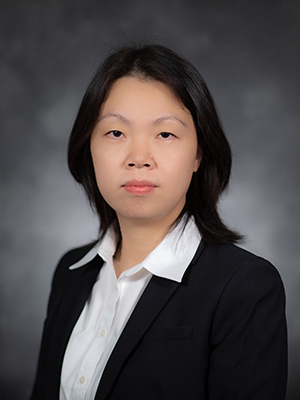
Possu HuangView profile
Assistant Professor
Possu Huang serves as Assistant Professor of Bioengineering in the Department of Bioengineering at Stanford University's School of Engineering. His research group operates from the Shriram Center for Bioengineering, sharing laboratory space with the Bintu Lab while maintaining an active interdisciplinary program bridging computational and experimental protein engineering. His educational journey includes: B.A. in Molecular and Cell Biology (Biochemistry) from UC Berkeley Ph.D. in Biochemistry and Molecular Biophysics from Caltech Postdoctoral training as Senior Fellow at University of Washington Dr. Huang's research focuses on atomic-precision protein design through integrated computational-experimental approaches. His lab has pioneered breakthroughs including the first computationally designed protein-protein interface, TIM barrel fold design principles, and the eOD HIV immunogen. Current work leverages machine learning , structural biology , and library optimization to develop therapeutic proteins and nanotechnology platforms, with particular emphasis on achieving natural-level complexity in engineered systems. Analysis of his 2023-2025 publications reveals three dominant trends: (1) generative AI for all-atom protein design (e.g., Protpardelle, SHAPES), (2) immunology applications targeting MHC complexes for HIV vaccine development, and (3) optogenetic tools through engineered fluorescent proteins. These works consistently integrate deep learning with wet-lab validation to solve biomedical challenges. Dr. Huang has mentored nine graduate students to completion, including PhD candidates Carla (defended June 2025), Christian (defended May 2025), and master's students Shankara and Kirsten. His lab maintains active social media presence (@possuhuanglab) and regularly publishes high-impact research while training the next generation of protein engineers. The Huang Lab operates as a dynamic interdisciplinary hub where computational biologists collaborate with experimentalists to push the boundaries of protein design. Current projects include developing tetravalent nanobody platforms, photoswitchable binders for temporal protein control, and AI-driven solutions for HIV immunogen design, all conducted within Stanford's state-of-the-art bioengineering facilities.