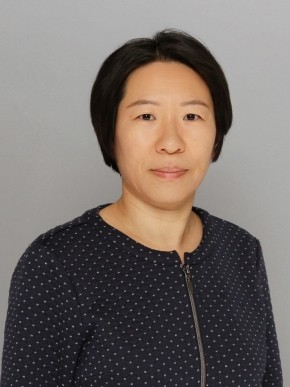
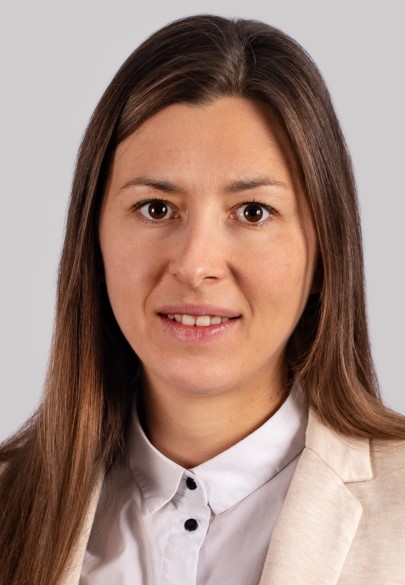
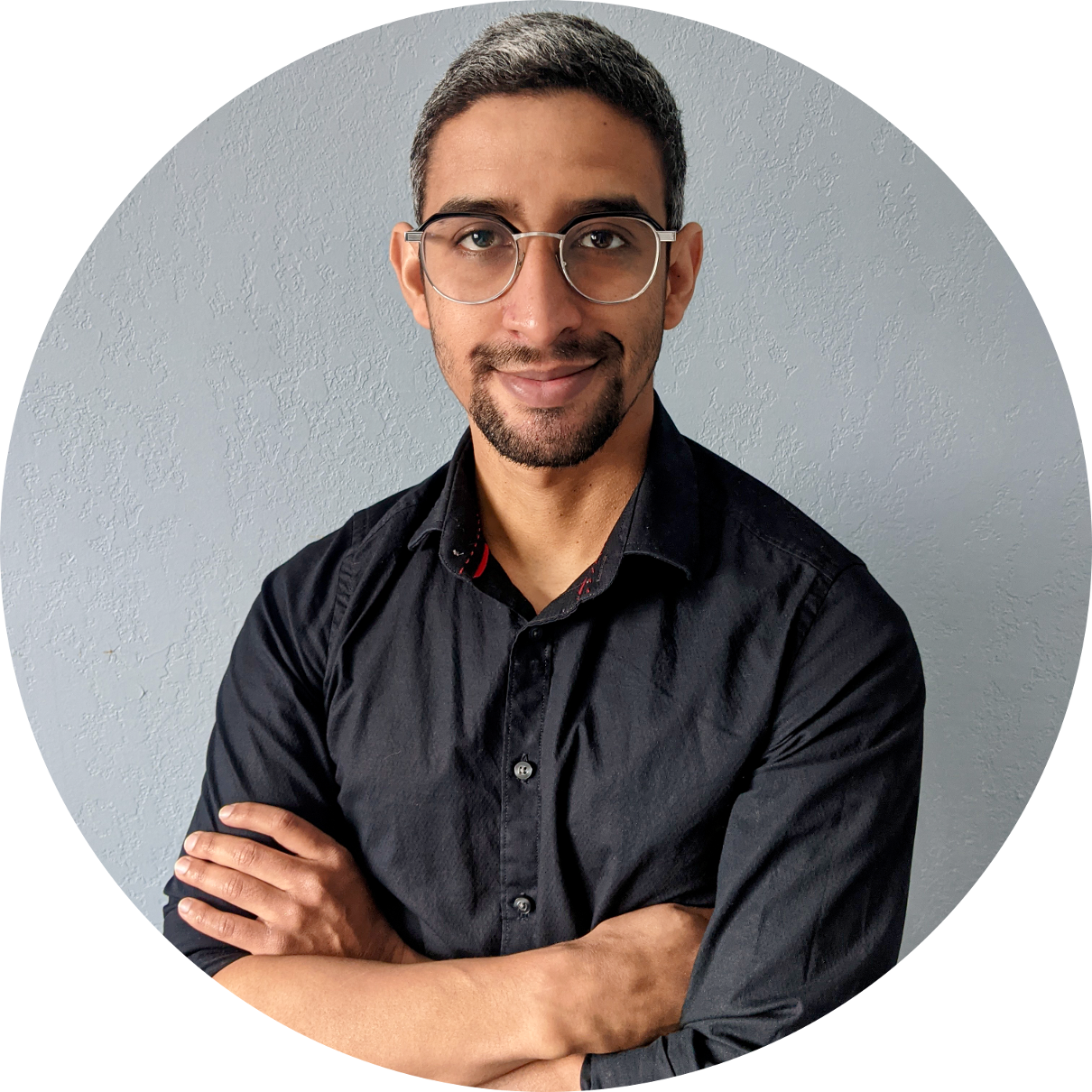
Antonio Dello Iacono is an Associate Professor (Reader) in Strength and Conditioning at the University of the West of Scotland's Division of Sport, Exercise, and Health within the School of Health and Life Sciences. With 20 years of combined experience in elite sport practice, teaching, and research, his work focuses on elite performance conditioning, training load monitoring, and technology integration in sports. He leads the Sports Performance Interest Group, coordinating industry-collaborative applied research projects. His research aims to develop personalized exercise prescription models to enhance individualized training outcomes, reduce overtraining risks, and improve health outcomes. Education & Positions Scientific Associate at University of Split (since 2017) Research Focus His primary research goals involve transitioning from rigid exercise protocols to personalized approaches tailored to individual abilities and stressors. Key areas include autoregulation methods in resistance training and interdisciplinary research integration. He contributes to UN Sustainable Development Goals related to health and well-being. Collaborations & Activities Peer reviewer for Frontiers in Physiology (2022) Invited speaker at ECSS conferences (2018–2021) Media engagements include discussions on mental training's physical benefits and collaborative partnerships Lab/Teams Leads the Sports Performance Interest Group, fostering applied research with industry partners.
Chi-Chun Lee (Jeremy) is a Professor and Associate Chair in the Department of Electrical Engineering at National Tsing Hua University (NTHU), Taiwan. He also serves as Director of the NVIDIA-NTHU Joint Innovation Center and leads the Behavioral Informatics & Interaction Computation (BIIC) Lab. His academic journey includes a B.S. (magna cum laude) and Ph.D. in Electrical Engineering from the University of Southern California (USC), USA (2007 and 2012), followed by roles as a data scientist at id:a lab and technical consultant for companies like E.Sun Bank and Allianz Taiwan. Research focuses on speech processing, affective computing, health analytics, and behavior signal processing. He is an IEEE Senior Member and holds editorial roles in top journals such as IEEE Transactions on Affective Computing and Multimedia. Key contributions include leading teams to international competitions (e.g., 1st place in INTERSPEECH 2009 Emotion Challenge) and developing AI frameworks for clinical applications like respiratory sound classification and tumor image synthesis. Recipient of prestigious awards including the NTHU-Novatek Distinguished Talent Chair (2024), National Science and Technology Council Outstanding Research Award (2023), and multiple best paper awards. His work bridges academia and industry, with collaborations extending to NVIDIA and startups like AHEAD Medicine. Research has been featured in major media outlets including Scientific American and Discovery.
Weerachai Jaratlerdsiri is a Research Fellow at the School of Medical Sciences , Faculty of Medicine and Health , University of Sydney . He is also a member of the University of Sydney Nano Institute and leads bioinformatics initiatives at the Charles Perkins Centre . His work focuses on genomics , prostate cancer , and health disparities in underrepresented populations. PhD in Comparative Genomics (University of Sydney, 2014) Postdoctoral Fellow at Australian Prostate Cancer Research Centre Co-Investigator for US Department of Defense Prostate Cancer Research Programs Developed frameworks for personalized genomics in cancer disparities His research interrogates "Big Data" genomics to uncover genetic and environmental factors influencing prostate cancer in African and other underrepresented populations. He has identified ancestral heritage connections to aggressive cancer and environmental effects on ethnic groups. His work spans computational biology , epigenetics , and translational research . His publications from 2014–2025 emphasize African-ancestral disparities , oncogenic drivers , mitochondrial genomics , and epigenetic machinery . Key journals include Nature , Science , and Cancer Discovery , often in collaboration with global institutions across Australia, South Africa, the UK, and the US. Scientific recognition includes: Best early-career presentation at the Australasian Genomic Technologies Association Conference FMH Showcase Travel Award 2023 (Faculty of Medicine and Health) Dr. Jaratlerdsiri supervises Ruotian HUANG and Jue JIANG , who investigate telomere length and genomic processes in prostate cancer. He collaborates with the Hayes Lab and the ICGC Pan-Prostate Cancer group to harmonize global genomic data from over 2,000 patients.
Pamela J. Bjorkman is the David Baltimore Professor of Biology and Biological Engineering, and Merkin Institute Professor at the California Institute of Technology (Caltech). She holds a B.A. from the University of Oregon (1978) and a Ph.D. from Harvard University (1984). Her academic career at Caltech spans from Assistant Professor (1989–1995) to her current roles, with tenure as HHMI Investigator (1989–2015). She has led research groups and served as Executive Officer in administrative roles. Her research focuses on structural immunology, particularly immune recognition of viral pathogens like HIV-1 and coronaviruses. Key areas include antibody-based therapies, vaccine design, and structural studies of viral glycoproteins and immune proteins. Notable work includes the structural classification of SARS-CoV-2-neutralizing antibodies and development of mosaic nanoparticle vaccines targeting sarbecoviruses. Her scientific contributions include over 300 publications, with recent emphasis on cross-reactive antibodies, HIV vaccine design, and HIV-1 Env trimer dynamics. Awards include her HHMI Investigator status, recognizing her impactful research. Her lab, led by Marta G. Murphy, combines structural biology and immunology to combat infectious diseases.
Malte Ebach is an Honorary Associate Professor at the School of Biological, Earth & Environmental Sciences, University of New South Wales (UNSW). His primary affiliation is with UNSW’s Science faculty, where he contributes to teaching and research in biogeography and systematics. He has held collaborative roles with institutions like CSIRO Publishing and the Linnean Society, and his work spans multiple disciplines involving classification and natural history. Ebanch’s research focuses on Australasian and Gondwanan biogeography, emphasizing natural classification methods such as cladistics and Goethean science. He critically examines historical taxonomic practices, advocating for rigorous area taxonomy and the integration of tectonic data into bioregionalization. Key themes include transition zones, the legacy of 19th-century plant and animal geography, and the revival of bioregionalization in the context of modern geology. He has authored or co-authored over 20 books since 2004, including Biotectonics of Neotropical Transition Zones (2024) and Goethe in the Age of Artificial Intelligence (2023). His edited works include Handbook of Australasian Biogeography (2017) and Biogeography in a Changing World (2006). His recent publications analyze tectonic influences on biogeography, SARS-CoV-2 taxonomy, and the philosophical underpinnings of classification systems. Ebanch’s teaching roles at UNSW include convening GEOS1111 Fundamentals of Geology and GEOS3071 Life on a Dynamic Earth , and lecturing in GEOS1211 Earth and Environmental Science . He critiques emerging trends in taxonomy, such as DNA barcoding, and emphasizes the need for intuitive, historically grounded methods in systematics.
Kangkang Yin is an Associate Professor in the School of Computing Science at Simon Fraser University (SFU). His research focuses on computer animation, computer graphics, humanoid robotics, machine learning, and multimedia analysis. He teaches courses such as Computer Animation and Scientific Computing, and holds a PhD from the University of British Columbia (2007), MSc from Zhejiang University (2000), and BSc from Zhejiang University (1997). His work bridges robotics and animation through projects like physics-based character controllers, motion diffusion models, and robotic manipulation. Key contributions include the SIMBICON biped locomotion framework and research into emotion-driven dance animation. Recent efforts emphasize reinforcement learning applications in motion synthesis and robust visual navigation for unmanned ground vehicles. Yin's publications span over two decades, addressing challenges in motion control, physics-based simulation, and machine learning applications. His lab contributes to both academic advancements and practical robotics solutions. Current research trends show strong emphasis on combining generative AI with traditional animation techniques, as seen in recent work on auto-regressive motion models (AAMDM) and physics-augmented reinforcement learning (PARC).
Tove Hels is an Associate Professor in the Department of the Built Environment at the Faculty of Engineering and Science, Aalborg University, Denmark. She is a key member of the Traffic Research Group, focusing on transportation safety, road user behavior, and traffic policy. Her work bridges engineering, public health, and social science to improve road safety outcomes. Research Interests: Her research spans traffic safety, cyclist-motorist interactions, speed enforcement, accident risk modeling, and the impact of vehicle technologies. She investigates both infrastructure design and behavioral factors influencing road safety, with a strong emphasis on data-driven analysis and policy evaluation. The recent publications reveal a consistent focus on improving cyclist safety through infrastructure (e.g., advanced stop boxes, roundabout design), addressing under-reporting of traffic injuries, and evaluating behavioral interventions for speeding. Her work integrates epidemiological methods, statistical modeling, and real-world policy applications. Scientific Contributions: Principal Investigator in the Danmarks Trafikulykker cohort study (2025–2029) Project participant in EASE: Intervention against speed offenders (2019–2025) Author of over 29 research outputs including journal articles, reports, and policy briefs Frequent contributor to national media and advisory bodies like Dansk Vejforening Advising and Grants: While no formal students are listed, her leadership in major funded research projects indicates a supervisory role in training junior researchers. She has secured and contributed to significant research grants related to traffic safety monitoring and intervention evaluation. Labs and Teams: She is part of the Traffic Research Group at Aalborg University, collaborating closely with researchers such as H. Lahrmann, T.K.O. Madsen, and A.V. Olesen. The group conducts field studies, data linkage projects, and policy evaluations with national impact.
Tania Cerquitelli is a Full Professor in the Department of Control and Computer Science (DAUIN) at Politecnico di Torino, where she leads research in data science, concept-drift management, and inclusive AI technologies. She is a member of SmartData@PoliTO, the GEDI Observatory for Gender Equality, and serves in leadership roles related to social affairs and community policies at the university level. She also acts as a scientific advisor for the partnership with Accenture. Her research interests span Data Science , Concept-Drift Management , Database Systems , Conversational Data Science , and Industry 4.0 . She applies AI and machine learning to industrial, societal, and ethical challenges, particularly in promoting inclusive communication and gender equality in research. The most recent publications highlight her work in explainable AI, concept drift detection, multimodal diagnostics, and AI for social good. Her research integrates machine learning, natural language processing, and computer vision to address real-world problems in manufacturing, healthcare, agriculture, and education. She is an Associate Editor for several prestigious journals including Expert Systems with Applications , Computer Networks , Future Generation Computer Systems , and Knowledge and Information Systems . She has served on the program committees of major conferences such as ECML PKDD, EDBT/ICDT, and ACM KDD, and has been a reviewer and selection committee member for ETH Zurich and EMPA. She actively supervises PhD students and teaches a wide range of courses including Data Science and Database Technologies, Business Intelligence for Big Data, and Gender and Diversity in Research. She is involved in multiple national and international research projects such as E-MIMIC, WEBFARE, and EnABLES, focusing on inclusive AI, smart data, and industrial applications. Her lab affiliations include the DBDM - Database and Data Mining Group (DAUIN) and the Interdepartmental Center SmartData@PoliTO - Big Data and Data Science Laboratory , where she contributes to advancing data science methodologies and their societal impact.
Sean Robson is a Professor of Policy Analysis at the RAND School of Public Policy and a Senior Behavioral/Social Scientist at the RAND Corporation. He serves as Associate Director of the Workforce, Development, and Health Program within RAND Project AIR FORCE, where he leads research on manpower, personnel, training, and readiness issues for the U.S. military. Robson holds a Ph.D. in industrial-organizational psychology from the University of Tulsa and a B.S. from James Madison University. His research expertise lies in the scientific validation of assessment and selection systems, physical and psychological fitness standards, and workforce development in military contexts. His research interests span military education and training, operational readiness, gender integration in the military, workforce diversity, enlisted personnel management, leadership, and competency modeling. He has led numerous projects to establish evidence-based physical fitness tests for Air Force Special Warfare and combat specialties in the Army, and has contributed to reforms in recruiting, classification, and resilience programs. Recent publications highlight a strong trend in applying data science, machine learning, and policy analysis to improve human resource management in the Air Force and Department of Defense. His work increasingly integrates artificial intelligence and optimization models to modernize workforce systems, while maintaining a core focus on human performance, resilience, and readiness. Assessment and selection for special operations Physical and behavioral fitness standards Military workforce development Machine learning in HR STEM talent in defense Robson has made significant contributions through RAND’s research portfolio, with over 37 research publications and multiple expert insights. His scientific work informs high-level defense policy and operational practices, particularly in the U.S. Air Force and Army. He has also advised on diversity initiatives, abuse prevention in training, and energy-sector workforce development. He is actively involved in current defense research, with recent and forthcoming publications in 2024 and 2025, indicating ongoing leadership and scholarly impact. He is based at RAND and can be contacted at Sean_Robson@rand.org.
Miryam de Lhoneux is an Assistant Professor at the Department of Computer Science , Faculty of Engineering Science , KU Leuven . She is affiliated with interdisciplinary institutes including Leuven.AI and LILI (KU Leuven Interdisciplinary Language Institute). Active in Multilingual Natural Language Processing and Fair AI research Member of the Faculty of Engineering Science Council and Computer Science Department Council Her research focuses on neuro-symbolic methods , language adaptation , and typological diversity in NLP. Recent projects include: Neuro-Symbolic Methods for Fair Multilingual NLP (2023-2027), Graph-Based Instance Selection for Multi-Modal Data (2024-2028), and Unit of Representation in Multilingual Modeling (2025-2028). Her publications span topics including code-mixed data analysis , English bias in LLMs , and sociolinguistically informed interpretability . She teaches courses in Advanced Natural Language Processing and Language Engineering Applications .
Milena Stróżyna is an Assistant Professor at the Department of Economic Informatics in the University of Economics in Poznan , Poland. Her work focuses on data modeling, AI applications in disinformation detection, and maritime data analysis . Email: milena.strozyna@ue.poznan.pl Research interests span: Data Modeling & Analysis : Extracting insights from diverse data sources, ensuring quality, and implementing ERP systems Disinformation Studies : Developing AI tools for fake news detection and semantic mapping of misinformation topics Maritime Data Science : Crisis impact analysis in shipping, anomaly detection in maritime transport Scientific Contributions include: Pioneering OpenFact system for information verification Creating adversarial text detection methods Leading research on generative AI risks in information integrity Notable Awards : 2018: Most innovative article at NATCON conference Multiple first-place international competition wins with OpenFact system (2022-2024)
Diego Patiño is an Assistant Professor in the Department of Computer Science and Engineering at the University of Texas at Arlington (UTA), a position he began in September 2024. He earned his Ph.D. in Computer Engineering from the National University of Colombia in 2020, following M.S. and B.S. degrees from the same institution. Prior to joining UTA, he served as a Postdoctoral Fellow at Drexel University and a Postdoctoral Researcher at the GRASP Laboratory, University of Pennsylvania. B.S. in Computer Engineering, National University of Colombia, 2010 M.S. in Computer Engineering, National University of Colombia, 2012 Ph.D. in Computer Engineering, National University of Colombia, 2020 Dr. Patiño's research centers on geometric computer vision and machine learning, with applications in robotics and 3D vision. His primary interests include 3D reconstruction, graph neural networks, symmetry detection, physics-informed machine learning, and reinforcement learning. He develops algorithms that integrate geometric priors and physical constraints into deep learning models to improve robustness and generalization in real-world robotic systems. His recent publications demonstrate a strong trend in leveraging implicit neural representations for 3D shape reconstruction, applying graph neural networks to swarm robotics, and enhancing computer vision tasks with self-supervised and physics-informed learning. Work spans high-impact venues such as IEEE RA-L, ICRA, ICPR, and MICCAI, showing a consistent focus on geometric reasoning, robotic perception, and medical imaging applications. His scientific contributions have been recognized with awards from the UTA Division of Student Affairs for exceptional dedication and positive impact (2024 and 2025). He is actively involved in securing research funding, with multiple grants under review from NSF, Air Force SBIR, and industry partners like Sony. Exceptional dedication and positive impact recognition, UTA Division of Student Affairs (December 9, 2024) Exceptional dedication and positive impact recognition, UTA Division of Student Affairs (April 30, 2025) Dr. Patiño advises and serves on committees for multiple graduate students in computer science and engineering, including doctoral and master’s candidates. He is also leading or co-leading several research grants under review, covering topics such as aerial swarm navigation, neuromorphic sensing, and industrial computer vision. He teaches graduate courses in computer vision and is involved in service roles including PhD admissions and faculty appointments committees. He is affiliated with research initiatives at UTA, including the UTARI Research Institute, where he has presented on geometric modeling and physics-informed learning. His lab focuses on developing next-generation computer vision algorithms for robotics, industrial inspection, and safety-critical systems.
Giuseppe Corti is a Full Professor in the Department of Agricultural, Food and Environmental Sciences at the Università Politecnica delle Marche (UNIVPM), Italy. He is affiliated with the Faculty of Agriculture and specializes in the scientific sector of Pedology (AGRI-06/C), focusing on soil formation, classification, and environmental interactions. His research interests lie primarily in Soil Science and Environmental Sustainability , with emphasis on pedological processes, land degradation, and conservation strategies. Given his departmental affiliation and scientific sector, his work likely integrates field-based soil analysis with broader environmental and agricultural sustainability goals. Although no specific publications or research projects are detailed in the provided text, his academic profile suggests a strong engagement in soil-environmental research within Mediterranean and agricultural contexts. No scientific awards or honors are mentioned in the available information. Prof. Corti maintains regular office hours on Wednesdays from 15:30 to 17:30 at the Soil Science Area studio, indicating active participation in academic duties. He advises students and contributes to teaching within the agricultural sciences curriculum. There is no mention of specific laboratories or research teams, but his work is likely connected to soil science research initiatives within the department.
Tobias Ofner-Graff is a researcher at the Institute of Forest Growth within the Department of Ecosystem Management, Climate and Biodiversity at the University of Natural Resources and Life Sciences, Vienna (BOKU). Based at Peter-Jordan-Straße 82, 1190 Wien, his work focuses on advanced forest monitoring technologies. His research interests include: LiDAR and remote sensing applications in forestry Automated forest inventory systems Forest regeneration quantification Airborne Laser Scanning (ALS) data analysis Sustainable forest harvesting planning Recent project contributions include: Leading lidar-based forest monitoring systems development Developing spatial forest growth models Implementing digital inventory workflows His publications demonstrate expertise in: Quantifying forest resources through 3D point clouds Advanced timber stack measurement techniques ALS data integration for forest modeling Mobile laser scanning applications Forest climate adaptation strategies
Dr. Kevin Gee is a Professor in the School of Education at the University of California, Davis, specializing in the School Organization & Educational Policy emphasis area. He serves as Director of the School Policy, Research, and Action (SPARC) Center and is a Faculty Research Affiliate with the Center for Poverty & Inequality Research. As a 2020-25 Chancellor's Fellow, Dr. Gee leads research initiatives focused on vulnerable youth populations and educational policy impacts. His work bridges education, public health, and social welfare systems to address structural inequities affecting children's development and academic success. Dr. Gee's educational background includes: Ed.D., Harvard Graduate School of Education, Quantitative Policy Analysis in Education (2010) Ed.M., Harvard Graduate School of Education, International Education Policy (2006) M.P.I.A., University of California, San Diego, Pacific & International Affairs (cum laude, 2004) B.A., University of California, Berkeley, City & Regional Planning (magna cum laude, 1994) Dr. Gee's research centers on the critical intersection between health and education systems, examining how schooling can influence children's well-being. He investigates policies addressing adverse childhood experiences including bullying, food insecurity, abuse, and neglect. His work employs rigorous quantitative methods including Hierarchical Linear Modeling, longitudinal analysis, and experimental/quasi-experimental designs. Dr. Gee focuses particularly on vulnerable populations such as children with disabilities, Asian American and Pacific Islander youth, and those involved in the child welfare system, seeking data-driven solutions to educational inequities. Analysis of Dr. Gee's recent publications reveals a strong focus on educational equity, with particular attention to vulnerable student populations. His work spans school absenteeism patterns, bullying and hate speech against AAPI youth, food insecurity impacts, and health-related educational outcomes. The research demonstrates increasing interdisciplinary collaboration, particularly with public health researchers, and shows a growing emphasis on pandemic-related educational disruptions and their disproportionate impacts on marginalized communities. Dr. Gee's notable scientific awards include: National Academy of Education (NAEd)/Spencer Postdoctoral Fellowship (2015) Foundation for Child Development (FCD) Young Scholars Program Award (2014-2017) UC Davis Hellman Fellowship (2015-2016) Chancellor's Fellowship (2020-2021) Outstanding Faculty Award, Asian Pacific American UC-Systemwide Alliance (2023) Distinguished Visiting Scholar, Advanced Research Collaborative, CUNY (2022) Dr. Gee serves as Principal Investigator for multiple significant grants, including the Heising-Simons Foundation project on districtwide family engagement strategies and chronic absenteeism (2024-2026), and the UC Davis SEED funding for research on how Asian American and Pacific Islander youth confront bullying. He also serves as Co-Investigator on the AAPI Data Grant examining school climate influences on bullying experiences. His grant portfolio demonstrates strong interdisciplinary collaboration, particularly between education and public health researchers, with a consistent focus on generating actionable insights for educational policymakers and practitioners. As Director of the School Policy, Research, and Action (SPARC) Center at UC Davis, Dr. Gee leads a research team focused on generating data-informed insights about underserved and overlooked youth in educational policy. The center's work specifically supports Asian American and Pacific Islander youth who have experienced bullying, children with chronic absenteeism, and child welfare-involved youth who have experienced maltreatment. The SPARC Center collaborates with various California school districts and state agencies to translate research into practical policy recommendations and implementation strategies.