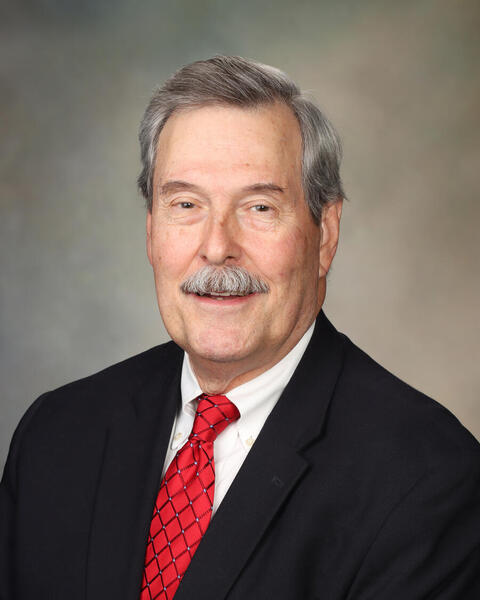
Mark R. Pittelkow is a Professor of Dermatology at the Mayo Clinic, holding a primary appointment as a Consultant in the Department of Dermatology. He completed his MD at Mayo Medical School and advanced training through Mayo Graduate School of Medicine and Northwestern University. His research focuses on cutaneous lymphomas, photoprotection, and skin cancer, with leadership roles in international guidelines (ISCL/EORTC). He contributes to clinical trials, medical education, and interdisciplinary research through affiliations like the Mayo Clinic Comprehensive Cancer Center and Regenerative Biotherapeutics. Education: MD (Mayo Medical School), MS (Biological Sciences, Northwestern), BA (Northwestern University). Research spans cutaneous lymphoma classification, immunology, and translational dermatology. Notable publications address staging systems for mycosis fungoides/Sezary syndrome and photoprotection strategies. His work integrates clinical practice with molecular mechanisms, such as JAK inhibitor responses in lichen planus. Labs/Teams: Collaborates with Mayo Clinic Cancer Center and interdisciplinary groups in immunotherapy and regenerative medicine. Supervises clinical trials and postdoctoral training programs.
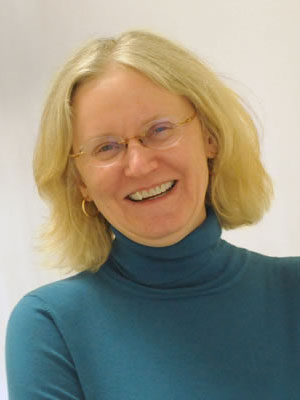
Gail E. Kaiser is a Professor of Computer Science and the Director of the Programming Systems Laboratory (PSL) in the Computer Science Department at Columbia University. She has been with Columbia University since 1985, becoming a full Professor in 1998. Prof. Kaiser's research spans software engineering, program analysis, software testing, and software security, with recent focus on addressing challenges in AI/ML systems testing and security. Prof. Kaiser received her PhD in Computer Science from Carnegie Mellon University in 1985 and her ScB in Computer Science and Engineering from MIT in 1979. Her dissertation at CMU was titled "Semantics for Structure Editing Environments" under advisor Nico Habermann, and at MIT she completed "Automatic Extension of an Augmented Transition Network Grammar for Morse Code Conversations" under advisor Al Vezza. Prof. Kaiser's research interests primarily focus on software engineering following a systems building approach, with recent emphasis on static and dynamic program analysis techniques to improve software reliability and security. Since 2005, she has investigated testing "non-testable" programs, particularly in machine learning, data mining, and scientific computing applications where traditional testing oracles are insufficient. She has developed novel techniques and tools for detecting bugs and verifying repairs in complex systems. Concurrently, she has worked on collaboration environments for computational scientists, creating knowledge sharing and domain-aware environments to support scientific workflows. Prof. Kaiser's recent publications demonstrate a strong focus on the intersection of software engineering and artificial intelligence. Her work addresses critical challenges in testing AI systems, code understanding through deep learning, vulnerability detection, and educational tools for computational thinking. There's a clear evolution from traditional software engineering topics toward AI/ML applications, with particular emphasis on metamorphic testing for non-testable systems, code similarity analysis, and educational applications. Prof. Kaiser has received numerous prestigious awards throughout her career: Distinguished Journal Award (10 Years) from 18th IEEE International Conference on Software Testing, Verification and Validation (ICST), April 2025 Best Research Paper Award at 24th IEEE International Conference on Source Code Analysis & Manipulation (SCAM), October 2024 Distinguished Reviewer Awards for ASE 2024 and FSE 2024 ACM SIGSOFT Distinguished Paper Award for "CONCORD: Clone-aware Contrastive Learning for Source Code", July 2023 Best Student Paper Award at ICCE 2021 Multiple ACM SIGSOFT Distinguished Paper Awards dating back to 2014 Presidential Young Investigator in Software Engineering and Software Systems from NSF (1988-1993) Prof. Kaiser has chaired Columbia's doctoral program since 1997 and served on editorial boards including IEEE Internet Computing and as a founding associate editor of ACM Transactions on Software Engineering and Methodology. Her lab has been continuously funded by major agencies including NSF, NIH, DARPA, ONR, NASA, and numerous companies. Current grants include significant NSF funding for secure containers architecture, learning semantics of code for software assurance, and finding semantic security bugs. As Director of the Programming Systems Laboratory (PSL), Prof. Kaiser leads research in software systems, program analysis, and software testing. The lab has developed numerous tools and techniques for software reliability and security, with recent focus on challenges in AI/ML systems. Her work bridges theoretical foundations with practical applications, often resulting in deployable tools that address real-world software engineering challenges.
Changxi Zheng is an Associate Professor in the Department of Computer Science at Columbia University's School of Engineering and Applied Science (SEAS). He directs Columbia's Computer Graphics Group (C2G2) within the Columbia Vision and Graphics Center (CVGC). After receiving his PhD from Cornell University, he joined the faculty of Computer Science Department at Columbia, where he has established himself as a leading researcher in computer graphics and scientific computing. Dr. Zheng's research spans multiple areas of applied computer science with a particular focus on computer graphics and scientific computing. His work centers around developing numerical models for simulating physical phenomena involving complex motions such as fluids, bubbles, and thin rods, along with their resulting acoustic waves. Leveraging computational insights from these models, he devises methods for improving tangible object creation, enabling novel human-computer interactions, and developing software tools for acoustic and photonic devices. His research has attracted significant public interest and media coverage, including projects like FontCode, AirCode, and Computational Metallophone Design. His recent publications reveal a strong interdisciplinary approach, bridging computer graphics, physics simulation, machine learning, and hardware design. His work demonstrates consistent innovation in computational methods for simulating physical phenomena and applying these techniques to practical problems in 3D printing, acoustic modeling, and interactive systems. The breadth of his research spans from fundamental physics-based simulations to practical applications in industry. Columbia SEAS Dean's Fellow (for advised students) NSF Graduate Research Fellow (for Ruilin Xu) Snap Research Fellow (for Rundi Wu) CKGSB Fellow (for Yun Fei) Adobe Research Fellow (for Gabriel Cirio) Marie Sklodowska-Curie Individual Fellow (for Rundi Wu) Best Paper Award at ACM International Conference on Multimedia (ACMMM), 2019 Dr. Zheng actively mentors a diverse group of students, including current PhD candidates and postdoctoral researchers. His research group has received support from various sources that enable their innovative work in computational graphics and physics-based simulation. He has supervised numerous successful students who have gone on to positions at leading technology companies including Adobe, Tencent, Facebook, and academic institutions. As director of Columbia's Computer Graphics Group (C2G2) within the Columbia Vision and Graphics Center (CVGC), Dr. Zheng leads a vibrant research team focused on advancing the state of the art in computer graphics, physics-based simulation, and their applications. The group maintains strong collaborations with industry partners and academic institutions worldwide, fostering an environment of innovation and practical application of theoretical concepts.
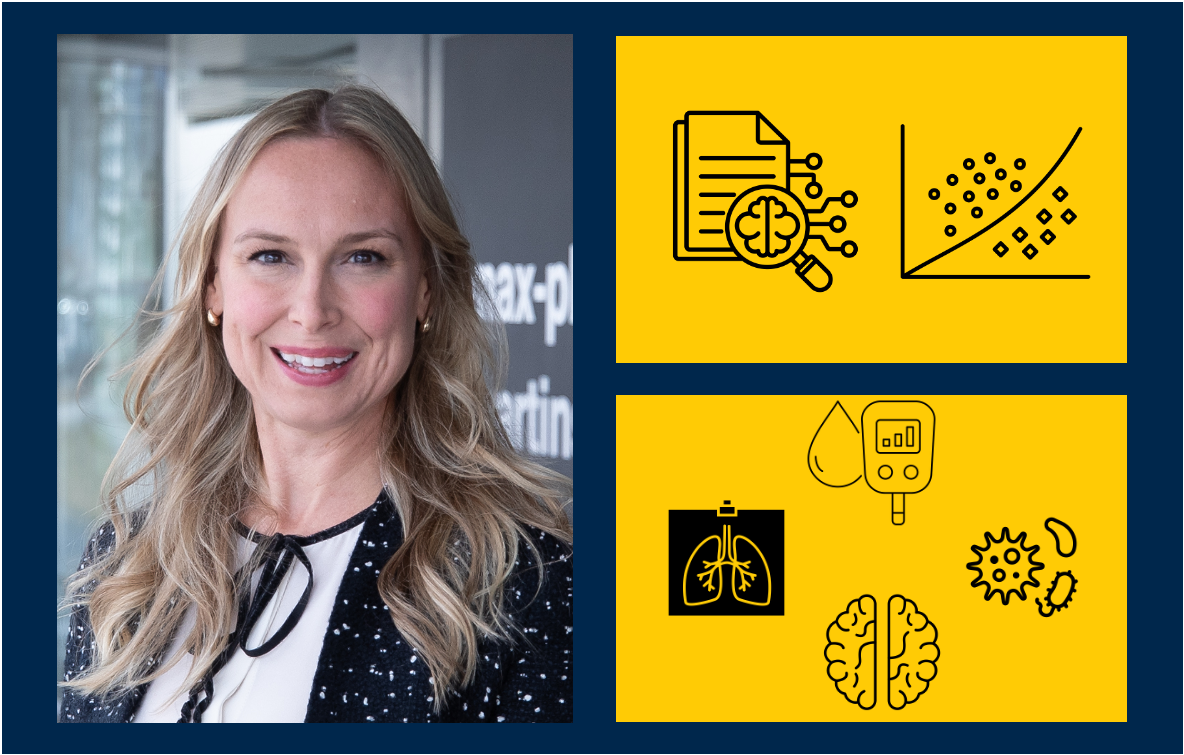
Jenna Wiens is an Associate Professor of Computer Science and Engineering at the University of Michigan's College of Engineering. She serves as Associate Director of the Artificial Intelligence Lab and co-Director of AI & Digital Health Innovation. Leading the MLD3 research group, her work focuses on machine learning and AI applications for healthcare data. PhD from MIT (2014) under John Guttag NSF CAREER Award recipient (2016) Humboldt Foundation Carl Friedrich von Siemens Award (2024) Her research addresses four key technical thrusts: Time-series analysis for predicting clinical outcomes Robust machine learning against spurious correlations Decision-making with causal inference and offline reinforcement learning Human-AI collaboration frameworks Notable methodological contributions include the FIDDLE preprocessing pipeline for clinical time-series data, foundational work on survival analysis, and novel approaches to model selection in healthcare reinforcement learning. Her work has led to real-world AI deployments in infection prevention and patient risk stratification. Scientific honors include: Forbes 30 Under 30 (2015) MIT Tech Review 35 Innovators Under 35 (2017) Sloan Research Fellowship in Computer Science (2020) Sarah Goddard Power Award (2023) Wiens collaborates with clinicians across disciplines, emphasizing clinician-in-the-loop AI systems and ethical implementation in healthcare workflows.
Prof. Dr. Dennis Säring is a faculty member at the University of Applied Sciences Wedel , specifically affiliated with the School of Engineering. His academic and research activities focus on Deep Learning , Medical Image Analysis , and applications of Artificial Intelligence in healthcare and biomedical imaging. He has led seminars on Deep Learning topics and supervised student projects in Autonomous Driving at Audi's AADC 2018 competition. Research Highlights : Cardiovascular imaging, forensic age estimation via MRI, neural network-based bone segmentation, and cerebrovascular aneurysm analysis. Technical Expertise : Cardiac MRI, 3D/4D image processing, parametric mapping, and spatiotemporal data fusion. His recent publications (2018-2023) emphasize 3D MR segmentation for age assessment, CMR strain analysis in athletes, and T1/T2 mapping for myocarditis. Key collaborations include institutions like the University Medical Center Hamburg-Eppendorf and Wedler Hochschulbund, with funding for autonomous vehicle research. While no explicit scientific awards are listed, his work spans clinical cardiology, forensic radiology, and AI-driven medical diagnostics.
Roswitha Skare is a Professor of Documentation Science at the Department of Language and Culture, UiT The Arctic University of Norway, within the Faculty of Humanities, Social Sciences and Teacher Education. She is actively engaged in research and teaching, focusing on documentation studies, public libraries, archives, museums (LAM sector), digitalization, and film history. Her research interests include: Documentation and document theory Paratext and digital documents Public libraries and their role in society Libraries and social media Migration and refugee services in libraries Film history, especially silent films and early documentaries Cultural memory and Sámi cultural resilience Institutional convergence in cultural policy Her recent publications (2019–2025) reveal a strong focus on public libraries during and after the Covid-19 pandemic, the role of libraries in supporting immigrants and refugees, theoretical developments in document studies, and historical film analysis—particularly Robert Flaherty’s Nanook of the North . She frequently collaborates with scholars such as Andreas Vårheim, Noah Lenstra, and Sigrid Stokstad. Her work appears in journals like Journal of Documentation , Library & Information Science Research , and Proceedings from the Document Academy . Roswitha Skare teaches courses such as: MDV-1001: Multimediale dokumenter: Historie, teori og analyse MDV-1203: Bibliotek og formidling MDV-1207: Dokumentinstitusjoner og digitalisering MDV-1206: Prosjektoppgave i bibliotek- og dokumentasjonsvitenskap She supervises bachelor’s, project, and master’s students in library and documentation science. She is a member of the research group Engaging Conflicts in a Digital Era (ENCODE) and participates in projects such as LAMCOM – Libraries, archives, and museums in the community and SAMCOM - Sámi cultural centers as community and cultural resilience infrastructure , which explore the societal roles of cultural institutions and Indigenous resilience. No scientific awards are listed in the provided text.
Erik B. Sudderth is a Professor of Computer Science and Statistics and Chancellor's Fellow at the University of California, Irvine (UCI). He leads the Learning, Inference, & Vision Group and directs multiple research centers, including the UCI Center for Machine Learning and Intelligent Systems and the HPI Research Center in Machine Learning and Data Science. He previously served as an Associate Professor at Brown University. Education: B.S. (summa cum laude) in Electrical Engineering from UC San Diego (1999), M.S. and Ph.D. in EECS from MIT (2002, 2006). His research focuses on statistical methods for scalable machine learning, Bayesian nonparametrics, probabilistic graphical models, and applications in computer vision, AI, and environmental science. Key areas include nonparametric clustering, deep generative models, and particle-based inference algorithms. Research interests span diverse topics: advancing Bayesian nonparametric models for medical time series, scalable variational inference, and AI ethics. Notable contributions include the NET-VISA seismic monitoring system (ISBA Mitchell Prize, 2014), the BNPy toolbox (NSF CAREER Award), and work on diverse particle max-product algorithms for continuous inference. Scientific awards include the NSF CAREER Award, ISBA Mitchell Prize, and recognition as one of "AI's 10 to Watch" (IEEE). He has served as editor for top journals (JMLR, IEEE PAMI) and conference chairs (NeurIPS, CVPR). His work bridges theory and practice, with applications in robotics, climate science, and healthcare. Labs/Teams: UCI Learning, Inference, & Vision Group; UCI Center for Machine Learning; CREATE Technology Center. Grants include NSF funding for visually impaired collaboration tools and soil biogeochemical modeling.
Dr. Arno Solin is a tenured Associate Professor in Machine Learning at Aalto University's Department of Computer Science and an Academy of Finland Research Fellow . He leads the Aalto machine learning research group and serves as Director of the Finnish Doctoral Program Network in AI (AI-DOC) . His work bridges probabilistic modeling with practical applications in sensor fusion and real-time inference. ELLIS Scholar (European Laboratory for Learning and Intelligent Systems) Adjunct Professor at Tampere University Member of Young Academy Finland (2021–2025) Research Interests focus on data-efficient machine learning with probabilistic methods for real-time inference and sensor fusion. Key areas include Gaussian processes, diffusion models, stochastic differential equations, and uncertainty quantification in deep learning. His group develops methods that combine structural constraints with adaptive learning for deployment on resource-limited hardware. Publication Trends show consistent output in top venues (NeurIPS, ICML, ICLR, AISTATS) with emphasis on diffusion models , 3D scene reconstruction , and real-time probabilistic modeling . Recent works explore physics-informed learning, heterophily-aware graph models, and compressed representations for world models in reinforcement learning. Scientific Recognition : Awarded AI Researcher of the Year 2024 by AI Finland Teacher of the Year 2023 at Aalto CS ISIF Jean-Pierre Le Cadre Best Paper Award (2018) MLSP Schizophrenia Classification Challenge Winner (2014) NeurIPS/ICML Reviewer Awards Research Leadership includes coordinating Finland's AI Center of Excellence program and directing the Finnish Doctoral Program Network in AI (AI-DOC). He supervises 15+ doctoral/postdoctoral researchers and has spun off Spectacular AI , a company commercializing sensor fusion technology.
Cyrill Stachniss is a Full Professor at the University of Bonn , where he heads the Lab for Photogrammetry and Robotics and is affiliated with the Lamarr Institute for Machine Learning and Artificial Intelligence . He was previously a Visiting Professor in Engineering at the University of Oxford until 2025. His academic journey includes positions at the University of Freiburg, University of Zaragoza, and the Swiss Federal Institute of Technology. University: University of Bonn School: Faculty of Engineering Department: Department of Photogrammetry Academic Rank: Professor His research spans robotics, photogrammetry, SLAM, autonomous navigation, perception systems, agricultural robotics, and unmanned aerial vehicles . He emphasizes probabilistic techniques for mobile robots and has made significant contributions to visual and LiDAR-based localization, scene understanding, and 3D reconstruction. The recent publications highlight a strong trend toward neural implicit representations, agricultural phenotyping, radar-based perception, and active learning . His team develops robust systems for real-world deployment in dynamic and unstructured environments, particularly in precision farming and autonomous vehicles. Scientific Awards: IEEE RAS Early Career Award (2013) Microsoft Research Faculty Fellow (2010) 7th EURON Georges Giralt Award (2008) Multiple Best Paper Awards at ICRA, IROS, RSS, and RAL Faculty Teaching Award, University of Freiburg He has advised numerous students and leads the DFG Cluster of Excellence PhenoRob and Research Unit FOR 1505 Mapping on Demand . His lab has co-founded three startups, reflecting strong industry and societal impact. He also runs the educational video series 5 Minutes with Cyrill , explaining key robotics concepts.
Mikhail (Misha) Belkin is a Professor at the Halicioglu Data Science Institute (HDSI) at the University of California San Diego , with an affiliated appointment in the Department of Computer Science and Engineering . He is also an Amazon Scholar , reflecting his impactful industry collaboration. Since January 2024, he has served as the Editor-in-Chief of the SIAM Journal on Mathematics of Data Science (SIMODS) . Research Interests: Belkin's research centers on the theoretical foundations of machine learning, particularly the mathematical understanding of modern deep learning. His work investigates interpolation , over-parameterization , and feature learning in neural networks. He is renowned for introducing the double descent risk curve, which reconciles classical bias-variance trade-offs with the success of overfitted models. His recent work identifies the Average Gradient Outer Product (AGOP) as a fundamental mechanism of feature learning, applicable across architectures like CNNs and transformers. Scientific Contributions and Trends: His recent publications, appearing in Science , PNAS , and NeurIPS , demonstrate a strong trend toward unifying theories of generalization and optimization in over-parameterized systems. He explores how interpolating models can be statistically optimal, how gradient descent converges in non-convex landscapes via the PL* condition, and how kernel methods can be enhanced to perform feature learning. ACM Fellow (2023) Editor-in-Chief, SIAM Journal on Mathematics of Data Science (2024–present) Advising and Grants: Belkin actively mentors students and collaborators such as Adityanarayanan Radhakrishnan , Daniel Beaglehole , and Chaoyue Liu , who are frequent co-authors. He is a Principal Investigator (PI) in the Collaboration on the Theoretical Foundations of Deep Learning , funded by the NSF and Simons Foundation. He is also an external collaborator with the Eric and Wendy Schmidt Center at the Broad Institute and part of the NSF-funded TILOS AI Institute . Laboratories and Teams: While not explicitly named, his research group at UCSD is deeply involved in theoretical machine learning, focusing on the intersection of statistics, optimization, and deep learning. His work often involves large-scale collaborations and is closely tied to initiatives like SIMODS and TILOS.
Karsten Lambers is Professor of Digital and Computational Archaeology at the Faculty of Archaeology, Leiden University, where he leads research and teaching in the application of computational methods to archaeological data. His work integrates machine learning, remote sensing, text mining, and citizen science to advance archaeological prospection and heritage management. He is affiliated with the Department of Archaeological Sciences and plays key roles in research groups and university-wide initiatives such as SAILS and ARCHON. His research interests span Digital Archaeology , Machine Learning in Archaeology , Remote Sensing , Geoarchaeology , and Human-Environment Interaction . He investigates how computational tools can extract meaningful archaeological information from large datasets, including LiDAR imagery and excavation reports. His fieldwork spans Central Europe and Latin America, with a focus on prehistoric landscapes and cultural heritage. The analysis of his recent publications reveals a strong trend toward automated detection using deep learning (e.g., R-CNN, WODAN), named entity recognition in archaeological texts (e.g., ArcheoBERTje), and citizen science integration for data validation. His work bridges archaeology with computer science, geomatics, and environmental science, emphasizing interdisciplinary collaboration and methodological rigor. His scientific awards include: Best Thesis Award (University of Zurich, 2005) EUROPA NOSTRA Award (2020, 2022) Membership in the German Archaeological Institute (since 2022) Lambers actively supervises students and leads major research projects such as ABMA, EXALT, and Heritage Quest. He has secured substantial research funding and collaborates widely with computer scientists, geophysicists, and palaeoecologists. His teaching includes digital methods, modeling, and simulation, often linked to ongoing research. He has also contributed to open educational resources and digital textbooks in archaeology. He leads or participates in several research labs and teams, including the Digital Archaeology Research Group (which he chairs), the Heritage Quest citizen science project, and interdisciplinary teams focusing on alpine terraces and Iraqi prospection. His work emphasizes the integration of digital tools into practical archaeological workflows, advocating for complementary human-computer strategies.
Maren Toft is a Professor in the Department of Sociology and Human Geography at the University of Oslo's Faculty of Social Sciences. Her academic career has progressed from Research Assistant (2013-2014) to PhD Candidate (2014-2018), Postdoctoral Fellow (2018-2022), Associate Professor (2022), and now Professor. Her research focuses on: Class theory and theory of elites Social mobility and class structuration Segregation and urban inequality Social capital and networks of power Advanced quantitative methods including social sequence analysis and correspondence analysis Toft's publication record shows a consistent focus on elite formation, wealth accumulation, and class reproduction. Her work frequently employs longitudinal approaches to examine how social origins influence life trajectories, particularly among the upper classes. She has made significant contributions to understanding how class structures persist in Scandinavian welfare states, challenging assumptions about equality in these societies. Her major scientific awards include: His Majesty the King's Gold Medal for her 2018 PhD dissertation 'Biographies of privilege' Norwegian sociological association's award for best international publication in 2020/2021 Norwegian sociological association's award for best international publication in 2017 Kunnskap Oslo's award for best Oslo-related Research in 2015 Norwegian sociological association's award for research dissemination in 2018 Toft actively supervises PhD students including Iselin Hewitt (studying urban planning and gentrification), Marte Lund Saga (examining business-politics networks), and Stian Uvaag (researching sibling similarities in mobility). She serves on the board of both the Department of Sociology and Human Geography and the Norwegian Sociological Association. She is involved in several major research projects including HISTCLASS, The Oslo Register Data Classification (ORDC), The Salmon Elite (SALELITE), and Weaving the fabric of Elite Bonds (WEB), which collectively examine various dimensions of elite formation, power structures, and social inequality in Norway and internationally.
David W. Jacobs is a Professor in the Department of Computer Science at the University of Maryland, with a joint appointment at the University of Maryland Institute for Advanced Computer Studies (UMIACS). He also served as the interim Director of the University of Maryland Center for Machine Learning starting in 2018. University: University of Maryland School: College of Computer, Mathematical, and Natural Sciences Department: Department of Computer Science Academic Rank: Professor Education: He received his B.A. from Yale University, and M.S. and Ph.D. in Computer Science from MIT. Research Interests: His research primarily focuses on computer vision and machine learning, particularly visual object recognition, lighting variation modeling, 3D reconstruction, perceptual organization, motion understanding, and the integration of vision with graphics and human-computer interaction. A major applied contribution is the development of Leafsnap , an electronic field guide app for plant identification, which has been downloaded over 1.5 million times and used in biodiversity and educational contexts. Publication Trends: His recent scholarly output centers on deep learning, convolutional networks, residual architectures, generative models (especially GANs), and interpretability. His work often bridges theoretical insights with practical applications in vision and AI. Scientific Awards: Honorable Mention, Best Paper Award, CVPR 2000 Best Student Paper Award, UIST 2003 Best Paper Award, Eurographics 2016 2011 Edward O. Wilson Biodiversity Technology Pioneer Award for Leafsnap Teaching and Advising: He has taught advanced courses such as CMSC 422 (Introduction to Machine Learning) and CMSC 828L (Deep Learning). He mentors students through course projects and research, though specific advisees are not listed. He has collaborated with institutions like Columbia University and the Smithsonian on impactful interdisciplinary projects. Labs and Teams: He is affiliated with UMIACS and leads research efforts in vision and learning, contributing to the University of Maryland Center for Machine Learning. His team has developed several mobile applications including Leafsnap, Birdsnap, and Dogsnap, demonstrating a strong focus on real-world deployment of vision technology.
Dr. Robert Huber serves as a Lecturer at the Department of Environmental Systems Science at ETH Zürich, specializing in Agricultural Economics and Policy. His research focuses on the integration of interdisciplinary knowledge to analyze and evaluate management and policy options that promote sustainable development in the agricultural sector. Institution: ETH Zürich Department: Agricultural Economics and Policy Research Focus: Sustainable Agriculture and Policy Methodologies: Bio-economic and agent-based modeling Dr. Huber's research explores how multifunctional agricultural sectors can provide essential non-market goods and services while maintaining their primary economic function of food production. His work applies bio-economic and agent-based modeling techniques to understand farmers' decision-making processes regarding ecosystem services provision, coupled with economic valuation techniques to analyze societal demand for these services. His research aims to identify effective and efficient policy measures that align supply and demand for ecosystem services at landscape scale. His recent publications demonstrate strong expertise in agricultural policy analysis, climate change mitigation strategies, sustainable farming practices, and innovative modeling approaches. His work spans topics from herbicide-free agriculture using remote sensing technologies to biodiversity enhancement in agricultural landscapes and the cost-effectiveness of different climate change mitigation policies at various scales. Remote sensing applications in sustainable agriculture Behavioral aspects of farmer decision-making Policy evaluation methodologies Climate change adaptation in farming systems Economic valuation of ecosystem services Digitalization impacts on agricultural policy Dr. Huber has published extensively in high-impact journals including Journal of Agricultural Economics, People and Nature, and Q Open. His collaborative research often involves interdisciplinary teams addressing complex agricultural sustainability challenges. His publications demonstrate a consistent focus on practical policy implications derived from rigorous empirical analysis.
Anna Gottard is an Associate Professor of Statistics at the University of Florence, where she leads the Department of Statistics, Computer Science, and Applications. She directs the Florence Center for Data Science (FDS) and participates in the Technical Scientific Committee of the Tuscan Center for Big Data, Data Science, and AI (CBDAI). Her research focuses on multivariate statistical models, particularly graphical models, and extends to statistical machine learning, fair models, and directional data analysis. She is an Associate Editor for the Journal of the Royal Statistical Society Series A (JRSSA) and Statistical Methods & Applications (SMA). Her recent work includes Bayesian approaches for mixed graphical models, uncertainty-aware classification trees, and methodological advancements in latent uncertainty models. Her contributions span theoretical developments and applied research in interdisciplinary areas like biostatistics and sustainability. Her research interests emphasize bridging statistical theory with practical applications, including fairness in machine learning, interpretable models, and tree-based methodologies. She has actively contributed to open-source software, notably the Mix3Trees R package for mixed-effect tree models. Her work addresses challenges in variable selection, graphical model inference, and ethical AI practices. Current projects explore Bayesian frameworks for complex data structures and methodological improvements in graphical model interpretability. Anna has advised on interdisciplinary collaborations, such as studies on GDPR compliance in biobanking and epidemiological modeling of the SARS-CoV-2 pandemic in Tuscany. She collaborates with institutions like the CBDAI to advance data science applications in regional policy and healthcare. Her research trajectory reflects a commitment to both foundational statistical theory and real-world problem-solving across diverse domains.