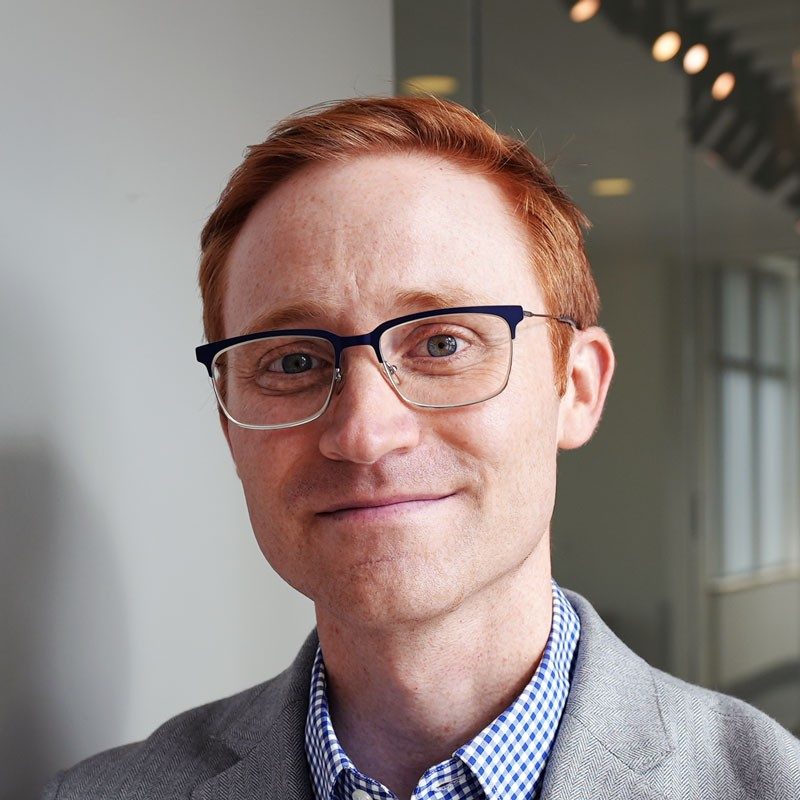
Andrés Cuervo-Rubio is a Part-time Lecturer at Parsons School of Design, The New School. They are an interdisciplinary artist, programmer, and HCI researcher based in Brooklyn. As a co-founder of Folk Computer, a research consultancy focused on tangible computing hardware/software and programming languages, they explore accessible interfaces and paper-based interaction systems. They advise the W3C Immersive Web Working Group (WebAR/VR/XR APIs) and have spoken at global JavaScript conferences since 2017. Education: BA in Computer Science, Oberlin College (2017) BA in Creative Writing, Oberlin College (2017) Research Interests: Focuses on material-based interaction design, bridging physical/digital systems through accessible technologies. Current work emphasizes tangible computing interfaces and inclusive design practices. Active in developing educational frameworks for dynamic content creation in design curricula. Teaching: Recently taught Core 1: Interaction (PUCD 2035) and Core 2: Interaction Studio (PUCD 2125). Upcoming courses include CD Foundations: Interaction (PSAM 1028) in Fall 2025 and CD Studio: Dynamic Content (PSAM 2090) in Spring 2026. Professional Engagement: Serves as technical advisor for immersive web standards and collaborates with industry on accessible XR solutions. Co-leads workshops on physical computing pedagogy.
Paul Larson is a Professor of Mathematics at Miami University. His research focuses on set theory, topology, and model theory, with particular expertise in forcing axioms, descriptive set theory, and infinitary logic. He holds a Ph.D. in Mathematics from the University of California, Berkeley. His work bridges foundational mathematical logic with applications in topology and combinatorics. Key contributions include studies on canonical models under fragments of the Axiom of Choice, polar forcings, and cardinal characteristics. Larson has collaborated extensively with leading researchers such as Saharon Shelah and Jindřich Zapletal. His publications span prestigious journals like the Annals of Pure and Applied Logic and Transactions of the American Mathematical Society. Beyond research, he contributes to the academic community through editorial work and expository writings on historical developments in determinacy theory. Education: Ph.D., Mathematics, University of California, Berkeley Research interests emphasize foundational questions in set theory with applications to topology and model theory. His recent work explores advanced forcing techniques, square principles in Pmax extensions, and combinatorial properties of cardinal invariants. Publications reflect interdisciplinary engagement, including crystal structure prediction in high-pressure chemistry and operator theory in functional analysis. Despite an extensive publication record, no specific scientific awards are documented here. His advising and grant activities remain unspecified in the provided texts. Collaborations span international institutions, reflecting his role as a central figure in contemporary set theory research.
Marianna Patrick is a Research Fellow at the School of Education, Learning and Communication Sciences (SELCS), University of Warwick. She holds a PhD in Intercultural Communication (2025), MA in Global Communication from the Chinese University of Hong Kong (2013), and BA (Hons) in Politics and International Studies from Warwick University (2012). Her research focuses on generative AI in academic writing, migration narratives, and intercultural communication. She leads a Leverhulme Trust-funded project on AI chatbots' impact on academic writing practices, collaborating with the University of Edinburgh and Sophia University Tokyo. Research & Education: Her doctoral work explored language and place construction in serial migration narratives, supervised by Prof. Stephanie Schnurr and Prof. Steve Mann. She also contributed to Monash-Warwick Alliance projects on multicultural cricket team inclusivity. She teaches professional skills and research methods across Computer Science and Applied Linguistics departments, supervising MSc dissertations in intercultural communication. Awards & Engagement: Received the People's Choice Prize at the Warwick Research Festival. Actively promotes interdisciplinary collaboration through initiatives like the Social Sciences Research Exchange Group (co-founder) and chairs the Applied Linguistics PGR Student-Staff Liaison Committee. She also contributed to EDI efforts as part of the Athena Swan team and served as Assistant Director of Student Experience and Progression for the Faculty of Arts.
Jason M. LaBelle is a Professor of Anthropology at Colorado State University (CSU), affiliated with the College of Liberal Arts. He serves as Director of the Center for Mountain and Plains Archaeology (CMPA) and Curator of the Archaeological Repository of CSU (AR-CSU). His research focuses on hunter-gatherer societies, particularly in the Intermountain West, emphasizing subsistence, mobility, and pre/post-contact Native American cultures. His work spans environments from the Great Plains to high alpine regions, with specialties in Clovis/Folsom cultures, communal hunting practices, and lithic technology. LaBelle teaches courses in archaeology, lithic technology, and public archaeology. He oversees CMPA projects funded by federal agencies like the National Park Service and the Bureau of Land Management, supporting student training in fieldwork, lab analysis (lithics, faunal studies), and report writing. His lab houses extensive collections from Colorado’s South Platte and Colorado River Basins, including alpine artifacts. He actively engages with tribal partners and the public through outreach, conferences, and NAGPRA coordination. LaBelle’s recent research includes studies on lithic quarries, ice patch archaeology, and Bayesian chronology modeling. His publications address prehistoric mobility, site chronology, and cultural resource management. He values interdisciplinary collaboration and student mentorship, aiming to bridge academic and applied archaeology.
Henrik Boström is a Professor of Computer Science specializing in Data Science Systems at the Division of Software and Computer Systems, KTH Royal Institute of Technology. His research focuses on trustworthy machine learning , with emphasis on conformal prediction (for confidence-calibrated predictions) and explainable AI . He is the developer of Python packages crepes (conformal classifiers/regressors) and xrf (explainable random forests). His primary research domains include: Developing robust methods for uncertainty quantification in predictive models Creating interpretable machine learning frameworks Optimizing ensemble techniques for high-dimensional data Applying ML to healthcare informatics and industrial diagnostics Analysis of his recent publications reveals strong emphasis on: (1) advancing conformal prediction theory for trustworthy AI, (2) enhancing interpretability of complex models like random forests and GNNs, and (3) developing efficient algorithms for uncertainty-aware learning in domains including healthcare, graph data, and high-dimensional regression. He serves as examiner for multiple degree projects and teaches courses including Programming for Data Science (ID2214) and Research Methodology and Scientific Writing (II2202) . He leads development of open-source tools for conformal prediction and model interpretation.
Martina Artmann is a Research Professor in Green Infrastructure at the University of Applied Science Weihenstephan-Triesdorf, Germany. She leads the Leibniz Junior Research Group URBNANCE on Urban Human-Nature Resonance at the Leibniz Institute of Ecological Urban and Regional Development (IOER) in Dresden. Her work spans urban ecology, green infrastructure, and sustainability transformation, with a focus on human-nature interactions in cities. PhD in Natural Sciences, University of Salzburg & Bavarian Academy for Nature Protection MSc in Landscape, Regional and Urban Management, University of Salzburg BSc in Agricultural Science, University of Hohenheim Her research centers on urban ecosystem services, green infrastructure, and edible cities as nature-based solutions for urban sustainability. She investigates how urban agriculture, soil sealing, and green space planning contribute to resilient cities. Her work integrates transdisciplinary methods, citizen science, and policy evaluation to foster human-nature resonance and transformative change. Her recent publications reflect a strong trend toward systemic assessments of urban agriculture, sustainability transformation, and the role of relational values in urban ecology. Themes include edible cities, green infrastructure, urban human-nature interactions, and the integration of ecological and social dimensions in urban planning. Student Award, German IALE-D (2012–2014) Doctoral Scholarship, German Federal Foundation for Environment (DBU, 2011) TUD Young Investigator, TU Dresden (2013) Fellowships for study in China (2005) and New Zealand (DAAD) Artmann has led multiple funded research projects, including DFG’s Edible Cities, BMBF’s Future Town Dresden, and BMVI’s meinGrün. She mentors students through project-based teaching at TU Dresden and has served as a visiting professor at the University of Bucharest. She is a Review Editor for Frontiers in Environmental Science and actively contributes to academic networks such as the Society for Urban Ecology (SURE) and the China Centre for Urban Ecology (CCUE). She is involved in research labs and teams including the URBNANCE Junior Research Group at IOER and collaborates with interdisciplinary teams on urban sustainability projects. Her work emphasizes transdisciplinary research, stakeholder engagement, and the co-creation of knowledge for sustainable urban development.
Alexey Vladimirovich Vdovin is a Professor and Senior Research Fellow at the National Research University Higher School of Economics (HSE), working within the Faculty of Humanities and School of Philological Sciences. He began his tenure at HSE in 2012 and has accumulated 15 years of scientific and teaching experience. His academic journey includes a Doctor of Philology degree from HSE (2023), a PhD from the University of Tartu (2011), and his initial degree in 'Russian language and literature' from Vyatka State Humanitarian University (2007). He has held significant roles including Deputy Dean for Science at the Faculty of Humanities (2018-2020) and serves on numerous academic councils and committees. Vdovin's educational background demonstrates both depth and international perspective. After completing his undergraduate studies at Vyatka State Humanitarian University in 2007, he pursued doctoral studies at the University of Tartu, where he earned his PhD in 2011 with a dissertation on 'The concept of 'chapter of literature' in Russian criticism of the 1830-1860s.' His academic development has been enriched by numerous international experiences, including visiting researcher positions at Selwyn College, University of Cambridge (2019), Jordan Center at New York University (2017), and multiple research stays at Humboldt University in Berlin through the Aurora Erasmus Mundus program. Professor Vdovin's research focuses on Russian intellectual history, the history of ideas, the Russian Empire, Russian literature of the 19th century, and nationalism studies. His work particularly examines the formation of the Russian literary canon, representations of peasants in literature, and the relationship between literature and society. He has authored approximately 80 articles and 4 monographs on 19th-century Russian literature, culture, and criticism, with works on major figures like Turgenev, Dostoevsky, Tolstoy, Goncharov, Belinsky, Chernyshevsky, Dobrolyubov, and Nekrasov. His recent book 'Monsters at the Threshold: Dracula, Frankenstein, Viy and Other Literary Monsters' (2024) demonstrates his expanding interest in literary archetypes and cultural phenomena. Vdovin has received numerous awards and recognitions for his scholarly work, including the Moscow Government Prize for young scientists (2017), multiple 'Best Teacher' awards (2013-2015, 2017-2024), and recognition as a winner of HSE's competition for best Russian-language scientific works (2022, 2024). He has also received various letters of gratitude from HSE administration, the Faculty of Humanities, and the School of Philology for his contributions to academic life. As an advisor, Vdovin has supervised numerous student research projects, including Smirnova T.V.'s 2014 master's thesis on 'Representation of 'Russianness' and 'Otherness' in Russian essays of the 1840s.' He has also served as a curator for HSE's Personnel Reserve Program at the School of Philological Sciences and has been actively involved in dissertation councils. His research has been supported by significant grants, including a 2024-2025 Russian Science Foundation grant 'The Genre of 'Peasant Life Story' in Russian Literature Before 1861: Poetics, Plots, Socio-Cultural Functions' (No 24-28-00184) and a 2018-2020 RFBR grant on 'State and Literary Institutions: From Peter I's Reforms to the 'Great Reforms.' Professor Vdovin is actively engaged in academic communities beyond HSE, serving as editor-in-chief of the HSE preprint series 'Literary Studies' and participating in the Big Project 'Literature and Society: An Experience of Sociocultural Description.' He is also involved in public scholarship, frequently giving public lectures through platforms like 'Arzamas,' 'Postnauka,' and 'Stradarium,' and appearing on the 'Observer' television program (Culture channel). Since 2015, he has been a mentor at Maya Kucherskaya's Creative Writing School, bridging academic scholarship with creative practice.
Elaine J. Francis is a Professor of English and Linguistics at Purdue University, where she also serves as the Associate Head of the Department of English. She holds affiliate appointments in the Department of Linguistics and the Department of Speech, Language, and Hearing Sciences. At Purdue, she directs the Experimental Linguistics Lab and teaches linguistics courses at both graduate and undergraduate levels. Francis completed her B.A. in Linguistics at the College of William and Mary in 1993, followed by her M.A. (1995) and Ph.D. (1999) in Linguistics at the University of Chicago under the direction of Salikoko Mufwene. Her dissertation examined variation among members of the same lexical category in English using Sadock's Autolexical Grammar framework. Prior to joining Purdue in 2003, she served as an Assistant Professor at the University of Hong Kong from 1999 to 2002, where she collaborated with Stephen Matthews on research concerning syntactic categories and relative clauses in Cantonese. Her research focuses on syntax and its interfaces with semantics, discourse information structure, and language processing in production and comprehension. Francis employs experimental methods to investigate syntactic, semantic, discourse-pragmatic, and cognitive factors underlying the grammar and usage of complex sentence structures. Her specific interests include word order alternations, filler-gap dependencies, resumptive pronouns, relative clauses, grammatical categories, and syntactic alternations. She has published extensively in top linguistics journals including Language and Cognition, Glossa Psycholinguistics, Linguistics, Lingua, Cognitive Linguistics, and the Journal of Psycholinguistic Research. Analyzing her recent publications reveals a consistent focus on experimental approaches to syntactic phenomena. Her work demonstrates a strong interest in gradient acceptability, syntactic priming, cross-linguistic comparison (particularly involving English and Cantonese), and the relationship between grammatical theory and language processing. Her 2022 book Gradient Acceptability and Linguistic Theory represents a major contribution that synthesizes experimental findings with theoretical linguistics frameworks. Francis plays an active role in the broader linguistics community. She regularly teaches short courses at the Linguistic Society of America Linguistic Institutes, serves on the LSA Ethics Committee, and is on the editorial board of Glossa Psycholinguistics. She has also edited several books and special journal issues, including Mismatch: Form-Function Incongruity and the Architecture of Grammar (2003) and Polymorphous Linguistics: Jim McCawley's Legacy (2005). As an educator and administrator, Francis has supervised numerous graduate students and currently serves as Associate Head of the Department of English at Purdue. Her Experimental Linguistics Lab provides research opportunities for students interested in the intersection of theoretical syntax and experimental methodology. While she recently announced she will not be accepting new graduate students for the 2025-2026 cycle, her established mentorship record demonstrates her commitment to training the next generation of linguists. The Experimental Linguistics Lab, which she directs, serves as a hub for research combining theoretical linguistics with experimental methods. Her collaborative work extends across disciplines, including collaborations with researchers in speech-language pathology, cognitive science, and computational linguistics, reflecting the interdisciplinary nature of modern linguistic research.
Manoj Sachdev is a Professor in the Department of Electrical and Computer Engineering at the University of Waterloo, Faculty of Engineering. His research focuses on semiconductor devices, low-power electronics, and secure hardware systems. He leads projects in flexible electronics, nanotechnology, and radiation-hardened circuits, with applications in displays, memory technologies, and biomedical sensors. His work integrates advanced materials science with circuit design to address challenges in energy efficiency and security. Education: Not explicitly stated in provided text. Research interests span thin-film transistors (TFTs), resistive switching memories, neuromorphic computing, and physically unclonable functions (PUFs). Recent efforts include developing low-power circuits for flexible substrates and secure microprocessors. His contributions to semiconductor device physics and integration techniques have advanced applications in wearable electronics and medical diagnostics. Publications highlight innovations in low-power flip-flops, energy-efficient display drivers, and memristor-based systems. He collaborates on interdisciplinary projects combining photonics, nanoelectronics, and biomedical engineering. Awards: None explicitly listed in provided text. Grants and advising: Advises on semiconductor fabrication, secure hardware design, and radiation effects in electronics. Leads research groups focused on next-generation memory technologies and flexible integrated systems. Labs/Teams: Active in the University of Waterloo's semiconductor and flexible electronics research clusters, contributing to both academic and industry partnerships.
Dr. Patrick J Solar is an Associate Professor of Criminal Justice and Forensic Investigation at the University of Wisconsin-Platteville, within the College of Liberal Arts and Education. He serves as the Program Coordinator for the online Master of Science in Criminal Justice program and teaches courses such as Police Administration, Police Community Relations, and Criminal Investigations. With a career spanning 29 years in law enforcement, including roles as a police officer, detective, and chief, he brings extensive practical experience to academia. Education: Doctorate in Philosophy, Northern Illinois University Master of Public Administration, Northern Illinois University Bachelor of Science, Northern Illinois University FBI National Academy Graduate Research & Publications: Focused on policing strategies and accountability, including his textbook Police Community Relations: A Conflict Management Approach and an upcoming work on police accountability frameworks. His writing emphasizes leadership development and risk management in law enforcement. Affiliations: Lifetime member of the Illinois Association of Chiefs of Police, FBI National Academy Associates, and member of the Wisconsin Chiefs of Police Association.
Prof. Yan Lianke (born 1958) is a renowned contemporary Chinese writer and academic. He currently holds the IAS Sin Wai Kin Professor of Chinese Culture at Hong Kong University of Science and Technology and serves as Professor at the School of Liberal Arts of Renmin University of China. His work spans novels, short stories, and literary theory, often exploring political, historical, and social themes through a critical lens. Education: BA in Political Education (Henan University, 1985), MA in Literature (PLA Academy of Art, 1991) Awards: Lu Xun Literature Prizes, Franz Kafka Prize, Newman Prize, and international recognition for his humanistic and socially conscious writing Yan’s research and writing focus on the intersection of literature, memory, and truth-telling in authoritarian contexts. His theoretical work, such as the 2020 lecture On Memory , critiques the erasure of personal and collective recollection in modern China. His novels, including Four Books and Dreams of Ding Village , are celebrated for their allegorical depth and spiritual realism. Scientific awards and honors include: 2014 Franz Kafka Prize (first Chinese recipient) 2017 Dream of the Red Chamber Award 2021 Newman Prize for Chinese Literature 2022 Lee Hochul Prize for Peace 2024 Nebula Award for Contribution to Global Chinese Literature Yan’s teaching and creative writing programs at HKUST and Renmin University emphasize the ethical role of literature in documenting human experiences and challenging historical amnesia. His work has been translated into over 30 languages, with more than 150 foreign publications.
Adam Wickberg is a researcher in the Division of History of Science, Technology and Environment at KTH Royal Institute of Technology in Stockholm. He serves as co-director of the VR Excellence Centre for Anthropocene History and deputy director of the KTH Environmental Humanities Lab . His work critically examines the intersections of digitalization, sustainability , and the Anthropocene , focusing on their social, political, and historical dimensions. He leads the research project The Mediated Planet: Claiming data for environmental SDGs and has held visiting positions at the Max Planck Institute for the History of Science in Berlin. Education : Not explicitly stated His research spans media studies, environmental history, critical data studies , and postcolonial science and technology studies . Key themes include: Digital twins and marine futures AI ethics for climate justice Colonial histories of environmental data Temporal dimensions of Anthropocene governance Environing media as epistemological tools Planetary datafication systems Recent publications explore how data infrastructures shape environmental governance and how historical media practices inform contemporary sustainability challenges. He has contributed to journals like New Media and Society , Nature , and Critical Inquiry , while engaging in public debates through op-eds in Dagens Nyheter and Aftonbladet . Teaching : Courses include Artificial Intelligence and Sustainable Development (AK122V), Environmental History (AK2210), and The Anthropocene (AK126V). Labs/Teams : Leads the Environmental Humanities Lab and collaborates with the WASP-HS Community .
Michael Bartlett is an Associate Professor in the Department of Mechanical Engineering at Virginia Tech , leading the Soft Materials and Structures Lab within the College of Engineering. His research focuses on bio-inspired materials , soft robotics , and multifunctional composites with applications in adaptive adhesives , stretchable electronics , and self-healing systems . Education: Ph.D., Polymer Science & Engineering, University of Massachusetts Amherst (2013) B.S.E., Materials Science & Engineering, University of Michigan (2008) His work explores the intersection of soft materials , morphing structures , and functional composites , leveraging techniques like kirigami and liquid metal integration to create innovations such as octopus-inspired underwater gloves and shape-shifting drones . His recent articles highlight advancements in programmable adhesion , liquid metal conductors , and multiscale material design . Scientific Awards: National Academy of Inventors Senior Member (2024) NSF CAREER Award (2023) Office of Naval Research Young Investigator Award (2021) Soft Matter Emerging Investigator (2021) DARPA Director’s Fellowship (2020) Adhesion Society Early Career Scientist (2020) DARPA Young Faculty Award (2018) 3M Non-Tenured Faculty Award (2017) Bartlett has mentored over 40 undergraduate students and numerous graduate researchers, resulting in 12 peer-reviewed articles with student co-authors. His lab receives funding from federal agencies like NSF , ONR , and DARPA , as well as industry partnerships. The group also engages in K-12 outreach programs and collaborates with institutions such as University of Nebraska-Lincoln and Iowa State University .
Andrew Miller is an Associate Professor in the Electrical and Computer Engineering department at the University of Illinois, specializing in Programming Languages, Formal Methods, Software Engineering, Security and Privacy, and Systems and Networking. His research focuses on blockchain technologies, cryptography, and secure systems. Professor Miller's research spans multiple critical areas in modern computer security. His work primarily focuses on blockchain technologies , where he has made significant contributions to understanding and improving the security, privacy, and performance of systems like Bitcoin and Ethereum. He has conducted empirical analyses of privacy in the Lightning Network and developed protocols for confidential smart contracts. His work in cryptography includes research on multiparty computation, zero-knowledge proofs, and formal methods for cryptographic protocol design. Miller also investigates security vulnerabilities in proof-of-stake systems and resource exhaustion attacks, contributing to the robustness of decentralized systems. His applied security research extends to privacy-preserving health applications, as evidenced by his work on the Safer Illinois platform for COVID-19 contact tracing. Miller's publication record demonstrates consistent contributions to top security and systems venues including IEEE Security & Privacy, ACM CCS, Financial Cryptography, and USENIX Security. His research shows a clear trajectory from foundational work in blockchain security to more applied systems addressing real-world privacy and security challenges. Recent work focuses on making multiparty computation services publicly auditable and developing decentralized identity solutions that maintain compatibility with existing systems. Distinguished Reviewer Award, IEEE Security & Privacy 2018 Professor Miller has advised students including Vivek Nair, who joined the prestigious Hertz Fellows program in 2022. He has taught various courses including Introduction to Algorithms & Models of Computation, Advanced Computer Security, Cryptography, Applied Cryptography, and Ideal Functionality in Cryptography. His research has received support through grants including the SaTC: CORE: Medium project on "Automated Support for Writing High-Assurance Smart Contracts" in 2018. Miller is actively involved in research groups focusing on blockchain security, cryptographic protocols, and privacy-preserving systems. His lab appears to collaborate extensively with researchers across multiple institutions, as evidenced by the diverse author lists on his publications. Current work seems to be focused on making decentralized systems more secure, privacy-preserving, and accessible for real-world applications.
Lauren M.E. Goodlad is a Professor of English and Comparative Literature at Rutgers University, serving as Chair of Critical AI @ Rutgers and Editor of the journal Critical AI . She holds affiliations with the Center for Cultural Analysis (CCA), Rutgers British Studies Center, and Rutgers Center for Cognitive Science. Her research bridges 19th-century studies and critical AI, emphasizing 'critical AI literacies' and ethical AI development. Goodlad has held roles like Associate Chair of English and membership in Rutgers' AI Advisory Council and CASS (Cyberinfrastructure for Science, Engineering & Society). Her education includes a BSILR from Cornell University, MA in English from NYU, and PhD in English from Columbia University. Notable grants include NEH funding for global AI workshops ('Unboxing AI'), an NSF planning grant on teaching writing with AI, and an upcoming Global Humanities Institute on Design Justice AI. Research interests span Victorian literature, genre theory, television studies, and AI's sociocultural impacts. Awards include University of Illinois' Kathryn Paul Professorial Scholar and Provost Fellow for Undergraduate Education. Current projects include a book on 19th-century fiction's ontological influence and collaborations on AI ethics frameworks. Publications include The Victorian Geopolitical Aesthetic (Oxford, 2015), co-edited special issues on Mad Men and Victorian Internationalisms , and recent critical AI essays in Critical AI and New Literary History . She advocates for AI development aligned with public interest through pedagogical innovation and interdisciplinary collaboration.