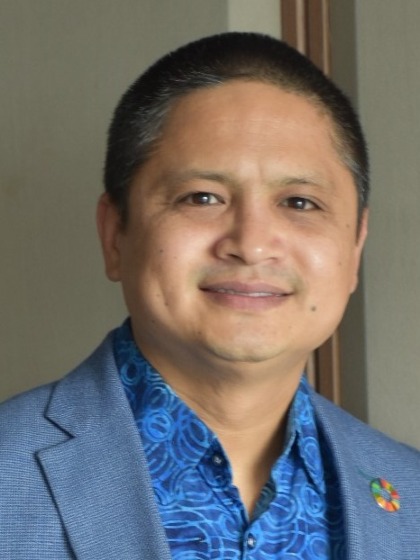
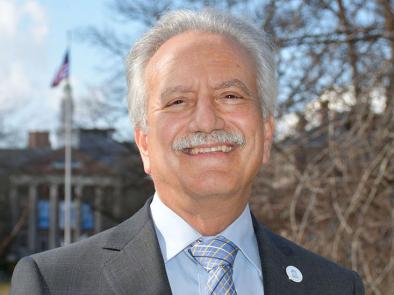
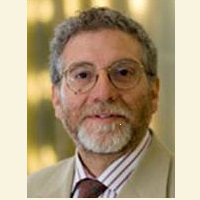
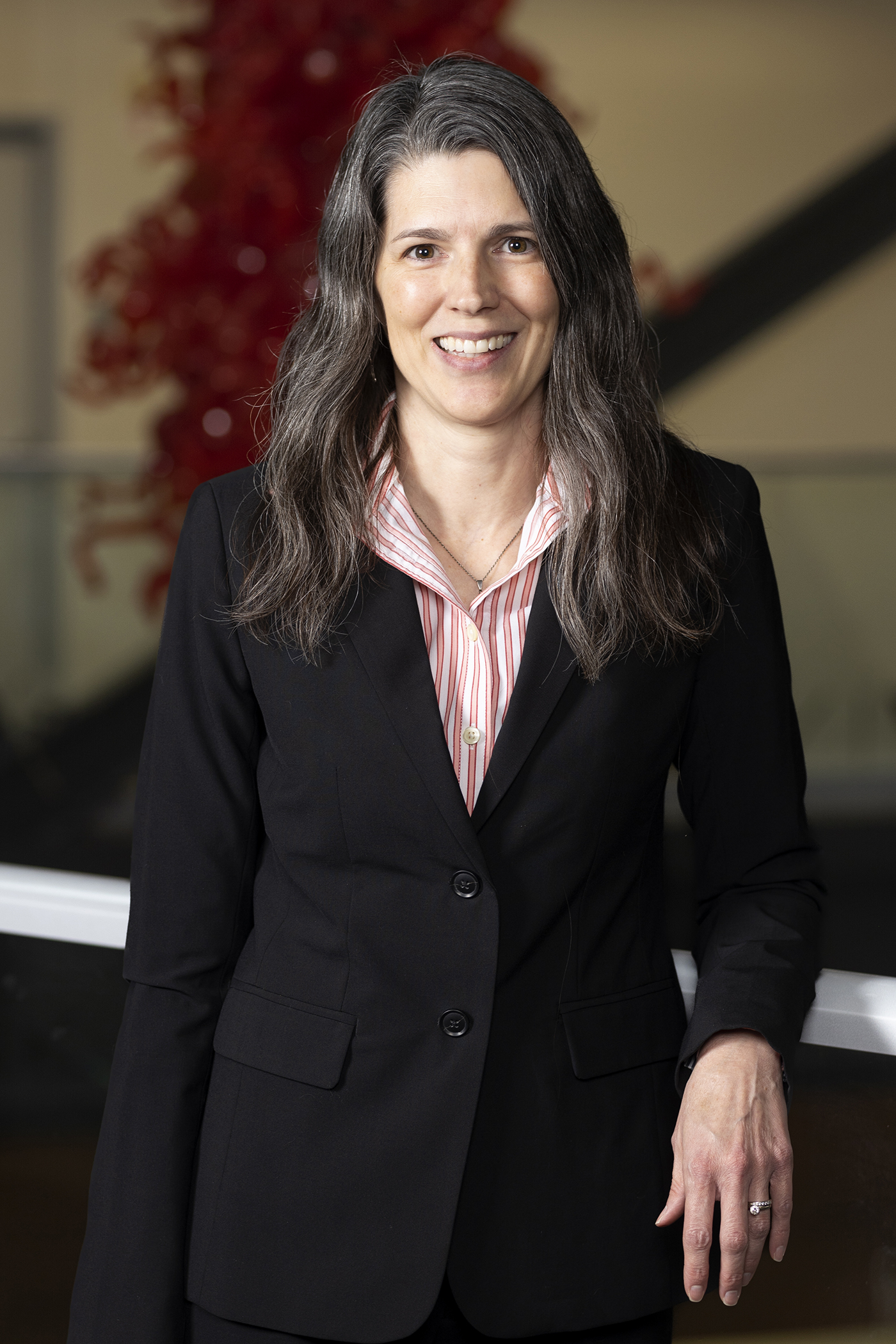
Eamonn O'Neill is a Professor and Head of the Department of Computer Science at the University of Bath. His research focuses on innovative human-technology interaction, including mixed/augmented/virtual reality, and interaction with intelligent systems. His work emphasizes applied science, deriving design principles grounded in theory and empirical testing. He leads the UKRI CDT in Accountable, Responsible and Transparent AI and is affiliated with multiple centers, including the Centre for the Analysis of Motion, Entertainment Research & Applications (CAMERA) and the REal and Virtual Environments Augmentation Labs (REVEAL). His projects span EU-funded initiatives such as EMIL and UNREST, addressing topics like embodied interaction, AI regulation, and social cohesion. Recent research explores emotion recognition in VR exergaming, EEG-based brain-computer interfaces, and regulatory frameworks for AI. His work contributes to UN Sustainable Development Goals related to innovation and infrastructure. Collaborations include academic institutions and industry partners across Europe.
Carlos Cámara-Menoyo is a Senior Research Software Engineer at the University of Warwick's Centre for Interdisciplinary Methodologies, where he bridges technical expertise with urban research. He holds a PhD in Information and Knowledge Society from the Universitat Oberta de Catalunya (2018), awarded the IND+I Science Prize. His academic roles include Lecturer at Universidad San Jorge and Associate Lecturer at Oxford Brookes University and Universitat Oberta de Catalunya. Education : PhD in Information and Knowledge Society (2018), Universitat Oberta de Catalunya MSc in Information and Knowledge Society (2012), Universitat Oberta de Catalunya MSc Architecture (2004), Universitat Politècnica de Catalunya Research Interests : Urban Studies, Open Science, Spatial Justice, Data Visualization, and Urban Commons. His work explores commodifications between cities, technology, and society, focusing on equitable urban development and participatory methods. Articles : His recent work addresses the Food-Water-Energy Nexus, participatory urban governance, and inclusive GIS applications. Key themes include sustainability transformations and co-design processes. Awards : IND+I Science Prize (2018), Cum Laude PhD distinction. Advising & Grants : Supervised Master’s theses on urban commons and co-production. Active in collaborative projects like Zaragoza Accesible and the Creating Interfaces initiative. Labs & Teams : Leads research software engineering efforts at CIM, promoting open science and reproducible workflows.
Prajal Pradhan is an Assistant Professor at the University of Groningen’s Faculty of Science and Engineering, affiliated with the Integrated Research on Energy, Environment & Society (IREES). He holds a Visiting Scientist position at the Potsdam Institute for Climate Impact Research (PIK). His research focuses on climate change mitigation, sustainable development goals (SDGs), food systems, and urban resilience. He earned a PhD in Geoecology from the University of Potsdam and holds degrees in Environmental Management (University of Kiel) and Agricultural Engineering (Tribhuvan University). Education: PhD in Geoecology, University of Potsdam (2015) MSc in Environmental Management, University of Kiel (2008) BEng in Agricultural Engineering, Tribhuvan University (2006) Research Interests: Pradhan’s work addresses systemic sustainability challenges through interdisciplinary approaches. Key themes include SDG interactions, climate-resilient food systems, urban transformations, and policy frameworks for long-term sustainability. He emphasizes synergies between environmental protection, social equity, and economic development. Grants & Projects: ERC Starting Grant (€1.5M, 2023–2028): Transformation towards long-term sustainability beyond SDGs DAAD-ForHimSDG (€325k, 2022–2025): Himalayan sustainable development education BIOCLIMAPATHS (€400k, 2019–2021): EU bioeconomy resilience Awards: ERC Starting Grant 2022 Best Sustainable Development Article (1st, 2022; 2nd, 2021) Mondialogo Engineering Award 2007 Labs & Teams: Leads IREES research group on climate policy and SDG integration. Collaborates with PIK’s Urban Transformations group and international networks like the Global Land Programme.
Dr. Gary Marchionini is the Cary C. Boshamer Distinguished Professor and Dean of the School of Information and Library Science (SILS) at the University of North Carolina at Chapel Hill. He previously served as a professor at the University of Maryland's College of Library and Information Services and as a member of the Human-Computer Interaction Laboratory. His expertise spans information interaction, human-computer interaction, digital libraries, and information policy. Marchionini holds a PhD in mathematics education from Wayne State University, emphasizing educational computing. His research focuses on interfaces for information seeking, digital video retrieval, and the impact of data science. Notable projects include the Information in Life Video Series (2007), one of the first academic YouTube channels, and leadership in the Open Video Project . He has secured grants from NSF, NASA, Microsoft, and Google, among others. Marchionini's awards include the ASIS&T Award of Merit (2011) and the LITA Kilgour Award (2000). He has served as editor-in-chief of ACM Transactions on Information Systems (2002–2008) and as president of ASIS&T (2010). Current interests include the societal impact of information, personal health records usability, and digital curation strategies. His leadership roles include serving on the iSchools Board of Directors and directing the Center for Information Impact. He has advised numerous grants, including Mellon Foundation-funded initiatives and EPA research library operations. Marchionini's work bridges academic research with real-world applications, emphasizing human-centered design and interdisciplinary collaboration.
Manjana Milkoreit is a Research Fellow at the University of Oslo's Department of Sociology and Human Geography, part of the Faculty of Social Sciences. She holds a Ph.D. in Global Governance from the University of Waterloo (Canada) and a Master of Public Policy from Harvard Kennedy School. Previously, she was an Assistant Professor at Purdue University and a Postdoctoral Researcher at Arizona State University’s Wrigley Institute. Her work focuses on global environmental governance, climate policy, and the role of cognition in decision-making. She coordinates governance research for the Global Tipping Points Report and leads projects like the Imagination and Climate Futures Initiative. Academic interests include science-policy interfaces, social tipping points, and future-oriented sustainability governance. Education: Ph.D. in Global Governance (University of Waterloo), MPP (Harvard Kennedy School). Key Positions: Affiliate at Norwegian Institute of International Affairs (NUPI), Sustainability Scholar at Arizona State’s Global Futures Lab. Research Themes: Climate change governance, cognitive approaches to policy, Earth system resilience, and anticipatory governance frameworks. Projects & Teams: Co-leads the RESULTS project on sustainability transformations and the Democrisis initiative exploring democracy and climate crisis intersections. Engages in interdisciplinary collaborations linking academia, policymakers, and civil society through tools like serious gaming and scenario planning. Grants & Collaboration: Funds include projects on governance innovation for tipping points and participatory climate action frameworks. Her work emphasizes bridging cognitive science with environmental policy to address complex global challenges.
Shareq Mohd Nazir is an Associate Professor at KTH Royal Institute of Technology, affiliated with the Division of Energy Processes in the Department of Chemical Engineering. He holds a joint appointment within the Digital Futures Faculty, a cross-disciplinary research center addressing societal challenges through digital technology innovation. Nazir earned his PhD in Energy and Process Engineering from NTNU (2018) and holds Master and Bachelor degrees in Chemical Engineering from BITS Pilani. His research focuses on decarbonization strategies including CO2 capture/utilization (CCUS), bioenergy conversion, and methane mitigation. Key methodologies involve techno-economic analysis and process modeling for industrial systems. Nazir leads projects integrating catalytic conversion, waste heat recovery, and gas switching technologies to achieve low-carbon energy systems. He teaches courses on chemical engineering systems, process design, and carbon-neutral energy systems at KTH. Recent publications emphasize multi-gas mitigation strategies, synthetic fuel production via biomass gasification, and cost-effective hydrogen production pathways. His work bridges academia and industry through collaborations with RISE Research Institutes and NTNU. Nazir’s research directly supports Sustainable Development Goals (SDGs), particularly targeting climate action (SDG13) and affordable clean energy (SDG7).
Antonio Fábregas (b. 1978) is a Professor at the Department of Language and Literature, Norwegian University of Science and Technology (NTNU), specializing in Spanish grammar, variation, morphosyntax, comparative linguistics, and semantics. He has authored 8 monographs and over 150 articles/book chapters. Research : Focuses on syntax, semantics, phonology, and their interactions in word formation. Explores Spanish language variation, sociolinguistic contact phenomena, and theoretical morphology. Teaching : Engaged in linguistics education at NTNU (office: Bygg 4 Dragvoll, Trondheim). Publications : Recent work includes analyses of Spanish prefixation, argument structure, elative compounds, and negation-participle constructions. Key contributions to morphological theory and Romance language comparison.
Cejna Anna Quist-Jensen is an Associate Professor at the Department of Chemistry and Bioscience, Aalborg University, affiliated with the Bioresources and Process Engineering Center and the Center for Membrane Technology. Her research focuses on membrane-based technologies for resource recovery, including minerals/metals and freshwater from unconventional sources like waste streams. She specializes in membrane distillation, membrane crystallization, electrodialysis, and forward osmosis. Education: PhD in Membrane Crystallization (Institute on Membrane Technology, ITM-CNR, 2016) and MSc in Chemical Engineering (2012). Key projects include BEYONDBATTREC (battery recycling), CORNERSTONE (water-energy-solute recovery), and EXBRINER (seawater brine resources). She teaches Integrated Process Modeling and supervises students across multiple semesters in water/wastewater treatment. Research interests span sustainable development goals (SDGs), particularly clean water (SDG 6), affordable energy (SDG 7), and responsible consumption (SDG 12). Her work addresses industrial wastewater treatment, produced water management, and circular economy strategies. Notable contributions include advancements in 3D-printed membranes, percrystallization for zero liquid discharge, and lithium/magnesium recovery from brines. She actively participates in conferences and collaborates internationally on membrane technology innovations.
Senarath Dharmasena is an Instructional Associate Professor at the Department of Agricultural Economics within the College of Agriculture & Life Sciences at Texas A&M University. He holds a Ph.D. in Agricultural Economics from Texas A&M University and an undergraduate degree in Agriculture from the University of Peradeniya. His research focuses on consumer economics, applied demand analysis, agribusiness, and food market dynamics. Dr. Dharmasena’s work explores complex economic systems, including food price inflation, rural land market valuation, and the impact of macroeconomic factors on food security. He employs advanced methodologies like causal inference, machine learning, and hedonic pricing models. His recent publications analyze U.S. demand patterns for alternative food products, energy drinks, and agricultural aviation industry economics. As an associate editor for the Journal of Agribusiness in Developing and Emerging Economies (JADEE), he contributes to academic discourse. His affiliations include Texas A&M AgriLife Extension Service and the Agribusiness, Food and Consumer Economics Research Center (AFCERC). His research integrates socioeconomic factors with food policy implications, emphasizing practical applications in agriculture and consumer behavior.
Sally Stares is a social psychologist and faculty member in the Department of Methodology at the London School of Economics (LSE). She specializes in survey methods, public opinion analysis, and public perceptions of new technologies. After nine years as a lecturer/senior lecturer at City, University of London, she returned to LSE, where she previously earned her MSc in Social Research Methods and PhD in Social Psychology. Her research focuses on science-technology-society interactions, particularly public attitudes toward self-driving vehicles, automated journalism, and criminal justice standards. Methodologically, Dr. Stares is an expert in survey design, latent variable models, and cross-national analysis. She has contributed to EU-funded projects on diversity-aware technology, global civil society metrics, and poverty typologies in Scotland. As an editorial board member of Public Understanding of Science , she emphasizes bridging gaps between scientific communities and the public. Her recent work explores audience reactions to automated media content and cross-national variations in automated vehicle acceptance. Publications span transportation policy, biotechnology ethics, and criminology, with a focus on empirical social science methodologies. She has advised organizations including the Social Mobility Commission and Mo Ibrahim Foundation on research design and implementation. Labs/Teams: Active in LSE's methodological research groups and collaborates with interdisciplinary teams on technology ethics and public engagement initiatives.
Dr. Jonathan Liebenau is an Associate Professor (Reader) in Technology Management at the London School of Economics (LSE), part of the Department of Management. He also holds a visiting professorship at Columbia University’s Graduate School of Business and School of Engineering. His expertise spans technology management, innovation policy, and the socio-economic impacts of information systems in developing countries. He has authored/co-authored over 70 publications and advised global organizations such as Dell, IBM, and the UK Office of Science and Innovation. Education: PhD in History and Sociology of Science (University of Pennsylvania, 1981), BA in Science Policy (University of Rochester, 1976). His career includes roles at the Smithsonian Institution, Boston University, and academic leadership roles at LSE. Research focuses on technology policy, telecommunications, and the role of digital infrastructure in development. He leads LSE Tech, a research group exploring internet economics and policy. Notable work includes studies on payment systems modernization, blockchain regulation, and the economic implications of cloud computing in emerging economies. Advisory roles include membership on boards at Istanbul Bilgi University and the American University in Cairo. He has supervised numerous PhD students researching topics like ICT in Sub-Saharan Africa, banking innovation in Thailand, and DSS applications in national debt management. His recent articles address global technological competition with China, urban mobility policy, and fintech innovation mechanisms. He emphasizes interdisciplinary approaches to understanding how technology shapes economic development and regulatory frameworks.
Rafael Ruiz De Castañeda is a Researcher and Lecturer at the Faculty of Medicine, University of Geneva, leading the One Health Unit in collaboration with Dr. Isabelle Bolon. His work focuses on interdisciplinary global health challenges, including emerging infectious diseases, zoonotic pathogens, and conservation biology. He has extensive field experience in Africa and Latin America, coordinating projects like the EU-funded Africa Build and RAFT Network. He is also a key figure in global health education, developing MOOCs such as the Coursera course on Global Health at the Human-Animal-Ecosystem Interface . His research integrates ecological, veterinary, and human health perspectives, emphasizing snakebite envenoming epidemiology, AI-driven species identification, and planetary health. He collaborates globally with institutions like Institut Pasteur and the Geneva Science Policy Interface. Key contributions include policy briefs on humanitarian action in planetary crises and frameworks for One Health diplomacy. Recent publications highlight transdisciplinary approaches to snakebite prevention, geospatial modeling of health risks, and leveraging AI for wildlife health surveillance. His work bridges academia, policy, and community engagement to address systemic health challenges at the human-animal-environment nexus.
Cristian Román-Palacios is an Assistant Professor in the Department of Ecology and Evolutionary Biology at the University of Arizona, where he also serves as Coordinator and Advisor for the Master of Science in Data Science (MSDS) and Master of Science in Information Systems (MSIS) programs. He is a core faculty member in Artificial Intelligence and Machine Learning, Data Management, Analysis and Visualization, and Environmental, Health and Biological Sciences. Education: PhD in Ecology and Evolutionary Biology, University of Arizona (2020) BS in Biology, Universidad del Valle, Colombia (2015) His research lies at the intersection of phylogenetics, biodiversity modeling, and machine learning, focusing on large-scale biodiversity patterns, the impacts of climate change on species survival, and the development of statistical tools for paleoclimatic reconstructions. He employs computational and data-intensive methods to explore evolutionary and ecological questions across diverse taxa. His recent publications (2024–2025) demonstrate a strong trend toward interdisciplinary research, combining computational biology, geochemistry, climate science, and open-source software development. Key themes include biodiversity informatics (e.g., Animal Culture Database), paleoclimatic modeling (e.g., clumped isotope thermometry), reproducibility in science, and tools for collaborative research (e.g., LabOps, SSARP). His work increasingly integrates data science with biological and environmental applications. Scientific Contributions: Published over 25 peer-reviewed papers, many as first author Research featured in Science News, Popular Science, CNN, USA Today Developed open-source tools: phruta , treedata.table , SSARP , LabOps Cristian advises graduate students through the infosci-msadvise@arizona.edu email and Calendly appointments. He was previously a staff researcher at UCLA’s Tripati Lab. He leads initiatives such as the Southwest Center on Resilience for Climate Change and Health and promotes inclusive, collaborative science through online toolkits and leadership ecosystems aimed at addressing climate and social inequities. His lab, the Román-Palacios Lab, and involvement with the Data Diversity Lab reflect his commitment to open, reproducible, and equitable research practices in data-intensive biology.
Deanna House is an Assistant Professor in the Information Systems and Quantitative Analysis department at the University of Nebraska at Omaha's College of Information Science and Technology. She co-directs the Nebraska Deterrence Lab and serves as a research fellow for NSRI, along with mentoring the USSTRATCOM Fellows program. Her academic journey includes a PhD in Information Systems from the University of Texas at Arlington and prior roles in Human Resources as a Business Systems Analyst. Bachelor of Science, Bellevue University, Management of Human Resources (2002) Master of Science, University of Nebraska at Omaha, MIS (2006) PhD, University of Texas at Arlington, Information Systems and Operations Management (2013) Dr. House specializes in behavioral cybersecurity, privacy, and quantitative risk management, with a focus on deterrence in critical infrastructure. Her research bridges individual user behavior with organizational and governmental security strategies. Recent publications highlight trends in cybersecurity education, phishing behavior, AI ethics, and infrastructure protection. She has contributed to journals like Computers & Security and Journal of Cybersecurity , with 2025 work on DoD cyber deterrence. NSRI Research Fellow Her teaching covers Risk Management, Cybersecurity, and Systems Analysis, utilizing tools like Visual Paradigm Online for technical diagrams. She actively presents at conferences such as ICIS and DSI, advocating for ethics and workforce development in technology.
Associate Professor Nalin Arachchilage is a leading academic in Cyber Security at RMIT University's School of Computing Technologies. He holds an honorary role at the University of Warwick and advises DEFSAFE Cyber Security Inc. His research focuses on usable security, privacy engineering, and AI-driven cybersecurity solutions. Key roles include revamping RMIT's Master of Cyber Security program and leading the Usable Security Engineering group at UNSW ADFA. Education: PhD in Cyber Security (Brunel University), Postdocs at Oxford and UBC. Research spans interdisciplinary areas including HCI, machine learning for threat modeling, and serious games for security education. He has published extensively in top venues like ACM CCS and SOUPS, contributing to global standards like OWASP. Leadership: Previously Assistant Head of School (Research) at the University of Auckland, and Director of the MProfStuds in Digital Security. Active in program committees for major conferences (ACM CCS, SOUPS). Current supervision includes 5 PhD students across RMIT and Auckland. Media Impact: Featured in Sky News Australia, ABC, and TVNZ. Collaborations with HP and Facebook. Awards include impactful contributions to security frameworks and standards. Teaching: Coordinates courses like INTE2625 (Cyber Security) and COSC2738 (Human-Centric Cyber Security). Supervises projects on topics like blockchain security and responsible AI. Non-Academic Roles: Chair of the Academic Board at Canberra Business & Technology College (2020-2021). Advisor to DEFSAFE, focusing on novel cyber-security products.