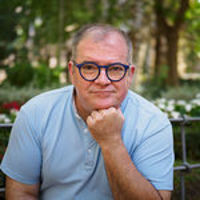
Sara Martín Alegre is a Professor in the Department of English and German Studies at the Autonomous University of Barcelona (UAB). She specializes in Gender Studies, Science Fiction, and Cultural Analysis, with a focus on posthumanism and masculinity in media. Her research explores themes such as gender fluidity, AI ethics, and the intersection of popular culture with academic discourse. She has directed numerous research projects and supervised doctoral theses, including works on human-eating monsters in film and transhumanism in literature. Her teaching includes courses on contemporary Anglophone literature, gender studies, and Victorian literature. She actively collaborates in publishing initiatives, such as e-books with students and academic monographs on topics like masculinities in cinema and science fiction. Her work bridges traditional literary analysis with modern digital humanities, emphasizing the role of popular fiction in academic exploration. Award-winning scholar and author, her contributions include monographs like *Detrás de la máscara: masculinidades americanas en el documental contemporáneo* (2023) and edited volumes on topics ranging from children in cinema to 21st-century miniseries. Her research highlights the sociopolitical implications of gender representation in media, from Shakespearean adaptations to modern science fiction narratives.
José Juan Morcillo Pérez is a Visiting Professor at the Universidad Pontificia de Salamanca 's Faculty of Humanities and Social Sciences. Holding a 'Cum Laude' Doctorate in Hispanic Philology from the University of Salamanca (2002), he has held teaching positions at the University of St. Andrews, Universidad de Castilla-La Mancha, and the Universidad Pontificia de Salamanca's International Courses. His research focuses on Renaissance Spanish literature Francisco de Osuna's linguistic innovations Lazarillo de Tormes authorship debates Historical linguistics Cultural intersections of law and literature His 2002 doctoral thesis presented a critical edition of Francisco de Osuna's Abecedario Espiritual (1528-1530), analyzing its linguistic registers and neological contributions. He has received recognition for educational innovation projects, particularly in bilingual education and technology integration (2006-2007). Academic contributions include: Pioneering textual editions of Spanish Golden Age mystical works Interdisciplinary analysis of legal discourse in picaresque novels Lexical studies connecting Renaissance humanism with theological expression Scientific recognition includes: Doctor 'Cum Laude' , University of Salamanca (2002) Award for innovative educational project in Castilla-La Mancha public education system
Adela Cortijo Talavera is a Professor of French literature and cinema at the University of Valencia, specializing in comics studies with a particular focus on French-language comics, their inter-media relationships with literature and film, and the work of female comics authors from the 1970s to the present. She serves as Director of the University of Valencia's Cultural Service since January 2021 and has been a member of the SM Foundation's Chair of Comic Studies since 2019. Her research interests span comics studies, French literature, graphic novels, gender studies in comics, and the analysis of female comics authors. Cortijo has made significant contributions to understanding the representation of women in comics, autobiographical comics, and the cultural significance of French bande dessinée. She has co-directed a Diploma in Comic Translation and teaches 'Gender and Identity in Comics' in the University of Valencia's Comics and Education Master's program. Cortijo's scholarly work reveals trends across comics studies with particular emphasis on gender representation, autobiographical narratives, and the visual language of comics. Her articles span from analyses of specific authors like Phoebe Gloeckner and Rachel Deville to broader cultural examinations of comics as a medium. The interdisciplinary nature of her work connects comics studies with literary theory, film studies, gender studies, and cultural studies. As an active academic, Cortijo has organized international colloquia, served on scientific committees of numerous international comics conferences, and been a visiting researcher at universities including a residency at the CIBDI in Angoulême. She has directed numerous research projects and theses on comics and has coordinated special journal issues dedicated to comics studies.
Marta Benenti is a Research Fellow in the Department of Philosophy at the Faculty of Philosophy, University of Murcia, affiliated with the Phronesis: Analytic Philosophy Group. Holding a prestigious Marie Curie Fellowship, she bridges philosophical inquiry with cognitive science to investigate expressive properties across art, nature, and everyday experience. Her research centers on Aesthetics and Philosophy of Mind, examining how emotions manifest in music, landscapes, and visual art through theories like contour analysis. Key interests include perceptual learning in aesthetic appreciation, paradoxes of cultural tourism authenticity, and climate change narratives through philosophical fiction. She extends these inquiries to thought experiments in outer space exploration and secondary meaning in musical metaphors, consistently integrating empirical psychology with analytic philosophy. Benenti's recent publications (2020-2024) reveal a cohesive trajectory in expressiveness, demonstrating how affective affordances regulate emotional states and how fictional frameworks illuminate real-world environmental crises. Her work on tourism paradoxes reveals tensions between commodified authenticity and genuine engagement, while her analysis of music-landscape emotion recognition advances cross-modal perceptual theories. Scientific recognition includes: Marie Curie Fellowship As a core member of the Phronesis research group, Benenti contributes to collaborative projects that synthesize analytic rigor with interdisciplinary approaches, particularly through editorial work on contemporary expressiveness debates and Foucault-inspired power analyses in aesthetic contexts.
María Ayete Gil is a researcher in the Department of Filology, Communication and Documentation at the University of Alcalá, specializing in contemporary Spanish literature, political narratives, and gender studies. She is an active academic with a PhD from the University of Salamanca and a member of the GILCO (Contemporary Literature Research Group). Her work explores the ideological dimensions of literature, particularly in relation to social movements like 15M, rural representations, and feminist discourse. Her research interests include: Political Literature Gender and Intersectionality Neorural Narratives Marxism and Critical Theory Contemporary Spanish Fiction Literary Ideology and Power Her scholarly output reveals a strong focus on authors such as Sara Mesa, Bibiana Collado Medrano, and Federico Falco, analyzing themes of precarity, moral authority, and the politicization of narrative form. Her recent publications (2023–2025) demonstrate sustained engagement with evolving literary trends, particularly the role of literature in social critique and resistance. She frequently publishes in specialized journals such as Kamchatka , Orillas , and Revista Chilena de Literatura . Her work reflects a deep theoretical engagement with thinkers like Rancière, Badiou, Bourdieu, and Foucault. She has co-edited volumes and organized academic events, including an international conference on rural representations in Hispanic literatures. While no formal list of advisees is provided, her supervisory role in thesis work and collaborative research suggests mentoring activity. Among her scientific contributions are critical editions and reviews on works addressing revolution, feminism, and literary resistance. She has also conducted interviews with prominent authors, further establishing her role in contemporary literary discourse. She is affiliated with the University of Alcalá, contributes to interdisciplinary research, and maintains an active presence in academic networks. Her publications consistently address the interplay between literature, ideology, and social transformation, positioning her as a significant voice in current Spanish literary criticism.
Vicente Javier López Mate is an Assistant Professor at the Department of Modern Philology, Faculty of Philology, University of Alcalá. His academic work focuses on medieval and renaissance studies, intersemiotic translation, and sustainable development goals in education. Specializes in cultural and literary history of Western Europe (Medieval and Modern Ages) Expertise in translation history and practices Research interests include neomedievalism in modern adaptations of medieval texts, Gothic fiction's exploration of science and ethics, and the integration of sustainability agendas into university curricula. His publications analyze intersemiotic translation in film adaptations of Arthurian legends and pedagogical challenges in SDG implementation. Key article trends reveal a focus on: Medieval textual interpretation Translation theory applications Sustainable education frameworks Neomedievalism in visual media Gothic literature's bioethical themes Arthurian legend adaptations Active in educational innovation with projects related to bilingual teaching and drama-based language learning methodologies.
Rodrigo Lopes De Barros Oliveira is an active Lecturer at the University of the Balearic Islands (UIB), specializing in Spanish Language Education within the Department of Spanish Philology and Language Education. He teaches courses including Teaching Spanish in Primary Education, Language in the Early Childhood Classroom, and Spanish Language Communication Strategies for both Bachelor's and Double Degree programs in Education. His academic career spans teaching activities through the 2025-26 academic year, demonstrating ongoing institutional engagement. His research interests center on Brazilian literature, creative writing, and experimental film production with particular focus on urban cultural studies and representations of social marginalization. Oliveira's creative output reveals a distinctive voice exploring São Paulo's urban landscape, often employing dark social commentary and experimental narrative forms that challenge conventional literary boundaries. His work frequently examines the intersection of Brazilian identity, political resistance, and bodily experience within contemporary society. Oliveira's creative works demonstrate consistent thematic evolution toward increasingly complex explorations of surveillance, urban decay, and cultural resistance. His film projects often blend documentary and experimental techniques while his literary works maintain a strong connection to Brazilian social realities. The academic analysis of his work, such as Milton Francisco's semiotic study of 'A Carne do Metrô,' confirms his significance within contemporary Brazilian literary discourse. Scientific Recognition: Cultural Contest Caderno 2 in the 450 Years of São Paulo (2004) for 'A Carne do Metrô' As an educator, Oliveira guides students through foundational language education courses and supervises Bachelor's Thesis projects in Early Childhood Education. His creative practice informs his pedagogical approach, bringing real-world artistic experience into the classroom. While specific research grants aren't documented in the provided materials, his sustained creative output across multiple media suggests ongoing scholarly engagement. Oliveira is affiliated with the Art and Education - Music and Art Laboratory (GRAiE - Mus&Art Lab), a consolidated experimental R&D&I group at UIB, indicating active participation in interdisciplinary artistic research. His work bridges academic scholarship with creative practice, positioning him at the intersection of education, literature, and visual arts within the university setting.
Mariana Ripoll Fonollar serves as an Assistant Professor in the Department of English Philology at the University of the Balearic Islands (UIB), where she has established herself as a dedicated educator and researcher. Her academic career is deeply rooted at UIB, where she completed all her formal education and currently maintains her primary institutional affiliation through teaching and research activities. Education: PhD in English Philology from the University of the Balearic Islands Master's Degree in Teacher Training (2018) Bachelor's Degree in English Philology (2017) Dr. Ripoll Fonollar's research primarily focuses on gender studies and popular fiction studies, with particular attention to women's historical writing and the history of British feminism. Her scholarly work bridges literary analysis with feminist theory, examining how historical narratives of women's suffrage are represented and repurposed in contemporary contexts. She brings this research expertise into her teaching across multiple degree programs at UIB. Her publication record demonstrates a consistent focus on the intersection of feminism, historical representation, and popular literature. Recent articles analyze suffragette narratives in contemporary fiction, examining how postfeminist contexts reshape historical understanding of women's suffrage movements. Her work appears in respected venues including The Conversation, Routledge publications, and the Revista Alicantina de Estudios Ingleses, reflecting both academic rigor and public engagement. Dr. Ripoll Fonollar is an active member of the LITANGLO (Contemporary Anglophone Literatures) research group and has contributed to significant research projects funded by the Spanish Government. Her involvement in the 'Romance for Change' project (PID2021-122249NB-I00) demonstrates her commitment to examining diversity, intersectionality, and affective repair in contemporary romantic narratives. In her teaching capacity, she supervises final degree projects across multiple programs while delivering courses on English language, academic text interpretation, and specialized English for various disciplines. Her teaching portfolio spans Education, Catalan Language and Literature, Art History, Philosophy, and other programs, demonstrating her versatility as an educator.
Maria Jose Vega Ramos is an Associate Professor at the University of Extremadura's Department of Spanish Philology, specializing in Poetics and Politics of the Early Modern Age. She leads the Renaissance Studies Seminar and has been actively involved in academic roles since 1984. Her research focuses on Early Modern Spanish literature, cultural history, and religious practices, with notable projects on heresy, censorship, and Habsburg-era intellectual movements. She has supervised 25 academic works and contributed to over 128 scientific publications. Education: Bachelor's in Hispanic Philology (University of Extremadura, 1984) Professional Music Degree (Cáceres Conservatory, 1984) Advanced degree in Philosophy and Letters (University of Extremadura, 1988) Research Interests: Her work examines 16th-century socio-political dynamics, religious censorship, and the intersection of literature with power structures. Key themes include heresiography, textual expurgation, and the role of the Habsburg monarchy in shaping cultural narratives. Recent Projects: UNDERSTANDING DISSENT (2023-2026): Explores heresy documentation in Counter-Reformation Europe Censura, expurgación y lectura (2022-2025): Analyzes banned book indexes and textual transformation Los límites del disenso (2019-2022): Studies censorship policies of the Spanish monarchy Awards and Recognition: While no specific awards are listed, her extensive publication record and leadership in interdisciplinary projects reflect scholarly excellence. Advising & Grants: She has secured funding from the European Regional Development Fund and the Spanish Ministry of Science, overseeing collaborative teams on transnational research initiatives. Lab/Teams: Central to her work is the Renaissance Studies Seminar, fostering interdisciplinary exploration of Early Modern European culture and politics.
María Teresa Vilariño Picos is a Full Professor at the University of Santiago de Compostela, specializing in Digital Humanities, Comparative Literature, and Cyberculture studies. Her academic work bridges Literary Theory with technology, urban studies, and education. She coordinates the Ñínós Project for Sustainable Development education and participates in multiple academic committees within the Faculty of Philology. She is affiliated with research centers including CEFILMUS (Film Studies), CIPPCE (Emerging Processes), CEGAL (Galician Supercomputing), and international groups like NUPILL (Brazil) and Narratopedia (Colombia). Doctorate in Theory of Literature and Comparative Literature (USC) MSc in Rare Congenital Metabolic Diseases Her research explores transmedia narratives, interactive digital art, and the intersection of literature with virtual reality, artificial intelligence, and urban architecture. Key projects include Crossed Narratives (2016), Trans-Architectures (2011), and Connected but Alone (2021), which examines digital narrative's impact on education and social interaction. Her work spans cyberpoetry, video game narratives, and digital cartographies of cities. She has contributed to 15+ publications since 2001, with recent work focusing on educommunication 3.0, intermediality, and performative digital spaces. She teaches courses on Text/Image relationships and Literary Theory, and leads research on educational innovation through social pedagogy.
JORGE SACIDO ROMERO is a Professor at the University of Santiago de Compostela, affiliated with the Department of English and German Philology within the Faculty of Philology. His primary research focuses on English Philology and Discourse and Identity studies, anchored in the Humanities Research Institute (iHUS). He holds a PhD from the University of Santiago de Compostela, awarded in 2003 for his thesis on identity in Joseph Conrad’s early Marlow narratives. His work intersects literary analysis, postcolonial studies, psychoanalysis, and gender studies, with a particular emphasis on intertextuality and cultural critique. Research interests include the analysis of narrative voice, liminality in diasporic literature, and the application of psychoanalytic theory to literary texts. His contributions span modernist and contemporary British literature, with notable explorations of authors like Janice Galloway, Roald Dahl, and Terry Eagleton. Recent studies address themes such as national identity in postcolonial fiction and the acoustic dimensions of narrative. His publications reflect a commitment to interdisciplinary approaches, blending literary criticism with cultural, political, and philosophical inquiries. Key contributions include examinations of gender dynamics in short fiction, the spectral elements in Conrad’s works, and the ideological underpinnings of modernist narratives. Despite prolific output, no formal awards are explicitly mentioned in the provided texts. Jorge Sacido’s academic trajectory includes directing doctoral research, with his thesis supervised by Dr. Jose Manuel Barbeito Varela, and maintaining active participation in research groups such as DI-1924. His engagement with both classical and contemporary texts underscores his role as a bridge between historical literary analysis and modern critical frameworks.
Marta Pascua Canelo is a Juan de la Cierva Postdoctoral Research Fellow at the Department of Philology, Communication and Documentation at the University of Alcalá, Spain. She holds a PhD with International Mention and an Extraordinary Doctoral Award from the University of Salamanca (2023), where she previously held an FPU predoctoral contract. She earned her undergraduate degree in Hispanic Philology from the University of Alcalá. Her research is deeply interdisciplinary, situated at the intersection of contemporary Hispanic literature, gender studies, disability studies, feminist theory, and visual culture. PhD in Spanish and Latin American Literature, University of Salamanca (2023) Bachelor’s in Hispanic Philology, University of Alcalá Her work explores the representation of visual impairments and bodily differences in literature by women as forms of feminist and anti-ableist resistance. She investigates how 'poetics of the eye' challenge patriarchal and ocularcentric epistemologies, particularly through the concept of the 'almost blind' as a site of creative and symbolic power. Her research also engages with exocanonical literature, queer narratives, affect theory, and the politics of authorship. She has published extensively in journals such as 452ºF , Perífrasis , and Kamchatka , and has authored and co-edited several books, including the forthcoming No por no ver no veo (2025). Her publications reveal a consistent focus on literary resistance, bodily autonomy, and marginalized voices in 21st-century Hispanic writing. Her scholarly contributions have been recognized with the Premio ASETEL for best article (2020), the Extraordinary Doctoral Award, and the International Mention from the University of Salamanca. She is an active participant in academic discourse, contributing to edited volumes, book reviews, and interdisciplinary projects such as the SENSOTECA Congress on sensory poetics in contemporary Hispanic literatures. She collaborates with scholars across Spain and Latin America and is involved in public outreach initiatives that bring non-canonical topics into educational settings. Premio ASETEL al mejor artículo (2020) Premio Extraordinario de Doctorado (2023) Mención Internacional en Doctorado Marta Pascua Canelo supervises and mentors emerging scholars indirectly through her research group GILCO (Contemporary Literature Research Group) and her editorial collaborations. She has contributed to academic training through teaching documents and outreach projects like 'Otra Onda,' which introduces non-canonical topics such as transgender realities and science fiction into educational curricula. Her research is supported by the Juan de la Cierva Formación program, a competitive postdoctoral fellowship in Spain. She is a key member of the GILCO research group at the University of Alcalá, which focuses on contemporary literature, and contributes to broader academic networks through collaborations with institutions in Latin America and Europe. Her work bridges literary analysis with critical theory, activism, and pedagogy, positioning her as a leading voice in the study of feminist and disability-informed approaches to contemporary Hispanic literature.
María del Rincón Yohn is a Lecturer in Film and Media at the University of Navarra 's College of Communication , with research focus on Film Aesthetics, Film Theory, and Cinema's Representation of Memory . She leads the NEA (Narrativa y Estética Audiovisual) research group. Education: PhD in Film Studies (University of Navarra, 2016) BA in Theology (Pontificia Universitá della Santa Croce) Her groundbreaking work in "memory films" explores cinematic portrayal of subjective memory through: Temporal indiscernibility Narrative performativity Subjective documentation in fiction/documentary Key publications analyze Michel Gondry's Eternal Sunshine of the Spotless Mind and Alan Berliner's documentaries as paradigmatic cases. She has presented at international conferences on topics like the interplay between personal/collective memory in cinema.
Aníbal Salazar Anglada serves as an Associate Lecturer in the Department of Culture and Communication at the Blanquerna School of Communication and International Relations, Ramon Llull University. His academic profile centers on Hispanic literary studies with emphasis on Argentine and Puerto Rican traditions, ecocriticism, and dystopian narratives. His primary research interests include: Argentine Poetry: examining Juan Ramón Jiménez's influence on mid-20th century Argentine poets Puerto Rican Literary Production: chronicles of the Spanish Civil War and contemporary short fiction Ecocriticism: analyzing environmental themes in Homero Aridjis's works Dystopian Literature: ecodystopian visions in Latin American narrative Literary Canon Formation: through Puerto Rican short story anthologies Recent scholarship demonstrates sustained engagement with transnational literary connections between Spain and Latin America, particularly Argentina and Puerto Rico. His work on Homero Aridjis reveals consistent focus on literature-ecology intersections, while Spanish Civil War chronicles contribute to memory studies. Anthology editing reflects active promotion of emerging Puerto Rican literary voices. No scientific awards or fellowships are documented in available sources. Salazar Anglada participates in Agència de Gestió d'Ajuts Universitaris i de Recerca (AGAUR)-funded projects: EIDOS: Estudis de cultura i comunicació (2022-2025) EIDOS: Estudis de cultura i comunicació (2017-2021) Cultura Audiovisual (2014-2017) These collaborations demonstrate active involvement in cultural/communication studies. Editorial and authorial roles indicate scholarly mentorship despite absent student advising documentation. He is a core member of the EIDOS research group investigating literary production, cultural memory, and communication practices within Blanquerna's academic ecosystem.
María Goicoechea de Jorge is an Associate Professor in the Department of English Literature II (Literature of English-Speaking Countries) at the Faculty of Philology, Complutense University of Madrid (UCM). She is a leading researcher in digital literature and cyberculture studies, with a focus on electronic textuality and reading practices in digital environments. As Principal Investigator of the eLITE-CM project on Electronic Literary Edition, she contributes significantly to the development of digital literary studies in Spain and internationally. English Philology, University Complutense of Madrid Studies at University of East Anglia (UK) Master's Degree in Intercultural Communication, University of Maryland Baltimore County (USA) Doctoral dissertation: "The Reader in Cyberspace: A Literary Ethnography of Cyberculture" (2004) Professor Goicoechea's research focuses on literary theory, ethnography of reading, and cyberculture. She investigates interculturality and electronic textuality, distant reading, and computational stylistics. Her work explores how digital technologies transform literary creation, reading practices, and the concept of authorship. She is particularly interested in postdigital recycling practices in literature and the emergence of new literary forms in digital environments, examining how traditional literary concepts adapt to contemporary digital contexts. Her recent publications reveal a strong focus on postdigital recycling in literature, digital reading practices, and electronic literature. She examines how contemporary authors repurpose digital and analog elements in innovative ways, with particular attention to Spanish-language digital literature. Her work also explores the intersection of theater and digital technologies, children's literature in digital formats, and the development of digital repositories for preserving electronic literary works. This research trajectory demonstrates her commitment to documenting and analyzing the evolving landscape of digital literary production. Professor Goicoechea is Principal Investigator of the eLITE-CM project on Electronic Literary Edition, which addresses concerns about reading education in the face of increasing use of interactive screen media by children. She has supervised one completed PhD dissertation on Authorship in the Digital Era and currently supervises three literary doctoral dissertations along with one co-supervision in forensic linguistics and computational stylistics. She is an active member of LEETHI (Literaturas Españolas y Europeas del Texto al Hipermedia), a research group from the University Complutense of Madrid, and HERMENEIA (Universitat de Barcelona), two interdisciplinary groups dedicated to studying literature in the digital era. Through the Ciberia Project, she has contributed to building a digital archive dedicated to digital literature in Spanish, fostering community building around this emerging field.