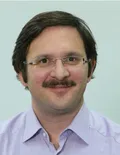
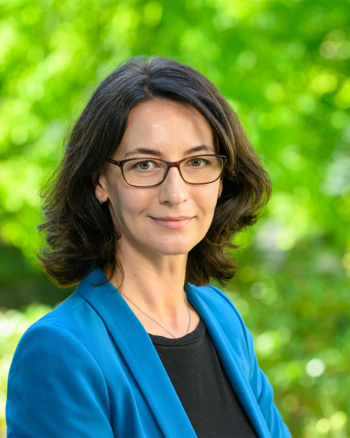
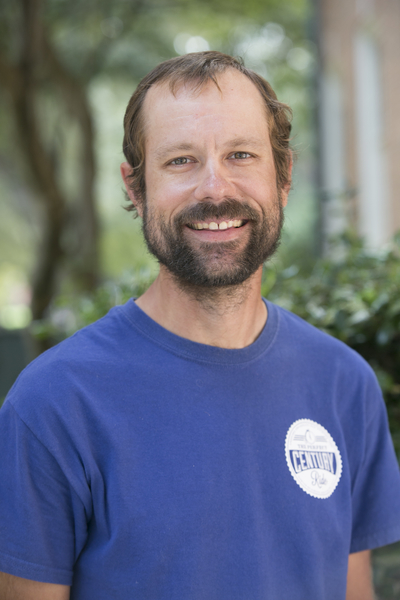
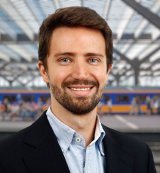
Leon Benade is a Professor in the School of Education at Edith Cowan University (ECU). He holds a Doctor of Education from New Zealand (2012) and has established a national and international reputation in learning environments research. His work focuses on 21st-century learning imperatives, innovative teaching practices, and bicultural education policy. Benade is a Co-Investigator in the 2021 Marsden Fund project exploring Māori flexible learning spaces. He has received several awards, including the 2017 Emerging Researcher Award from AUT. **Research Interests** Innovative Learning Environments Educational Philosophy Teachers' Work Educational Policy Cultural Spaces in Education **Awards** 2017 Auckland University of Technology Emerging Researcher Award 2021 Marsden Fund Co-Investigator 2016 Innovation in Teaching Award Benade supervises PhD/Master's students on topics like sustainability education and rural Colombian education policy. He has held editorial roles at journals like New Zealand Journal of Educational Studies and New Zealand Journal of Teachers' Work . His recent publications (2021–2025) address Māori spatial pedagogy, flexible learning spaces, and peer review ethics in academic publishing.
Dr. Michael Ritter is a researcher and academic staff member at the Technical University of Munich (TUM), affiliated with the TUM School of Computation, Information and Technology and the Department of Mathematics. His primary role involves advising Master's students in Mathematics programs and coordinating administrative duties for academic affairs. He is part of the Discrete Optimization research group and collaborates with professors like Stefan Weltge and Peter Gritzmann on advanced optimization projects. His research focuses on Combinatorial Optimization, Integer Programming, and real-world applications such as flight schedule design, semiconductor manufacturing optimization, and logistics systems. He has contributed to projects involving automated driving systems, production network resilience, and low-power semiconductor design. Ritter teaches courses on Discrete Optimization and Case Studies in Optimization, balancing theoretical instruction with practical problem-solving. He has co-advised numerous theses on topics ranging from supply chain optimization to timetabling algorithms, demonstrating his commitment to both academic research and student mentorship. His work bridges mathematical theory with industrial applications, addressing challenges in manufacturing, transportation, and electronics through rigorous optimization frameworks. He maintains an active publication record in reputable journals and conferences, reflecting his expertise in interdisciplinary optimization research.
Prof. Dr. Natalia Kliewer is a Professor of Business Informatics at the Free University of Berlin, where she leads the Professorship for Business Information Systems within the Department of Business Informatics in the Faculty of Economics and Business Administration. She has been serving in this position since 2009, following a Junior Professorship at the University of Paderborn from 2005-2009. Free University of Berlin (2009-present): Professor of Business Informatics University of Paderborn (2005-2009): Junior Professorship for Business Informatics and Operations Research Doctorate from University of Paderborn (2005) Studies in Information Systems at Kirgisischen Technischen Universität and Business Informatics at Münster and Paderborn (until 2000) Prof. Kliewer's research focuses on optimization in transport and traffic systems, with particular expertise in robust planning approaches, delay management, and airline revenue management. Her work bridges business informatics with practical transportation challenges, developing algorithms and decision support systems that enhance efficiency in public and air transportation networks. She has made significant contributions to integrated vehicle and crew scheduling, timetabling, and resource deployment planning that can withstand disruptions and uncertainties in real-world operations. Her recent publications demonstrate a strong trend toward addressing sustainability challenges in transportation, particularly through the integration of e-mobility solutions in public transport systems. Her research increasingly combines traditional operations research methods with data-driven approaches, including machine learning for travel time prediction and robust schedule generation. The work spans multiple transportation modes including buses, trains, and aircraft, with a consistent focus on developing integrated optimization approaches that consider multiple planning stages simultaneously. Member of the Advisory Board of the German Society for Operations Research (since 2013) Mentored students receiving prestigious awards including the GOR Bachelor Prize (Felix Becker) Prof. Kliewer has supervised numerous doctoral students including Dr. Lucas Mertens and Dr. Max Gerlach, and has advised multiple bachelor's and master's theses. Her research is supported by significant grants from the German Research Foundation (DFG), including multiple projects on robust efficiency in resource deployment plans for air transport and public transportation. She leads the BERLIN MOBILITY DATA HUB initiative and has secured funding for projects on e-mobility infrastructure planning and smart mobility solutions. She leads a research team that includes doctoral students, postdoctoral researchers, and student assistants working on various aspects of transportation optimization. Her group collaborates closely with transportation operators and industry partners to ensure practical relevance of their research. Current projects focus on AI-enhanced hybrid optimization for personnel scheduling, robust planning in public transport, and blockchain applications for secure documentation in aviation maintenance.
Alessio Trivella is a Researcher specializing in Industrial Engineering & Business Information Systems , with a focus on optimization models for energy, transportation, and logistics. His work bridges academic research with industry applications, emphasizing mathematical programming, stochastic optimization, and sustainability. Research Interests: His expertise spans combinatorial optimization , dynamic programming , and network algorithms , addressing challenges in green hydrogen production , hydrogen railway systems , container loading , and renewable energy procurement . Key themes include uncertainty modeling , resource flow optimization , and system resilience . Scientific Contributions: Recent work (2023–2025) explores sustainable energy hubs , hydrogen infrastructure , retail planning , and railway automation , with publications in journals like Renewable Energy and Management Science . His research aligns with UN Sustainable Development Goals, particularly in energy sustainability and smart transport systems . Awards: Recognized for excellence with the Outstanding Reviewer Award OR Spectrum 2019 .
Brian R. Toone serves as an Assistant Professor in the Department of Mathematics and Computer Science within Samford University's Howard College of Arts and Sciences. A native of Hoover, Alabama, he teaches in Samford's growing computer science program with a focus on one-on-one student interaction. Toone holds a BS in Computer Engineering from Clemson University and both MS and PhD degrees in Computer Science from the University of California-Davis. His educational background prepared him for a career that blends academic research with practical software development experience. His research spans multiple areas of computer science with particular focus on web engineering, software engineering, trust and security systems, programming languages, database applications, and parallel processing. Toone is actively working to apply software engineering concepts to web application development and optimization, with special interest in bringing parallel computation capabilities to web applications. He is currently building a virtual supercomputer by networking department computers to donate idle processing cycles across campus. His publication history reveals consistent research in trust mediation for distributed information systems, with significant work between 1998-2008. His research evolved from control flow prediction in high-performance computing (1998) to web engineering and Ajax applications (2006-2008), showing adaptability to changing technology landscapes. Toone is an active member of professional organizations including the Association for Computing Machinery (ACM) and the Institute for Electrical and Electronics Engineers (IEEE). His research has been presented at numerous conferences including the ACM Mid-Southeast Chapter, Alabama Academy of Science, and various security and information systems conferences. Beyond academia, Toone is a competitive cyclist who has participated in major endurance cycling events including Paris-Brest-Paris (2023) and Race Across America (2017), where he raised awareness for Duchenne Muscular Dystrophy through the Ride4Gabe initiative.
Christina Busing is a Full Professor for Combinatorial Optimization at RWTH Aachen University, a position she has held since 2021. Previously, from 2016 to 2021, she served as a Junior Professor for Robust Planning in Medical Care at the same institution. She leads the Teaching and Research Group on Combinatorial Optimization, contributing significantly to the academic community through her research and teaching activities. Her educational background includes Mathematics studies at WWU Münster, Universidad Comlutense de Madrid, and the Technical University of Berlin. Her doctoral work was completed under the supervision of Prof. Möhring, focusing on Recoverable Robustness in Combinatorial Optimization. She has also held postdoctoral positions at institutions in Aachen, Lancaster, and Vienna. Professor Busing's research spans multiple areas of optimization theory and application. Her work focuses on optimization under uncertainty, robust optimization, scenario generation, combinatorial optimization, complexity theory, optimality criteria, and both exact and heuristic algorithms. She has made significant contributions to applying these theoretical frameworks to practical problems in healthcare, energy systems, and transportation networks. Her interdisciplinary approach bridges theoretical computer science with real-world operational challenges. Her extensive publication record demonstrates a consistent focus on robust combinatorial optimization, with recent work emphasizing applications in healthcare systems, particularly in patient-to-room assignment, primary care scheduling, and pharmacy services. She has developed novel methodologies for handling uncertainty in optimization problems, including recycling valid inequalities and designing consistent decision frameworks for two-stage optimization problems. RWTH Aachen Brigitte Gilles Award for contributions to the advancement of women in science (2022) RWTH Aachen FAMOS Award for excellent family-friendly leadership (2019) RWTH Aachen university-wide Best Teaching Award (2018) TU Berlin Best Diploma Excellence Award in Mathematics (2008) German National Scholarship (Cusanuswerk) (2003-2007) Professor Busing serves on multiple program committees including EURO (2019), INOC (2018), and ESA (2017). She is also involved with the UnRAVeL Graduate College since 2018. Her teaching portfolio includes courses on Graph and Network Optimization, Mathematical Heuristics for Discrete Optimization Problems, and Combinatorial Optimization. She has developed problem-based learning approaches for heuristic methods in decision problems across mathematics, computer science, and industrial engineering. Her research group actively collaborates on interdisciplinary projects addressing operational issues in healthcare, energy systems, and transportation networks, developing mathematically optimized solutions for complex real-world challenges.
Gerhard F. Post is an Assistant Professor specializing in Mathematics of Operations Research. His work focuses on algorithmic solutions for scheduling and optimization problems, particularly in healthcare and educational contexts. He contributes to the UN Sustainable Development Goals through research addressing complex operational challenges. Research interests include personnel scheduling, integer linear programming, and timetabling systems. His work bridges theoretical models with real-world applications, such as nurse rostering and compliance with labor regulations. Recent studies involve service planning processes and shift design optimization using advanced mathematical frameworks. Key contributions include a unified nurse rostering model and analyses of Dutch labor law inconsistencies. His research has been disseminated through peer-reviewed journals like Annals of Operations Research and conference proceedings such as PATAT. Active in academic discourse, he has presented on topics ranging from sports tournament scheduling to harmonious personnel scheduling strategies.
Morteza Davari is an Associate Professor at SKEMA Business School (France) and Visiting Professor at KU Leuven (Belgium). He holds a Ph.D. in Operations Research from KU Leuven (2016), an M.Sc. in Advanced Business Studies (2012), and a B.Sc. in Industrial Engineering (2011). His research focuses on Combinatorial Optimization, Stochastic Optimization, and their applications in Sports Planning, Project Scheduling, and Supply Chain Management. Professional affiliations include: SKEMA Business School: Full-time faculty since 2020 (Assistant Professor until 2024) KU Leuven: Visiting faculty since 2020, Postdoctoral Researcher (2017–2020) Research interests span: Exact algorithms for scheduling problems Resource-constrained project scheduling Sports timetabling Data-driven optimization Uncertainty management in operations Notable contributions include: Developed hybrid scheduling models integrating inventory constraints Pioneered proactive/reactive scheduling frameworks Designed multi-league sports scheduling algorithms Modeling pandemic ripple effects on supply chains Academic leadership roles include: PhD co-supervisor for 5 ongoing/done theses Jury member for multiple international PhD defenses Reviewer for top journals like European Journal of Operational Research and Annals of Operations Research Labs/Teams: Active contributor to SKEMA's Centre for Analytics and Management Science.
Tania Merelas Iglesias is an academic affiliated with the University of Santiago de Compostela, specifically within the Department of Educational Theory, Educational History and Social Pedagogy. Her research focuses on gender studies, social education, and feminist theory, with an emphasis on equality policies, work-life balance, and socio-educational interventions. She has coordinated academic events such as the II Galician Congress of Research in Educational Sciences. Her scholarly output includes journal articles and collaborative works exploring themes like women's associations in rural areas, men's roles in gender equality, and feminist approaches to social education. Her educational background includes a doctoral thesis titled *Leisure education in recovery processes from gender violence*, directed by María Belén Caballo Villar and Ana Sánchez-Bello. This work highlights her engagement with gender-based violence and recovery frameworks. Research interests span across gender equity, feminist pedagogy, and socio-educational policies, with a particular focus on community participation and institutional responses to gender dynamics. Her articles reflect a commitment to analyzing policy implementation, rural development, and educational systems through a gender lens. Collaborations include projects on feminist social work, work-life balance, and the role of socio-educational services in family co-responsibility. While no scientific awards are explicitly mentioned, her contributions to gender and education research are evident through her extensive publication record and coordination roles in academic initiatives.
Christiane Schmidt is a Senior Associate Professor at Linköping University's Department of Science and Technology (ITN), affiliated with the Communications and Transport Systems (KTS) research group. Her work focuses on algorithm design, air traffic management, railway optimization, and computational geometry. She contributes to both academic research and practical solutions for transportation systems. Education and Research: While specific educational details are not provided, her research emphasizes algorithmic solutions for complex transportation challenges. Her team develops models for air traffic controller workload prediction using machine learning and explores late train-crew rescheduling via heuristic approaches. Research Interests: Key areas include railway traffic optimization, air traffic management systems, and computational geometry applications. Recent projects involve guard route optimization for polygons, multi-agent path planning, and automated aircraft arrival scheduling. Publications: Her 2025 work highlights advancements in tabu-search-based scheduling, machine learning for air traffic analysis, and train path insertion methods. Earlier papers address workforce scheduling and disaster recovery in transportation networks. Labs and Teams: Active within the Communications and Transport Systems group, she collaborates on projects like the Flight Logistics Unit (FL) and contributes to initiatives like B-PREPARED for disaster preparedness.
G. Homem de Almeida Correia is an Assistant Professor at Delft University of Technology, specializing in Transport, Mobility, and Logistics within the Civil Engineering & Geosciences department. His work focuses on automated vehicles, sustainable transportation systems, and IoT applications in logistics. He holds a PhD and Dr.ir. degree, though specific institutional details are not provided. Key roles include editorial work for the Journal of Advanced Transportation (2020-2022), consultancy for the eHubs project (2020-2022), and keynote speaking at international conferences such as EAI SmartCity 2021. Research interests span automated vehicle systems, mobility-as-a-service, and demand-responsive logistics. Notable contributions include optimizing shared automated vehicle services and railway traffic management strategies. He has supervised 5 academic works and contributed to datasets like the Urban Dynamics Educational Simulator (UDES). Collaborations involve institutions across multiple countries, emphasizing global transportation challenges.
Andrew J. Parkes is an Assistant Professor (Lecturer) in Operational Research and Computer Science at the University of Nottingham , affiliated with the School of Computer Science and the COL research group (formerly ASAP). He has been a member of the LANCS Initiative's executive committee and co-organized multiple streams at international conferences like OR61, EURO 2019, and OR60. His research spans optimization techniques, heuristic methods, and applications in timetabling and financial modeling.
Dr. Chengbo Ai is an Associate Professor at the Department of Civil and Environmental Engineering , University of Massachusetts Amherst , specializing in transportation infrastructure and safety research. He holds a Ph.D. in Transportation Systems Engineering from Georgia Tech and a B.S. in Electrical Engineering from Peking University. Research Interests: Transportation Asset Management, Mobile LiDAR Applications, Roadway Safety Analytics, and Spatial Infrastructure Analysis Current Projects: Developing automated guardrail/sidewalk inventory systems, improving pedestrian infrastructure accessibility, and optimizing rail inspection methods Publications focus on integrating computer vision, machine learning, and geospatial technologies for infrastructure condition assessment. Recent work includes automated guardrail evaluation, rail gage inspection using consumer-grade devices, and pedestrian network analysis. Awards: Dwight David Eisenhower Transportation Fellowship recipients (2020-2022) Acorn Innovation Grant (2019) Best Poster Award at MassDOT Conference (2019) Students: Mentors Ph.D. researchers in pavement preservation, LiDAR processing, and transportation equity, with alumni working at FHWA, AECOM, and leading engineering firms Lab Facilities include advanced LiDAR systems (Theodore 1-3), dual-GPU workstations (Sullivan, Wazowski), and field vehicles like "Cynthia" for mobile mapping.
Carl Henrik Häll is an Associate Professor at Linköping University's Department of Science and Technology, within the Communications and Transport Systems division. His research focuses on railway and public transport systems, including timetable optimization, freight train rescheduling, dynamic bus lane analysis, and electric vehicle integration. He has collaborated on projects addressing infrastructure modeling, disruption recovery, and sustainable transport solutions. Key research areas include transportation engineering, operations research, and logistics. His work combines mathematical modeling, simulation, and heuristic algorithms to improve traffic flow, resource allocation, and system stability. Notable contributions include developing MILP models for freight train rescheduling and evaluating dynamic bus lane impacts using real-world simulations. Recent publications emphasize railway crew scheduling, electric bus timetabling, and robust train path insertion in non-cyclic networks. He actively participates in interdisciplinary projects, such as B-PREPARED (disaster preparedness) and EAN (electric aircraft networks), and contributes to the Swedish transport research community through conferences like STRC2025. His expertise spans both academic and applied contexts, with a focus on translating research into practical tools for transportation planners and operators.
Elise Farstad Djupedal is an Associate Professor in Social Studies and Physical Education and a PhD candidate in Pedagogy at NTNU's Department of Teacher Education. She specializes in education policy, curriculum history, and the political dimensions of school reforms. Her research examines the historical and political shaping of Norway's educational systems, particularly focusing on curriculum development, time allocation, and the prioritization of subjects like Norwegian and mathematics. Her doctoral project analyzes primary education as knowledge policy through the lens of curriculum documents from 1954 to 2008. She has contributed to revising upper secondary school curricula and led national subject renewal initiatives. Djupedal is also an active public commentator, appearing in media outlets like Morgenbladet and Aftenposten , where she critiques educational policies and advocates for balanced curricula. Her work combines academic rigor with practical engagement, including teaching at NTNU and Thora Storm Upper Secondary School. She frequently speaks at conferences and writes columns addressing issues like teacher autonomy, time management in schools, and the future of vocational education.