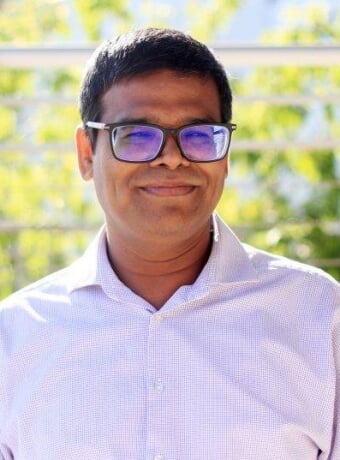
Marc Hanheide is a Professor of Intelligent Robotics and Interactive Systems at the University of Lincoln 's School of Computer Science. With a career spanning EU projects like VAMPIRE, COGNIRON, CogX, and STRANDS, his work focuses on long-term robotic behavior, human-robot spatial interaction, and cognitive system architectures. He has secured over 12 major grants from organizations including EPSRC, BBSRC, and the European Commission. Key Research Areas : Autonomous robotics, HRI, AI, cognitive systems, agricultural robotics Current Projects : STRANDS (long-term behavior), AgriFoRwArdS (robotics training), NCNR (nuclear robotics) Major Contributions : Human-aware navigation modules, topology optimization for robot fleets, causal analysis frameworks Scientific Awards: While no specific awards are listed, his numerous EPSRC grants and leadership in multi-institutional projects highlight his impact. He has over 172 publications and collaborates with institutions like CoR-Lab and CITEC.
Cavit Fatih Küçüktezcan is an Assistant Professor in the Department of Electrical Engineering at Istanbul Technical University, College of Engineering. His research focuses on power system security, optimization methods, and smart grid technologies. He actively contributes to advancements in electric vehicle energy systems, battery modeling, and resilience of renewable-rich power grids. Research Interests: His work spans power system dynamic security , preventive and corrective control , heuristic and evolutionary optimization (e.g., differential evolution, mean-variance mapping, genetic algorithms), and the application of machine learning for transient stability prediction. He also investigates electric vehicle battery systems , including optimal cell selection and real-time energy consumption modeling. The publication trends show a shift toward data-driven and AI-enhanced approaches in power systems, especially in modeling cyber-attack impacts and improving grid resilience. His recent articles emphasize practical applications in sustainable transportation and secure grid operation under uncertainty. Scientific Contributions: Developed optimization frameworks for preventive control with search space reduction. Applied mean-variance mapping optimization to enhance dynamic security. Explored machine learning benchmarks for transient stability under cyber threats. Contributed to battery modeling and energy efficiency in electric buses. Advising and Grants: While specific details on students or funded projects are not available in the provided text, his collaborative research patterns suggest active supervision and team-based research in power systems and energy technology. He frequently co-authors with researchers from Istanbul Technical University, indicating strong institutional collaboration. Labs and Teams: Though no specific lab or research group is named, his work aligns with smart grid, energy systems, and optimization research teams within the Department of Electrical Engineering at ITU. His focus on real-time data and cyber-physical systems suggests potential involvement in intelligent grid monitoring and control initiatives.
Dr. Mary Hall is a Professor in the School of Computing at the University of Utah, specializing in compiler optimization, parallel computing, and high-performance computing (HPC). Her work focuses on autotuning techniques, compiler-driven performance optimization, and minimizing data movement in computations to enhance efficiency. She has contributed significantly to frameworks like Bricks and Peak , advancing code generation for GPUs and block-structured grids. Her research also addresses educational initiatives, such as improving student retention in introductory computing courses and fostering diversity in the computing workforce through NSF-funded programs. Her research interests span compiler technology, stencil computations, and energy-efficient HPC applications. Key projects include optimizing geometric multigrid methods, developing communication-avoiding algorithms, and integrating machine learning into autotuning. She has led efforts to streamline performance portability across heterogeneous architectures and has published extensively on scheduling languages and compiler-driven optimizations. Mary Hall’s contributions include advancing data layout strategies for sparse tensors and DNNs, as well as fostering reproducibility in computational research through collaborative NSF REU programs. Her work emphasizes practical tools like ytopt and Rigel , which automate performance tuning for scientific applications. She remains active in both academic and industrial HPC communities, addressing challenges in extreme heterogeneity and scalable computing.
Per-Olov Östberg is an Associate Professor at the Department of Computing Science, Umeå University, and a research leader in the Autonomous Distributed Systems Lab (ADSLab). His work focuses on resource management for distributed cloud environments using AI/ML-based techniques, with a particular emphasis on ethical reasoning integration for responsible AI solutions. Research Themes: Cloud-edge continuum optimization, serverless frameworks, 6G computing challenges, data fabric architectures, and energy-aware systems Projects: COGNIT (cognitive serverless framework), WARA Common Information Bridge (data-driven cloud operations), De facto Center of Excellence in Autonomous Distributed Systems His publications (2011-2024) demonstrate consistent contributions to cloud resource management, including fairshare scheduling, decentralized prioritization, and power-performance tradeoffs. He has collaborated on interdisciplinary projects with institutions across Europe. Scientific Awards: None explicitly stated in provided information.
Anh T. Ninh is an Associate Professor in the Department of Mathematics at William & Mary, where he also contributes to the M.S. program in Computational Operations Research within the Department of Computer Science. His academic work bridges mathematics, computer science, and healthcare applications, with a strong focus on optimization and machine learning. Research Interests: His primary research areas include optimization under uncertainty, machine learning, and their applications in healthcare systems, particularly in clinical trial design and pharmaceutical supply chain management. He develops advanced mathematical models to improve decision-making under uncertainty in complex operational environments. Publication Trends: His recent publications reflect a consistent focus on integrating stochastic and robust optimization with real-world healthcare logistics, clinical operations, and pharmaceutical planning. The works demonstrate a strong interdisciplinary approach, combining operations research, data science, and domain-specific knowledge to solve critical problems in health systems. Scientific Awards & Recognition: While no specific awards are listed in the provided text, his research is supported by the Bill & Melinda Gates Foundation, indicating significant recognition and impact in the field. He has also collaborated with major pharmaceutical companies such as Lifecell (now Abbvie), Sandoz, and IntegriChain, highlighting the practical relevance of his work. Advising and Grants: Dr. Ninh advises students through the Computational Operations Research program and leads externally funded research, including an active project on site selection funded by the Bill & Melinda Gates Foundation. His work bridges academia and industry, contributing to both theoretical advances and practical implementations in healthcare operations. Labs and Research Teams: While no formal lab name is mentioned, Dr. Ninh leads a research group focused on computational optimization and machine learning applications in healthcare. His team likely includes graduate students and collaborators from both mathematics and computer science, working on projects related to supply chain resilience, clinical trial efficiency, and data-driven healthcare decision-making.
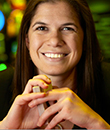
Brett Abarbanel serves as Associate Professor and Executive Director of the International Gaming Institute at the University of Nevada, Las Vegas (UNLV), within the William F. Harrah College of Hotel Administration. She maintains a research affiliate appointment at the University of Sydney School of Psychology’s Gambling Treatment and Research Clinic, demonstrating transnational academic engagement. Her educational foundation includes dual bachelor's degrees in Statistics and Architectural Studies from Brown University, where she received the Hartshorn Hypatia Award for mathematical excellence. She earned her MS and PhD at UNLV, receiving Best Thesis and Best Dissertation awards for research on sports book patronage and online gambling user experiences respectively. Dr. Abarbanel's research program critically examines gambling's intersection with esports, video games, and traditional sports through multiple lenses: technological (gaming operations infrastructure), sociocultural (community relations and spectatorship), and historical (evolution of gambling practices). Her work uniquely bridges academic rigor with industry applicability, particularly in developing evidence-based responsible gambling frameworks for emerging digital gambling environments. Analysis of her recent publications reveals three dominant trajectories: (1) esports-gambling convergence integrity, (2) data-driven responsible gambling interventions using transaction analytics, and (3) historical/media studies of gambling culture. These span gambling studies, behavioral psychology, data science, and media theory, with increasing emphasis on real-world implementation of research findings. Her distinguished recognition includes: 2015 Emerging Leader Award (The Innovation Group) 2016 Global Gaming Business 40 Under 40 Hartshorn Hypatia Award for mathematical excellence UNLV Best Thesis and Dissertation awards Dr. Abarbanel actively shapes industry standards through editorial leadership as Executive Editor of the UNLV Gaming Research & Review Journal and board membership at International Gambling Studies. Her policy impact is evidenced by service on Singapore's National Council on Problem Gambling International Advisory Panel and co-founding the Nevada Esports Alliance. As a charter member of Nevada's Esports Technical Advisory Committee, she directly influences regulatory frameworks for esports betting integrity. She directs UNLV's International Gaming Institute while co-leading the Nevada Esports Alliance, establishing dual institutional pathways for translating research into industry best practices. Her committee work with the Nevada Gaming Control Board creates formal mechanisms for academic input into regulatory decision-making, particularly regarding esports betting integrity standards.
Dr. Shabnam Kabiri is a Lecturer at the School of Construction Management and Engineering at the University of Reading . She serves as School Director of Internationalisation and Exams Officer, teaching core management subjects at undergraduate and postgraduate levels including Business Organisation and Management, Management in the Built Environment, and Construction Project Management. Academic Background: Civil engineer with two MSc degrees (Soil and Foundation Engineering, Construction Project Management) and a PhD on role conflict/ambiguity in construction projects. Research Interests: Focus on professionalization dynamics, role stress in construction teams, formal/informal role interactions, and business planning for construction firms. Her work bridges organizational theory with practical construction challenges, particularly in conflict resolution and productivity optimization. Key Research Contributions: Developed the RZ model for low emission zone optimization, created weather-aware planning tools to mitigate construction claims, and investigated systemic role conflicts in project teams. Publications span system dynamics modeling, contract frameworks, and pre-construction complexity analysis. Research Affiliations: Affiliated with two research groups at University of Reading: Organisations, People and Technology and Energy and Environmental Engineering .
Dr. Amon Göppert serves as Professor and Chair of the Intelligence in Quality Sensing group at RWTH Aachen University's Laboratory for Machine Tools and Production Engineering (WZL). His work integrates artificial intelligence into manufacturing processes to enhance quality control, production efficiency, and sustainable practices. Göppert's research spans intelligent manufacturing systems with core expertise in AI-driven production engineering, circular economy applications, and advanced assembly systems. He investigates how machine learning optimizes production ramp-up, disassembly processes, and flexible manufacturing while developing sensor-based quality control solutions for industrial applications. His recent publications reveal strong trends toward AI implementation in production planning, with emphasis on worker assistance systems for disassembly, digital twin applications for real-time control, and mobile robotics in line-less assembly environments. Key focus areas include sustainable manufacturing, metrology innovation, and adaptive scheduling systems. Göppert leads multiple high-impact research initiatives: AI-driven Product Development: Machine learning for smart measurement strategies in metrology MetaVision Consortium: Industrial metaverse applications for AI-supported vision systems Generative AI for Non-Destructive Testing optimization Cluster of Excellence Internet of Production participation As Chief Engineer at WZL, he oversees technical implementation of research projects and collaborates with industry partners to translate innovations into practical manufacturing solutions, particularly in adaptive assembly systems and quality sensing technologies.
Stephen Crouch serves as a Software Architect within the School of Electronics and Computer Science at the University of Southampton, where he actively contributes to the Web and Internet Science research group and the Southampton Research Software Group (SRSG). His role bridges technical software development with academic research infrastructure, focusing on creating robust solutions that enhance research capabilities across scientific domains while emphasizing sustainability and reproducibility in software practices. His research spans Research Software Engineering, Software Architecture, Grid Computing, Data Management, Reproducible Research, and High Performance Computing. Crouch has been instrumental in major projects including IGE (funded by the European Union's FP7 program) which developed integrated educational frameworks for research software engineering, and UNIVERSE-HPC (EPSRC-funded) addressing educational strategies in high-performance computing. His work consistently targets the intersection of software engineering principles and scientific research needs, particularly in creating maintainable systems for evolving research workflows. Analysis of his publication trajectory from 2007-2025 reveals a clear evolution from foundational grid computing research toward contemporary challenges in research software sustainability and reproducibility. Early work focused on grid interoperability and job scheduling, while recent contributions emphasize institutional strategies for research software engineering, data evolution pathways, and sustainable software practices. This progression demonstrates his adaptation to shifting research computing paradigms while maintaining core expertise in software architecture for scientific applications. Crouch has secured significant funding from the European Union and EPSRC, supporting his work in research software infrastructure. Within the Southampton Research Software Group, he plays a key role in developing institutional capacity for research software engineering, providing expertise that enables researchers across disciplines to implement reliable, efficient computational solutions. His collaborative approach is evident through extensive co-authorship with national and international research software engineering initiatives.
Dr. M M Manjurul Islam is a Research Associate in Artificial Intelligence for Smart Manufacturing at Ulster University's School of Computing, Engineering and Intelligent Systems. His research focuses on applying advanced AI techniques to solve critical challenges in manufacturing systems, with particular expertise in fault diagnosis, predictive maintenance, and semiconductor production optimization. His research interests span Artificial Intelligence , Smart Manufacturing , Fault Diagnosis , Machine Learning , Deep Learning , Predictive Maintenance , and Semiconductor Manufacturing . He has made significant contributions to the application of convolutional neural networks, support vector machines, and generative adversarial networks in industrial settings, particularly for bearing fault diagnosis and wafer defect classification. Dr. Islam's recent publications (2023-2025) demonstrate a strong focus on practical AI applications in manufacturing, with multiple chapters in the Springer Series in Advanced Manufacturing. His work shows an evolving trajectory from traditional machine learning approaches to more sophisticated deep learning and explainable AI techniques, with increasing emphasis on semiconductor manufacturing challenges and trustworthy AI systems. His research contributes to UN Sustainable Development Goals, particularly in industrial innovation and infrastructure. He is an active member of professional organizations including IEEE and Advance HE, serving as Chair for both networks. According to Scopus data, Dr. Islam has accumulated 1,706 citations with an h-index of 16, reflecting the impact of his research in the field. His publication record shows consistent productivity, with research outputs spanning from 2015 to anticipated publications in 2025.
Dong Xie is an Assistant Professor in the field of Computer Science and Engineering , with a focus on database systems and privacy-preserving computation. His work spans indexing techniques, oblivious RAM, and high-throughput data processing. Key Research Areas: Encrypted databases, access pattern privacy, dynamic data structures, spatial analytics. Collaborations: Active in database optimization and security, with external partnerships reflected in recent publications. Over the past decade, Dong Xie has contributed to advancements in oblivious query processing , index dynamization , and spatial data management . His research addresses challenges in secure data access , concurrent updates , and storage efficiency , particularly for cloud and distributed environments. Recent publications highlight his work on low-latency transaction scheduling (2025), dynamic sampling indexes (2023), and SSD-based storage optimization (2022). His articles explore intersections of privacy , performance , and scalability .
Snehamoy Chatterjee serves as Associate Professor and Witte Family Endowed Faculty Fellow in the Department of Geological and Mining Engineering and Sciences at Michigan Technological University. His expertise spans ore reserve estimation, mine planning optimization, and AI-driven safety systems, with significant contributions to remote sensing applications in mining and geological hazard assessment. Chatterjee earned his PhD in Mining Engineering from the Indian Institute of Technology Kharagpur, followed by postdoctoral research at the University of Alaska Fairbanks and the COSMO Stochastic Mine Planning Laboratory at McGill University. His academic journey includes prior faculty positions at India's National Institute of Technology. His research program integrates cutting-edge artificial intelligence with geospatial technologies to solve critical challenges in mining safety and resource management. Key focus areas include: Generative AI frameworks for real-time mining hazard prediction Hyperspectral and InSAR remote sensing for mineral exploration Deep learning applications in geophysical inversion Stochastic optimization of mine planning under uncertainty Machine learning-driven landslide and earthquake hazard mapping Chatterjee's 15 most recent publications (2023-2024) reveal a pronounced shift toward AI-geospatial fusion , with 60% of works applying deep learning to satellite imagery for hazard monitoring. His team's research spans three critical domains: mining safety systems (33%), geological hazard prediction (47%), and resource optimization (20%), demonstrating strong interdisciplinary collaboration across environmental science and engineering disciplines. Professional recognition includes: Editor's Best Reviewer Award 2014 from Mathematical Geosciences Journal APCOM Young Professional Award 2015 at the 37th APCOM conference Chatterjee actively mentors graduate students and leads multiple federally funded research initiatives focused on mine safety innovation and critical mineral exploration. His professional service includes editorial responsibilities for Mining, Metallurgy & Exploration and committee roles in major international conferences through IAMG, SME, and AGU. Current projects emphasize generative AI applications for predictive safety analytics and hyperspectral remote sensing for critical mineral discovery. His research extends through collaborations with the COSMO Laboratory network and industry partners across North America, India, and Australia, with recent fieldwork focusing on Alaskan platinum deposits and Indian coal reserves.
Yoshitaka Tanimizu is a Professor at the School of Creative Science and Engineering, Faculty of Science and Engineering, Waseda University. His research focuses on intelligent manufacturing systems, scheduling optimization, and human-centered production models. He holds a Doctor of Engineering degree from Osaka University and maintains an active research laboratory.
Torsten Schaub is a Professor at the Institute of Computer Science , University of Potsdam. His research focuses on Answer Set Programming (ASP) , constraint solving, temporal reasoning, and combinatorial optimization, with applications in multi-agent pathfinding, product configuration, and course timetabling. Key contributions include ASP-based tools for industrial-scale optimization problems, metric temporal logic implementations, and frameworks for dynamic equilibrium logic. Recent work explores efficient design space exploration, stream reasoning, and multi-shot ASP solving for complex domains. His publications emphasize hybrid ASP systems , integrating constraints and temporal logic, with co-authors across Europe and Asia. He actively develops tools like clingo and Clingraph for practical ASP applications in logistics, bioinformatics, and robotics. The articles reveal a trend toward multi-agent systems (e.g., pathfinding algorithms) and temporal extensions in ASP, combining formal logic with real-world problem-solving. Sub-fields include constraint satisfaction, logical abduction, and declarative modeling for optimization tasks.
Alberto Gottardi is a Professor at the University of Genoa's Department of Electrical, Electronic, Telecommunications Engineering, and Naval Architecture, with a distinguished research career spanning over two decades in satellite communications and next-generation networking technologies. His work bridges theoretical research with practical applications in telecommunications infrastructure. Dr. Gottardi's research interests focus on Satellite Communications , 5G/6G Networks , Non-Terrestrial Networks , UAV Communications , Federated Learning , and Internet of Things . His work demonstrates a consistent trajectory from traditional satellite communication protocols toward integrating AI techniques with next-generation wireless networks, particularly focusing on the convergence of terrestrial and non-terrestrial network architectures. Analysis of his recent publications (2022-2025) reveals a strong emphasis on AI-driven approaches for satellite-terrestrial network integration, with particular focus on federated learning applications, UAV communications, and 6G non-terrestrial network architectures. His research increasingly incorporates machine learning techniques to solve traditional telecommunications challenges, showing a clear evolution toward data-driven network optimization. Dr. Gottardi has maintained an exceptionally productive research output, with over 99 publications documented in the dblp database spanning from 2005 to projected 2025 publications. His work demonstrates consistent collaboration with key researchers including Pietro Cassarà (45 joint publications), Manlio Bacco (33), and Erina Ferro (23), indicating stable research partnerships and team leadership. His research has significant practical applications in maritime communications, intelligent transportation systems, and emergency response networks, with several publications addressing real-world implementation challenges in satellite-based IoT systems and vehicular communications.