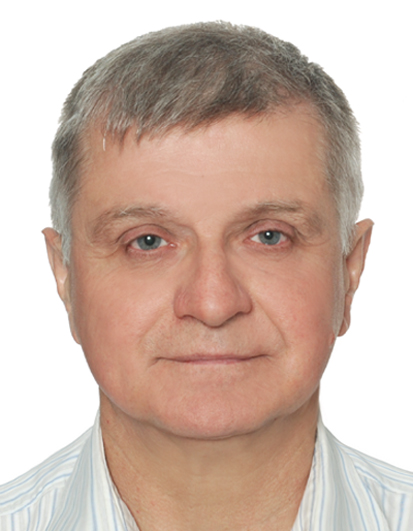
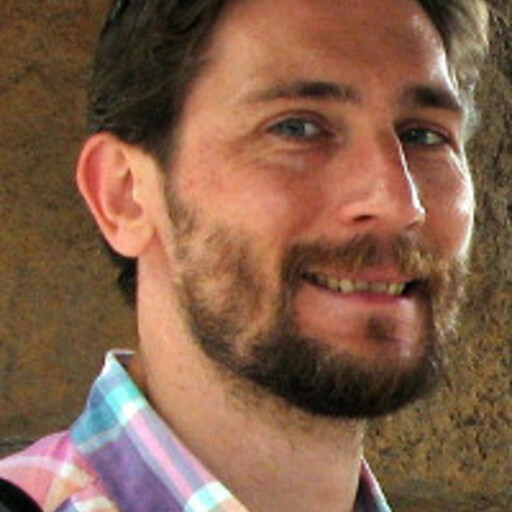
Rafał Biedrzycki is an Assistant Professor at The Institute of Computer Science within Warsaw University of Technology's Faculty of Electronics and Information Technology. His research focuses on optimization algorithms, evolutionary computation, and machine learning applications. He holds a PhD in Information Science (2009) and a D.Sc. (2024). Key research interests include evolutionary algorithms (e.g., Differential Evolution, CMA-ES), optimization techniques for real-world problems (e.g., compressor scheduling, optical networks), and algorithm benchmarking. He has contributed to improving constraint-handling methods and hybrid algorithm designs. Received team awards for scientific achievements from Warsaw University of Technology (2019, 2023) and teaching excellence (2021, 2024). Active in interdisciplinary projects, including the DAFNE initiative for data fusion systems (2010-2011). Supervises research in optimization, machine learning, and computational electromagnetics. His work bridges theoretical algorithm development with practical applications in engineering and data analysis. Recent efforts include analysis of CEC competition algorithms and parameter-tuning methodologies.
Prof. Dr. hab. Marek Pawlak is a tenured Professor at the Department of Business Management , Institute of Journalism and Management , Faculty of Social Sciences , John Paul II Catholic University of Lublin . He holds academic degrees including MBA, Technical University of Lublin (1980) PhD, Technical University of Gdańsk (1987) Hab. PhD, Institute of Organization and Management in Industry, Warsaw (1997) Professor, Institute of Organization and Management in Industry, Warsaw (2009) His research focuses on Corporate Governance Computer Sciences Application in Management Business Ethics Strategic Management Project Management . His recent publications analyze generational changes in family business leadership, tax haven usage by multinational corporations, and moral development indices of future leaders. He has coordinated international projects like TEMPUS JEP 04214 and received grants from the Polish Ministry of Science and Higher Education on topics including genetic algorithms for production scheduling and CSR impact on consumer behavior. He has served as a Vice-Dean at both Technical University of Lublin and John Paul II Catholic University of Lublin. Professional activities include multiple Erasmus+ teaching assignments at Spanish institutions (Universidad Francisco de Vitoria, University of Seville) and industry consultancy roles. His scientific work spans 40+ years with over 140 publications, including books like Zarządzanie projektami (PWN, 2006) and Zarządzanie grupą przedsiębiorstw (KUL, 2015).
Dr. Wojciech Józef Janicki is a Professor at Maria Curie-Skłodowska University in Lublin, Poland, where he serves as Director of the Institute of Socio-Economic Geography and Spatial Economy and Head of the Department of Socio-Economic Geography within the Faculty of Earth Sciences and Spatial Management. His research focuses on political geography, demography and development, with particular emphasis on migration policy, demographic policy, national and ethnic minorities, international conflicts, global problems, and regional development. His work bridges theoretical geography with practical policy implications, especially regarding migration and demographic challenges in Eastern Europe and at the EU's external borders. He has developed an interdisciplinary approach that increasingly integrates psychological perspectives on societal fears with traditional geographical analysis. His recent publications demonstrate a strong focus on migration policy, demographic challenges, and regional development, with an increasing attention to psychological aspects of societal fears. His 2024 edited volume "Fear/Less" represents a significant interdisciplinary contribution examining societal fears from multiple perspectives, reflecting his expanding research horizon beyond traditional geography. Dr. Janicki is actively engaged in public policy discourse as evidenced by his membership in several important bodies: Member of the Government Population Council since 2024 Member of the Committee on Demographic Sciences of the Polish Academy of Sciences since 2019 Member of the Scientific Council of the Polish Geopolitical Society since 2024 Member of the Editorial Board of Global Population Perspectives since 2025 His academic contributions extend to public engagement through numerous podcasts and lectures where he discusses migration, demography, and societal fears. His ORCID profile shows an h-index of 9 (Google Scholar), 4 (Scopus), and 3 (Web of Science), with a total of 44 publications and a ministerial score of 1,110. He maintains an active consultation schedule for students during the 2024/2025 academic year.
Dariusz Król is a Professor at the Department of Applied Computer Science, Faculty of Computer Science and Telecommunications at Wrocław University of Science and Technology. He serves as Vice-dean for general matters and Head of the Knowledge Engineering Lab. With a strong background in technical and engineering sciences, his academic career spans over two decades of teaching and research in computer science and telecommunications. Professor Król's educational background, though not explicitly detailed in the provided texts, is evidenced by his habilitation (dr hab. inż.) and professorship at one of Poland's leading technical universities. His extensive experience is reflected in his long-standing teaching career and research leadership. Professor Król's research interests focus on knowledge engineering, multi-agent systems, data quality, and intelligent production. His scholarly output shows a progression from foundational work in multi-agent systems to contemporary applications of deep learning in industrial contexts. Recent publications demonstrate increasing emphasis on practical applications of data quality assessment in production environments, with strong connections to Industry 4.0 and intelligent manufacturing concepts. His work consistently bridges theoretical foundations with real-world industrial applications where data quality and intelligent systems play crucial roles. His scholarly impact is evidenced by his edited books ranking among Springer's top downloaded publications, with two titles placing in the top 25% most downloaded books in 2018. His editorial leadership extends to serving as editor for Computational Intelligence (Wiley-Blackwell) since 2008 and International Journal of Distributed Systems and Technologies since 2010. Book 'Advanced Topics in Intelligent Information and Database Systems' among top 25% most downloaded Springer books in 2018 (31,481 downloads) Book 'Recent Developments in Intelligent Information and Database Systems' among top 25% most downloaded Springer books in 2018 (24,896 downloads) Book 'Propagation Phenomena in Real World Networks' among top 50% most downloaded Springer books in 2015-2016 Professor Król has supervised over 50 Master's and Engineering theses across diverse topics in computer science. He teaches courses ranging from foundational programming to advanced topics in knowledge engineering, maintaining an active teaching schedule for over 18 academic years. He leads the KNJavaTech scientific circle, which has provided research opportunities for students since 2005. His international collaborations include invited seminars at prestigious institutions worldwide, demonstrating global recognition of his expertise in knowledge engineering and intelligent systems.
Paweł Myszkowski is a Professor at Wrocław University of Science and Technology, affiliated with the Department of Artificial Intelligence within the Faculty of Computer Science and Management. He is a key member of the Metaheuristics Team and actively contributes to research in evolutionary computation, multi-objective optimization, and scheduling algorithms. His research focuses on evolutionary algorithms , metaheuristics , and multi-objective optimization , particularly applied to the Multi-Skill Resource-Constrained Project Scheduling Problem (MS-RCPSP). He has developed hybrid algorithms combining differential evolution, greedy methods, and ant colony optimization. His work includes the creation of benchmark datasets (iMOPSE) and quality measures for optimization algorithms. The recent publications show a strong trend in algorithmic innovation for complex scheduling and design automation , with applications in architectural design and financial modeling. His work bridges theoretical optimization and practical implementation in software systems. Golden Badge of Wrocław University of Science and Technology He supervises diploma theses and collaborates extensively with researchers such as Maciej Laszczyk and Marek Skowroński. He has contributed to the development of tools and benchmarks that support reproducibility and comparative evaluation in computational intelligence research. He is involved in research projects on dark-box optimization, multi-criteria optimization for classifiers, and application-aware network optimization, indicating an ongoing active research agenda.
Michał Panek is a researcher at the Department of Computer Systems and Networks, Faculty of Computing, Wroclaw University of Science and Technology. He is a member of the Machine Learning Team (ZUM) and actively contributes to research in optimization and machine learning applications in networking. His research interests include: Machine Learning in cellular networks Multi-criteria and many-objective optimization Evolutionary algorithms with gene-linkage techniques Application-aware multi-layer network optimization Classifier training using optimization methods The research projects he is involved in focus on developing advanced general-purpose optimizers (Dark-Box Optimization), evolutionary methods for high-dimensional multi-criteria problems, and performance analysis for wireless network automation. These projects reflect a strong interdisciplinary trend combining computer science, optimization theory, and telecommunications engineering. Michał Panek serves as a supervisor for diploma theses and is engaged in teaching activities. He is currently completing his doctoral studies, with a thesis titled "Machine Learning-based performance analysis to enhance the wireless network automation," supervised by Prof. Michał Woźniak and Prof. Ireneusz Jabłoński. The defense is scheduled for March 18, 2025. He is involved in key research teams including: Machine Learning Team Teaching Team Computer Networks Team Advanced Data Analysis Methods Team Metaheuristics Team
Łukasz Kruk is a University Professor and Head of the Department of Applied Mathematics at the Faculty of Mathematics, Physics and Computer Science, Maria Curie-Skłodowska University (UMCS) in Lublin, Poland. His research primarily focuses on queueing theory, stochastic processes, and operations research with applications to resource allocation and scheduling algorithms. Dr. Kruk's research spans multiple areas within applied mathematics, with particular emphasis on: Queueing theory and performance analysis of scheduling algorithms Fluid and diffusion limits for queueing networks Resource sharing networks and stability analysis Stochastic control problems and optimization Real-time scheduling policies including EDF, SRPT, and LRTF His most recent publications reveal a strong focus on fluid models for queueing networks, stability analysis of various scheduling policies, and singular stochastic control problems. Dr. Kruk has published extensively on the mathematical properties of queueing systems, particularly examining minimality conditions, edge minimality, and instability phenomena in complex networks with resource sharing. Dr. Kruk has accumulated 35 publications with significant impact in his field, as evidenced by his h-index of 10 (Google Scholar), 7 (Web of Science), and 2 (Scopus). His work bridges theoretical mathematics with practical applications in computer systems, telecommunications, and operations management. As Head of the Department of Applied Mathematics, Dr. Kruk oversees academic activities and research initiatives while maintaining an active research program. His consultation hours are Tuesdays from 10-12, and he can be contacted via email at lukasz.kruk@mail.umcs.pl or by phone at (081) 537 6115.
Leon Prochowski is a Professor at the Military University of Technology, specializing in vehicle safety and transportation systems. His work focuses on collision dynamics, occupant safety, and autonomous vehicle technologies. He holds a PhD with habilitation and contributes to both academic research and practical safety solutions in road transport. Research interests include analyzing accident hazards in vehicle collisions, improving safety for special-needs adaptations, and advancing autonomous vehicle systems. He has conducted extensive experimental and analytical studies on crash testing, structural deformation, and energy dissipation during collisions. Key publications from 2018-2023 address topics like side-impact collisions, autonomous vehicle obstacle avoidance, and maintenance economics of motor vehicles. His work often combines experimental data with computational models to enhance safety standards and driver performance. Prochowski has received no explicitly mentioned awards but has authored over 50 peer-reviewed articles. His research supports Poland's road safety initiatives, including analysis of accident patterns in the Mazovia region and elderly mobility challenges.
Wojciech Thomas is a Lecturer at the Department of Applied Informatics, Faculty of Information and Communication Technology, Wrocław University of Science and Technology. He teaches courses including Technologies Supporting Software Development (DevOps) , Cloud Computing , and Script Languages . Since 2016, he has directed the postgraduate program Computer Network Administration , designed for professionals seeking advanced knowledge in network/server management. His research focuses on DevOps, cloud technologies (AWS/Azure), automation of complex IT environments, web applications, and software engineering. He has published on topics ranging from task scheduling algorithms to trends in software engineering education. His publications (2000–2021) reflect interdisciplinary work in computer science, operations research, and educational methodology. Common themes include optimization algorithms, cloud infrastructure, and academic curriculum development.
Marcin Hernes is a Lecturer and Head of the Department of Process Management at Wrocław University of Economics. He also serves as Director of the Center for Intelligent Management Systems. His academic career spans undergraduate, graduate, and postgraduate teaching, alongside extensive research collaboration. He is actively involved in national and international conferences, and holds memberships in IEEE, the Polish Association of Artificial Intelligence, and the Scientific Society for Economic Informatics. His research interests include artificial intelligence, cognitive technologies, machine learning, and decision support systems in production and management contexts. Education details are not explicitly stated in the provided text, but his professional trajectory indicates advanced academic qualifications. His research focuses on resolving knowledge conflicts in multi-agent systems, optimizing production processes, and leveraging AI for business sustainability. He has developed dozens of software applications for industrial and public administration use cases, emphasizing practical technological solutions. Hernes supervises doctoral students and maintains active engagement with the socio-economic environment through collaborative projects. His consultations are held on Wednesdays, and master's seminars are conducted remotely via MS Teams with specific schedules for full-time and part-time students. Notably, he has pioneered frameworks integrating cognitive architecture into financial decision support systems and contributed to ERP 4.0 systems aligning with Industry 4.0 standards. His work emphasizes sustainability across domains, from reducing urban carbon footprints through cloud technology to environmental life cycle costing in network organizations. He has also addressed challenges in supply chain management, such as the Forrester effect reduction, and explored blockchain applications in public administration digital transformation.
Dr. Eng. Wojciech Kmiecik is a researcher at the Department of Computer Systems and Networks, Faculty of Electronics, Photonics and Microsystems, Wrocław University of Science and Technology. He is actively involved in multiple research teams including Machine Learning, Computer Networks, Advanced Data Analysis Methods, and Metaheuristics. He also contributes to teaching and supervises diploma theses. His research focuses on optical networks , survivable multicasting , multi-criteria optimization , and metaheuristic algorithms . He has led and contributed to projects such as Dark-Box Optimization, evolutionary multi-criteria optimization, and advanced methods for multi-layer networks. His work bridges theoretical algorithm development with practical network design. The publication trends from 2010 to 2020 show a consistent focus on network survivability , elastic optical networks , and task allocation in parallel systems . His research integrates optimization techniques into networking solutions, particularly in dual homing architectures and deadline-sensitive provisioning. Key themes include resilience, efficiency, and scalability in both optical and computational systems. Scientific Awards: Medal for long-standing service to Wrocław University of Science and Technology Dr. Kmiecik has supervised diploma theses and is involved in teaching. He has not received externally reported grants, but his sustained project involvement suggests institutional or collaborative funding. He collaborates extensively with Prof. Krzysztof Walkowiak and other researchers in the department. Research Labs and Teams: Machine Learning Team Teaching Team Computer Networks Team Advanced Data Analysis Methods Team Metaheuristics Team
Katarzyna Rycerz is a Lecturer at the Institute of Computer Science within the Faculty of Computer Science at AGH University of Science and Technology in Kraków, Poland. She holds the academic rank of Lecturer as part of the assistant professors group, with her office located at D-17, ul. Kawiory 21, room II, 3.54. Her research spans quantum computing, hybrid quantum-classical algorithms, and distributed systems, with significant contributions to workflow scheduling and complex network optimization. Dr. Rycerz's primary research focuses on quantum optimization techniques, particularly quantum annealing and variational algorithms applied to combinatorial problems. Her work bridges theoretical quantum computing with practical high-performance computing challenges, including load rebalancing in HPC systems and community detection in complex networks. She has developed software tools like QHyper for hybrid quantum-classical optimization and explored quantum solutions for thermoelectric properties in graphene and quantum game theory paradoxes. Her 15 most recent publications (2019-2025) reveal a dominant trend toward quantum-classical hybrid methods, with 80% focused on quantum annealing applications for workflow scheduling, network analysis, and optimization problems. Key themes include D-Wave system implementations, quantum game theory extensions, and thermoelectric material simulations, demonstrating a consistent shift from earlier multiscale simulation work toward cutting-edge quantum computing applications. No scientific awards are documented in the available information. Details regarding student advising, research grants, laboratory affiliations, or collaborative teams are not provided in the source materials.
Bernadetta Bartosik serves as an Assistant Professor in the Department of Neuroinformatics and Biomedical Engineering at Maria Curie-Skłodowska University (UMCS) within the Faculty of Mathematics, Physics and Computer Science. Her academic affiliation places her at the intersection of computer science, neuroscience, and biomedical applications, with her office located in room 511 of the Institute of Computer Science. Dr. Bartosik's research interests span neuroinformatics and biomedical engineering with particular focus on EEG analysis, brain-computer interfaces, and cognitive processes. Her work investigates cortical activity patterns related to social cognition, trust assessment, attractiveness judgment, and cognitive impairments such as post-COVID brain fog. She employs advanced methodologies including ERP analysis, machine learning algorithms, and neural network approaches to decode brain activity and understand human cognitive processes. Analysis of her recent publications (2019-2023) reveals a strong research trajectory in cognitive neuroscience with applications to real-world problems. Her work demonstrates expertise in both theoretical computational approaches and clinical applications, particularly in understanding how brain activity correlates with social judgments and cognitive impairments. The research shows consistent methodological rigor with emphasis on EEG signal processing, classification algorithms, and neural decoding techniques. Dr. Bartosik maintains active academic engagement through regular consultations for students, currently scheduled for the 2024/2025 summer semester with stationary sessions on Mondays from 10:00-12:00 and individual Teams appointments. Her scholarly contributions are tracked through ORCID (0000-0002-7228-452X) and various academic databases including Google Scholar, Scopus, and Web of Science, with documented metrics including an h-index of 2 (Web of Science), Total Impact Factor of 6.673, and a Total ministerial score of 260.
Dr. Uday Venkatadri is a Professor and Department Head in the Department of Industrial Engineering at Dalhousie University in Halifax, Nova Scotia, Canada. He has been teaching at Dalhousie University since July 2001, progressing from Assistant Professor (2001-2006) to Associate Professor (2006-2019) and finally to Professor (2019-present). His extensive experience includes prior roles as a Lead Architect for supply chain planning products at Baan and as a Research Associate at Université Laval in Québec City. Dr. Venkatadri's educational background includes: Ph.D. in Industrial Engineering from Purdue University M.S. in Industrial Engineering from Clemson University B.Tech in Mechanical Engineering from Indian Institute of Technology, Banaras Hindu University His research focuses on addressing design, planning, and control issues in production and distribution systems in the era of Industry 5.0 and Hyperconnected Logistics. He employs Mixed Integer Linear Programming as the cornerstone of his methodological approach, while incorporating trends in big data analytics, machine learning, and artificial intelligence. Dr. Venkatadri's work spans several critical areas including facilities planning and design, supply chain management, production planning and control, and sustainable manufacturing systems. He has developed frameworks for perishable food supply chains, healthcare logistics during pandemics, offshore wind energy maintenance, and cellular manufacturing systems. Dr. Venkatadri's recent publications demonstrate a strong emphasis on sustainable and resilient supply chains, maintenance optimization, and the application of advanced analytics to logistics problems. His work addresses contemporary challenges such as pandemic response in healthcare supply chains, optimization of renewable energy systems, and management of perishable goods in food supply chains. He frequently collaborates with researchers across disciplines, particularly with Claver Diallo, Abdelhakim Khatab, and other colleagues in the field of industrial engineering. Dr. Venkatadri has received numerous awards and honors throughout his career: 2021: Teaching award by the Logistics and Supply Chain Division of the Institute of Industrial and Systems Engineers 2016: Best Teacher of the Year award, Department of Industrial Engineering, Dalhousie University 2004: Best Teacher of the Year award, Department of Industrial Engineering, Dalhousie University 1991-1993: Summer David Ross Fellowship from Purdue University for excellence in teaching 1987-1990: David Ross Fellowship from Purdue University for Ph.D. work 1988: Institute of Industrial Engineer's General Motors First Place Master's thesis award Dr. Venkatadri has advised numerous graduate students, with many co-authoring publications with him. His research has been supported by various grants focusing on supply chain optimization, maintenance systems, and sustainable manufacturing. He is actively involved in the academic community as a Senior Member of IIE (Institute of Industrial Engineers), a Member of Engineers Nova Scotia, and a Member of the Canadian Operational Research Society (CORS). His teaching portfolio includes undergraduate and graduate courses in computational methods, operations research, supply chain management, facilities design, and quality control.
Dr. Eng. Marcin Markowski is a researcher at the Department of Computer Systems and Networks, Faculty of Computer Science and Telecommunications, Wrocław University of Science and Technology. His work focuses on computer network design, optimization, and security, with an emphasis on cloud computing, elastic optical networks, and distributed systems. Faculty: Computer Science and Telecommunications Department: Computer Systems and Networks Email: marcin.markowski@pwr.edu.pl His research spans network optimization algorithms (ant colony, tabu search), industrial IoT applications, and security protocols. Articles demonstrate expertise in WAN-based resource allocation, SDN laboratory development, and sustainable logistics through WiFi-based monitoring systems. Key trends in his publications include heuristic methods for elastic optical networks, multi-criteria replica placement in wide area networks, and cloud computing efficiency analysis. He integrates algorithmic innovation with practical applications in industrial and telemedicine contexts. The Software Defined Networking Research Laboratory at WUST features prominently in his experimental work on network topologies and scenarios. No explicit information is available on teaching roles, awards, or grants.