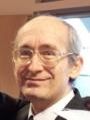
Carl E. Carlson is the Class of 1962 Professor of Physics at the College of William & Mary in Virginia. He holds a B.A. and Ph.D. from Columbia University (1965 and 1968, respectively). His research focuses on theoretical particle and nuclear physics, including the proton radius problem, low-energy tests of new physics, hadronic effects in atomic physics, and two-photon physics. Recent courses include Quantum Field Theory II, Classical Electricity and Magnetism II, and General Physics. He has been recognized with the Thomas Ashley Graves Award for Sustained Excellence in Teaching (1994) and the Alumni Fellows Award (1978). His recent work explores topics like twisted photon interactions, lattice QCD corrections, and proton structure corrections to atomic spectroscopy. He has held sabbaticals at institutions like the Helsinki Institute for Physics and the Helmholtz Institute Mainz.
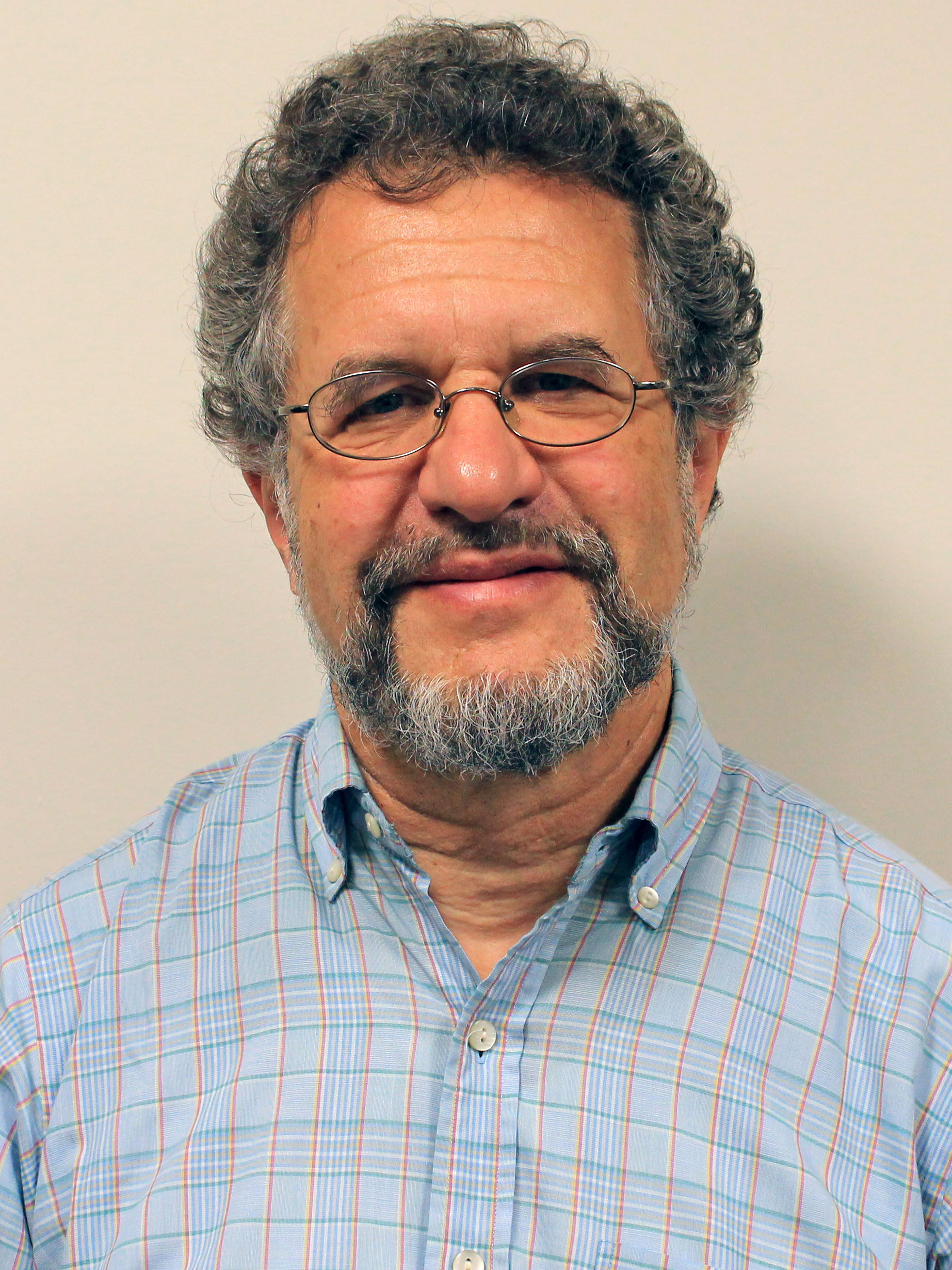
Miklós Tibor Horváth is a Professor at the Department of Mathematics , Budapest University of Technology and Economics , specializing in inverse spectral problems and differential operators. He serves as Head of Department and holds the MTA doktora degree. Email: horvath@math.bme.hu Office: H226c Phone: +36-1-463-2630 Research Interests: His work focuses on inverse spectral theory, including reconstruction of linear differential operators from spectral data, eigenvalue distribution of Sturm-Liouville problems, and fixed-energy inverse scattering. Key areas include stability analysis of inverse problems and closed exponential systems. Publications & Teaching: Horváth has published extensively in journals like Inverse Problems and Transactions of the American Mathematical Society , with notable contributions to stability theorems and spectral shift functions. He teaches courses such as Analysis 2 , Functional Analysis , and Inverse Distribution Problems at both undergraduate and graduate levels. Additional Information: Personal Website: http://math.bme.hu/~horvath Mathscinet Profile: AMS Profile Google Scholar: Google Scholar Profile
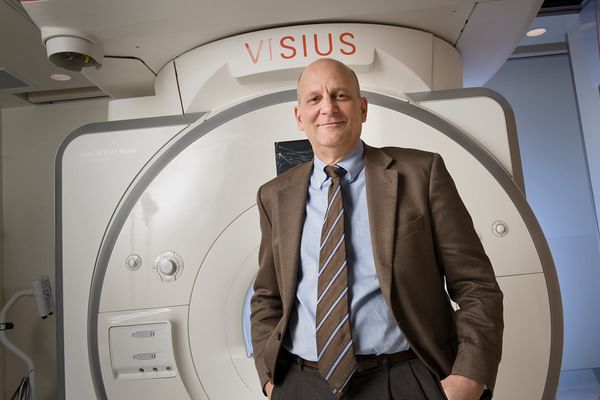
Dana Brooks is a Research Professor in the Department of Electrical and Computer Engineering at Northeastern University, with affiliations in Bioengineering. He holds a PhD from Northeastern University (1991) and has received the Søren Buus Outstanding Research Award (2006). His primary research focuses on biomedical signal and image processing, medical imaging techniques (including MRI and electrocardiography), and neuromodulation technologies such as transcranial magnetic stimulation (TMS). He is also involved in protein conformation estimation using X-ray scattering and optimization algorithms for medical applications. Dr. Brooks leads the Biomedical Signals Processing Lab and collaborates with the Center for Integrative Biomedical Computing . His work bridges engineering and medicine, with recent grants including a $400K NSF MRI grant for advanced TMS systems and a $600K NSF grant for motor cortical organization studies. He has advised students like Setareh Ariafar (PhD’20) and contributed to innovations in image mosaicking for confocal microscopy and machine learning applications in dermatology. His publications span computational neuroscience, cardiac imaging, and uncertainty quantification in biomedical simulations. Notable achievements include developing algorithms for ECG imaging, optimizing TMS protocols, and creating tools like UncertainSCI for simulation reliability assessment.
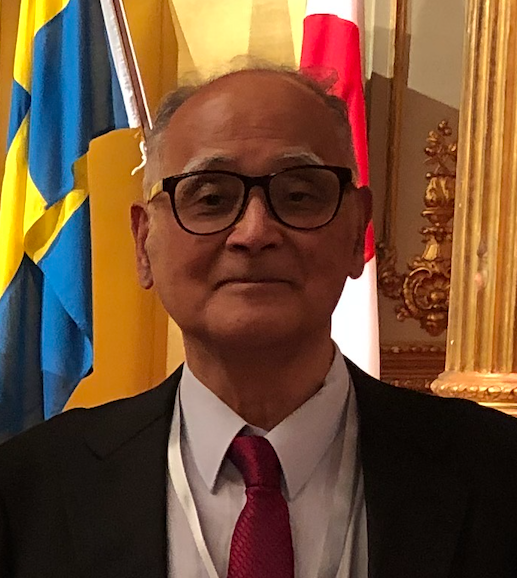
Prof. Osamu Terasaki is a leading expert in electron microscopy and structural chemistry, currently serving as Professor and Director of the Centre for High-Resolution Electron Microscopy at ShanghaiTech University, China since 2017. Previously, he held academic roles at Stockholm University (Professor and Head of Structural Chemistry, 2003-2010), KAIST (Invited Guest Professor, 2009-2017), UC Berkeley (Visiting Professor, 2014-2017), and Tohoku University (Assistant to Associate Professor, 1967-2002). Education: B.Sc. in Physics, Tohoku University, Japan (1965) M.Sc. in Physics, Tohoku University, Japan (1967) DSc in Physics, Tohoku University, Japan (1982) Research Interests focus on advanced electron microscopy techniques to solve complex structural problems in nanoporous materials. His work includes groundbreaking contributions to electron dynamical scattering, zeolite characterization, and the development of Gas Adsorption Crystallography for determining adsorbate distributions in nanoporous crystals. He pioneered electron microscopy methodologies for Metal-Organic Frameworks (MOFs) and Covalent-Organic Frameworks (COFs). Scientific Contributions extend to establishing world-leading electron microscopy centers at Stockholm University, KAIST, and ShanghaiTech University. These facilities have advanced the application of state-of-the-art instrumentation to analyze defects, fine structures, and quantum-confined cluster-crystals in microporous materials. Scientific Awards and Honors include: Dual Donald W. Breck Awards (2007, 2019) Humboldt Research Award (2008) Daiwa Adrian Prize (1996) Magnolia Silver Award (2018) Honorary Memberships in the Scandinavian Electron Microscopy Society (2010) and Japan Association of Zeolites (2014) International Collaborations span institutions in Sweden, South Korea, the U.S., and China, reflecting his global impact in structural science and electron microscopy.
Keith D. Paulsen is the MacLean Professor of Engineering at Dartmouth College’s Thayer School of Engineering and holds the title of Professor of Radiology & Surgery at the Geisel School of Medicine. He serves as Scientific Director of the Center for Surgical Innovation at Dartmouth-Hitchcock Medical Center and Co-Director of the Translational Engineering in Cancer Research Program at the Norris Cotton Cancer Center. His roles emphasize interdisciplinary collaboration between engineering, medicine, and oncology. Paulsen earned a BSc in Biomedical Engineering from Duke University (1981), followed by MS (1984) and PhD (1986) degrees in Engineering Sciences from Dartmouth College. His research focuses on biomedical imaging, cancer therapeutics, and image-guided surgery, with particular expertise in optical and electromagnetic methodologies. He has pioneered technologies such as fluorescence-guided surgery, quantitative scatter imaging, and non-linear image reconstruction techniques, aiming to enhance surgical precision and cancer diagnosis. His awards include fellowships from OSA, SPIE, AIMBE, IEEE, and the National Academy of Inventors. Paulsen’s work has led to startups like CairnSurgical (where he serves as CTO) and InSight Surgical Technologies, translating research into clinical tools. Key projects include intraoperative imaging systems for brain and spine surgery, microwave imaging for breast cancer, and optical molecular imaging for real-time surgical guidance. Paulsen teaches advanced computational methods (ENGS 205, 105) and courses on medical device innovation (ENGM 189.1/2). His lab, part of Dartmouth’s Optics in Medicine cluster, collaborates with radiology, surgery, and oncology departments to develop clinical technologies funded by NIH, NCI, and DoD grants.
Mariana Dalarsson is an Associate Professor in Electromagnetic Theory at the Division of Electromagnetic Engineering and Fusion Science (EMF) within the School of Electrical and Computer Engineering (EECS) at KTH Royal Institute of Technology. She holds an MSc (2010), PhD (2016), and Docent (2019) from KTH, where she is recognized as the (shared) second youngest woman ever to receive a PhD degree from the institution. Her research spans electromagnetic scattering and absorption, inverse problems, electromagnetics of stratified media, double-negative metamaterials, electromagnetics in medicine, antenna theory, and mathematical physics. She has authored approximately 102 peer-reviewed publications, including 51 journal papers, with recent work focusing on gold nanoparticles for biomedical applications, waveguide theory for artificial materials, and plasmonics. Analysis of her recent publications reveals a strong focus on graded metamaterials, electromagnetic wave propagation in complex media, and biomedical applications of electromagnetic theory. Her work bridges fundamental electromagnetic theory with practical applications in medical technology, particularly in the areas of nanoparticle-based treatments and diagnostic systems. Honorary Grant ("Honnörsstipendiet") for best graduate of her program (2011) L'Oréal-Unesco For Women in Science Sweden Prize (2020) Göran Gustafsson Prize for Young Researchers at UU/KTH (2024) Teaching Assistant of the Year from Engineering Physics students (2015) Mariana is highly active in teaching, serving as course responsible and examiner for EI1222 Electromagnetic Theory, EI2405 Classical Electrodynamics, and FEI3304 Integral Equation Methods in Electromagnetics. She also co-teaches several other courses and regularly supervises multiple BSc/MSc theses annually. Her research is primarily funded through her own project grants from the Swedish Research Council, including "Waveguide theory for artificial materials and plasmonics" (2019) and "Gold nanoparticles for high-frequency deep brain stimulation" (2023).
Professor Lehel Banjai is a faculty member at the School of Mathematical and Computer Sciences, Heriot-Watt University, where he has held the position of Professor in Mathematics since 2022. Previously, he served as Associate Professor (2015–2022) and Assistant Professor (2012–2015) at the same institution. Education: Habilitation (University of Dusseldorf, 2013), D.Phil. (Oxford, 2003), BA(Hons) in Mathematics and Computation (Oxford, 2000) His research spans numerical analysis and computational mathematics, focusing on boundary and finite element methods, space-time formulations, and convolution quadrature for time-domain problems. Key areas of interest include wave scattering (acoustic and electromagnetic), Schrödinger equations, fractional differential operators, and high-order numerical schemes. Recent publications highlight his work on Runge-Kutta convolution quadrature, fractional diffusion, nonlinear impedance boundary conditions, and efficient solvers for wave equations. He has collaborated with researchers at institutions such as Max Planck Institute, University of Zurich, and University of Dusseldorf. Students supervised include Brian Hennessy (joint with Emmanuil Georgoulis), Ebraheem Aldahham, Katherine Baker, Jeta Molla (joint with Gabriel Lord), and Oluwaseun Lijoka, among others.
Randy Bartels is a Professor in the Department of Biomedical Engineering at the University of Wisconsin-Madison. His laboratory specializes in developing advanced biomedical imaging techniques to study complex biological phenomena and translate these methods into applications that enhance fundamental understanding of biology and disease treatments. Education: PhD, University of Michigan (2002) MS, University of Michigan (1999) BS, Oklahoma State University (1997) Research Interests: Bartels focuses on creating novel coherent nonlinear optical imaging modalities, such as spatial frequency modulation imaging (SPIFI), impulsive stimulated Raman scattering (ISRS), and synthetic aperture holography. His work emphasizes label-free imaging, optical scattering robustness, and computational enhancements for resolution and sensitivity. Scientific Awards: 2021 Institut Fresnel Visiting Professor 2013 American Physical Society Fellow 2011 Optical Society of America Fellow 2006 Presidential Early Career Award in Science and Engineering (PECASE) 2005 Sloan Research Fellow (Physics) 2004 NSF CAREER Award Recent Article Trends: Bartels' publications highlight innovations in label-free imaging, nonlinear microscopy, and computational techniques. Key themes include hyperspectral coherent Raman imaging, quantum-classical fusion for super-resolution, and robustness to optical scattering in biological and industrial applications. His work spans fundamental physics, engineering, and biomedical translation. Laboratory: Bartels leads a research group dedicated to advancing imaging technologies, with a focus on overcoming limitations in resolution, depth, and sensitivity through optical and computational methods.
Jonathan Freund is Professor of Mechanical Science and Engineering and Aerospace Engineering at the University of Illinois at Urbana-Champaign, holding the Donald Biggar Willett Professorship since 2016. He serves as Head of Aerospace Engineering (2020-present) and is Co-Director of the Center for Exascale-enabled Scramjet Design (CEESD). His academic journey began with all three degrees in Mechanical Engineering from Stanford University (B.S. 1991, M.S. 1992, Ph.D. 1998), followed by faculty positions at UCLA (1997-2001) before joining UIUC. Freund's research spans fluid mechanics with applications in biomedical systems, aeroacoustics, and materials science. His work focuses on computational modeling of cellular blood flow, jet noise control, plasma-coupled combustion, uncertainty quantification, and nanoscale material processing. He develops advanced simulation tools to investigate phenomena ranging from atomically thin liquid films to spacecraft propulsion systems. His laboratory leverages high-performance computing to solve complex multiphysics problems requiring exascale capabilities. Analysis of his recent publications reveals a strong emphasis on computational fluid dynamics applied to biological systems (35%), aeroacoustics and jet noise (25%), materials processing at nanoscale (20%), and uncertainty quantification methods (20%). His work consistently bridges fundamental fluid mechanics with practical engineering applications, particularly in medical technologies and advanced propulsion systems. Donald Biggar Willett Professor (2016-present) Kritzer Faculty Scholar (2011-2016) Fellow of the American Physical Society (2011) Campus Excellence in Faculty Mentoring Award (2017) APS DFD Gallery of Fluid Motion Winner (2000) Associate Fellow of AIAA (2012) Freund has advised numerous graduate students and received multiple teaching honors including the Engineering Council Award for Excellence in Advising (2008, 2012) and repeated recognition on the List of Excellent Teachers. His research has been supported by agencies including the Department of Energy's National Nuclear Security Administration. He leads the CEESD center which develops physics-faithful predictive simulations for scramjet design using advanced high-temperature composite materials.
Shawki M. Areibi is a Professor and Area Head of Engineering Systems and Computing in the School of Engineering at the University of Guelph. His research focuses on VLSI Physical Design Automation, Reconfigurable Computing Systems, and Hardware/Software Co-design for Embedded Systems. He leads efforts in developing advanced algorithms for CAD tools, FPGA design, and machine learning applications. His work addresses challenges in VLSI layout optimization, parallel processing, and embedded systems design. Affiliations: AI Affiliated Faculty, Area Heads, Computer Engineering, Engineering Systems and Computing Research. Research Interests: VLSI Circuit Layout, Reconfigurable Computing, Machine Learning, and FPGA-based Accelerators. His research integrates meta-heuristics like Genetic Algorithms and Tabu Search to solve complex optimization problems. He has contributed to hardware acceleration frameworks for machine learning algorithms and embedded systems, with applications in domains like signal processing and data mining. His recent work includes congestion-estimation models for modern FPGAs and analytic placement tools for ultra-scale architectures. Publications span VLSI design, reconfigurable computing, and machine learning, emphasizing algorithmic innovation and hardware-software co-design. His students have explored topics ranging from FPGA placement to domain adaptation in remote sensing. Grants and Advising: Advises graduate and undergraduate students on projects involving FPGA acceleration, machine learning, and embedded systems. His labs focus on developing next-generation CAD tools and hardware accelerators.
Hans Christianson is an Associate Professor and Associate Chair in the Department of Mathematics at the University of North Carolina at Chapel Hill. His research bridges classical mechanics and quantum phenomena through advanced mathematical frameworks. He received his B.S. from the University of Minnesota, Twin Cities (2002) and Ph.D. from the University of California, Berkeley (2007), followed by a CLE Moore Instructorship at MIT (2007-2010) and an MSRI Postdoc (2008). Christianson's work centers on classical-quantum correspondence using microlocal analysis to study partial differential equations in phase space. He investigates chaotic and singular classical systems that produce quantum effects like wave equidistribution and unstable scattering, with applications in spectral geometry and quantum chaos. His recent publications reveal consistent focus on wave propagation phenomena, including Neumann data equidistribution, damped wave control, and Schrödinger equation smoothing properties. These works demonstrate deep integration of geometric analysis with quantum mechanical principles. No scientific awards are documented in the provided materials. As part of the NSF RTG-funded Analysis and PDE research group (grant DMS-2135998), Christianson contributes to collaborative research on manifolds while mentoring graduate students in advanced mathematical analysis. He actively participates in the UNC Analysis and PDE research group, which drives interdisciplinary work on partial differential equations across geometric and quantum domains.
Per-Gunnar J. Martinsson serves as Deputy Director of the Oden Institute and Professor of Mathematics at the University of Texas at Austin, holding the W. A. "Tex" Moncrief, Jr. Endowment in Simulation-Based Engineering and Sciences. He maintains an affiliated professorship at the Royal Institute of Technology (KTH) in Stockholm, where he chairs the MathDataLab scientific advisory board. Previous appointments include faculty positions at the University of Oxford, University of Colorado Boulder (2005-2017), and Yale University. His educational background includes: Ph.D. in Computational and Applied Mathematics, University of Texas at Austin, 2002 Dr. Martinsson's research spans numerical analysis, scientific computing, and data science, with emphasis on randomized linear algebra methods, accelerated direct solvers for elliptic PDEs, structured matrix computations, and numerical techniques for scattering problems, computational fluid dynamics, and acoustics. His work extends to applied harmonic analysis, fast multipole methods, boundary integral equations, and modeling of heterogeneous materials and bandgap phenomena. His notable recognition includes: Germund Dahlquist Prize by SIAM (2017) He actively contributes to the Center for Numerical Analysis and Center for Scientific Machine Learning at the Oden Institute, while providing strategic leadership to KTH's MathDataLab through its scientific advisory board.
Markus Haltmeier is a Professor in the Department of Mathematics at the University of Innsbruck. His research focuses on inverse problems, image reconstruction, and deep learning with applications in medical imaging, photoacoustics, and computational mathematics. He leads a group dedicated to advancing theoretical and practical solutions for challenges in non-destructive testing and medical diagnostics. His work integrates mathematical analysis with machine learning, addressing issues such as high-resolution imaging in scattering media and automated segmentation of cardiac structures. Key research areas include regularization techniques for inverse problems, self-supervised learning approaches for limited data scenarios, and computational methods for photoacoustic tomography. His contributions span both theoretical developments (e.g., inversion formulas for Radon transforms) and applied solutions (e.g., algorithms for cylinder liner wear assessment and myocardial infarct segmentation). Publications highlight advancements in neural network-based regularization, 3D medical image synthesis, and unsupervised learning frameworks for segmentation and registration. His research emphasizes bridging the gap between mathematical theory and real-world applications in healthcare and engineering.
Annick Hubin is a Professor in the Department of Sustainable Materials Engineering at the Faculty of Engineering, Vrije Universiteit Brussel. She serves in additional leadership roles including R&D Central management and as Head of a Research Group. Her work focuses on electrochemical processes with applications in materials engineering, corrosion science, and sustainable technologies. Her research interests span electrochemical kinetics, thermodynamics of aqueous solutions, electrode processes, electroreduction of metals and alloys (plating, extraction, refining, recycling), and environmental electrochemistry. She specializes in investigating basic electrochemical reactions using techniques such as potentiometric titrations, voltammetry, chronoamperometry, chronopotentiometry, and impedance measurements. Her work also examines mass transport in electrochemical processes and the action of organic inhibitors for metal deposition or dissolution reactions. Her recent publications reveal a strong focus on corrosion science, battery technologies, and electrochemical materials. There is a clear trend toward applying advanced characterization techniques and machine learning to solve complex problems in electrochemistry and materials science. Her research increasingly addresses sustainability challenges, particularly in battery technology and low-carbon solutions. Professor Hubin actively supervises doctoral students and participates in numerous research projects, demonstrating her commitment to mentoring the next generation of scientists and engineers. She has secured substantial research funding for projects spanning fundamental and applied research in materials engineering. She leads or participates in several significant research initiatives including DESTINY (Low-carbon solutions network), fundamental research on sulfide-based all-solid-state batteries, and projects focused on atmospheric corrosion prediction using machine learning. Her laboratory appears to specialize in electrochemical characterization and materials development for energy applications.
Rainer Sinn is a University Professor (on leave) at Leipzig University, specializing in Applied Algebra within mathematics. His research centers on real algebraic geometry, convex optimization, and sums of squares, with significant contributions to spectrahedra, amplituhedra, and nonnegativity certificates. His primary research interests include real algebraic geometry (focusing on nonnegative polynomials and quadratic forms), convex algebraic geometry (studying convex hulls of algebraic varieties), and combinatorial applications in optimization. He explores geometric structures like amplituhedra in theoretical physics and investigates algebraic solutions to optimization problems. Recent publications (2022-2025) demonstrate a cohesive focus on algebraic approaches to optimization, with recurring themes in nonnegativity certificates, tropical geometry, and combinatorial aspects of algebraic varieties. His German-language works also address the philosophy and public understanding of mathematics, highlighting interdisciplinary impact. No scientific awards were documented in the provided sources. Details regarding academic advising, research grants, laboratories, or collaborative teams were not specified in the available information.