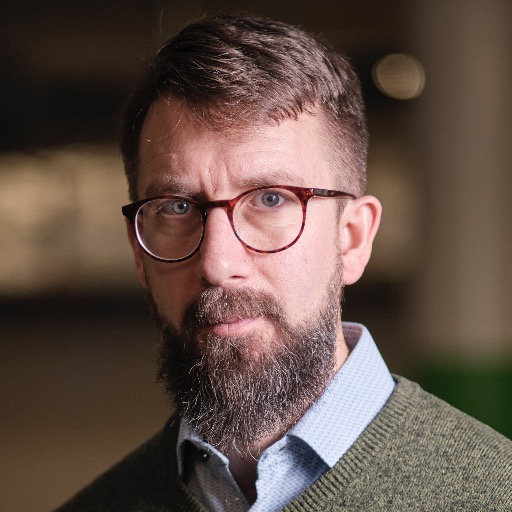
Gary SvenssonView profile
Assistant Professor
Gary Svensson serves as Assistant Professor at Linköping University, holding dual affiliations with the Department of History, Art History and Religious Studies (HKR) and the Department of Culture and Society (IKOS). Since 2004, he has taught art history, media studies, and graphic design while actively contributing to the university's academic programs. His academic journey includes appointment as associate professor in Art History and Visual Communication in August 2009, followed by promotion to assistant professor in April 2015—a progression reflecting the unique structure of Swedish academic ranks. Svensson has provided significant administrative leadership as program manager for the Bachelor's program in Communication Society Media Production (KSM) and previously for the Cultural Studies program. Professor Svensson's primary research investigates phantom images —a field examining forensic description imagery including Forensic DNA phenotyping, Facial composites, and Police sketches (known as Robot-bild or Robot-photo in some contexts). His work traces the historical evolution of these visual representations across different legal systems, linguistic traditions, and technological eras, with particular attention to notable cases like the 1986 Swedish prime minister assassination. His recent publications demonstrate a sophisticated integration of art historical methodology with contemporary media studies, exploring topics ranging from Giovanni Morelli's connoisseurship techniques to the radicalization of postwar Scandinavian art scenes. This body of work reveals consistent engagement with how visual representation functions within societal and legal frameworks. Teaches within Communication, Society, Media Production Bachelor's Program Focuses on cross-media competencies including social media, podcasts, and spatial media Contributes to problem-oriented cultural studies at humanities-social sciences intersections Through his research and teaching, Svensson bridges traditional art historical scholarship with contemporary forensic visual culture, examining how societies conceptualize and utilize descriptive imagery across historical periods.