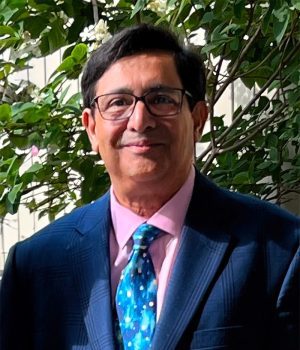
Javid BayandorView profile
Associate Professor
- Space explorations and mission design
- collision dynamics and crashworthiness
- aerospace conceptual design
- +5 more
Javid Bayandor serves as Associate Professor in the Department of Mechanical and Aerospace Engineering at the University at Buffalo's School of Engineering and Applied Sciences. His research bridges theoretical aerospace engineering with practical applications in space exploration and bioinspired systems. Education: Postdoctoral Research in Aerospace Structures, The Royal Melbourne Institute of Technology (2000-2001) PhD in Aerospace Engineering, The Royal Melbourne Institute of Technology (2000) His research portfolio spans eight core areas: space mission design, collision dynamics, aerospace conceptualization, space physics, ballistics, bioinspired robotics, advanced structures, and fluid-structure interactions. This interdisciplinary approach integrates computational modeling with experimental validation to solve complex engineering problems across aerospace and biological domains. Current projects demonstrate particular strength in developing innovative solutions for extreme environments including space and underwater applications. Analysis of his 15 most recent publications (2023-2025) reveals three dominant research trajectories: (1) Space mission architectures for Mercury, Venus, and Mars featuring novel entry/landing systems; (2) Impact dynamics studies covering hypervelocity collisions, bird/drone strikes on urban air mobility vehicles, and spacecraft shielding; (3) Bioinspired flight mechanics focusing on bee and bat aerodynamics under environmental stressors. These threads consistently employ fluid-structure interaction methodologies across scales. Scientific Awards: No awards or honors were documented in the provided source material While specific student advising relationships aren't enumerated, his research scope suggests supervision of graduate students in computational mechanics, space systems, and bioinspired robotics. The publication record indicates sustained grant funding for hypervelocity impact studies, space mission design, and bioflight mechanics, though specific grant details aren't provided. His work likely connects with NASA mission development programs and urban air mobility safety initiatives. The research ecosystem appears centered around computational laboratories specializing in fluid-structure interaction modeling, with potential connections to experimental impact testing facilities and biological flight observation setups for bioinspired studies.