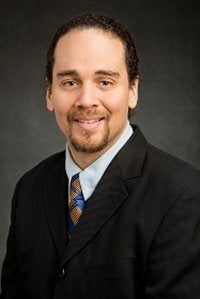
Dr. Eiko Fried is an Associate Professor at Leiden University's Faculty of Social and Behavioural Sciences, where he works at the intersection of clinical psychology, psychiatry, epidemiology, methodology, and complexity science. His research focuses on improving psychological science through open science practices and innovative measurement approaches. PhD in clinical psychology, Free University of Berlin Postdoctoral training at KU Leuven and University of Amsterdam Promoted to Associate Professor at Leiden University in 2021 Key research areas include: Psychopathology measurement and classification Network analysis in mental health research Ecological momentary assessment (EMA) methodology Open science advocacy and implementation Dynamic systems modeling in psychology Transdiagnostic approaches to mental disorders Recent publications demonstrate expertise in: Symptom network analysis across disorders Improving depression measurement standards Transdiagnostic assessment protocols Mental health data integration challenges Psychological theory construction Methodological innovations in clinical research
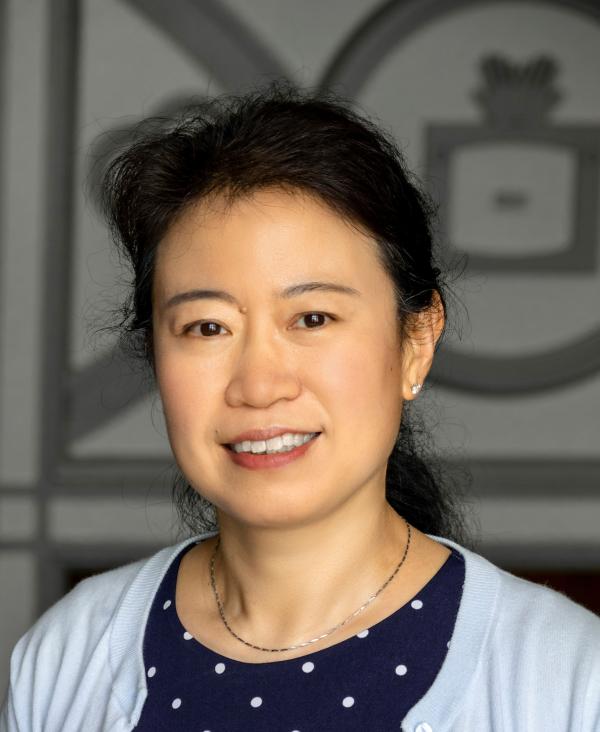
Lande Liu is a Senior Lecturer in Chemical Engineering at the University of Huddersfield's School of Applied Sciences. Previously, he held a Lectureship at the University of Manchester (2010-2014), and earlier worked as an industrial consultant and research fellow at Leeds and Sheffield Universities. His academic journey began with a MEng in Chemical Engineering and a PhD in kinetic theory of aggregation from Sheffield (2004), preceded by a visiting PhD at Twente University (2002). Education: PhD in Chemical Engineering (University of Sheffield, 2004) Visiting PhD (Twente University, 2002) MEng in Chemical Engineering (Tsinghua University, 1999) BSc in Applied Mathematics (Tsinghua University, 1996) Liu's research focuses on multi-scale particle interactions (molecular to granular) using kinetic theory of aggregation, with applications spanning nanotechnology, pharmaceutical engineering, and sustainable chemical processes. His work aligns with UN Sustainable Development Goals for environmental protection and industrial innovation. Recent publications examine particle deposition in turbulent flows, enhanced heat exchanger designs, and nanofluid stabilization techniques. He teaches core chemical engineering topics including transport phenomena, unit operations, and process design. Active in collaborative research, Liu has partnered with institutions across Europe on projects involving spectroscopy, ultrasonics, and dynamic modeling. His technical expertise includes particle size analysis, tomography, and computational simulation of complex systems.
Tingliang Huang holds concurrent roles as the Amazon Distinguished Professor of Business Analytics at the University of Tennessee's Haslam College of Business and Honorary Professor at the UCL School of Management. He earned his PhD from Northwestern University's Kellogg School of Management. His research focuses on business analytics, AI-driven strategies, supply chain optimization, and behavioral operations, with notable contributions to Marketing Science, Management Science, and Production and Operations Management. Affiliations: Amazon Distinguished Professor, Haslam College of Business, University of Tennessee Honorary Professor, UCL School of Management Former tenured Associate Professor at Boston College's Carroll School of Management Education: PhD in Management, Kellogg School of Management, Northwestern University (2011) M.S. and B.S. from University of Science and Technology of China (USTC) Research Interests: Huang’s work bridges analytics and operations, exploring topics like opaque selling, bounded rationality in consumer decisions, supply chain dynamics, and sustainable operations. He has pioneered frameworks for probabilistic selling and dynamic pricing under uncertainty. His interdisciplinary approach integrates behavioral economics and big data analytics. Publications: Over 20 peer-reviewed articles in top journals, emphasizing service systems, supply chain strategy, and marketing-operations interfaces. Recent work explores AI's societal impacts and algorithmic targeting in vertical markets. Awards: 2025 Vallett Family Outstanding Researcher Award 2018 POMS Wickham Skinner Early Career Award 2015 POMS Best Paper Award Multiple Meritorious Service Awards (M&SOM, Management Science) Editorial Roles: Senior Editor at Production and Operations Management, Associate Editor at Manufacturing & Service Operations Management, Decision Sciences, and others. He also serves on editorial review boards for leading journals. Teaching & Mentorship: Award-winning educator recognized as Carroll School Teaching Star (2021). Advises doctoral students at UCL, UTK, and Chinese institutions, with placements at top schools like George Mason University and USTC. Labs & Teams: Leads the Business Analytics PhD Program at UTK and collaborates on AI ethics research through cross-institutional projects.
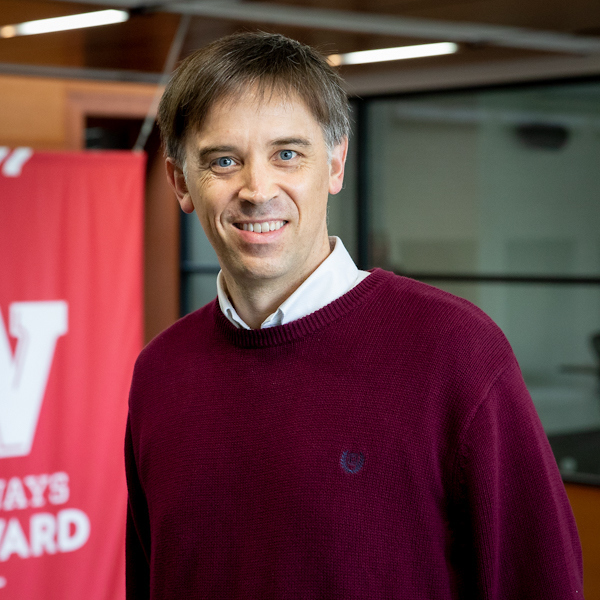
Steven Andrew Culpepper is a Professor of Statistics at the University of Illinois at Urbana-Champaign, holding additional appointments as Professor in the Beckman Institute for Advanced Science and Technology, Psychology, and Educational Psychology. He specializes in quantitative methods for social sciences, focusing on psychometric models, latent class analysis, and statistical computing. Education: PhD, Educational Psychology, University of Minnesota, 2006 BS, Economics, Bowling Green State University, 2001 Research interests include advanced statistical methodologies such as latent class models, high-stakes testing analysis, and applications of Bayesian computing in education and organizational research. His work emphasizes improving large-scale assessment systems through innovative modeling approaches. His publications consistently address latent structure modeling, cognitive diagnosis frameworks, and methodological advancements in educational and behavioral statistics. While no scientific awards are explicitly listed, his contributions to psychometric theory and statistical software development are notable. Steven has grants and consulting projects related to statistical methodologies but specific grant details are not provided in the texts. He has no listed advisees/PhD students in the provided information. He collaborates across disciplines through affiliations with the Beckman Institute and maintains active software development projects, including R packages like 'rrum' and 'pathmodelfit'.
YingLi Tian is a CUNY Distinguished Professor in the Department of Electrical Engineering at The City University of New York. Their work focuses on computer vision, machine learning, and medical imaging. Key areas include sign language recognition, medical image analysis, and AI-driven healthcare solutions. Research Interests: Artificial Intelligence applications in healthcare 3D point cloud and scene understanding Self-supervised learning and domain adaptation Sign language recognition systems Medical imaging segmentation and diagnosis Human-robot interaction and assistive technologies Notable Projects: Developed AI systems for American Sign Language recognition using RGB-D data Pioneered self-supervised feature learning techniques in medical imaging Created virtual contrast enhancement tools for CT scans Advanced sea ice motion prediction using deep learning Labs & Teams: Leads the Media and Information Technology Lab at CCNY, focusing on multimodal AI and healthcare technology innovations.
Dr. Ralph Evins is an Associate Professor and Director of the Graduate Program in the Department of Civil Engineering at the University of Victoria. He holds affiliations with the Urban Energy Systems laboratory at Empa and ETH Zurich in Switzerland. His expertise spans building energy simulation, energy system optimization, and machine intelligence applications in sustainable design. Evins holds an MEng from Imperial College London and an EngD from the University of Bristol. His research focuses on computational problem-solving in energy systems, including surrogate modeling, optimization algorithms, and machine learning. He develops tools like the Holistic Urban Energy Simulation (HUES) platform and BESOS software framework to bridge building, district, and city-scale energy analysis. His work emphasizes holistic systems thinking, integrating energy hubs, thermal modeling, and digital twin technologies. Recent articles explore surrogate model refinement, inverse modeling for building characterization, and decarbonization strategies. He collaborates with industry to translate academic innovations into practical solutions. Evins advises students in energy systems and leads projects on net-zero building design, retrofit prioritization, and smart grid integration. His research addresses challenges in climate adaptation, energy efficiency, and sustainable urban development through interdisciplinary approaches.
Daniel Bolt is the Nancy C. Hoefs Bascom Professor of Educational Psychology at the University of Wisconsin-Madison’s School of Education. His research focuses on psychometric methodologies in educational, social, and health sciences, including latent variable models, computational methods, and assessment of individual differences. He also collaborates on biostatistics projects at the Waisman Center. Education: PhD in Educational Psychology, University of Illinois at Urbana-Champaign (1999) MS in Statistics, University of Illinois at Urbana-Champaign (1995) BA in Psychology/Mathematics, Calvin College (1992) Research Interests: Bolt’s work bridges psychometrics and educational data science, addressing topics like response style modeling, computer-based testing, and measurement validation. His recent projects explore the intersection of IRT models with modern assessment challenges, including rating scale confusion and item complexity effects. Awards: Kellett Mid-Career Award (2019) Vilas Associates Award (2015, 2017) Chancellor’s Distinguished Teaching Award (2009) Outstanding Reviewer Awards (Journal of Educational and Behavioral Statistics, 2011/2020) Teaching & Leadership: Bolt teaches advanced courses in test theory and hierarchical linear modeling. He served as President of the Psychometric Society (2019–2021) and is a Teaching Academy Fellow at UW-Madison.
Ying MacNab is an Associate Professor in the Department of Statistics at the University of British Columbia (UBC), Vancouver Campus. She holds an additional affiliation as an Associate Member in the School of Population and Public Health (SPPH). Her research focuses on Bayesian hierarchical modeling, spatial epidemiology, and disease mapping with applications to public health surveillance and aging populations. She has contributed extensively to methodological advancements in Gaussian Markov random fields and spatiotemporal modeling frameworks. Her work bridges statistical theory and practical health challenges, including pandemic-related stress in older adults, opioid treatment outcomes, and infectious disease forecasting. MacNab has collaborated on projects involving mental health assessments (e.g., sleep dysfunction, anxiety/depression in iOAT patients) and has developed novel statistical tools for analyzing spatially and temporally correlated health data. Her research also addresses methodological gaps in coregionalized multivariate models and constrained Bayesian estimation. MacNab's publications reflect a multidisciplinary approach, integrating epidemiological theory with advanced computational methods. Recent trends in her work emphasize dynamic modeling of infection risks, mediation analysis in aging populations, and validation of psychometric scales for health-related stress. She has maintained an active research agenda since the early 2000s, with notable contributions to neonatal health outcomes, injury surveillance, and healthcare quality improvement.
Andreas Mortensen is a full Professor at École Polytechnique Fédérale de Lausanne (EPFL) in Switzerland, where he leads research at the Mechanical Metallurgy Laboratory (LMM) within the School of Engineering. His office is located in building MXD at EPFL's main campus in Lausanne. Institution: École Polytechnique Fédérale de Lausanne (EPFL) School: School of Engineering (STI) Department: Mechanical Metallurgy Laboratory (LMM) Position: Professor Professor Mortensen's research focuses on the mechanical properties of materials, particularly metal matrix composites, microcellular materials, and the fundamental aspects of metallurgy. His work spans from theoretical modeling to practical applications in materials processing and characterization. He has made significant contributions to understanding infiltration processes, fracture mechanics, and the behavior of materials at micro and nano scales. Analysis of Professor Mortensen's recent publications (2022-2025) reveals a continued focus on advanced materials characterization techniques, particularly nanoindentation and micro-scale mechanical testing. His research shows increasing attention to additive manufacturing processes, multi-scale material behavior, and the development of novel composite structures. The work spans fundamental investigations of dislocation dynamics and slip phenomena to applied research on brazing technologies and investment casting methods. Throughout his extensive career, Professor Mortensen has supervised numerous students and collaborated with researchers worldwide, contributing to the advancement of materials science and engineering. His laboratory has been instrumental in developing methodologies for characterizing material behavior across multiple length scales, from nano to macro.
Aji Mathew is a Professor at the Department of Materials and Environmental Chemistry, Stockholm University. He holds a PhD in polymer chemistry from Mahatma Gandhi University (2001) and conducted postdoctoral research at CERMAV (Grenoble, France) and NTNU (Trondheim, Norway). His academic career includes roles as an assistant professor (2007–2011) and associate professor (2011–2015) at Luleå University of Technology before becoming an associate professor (2015) and subsequently a professor (2017) at Stockholm University. His research focuses on bio-based nanocomposites and sustainable materials, particularly nanocellulose and its applications in environmental remediation, advanced materials, and circular economy solutions. His group, the Aji Mathew Group , specializes in designing bio-based materials for diverse applications, including water treatment, 3D printing, and biomedical uses. Key projects involve upcycling textile waste, developing eco-friendly composites, and creating functional hydrogels. His work bridges fundamental polymer chemistry with practical sustainability challenges. Publications highlight innovations like nanocellulose-based foams, zeolitic frameworks for water purification, and bio-based coatings. While no awards are explicitly mentioned, his extensive peer-reviewed contributions reflect significant scholarly impact. His research emphasizes scalability and real-world applicability, addressing global environmental and material science challenges.
Dr. Philipp Rode is Executive Director of LSE Cities and Associate Professor (Education) at the London School of Economics' School of Public Policy. He leads interdisciplinary urban development research, focusing on transport, sustainability, and governance. His work spans global urban challenges, including climate policy, emergency governance, and urban transitions. Rode co-founded the Urban Age Programme and advises international organizations like UCLG and Metropolis. He holds degrees in transport systems (TU Berlin), city design (LSE), and urban governance (PhD, LSE), and has authored/co-edited influential books such as Governing Compact Cities and Shaping Cities in an Urban Age . Affiliations: LSE Cities, University of St. Gallen (Visiting Professor) Key Roles: Co-Director of LSE's MSc in Cities, Lead of Emergency Governance Initiative Global Engagement: Partnered with OECD, UNDP, World Resources Institute, and over 50 city governments Research interests center on multi-dimensional urbanization, socio-technological transitions, and governance systems. His recent work emphasizes emergency governance frameworks for cities, climate-resilient urban policies, and accessibility strategies. Rode has contributed to shaping the UN's New Urban Agenda and advised the Global Commission on the Economy and Climate. Publications span peer-reviewed journals ( Transport Policy , Environment and Planning B ) and edited volumes addressing urban sustainability, transport governance, and strategic planning. His work bridges academic insights with policy impact, emphasizing actionable frameworks for equitable and resilient cities.
Xiaolei Fang is Associate Professor in the Edward P. Fitts Department of Industrial and Systems Engineering at North Carolina State University. His research develops advanced statistical learning, deep learning, and optimization methods for industrial applications involving high-dimensional data, with particular focus on condition monitoring, failure prognostics, and system performance optimization. He holds a PhD in Industrial Engineering and MS in Statistics from Georgia Tech. Professor Fang's research integrates machine learning with industrial engineering to solve complex problems in predictive maintenance, quality control, and energy systems. His methodological innovations include federated learning approaches for privacy-preserving prognostics, distributionally robust machine learning models, and tensor-based statistical methods for manufacturing quality diagnostics. He has received multiple prestigious awards including the ISE Outstanding Research Award (2024), Sigma Xi Best PhD Thesis Award (2019), and SAS Data Mining Best Paper Award (2016). His research has been funded by NSF, Cisco Systems, and the US Department of Energy. Professor Fang teaches courses in Quality Design & Control, Statistical Models for Systems Analytics, High-Dimensional Data Analytics, and Optimization Models. He has supervised 9 PhD students to completion and currently advises 7 graduate students working on projects spanning federated learning for prognostics, tensor-based quality control, and machine learning applications in manufacturing and energy systems.
Terese Løvås serves as Vice Dean of Research and Innovation at the Faculty of Engineering, Norwegian University of Science and Technology (NTNU), where she leads strategic development of research and innovation activities. She concurrently holds the position of Professor of Combustion and Thermodynamics within the Department of Energy and Process Engineering. Her leadership responsibilities include oversight of Centers of Excellence, Horizon Europe projects, and PhD researcher training. Her research focuses on combustion engineering and alternative fuel technologies , particularly investigating ammonia and hydrogen combustion for zero-emission engines, biomass gasification processes, and reactive multiphase flow modeling. She heads the Engine Lab at NTNU and teaches Thermodynamics, Heat, and Combustion courses. Her work bridges theoretical modeling with experimental validation in sustainable energy systems. Løvås actively contributes to major research initiatives including LowEmission (SFI center), ACTIVATE (ammonia-powered agricultural vehicles), AMAZE (ammonia zero-emission), and CAHEMA (marine ammonia/hydrogen engines). Her publications reveal strong trends in ammonia combustion chemistry , emissions reduction , and advanced computational modeling for sustainable fuel systems, with increasing focus on nitrogen oxide formation mechanisms and dual-fuel strategies. Member of the Board of Directors, Combustion Institute (2022–present) Joint Editor, Proceedings of the Combustion Institute (2019–present) Alumni Fellow in Engineering, Churchill College, Cambridge University As Vice Dean, she manages NTNU's Research and Innovation Committee and represents the faculty in NTNU's Research and Innovation Committee. She supervises multiple PhD candidates and leads international collaborations through projects funded by the Norwegian Research Council, Nordic Energy Research, and EU programs. Her laboratory work focuses on optical engine diagnostics and advanced combustion testing. Løvås maintains active industry engagement through her leadership in the ComKin Research Group and membership in the Institute of Physics and Scandinavian-Nordic Section of the Combustion Institute. Her current work emphasizes practical implementation of ammonia-fueled engine technologies for marine and agricultural applications.
Olof Bälter is a Professor in Computer Science at KTH Royal Institute of Technology, affiliated with the Division of Media Technology and Interaction Design within the School of Electrical Engineering and Computer Science. He is the founder of the Technology-Enhanced Learning research group and holds a focus on learning engineering and human-computer interaction. His research interests center on technology-enhanced learning , question-based learning , learning analytics , AI in education , and inclusive pedagogy . A consistent theme in his work is improving efficiency in education and daily life through digital tools. He developed the Pure Question-Based Learning (Pure QBL) methodology, a digital Socratic approach that enhances student engagement and learning outcomes. His work extends to wellness in education through initiatives like walking seminars, and he investigates digital interventions for mental health, such as online Cognitive Behavioral Therapy (CBT) courses. His recent publications highlight trends in AI-generated educational content , learning efficiency , digital pedagogy , and inclusive course design , with applications in computer science education, language instruction, and global development. His research often employs experimental and data-driven methods, including randomized controlled trials and learning analytics. Teacher of the Year at the Surveying program KTH's Pedagogical Prize Higher Education Hero STINT Excellence in Teaching Scholarship (2008 and 2013) Olof Bälter has supervised numerous courses in programming, computer science, media technology, and learning engineering. He has collaborated with institutions such as Stanford University, Williams College, Region Stockholm, Stockholm University, and organizations like Promobilia and Begripsam. His projects aim to scale effective learning methods globally and make education more accessible and efficient. He leads research on the effectiveness of Pure QBL for students with ADHD and is involved in developing digital tools for health literacy and professional development in Ethiopia and Rwanda. His work bridges theory and practice, aiming to transform educational delivery through innovation and evidence-based design.
Sherry Tongshuang Wu is an Assistant Professor at Carnegie Mellon University's School of Computer Science, with primary appointments in the Human-Computer Interaction Institute (HCII) and secondary affiliation with the Language Technology Institute (LTI) . Trained at the University of Washington under Jeffrey Heer and Dan Weld, she bridges HCI and NLP to study human interactions with AI systems across diverse user groups. Her educational background includes a Ph.D. (2016-22) and M.S. (2016-18) in Computer Science and Engineering from the University of Washington, and a B.Eng. (2012-16) from Hong Kong University of Science and Technology. Industry experience includes research internships at Google Brain, Microsoft Research, and Apple. Wu's research focuses on three interconnected pillars: Real-world AI Evaluation (developing frameworks like SPHERE for systematic assessment), Task-specific AI Test & Distill (optimizing general-purpose models for specific use cases), and Human-AI Task Delegation (designing optimal collaboration between humans and AI). Her work emphasizes practical deployment, user-specific net gains, and error recovery mechanisms. Analysis of her 15 most recent publications reveals a strong trend toward evaluation frameworks (35%), human-AI collaboration systems (30%), and specialized model distillation (25%), with growing emphasis on educational applications (10%). Key methodological themes include checklist-based evaluation, perspective-aware retrieval, and structural analysis of AI outputs. Google Academic Research Award (2024) Amazon Research Awards (2024) AIED 2024 Best Paper Award ACL 2020 Best Paper Award Rising Stars in EECS Workshop (2020) Wu actively mentors 19 students across PhD, Master's, and undergraduate levels, with notable projects including synthetic data generation, LLM literacy tools, and retrieval system optimization. She leads significant grant-funded work through Amazon Research Awards and Google Academic Research Awards, focusing on deployable model generation and human-AI collaboration frameworks. Her lab develops practical tools like Promp2Model and SPHERE that bridge theoretical research with industry applications.