Arrvindh Shriraman is an Associate Professor and Program Director of Software Systems at Simon Fraser University's School of Computing Science in Surrey. His research focuses on energy-efficient software, multicore memory systems, and optimizing hardware/software interfaces for parallel programming. He holds a Ph.D. (2010) and M.S. (2006) in Computer Science from the University of Rochester, and a B.Eng. (2004) from the University of Madras. He teaches courses on parallel programming and energy-conscious software design. His research interests include synchronization mechanisms for domain-specific architectures, cache optimization, and FPGA-based acceleration. He has contributed to frameworks like Mu-grind for HLS-generated RTL instrumentation and TAPAS for parallel accelerator generation. Notable projects include RANGE-BLOCKS for synchronization in domain-specific systems and TapeFlow for gradient computation in neural networks. His work emphasizes real-time verification of autonomous systems and safety-critical trajectory planning for underwater vehicles. Shriraman collaborates closely with the Tangent Lab, exploring cutting-edge solutions in hardware-software co-design and embedded systems. His teaching and research bridge theoretical computer science with applied engineering challenges, addressing scalability, efficiency, and safety in modern computing systems.
Tomaso A. Poggio is the Eugene McDermott Professor in the Department of Brain and Cognitive Sciences at the Massachusetts Institute of Technology , an investigator at the McGovern Institute for Brain Research , a member of the Computer Science and Artificial Intelligence Laboratory (CSAIL) , and the director of both the MIT Center for Biological and Computational Learning (CBCL) and the multi-institutional Center for Brains, Minds and Machines (CBMM) . Research Interests Poggio’s research is fundamentally interdisciplinary, sitting at the intersection of computational neuroscience , machine learning , and computer vision . His work is driven by the conviction that learning is the core gateway to both biological intelligence and artificial systems. Current themes include: Mathematical foundations of statistical learning theory Engineering applications in computer vision, graphics, bioinformatics, and intelligent search Computational neuroscience of visual object recognition and the ventral stream of the visual cortex Scientific Awards & Honors Eugene McDermott Professorship, MIT Advising & Grants Over three decades, Poggio has advised a large cohort of doctoral and master’s students whose theses span machine learning, computer vision, neuroscience, and bioinformatics. Representative graduates include H. Jhuang, Stanley Bileschi, Jacob Bouvrie, Jennifer Louie, M. Kouh, Sayan Mukherjee, Ryan Rifkin, Alexander Rakhlin, Thomas Serre, Gene Yeo, and many others. His research has been continuously supported by major federal and private funding initiatives, most recently through the multi-institutional Center for Brains, Minds and Machines (CBMM) headquartered at the McGovern Institute since 2013. Laboratories & Teams Poggio directs the Poggio Lab (CBCL) at MIT, an interdisciplinary group comprising neuroscientists, computer scientists, mathematicians, and engineers. The lab collaborates closely with experimental neuroscientists to develop predictive computational theories of visual cortex function and to translate those insights into practical algorithms for computer vision and machine learning.
Professor David Taubman is a distinguished academic serving as Professor and Deputy Head of School (Research) at the School of Electrical Engineering and Telecommunications (EE&T) at the University of New South Wales (UNSW) in Sydney, Australia. He is also co-director of Kakadu Software Pty. Ltd. and its affiliates Kakadu R&D and Kakadu GPU. With a career spanning over three decades, Professor Taubman has made significant contributions to the field of image and video compression, most notably as the author of the EBCOT coding algorithm adopted in the JPEG2000 international standard. Professor Taubman earned his B.Sc. in Mathematics and Computer Science (1986) and B.E. (Medal) in Electrical Engineering (1988) from the University of Sydney, followed by an M.Sc. (1992) and Ph.D. (1994) in Electrical Engineering from the University of California at Berkeley. His professional journey includes engineering work at the Electricity Commission of N.S.W. (1988-1990), research positions at Hewlett-Packard Laboratories in Palo Alto (1994-1998), and an academic career at UNSW where he progressed from Senior Lecturer (1998-2003) to Associate Professor (2004-2009) and finally to Professor (2009-present). He has held various leadership roles including Head of the EE&T Telecommunications Research Group (2003-2014), Head of the EE&T Signal Processing Research Group (2014-present), Director of Research for the School of EE&T (2011-2016), and Deputy Head of School (Research) since 2017. Professor Taubman's research interests center on image and video compression, with particular expertise in JPEG2000 standards and implementations. His work spans signal processing, wavelet transforms, scalable video coding, motion modeling, and multimedia systems. He has pioneered numerous compression algorithms and frameworks, including the EBCOT coding algorithm that became central to the JPEG2000 standard. His recent research focuses on efficient motion modeling with cuboidal partitioning, learned lifting-based transform structures, and high-throughput implementations of JPEG2000 for video applications. His work bridges theoretical foundations with practical implementations, as evidenced by the commercially successful Kakadu Software tools that have garnered around 500 commercial licensees. Analysis of Professor Taubman's recent publications reveals a consistent focus on advancing compression technologies with particular emphasis on scalability, efficiency, and adaptability. His work spans traditional image compression (JPEG2000 extensions), video coding (cuboid-based partitioning for UHD/360-degree video), and emerging applications (nanopore sequencing data compression). A notable trend is the integration of machine learning techniques with traditional compression frameworks, as seen in his work on learned lifting-based transform structures. His research maintains strong connections to real-world applications across diverse domains including medical imaging, astronomical data processing, and genomic sequencing. IEEE Fellow Engineers Australia Fellow (by invitation) Professor Taubman has served as Associate Editor for the IEEE Transactions on Image Processing for two four-year appointments (2003-2005 and 2010-2013). He has been actively involved in numerous research grants focused on image and video compression technologies, particularly those related to the JPEG2000 standard and its extensions. His work has received significant industry support, reflected in his consultancy with various U.S., Japanese, and Australian corporations. He has also contributed to international standards development as a member of Standards Australia Technical Committee MS-065 (mirroring ISO TC42 on Digital Photography) and as a constitutional member of Standards Australia Technical Committee IT-029 (Coded Representation of Picture, Audio and Multimedia/Hypermedia Information). Professor Taubman co-directs Kakadu Software Pty. Ltd. and its research affiliates Kakadu R&D and Kakadu GPU, which have developed the commercially successful Kakadu Software tools for JPEG2000. His research group at UNSW focuses on advanced image and video compression techniques, with particular expertise in wavelet-based methods, scalable coding, and motion modeling. The group maintains strong industry connections and has contributed significantly to the development and standardization of image compression technologies worldwide.
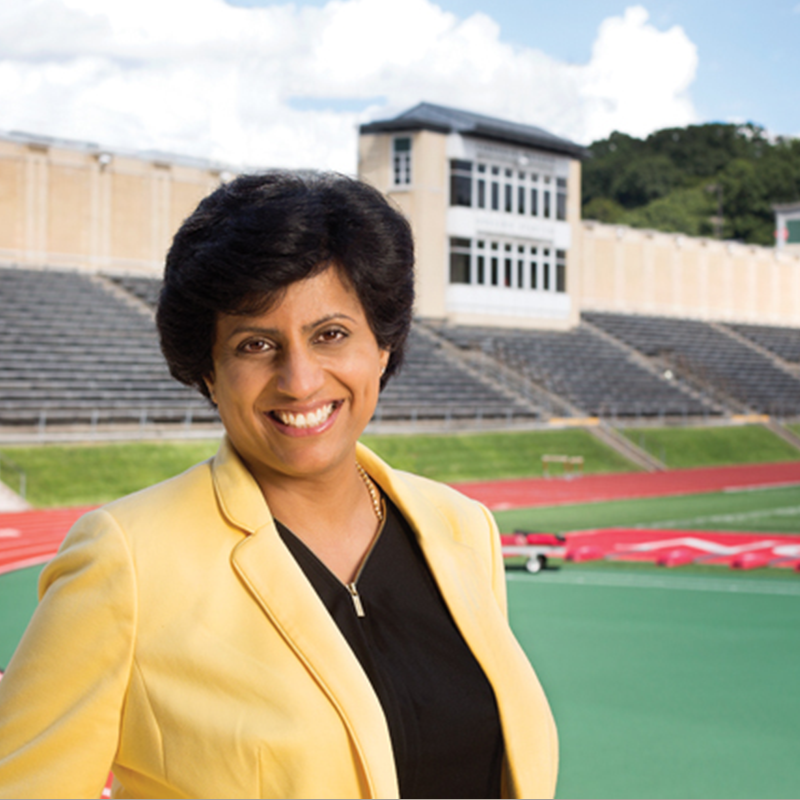
Priya Narasimhan is a Professor of Electrical & Computer Engineering at Carnegie Mellon University (CMU), affiliated with the College of Engineering. Her research focuses on dependable distributed systems, fault-tolerance, embedded systems, mobile systems, and sports technology. She leads the Intel Science and Technology Center in Embedded Computing (ISTC-EC) and founded YinzCam, a CMU spin-off providing mobile live streaming to sports venues. She holds multiple awards, including the Sloan Fellowship and NSF CAREER Award. Education: Ph.D. and M.S. in Electrical & Computer Engineering from UC Santa Barbara. Notable roles include former CTO of Eternal Systems, Director of Intel Labs Pittsburgh, and Director of CMU's CyLab Mobility Research Center. Research spans failure diagnosis in distributed systems, live upgrades, mobile cloud computing, football technology, assistive tech for the blind (Trinetra), and civic tech (iBurgh). Over 30+ students advised across Ph.D., M.S., and undergraduate programs. Active in entrepreneurship, teaching (courses like 18-349 Embedded Systems), and industry collaborations.
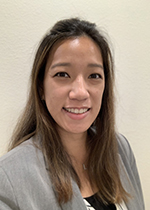
Lisa Yan serves as a Teaching Professor in the Department of Electrical Engineering and Computer Sciences at the University of California, Berkeley, appointed in Spring 2022. She teaches core computer science education courses including CS 195 (Social Implications of Computer Technology), CS H195 (Honors variant), CS 294-189 (Teaching Process Design), and CS 375 (Teaching Techniques), holding regular office hours in Soda Hall for student engagement. Her academic credentials include: PhD in Electrical Engineering from Stanford University (2019) MS in Electrical Engineering from Stanford University (2015) BS in Electrical Engineering and Computer Science from UC Berkeley (2013) Dr. Yan's research centers on data-driven analysis of student learning in large-scale computer science courses, with significant contributions to computing ethics pedagogy and teaching assistant development programs. Her work develops innovative methodologies for assessing student earnestness in interactive lectures, creating flexible learning extensions, and designing integrity-focused assessments. Earlier research focused on software-defined networking and network switch performance optimization, demonstrating technical depth before her pivot to educational innovation. Current projects emphasize scalable teaching techniques and mastery learning frameworks that address challenges in modern CS education. Analysis of her 14 publications (2013-2024) reveals a strategic shift from computer networking (pre-2018) to computer science education research (2018-present). Recent work (2020-2024) dominates in venues like SIGCSE, featuring tools such as Otter-Grader for Jupyter notebook grading and the Earnest Insight Toolkit for lecture participation analysis. This evolution highlights her commitment to solving practical educational challenges through data analysis and tool development, particularly for large undergraduate courses. She received recognition through: The Faculty Award for Outstanding Mentorship of GSIs (2024) Lisa actively mentors Graduate Student Instructors and collaborates with educational technology initiatives. Her research team includes dedicated support staff like Taylor Kaserman (taylor.kase@berkeley.edu), reflecting structured collaboration in developing teaching innovations. She contributes to curriculum design committees within EECS, focusing on assessment integrity and scalable pedagogical methods for growing student populations. Her work operates through the EECS department's educational infrastructure, utilizing Soda Hall resources for both teaching coordination and research development, with strong connections to Berkeley's broader computing education ecosystem.
Christopher John Rozell is the Julian T. Hightower Chaired Professor in the School of Electrical and Computer Engineering at the Georgia Institute of Technology's College of Engineering. He serves as Executive Director of the Institute for Neuroscience, Neurotechnology & Society (INNS) and directs the Sensory Information Processing Lab (SIPLab). His research bridges computational neuroscience, machine learning, and neurotechnology, with clinical applications in treatment-resistant depression and neuromodulation therapies. Education: B.S.E. in Computer Engineering & B.F.A. in Music, University of Michigan (2000) M.S. and Ph.D. in Electrical Engineering, Rice University (2002, 2007) Postdoctoral Scholar, Redwood Center for Theoretical Neuroscience, UC Berkeley Research Focus: Dr. Rozell's interdisciplinary work spans computational neuroengineering, theoretical neuroscience, and artificial intelligence. He develops data analysis tools inspired by neural processing and creates therapeutic neurotechnologies. Key areas include: computational psychiatry (developing DBS therapies for depression), neural dynamics modeling, brain-computer interfaces, and societal impacts of neurotechnology. His lab focuses on high-dimensional data analysis, neural coding principles, and scalable neuromodulation approaches. Publication Trends (2023-2025): Recent works concentrate on deep brain stimulation mechanisms for depression, computational modeling of neural/autonomic dynamics, and machine learning applications in neuroscience. Dominant themes include biomarker discovery for treatment response, neural interoception modulation, probabilistic modeling of latent states, and brain-computer interface taxonomy. Clinical translation of neurotechnology is a consistent focus across publications. Awards & Honors: Elected AIMBE Fellow (2025) NIH BRAIN Initiative Photo/Video Award (2024) Congressional Panelist for BRAIN Initiative 10th Anniversary (2024) Sigma Xi Best Faculty Paper (2024) Neuro Open Science International Prize (2022) W. Howard Ector Outstanding Teacher Award (2019) McDonnell Foundation 21st Century Science Award (2014) NSF CAREER Award (2014) Leadership & Training: Dr. Rozell co-founded Neuromatch, Inc. to build global computational neuroscience communities. He advises Motif Neurotech and the Institute of Neuroethics. His mentees have received prestigious fellowships (Schmidt, Fulbright, NIH K99/R00) and hold leadership positions across academia and industry. Research is supported by NIH BRAIN Initiative, NSF, and private foundations. Labs & Initiatives: Directs the Sensory Information Processing Lab (theoretical neuroscience/neuroengineering) and the Institute for Neuroscience, Neurotechnology & Society (addressing ethical/societal implications). Neuromatch promotes open, accessible computational neuroscience training globally.
Cristiano Politowski is an Assistant Professor in the Department of Computer Science at Ontario Tech University’s Faculty of Science. His research focuses on applying software engineering principles to video game development, with particular emphasis on software testing, artificial intelligence for software engineering (AI4SE), deep reinforcement learning, and empirical software engineering. Education includes a PhD in Computer Science and Software Engineering from Concordia University (2022), supervised by Professors Yann-Gaël Guéhéneuc and Fabio Petrillo. Prior to his current role, he held postdoctoral positions at Université de Montréal and École de Technologie Supérieure in Montréal, Canada. Research interests span game engine architecture analysis, automated testing methodologies for games, and bridging gaps between academic theory and industry practices in software engineering. His work often involves empirical studies on software quality, framework impacts, and event-driven systems. Publications reflect a focus on game development challenges, including studies on API compatibility, subsystem coupling visualization, and AI-driven game balance assessment. He actively contributes to the understanding of software processes in the video game industry through surveys and dataset curation initiatives like PlayMyData.
Prof. Dr. Mehmet Reşit Tolun is a full-time Professor in the Department of Software Engineering at Çankaya University (Turkey) since 2022. Previously held full-time professor positions at Konya Food and Agriculture University (2020-2022), Aksaray University (2013-2017), and TED University (2011-2013), along with a part-time professorship at Başkent University (2017-2020). Specializes in Artificial Intelligence , Machine Learning , and Data Mining , with a focus on deep learning applications in aerospace, biomedical data analysis, and software process improvement. PhD in Computer Science (University of Kent, 1985) MSc in Computer Science (University of Kent, 1982) BSc in Physics and Computer Science (University of Kent, 1981) Research Interests span deep learning frameworks, hybrid expert systems, software engineering methodologies, and biomedical signal processing. Publications emphasize practical implementations in medical diagnostics, robotics, and agricultural pest detection. Scientific Awards include the IEEE Third Millenium Medal (2000). Supervised over 55 graduate students, including Burak Çetin, Uğur Özotuk, and Mahinur Doğan. Collaborated with researchers from Orta Doğu Teknik Üniversitesi , Çankaya University , and Aksaray University .
Zhan Ma is a Professor and PhD Advisor at the School of Electronic Science and Engineering, Nanjing University. He leads research in Neural Video Communication, Smart Cameras, and Computational Vision Models. His work focuses on end-to-end learning for compression, networking, and hardware-software co-design. Dr. Ma holds a PhD from New York University's Tandon School of Engineering (2010), and prior to his current role, he served as Senior Staff Researcher at Huawei (2013-2015) and Senior Researcher at Samsung (2011-2013). Research highlights include pioneering work in point cloud compression (adopted into IEEE standards) and dual-camera systems for high-resolution video acquisition. His algorithms are deployed in WeChat/WeChat Video for rate-quality optimization and in ISO standards for video complexity indicators. Recent work emphasizes machine learning-driven approaches for image/video compression and adaptive streaming frameworks. Honors include the 2023 IEEE CAS Society Outstanding Young Author Award and multiple best paper awards at IEEE WACV, BMSB, and other venues. He leads the Vision Lab at Nanjing University and collaborates with industry partners on practical implementations of his research.
Konstantinos Nikitopoulos is a Professor at the University of Surrey , UK, specializing in Wireless Communications and Signal Processing . His research focuses on MIMO Systems , Open-RAN , and Non-Linear Processing for next-generation wireless networks. His recent work explores Analogue Processing for Tbps Wireless Systems and Neuromorphic Computing in MU-MIMO detection. He has developed frameworks like MIMO-SoftiPHY and SACCESS for software-based radio acceleration and power-efficient network design. Key Publications : Power-Efficient RIC, NL-COMM, NeuroMIMO Collaborators : Rahim Tafazolli, George Katsaros, Marcin Filo His research impacts 6G Network Development through innovations in Beamforming , Channel Estimation , and Software-Defined Radios .
Professor David Scott Taubman is a faculty member and Deputy Head of School (Research) at the School of Electrical Engineering and Telecommunications (EE&T) at UNSW Sydney, Australia. He is also co-director of Kakadu Software Pty. Ltd. and its affiliates Kakadu R&D and Kakadu GPU. He earned his academic credentials from the University of Sydney and University of California at Berkeley: B.Sc. in Mathematics and Computer Science, University of Sydney, 1986 B.E. (Medal) in Electrical Engineering, University of Sydney, 1988 M.Sc. in Electrical Engineering, University of California at Berkeley, 1992 Ph.D. in Electrical Engineering, University of California at Berkeley, 1994 Professor Taubman's research interests span multiple domains within electrical engineering and telecommunications, particularly focusing on: Image Compression (EBCOT algorithm, JPEG2000 technologies) Video Compression (scalable video compression, motion compensated temporal lifting) Image and Video Processing (motion and depth estimation, demosaicing of digital color images, medical image analysis) Multimedia Communication (JPIP standard for interactive imaging, scalable communication systems) He has received numerous scientific awards and honors, including best paper awards from IEEE Signal Processing Society, IEEE Circuits and Systems Society, and IEEE Int. Conf. Image Processing. He has also received teaching awards from UNSW and was recognized with the NSi Inventor of the Year Award. Professor Taubman has contributed significantly to industry standards: Author of the EBCOT coding algorithm adopted in the JPEG2000 standard in November 1998 Author of Verification Model and associated documentation for JPEG2000 Central contributor to IS15444-1, IS15444-4, IS15444-9, IS15444-15 and IS15444-17 Developer of the commercially successful Kakadu Software tools for JPEG2000 He has held various leadership positions at UNSW including Head of the Telecommunications Research Group, Head of the Signal Processing Research Group, and Director of Research at School of EE&T.
Mia Minnes is a Teaching Professor and the Vice Chair for Undergraduate Education in the Computer Science and Engineering Department at UC San Diego's Jacobs School of Engineering. She teaches discrete math for CS, introduction to computability, and TA training classes, while leading initiatives that connect academic learning with professional development. Her research focuses on Automata Theory and Computability education, Scholarship of Teaching and Learning (SoTL), and projects supporting student professionalization pathways including industry internships, peer mentor development, and ethics in computing. She has pioneered initiatives like the Summer Internship Symposium and CSE-PACE (Peer-led Academic Cohort Experiences) to enhance student experiences in large computing programs. Minnes' publication portfolio reveals strong trends in computing education research, particularly in internship experiences, TA professional development, assessment methods, and interventions for large classes. Her work consistently bridges theoretical computer science with practical educational applications, demonstrating a commitment to evidence-based teaching practices and student success metrics. UC San Diego Academic Senate Distinguished Teaching Award (2020) Jacobs School of Engineering Teacher of the Year (2013-2014) Multiple NSF grants as PI including DUE-2337253 (2024-2027) UC San Diego Student Centeredness Award (2023-2024) Teaching+Learning Commons Faculty Fellow (2018-2019) She has advised numerous undergraduate and graduate students through research projects examining internship disparities, TA professional development, educational technology tools, and student experiences in computing programs. Her leadership extends to projects like FlapJS (an interactive visualization tool for formal computation), ComputingPaths (resources for computing career paths), and OCCTIVE (supporting computational problem solving in non-CS courses).
Brent Lagesse is an Associate Professor at the University of Washington - Bothell , affiliated with the Division of Computing & Software Systems under the School of Science, Technology, Engineering & Mathematics . His research focuses on security in emerging environments , particularly secure machine learning and privacy in sensor-rich systems . Ph.D. in Computer Science from the University of Texas at Arlington (2009) Research Interests include: Detecting and locating hidden webcams Scalable AI/ML defense mechanisms Privacy-preserving video sharing AI systems for air quality prediction Automated yeast cell analysis CRISPR/CAS9 guide-donor libraries Article Trends : Recent publications emphasize secure machine learning for smart city applications, privacy-preserving technologies , and resource-constrained security in crowdsensing environments . Collaborative work spans cybersecurity education , environmental monitoring , and context-aware systems . Scientific Awards : Cybersecurity Fulbright Scholar (University of Cambridge, 2018) Johann-von-Spix International Guest Professorship (University of Bamberg, 2019-20) Advising & Grants : Advises current research students Neil Prakasam and Nicholas Handaja NSA grant ($96k) for GenCyber curriculum development (2022) NSF grant ($300k) for AI-enhanced cybersecurity workforce studies (2021) T-Mobile grants for ML security metrics and dataset anonymization (2020-2022) Laboratory : Leads the Security of Emerging Environments (SEE) Lab , developing practical and theoretical frameworks for smart city security and privacy-preserving technologies .
Dr. Rui Dai is an Associate Professor in the Department of Computer Science at the University of Cincinnati's College of Engineering and Applied Science. Her research focuses on wireless sensor networks, multimedia communications, and video analytics for healthcare and surveillance applications. She directs multiple NSF and NIST-funded projects on perceptual-quality-aware video systems. Research interests include quality-of-experience optimization for video analytics, compressed domain feature extraction, and edge computing frameworks for intelligent surveillance. Recent work develops deep feature compression techniques, multi-camera fall detection systems, and quality-aware video distribution strategies for 5G networks. Publications demonstrate consistent innovation in video processing for resource-constrained environments, with applications spanning healthcare monitoring, public safety networks, and embedded vision systems. Current projects investigate metaverse communication challenges for 6G networks and PHP vulnerability detection through hybrid static-fuzzing analysis.
Andrés S Martin is the Riva Ariella Ritvo Professor at the Child Study Center and Professor of Psychiatry at Yale School of Medicine. He serves as Medical Director of the Children's Psychiatric Inpatient Service at Yale-New Haven Children's Hospital, Director of the Standardized Patient Program at the Teaching and Learning Center, and Director of Medical Studies at the Child Study Center. He is also a faculty affiliate at the Center for Medical Education. Education: PhD in Medical Education, University of Groningen (2022) MPH in Chronic Disease Epidemiology, Yale School of Public Health (2002) Fellowship in Child and Adolescent Psychiatry, Harvard Medical School / Massachusetts General & McLean Hospitals (1995) Residency in Psychiatry, Harvard Medical School / Massachusetts Mental Health Center (1993) Residency in Internal Medicine, University of Miami / Jackson Memorial Hospital (1991) MD, Anahuac University (1990) Dr. Martin’s research centers on child and adolescent mental health, with a strong emphasis on reducing stigma—particularly surrounding transgender youth and survivors of childhood maltreatment—through innovative digital interventions such as animated videos and social media campaigns. He explores climate change anxiety in adolescents and the reintegration of youth into school after psychiatric hospitalization. His work integrates clinical practice with educational innovation, especially in standardized patient training and medical education curriculum development. His recent publications span themes of stigma reduction, digital mental health, and psychosocial interventions, appearing in journals such as JAACAP , SSM - Mental Health , and Child and Adolescent Psychiatry and Mental Health . These works reflect a consistent focus on accessible, scalable, and evidence-based mental health promotion strategies. Professional Roles and Leadership: Editor-in-Chief, Journal of the American Academy of Child and Adolescent Psychiatry (2008–2017) Co-Editor, IACAPAP e-Textbook of Child and Adolescent Mental Health Director, Standardized Patient Program, Teaching and Learning Center Director of Medical Studies, Child Study Center Dr. Martin is actively engaged in mentorship and medical education, contributing to national and global child mental health resources. He has no listed scientific awards in the provided text, but his leadership in editorial and training roles underscores his academic influence. He collaborates extensively with colleagues such as Laelia Benoit, Dorothy Stubbe, and James Leckman, reflecting a strong interdisciplinary research network.