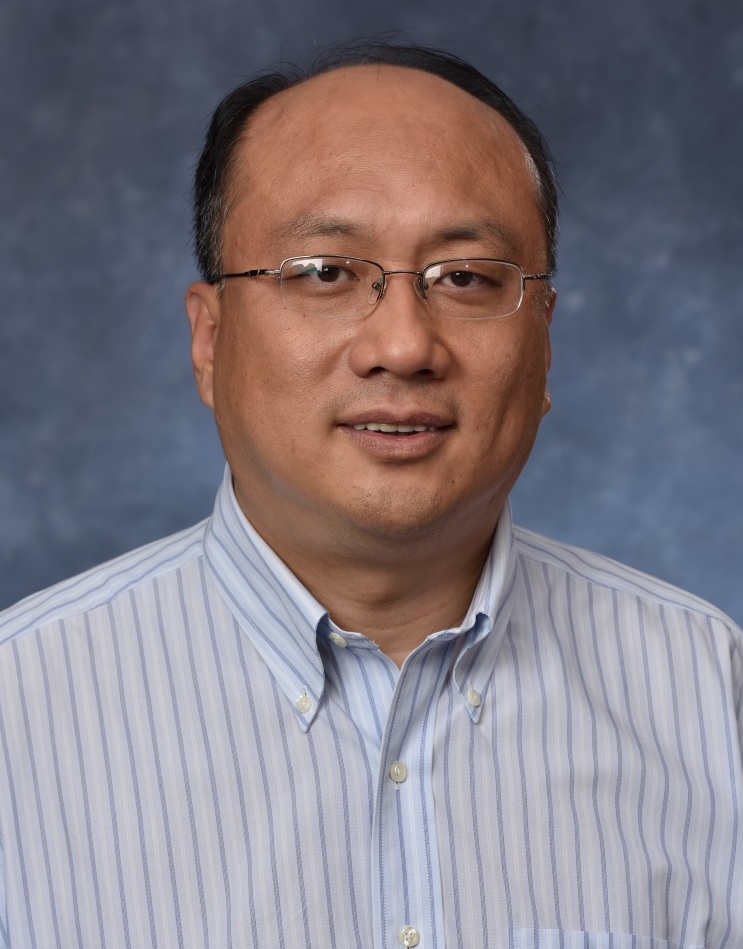
Thomas Heide Clausen is a Professor at École Polytechnique (France) and leads its computer networking research group. He holds the Cisco Endowed Chair in 'Internet of Everything' and serves as Academic Director for the interdisciplinary Master's program 'IoT: Innovation and Management'. His work focuses on protocols and architectures for maintaining internet connectivity in dynamic environments, particularly through the development of the OLSR and LOADng routing protocols. Education: M.Sc. and PhD from Aalborg University (Denmark) Research: IoT networking, Smart Grid communication, wireless mesh networks, routing protocol design, network load balancing, and security in MANETs Recent Article Trends: Explored machine learning for load balancing (2022), zero-trust architectures (2023), and wireless optimization for IoT/SmarGrid (2016-2022) Scientific Awards: IEEE Senior Member (2016), IEEE Computer Society Distinguished Contributor (2021) Industrial Collaborations: Hitachi (Japan), Fujitsu (USA), Toyota (Japan), Cisco (USA/France), EDF (France), and others
Heng Huang is the John A. Jurenko Endowed Professor at the University of Pittsburgh with dual appointments in the Department of Electrical and Computer Engineering and Department of Biomedical Informatics. His research spans machine learning, bioinformatics, and medical image analysis with significant contributions to Alzheimer's disease research, neuroinformatics, and precision medicine. His educational background includes a Ph.D. in Computer Science from Dartmouth College and M.S./B.S. degrees from Shanghai Jiao Tong University. Research focuses on Machine Learning , Big Data Computing , and Biomedical Informatics with emphasis on: Neurodegenerative disease prediction through transferable deep networks Medical image analysis for macular degeneration and Alzheimer's Watermarking techniques for LLM security and protein design Optimization methods for non-convex problems Recent publications show strong trends in multimodal learning (TV-LSTM, MIRROR), LLM security (CoTGuard, Web IP protection), and biomedical applications (Alzheimer's classification, single-cell analysis). He actively mentors students including Yanfu Zhang (recent tenure-track appointment at William & Mary) and seeks new PhD candidates/postdocs for research in big data, machine learning, and biomedical image analysis. His lab maintains active participation in top conferences including ICML, CVPR, NeurIPS, and MICCAI as evidenced by consistent paper acceptances (3 at ICML 2023, 5 at AAAI 2023).
Panagiotis Papadimitratos is a Professor at KTH Royal Institute of Technology, leading the Networked Systems Security (NSS) group. His research focuses on secure networked systems, addressing security and privacy challenges in vehicular communications, mobile ad hoc networks (MANETs), and wireless systems through a blend of theoretical methods and practical implementation. Role: Professor | Division: Software and Computer Systems | Email: papadim@kth.se His work spans security architecture , formal protocol analysis , and information-theoretic security , with a systems-oriented approach emphasizing real-world evaluation. Key areas include VANETs , MANETs , and trust establishment in dynamic networks. Recent publications highlight scalable secure routing (e.g., Castor protocol), vehicular network authentication , and malicious node containment in adversarial environments. These works integrate cryptographic techniques, distributed decision-making, and robustness analysis across diverse network topologies. He teaches advanced courses on networked systems security (EP2500, EP2510, EP2520) and supervises degree projects in cybersecurity, embedded systems, and communication networks. The NSS group actively engages in research and education, offering summer schools like CySeP. The group maintains a strong systems character while incorporating theoretical rigor, with collaborations spanning institutions like École Polytechnique Fédérale de Lausanne and Cornell University. Tools like TraNS (joint traffic-network simulator) exemplify this dual focus on simulation and real-world deployment.
Muhammad Adnan Tariq is a Professor at the University of Stuttgart in the Faculty of Computer Science, Department of Distributed Systems and Networking. His research spans distributed systems, networking, and security with a particular focus on publish-subscribe systems, software-defined networking, and complex event processing. PhD in Non-functional requirements in publish, subscribe systems (2013) Over 40 publications between 2009-2022 Extensive collaboration with Kurt Rothermel (36 joint publications) Dr. Tariq's research interests focus on the intersection of distributed computing and network systems. His work addresses critical challenges in publish-subscribe systems, software-defined networking, complex event processing, and workflow management. His research has evolved to incorporate emerging technologies like blockchain for IoT security and edge-based machine learning. His publications demonstrate a consistent focus on performance optimization, security, and scalability in distributed systems, with recent work emphasizing applications in IoT environments and edge computing. His publication record shows a clear progression from foundational work on publish-subscribe systems to more complex applications involving workflow engines, graph processing, and security mechanisms. The research demonstrates strong theoretical grounding combined with practical implementation considerations, particularly evident in his work on software-defined networking applications and IoT security frameworks. Dr. Tariq has maintained a productive research career with consistent publication output across top venues including IEEE Transactions, DEBS, ICDCS, and Middleware conferences. His work shows strong collaboration patterns, particularly with researchers at what appears to be his home institution.
Kingsley Nwosu is an Associate Professor in the Department of Computer Science at Norfolk State University's College of Science, Engineering and Technology. His research spans artificial intelligence, biometric systems, and security frameworks, with a focus on healthcare, campus safety, and low-resource environments. Email: kcnwosu@nsu.edu Research Themes: AI-driven emotion recognition and facial recognition systems Biometric authentication for security and privacy Blockchain applications in e-voting and data integrity Urban mobility optimization via embedded systems Public policy evaluation for social enterprises Data partitioning strategies for machine learning Publication Trends: His work since 2012 highlights interdisciplinary applications of AI and biometrics in healthcare, security, and economic development, with recent emphasis on scalable solutions for developing economies and proactive cybersecurity measures.
Johannes Theissen-Lipp is a senior scientific researcher at the Fraunhofer FIT Office Aachen with significant academic affiliations at RWTH Aachen University. He operates within the Department of Computer Science (Informatik 5) under the Faculty of Mathematics, Computer Science and Natural Sciences, working from the Databases and Information Systems (DBIS) group led by Professor Stefan Decker. His research focuses on semantic foundations of dataspaces with practical applications in manufacturing and mobility sectors. He earned his Computer Science degree from RWTH Aachen University, where he later conducted research at the Institute for Information Management in Mechanical Engineering (IMA) for nearly two years before joining the "Knowledge Pipelines" research group in December 2019. He successfully defended his PhD thesis titled "Semantic Foundations of Dataspaces" on September 25, 2024, completing his doctoral studies at RWTH Aachen. Theissen-Lipp's research spans semantic web technologies, ontologies, and data interoperability with particular expertise in RDF validation (SHACL), semantic mappings (RML), and FAIR data implementation within dataspaces. His work bridges theoretical foundations with industrial applications, especially in manufacturing contexts where data integration across organizational boundaries presents significant challenges. He has pioneered approaches for enhancing dataspaces through large language models and developing scalable validation techniques for distributed data environments. His publication record demonstrates consistent contributions to major semantic web venues including ESWC, SEMANTiCS, and dedicated workshops on dataspaces. As both author and editor (notably for the Second International Workshop on Semantics in Dataspaces proceedings), he has helped shape research directions in this emerging field. His recent work increasingly explores the intersection of traditional semantic technologies with contemporary AI approaches. Theissen-Lipp actively supervises multiple thesis projects including "FAIRification of Data Models in Manufacturing," "Leveraging Solid Pods for Sovereign Data Sharing in the Cultural Sector," and "Identification Techniques for Data-driven Feedback Loops in Manufacturing." He has taught the "Dataspaces Proseminar" in the summer semester of 2025, demonstrating his commitment to academic education alongside his research activities. As part of the Cluster of Excellence Internet of Production, he contributes to advancing data interoperability in industrial contexts. His professional presence extends to GitHub (JohannesLipp), LinkedIn, and ResearchGate, with a personal website providing additional details about his research portfolio and professional activities.
Dr. Marten van Dijk is a Full Professor in the Computer Security department at Vrije Universiteit Amsterdam (VU) since 2022 and a Group Leader for Computer Security at CWI since 2020. He also holds a Gratis Full Research Professor position at the University of Connecticut's ECE Department since 2020. Previously, he served as Associate and Full Professor at the University of Connecticut and held research roles at MIT CSAIL, RSA Laboratories, and Philips Research. PhD in Mathematics (1997, Eindhoven University of Technology) M.S. in Mathematics (Cum Laude, 1993) M.S. in Computer Science (Cum Laude, 1991) His research focuses on foundational computer security problems using cryptographic principles, including secure processor design, oblivious computation, and privacy-preserving machine learning. Notable contributions span Physical Unclonable Functions (PUFs), Aegis secure processor architecture, and oblivious RAM protocols. 15+ publications in 2023-2025 address topics like PUF cryptanalysis, differential privacy in federated learning, and Byzantine fault tolerance Key journals: IEEE Transactions on Computers, Journal of Cryptology, ACM CCS Conference Award highlights include: IEEE Fellow (2022) for secure processor design and encrypted computation IEEE Technical Achievement Award (2023) Intel Test of Time Award (2022) ACM CCS Best Paper (2013) A. Richard Newton Technical Impact Award (2015) His technical leadership spans hardware security (blu-ray error correction codes), cryptographic protocol design, and machine learning privacy frameworks. Current projects focus on secure processors with hardware-enforced isolation and differential privacy optimization.
Dr. Vladimir Stankovic is a Senior Lecturer in the Department of Computer Science at City, University of London, where he has been employed since 2003. He progressed through academic ranks from Research Assistant to his current position as Senior Lecturer (since August 2019). From August 2019 to July 2024, he served as Deputy Head of Department of Computer Science, including a transitional period as Head in autumn 2024. He has held several leadership roles including NSS and Employability Director (2019-2023) and Undergraduate Programme Director (2017-2019). His educational background includes a PhD in Software Engineering (2008) and a BEng in Computing (2003), both from City, University of London. He is a member of professional organizations including IEEE, ACM, and is a Fellow of the Higher Education Academy. Dr. Stankovic's research focuses on dependability and security assessment of computer-based systems, software fault tolerance, diverse redundancy, distributed systems algorithms, and database replication protocols. His work contributes to the department's research areas in Software and Systems Engineering. He has been particularly active in designing and evaluating diverse database replication protocols and security assessment methodologies. His recent publications (2011-2025) show a consistent focus on database replication, security assessment, and distributed systems. The research trend demonstrates increasing integration of machine learning techniques with traditional dependability approaches, particularly in security applications. His work spans theoretical modeling, empirical studies, and practical implementations with growing emphasis on real-world applications in critical infrastructure protection. Patent EP2470994 (EU) for Improvements Relating to Database Replication Protocols Patent 8793216 (USA) for Database replication Dr. Stankovic has supervised multiple PhD students including Saidu Sokoto (focused on decentralized networks), Kaleem Peeroo (focused on Data Distribution Service performance), and Konstantin Pozdniakov (focused on security penetration testing). He has served as Principal Investigator for the EPSRC-funded DIDERO-PC project and co-investigator in several EU-funded projects including AQUAS, SESAMO, and AFTER. His enterprise activities include co-founding ResilSoft Ltd (2012-2021), a university spin-off company focused on dependability solutions. He has been actively involved in the academic community as Program Committee member for conferences including CRITIS (2020-present), IEEE Cyber Security and Resilience (2025), and ISSRE (2015), and as reviewer for premier journals including IEEE Transactions on Dependable and Secure Computing and IEEE Security & Privacy.
Santosh Chandrasekhar serves as an Assistant Teaching Professor in the Department of Electrical Engineering and Computer Science at the University of California, Merced, within the School of Engineering. His academic position focuses on teaching excellence and curriculum development in computer science education. Dr. Chandrasekhar's research interests include: Development of effective teaching strategies for undergraduate computer science courses Development of a security education program for undergraduate students His scholarly work demonstrates significant contributions to computer security education and cryptographic research. His publications span from 2007 to 2017, showing a clear progression from fundamental cryptographic techniques to applied security solutions in modern computing environments. His research exhibits consistent focus on developing efficient, scalable security protocols that balance robust protection with practical implementation considerations. Dr. Chandrasekhar's publication record reveals expertise in trapdoor hash functions, proxy signatures, cloud security frameworks, and authentication protocols. His work addresses security challenges across multiple domains including cloud computing, ubiquitous computing environments, and mobile ad hoc networks, demonstrating both theoretical depth and practical application. As a teaching professor, he is deeply involved in undergraduate instruction and curriculum development, with particular emphasis on integrating security concepts throughout the computer science program at UC Merced.
Muntadher Fadhil Sallal is a researcher affiliated with the University of Portsmouth, Department of Computing and Informatics, United Kingdom. His academic work focuses on blockchain technology, Bitcoin network security, and performance optimization, with additional research interests in e-voting systems utilizing distributed ledger technology. Education: PhD in Computer Science, University of Portsmouth, UK (2018) Research Interests: Dr. Sallal's research primarily investigates the intersection of blockchain technology and network security, with a specific focus on Bitcoin network architecture and performance metrics. He explores methods to enhance propagation delay through clustering strategies and node protocol analysis. Additionally, his work extends to implementing blockchain-based solutions for secure e-voting systems with verifiability features, as well as innovative applications in 6G network spectrum management and industrial autonomous robot security. Publication Trends: His publications demonstrate expertise in blockchain performance analysis, with 15 recent works examining network optimization, security frameworks for decentralized systems, and verifiable voting mechanisms. Key research areas include cryptocurrency network topology, latency reduction in peer-to-peer systems, and blockchain-based infrastructure for secure digital processes.
Aad P. A. van Moorsel is a faculty member at the School of Computing Science, University of Newcastle , with a focus on blockchain technology, cybersecurity, and privacy-preserving machine learning systems. His work bridges theoretical analysis with practical implementations in decentralized systems and financial technologies. Research Interests : Blockchain systems, smart contract security, federated learning, verifiable fairness in AI, and privacy-preserving technologies. Key Contributions : Development of the BlockSim simulation framework for blockchain, quantitative analysis of Ethereum's verifier dilemma, and frameworks for fairness-as-a-service in machine learning. Collaborations : Regularly works with researchers in cybersecurity (e.g., Mhairi Aitken, Ehsan Toreini), financial technology (e.g., Karen Elliott, Kovila Coopamootoo), and distributed systems (e.g., Han Wu, Lydia Chen). Publications : Over 170 works since 1992, with recent emphasis on blockchain scalability, AI ethics, and secure financial services. Tools : Co-designed OpBench for Ethereum opcode benchmarking and ADaCS for analyzing data collection strategies in security contexts.
Xiaoxue Zhang is an Assistant Professor in the Department of Computer Science & Engineering at the University of Nevada, Reno, commencing her tenure-track position in July 2024 after completing her Ph.D. at the University of California Santa Cruz. She holds a Bachelor of Engineering from the University of Science and Technology of China (2019). Her educational background includes: Ph.D. in Computer Engineering, University of California Santa Cruz (2024) Bachelor of Engineering in Computer Science and Technology, University of Science and Technology of China (2019) Dr. Zhang's research focuses on securing and optimizing next-generation distributed systems, with core expertise in blockchain architectures, quantum network routing, and IoT security protocols. Her work bridges theoretical models with practical implementations, particularly in payment channel networks and entanglement routing frameworks. Analysis of her 14 publications (2018-2024) reveals an evolving research trajectory: early work on backscatter communication (2018-2019) transitioned to blockchain payment networks (2020-2023), culminating in recent breakthroughs in quantum networking and federated learning (2024). This progression demonstrates consistent innovation across computer networks, security, and emerging quantum technologies. Dr. Zhang is actively recruiting Ph.D. students for her research group, requiring applicants to submit CVs, academic transcripts, and relevant publications. Prospective students must demonstrate strong motivation in networks and security research, with emphasis on practical implementation skills.
Dr. José Carlos Cabaleiro Domínguez is a Full Professor in the Department of Electronics and Computing at the University of Santiago de Compostela's Faculty of Computing, Spain. He has been a member of CiTIUS (Centro singular de investigación en tecnoloxías da información e comunicación) since 2010 and was promoted to Full Professor in 2022 after serving as an Associate Professor since 1994. His academic journey began with a BS and PhD in Physics from the University of Santiago de Compostela in 1989 and 1994 respectively, with initial teaching experience at the University of A Coruña from 1990-1994. His research focuses on high performance computing, particularly in parallel systems architecture, development of parallel algorithms for irregular problems with sparse matrices, performance prediction and improvement of parallel applications, memory hierarchy optimization, and applications for grid and cloud computing. He has developed significant expertise in 3D point cloud processing from remote sensors like LiDAR, with applications in urban infrastructure analysis, powerline detection, and route planning. Analysis of his recent publications reveals a strong emphasis on optimizing resource allocation for big data frameworks, developing deep learning applications for point cloud classification, and creating efficient algorithms for powerline detection in LiDAR surveys. His work bridges theoretical computer science with practical applications in geospatial analysis and infrastructure monitoring. His research has been published in top-tier journals including IEEE Transactions, ISPRS Journal of Photogrammetry and Remote Sensing, and Future Generation Computer Systems, reflecting his significant contributions to the field of high performance computing and its applications. Dr. Cabaleiro actively collaborates with researchers across multiple institutions, as evidenced by his extensive publication record with co-authors from various universities and research centers. His work demonstrates a consistent trajectory of advancing parallel computing techniques while applying them to increasingly complex real-world problems involving large-scale geospatial data.
Prof. PhD Miroslav Nikolov Galabov is a Professor at the Faculty of Mathematics and Informatics, St. Cyril and St. Methodius University of Veliko Turnovo in Bulgaria. His academic career spans several decades with significant contributions to computer science, particularly in the areas of 3D visualization, virtual and augmented reality, and image processing. He maintains active research collaborations and participates in multiple funded projects at the university. Professor Galabov's research interests focus on cutting-edge technologies including: Image processing and computer vision 3D visualization and modeling Virtual and Augmented Reality systems Microprocessor systems and embedded computing System programming and software architecture Multimedia systems and publishing technologies E-business applications and social network technologies His scholarly output demonstrates a clear evolution from foundational work in digital signal processing and image compression toward contemporary research in cloud infrastructure, semantic web technologies, and digital twin applications. Recent publications show a strong emphasis on practical implementations of AWS infrastructure, microservices architecture, and blockchain solutions for IoT systems. His work consistently bridges theoretical computer science with real-world applications across multiple domains including education, business, and cultural heritage preservation. Professor Galabov actively participates in significant research projects including: "Изследване и анализ на приложението на технологични инструменти и инфраструктура като креативна среда за трансфер на знания" (2025-2025) "Изследване, анализ и популяризиране на мобилни технологии и софтуерни приложения в полза на студенти със специални потребности" (2025-2025) "Изследване възможностите на технологиите за виртуална и добавена реалност за атрактивно представяне и популяризиране на българското фолклорно наследство" (2023-2023) Multiple projects related to 3D visualization, e-learning, and digital infrastructure development
Prof. Dr. Ünal Çavuşoğlu is an Associate Professor at the Department of Software Engineering, Faculty of Computer and Information Sciences, Sakarya University. With a doctorate in chaos-based encryption algorithms (2016) and a master's degree comparing network simulation tools (2014), his research focuses on cybersecurity, machine learning, and chaos theory. He has contributed extensively to intrusion detection systems, IoT security, and cryptographic protocols. Education: Doctorate (2016), Master's (2014), and Bachelor's (2011) in Computer Engineering. Research Interests: Cybersecurity frameworks, machine learning adaptation for threat detection, chaotic encryption, and IoT communication protocols. Recent Work: 2025 publications on homomorphic encryption and LSTM-based intrusion detection demonstrate cutting-edge applications of deep learning in security domains. His 2019-2024 publications reveal a trajectory from foundational chaos theory to applied IoT and cloud security solutions. Key methodologies include genetic algorithms, fractional calculus, and hybrid encryption systems.