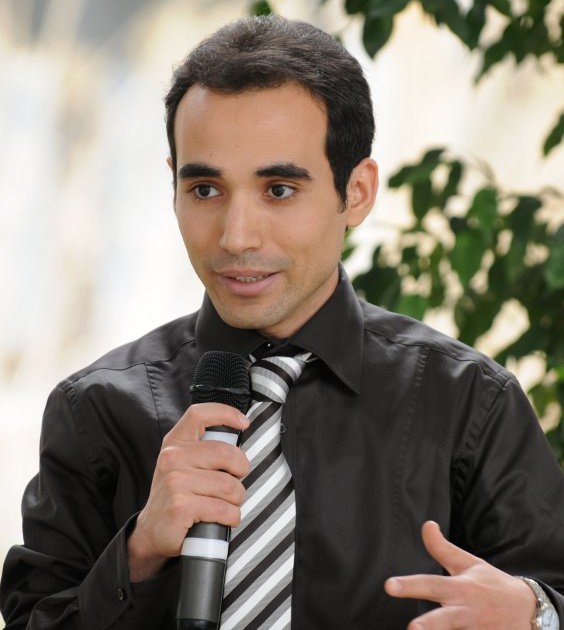
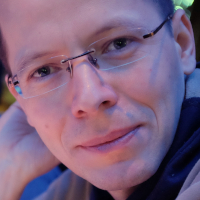
GHALMANE Zakariya is a Teacher-Researcher at CESI's Strasbourg Campus, affiliated with the LINEACT research team. His work focuses on the 'Engineering and Digital Tools' research group, where he investigates complex networks, machine learning, and data analysis. He teaches computer science disciplines—including AI, algorithms, web development, and software engineering—to 2nd–5th year engineering students. His research explores: Backbone extraction in modular networks Centrality measures for overlapping communities Immunization strategies for resilient networks Applications in IoT security and ecological diversity modeling Publications emphasize network topology, machine learning integration, and real-world applications in cybersecurity and marine biology. He supervises PhD candidate M. TERMOS on IoT security using AI and complex networks. As an active reviewer for journals (e.g., Applied Network Science ) and conferences, he contributes to the academic community. No awards or grants are documented.
Richard Alligier is a lecturer and researcher at Ecole Nationale de l'Aviation Civile (ENAC) specializing in artificial intelligence applications for air traffic management. His work bridges machine learning, optimization algorithms, and trajectory prediction to address critical challenges in conflict detection and resolution for both manned and unmanned aerial systems. Research Focus : Trajectory prediction, conflict resolution, UAV collision avoidance, mass/thrust estimation, and uncertainty modeling Key Collaborations : Nicolas Durand, David Gianazza, Xavier Olive, Kim Gaume, Sarah Degaugue His publications (2011–2024) analyze trajectory uncertainty quantification, 3D maneuver visualization, and human-aligned deconfliction strategies using ADS-B data. Notable contributions include: Dual-horizon collision avoidance algorithms integrating human factors High-confidence interval prediction frameworks Wind parameter extraction from flight paths Machine learning models for climb/descent phase optimization Awarded the 2019 best paper in trajectory prediction , his work emphasizes operational alignment between automated systems and air traffic controller decision-making. He employs GPU acceleration, metaheuristics, and deep learning architectures while maintaining a focus on practical implementation through partnerships with ONERA and ISAE-SUPAERO.
Gilles Audemard is a Professor at Artois University in France, specializing in satisfiability (SAT), constraint satisfaction problems, and eXplainable AI (XAI). His research focuses on developing efficient solvers such as Glucose and CoSoCo , and tools like PyXAI for interpretable machine learning. He leads the XCSP3 format for combinatorial problem representation and the SAT Heritage project to archive SAT solvers. Key achievements include the 2023 Skolem Award for influential work on hybrid SAT solving, a 2021 CAV Award for foundational contributions to SMT, and multiple best paper awards. His solvers have won medals in SAT and XCSP competitions. Audemard collaborates on projects like the French ANR-funded EXPECTATION AI Chair and contributes to open-source tools like pFactory and PyCSP3 . Research spans formal methods, constraint programming, and AI explainability, with a focus on practical applications in combinatorial optimization and machine learning interpretability. His work bridges theoretical advancements with scalable solver implementations, impacting both academic and industrial problem-solving.
Mustapha Lebbah is an Associate Professor (Maître de Conférences HDR) at Université Sorbonne Paris Nord, affiliated with the Computer Science Laboratory of Paris North (LIPN). As a permanent member of the 'Artificial Learning and Applications' research team, he specializes in developing machine learning systems for processing and visualizing complex, high-dimensional data. His primary research investigates scalable unsupervised learning methods using distributed computing paradigms like MapReduce. Current work addresses challenges in clustering heterogeneous data types (categorical, binary, sequential) and developing topological models for massive dataset visualization. Research bridges theoretical machine learning with practical applications in data science platforms.
Mikolaj Kasprzak is an Assistant Professor at ESSEC Business School, specializing in mathematical statistics and applied probability. He holds a DPhil (PhD) in Statistics from the University of Oxford, following a Master’s degree in Mathematics, Operational Research, Statistics, and Economics from the University of Warwick. His career includes postdoctoral research at the University of Luxembourg and a Marie Skłodowska-Curie Individual Fellowship (2021–2023), with research stints at MIT and UCL. He joined ESSEC in 2024 as part of the Information Systems, Data Analytics, and Operations department. Research Interests: Mikolaj focuses on rigorously quantifying the accuracy of approximations in applied probability, statistics, and machine learning. His work involves developing mathematical tools to bound distances between probability distributions, with applications in Stein’s method, U-statistics, and stochastic processes. He emphasizes theoretical foundations while addressing real-world challenges in statistical inference and computational methods. Key Contributions: His research spans functional central limit theorems, kernel Stein discrepancies, and validated variational inference. Recent work includes advancements in goodness-of-fit tests for high-dimensional measures and error bounds for Bayesian posterior approximations. Awards: Marie Skłodowska-Curie Fellowship (2021), New Researcher Travel Award (2019), EUTOPIA Young Leaders Academy Fellowship (2024). Grants: Junior Chair of Excellence in Data Analytics (CY Initiative, 2024). Academic Roles: He also holds the Chaired Professorship in Data Science at ESSEC (2024–2028). His research has been published in top journals like Bernoulli , Annals of Applied Probability , and Probability Theory and Related Fields .
Walid Bechkit is an Associate Professor at INSA de Lyon and a member of the INRIA UrbaNet research team within the CITI laboratory. His research focuses on wireless sensor networks (WSNs), UAV networks for environmental monitoring, energy-efficient machine learning, and IoT security. He holds an HDR in Computer Science from INSA Lyon (2024) and a PhD from Compiegne University of Technology (2012), recognized with the 'Guy Deniélou' Best Thesis Award. He has coordinated major projects like ANR DRON-MAP (2021-2025) and 3M'Air, totaling over €600k in funding. His work includes deploying WSNs for urban pollution monitoring, participatory sensing initiatives, and industrial collaborations with TotalEnergies. Education: HDR in Computer Science (INSA Lyon, 2024), PhD in Computer Science (UTC, 2012), Engineering degree from ESI Algiers (2009, Valedictorian), and Baccalaureate (2004). Teaching responsibilities include leading courses on wireless networks, performance evaluation, and mobile networking at INSA Lyon. He heads the Networking teaching group and oversees admissions in the Telecommunications department. His research spans over 30 peer-reviewed publications and multiple patents, emphasizing interdisciplinary applications in environmental science and computer engineering. Rewards include INSA Lyon Best Thesis Awards (2020, 2023) for his students and GDR RSD's ASF Best Thesis Award (2020). He collaborates with institutions like LMFA, IFSTTAR, and Atmo-AURA, and has supervised over 20 PhD, master, and engineering students globally.
Sonia Ikken Benali is a Researcher-Lecturer at CESI (Lille, France), affiliated with the Engineering and Numerical Tools research team. Her work focuses on Big Data, Machine Learning, Distributed Systems, Business Intelligence, and Optimization Problems. She teaches courses in Data Storage/Processing, Business Intelligence, and Operations Research at the Integrated Preparatory Program and Engineering Program levels. Education : Ph.D. in Efficient Placement Design for Big Data in Clouds (Télécom SudParis - Institut Mines-Télécom - Pierre and Marie Curie University, 2018) M.Sc. in Networks and Distributed Systems (Abderrahmane Mira University, Algeria, 2011) State Engineer in Advanced Information Systems (Abderrahmane Mira University, 2010) Her research emphasizes optimizing cloud storage efficiency, cost reduction in distributed systems, and scheduling algorithms for big data workflows. Key contributions include collaborative cloud storage frameworks and Markov model-based I/O scheduling for MapReduce tasks. Lab/Team : Part of the Engineering and Numerical Tools research group at CESI, focusing on practical applications of advanced computational methods.
Sarah BOURAGA is an Associate Professor in Supply Chain Management at EM Normandie since 2024, specializing in blockchain technology, digital innovation, and data-driven decision-making. Previously, she held academic roles at the University of Namur (Belgium) from 2017-2024, including Assistant and Associate Professor positions. She earned her PhD in Management Science from the University of Namur in 2017, focusing on requirements engineering for online social networks. Her research explores intersections between blockchain, AI, and supply chain management, with notable contributions to tokenization frameworks, smart contract design, and disruptive technologies in the fashion industry. She teaches Logistics and has published extensively in journals like Expert Systems with Applications and Business & Information Systems Engineering , as well as conference proceedings on blockchain applications and user-centric BI dashboards. Her work emphasizes practical frameworks for early-phase blockchain development (CASCADE method) and examines social network analysis for cryptocurrency adoption patterns. She has also contributed to user experience models for business intelligence systems, addressing cognitive overload challenges in dashboard design. No scientific awards or grants are explicitly mentioned in the provided information. She has advised multiple students through collaborative research but no specific advisee names are listed. Her academic contributions span over 15 peer-reviewed articles and conference papers since 2014, covering topics from knowledge-based recommendation systems to blockchain consensus protocols. Current research interests include NFTs in fashion, machine learning on blockchain data, and supply chain digitization strategies.
Alessio Iovine is a CNRS researcher at the Laboratory of Signals and Systems (L2S) affiliated with CentraleSupélec (Paris-Saclay University). His research focuses on control systems for cyber-physical applications, including energy systems (e.g., microgrids, renewable integration) and transportation (e.g., autonomous vehicles, traffic control). He holds a European Doctorate in Information Science and Engineering from the University of L’Aquila and CentraleSupélec, with postdoctoral experience at institutions like UC Berkeley and Efficacity. Research Areas: Cyber-Physical Systems DC/AC Microgrid Control Autonomous Vehicles & Adaptive Cruise Control Predictive Grid Management Multi-Agent Systems Publications Trends: Recent works emphasize mesoscopic control approaches for vehicular systems, distributed control for multi-agent networks, and predictive algorithms for power grid congestion management. Over 20 peer-reviewed articles since 2017 reflect his expertise in nonlinear control, hybrid systems, and renewable integration. Opportunities: Actively recruiting PhD/Master students for projects in cyber-physical power systems, machine learning for grid identification, and autonomous traffic control. Hosts seminars on energy systems and signal processing at Paris-Saclay. Labs/Teams: Member of L2S’s Modelling and Estimation team, collaborating with groups like ILOCOS (Information, Learning, Optimization & Communication Sciences).
Zoltán Szabó is a Professor of Data Science at the Department of Statistics, London School of Economics (LSE). His research focuses on statistical machine learning, particularly kernel methods, information theoretical estimators, and scalable computation. He has held roles such as Programme Director of the MSc Data Science program and is actively involved in academic service, including Area Chair positions at top conferences like NeurIPS and ICML. His work bridges theory and applications, with contributions to fields like safety-critical learning, economics, climate data analysis, and natural language processing. Education and Affiliations: While specific educational details are not explicitly listed, his career trajectory indicates advanced training in statistics and machine learning. He is affiliated with the LSE's Department of Statistics and the Turing Institute, contributing to academic leadership and interdisciplinary projects. Research Interests: His work emphasizes kernel-based methods, including kernel Stein discrepancies, Hilbert-Schmidt independence criteria, and shape-constrained prediction. Applications span finance, economics, robotics, and environmental data analysis. Recent projects include developing outlier-robust estimators and scalable algorithms for high-dimensional data. Publications: His recent work includes advancements in kernel methods for dependency testing, shape-constrained regression, and robust estimation. Key themes include improving computational efficiency, theoretical guarantees for kernel approximations, and practical applications in interdisciplinary domains. Awards and Grants: While no explicit awards are listed, his contributions to NeurIPS (e.g., a Best Paper Award in 2017) and his role in securing grants (e.g., Europlace Institute of Finance) highlight his impactful research. He also serves on editorial boards, including JMLR and ACM Transactions on Probabilistic Machine Learning. Students and Labs: Supervises PhD students in areas like functional data analysis and scalable computation. Collaborates with researchers on projects such as distribution regression and safety-critical learning, contributing to both theoretical and applied outcomes.
Ali Khalesi is a postdoctoral researcher at EURECOM's Communication Systems department, focusing on distributed computing and information theory. His work bridges theoretical advancements with practical applications in multi-user systems and large-scale machine learning frameworks. He holds a PhD in multi-user linearly-decomposable distributed computing, recognized with the 2025 EDITE Best Thesis Award (2nd place). Research Interests: Decentralized computing architectures Efficient distributed algorithm design Applications in large language models Non-linear separability challenges Publications span top venues like IEEE Transactions on Information Theory and ISIT conferences, emphasizing tessellation-based computing, coded mixture of experts, and multi-user system optimization. His work often explores theoretical limits and practical implementations in distributed environments. Awards : 2nd place EDITE 2025 Best Thesis Award His research explores cutting-edge distributed computing paradigms, with particular attention to scalability, security, and efficiency in multi-user scenarios. Current work extends into advanced coding techniques for large-scale machine learning systems.
Luiz ANET NETO is a Professor in the Département Optique at IMT Atlantique, a leading technological university within the Institut Mines-Télécom network. His research focuses on advanced optical communications, telecommunications networks, and network architecture innovations, particularly in areas like 5G integration, passive optical networks (PON), and software-defined networking (SDN). He has contributed extensively to optimizing high-speed data transmission systems, including work on wavelength-division multiplexing (WDM), cost-effective transceivers, and machine learning-driven network modeling. His projects often bridge theoretical advancements with practical implementations, addressing challenges in optical access networks, fiber optics, and mobile network convergence. Recent efforts emphasize reconfigurable architectures for bidirectional access networks and the integration of SDN for enhanced network flexibility and security. Key areas of research include: High-speed optical transmission systems (up to 200 Gbps) Optimizing PON technologies for 5G fronthaul/backhaul Machine learning applications in fiber optics and network modeling SDN-enabled network slicing for 5G environments His publications highlight trends in ultra-high-speed PONs, low-complexity decoding algorithms, and the synergy between optical and wireless systems. Collaborations often involve industry partners to ensure practical relevance, such as developing cost-effective 50G ONU solutions or analyzing real-time performance of optical access platforms. Despite no explicitly listed awards or students, his contributions are reflected in numerous peer-reviewed journals and conference proceedings.
Jean-Louis Dessalles is a Professor at the Institut Polytechnique de Paris, affiliated with the School of Computer Science and the Department of Cognitive Sciences. His research focuses on the intersection of cognitive science, evolutionary biology, and artificial intelligence, particularly the evolutionary origins of language, computational models of human cognition, and algorithmic information theory. He is a co-founder of the Simplicity Theory framework, which explains cognitive processes through principles of complexity minimization. Key contributions include books such as Why We Talk: The Evolutionary Origins of Language and Des Intelligences Très Artificielles , which explore language evolution and AI limitations. His work spans interdisciplinary areas like social signaling, causal reasoning in cyber-physical systems, and the philosophical implications of consciousness and responsibility. Recent research emphasizes applications of simplicity theory to AI, causal learning in smart environments, and the biological foundations of communication. Dessalles has pioneered methods for explainable AI in complex systems, focusing on decentralized architectures for smart homes and urban traffic management.
Maurizio Filippone is an Assistant Professor in the Data Science Department at Eurecom. He specializes in probabilistic machine learning, focusing on Bayesian inference methods for Gaussian processes, neuroimaging-based diagnostic tools for neurological disorders, and systems biology applications. His teaching includes Advanced Techniques of Statistical Inference. Research interests center around three core challenges: scalable uncertainty quantification, model interpretability, and reducing energy consumption in machine learning workflows. His work bridges theoretical advancements with practical applications in healthcare and computational biology. No specific awards or grants are listed in the provided text. While affiliated with the 3IA Chairholders program, details about labs, teams, or collaborative projects are not explicitly mentioned here.
Dr. Hadrien Courtecuisse is a Researcher (Chargé de Recherche) at CNRS, affiliated with the AVR/ICube team in Strasbourg since 2013. He holds a Ph.D. in Computer Science from Inria (2011), specializing in parallel architectures for medical simulations. His postdoctoral work at Cardiff University (2012) focused on biomechanical modeling of soft tissues. He later contributed to the Institut Hospitalo-Universitaire (IHU) as a research engineer. His expertise spans sparse linear algebra, real-time simulations, GPU computing, and medical robotics, particularly in surgical training systems and robotic control using inverse finite element models. Education: Ph.D., SHAMAN Team, Inria (2011) Postdoctoral Research, IMAM, Cardiff University (2012) Research Interests: Courtecuisse’s work emphasizes real-time computational methods for medical applications, including deformable object simulation, haptic feedback, and robotic assistance. He develops algorithms for contact response, topological changes, and parallel computing to enhance surgical training and robotic precision. His contributions address challenges in needle insertion, soft tissue interaction, and real-time error control in surgical simulations. Awards & Recognition: No specific scientific awards mentioned. Key Projects: MIMESIS Project (Inria): Focuses on medical robotics and real-time simulation for therapy planning. SOFA-FrameWork: Contributed to open-source simulation software for deformable objects and haptics. Calipso: Image editing via physics-based CAD models. Labs & Teams: Active in the AVR/ICube team at CNRS, collaborating with Inria and international institutions like Cardiff University.