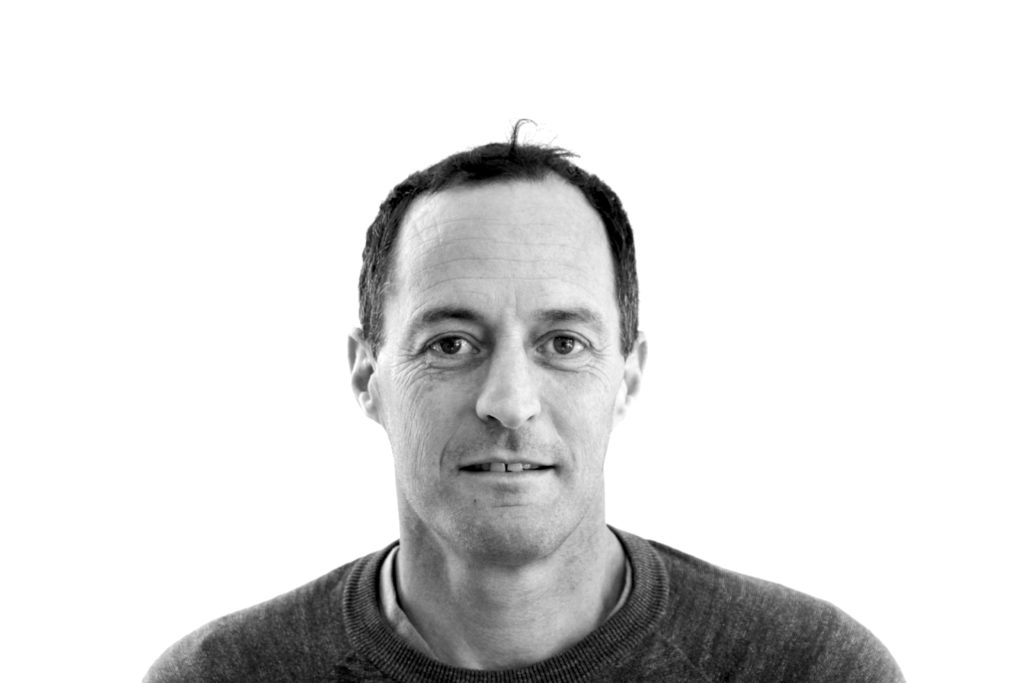
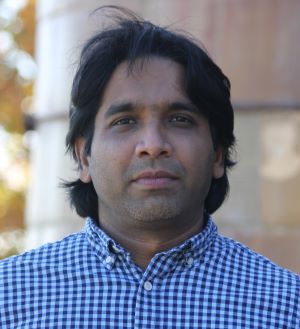
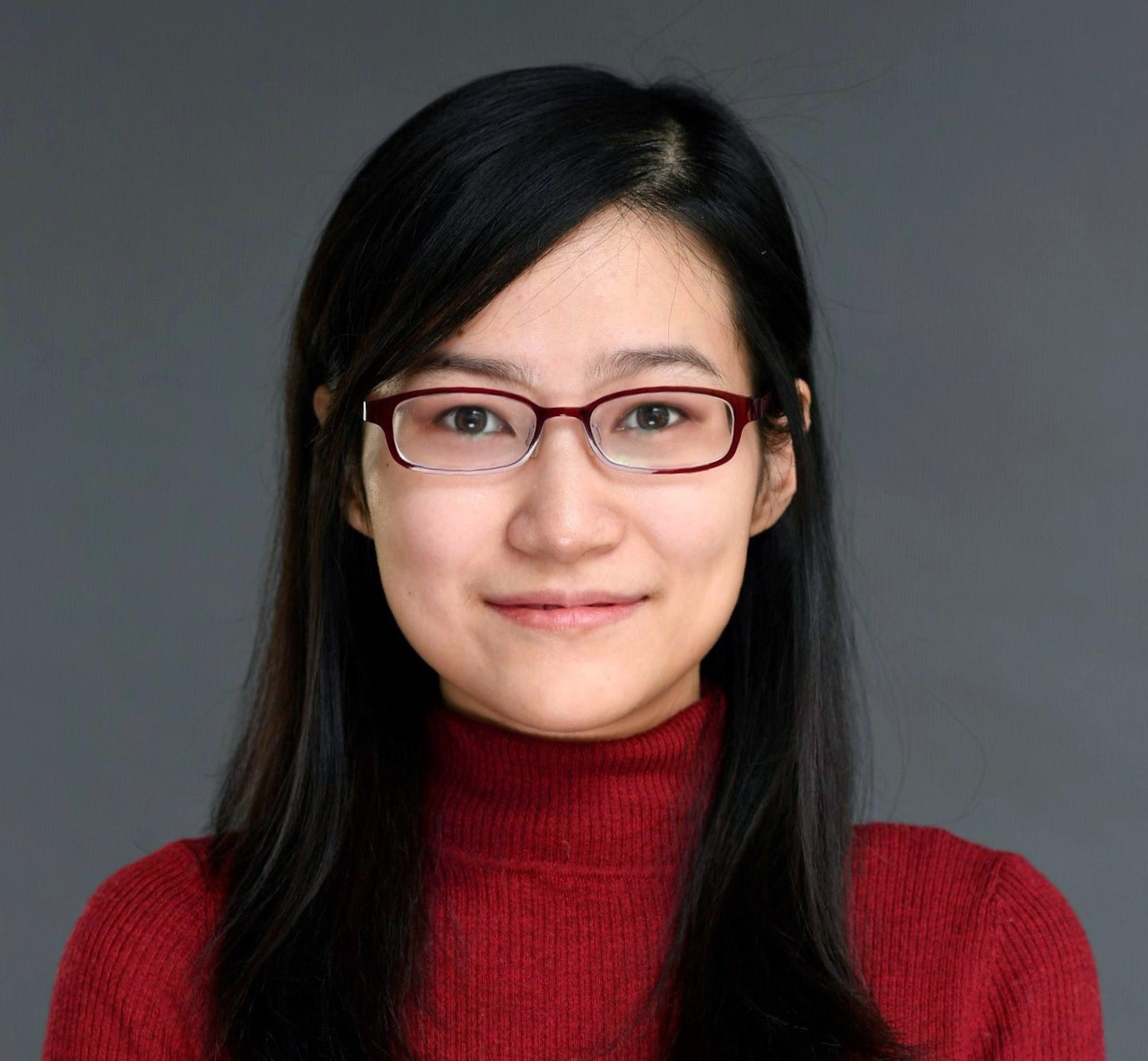
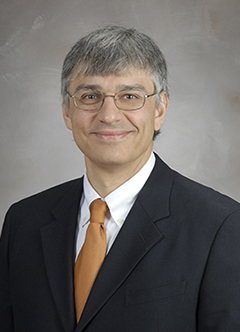
Anna Fariha is an Assistant Professor in the Kahlert School of Computing at the University of Utah. She co-leads the Data Management Research Center for Human-centered, Efficient, and Scalable Systems. Her research focuses on enhancing data system usability, explainability, and trustworthiness through algorithmic innovations and practical implementations. She holds a Ph.D. from the Manning College of Information and Computer Sciences at the University of Massachusetts, Amherst, under Prof. Alexandra Meliou. Education: Ph.D. in Computer Science, University of Massachusetts Amherst (2021) Master's in Computer Science, University of Massachusetts Amherst (2020) Undergraduate work in Computer Science, unspecified institution Her research interests include data wrangling tools, constraint discovery, conversational AI for data science, and human-centered database systems. Recent work emphasizes automated data summary recommendations, constraint violation detection, and educational tools for data science programming. Grants & Awards: NSF CIRC: ENS/Grand: POWDER-ENS Award (2024) Stena Center Seed Grant for Fintech Data Analysis (2025) Microsoft Research Dissertation Grant (2020) SIGMOD 2022 Comprehensive Reproducibility Award Teaching: Recently taught Advanced Database Systems , Human-Centric Data Management , and Deep Learning courses at the University of Utah.
J.A. La Poutré is a Full Professor at Delft University of Technology and a Scientific Staff Member at CWI (Centrum Wiskunde & Informatica) in the Intelligent and Autonomous Systems group. He holds part-time positions and is involved in research on multi-agent systems and computational intelligence for smart energy systems, with a focus on market-based optimization and fairness in network congestion management. PhD in computer science (Utrecht University, 1991) MSc in mathematics (TU Eindhoven, 1986) His research spans algorithm design, game theory, and reinforcement learning applied to energy systems, particularly smart grids and market mechanisms. Recent publications address cybersecurity threats in power networks, auction-based energy trading, and AI integration in media sectors. The 2019–2025 publications highlight his work in combining game theory with smart grid optimization , covering topics such as topology attacks , demand-side bidding , and fair congestion management . Papers frequently involve reinforcement learning , metaheuristics , and market mechanisms . Scientific Awards : Best paper award at GECCO-2015 KNAW fellow (Utrecht University, 1991–1997) He has led funded projects like Computational Capacity Planning in Electricity Networks (STW program) and co-chairs the Commit2Data Energy division. La Poutré also serves as Vice President of ERCIM (European Research Consortium for Informatics and Mathematics).
Dr. Eoin O'Connell is an Associate Professor in the Department of Electronics & Computer Engineering at the University of Limerick. He is affiliated with the Centre for Robotics and Intelligent Systems (CRIS) and the Optical Fibre Sensors Research Centre (OFSRC), actively contributing to IoT research and founding the IOT@UL seminar in 2016. Research Interests include cyber-physical modeling, digital twinning, system scalability, security vulnerabilities, edge processing techniques, and sensor development. His work intersects IoT, fiber optics, smart manufacturing, and cloud computing. Recent publications focus on interoperable IoT systems, AI-driven failure detection in additive manufacturing, and digital twin integration, reflecting his expertise in scalable, secure IoT solutions. He has supervised over 40 postgraduate students throughout his career. Teaching Hero Award (2021) Education includes a PhD in wireless integration of fiber optic sensors, an MBA, a Bachelor's in Telecommunications, and certifications in Cisco Networking and cloud computing.
Dan Gutfreund is a Principal Research Scientist and Senior Manager at the MIT-IBM Watson AI Lab, focusing on machine learning with applications to natural language processing and computer vision. He previously held managerial and technical roles at IBM's Haifa Research Lab and was involved in IBM Project Debater. Gutfreund earned his PhD in computer science from the Hebrew University in Jerusalem in 2005. His research spans Neuro-Symbolic AI , Computational Complexity , and Foundations of Cryptography , with notable contributions to datasets like Moments in Time and ObjectNet . His recent work includes multimodal models for the metaverse, generative AI for engineering design, and simulator-assisted training for interpretable systems. Gutfreund's publications reflect expertise in AI applications for supply chain prediction, avatar personalization, and reconciling virtual disputes. He has also explored evolutionary algorithms for software engineering and constraint-based generative models in design tasks.
Dr. Chandi Witharana is an Assistant Professor in the Department of Natural Resources and the Environment at the University of Connecticut's College of Agriculture, Health, and Natural Resources. Previously, they served as Assistant Professor in Residence (2020-2023), Assistant Research Professor (2018-2020), and Visiting Assistant Professor (2016-2018) at UConn. Their academic journey includes a Postdoctoral Research Fellowship at SUNY Stony Brook (2014-2016) and graduate work at UConn where they earned their PhD in Remote Sensing in 2014. Dr. Witharana teaches courses in high-resolution remote sensing, geospatial analysis, and introductory geomatics. Dr. Witharana's educational background includes: PhD in Remote Sensing, University of Connecticut (2014) MS in GIScience, University of Connecticut (2009) BS in Geology, University of Peradeniya, Sri Lanka (2005) Dr. Witharana's research focuses on methodological developments for analyzing large volumes of multi-modal remote sensing data for environmental, industrial, and agricultural applications, with special emphasis on Arctic Permafrost remote sensing. They harness sub-meter resolution satellite imagery, AI, and high-performance computing resources to map permafrost landforms, monitor thaw disturbances, and assess risks to human-built infrastructure in the Arctic. Their work extends beyond research to include innovative applications of remote sensing in K-12 STEM education through imagery-enabled lesson plans. Dr. Witharana aims to use cutting-edge geospatial technologies as transformative learning instruments to help students understand complex human-environment interactions. The recent publications of Dr. Witharana demonstrate a strong focus on applying advanced AI and remote sensing techniques to Arctic permafrost monitoring and infrastructure risk assessment. Their work increasingly incorporates vision transformers and deep learning models for more accurate detection of permafrost features and unhealthy tree crowns. There's a clear trend toward developing scalable geospatial datasets with standardized approaches, particularly for retrogressive thaw slumps. Many publications address practical applications including power outage risk modeling, forest management for storm resistance, and infrastructure monitoring in changing Arctic landscapes. The research shows growing interdisciplinary collaboration across environmental science, computer science, and engineering domains. Dr. Witharana has secured significant research funding as PI or Co-PI on numerous grants totaling over $14 million, including: NSF's Permafrost Discovery Gateway project ($3,000,000) Google-funded research on tracking Arctic permafrost thaw ($5,000,000) NSF's role of capillaries in the Arctic hydrologic system ($2,000,000) USDA projects on drone imaging for nutrient deficiency detection ($200,000) Eversource Energy projects on tree risk modeling ($275,000) As an educator, Dr. Witharana mentors students through research projects funded by these grants and teaches specialized courses in remote sensing and geospatial analysis. They serve as Director of the Remote Sensing & Geospatial Data Analytics Graduate Program and as a Steering Committee Member for UConn's Data Science Masters Program. Dr. Witharana is also an Editorial Advisory Board Member for the ISPRS Journal of Photogrammetry and Remote Sensing and regularly reviews proposals for NSF and other agencies. Their research group leverages high-performance computing resources including Frontera/NSF and XSEDE allocations for large-scale geospatial analysis. Dr. Witharana leads research teams focused on Arctic permafrost monitoring and geospatial AI applications, collaborating with institutions including University of Alaska-Fairbanks, Woodwell Climate Research Center, and UC Santa Barbara. Their work involves developing advanced workflows for processing satellite imagery and implementing machine learning models for environmental monitoring. The research group actively engages in developing educational applications of remote sensing technology, particularly for K-12 STEM education.
Tsui-Wei Weng is an Assistant Professor at the Halıcıoğlu Data Science Institute, affiliated with the Department of Computer Science and Engineering at the University of California, San Diego (UCSD). Her research focuses on enhancing the robustness, reliability, and safety of AI systems and deep learning models. Education: Ph.D. in Electrical Engineering and Computer Science (EECS), Massachusetts Institute of Technology (MIT), 2020; M.S. in Communication Engineering, National Taiwan University, 2013; B.S. in Electrical Engineering, National Taiwan University, 2011. Her research interests span neural network robustness, AI safety, adversarial robustness certification, control policy verification, and theoretical machine learning. She has contributed foundational work on probabilistic and deterministic robustness certification frameworks like PROVEN and CNN-Cert, with a focus on improving the scalability and efficiency of verification methods. Her publications from 2018–2021 reveal a trajectory in adversarial robustness, randomized smoothing, deep reinforcement learning, and interpretable AI. Collaborative efforts with institutions like MIT-IBM Watson AI Lab, Google DeepMind, and IBM Research further underscore her interdisciplinary approach. Scientific awards include the Best Paper Award at IEEE Components, Packaging and Manufacturing Technology (2016). She actively collaborates with students and postdocs, emphasizing mathematical and machine learning rigor in their research contributions.
Roy Sterritt is a Lecturer in Informatics at the School of Computing, Ulster University. His research focuses on autonomic computing, robotics, machine learning, and cybersecurity. He has contributed extensively to decentralized systems and fault management in autonomous environments. Research Interests: Roy’s work spans autonomic computing, robotics, and AI, with applications in cloud systems, space exploration, and drone fleets. He emphasizes self-adaptation, fault tolerance, and security protocols. Scientific Awards: Highly Ranked Scholar in Autonomic Computing (2024) Multiple Best Paper Awards (2016–2023) Recent Trends: His recent publications highlight autonomic solutions in cloud security, robot swarms, and space systems, leveraging machine learning and adaptive communication protocols. Projects & Collaborations: Roy has led projects like SPAAACE-Ware and DEL CAST AWARD, focusing on autonomic analytics and apoptotic computing. He organizes international conferences on autonomous systems and collaborates globally.
Kamesh Madduri is an Associate Professor in the Department of Computer Science and Engineering at Pennsylvania State University, with affiliations to the Huck Institutes of the Life Sciences. His research focuses on graph analytics, parallel algorithms, and high-performance computing for large-scale data analysis. NSF CAREER Award (2013) His work contributes to the development of scalable graph partitioning algorithms, extreme-scale sparse data analytics, and heterogeneous computing frameworks. Recent projects include multilayer network analysis (NetSplicer) and GPU-accelerated graph processing (Jet). Key research areas include network science, computational biology, and distributed-memory graph algorithms. His publications highlight applications in genomic workflows, advertising keyphrase recommendation (Graphite/BroadGen), and large-scale hydrology data management. Collaborative Research: CCRI (2021-2023) SHF: Medium: NetSplicer (2020-2024) PPoSS: Extreme-scale Sparse Data Analytics (2018-2022) XPS: Genomic Workflows Acceleration (2014-2020) EAGER: SME Manufacturing Integration (2024-2026)
Xingjie Ni is an Associate Professor in the Electrical Engineering department at the Materials Research Institute (MRI) . With a focus on metasurface physics , photonics , and plasmonics , their research spans advanced optical technologies and computational imaging. Research Trends : Recent work explores metasurface design for achromatic lenses and light manipulation machine learning-enhanced polarimetric imaging with encoding metasurfaces ultrathin optical devices enabling geometric image transformations reconfigurable liquid crystal systems for dynamic photonic applications electrically tunable nonlinear optics for ensemble learning nanoscale fabrication techniques for scalable metalenses Grants & Projects : Active grants include NSF funding for Photonic Integrated Guided-Wave-Driven Metasurfaces NASA collaboration on Metalens Origami Deployable Lidar National Institute of Biomedical Imaging and Bioengineering support for Metasurface-Based Endoscope
Elmer Bernstam, MD, MSE, is Professor of Biomedical Informatics and Internal Medicine at the University of Texas Health Science Center at Houston (UTHealth Houston). He holds the Reynolds and Reynolds Professorship in Clinical Informatics and serves as Associate Dean for Research at the McWilliams School of Biomedical Informatics while maintaining a joint appointment with the McGovern Medical School. Dr Bernstam is board-certified in internal medicine and continues to practice, and he directs the Biomedical Informatics Group within UTHealth’s Center for Clinical and Translational Sciences (CCTS). Education MS, 2001 – Biomedical Informatics, Stanford University Medical Center MSE, 1999 – Computer Science and Engineering, University of Michigan College of Engineering MD, 1995 – Integrated Medical-Premedical Program, University of Michigan Medical School BSE, 1992 – Computer Engineering, University of Michigan College of Engineering BS, 1992 – Biomedical Sciences and Psychology, University of Michigan College of Literature, Science, and the Arts Research Focus Dr Bernstam’s research centers on clinical and translational informatics . He and his team investigate how to improve health care through better information management, with specific emphasis on: Information retrieval from biomedical literature and EHRs Consumer informatics and online health information quality Clinical decision support systems, especially for personalized cancer therapy Health data warehousing, interoperability, and large-scale phenotyping Natural language processing for clinical narratives and pharmacovigilance Under his leadership, the UTHealth clinical data warehouse now curates longitudinal data for more than 400,000 patients, serving as a foundational resource for multi-institutional research and learning health-system initiatives. Scientific Awards & Honors John P. McGovern Outstanding Teacher Award (2004) – conferred by student vote at McWilliams School of Biomedical Informatics Fellow, American College of Physicians Fellow, American College of Medical Informatics Grants, Labs & Teams Dr Bernstam leads the Biomedical Informatics Group housed in UTHealth’s Center for Clinical and Translational Sciences. The group’s portfolio includes federal and foundation grants that fund the UTHealth clinical data warehouse, national collaboratory projects such as the ENACT network, and work on AI-driven decision support tools for precision oncology. The lab’s current initiatives focus on (1) scalable infrastructure for multi-site EHR-based research, (2) fairness and bias evaluation in AI models, and (3) harmonization of social determinants of health data across Texas CTSA institutions. Clinical & Educational Roles In addition to directing research programs, Dr Bernstam maintains an active internal-medicine practice and mentors graduate students, clinical informatics fellows, and junior faculty. His teaching emphasizes evidence-based use of informatics tools and translational approaches that move innovations from bench to bedside.
Dr. Vangelis Marinakis is an Assistant Professor at the School of Electrical and Computer Engineering (ECE) of the National Technical University of Athens (NTUA). His academic background includes an Electrical and Computer Engineering degree and a PhD in Decision Support Systems for Sustainable Energy Planning from NTUA. PhD in Decision Support Systems for Sustainable Energy Planning (NTUA) Electrical and Computer Engineer (NTUA) His research focuses on designing methodologies for intelligent energy management across Smart Homes, Buildings, Cities, and Districts, leveraging technologies like IoT, AI, and Big Data. He has contributed to over 25 European (Horizon Europe, H2020) and national projects, with more than 50 journal publications and book chapters. Key research areas include Decision Support Systems , Energy Efficiency , and Renewable Energy Integration . He has led research in AI-driven energy forecasting, federated learning for privacy-preserving data models, and blockchain applications in energy markets. His work explores the intersection of Smart Grids , Building Informatics , and Climate Resilience . Dr. Marinakis has developed frameworks for: Decarbonization-as-a-Service in building renovations Scalable Big Data architectures for smart buildings Multi-criteria optimization of EV charging stations Explainable AI in energy decision-making Climate resilience assessment for urban housing
Professor Tomoji Kishi is a distinguished faculty member at Waseda University's School of Creative Science and Engineering, where he has been serving since 2009. Previously, he held academic positions at Japan Advanced Institute of Science and Technology (2003-2009) following a 21-year career at NEC Corporation (1982-2003). He earned his Ph.D. in Information Science from Japan Advanced Institute of Science and Technology in 2002, building upon his earlier engineering graduate studies at Kyoto University. Professor Kishi's research focuses on software engineering, particularly in software product line development, model checking, formal verification, and aspect-oriented modeling. His work bridges theoretical formal methods with practical applications in embedded systems, automotive software, and IoT technologies. He has made significant contributions to scalability challenges in model checking for configurable systems and has pioneered approaches to variability management and approximate modeling techniques. His publication record demonstrates remarkable consistency and evolution, with 42 papers and 153 citations according to Scopus data (h-index: 7), spanning from foundational work in software architecture in the 1990s to cutting-edge research on AI-enhanced verification methods in 2025. His recent work shows increasing application of machine learning techniques to traditional formal methods problems, particularly in the context of highly configurable systems and IoT applications. ITS Standardization Activity Merit Prize (2022) from Society of Automotive Engineers of Japan IPSJ/ITSCJ Standardization Contribution Award (2017) IPSJ/ITSCJ Project Editor Award (2016 and 2013) Information Processing Society of Japan Society Activity Contribution Award (2010) IPA/SEC Journal Best Paper Award (2007) Information Processing Society of Japan Yamashita Memorial Research Award (1998) Professor Kishi has led multiple JSPS-funded research projects, including recent work on 'variability management methods prioritizing usability through variability mining' (2020-2023) and 'utility-first modeling method' (2017-2020). His industry collaborations, particularly with automotive systems developers, demonstrate the practical impact of his research. He maintains active membership in major professional societies including IEEE Computer Society, ACM, and the Information Processing Society of Japan.
Keiji Kimura is a Professor in the Department of Computer Science and Engineering at Waseda University's Faculty of Science and Engineering, School of Fundamental Science and Engineering. He earned his Doctor of Engineering from Waseda University and has held academic positions at the university since 1999, progressing from Research Associate to Assistant Professor (2004-2005), Associate Professor (2005-2012), and Professor (2012-present). He is affiliated with multiple professional organizations including ACM, IEEE Computer Society, The Institute of Electronics, Information and Communication Engineers, and Information Processing Society of Japan. His research focuses on computer architecture, particularly parallel computing systems and compiler technology. Kimura has made significant contributions to the development of the OSCAR (Optimally Scheduled Advanced Multiprocessor) automatic parallelizing compiler framework. His work spans multiple areas including multicore processor architecture, power reduction techniques for embedded systems, non-volatile memory systems, and parallelization methods for heterogeneous architectures. His research interests specifically include Multiprocessor Architecture and Parallelizing Compiler development, with applications in real-time systems and energy-efficient computing. Analysis of his recent publications reveals a strong focus on practical implementations of parallel computing technologies across diverse hardware platforms including RISC-V, ARM, and heterogeneous multicore systems. His work demonstrates a consistent trajectory from theoretical compiler development toward practical applications in embedded systems, security, and non-volatile memory technologies. The publications show increasing emphasis on RISC-V architecture, persistent memory programming, and power-efficient computing solutions. MEXT Award for Science and Technology (Research category), 2014.04 Ministry of Education, Culture, Sports, Science and Technology (MEXT) Kimura has served on numerous prestigious conference program committees including PACT, IPDPS, HPCA, and LCPC. His research has been supported through collaborations with major technology companies and government initiatives such as the METI/NEDO project entitled "Multicore Technology for Realtime Consumer Electronics." His work with the OSCAR compiler framework has demonstrated significant performance improvements and power reductions in real-world applications. He leads research in the APAL laboratory (http://www.apal.cs.waseda.ac.jp/) at Waseda University, focusing on advanced parallel processing technologies. His team works on compiler-directed approaches to solve challenges in heterogeneous multicore architectures, with particular emphasis on making parallel programming more accessible while optimizing for both performance and power efficiency. Current research directions include RISC-V secure boot verification, non-volatile memory systems, and GPU-based persistent memory solutions.
Dima Damen is a Professor of Computer Vision at the School of Computer Science, University of Bristol , and leads the Machine Learning and Computer Vision Group . She also holds a position as Senior Research Scientist at Google DeepMind. Her research focuses on egocentric vision , video understanding , and action recognition , with significant contributions to human routine modeling , hand-object interaction analysis, and multimodal learning from real-world environments. EPSRC Early Career Fellow (2020-2025) ELLIS Society Member Active in organizing workshops and challenges (e.g., EPIC, Ego4D, EgoVis) Her recent work explores temporal discrimination in video captioning ( It's Just Another Day ), active memory representations for long egocentric videos ( AMEGO ), and hand-object interaction referral ( HOI-Ref ). She has co-authored 15+ articles in top venues like CVPR, ICCV, NeurIPS, and IJCV, with a focus on egocentric scene modeling , audio-visual binding , and cross-scenario generalization . Awards include the Best Paper at ACCV 2024 and recognition as an Outstanding Reviewer at CVPR 2020 . She has supervised numerous PhD students and postdocs , including Adriano Fragomeni, Jacob Chalk, Alexandros Stergiou, and others who now hold academic or industry roles. Her funded projects include VISUAL AI (EPSRC Programme Grant) and UMPIRE (EPSRC Early Career Fellowship), supporting innovations in egocentric dataset creation , real-time tracking , and industrial workflow assistance .
Vincent Hellendoorn is a Research Scientist at Google DeepMind and an Assistant Professor at Carnegie Mellon University (currently on leave). He works in the School of Computer Science 's Software and Societal Systems Department , developing intelligent tools that leverage AI to democratize programming expertise through code modeling and LLM research. His research focuses on AI applications in software engineering Code language model analysis and training Multi-modal whiteboard-to-code systems Open-source model releases like PolyCoder Current work examines how to make programming more accessible through LLMs, with recent ICSE’25 research exploring whiteboard sketch translation. He advises PhD students including Nikitha Rao (7 papers, Spring 2025 PhD graduate) Luís F. Gomes (ICSE’25 paper lead) and collaborates with researchers like Jonathan Aldrich and Claire Le Goues. Contact: vhellendoorn@cmu.edu vhellendoorn@google.com GitHub: @VHellendoorn