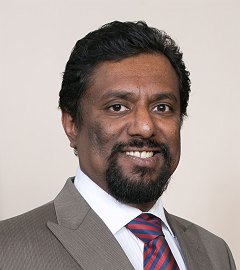
Niko Siltala is a University Instructor at Tampere University's Department of Automation Technology and Mechanical Engineering. He holds a Doctor of Science (Technology) in Mechanical Engineering (2016) and a Master of Science (Technology) in Automation Engineering (2001). His research focuses on production system design, reconfiguration, robotics, and virtual reality applications in safety training. He has contributed to the development of semantic rules for capability matchmaking, which supports rapid system design and reconfiguration. Key research areas include: Manufacturing automation and system adaptability Human-robot collaboration and safety protocols Virtual reality-based training solutions Formal resource descriptions for modular systems His work aligns with UN Sustainable Development Goals, particularly in advancing quality education (SDG 4) through innovative robotics education tools. He has received the Distinguished Committee Service Award (2004) and contributed to grants such as the K.F. ja Maria Dunderbergin testamenttisäätiö (2014). He has collaborated on projects like the D-BEST methodology for pilot lines and the ODIN project for scalable production systems. His activities include organizing conferences, presenting at international forums, and developing web-based tools for manufacturing system planning.
Martin Diehl is a computational materials scientist affiliated with KU Leuven (Departments of Computer Science and Materials Engineering) and the Max-Planck-Institut für Eisenforschung GmbH in Germany. His work focuses on crystal plasticity simulations, computational materials engineering, and multi-physics modeling of metallic systems. Research interests include: Crystal plasticity finite element method (CPFEM) and spectral solvers Microstructure evolution and damage mechanics Machine learning applications in materials design Development of the DAMASK simulation toolkit Multi-phase steel alloys and heterogeneous deformation Integrated computational materials engineering (ICME) Key trends in his publications since 2021 highlight advancements in: Multi-physics DAMASK framework for coupled chemo-mechanical and thermal simulations AI-driven inverse design of steel microstructures Damage modeling in dual-phase steels Collaborative software development for materials science Experimental-simulation integration for stress-strain partitioning High-resolution spectral methods for finite strain analysis He actively collaborates with institutions like Harbin Institute of Technology, University of Oxford, and research groups across Europe and Asia.
Maryam Mehri Dehnavi is an Associate Professor in the Department of Computer Science at the University of Toronto and a Principal Research Scientist at NVIDIA. She holds the Canada Research Chair in Parallel and Distributed Computing and leads the ParaMathics research group. Research focuses on high-performance computing , machine learning , sparse matrix optimizations , and compiler design for heterogeneous systems. Her work develops domain-specific languages , scalable numerical libraries , and auto-vectorization techniques for cloud and GPU platforms. Recent publications address LLM compression , sparse code translation , GPU kernel synchronization , and control flow optimization . Scientific recognition: Ontario Early Researcher Award (2021), NSF CRII Grant, NSERC New Frontiers in Research Fund. Current students: Mushegh Shahinyan , Martin Phan , Maryam Haghifam , and others. Former advisees: Kazem Cheshmi (NJIT), Zachary Blanco (MIT Lincoln Lab), Yuanxi Li (Amazon).
Dr. Liang (Leon) Dong is an Associate Professor in the Department of Electrical and Computer Engineering at Baylor University, where he conducts research and teaches in the areas of signal processing, wireless communications, and artificial intelligence. He leads the Laboratory of Signal Processing, Communications, and Artificial Intelligence, fostering innovation in next-generation communication systems, IoT, and AI-driven applications. PhD, Electrical & Computer Engineering, The University of Texas at Austin (2002) MS, Electrical & Computer Engineering, The University of Texas at Austin (1998) BS, Applied Physics with Minor in Computer Engineering, Shanghai Jiao Tong University (1996) Dr. Dong's research focuses on advancing digital signal processing and wireless communications, with strong emphasis on artificial intelligence applications. His work spans NextG wireless systems , IoT and smart cities , cyber-physical system security , and AI in healthcare and industrial automation . He applies deep learning to domains such as autonomous driving and drug discovery, and investigates energy-efficient, secure, and reliable communication protocols. The recent publications highlight a strong trend toward integrating AI into traditional signal processing and communications. Topics include mRNA vaccine stability prediction , smart city infrastructures , secure cyber-physical systems , and deep learning for biomedical and industrial applications . His work bridges theoretical innovation with real-world impact in defense, transportation, and public health. Dr. Dong has earned recognition as a Senior Member of IEEE and a Member of the American Physical Society. He has also served as Faculty Advisor for Baylor University's InterVarsity chapter. Senior Member, Institute of Electrical and Electronics Engineers (IEEE) Member, American Physical Society (APS) He has successfully advised numerous graduate and undergraduate students, many of whom now hold academic and industry positions at institutions like Stanford, Intel, NASA, L3Harris, and Cummins. His research is generously supported by Baylor's VP for Research, the National Science Foundation, NASA, the Department of Defense (TARDEC), the Michigan Department of Transportation, and industry leaders including Intel, L3Harris, ExxonMobil, and Denso. He actively mentors students through research assistantships and senior design projects. Dr. Dong leads the Laboratory of Signal Processing, Communications, and Artificial Intelligence, which provides a collaborative environment for advancing research in signal processing, communications, and AI. The lab supports graduate and post-doctoral researchers and offers opportunities for undergraduate involvement in AI programming, circuit design, and embedded systems.
Athinagoras Skiadopoulos is a computer systems researcher at Stanford University's School of Engineering, Department of Computer Science, focusing on the intersection of database systems and operating systems. His work centers around the innovative DBOS (Database-oriented Operating System) project and large-scale machine learning infrastructure, collaborating with prominent researchers including Christos Kozyrakis and Michael Stonebraker. His primary research interests include: Database-oriented Operating Systems (DBOS) Distributed systems for large-scale machine learning Resource management and optimization in data-intensive systems Transaction processing and data governance High-performance networking for accelerated computing Fault tolerance in distributed training systems Skiadopoulos's research trajectory shows a clear evolution from foundational DBOS architecture toward applications in large-scale machine learning systems. His early publications established the DBOS framework for operating system design using database principles, while his recent work addresses critical challenges in distributed training of massive neural networks. Systems like ReCycle and SlipStream demonstrate innovative approaches to pipeline adaptation and failure recovery during distributed training. His most recent 2025 work on accelerating Mixture-of-Experts training represents the cutting edge of efficient large model training infrastructure. Through his research, Skiadopoulos has established himself in both the database and systems research communities, with publications in premier venues including SOSP, OSDI, VLDB, and CIDR. His work consistently bridges theoretical database concepts with practical systems implementations, demonstrating how database techniques can solve real-world systems challenges in modern computing environments.
Per-Olov Östberg is an Associate Professor at the Department of Computing Science, Umeå University, and a research leader in the Autonomous Distributed Systems Lab (ADSLab). His work focuses on resource management for distributed cloud environments using AI/ML-based techniques, with a particular emphasis on ethical reasoning integration for responsible AI solutions. Research Themes: Cloud-edge continuum optimization, serverless frameworks, 6G computing challenges, data fabric architectures, and energy-aware systems Projects: COGNIT (cognitive serverless framework), WARA Common Information Bridge (data-driven cloud operations), De facto Center of Excellence in Autonomous Distributed Systems His publications (2011-2024) demonstrate consistent contributions to cloud resource management, including fairshare scheduling, decentralized prioritization, and power-performance tradeoffs. He has collaborated on interdisciplinary projects with institutions across Europe. Scientific Awards: None explicitly stated in provided information.
Prof. Dennis Kolberg serves as Professor of Industrial Engineering at Lübeck University of Applied Sciences, holding dual leadership roles as Head of Industrial Engineering Bachelor/Master programs and Head of the Institute for Entrepreneurship and Business Development (IEBD). His career uniquely bridges academic research and industry implementation, with recent executive experience as Chief Product Officer at DIGIMONDO (2020-2023) and co-founding SPARETECH (2019). M.Sc. Industrial Engineering, University of Bremen (2007-2014) Ph.D. in Industrial Engineering, Technical University of Kaiserslautern (2014-2018) focusing on Industry 4.0 and Lean Management Vocational Training as Industrial Clerk, RK Rose+Krieger (2004-2007) His research pioneers the integration of lean production methodologies with digital technologies , specializing in Industry 4.0 implementation and OT/IT convergence for manufacturing environments. Key contributions include developing reference architectures for cyber-physical production systems and optimizing human-machine interfaces through lean automation principles. Current work emphasizes digital transformation in B2B contexts , particularly for software startups in industrial settings. Publications from 2015-2022 reveal a consistent trajectory from foundational CPS architectures toward applied IoT solutions, with recent focus on digital twins for production optimization. His work consistently bridges theoretical frameworks and practical implementation , demonstrating how lean principles enhance digital transformation outcomes in manufacturing. Kolberg actively supervises bachelor's and master's theses at Lübeck University of Applied Sciences, with students registering via email for thesis topics. His industry background informs practical research directions, though specific grant funding isn't detailed in available sources. As IEBD Director, he drives academic-industry partnerships focused on digital entrepreneurship. Leading the Institute for Entrepreneurship and Business Development, Kolberg oversees initiatives connecting academic research with business development in digital manufacturing. Previously at DFKI's SmartFactory KL, he directed research on changeable cyber-physical production systems, establishing methodologies now applied in his current industry collaborations.
Junmin Jiang serves as Associate Professor in the Department of Electronic and Electrical Engineering at Southern University of Science and Technology's College of Engineering since 2022, following promotion from Assistant Professor. He directs a research group focused on cutting-edge analog/power IC design with strong industry partnerships including Texas Instruments, Qualcomm, and Analog Devices. His educational background includes: Ph.D. in Electronic and Computer Engineering (2017), The Hong Kong University of Science and Technology Visiting Scholar (2015-2016), State Key Laboratory of AMSV, University of Macau B.Eng. in Electronic Information Engineering (2011), Zhejiang University Dr. Jiang's research centers on power management IC design with three interconnected thrusts: Power ICs for Specific Applications (e.g., audio/LiDAR drivers), Power ICs for AI systems, and AI-enhanced power IC design. His work achieves breakthroughs in switched-capacitor converters, delivering ultra-high efficiency (>97%), fast transient response ( His 15 most recent publications demonstrate consistent leadership in top venues (ISSCC/JSSC), showing accelerating impact in hybrid converter topologies, parasitic loss reduction, and AI-integrated power management. The trend reveals increasing industrial relevance with 8 U.S. patents and real-world implementations in audio/LiDAR systems. Scientific recognition includes: IEEE SSCS Pre-Doctoral Achievement Award (2017) National Overseas High-level Talent (Youth Project, 2022) SUSTech Outstanding Teaching Award (2024) Shenzhen Industrial Innovation Talent Award (2023) As an advisor, he mentors 8+ students including ISSCC awardees and competition winners. His group actively recruits undergraduates for chip design projects, with students winning top honors in National Electronic Design and Mathematical Modeling competitions. Current teaching includes graduate Nonlinear Circuits and undergraduate Microcomputer Principles. The Jiang Research Group maintains strong industry ties for student placements and collaborates with international institutions in the U.S., EU, and Macau. Lab capabilities focus on full-cycle IC design from simulation to tapeout, with recent 100V-output converters achieving 86.2% efficiency for acoustic applications.
Sunoo Park is an Assistant Professor in Computer Science at NYU Courant Institute of Mathematical Sciences, with a secondary affiliation at NYU School of Law. He directs the DeTaIL Lab , focusing on security, privacy, and transparency in digital technologies. His educational background includes a J.D. from Harvard Law School, a Ph.D. in Computer Science from MIT, and a B.A. from the University of Cambridge. He is a licensed attorney in New York. His research bridges computer science and technology law , with core interests in cryptography, election security, AI ethics, blockchain, and digital policy. Recent work emphasizes legal risks in security research, verifiable voting systems, and adversarial robustness in AI. Park's publications (2017–2025) reveal strong trends in cryptographic applications for societal challenges , including election auditing, deniable encryption, and blockchain vulnerabilities. He consistently addresses tensions between technological capabilities and legal/policy frameworks. Teaching includes graduate courses on Digital Technology Law and AI Ethics , alongside clinical work in NYU's Technology Law & Policy Clinic. Service roles include program committees for IEEE Security & Privacy and NeurIPS (Ethics Committee).
Maria Loi is a Professor at the Faculty of Science and Engineering , University of Groningen, leading the Photophysics and OptoElectronics group. With over 321 research outputs and 17 datasets, her work focuses on the photophysics and optoelectronics of novel semiconductors including perovskites and quantum dots. Her research aims to understand and optimize semiconductor properties for applications in solar cells, LEDs, and photodetectors. Notable contributions include advancements in tin-based perovskites and unraveling hot carrier dynamics that challenge Shockley-Queisser limits. Scientific Awards : ERC Advanced Grant (2022) ERC Starting Grant (2013) Physica Prijs (2018) Fellowships: American Physical Society (2020), KNAW (2022), Royal Society of Chemistry (2022), EURASC (2022) Recent Trends : 2024-2025 publications emphasize defect passivation , scalable fabrication methods , hot carrier dynamics , and neuromorphic device applications in tin-lead and low-dimensional perovskites.
Dr. Mudrika Khandelwal is an Associate Professor in the Department of Materials Science and Metallurgical Engineering at Indian Institute of Technology Hyderabad. She holds a Ph.D. from the University of Cambridge (2013) and completed her M.Tech and B.Tech at IIT Bombay. Her research focuses on sustainable materials development through cellulose-based composites and nanotechnology for applications in drug delivery, food packaging, energy storage, and environmental remediation. Education: Ph.D. (University of Cambridge), M.Tech/B.Tech (IIT Bombay) Current Role: Associate Professor & Dean of Alumni Relations (appointed 2022) The Cellulose Group at IIT Hyderabad emphasizes interdisciplinary research combining materials science, chemistry, and biomedical engineering. Their work involves manipulating cellulose at nano and micro scales with inspirations from natural structures to address societal challenges in healthcare, food preservation, and renewable energy systems. Key funded projects include the SERB Women Excellence Award for medicated dressings, National Technical Textiles Mission initiatives for filtration applications, and several SERB/DST grants for cellulose-derived energy materials. The group maintains active collaborations across India, UK, Australia, and Singapore. Scientific Awards SERB Women Excellence Award (2022) IIT Hyderabad Faculty Research Excellence Award (2021) Young Associate, Indian National Academy of Engineering (2020) Platinum Jubilee Young Scientist Award (NASI, 2021) Young Engineer Award (INAE, 2020) The group has advanced laboratory facilities including battery testing systems, nanofabrication equipment, and drug release characterization tools. Dr. Khandelwal supervises both PhD and M.Tech students while leading multiple industrial collaborations with companies like Malai Biomaterials and Eaton.
Philipp Schindler serves as an Assistant Professor in the Department of Experimental Physics at the University of Innsbruck, Austria. His research is centered on experimental quantum computing using trapped ion systems, with a focus on advancing quantum error correction and scalable quantum processor architectures. Dr. Schindler's primary research interests include quantum error correction, fault-tolerant quantum computing, quantum simulation, and the development of trapped ion quantum hardware. His work bridges theoretical concepts with experimental implementations, contributing to the realization of practical quantum computers through innovations in ion trap design, qudit-based processing, and verification protocols. Key methodologies involve precision control of molecular ions and multiqubit operations within cryogenic environments. Analysis of his recent publications (2022-2025) reveals a consistent emphasis on experimental demonstrations of quantum error correction, novel ion trap architectures, and the use of qudits for enhanced quantum processing. Key themes include fault-tolerant operations, two-dimensional connectivity for scalability, and verification protocols for quantum computations. His research shows increasing focus on molecular ion systems and cross-verification techniques for quantum hardware validation. No scientific awards were mentioned in the provided information. Details regarding his students and research grants are not available in the given text. Dr. Schindler operates within the quantum computing research group at the Department of Experimental Physics, utilizing specialized facilities including cryogenic setups and microfabricated ion traps at Technikerstraße 25 in Innsbruck.
Eunhee Kim is a Professor in the Department of Defense Systems Engineering at Sejong University. She holds a Ph.D. in Mechanical Engineering from KAIST and has extensive industry experience in radar systems development. 1995 B.S. in Precision Engineering, KAIST 1997 M.S. in Mechanical Engineering, KAIST 2004 Ph.D. in Mechanical Engineering, KAIST Her research focuses on Radar Systems , Waveform Design , and MIMO Radar signal processing. She has contributed to projects involving space object tracking, airborne radar systems, and automotive radar optimization. Recent publications highlight her work on Machine Learning integration for Energy Forecasting and advanced MIMO Array Designs for improved radar resolution. She leads the Defense Radar Technology Laboratory, specializing in Phased Array Radar and Broadband Noise Radar systems. Patents include vehicle camouflage netting and RF-based positioning systems. Collaborations with agencies like Agency for Defense Development and companies such as LIG Nex1 and Hanwha Systems are prominent in her career.
Sunil Thomas, PhD , is a Research Professor at the Lankenau Institute for Medical Research (LIMR), with a distinguished career in translational science. His work bridges microbiology, immunology, molecular biology, and cell biology to develop diagnostic tools and vaccines for diseases affecting millions globally. He has held academic titles at LIMR since 2012, including Research Assistant Professor, Research Associate Professor, and now Research Professor. Current roles: Research Professor (2022–Present), Editor of Vaccine Design: Methods and Protocols (Springer-Nature), and Visiting Professor at Temple University (2017). Education: BSc in Botany (Kerala University), MSc in Biotechnology (Cochin University of Science and Technology), PhD in Environmental Biotechnology (Cochin University), and Postdoctoral Fellowship at Mount Sinai School of Medicine. Research interests encompass translational studies on immunotherapies for ulcerative colitis and Alzheimer’s disease, focusing on Bin1 monoclonal antibodies. He has pioneered structure-based vaccines for ehrlichiosis, modeled SARS-CoV-2 membrane proteins, and developed diagnostic tools like the ELISA kit for T-cell lipid rafts and Eastern Blotting for post-translational modifications. His lab investigates antibody uptake mechanisms and gut-brain axis interactions using animal models. Recent publications highlight his work on viral protein structure (Camp Hill, Borealpox, Oropouche), microbiome analysis in ICUs, diet-immunotherapy interactions, and advancements in AI-driven vaccine design. He has also contributed to understanding SARS-CoV-2 pathogenesis, monoclonal antibody therapies, and microbiome-host health connections. Patents include methods for disease treatment, Ehrlichia diagnostics, biosimulator technology, heat shock protein peptides, and vaccines against ehrlichiosis. Commercialized products like the IDO1 monoclonal antibody are now diagnostic probes in cancer research.
Professor Saman Amarasinghe is a faculty member in the Department of Electrical Engineering and Computer Science at the Massachusetts Institute of Technology (MIT), where he leads the Commit compiler research group at MIT's Computer Science and Artificial Intelligence Laboratory (CSAIL). His research focuses on programming languages and compilers that maximize application performance on modern computing platforms, with a particular emphasis on high-performance domain-specific languages. Professor Amarasinghe received his bachelor's degree in electrical engineering and computer science from Cornell University in 1988, followed by master's and PhD degrees in electrical engineering from Stanford University in 1990 and 1997, respectively. He joined the MIT faculty as an assistant professor in 1997 and has since become a world leader in his field. Professor Amarasinghe's research interests span programming languages, compiler design, and high-performance computing, with a particular focus on domain-specific languages. His group has developed numerous influential languages and compilers including Halide, TACO, Simit, StreamIt, StreamJIT, PetaBricks, MILK, Cimple, and GraphIt, which deliver unprecedented performance for application domains such as image processing, stream computations, and graph analytics. He has also pioneered the application of machine learning for compiler optimizations, from Meta optimization in 2003 to the OpenTuner autotuner framework. Professor Amarasinghe's publication history reveals a consistent research trajectory toward creating specialized language and compiler solutions that address performance challenges in specific domains while hiding complexity from application developers. His recent work focuses heavily on sparse computing, tensor algebra, graph processing, and the integration of machine learning techniques into compiler technology, demonstrating his ability to identify and address emerging computational challenges. ACM Fellow (2019) As an educator, Professor Amarasinghe has developed the popular Performance Engineering of Software Systems (6.172) class with Professor Charles Leiserson and created innovative project-based courses including the Open Source Software Project Lab, the Open Source Entrepreneurship Lab, and the Bring Your Own Software Project Lab. He also serves as the faculty director of MIT Global Startup Labs, which has helped create more than 20 startups across 17 countries. His research has translated into practical applications through startups like Determina, Inc. (acquired by VMware), demonstrating the real-world impact of his academic work. Professor Amarasinghe co-led the Raw architecture project with Professor Anant Agarwal, which did pioneering work on scalable multicores. His entrepreneurial activities include founding Determina, Inc. based on computer security research from his MIT lab and co-founding Lanka Internet Services, Ltd., the first Internet Service Provider in Sri Lanka, showcasing his ability to bridge academic research with commercial applications.